Home Blog Page 13

The Shettima danger for Tinubu, By Farooq Kperogi

Sometime in January this year, a senior Lagos-Ibadan journalist called my attention to a news story in which Hannatu Musawa, President Tinubu’s Minister of Art, Culture, Tourism and Creative Economy, said with earnest certainty that dropping Vice President Kashim Shettima as Tinubu’s running mate would gravely imperil Tinubu’s reelection chances. He wanted to know what I thought about it.

I promised I would share my thoughts in a column the following week, but more urgent matters that needed my discursive interventions came up, and I didn’t get round to doing it. In the intervening months, several other people have echoed Musawa’s sentiments. As manoeuvres for the 2027 election intensify, the question of Shettima’s place in Tinubu’s 2027 calculus keeps taking centre stage.

To my knowledge, no one has sufficiently articulated the socio-historical, political, strategic, ethnographic and even emotive reasons for the choice of Shettima as Tinubu’s running mate or why his replacement, especially with a northern Christian as is being rumoured, would convulse the foundations of the Tinubu presidency.

I have pointed out in many past columns that in Nigeria’s emotional cartography, there are five broad ethnographic cocoons, which I like to sometimes call emotional maps, that have evolved independently and have broadly shaped voting and other kinds of national behaviour.

There is the Northern Muslim Bloc that largely transcends northern ethnic boundaries, the Yoruba Bloc that mostly papers over religious differences, the Northern Christian Bloc that collapses ethnic and subregional borders, the Igbo Bloc that is self-explanatorily ethnically and religiously homogenous and the Southern Minority Bloc that encompasses a multiplicity of ethnicities that are neither Yoruba nor Igbo.

This emotional cartography isn’t intended to be a simplistic, self-sufficient and unnuanced mapping of diverse people into unproblematised boxes where there are no internal differences. It is intended only to show that, generically speaking, these broad collectivities tend to coalesce around the same affectional bonds in relation to national issues.

In the politics of emotional affiliation to, or connection with, the center of power, feelings of group representation draw on these maps. For example, the appointment of General Christopher Gwabin Musa first as Chief of Defense Staff and later as Minister of Defense has been a source of recognizable representational nourishment for most northern Christians across ethnic and subregional divides, even though Musa is from Kaduna, which is supposed to be in the Northwest.

So, based on my mapping of the emotional contours of Nigeria’s ethnographic landscape, the Tinubu-Shettima ticket actually is not, strictly speaking, the Muslim-Muslim ticket people say or think it is. It is, in reality, a Yoruba-Muslim ticket. Here’s why.

Tinubu, like most Yoruba people, defines himself first and foremost as a Yoruba person before he is anything else. That was why, in his 2022 Abeokuta speech, he prefaced “Emi lo kan” with “Yoruba lo kan.” In other words, he derived the social, political and emotional basis for the legitimacy of his presidential aspiration from his Yoruba identity.

Islam is incidental, even expendable, to Tinubu’s identity. This was dramatized this week when the presidency had to debunk a bizarre rumor that Tinubu had converted to Christianity.

Shettima, on the other hand, can’t afford to define himself as Kanuri in the context of national politics. On the national stage, he is the symbolic representation of collective northern Muslims, although this does not erase his Kanuri and cosmopolitical credentials. In other words, Shettima is primarily a northern Muslim who provides the symbolic conduit through which Muslims in the North identify with the administration he is a part of.

Some, maybe even most, northern Muslims may disagree with the administration and even with Shettima himself. But that’s in the region of the head. In their hearts, however, it’s a different matter. It’s like having a mother you disagree with but whose presence you cherish nonetheless because her absence would create a crushing emptiness in you.

In fact, no northerner, whether Christian or Muslim, can stake his or her national political aspiration on an ethnic platform. They would usually choose a pan-northern platform or a religious justification for their aspirations, depending on the context.

It needs to be pointed out that I am not making any moral judgments here. Tinubu’s appeal to Yoruba nationalism is not inferior to northern politicians’ appeals to regional or religious solidarity. The differences merely reflect how differently we have evolved politically and emotionally.

Now, replacing Shettima with a northern Christian running mate is fair in view of what appears to be the systematic exclusion of northern Christians at the top since the return of democracy in 1999. However, even at the risk of being misunderstood, it needs to be pointed out that such a move would signal two things.

First, contrary to what many people are inclined to assume, it won’t be a Muslim-Christian ticket. It would be a Yoruba-Christian ticket. As I pointed out earlier, Tinubu’s self- and collective identity definition is primarily Yoruba, and it’s the basis for his claim to the presidency. Until fairly recently, he didn’t even publicly identify with Islam and still stumbles when he tries to perform his secondary Muslim identity.

Second, Tinubu has to contend with the altered demographic calculations for the 2027 election that the choice of a northern Christian running mate would present. In the 2023 election, most northern Christians voted for Peter Obi, with Benue State being the notable exception. In Benue, Tinubu rode on the coattails of the then wildly popular APC governorship candidate Rev. Fr. Hyacinth Iormem Alia to victory.

Since 63.6 percent of Tinubu’s 8,805,420 votes in 2023 came from the North, it is safe to assume that most of those votes came from the Northern Muslim Bloc. To get rid of the ethnographic, emotional symbol of such a bloc in your quest for a second term, you have to be able to compensate for the electoral loss such a move would most certainly provoke. That seems like a tall order.

True, northern Christians seem to have warmed up to the Tinubu administration, perhaps because the anxieties that activated their hostility haven’t materialized. In fact, in May 2025, as Tinubu prepared to travel to Rome for the inauguration of Pope Leo XIV, the presidency reportedly supplied THISDAY with data that showed 62 percent of Tinubu’s appointees were Christians.

Bayo Onanuga later echoed the same claim at the Vatican when he said he had read that 62 percent of the president’s cabinet members were Christians.

Tinubu’s handlers can point not only to presidency-supplied claims about Christian appointments but also to a trail of public statements by some northern Christian bodies and clerics who said, in varying degrees of intensity, that his appointments had softened, answered or “allayed” fears over the Muslim-Muslim ticket.

For example, Rev. Kelvin Pwajok of the Northern Christian Forum thanked Tinubu in September 2023 for appointing northern Christians such as George Akume and Christopher Musa to strategic positions. Dominic Alancha of All Christian Youths in Northern Nigeria said the group’s earlier reservations had been eased by Tinubu’s appointments. Rev. Yakubu Pam of Northern CAN said in January 2025 that Tinubu had shown reasonable inclusiveness.

Archbishop John Praise Daniel of the Northern Christian Religious Leaders’ Assembly said in October 2025 that Christians did not feel sidelined and that Tinubu’s appointments had allayed many fears. Rev. Amos Mohzo of COCIN also thanked Tinubu for supporting northern Christians through appointments such as Akume as SGF and Nentawe Yilwatda as APC national chairman. In May 2026, the Christian Northern Nigeria Progressive Forum backed Tinubu’s re-election and framed its support around inclusion, fairness and national stability.

By contrast, Muslim groups and clerics have complained that the Muslim-Muslim ticket has not translated into commensurate representation for Muslims in Tinubu’s appointments.

For example, the Supreme Council for Shari’ah in Nigeria said Muslims remained politically marginalised despite their support for the ticket, while Professor Mansur Ibrahim Sokoto argued that Tinubu won Muslim votes but had since sidelined Muslims and the North.

Yoruba Muslim bodies have made a more specific regional case. MURIC has repeatedly alleged that South-West Muslims have been shortchanged. It even described some appointments as “Christian-Christian” under a Muslim-Muslim presidency. The Concerned Yoruba Muslim Scholars in Nigeria said Yoruba Muslims had expected Tinubu’s presidency to redress their long-standing marginalisation but have instead faced deeper exclusion. MUSWEN also said South-West Muslims are underrepresented in federal appointments relative to their demographic strength and intellectual weight.

In other words, dropping Shettima in favour of a Christian running mate would effectively create a perceptual “Christian-Christian” ticket in the North. Northern politicians like Musawa, who have an intimate familiarity with the sociology of northern politics, know that this would sound the death knell of Tinubu’s second-term bid, especially in light of Peter Obi’s dominance in the Southeast, which will deprive Tinubu of bloc votes from the South.

This choice comes with an even more poignant existential implication. Historically, in moments of political trauma, northern elites tend to instrumentalize religion to rouse the masses to popular action. Should Tinubu somehow manage to “win” without a northern Muslim running mate, he could have an unprecedentedly convulsive Nigeria to preside over.

The views expressed by contributors are strictly personal and not of Law & Society Magazine.

After they saved his life, he dedicated his to theirs

Shot down over a Japanese-held jungle in 1943, American pilot Fred Hargesheimer survived because a remote village refused to abandon him. He spent the next seven decades making sure he never abandoned them either.

In 1943, an American pilot fell out of the sky into one of the most dangerous jungles on earth.

For thirty-one days, Fred Hargesheimer wandered alone through the rainforest of New Britain after his burning reconnaissance plane was shot down over Japanese-controlled territory during World War II.

He was twenty-seven years old.

Starving.

Delirious.

Barely alive.

He survived on roots and stream water while moving through the jungle at night trying to avoid Japanese patrols searching the island.

By the time voices finally emerged from the trees on the thirty-second day, Fred believed he was about to die.

He thought the Japanese had found him.

Instead, it was a group of Nakanai tribesmen.

The villagers carried the weak American pilot back to their coastal village and hid him from Japanese forces despite knowing the consequences if they were caught.

The Japanese were offering rewards for captured Allied airmen.

They were also executing anyone who helped them.

The villagers hid Fred anyway.

He was so sick he could barely swallow solid food.

Then a nursing mother named Ida walked into the hut where he was lying.

She returned carrying a cup filled with her own breast milk and fed him herself for ten days to keep him alive while also nursing her own baby.

Fred never forgot her name.

Whenever Japanese patrols approached the village, someone would quietly blow into a conch shell hidden nearby.

That sound meant Fred had seconds to disappear.

And if he ran across the sand wearing boots, village children followed behind him carrying tiny palm-frond brooms — sweeping away his footprints before Japanese soldiers arrived.

If they had been discovered, the entire village likely would have been massacred.

Nobody betrayed him.

The children could not pronounce “Freddie,” so they called him “Mastah Preddi.”

Master Freddie.

He lived among them for seven months.

Then, in February 1944, Australian commandos finally reached the village and radioed for an American submarine to extract him from the island.

On a moonless night, Fred paddled out toward the submarine in a canoe while the villagers watched from shore.

Some mothers reportedly tried giving him their children to take back to America with him.

Fred survived the war and returned home to Minnesota where he married, raised children, and built a normal life.

But he could never forget the people who had saved him.

Especially Ida.

Especially the children with the little brooms.

For years, one thought haunted him constantly:

“How could I ever repay them?”

So in 1960, Fred returned to New Britain alone.

As his boat approached the beach, the villagers lined the shoreline waiting for him in the moonlight.

Then they began singing the only English song they knew:

“God Save the Queen.”

Fred stepped into the sand and cried.

He found Ida again.

He met the son she had been nursing while feeding him from her own body during the war.

And after returning home, he decided thank you was not enough.

A missionary later told him the village desperately needed a school.

So a middle-aged Minnesota salesman began going door to door across his hometown raising money through church groups and small donations.

By 1963, Fred returned to New Britain and helped build the village’s first permanent school.

Years later, he and his wife Dorothy moved there themselves for four years — leaving America entirely to teach children at the foot of a volcano twelve thousand miles from home.

Over the next several decades, Fred continued returning to the island again and again.

He helped build schools.

Libraries.

A medical clinic.

In 2000, the Nakanai people officially made him a tribal chief and gave him the title “Suara Auru.”

Chief Warrior.

Then, in 2006, at ninety years old, Fred made one final journey into the jungle.

The wreckage of the plane that crashed in 1943 had finally been found.

Villagers carried the elderly pilot through the rainforest on their shoulders so he could see it one last time.

The broken wing that had once dropped a starving young American into their lives still rested there beneath the trees.

Fred Hargesheimer died in 2010 at age ninety-four.

The schools and clinic he built are still operating today.

And when people asked why he spent nearly seventy years repaying a village he could have forgotten after the war, Fred always gave the same answer:

“These people were responsible for saving my life. How could I ever repay it?”

He spent the rest of his life trying.

Credits:https://www.facebook.com/share/p/1DfrrGq34u/?mibextid=wwXIfr

16 feared dead in Katsina Eid massacre as critics ask why outrage targets dissent more than terrorists

A few moments earlier, villagers in Kiliya had been celebrating Eid.

Men sat outside after Friday prayers. Families relaxed. Children moved between homes as the festive atmosphere settled over the community.

Then the gunfire started.

By the time the shooting stopped in the rural village in Katsina State’s Dutsinma Local Government Area, at least 16 people were reportedly dead. Others were missing. Survivors emerged from hiding to scenes of devastation.

One resident recalled sheltering inside a house after spotting armed men entering the community.

“When we came out, we found about 16 lifeless bodies,” he said.

Among the dead were relatives, neighbours and friends.

For many Nigerians, the attack felt painfully familiar.

Another village. Another massacre. Another community left counting bodies.

But increasingly, the debate that follows these attacks is no longer focused solely on the perpetrators. It is also becoming a conversation about accountability, criticism and whether public outrage is being directed at the right targets.

Another Attack, Familiar Questions

According to local accounts, the attackers arrived on motorcycles shortly after Juma’at prayers before opening fire and targeting parts of the village.

Residents believe the assault may have been retaliation for the reported killing of two suspected bandits by local vigilantes’ days earlier.

The Katsina State Police Command had not publicly commented on the incident at the time reports emerged.

The attack comes amid continuing violence across several regions of Nigeria.

In Oyo State, dozens of schoolchildren, teachers and school administrators remain in captivity following coordinated attacks on schools in Oriire Local Government Area.

Disturbing videos released by the kidnappers have heightened public anxiety. A recent video emerged showing a school principal and teacher pleading for intervention and rescue.

For affected families, each passing day deepens fear. For many citizens watching from afar, frustration is turning into anger.

The Politics of Insecurity

That anger intensified after comments by prominent political figures appeared to shift attention toward political calculations rather than the victims themselves.

Following the Oyo abductions, APC chieftain Joe Igbokwe suggested in a social media post that those hoping the kidnappings would damage President Bola Tinubu’s chances in the 2027 election would be disappointed.

The remarks triggered widespread criticism online, with many Nigerians arguing that public attention should remain focused on the safety of the abducted children rather than electoral implications.

The reaction reflected a broader national frustration.

As attacks continue across the country, many citizens increasingly question why public debates often become politically polarized rather than centered on confronting armed groups responsible for killings, kidnappings and mass displacement.

A Growing Complaint

Civil society groups, journalists and human rights advocates have for years argued that Nigeria’s political environment sometimes appears more confrontational toward critics than toward the insecurity they criticize.

Particular attention has focused on the use of provisions within the Cybercrimes Act, which rights organizations have repeatedly said have been used to arrest, detain or prosecute journalists, activists and government critics over online speech.

Supporters of the law argue it is necessary to combat cyberstalking, misinformation and online abuse.

Critics counter that it has too often been deployed against dissenting voices.

The perception has fuelled growing public debate.

Why, some activists ask, do outspoken critics frequently face interrogation, detention or legal battles while communities continue to endure recurring attacks from heavily armed groups?

The question has become increasingly prominent across social media, civil society forums and public discourse.

The Crisis of Confidence

The issue extends beyond politics. At its core is a crisis of public confidence.

Many Nigerians acknowledge that insecurity is a complex challenge with roots in poverty, weak governance, criminal networks, regional instability and longstanding social grievances.

But they also increasingly measure governments not by promises but by outcomes. And the outcomes remain troubling.

Villages continue to be attacked. Schoolchildren remain in captivity. Entire communities are displaced. Families still bury loved ones after nearly every major holiday.

Each new attack deepens the perception that the state remains reactive rather than decisive.

“Where Is the Outrage?”

Perhaps the most striking feature of recent public discussions is the growing sense that outrage itself has become contested.

After major attacks, some government supporters direct their frustration toward opposition politicians, activists or critics they accuse of exploiting insecurity for political gain.

Critics respond that demanding better security is not political opportunism but a basic civic expectation.

The resulting arguments often dominate public debate while the victims themselves fade from view.

In Kiliya village, however, politics offers little comfort. Families are mourning. The dead are being buried.

Survivors are trying to understand how a festive afternoon turned into a massacre.

And across Nigeria, from Katsina to Oyo, a growing number of citizens are asking whether the country’s political class is spending enough time confronting the people carrying guns—and too much time confronting those demanding answers.

That question may prove increasingly difficult to ignore as the death toll rises and public patience wears thin.

Bandits kill Zamfara officials, 150 feared dead in Kwara as new video emerges from Oyo kidnap victims

As Nigerian authorities continue to promise tougher action against insecurity, a wave of fresh violence stretching from Zamfara to Kwara and Oyo states is fuelling public frustration over what critics describe as a widening gap between official assurances and realities on the ground.

In Zamfara State, bandits have reportedly killed two local government officials after accusing them of favouring a rival terrorist group. In Kwara State, survivors are recounting a massacre that community leaders say left as many as 150 people dead. And in Oyo State, a newly released distress video shows abducted teachers pleading for negotiations nearly two weeks after dozens of schoolchildren and educators were kidnapped.

Taken together, the incidents paint a troubling picture of a country still struggling to contain overlapping security threats despite repeated government pledges to restore order.

Zamfara Killings Trigger New Fears

The latest shock came from Talata-Mafara Local Government Area of Zamfara State, where a councilor representing Jangebe Ward, Habibu Jangebe, and the local government’s Director of Planning, Alhaji Jamilu Sani, were reportedly executed by bandits.

According to local sources, the two officials were abducted while traveling to prepare for pilgrimage activities before later being killed.

Residents alleged that the bandits accused the officials of facilitating payments to Lakurawa militants while excluding other armed groups operating in the area.

One local source claimed the killings were intended as retaliation and a warning to local authorities.

The allegations have been firmly denied by Talata-Mafara Local Government Chairman Yahaya Yari.

Yari described the claims as baseless, insisting that neither his administration nor the Zamfara State Government negotiates with terrorist groups.

“My local government will never give money to either of them,” he said, referring to both Lakurawa militants and bandit factions.

Instead, he said government support was being provided to members of the Civilian Joint Task Force assisting security agencies in anti-bandit operations.

But the incident underscores a growing reality in parts of northwestern Nigeria, where competing armed groups increasingly exert influence over local communities and where accusations of unofficial arrangements between authorities and armed actors frequently surface.

Survivor: “I Don’t Know If My Family Is Alive”

While Zamfara mourns the loss of local officials, survivors of a devastating attack in Kwara State are still searching for missing relatives.

Community leaders say approximately 200 gunmen on motorcycles stormed Woro community in Kaiama Local Government Area, unleashing hours of violence that left scores dead and entire sections of the settlement destroyed.

The reported death toll has climbed to 150, although search efforts continue.

Among the survivors is Danjuma Bagu, who remains hospitalized with a gunshot wound.

Speaking from his hospital bed, Bagu said he has been unable to contact his wife and six children since the attack.

“As I speak with you now, I don’t know if my wife and six children are alive,” he said.

Another survivor, Joshua Dame, described how he watched gunmen kill his companion before bullets tore through his own body.

A bullet entered his stomach, exited through his side and shattered his hand.

Believing he was dead, the attackers moved on.

For eight hours, he crawled through the forest, bleeding heavily and hiding from fear that the gunmen might return.

“I don’t know how I survived,” he said.

The accounts have intensified concerns that armed groups are operating with increasing boldness across rural communities despite ongoing military deployments.

New Distress Video Raises Pressure on Government

Meanwhile, in Oyo State, a new hostage video has added urgency to demands for action.

The footage reportedly shows school principal Mrs. Rachael Alamu and another teacher pleading for intervention after their abduction during coordinated attacks on schools in Oriire Local Government Area.

Visibly distressed and kneeling before their captors, the victims appeal directly to the Federal Government, Governor Seyi Makinde and religious leaders to help secure their release.

The video emerged days after another graphic recording showed the execution of mathematics teacher Michael Oyedokun, whose killing shocked the country and reignited comparisons to previous school abductions that drew international attention.

The latest images have deepened fears for dozens of children, teachers and school administrators still being held.

Families say every passing day increases anxiety.

Parents continue waiting for news.

Children remain in captivity.

And questions about the effectiveness of rescue efforts continue to grow.

Growing Frustration

President Bola Tinubu has condemned the killing of the teacher and directed security agencies to intensify rescue operations.

Authorities in Oyo say arrests have been made, including suspects accused of providing logistical support to the kidnappers.

Officials have also indicated that security forces are pursuing the armed group believed responsible.

Yet for many Nigerians, the developments have done little to ease concerns.

Across social media and civil society circles, frustration is mounting over what critics describe as a pattern of official statements followed by continuing attacks.

From Zamfara to Kwara to Oyo, many citizens see a country where armed groups continue to dictate the tempo of national life while communities absorb the human cost.

The images emerging from these crises are increasingly difficult to ignore: local officials executed, entire villages devastated, children held hostage and survivors searching desperately for missing family members.

For affected communities, the debate is no longer about government promises, but about whether those promises can still translate into protection before the next attack arrives.

Odinkalu: Abia escaped a quarter-century of ‘un-government’, must not return there

UMUAHIA, Nigeria — Renowned human rights scholar and lawyer, Prof. Chidi Odinkalu, has declared that Abia State stands at a historic crossroads, warning that the state must never return to what he described as nearly 25 years of “un-government” that robbed citizens of dignity, hope and accountable leadership.

Speaking at the third anniversary lecture of Governor Alex Otti’s administration in Umuahia on Thursday, Odinkalu argued that the most significant achievement of the current government is not roads, infrastructure or urban renewal projects, but the restoration of human dignity and public trust in governance.

In a lecture titled “Governance as Dignity: Three Years of Impact and of Shaping the Future of Abia State and Beyond,” the former Chairman of Nigeria’s National Human Rights Commission said Abia’s experience before 2023 went beyond mere bad governance.

Borrowing from the Spanish term desgobierno, which he translated as “un-government,” Odinkalu described the period as one marked by the criminalization of state institutions, impunity and the systematic erosion of public confidence.

“For nearly a quarter century, this State was Nigeria’s poster-child for the impossibility of credible government founded on incredible illegitimacy,” he said.

According to him, governance during that era became detached from the will of the people, creating conditions in which public resources were pillaged while accountability mechanisms were weakened or captured.

The professor said the consequences were visible in the collapse of infrastructure, declining public services, growing insecurity and widespread hopelessness among residents.

However, he argued that the state’s recent transformation demonstrates the power of legitimate leadership backed by public trust.

“Governor Alex Otti’s biggest achievements lie in restoring dignity and hope to a people who had given up on both, elevating the state’s ambitions and investing intentionally in the idea of government as a virtuous enterprise,” he said.

Odinkalu acknowledged the administration’s visible accomplishments, including extensive road construction, urban regeneration, improved fiscal management, investments in education, healthcare and energy infrastructure, but insisted that the deeper significance lies in rebuilding citizens’ confidence in government.

He cited improvements in mobility, power supply, healthcare delivery and education as evidence of a coherent strategy aimed at transforming Abia into a competitive enterprise economy and regional commercial hub.

The scholar disclosed that the administration had asphalted hundreds of roads across the state and was pursuing long-term projects designed to position Abia as a major trade and logistics centre in the South-East.

He also commended investments in public education, healthcare and social inclusion, describing them as essential foundations for sustainable development.

Drawing from Nigeria’s Constitution, Odinkalu argued that government exists primarily to protect and enhance the dignity of citizens.

He referenced constitutional provisions requiring government to safeguard welfare, maintain human dignity and ensure that governmental actions remain humane.

“Human dignity is more than an aspiration; it is a constitutional metric for measuring the performance of government,” he said.

Beyond celebrating the administration’s achievements, Odinkalu challenged Abians to protect the gains recorded so far, particularly as political activities ahead of the 2027 general elections gather momentum.

He warned against returning to a culture of transactional politics and urged citizens to evaluate political leadership based on performance rather than sentiment.

“The outcomes announced in elections have profound implications for the lives and fates of real people,” he said. “We confront a season that will test the will of the state in defending what it now has.”

Looking ahead, the professor identified several strategic opportunities for Abia, including developing a professional services economy, establishing a regional commercial dispute resolution hub, strengthening the knowledge economy through higher education and research, attracting diaspora investment, creating a Women’s Legacy Fund for women-led enterprises and deepening regional security cooperation.

He particularly urged the government to leverage the state’s growing network of universities and educational institutions to build a knowledge-driven economy capable of competing globally.

Odinkalu also called for stronger engagement with the diaspora community, noting that Abia and neighbouring Imo State account for a substantial share of Nigeria’s annual diaspora remittances.

As the state charts its future, he said the ultimate challenge is whether the current reforms will become a permanent foundation for development or merely a temporary interruption in a longer history of poor governance.

“For Abia State, there are two options,” he said. “To make this experience sustainable and indefinite into the future, or to record it as a minor interregnum in a continuum of habitual un-government.”

“The choice is clear.”

The soldier who found a baby on the battlefield and carried her for 40 miles

This is the story of the American Soldier Who Found an Abandoned Baby on the Italian Battlefield and Carried Her 40 Miles to Safety — Then Spent 60 Years Wondering If She Survived, Italy, 1944.

January 1944. Anzio, Italy

The Anzio beachhead was a particular kind of hell — a narrow strip of Italian coastline held by Allied forces under constant German bombardment, no room to advance, no room to retreat, just the grinding daily mathematics of holding ground under fire.
Corporal James Whitaker, 24, Georgia, was moving through a bombed farmhouse on a patrol assignment when he heard it.
Not crying — past crying.
The sound an infant makes when it has cried beyond what crying can accomplish and has gone to a place beyond it, a thin persistent sound like a mechanical thing running down.
He found her in the farmhouse cellar. An infant girl. Eight months old at the most. Alone in a wooden crate lined with a woman’s wool coat. Alive, barely, from cold and dehydration.
No one else in the farmhouse. No one else anywhere visible.
He picked her up.

The Problem
James Whitaker was on a combat patrol in an active battle zone carrying an infant who would die if he put her down and who he had no ability to help if he kept her.
He had no formula, no milk, no baby supplies of any kind.
He had his canteen, a chocolate bar, and forty miles between his position and the field hospital at the rear.
He started walking.

The Forty Miles
He carried her inside his field jacket, against his chest, where the body heat kept her warm.
He gave her water from his canteen, dripped slowly from his finger to her lips the way he had seen his mother water young animals — a memory that surfaced from childhood without warning and turned out to be exactly applicable.
He broke small pieces of chocolate and let her suck the sweetness from his finger.
He moved at night when he could, staying off roads, moving through terrain that was simultaneously trying to kill him from German positions and from Italian winter.
He talked to her.

Quietly, constantly, in the specific soft register humans use with infants regardless of whether the infant understands. He told her about Georgia. About his mother’s cooking. About the farm where he grew up. He told her it was going to be fine, which he was not certain was true but which he had decided to commit to regardless.
She was alive when he reached the field hospital at dawn on the second day.
A nurse took her from his arms.
He sat down on the ground outside the hospital tent and did not get up for an hour.

The Handoff
The field hospital logged the infant as a found civilian, turned her over to an Italian Red Cross representative, and that was the last official record that connected her to James Whitaker.
He asked about her before he went back to his unit. They told him she was stable, that she would be placed with a relief organization, that she would be taken care of.
He went back to his unit.
He went back to the war.

The Sixty Years
James Whitaker came home to Georgia in 1945. He married. He had three children. He farmed and then he worked in hardware and then he retired.
He thought about the baby for sixty years.
Not obsessively — he was a practical man, not given to obsession. But consistently. On certain mornings. On certain nights. A presence in the back of his mind, an open question he had never been able to close.

She would be in her sixties now, he would calculate. He did not know her name. He did not know if she had survived the war, the occupation, the chaos of postwar Italy. He did not know if she had a family, children, a life.
He knew only that he had carried her forty miles and handed her to a nurse and never found out what happened next.

In 2004, his granddaughter Sarah — seventeen years old, working on a school project about WWII — asked him if he had any war stories.
He told her one.
Sarah put it on the internet.

The Finding
Three months later, a woman in Bologna, Italy, contacted Sarah’s email address.
Her name was Maria Conti. She was sixty years old. She had been told, by the Italian family who had raised her, that she had been found as an infant during the Anzio campaign by an American soldier who carried her to safety.
She had been looking for that soldier for forty years.
James Whitaker was eighty-four years old when Sarah showed him the email.
He read it twice.
He looked up at his granddaughter.
“”She’s alive,”” he said.
“”She wants to talk to you,”” Sarah said.
They spoke by telephone first — Sarah translating between English and Italian. Then by letter. Then, in 2005, Maria Conti flew to Georgia.
She was sixty-one years old. She was a schoolteacher. She had three children and five grandchildren.

She walked into James Whitaker’s living room and he stood up — slowly, at eighty-five, he stood up — and they looked at each other.
Maria crossed the room. She took both his hands. She said something in Italian.
Sarah translated: “”She says she has wanted to say thank you her whole life. She says she is sorry it took sixty years.””
James Whitaker held her hands.
He said: “”Tell her sixty years is nothing. Tell her I just needed to know she made it.”

Source: https://www.facebook.com/share/1NVwX7y88V/?mibextid=wwXIfr

Bring Back Our Children — Before Nigeria loses its soul

By Law & Society Magazine Editorial Board

Somewhere tonight in forests in northern and South-Western Nigeria, frightened children are likely trying to sleep on bare ground. Some may still be calling out for home in the darkness. Others may already have fallen into the numb silence fear often brings.

Back in Abuja and across the country’s political corridors, however, conversations are increasingly shifting toward something else entirely: the 2027 elections.

That contrast, between children in captivity and politics proceeding almost undisturbed, has become one of the most disturbing symbols of modern Nigeria.

As the country marked Children’s Day on May 27, public anger erupted online and across civil society over the continued abduction of schoolchildren and teachers in Oyo and Borno states. Using the hashtag #BringBackOurStudents, celebrities, activists and ordinary Nigerians accused political leaders of responding to national trauma with familiar statements but little visible urgency.

For many citizens, this year’s Children’s Day celebrations felt painfully hollow.

Three-year-old Sikiru Salami and 18-month-old Christiana Akanbi remain among dozens of children reportedly still held by abductors following attacks on schools in Oyo State. Other victims include toddlers barely old enough to understand the violence surrounding them.

The plight of the other schoolchildren abducted from schools in Mussa, Askira-Uba Local Government Area of Borno State on May 15, 2026, the same day the Oyo school abductions occurred, can only be imagined.

That reality has shaken many Nigerians more deeply than official statements appear to acknowledge.

President Bola Tinubu eventually addressed the issue 13 days after the incident, in his Children’s Day message, assuring grieving families that the abducted children had “not been abandoned” and that security agencies had been directed to intensify rescue efforts.

“As a father and your President: you are not forgotten,” he said.

The problem for many Nigerians is not necessarily the words themselves. It is that they have heard similar words repeatedly over the years while insecurity continues to spread.

Since the 2014 abduction of the Chibok schoolgirls under former President Goodluck Jonathan, mass kidnappings have evolved from national shock events into recurring headlines. Entire communities across parts of northern and central Nigeria now live under the constant threat of abductions, raids and mass killings.

Schoolchildren, once considered untouchable, have increasingly become targets.

That is partly why comparisons to the #BringBackOurGirls movement resurfaced so quickly this week.

Former Education Minister Obiageli Ezekwesili, one of the leading voices behind the Chibok campaign, openly criticised what she described as performative leadership during Children’s Day commemorations.

“Do not dare stand in front of cameras,” she wrote in a widely shared statement, accusing political leaders of celebrating children while many remained trapped in captivity.

Her criticism resonated because public frustration appears to be extending beyond insecurity itself into something deeper: the perception that national suffering no longer interrupts political business.

Even symbolic moments now carry outsized meaning.

When President Tinubu recently visited Plateau State following deadly attacks around Jos, many Nigerians expected images of a leader walking through grieving communities and devastated villages. Instead, reports that the visit remained largely around the airport — with selected victims brought there to meet him — triggered criticism online and reinforced perceptions of emotional distance between political leadership and ordinary citizens.

Meanwhile, politicians across party lines continue holding meetings, negotiating alliances and quietly positioning for the next electoral cycle.

To many Nigerians, the timing feels jarring.

The contrast becomes even more painful when viewed through the eyes of affected families. Parents of abducted children are living through an emotional nightmare that is difficult to fully describe: waiting endlessly for information, fearing ransom videos, imagining what frightened children may be experiencing in remote forests.

Some of the abducted children are younger than five.

Others are teenagers taken from classrooms alongside teachers and relatives.

And beyond the immediate horror lies another concern experts and activists increasingly raise: trauma.

Nigeria’s insecurity crisis is often discussed in terms of military operations, casualty figures and political accountability. Far less attention is given to the long-term psychological impact on children repeatedly exposed to violence, displacement and fear.

What happens to a society where children grow up watching schools become targets and governments struggle to guarantee basic safety?

That question has become harder to ignore.

Many Nigerians also point to broader structural failures feeding instability across the country — including mass youth unemployment, widespread poverty, poor education systems and the growing number of vulnerable children surviving on the streets.

Across several northern cities, including Abuja, Almajiri children can still be seen roaming major roads carrying bowls and searching for food. To critics, the image reflects a deeper national crisis: millions of children growing up around neglect, inequality and hopelessness while political elites remain consumed by power struggles.

“A nation that cannot protect its children is not merely losing its future,” one activist wrote this week. “It is breeding tomorrow’s anger.”

That warning may sound dramatic, but many Nigerians increasingly believe the country is entering dangerous territory psychologically as well as politically.

After years of repeated attacks, public reactions themselves appear to be changing. There is still outrage, but also visible exhaustion. A sense that mass abductions, killings and displacement are slowly becoming normalised.

Perhaps that is the greatest danger of all. This is because once a society becomes emotionally accustomed to children disappearing into forests, something deeper than security has already started collapsing.

And that is why this moment feels bigger than politics.

Children’s Day is supposed to celebrate innocence, safety and possibility. Instead, this year’s observance forced Nigeria to confront a troubling national question:

What does it say about a country when toddlers remain in terrorist camps while political conversations move on almost as if nothing happened?

NCoS says ₦120m theft claim at Kuje prison is false, dismisses allegation

The Nigerian Correctional Service (NCoS) has dismissed as false and misleading online reports alleging that an inmate at the Medium Security Custodial Centre, Kuje, Abuja, was robbed of personal valuables reportedly worth over ₦120 million during a routine search operation.

In a statement issued by the Service public relations officer, chief superintendent of Corrections, Jane Osuji, the NCoS described the allegation as inconsistent with established procedures governing custodial operations across the country.

The Service explained that what occurred at the facility was a routine security search conducted in line with Standard Operating Procedures aimed at maintaining order, discipline, and safety within the custodial centre.

According to the statement, all recovered prohibited items during the exercise were duly processed and documented, with no irregularities recorded. It stressed that inmates are not permitted to retain unauthorized valuables or large sums of money while in custody.

Read Also: Ex-Skye Bank Chairman Tunde Ayeni ‘robbed’ of N120m watch, wedding ring in Kuje prison raid

Read Also: Inside The Gates of Impunity: Why a remand inmate’s stolen watch matters to every Nigerian

The NCoS further stated that upon admission into any custodial facility, all declared personal belongings of inmates are properly documented and kept in safe custody until lawful release. It noted that there is no official record indicating that items matching the alleged ₦120 million valuation were declared or kept in custody at Kuje Custodial Centre.

It added that the items referenced in the reports are classified as prohibited contraband within custodial facilities, and therefore cannot be lawfully retained by inmates.

The Service also disclosed that no complaint, formal or informal, regarding theft or missing valuables has been lodged by any inmate or individual connected to the centre through official channels.

Reaffirming the state of security within the facility, the NCoS said the Medium Security Custodial Centre, Kuje, remains calm, peaceful, and secure.

The service urged members of the public and media organisations to disregard sensational and unverified claims, and to always seek clarification through appropriate official channels before publication.

It reaffirmed its commitment to professionalism, transparency, and ongoing reforms aimed at strengthening security and accountability across custodial centres nationwide.

“The Service wishes to categorically state that the allegation is false, misleading, and inconsistent with the operational realities and established procedures governing custodial facilities in the country.

“For the avoidance of doubt, what took place at the Custodial Centre in Kuje, was a routine security search carried out within the facility and all recovered prohibited items were dully processed and documented. The exercise was conducted professionally and in line with extant Standard Operating Procedures aimed at maintaining security, order, discipline, and the integrity of custodial operations,” the statement concluded.

Inside The Gates of Impunity: Why a remand inmate’s stolen watch matters to every Nigerian

By Kachi Okezie, Esq.

If a high-profile man on remand cannot keep his wedding ring safe in Kuje prison, then no citizen’s rights are safe anywhere.

There is a special kind of dread that grips a society when the very institutions created to secure life and liberty become the ones that violate them most brazenly. The recent report out of Kuje Medium Security Custodial Centre, alleging that former Skye Bank Chairman Tunde Ayeni was robbed of a ₦120 million watch and wedding ring, would be alarming enough if it were the work of external bandits scaling fences under cover of darkness.

It becomes something far more corrosive when, as alleged, the raiders were not hoodlums but security personnel whose identities remain unknown. That single detail shifts the conversation from one about failed fences and poor surveillance to something more fundamental: abuse of authority. When the hand that holds the key is the same hand that reaches into your pocket, we are no longer talking about insecurity. We are talking about the state turning on its own citizens.

Ayeni is on remand. That legal status matters more than most people realise. Under Section 36(5) of the Constitution of the Federal Republic of Nigeria 1999 as amended, every person charged with a criminal offence shall be presumed innocent until proved guilty. The Supreme Court reaffirmed this in Al-Mustapha v. State (2013) LPELR-20372(SC), holding that the presumption is absolute and applies at all stages including pre-trial detention.

A remand inmate is not a convict. He stands before the law as Ayeni does, entitled to every constitutional right that has not been expressly taken away by due process. Section 35(1)(c) of the Constitution permits detention only upon reasonable suspicion and for the purpose of bringing him before a court, while Section 34(1)(a) guarantees that the dignity of his person is inviolable. The Supreme Court in Uzoukwu v. Ezeonu II (1991) 6 NWLR Pt. 200 p.708 made clear that fundamental rights do not stop at the prison gate.

Property cannot be seized except by a court order following a lawful process, as Section 36(12) of the Constitution demands, and Section 12(8) of the Nigerian Correctional Service Act 2019 expressly provides that an inmate shall retain all rights not lawfully taken away by the sentence of a court or by the fact of detention.

Yet inside a facility that should be the most controlled environment in the country, a man awaiting trial is said to have been relieved of personal effects of immense value, with no judge, no order, no record, only the implied threat of men in uniform. If this is true, then it is not just a robbery. It is a desecration of the very idea of justice itself, a direct assault on the presumption of innocence that the Court of Appeal in Duru v. FRN (2017) LPELR-43289(CA) warned must not be violated by treating an accused as guilty before judgment.

For years Nigerians have watched the slow erosion of our public institutions with a mixture of anger and resignation. Courts hearings are delayed, hospitals under-equipped, roads abandoned, and now even prisons, the last line of the state’s claim to order, have become spaces where rights are negotiable.

Kuje itself was attacked by terrorists in 2022 and hundreds escaped. The state promised reforms, better intelligence, stronger perimeters. To now hear, as alleged, that danger may come not from outside the walls but from within the uniform is to confront a deeper rot. It suggests that the problem is not only what we lack in terms of money or manpower, but what we have lost in terms of discipline, oversight, and fear of consequences. When men who wear the insignia of the state can enter a custodial centre and allegedly strip an inmate of his possessions without fear that anyone will hold them to account, it means impunity has moved from the streets into the very heart of the correctional system.

Section 13 of the Nigerian Correctional Service Act 2019 requires that awaiting-trial persons be kept separate from convicted persons and treated as innocent. The Court in Nemi v. State (1994) 7 NWLR Pt. 355 p.201 held that remand inmates must not be subjected to punitive treatment reserved for convicts. When that statutory duty is ignored and the remand cell becomes a hunting ground, the law is not merely broken; it is ridiculed.

The social contract is simple in theory and demanding in practice. Citizens surrender certain freedoms to the state with the expectation that the state will protect their lives, their property, and their dignity. Nowhere is that bargain starker than in prison. An inmate cannot lock his door, cannot hire private guards, cannot run to the police if the police are the threat. The moment the state takes liberty away, it assumes total responsibility for safety. The Supreme Court in Fawehinmi v. IGP (2000) LPELR-1279(SC) held that detention, including remand, must be lawful and the detainee retains all constitutional rights except those necessarily restricted by detention itself. To fail at that point is to breach the contract at its most basic clause. If a remand prisoner cannot trust that his wedding ring will be safe inside Kuje, then what citizen can trust that his home will be safe in Abuja, his shop safe in Kano, his farm safe in Benue? The corrosion begins in the cell but it does not end there. It spreads outward, convincing people that the state is not a protector but another predator to be managed.

There are consequences that flow from this drift if we do not arrest it quickly. The first is the death of public trust in the judiciary and the correctional system. Why should any Nigerian believe in the rule of law if the place where the law is supposed to be enforced becomes a marketplace for extortion? The second is the hardening of criminality. Prisons are meant to correct, to rehabilitate, to return people to society better than they entered. A facility where inmates must defend their watches and wedding rings from those meant to guard them will not produce reformed citizens. It will produce embittered citizens who have learned that survival means distrusting every institution.

The third consequence is international. Nigeria has domesticated the African Charter on Human and Peoples’ Rights through the Ratification and Enforcement Act, and Article 7(b) of that Charter guarantees the presumption of innocence. In Abacha v. Fawehinmi (2000) 6 NWLR Pt. 660 p.228 the Supreme Court held that the Charter is part of Nigerian law and enforceable. Repeated violations inside our custodial centres invite scrutiny, lawsuits, and diplomatic embarrassment at a time when we are trying to attract investment and partnership. Investors do not pour money into countries where the state cannot even guarantee the safety of those in its custody.

What makes this episode particularly painful is that Ayeni is not a faceless statistic. He is a high-profile figure whose case has been in the public eye. If someone with resources, access to lawyers, and public attention can allegedly be robbed inside Kuje by security personnel, then the ordinary awaiting-trial trader, student, or driver who has no voice and no connections is completely vulnerable. That is the true measure of institutional failure. When the system cannot protect the visible, it has certainly abandoned the invisible. Remand under Section 296 of the Administration of Criminal Justice Act 2015 is administrative, not punitive, as the Court in Odogu v. A.G. Federation (1996) 6 NWLR Pt. 453 p.180 emphasised. Yet the experience alleged turns administration into punishment and custody into extortion.

So where is the state’s responsibility? It lies squarely at the door of those who control the Nigerian Correctional Service, the Ministry of Interior, and ultimately the presidency which swore to uphold the Constitution. Responsibility means more than issuing press statements. It means an immediate, independent, and transparent investigation into the allegations, with the identities of all personnel who accessed Ayeni’s cell in the relevant period made public. It means sanctioning and prosecuting any officer found culpable, not redeploying them quietly to another command, because the Evidence Act 2011 places the burden of proof on the state and the state must now prove that it can police its own. It means publishing a clear policy on inmate property, with receipts, inventories, and accountability, so that no court order is needed to remind officials that a man’s watch is not state property. It means decongesting prisons by speeding up trials for the majority of inmates who are awaiting trial, because overcrowding breeds chaos and chaos invites abuse. And it means funding and training staff properly, paying them on time, rotating them frequently, and subjecting them to real oversight, because a poorly paid, unsupervised officer with absolute power over a captive population will almost always become the problem he was hired to solve.

Nigerians are tired of excuses. We have heard about bad eggs and isolated incidents for too long while the pattern repeats. The Kuje allegation, if proven, is not an isolated incident. It is a symptom of a nasty culture. It tells us that the line between custodian and criminal is thinning, and that the authority we grant the state is being weaponised against the very people it should shield. That is an affront to civil rights and to justice in the deepest sense of those words. Justice is not only about courts handing down sentences. It is about the daily, unglamorous work of ensuring that every person, even the accused, even the unpopular, is treated as a human being under the protection of law, as Section 36(5) and the long line of authorities from Woolmington to Al-Mustapha demand. We must demand better, not just for Tunde Ayeni, but for the principle he represents in this moment. A nation that cannot keep its correctional facilities safe cannot claim to be secure. A government that cannot control its own security personnel cannot claim to have a monopoly on force. And a society that shrugs at the robbery of a remand inmate has already begun to accept that no one’s rights are safe. The time to arrest this drift is now, before the next story is not about a stolen watch, but about a stolen life, and before Nigerians conclude, with bitter accuracy, that the greatest threat to their liberty comes not from outside the gates, but from the officers standing inside them.

The views expressed by contributors are strictly personal and not of Law & Society Magazine.

Dame Patience Jonathan!

By Ayo Lijadu

There was once a First Lady of Nigeria.

A true Mother of the Nation who showed empathy; who rallied and gathered grieving mothers whose children were snatched from under them; who grieved and shed tears with them; who felt their pain.

But we mocked, laughed at, and ridiculed her.

Read Also: Echoes of Trauma: The children we are failing and the monsters we may be creating

Read Also: Falz, Labour Activists blast Tinubu over abducted schoolchildren, demand nationwide protests

Now that our children have been snatched from under us again and the nation is in dire need of a mother figure in the form of a First Lady; the Mother of the Nation; one to assure us that our pains are her pains; our tears her tears; our grief her grief; our sleepless nights hers as well; that she is on standby to rally around us and put pressure on her husband, the President, to do the urgent needful, – we cannot find one.

The one there now is as silent as night, and missing in action – two weeks since our children have been whisked away into the forests!

No word from her publicly on her concern for, and on the fate of our kidnapped children.

Two weeks after!

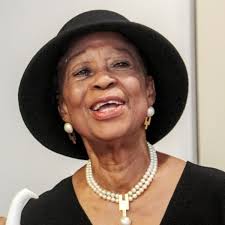
There was once a Dame Patience Jonathan – a true Mother of the Nation.

TIPS