By Sonnie Ekwowusi
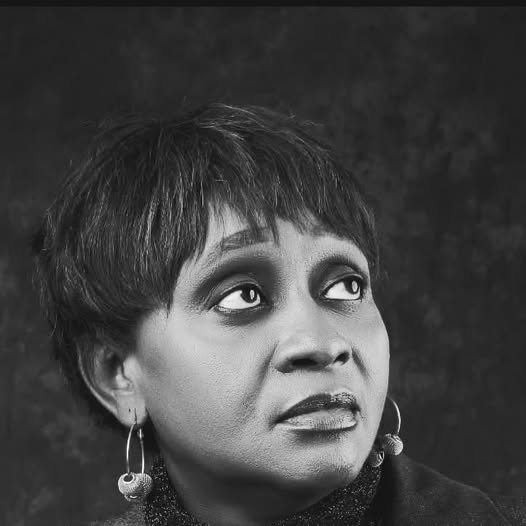
In the death of Marian Jones, the legal profession in Nigeria has not merely lost another brilliant legal practitioner; it has lost a compatriot, an ally, a committed public interest lawyer, a conscientious advocate, and an ardent human rights activist, particularly in the defence of women’s rights.
At various times, Marian served as the Financial Secretary and Treasurer of the Nigerian Bar Association (NBA), Lagos Branch. She will be greatly missed at the International Federation of Women Lawyers (FIDA), Nigeria, Ikeja Branch, where she held several important positions and played significant roles. She was the pioneer Chairperson of FIDA, Nigeria, Ikeja Branch.
Although my path and Marian’s never really crossed, from a respectful distance I regarded her as a focused, disciplined and dedicated lawyer, always prepared to make personal sacrifices whenever duty demanded that a wrong be righted. Marian was always elegantly attired in the traditional black robes of the legal profession. She became a symbol of hope for oppressed and disadvantaged litigants in search of justice. When Cicero extolled justice as the highest virtue, he was perhaps thinking of lawyers of Marian’s calibre, those who are willing to do everything within their power to ensure that justice prevails both in the courtroom and beyond.
Marian was a woman of astonishing energy. She possessed the restless drive of someone who simply had to remain in motion. It was uncommon to see her idle. She was always moving—from one courtroom to another, from one FIDA meeting to another, or from one arbitration session to another. Indeed, just two days before her passing, she was at the Lagos High Court representing a client. That was vintage Marian Jones—completely committed and unwaveringly dedicated to the cause of her clients.
According to Marian’s daughter, her beloved mother complained of chest pains at home. Her husband immediately took her to a hospital in Lagos (name withheld). The doctor on duty requested that she undergo an electrocardiogram (ECG). She did the test and returned the following day with the results. After examining the ECG, the doctor informed the family that Marian had a very serious heart condition requiring urgent medical attention.
However, instead of admitting her immediately for emergency treatment, the doctor reportedly told Marian and her husband to return the following day because he was too tired to attend to any more patients.
Pressed for time but left with little choice, Marian and her husband returned to the hospital at 9:00 a.m. the next day, only to be informed that the doctor was extremely busy and would not be able to see her until much later in the afternoon. They waited patiently until about 4:00 p.m. When the doctor eventually attended to Marian, he ordered additional medical tests. She joined a long queue to undergo the tests. Tragically, before her turn came, she collapsed. While efforts were being made to rush her for emergency treatment, she died.
In my respectful view, these facts, if established, typify a classic case of medical negligence. A lawyer walks into a hospital alive but is wheeled out dead shortly afterwards. How long shall this continue? O God, our petition is simple: shorten the season of medical negligence in Nigeria. We desperately need help.
Medical negligence is commonly defined as the breach by a doctor or hospital of the duty to exercise the level of care and skill expected of a reasonably competent medical practitioner, resulting in injury or death. Nigerian law does not presume negligence merely because treatment fails or because a patient dies. Nevertheless, allegations of medical negligence leading to avoidable deaths appear to be becoming alarmingly frequent in Nigeria.
For example, one of my former classmates at Edo College, Benin City, who had attended Higher School Certificate with me, suffered only a minor illness. He was admitted to a hospital in Lagos. I called him on the telephone. He sounded cheerful and healthy. We chatted like old friends. A few days later, however, I received the shocking news that he had died. I immediately sent a WhatsApp message to another Edo College classmate informing him of the sad development. Two days later, his son replied, informing me that his own father had died the day after receiving my message.
My former boss and fellow traveler in the arduous struggle to promote fundamental values in the public square was also admitted to a Lagos hospital. His ailment? A relatively small sore on his leg. He was diabetic. During my visit, he confidently assured me that he had recovered and was only awaiting discharge. Yet I noticed that the hospital had merely applied honey to the wound. Shortly before I left, the attending doctor entered the room to examine his leg. From the expression on her face, I sensed uncertainty about the appropriate course of treatment. The following day, my former boss died.
Last year, a female lawyer in Lagos suffered repeated bouts of malaria. Her husband, also a lawyer, accompanied her to the hospital. She was given an injection and died shortly afterwards. Upon hearing the tragic news, I went to their residence to offer my condolences. At the gate, the security guard, assuming I had come to sympathize with the family, said to me in Pidgin English: “Oga, this lawyer no fit die like that. I see am two days ago and she dey look well. I almost wept.
What increasingly appears to obtain in Nigeria today is a culture of transactional medicine. As many of Nigeria’s finest medical professionals continue to emigrate in search of better opportunities abroad, those who remain are often overworked, overstretched and, in some cases, constantly moving from one hospital to another in pursuit of additional income, sometimes at the expense of quality medical practice.
The death of Lagos chef Peju Ogboma following surgery in 2021 sparked national outrage and disciplinary proceedings before the Medical and Dental Council of Nigeria (MDCN). More recently, the tragic death of the 21-month-old son of celebrated novelist Chimamanda Ngozi Adichie has once again focused national attention on standards of medical practice. The MDCN’s Investigating Panel reportedly found a prima facie case against three doctors, who were suspended pending disciplinary proceedings before the Medical and Dental Practitioners Disciplinary Tribunal. Although those proceedings remain ongoing and no final determination has yet been made, the incident has intensified public debate about patient safety.
I could continue citing painful examples of alleged medical negligence in Nigeria. Medicine is not an exact science, and even the most competent doctors cannot guarantee favourable outcomes in every case. The overwhelming majority of Nigerian healthcare professionals remain dedicated to their vocation despite enormous challenges. Their commitment deserves recognition and support. Nevertheless, protecting the integrity of the medical profession also requires confronting negligence wherever it occurs. Accountability is not an attack on medicine; it is one of the pillars upon which ethical medical practice rests.
A country that cannot guarantee safe and accountable healthcare places every citizen at risk. Nigeria must therefore move beyond reacting to isolated tragedies and embrace a culture in which patient safety is regarded not merely as an aspiration but as a fundamental obligation. Lives depend upon it.
There have been other disturbing incidents. Reports of pregnant women allegedly being denied emergency treatment because they could not immediately pay hospital deposits have provoked widespread public outrage and exposed the poor enforcement of laws guaranteeing emergency medical care. Cases involving wrong blood transfusions, medication errors, delayed referrals, retained surgical instruments after operations, and failures to promptly diagnose life-threatening conditions continue to surface both in the media and before professional regulatory bodies.
None of this excuses negligence. Poor working conditions cannot justify a failure to observe basic professional standards or disregard for patient safety. Equally, responsibility should not rest solely on individual healthcare workers. Governments that fail to adequately fund public hospitals, hospital administrators who neglect quality assurance, and regulatory institutions that tolerate weak oversight all share responsibility for creating conditions that increase the risk of avoidable harm.
The solution is not to encourage a flood of litigation. Medicine inevitably involves risks, and healthcare professionals should not practise under constant fear of lawsuits. Rather, Nigeria needs a healthcare system that prioritises patient safety through better clinical governance, continuous professional training, accurate record-keeping, and prompt reporting of adverse medical events. The Medical and Dental Council of Nigeria must continue to discharge its disciplinary responsibilities independently and transparently. Equally important, hospitals should establish effective internal complaint mechanisms, encourage honest disclosure of medical errors, and adopt internationally recognised patient safety protocols.
All said, we mourn our beloved wife, mother, daughter, sister and colleague, Marian Jones. We offer for her the same Holy Sacrifice of the Mass, which she loved and attended almost every day. We pray for God’s merciful judgment upon her soul. We also pray for her husband, children, family, friends and all those who loved, admired and were inspired by her, that our Christian faith in the Lord’s Resurrection may console them and strengthen them in this painful hour.
In the Gospel according to St. John, Martha professes her faith in Jesus as “the Resurrection and the Life.” We profess that same faith today, longing to hear once more the comforting words of Christ: “Your brother will rise again.” Those words alone enable us to live with hope amid the sorrow of losing our dear friend, Marian.
On 24 July 2026, when the remains of our beloved sister Marian are carried to their final resting place, tears will undoubtedly flow down the cheeks of many who remember her good works and the countless lives she touched. But let those tears also inspire a solemn resolution to embrace and uphold the noble ideals for which Marian lived—and for which she gave so much of herself.