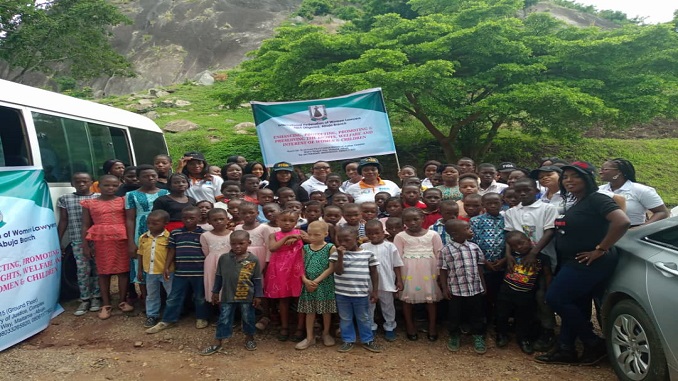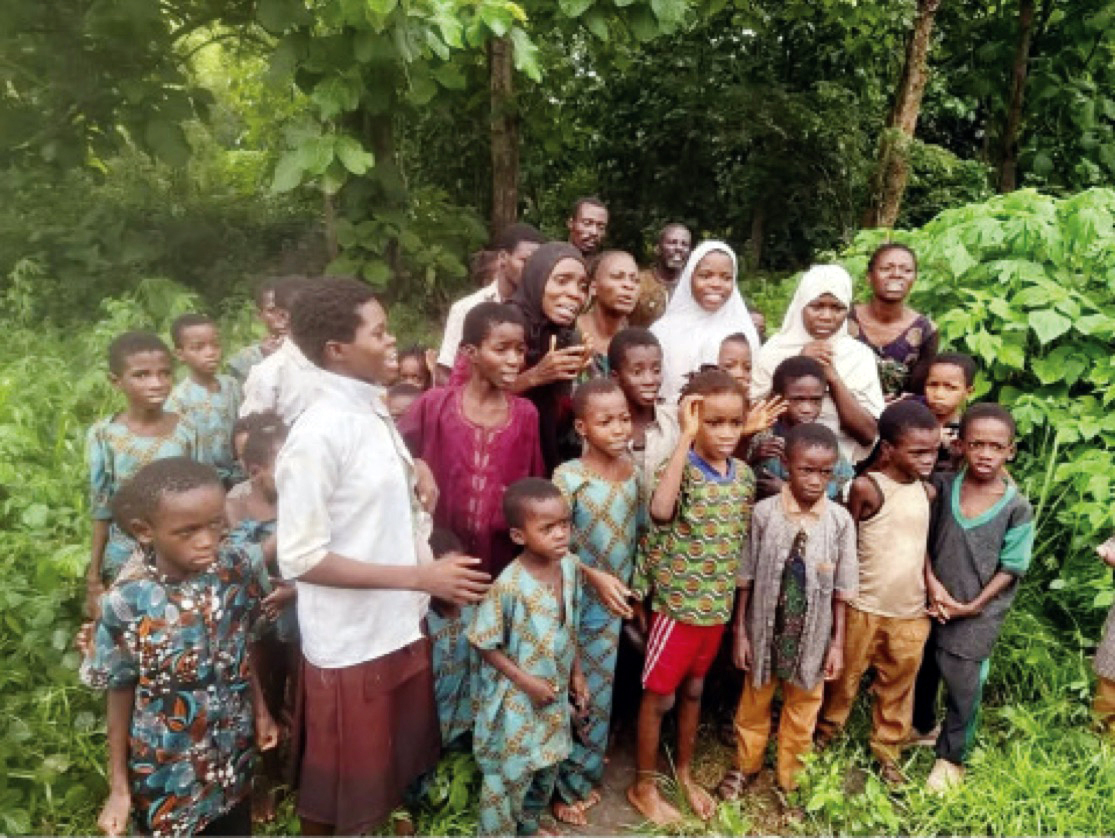
The rescue of Oyo’s abducted pupils and teachers ended one of Nigeria’s most agonising hostage crises in recent years. It also marked the beginning of a far more difficult test—whether the country knows how to help children recover after surviving terror.
By Law & Society Magazine Investigations
When the rescued pupils and teachers from Oriire Local Government Area of Oyo State appeared in a video thanking President Bola Tinubu and the security agencies that secured their freedom, the relief was unmistakable. After fifty-six days in captivity, they were alive. A military operation involving the armed forces, intelligence services and the police had succeeded where many feared time had already run out.
For their families, there was every reason to celebrate. For the country, the operation brought an end to weeks of anxiety that had followed one of the most disturbing school abductions ever recorded in Nigeria’s South-West.
But successful rescue operations often create an illusion of closure.
The images broadcast across the country captured the moment the captives returned. They could not reveal what nearly two months in the custody of armed kidnappers may have done to children whose lives had barely begun, to teenagers whose education was abruptly interrupted, or to teachers who were forced to protect frightened pupils while fearing for their own lives.
Those are questions measured not in days but in years.
Among those taken on May 15 were children as young as two, three and four years old. Others were in primary school, preparing for examinations or simply expecting another ordinary school day before heavily armed men stormed their classrooms and marched them into the forest. Their teachers, entrusted with keeping them safe, became captives alongside them. Two colleagues never returned alive.
It is tempting to see the operation that brought them home as the end of the story. In reality, it is the point at which another, less visible chapter begins.
Medical science has long established that prolonged captivity leaves consequences that are not always immediately apparent. Malnutrition, untreated infections and physical exhaustion are often the first concerns. The deeper injuries can emerge more gradually: disrupted sleep, persistent fear, difficulty concentrating, emotional withdrawal, developmental regression in younger children, or an overwhelming sense that ordinary life no longer feels ordinary.
Children experience trauma differently from adults because their brains are still developing. A toddler who spends weeks under the control of armed men may not remember every detail of the experience years later, but the prolonged absence of safety, routine and trusted caregivers can shape emotional development in ways that specialists recognise long after physical recovery. Older children and adolescents face different risks, including anxiety disorders, depression, survivor’s guilt and difficulty returning to learning environments associated with the abduction.
That is why, in countries that have confronted similar hostage crises, rescue marks the beginning of a carefully coordinated response rather than its conclusion. Paediatricians, psychologists, psychiatrists, trauma specialists, teachers and social workers are brought together to assess not only what survivors endured, but what they will need in the months ahead. Recovery is treated as a process rather than an event.
Nigeria now faces the same responsibility.
President Tinubu has directed emergency agencies to work with the Oyo State Government to provide medical and relief support for the rescued pupils and teachers. The directive acknowledges that the state’s duty does not end once hostages are freed. The next challenge is whether that commitment develops into a structured programme that addresses physical health, mental wellbeing, educational reintegration and long-term monitoring, particularly for the youngest survivors whose needs may not become fully apparent for some time.
The questions are neither academic nor premature. They go to the heart of what governments owe citizens after acts of terror. A child who survives fifty-six days in captivity should not have to navigate recovery alone. Nor should teachers who witnessed violence be expected to return to classrooms without professional support. If recovery is left entirely to families already struggling with the emotional and financial consequences of the ordeal, the effects of the kidnapping may outlast the captivity itself.
The contrast is already evident in one family.
While parents across Oriire embraced children they feared they had lost, the relatives of teacher Michael Oyedokun were preparing to welcome no one. Abducted alongside his colleagues, he was reportedly killed in captivity, turning a story of reunion into one of permanent absence. After the rescue, his family spoke of their happiness for the children who had returned while mourning the man who never would. It was a reminder that even the most successful rescue operation cannot restore every life that violence has taken.
That reality extends well beyond one community in Oyo State. It raises a broader question for a country that has endured years of mass kidnappings, from Chibok and Dapchi to Kankara, Kuriga and now Oriire. Nigeria has invested increasing effort in rescuing victims. It has devoted far less attention to understanding what becomes of them afterwards.
Escaping the forest is one milestone. Rebuilding a life is another.