Why insurgencies survive not only by killing soldiers—but by changing how nations think, move and live
LAW & SOCIETY MAGAZINE SPECIAL REPORT
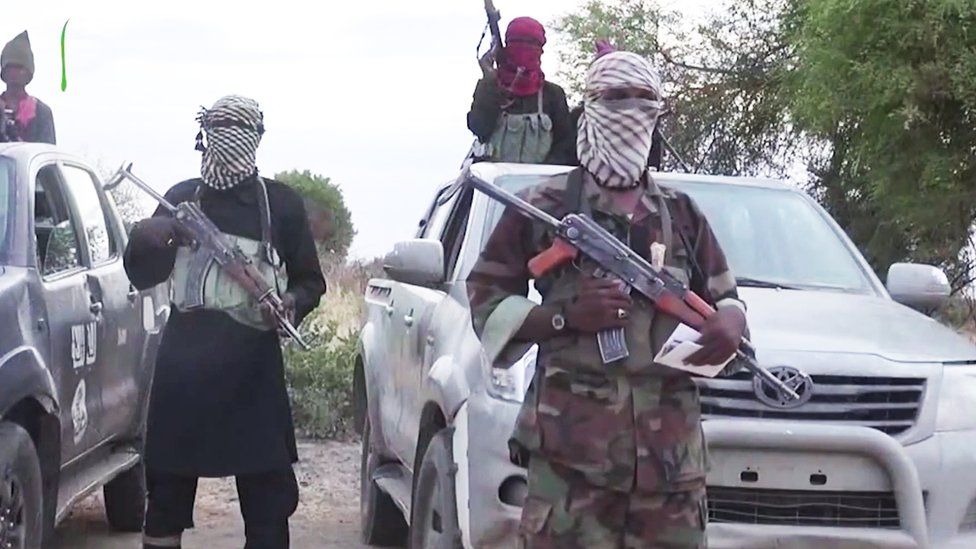
For years, Nigerians have been conditioned to measure the country’s war against insurgency through a familiar set of statistics. Military authorities announce the number of terrorists killed, camps destroyed, weapons recovered and communities “cleared” during operations. Insurgent groups, meanwhile, counter with videos of ambushed convoys, overrun military formations or kidnapped civilians, each intended to project strength and resilience.
Between these competing narratives, the public is often left asking a simple question: Who is really winning?
It is an understandable question. Yet it may also be the wrong one.
Modern insurgencies are seldom decided solely by the number of fighters eliminated or territories reclaimed. Increasingly, they are contests over something far less visible but arguably more consequential: the ability to shape behaviour, influence decisions and gradually alter how ordinary people live their daily lives.
That is why security analysts increasingly caution against judging conflicts only through casualty figures or territorial gains. An insurgent movement can lose dozens of fighters and still achieve a strategic objective if its attacks force farmers to abandon their fields, traders to avoid markets, teachers to reject rural postings or communities to stop sharing information with security agencies.
Read Also: Inside Nigeria’s Security Paradox (PART III A): The invisible battlefield
The battlefield, in other words, extends well beyond forests, highways and military bases. It reaches into homes, schools, markets and the quiet calculations millions of citizens make every day.
The War of Different Scorecards
Perhaps the greatest challenge in understanding Nigeria’s security crisis is that everyone measures success differently.
Military commanders naturally assess operational outcomes: terrorists neutralised, camps dismantled, hostages rescued and weapons seized.
Government officials often focus on broader indicators such as territories recovered, highways reopened and the return of displaced communities.
Citizens, however, use a different scorecard altogether. Their questions are simpler.
Can I travel home after sunset?
Can my children attend school without fear?
Can I cultivate my farmland this season?
Can I transport my goods without paying illegal levies or risking abduction?
Investors ask another question entirely: Is this environment stable enough for long-term investment?
Aid agencies ask whether humanitarian workers can safely reach vulnerable communities.
Local businesses ask whether customers still feel confident enough to come.
Each perspective is legitimate. Yet when these different measures collide, they can produce sharply different conclusions about the same conflict.
An operation hailed as a military success may do little to restore public confidence if kidnappings continue along nearby roads. Likewise, a temporary lull in attacks may offer little reassurance if communities remain too fearful to resume normal economic life. This helps explain why official optimism and public anxiety often coexist.
They are measuring different wars.
The Half-Life of Intelligence
Military professionals often describe intelligence as one of the most valuable assets in counter-insurgency operations. Less frequently discussed is another reality.
Intelligence has a shelf life. Its value diminishes rapidly with time.
Information that accurately identifies the location of an insurgent commander on Monday morning may become useless by Monday afternoon. A planned movement intercepted overnight may already have changed by dawn.
Read Also: Inside Nigeria’s Security Paradox (PART III A): The invisible battlefield
Read Also: Echoes of Trauma: Life on Hold — The waiting that changes us (I)
Unlike conventional armies, insurgent networks are often highly decentralised and remarkably adaptive. Small units disperse quickly, alter routes, abandon camps and communicate through informal human networks that are difficult to monitor consistently.
This constant adaptation creates what security scholars sometimes describe as an adaptability gap.
Formal institutions, by their nature, rely on procedures, approvals, logistics and clearly defined chains of command. These systems provide accountability and discipline but can also reduce operational flexibility. Insurgent groups operate differently.
They rarely hold committee meetings before changing tactics. They do not wait for budget approvals. They are unconstrained by procurement rules, administrative processes or bureaucratic reporting lines. They evolve continuously because survival depends upon doing so.
None of this diminishes the professionalism or sacrifices of Nigeria’s armed forces. Rather, it illustrates the uneven nature of the contest. One side is defending a constitutional order governed by law. The other answers to none.
When Fear Becomes Strategy
One of the most misunderstood aspects of modern insurgencies is that they do not always seek decisive military victories. Often, they seek psychological ones.
The objective may not be to defeat the Nigerian Army in a conventional sense. It may simply be to convince communities that resistance is futile, that government protection is unreliable or that cooperation with security agencies carries unacceptable risks.
Fear becomes a weapon in itself. Its effects spread far beyond the immediate victims of violence. A single attack on a rural road may discourage transport operators from using that route for weeks. One abduction of a traditional ruler can silence neighbouring communities.
An assault on a military base may resonate far beyond the battlefield if it convinces civilians that heavily armed soldiers themselves are vulnerable. This dynamic helps explain why insurgent propaganda often matters almost as much as insurgent firepower.
Every video released online. Every audio message circulated through encrypted platforms. Every exaggerated claim of military penetration. Each seeks to shape perceptions before facts can catch up.
The Republic of Rumours
The recent audio recording attributed to notorious bandit leader Kachalla Maha offers an instructive example.
In the recording, Maha claimed he receives advance warning of military operations, boasts of influence within security circles and suggests he possesses information reaching the highest levels of government. Whether every assertion is accurate is almost beside the point.
The recording performs another function. It plants doubt.
If villagers begin to wonder whether security operations are compromised, they may hesitate to cooperate with authorities. If soldiers suspect information is leaking from within their own ranks, trust inevitably suffers. If rival criminal groups believe the speaker enjoys extraordinary influence, his reputation grows regardless of the underlying facts.
This is psychological warfare. It costs almost nothing to wage. Yet its effects can linger long after the recording itself fades from public attention.
Security agencies therefore confront two battles simultaneously: one against armed groups on the ground and another against narratives capable of undermining public confidence.
The Geography of Behaviour
Wars are often depicted through maps shaded according to who controls which territory. Yet the most revealing map is rarely printed. It exists in the decisions ordinary citizens make every day. Which road feels safe enough to travel? Which village is still worth investing in? Should children return to school? Is it safer to relocate to the city? Should a witness report suspicious activity—or remain silent?
These choices gradually reshape the social and economic geography of entire regions.
A market that once attracted thousands may slowly empty. Farmland may lie uncultivated despite fertile soil. Health workers may refuse postings. Teachers decline appointments. Transport companies shorten routes. Businesses relocate. Banks reduce operations.
None of these developments require insurgents to occupy local government headquarters or hoist flags over public buildings. Behaviour changes first. Territory often follows later.
Winning Without Winning
History offers many examples of insurgent movements that survived not because they won every battle, but because they convinced governments that the cost of restoring normal life would remain painfully high.
This is why military historians often distinguish between tactical victories and strategic success.
Destroying an insurgent camp is a tactical achievement. Restoring lasting public confidence is a strategic one. The two are connected. But they are not identical.
Nigeria’s security forces have recorded undeniable operational successes over the years, eliminating key commanders, rescuing hostages and disrupting numerous terrorist cells. Those achievements deserve recognition.
Yet the broader question remains whether such successes are consistently translating into durable security for the communities most affected by violence. That is ultimately the measure citizens experience. Not daily operational briefings. But daily life.
Closing Reflection
The strength of an insurgency is not measured only by the number of rifles it carries or the territory it occupies. It is measured by the number of decisions it can influence without firing another shot. When fear persuades farmers to abandon fertile land, traders to avoid markets, teachers to reject rural postings and communities to withhold information from security agencies, the conflict has already expanded beyond the battlefield.
The greatest danger, then, is not simply that armed groups capture more territory. It is that they stealthily capture more imagination. A nation can recover lost ground with soldiers. Recovering confidence takes far longer.