Home Blog Page 14

AFBA President Eddy Mark mourns again as brother, Dr. Emmanuel Mark, dies weeks after family losses

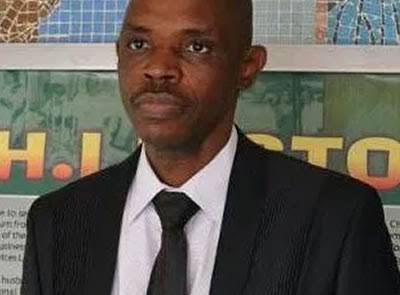
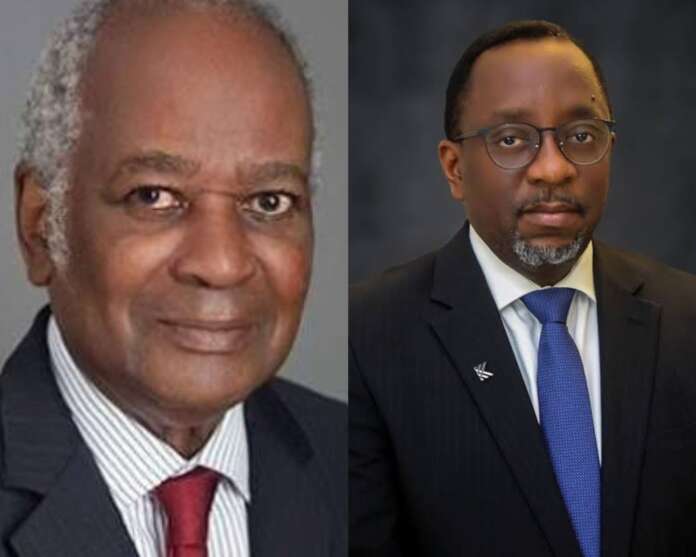
The African legal and professional community is mourning the death of Dr. Emmanuel Obumneme Mark — a celebrated lawyer, chartered estate surveyor, valuer and internationally recognized right-of-way consultant — whose passing has plunged the Mark family into yet another painful chapter of grief.

Dr. Mark, who is the 1st Vice President of the Nigerian Institution of Estate Surveyors and Valuers (NIESV), died on Monday, May 25, 2026, according to a statement released by the African Bar Association (AFBA), where his elder brother, High Chief Ibrahim Edmund “Eddy” Mark, serves as President.

He was 53 years old.

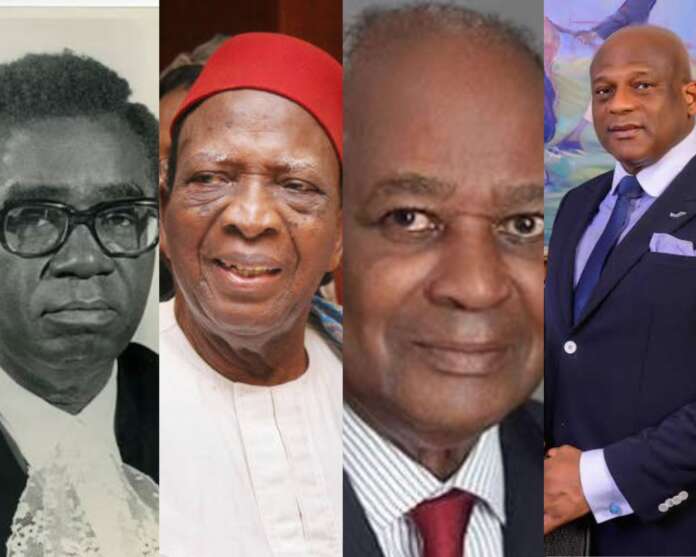
His death comes amid what close associates describe as one of the most emotionally devastating periods in the history of the prominent Rivers State family.

Only months earlier, the family buried their matriarch, Mrs. Priscilla Queen Nwanediye Mark, who died peacefully in November 2025 at the age of 95 and was laid to rest in January 2026 during an elaborate funeral ceremony attended by dignitaries from across Nigeria’s legal, political and traditional institutions.

Then tragedy struck again on Easter Sunday, April 5, 2026, with the passing of the family’s eldest son, Chief Maxwell Mark.

Now, barely weeks later, the family is grieving the loss of another towering figure — Dr. Emmanuel Mark — a man widely respected across the legal, real estate and professional regulatory sectors for what colleagues called “an unblemished record of selfless service.”

In a solemn tribute, the African Bar Association described the late professional as a distinguished member whose contributions transcended law and real estate practice.

“Our hearts go out to our President of the African Bar Association and to the entire Mark family during this difficult time,” the association said. “We pray that Dr. Mark’s soul rests peacefully with the Lord, and that God grants the President, his family and loved ones the strength and fortitude to bear this irreplaceable loss.”

Dr. Emmanuel Mark built a career that combined legal expertise with global recognition in estate surveying, valuation and environmental management.

A Fellow of the Royal Institution of Chartered Surveyors (FRICS), London, he was also the first African and first Nigerian member of the International Right of Way Association’s Chapter 84 to attain the elite Senior Right of Way Professional (SRWA) designation — one of the profession’s highest honours.

His rise in the profession mirrored an extraordinary academic journey.

He earned a Second-Class Upper degree in Estate Management before obtaining an M.Phil. and later a Ph.D. in Environmental Management. Refusing to stop there, he pursued an LL. B degree, further cementing his multidisciplinary reputation.

Dr. Mark also attended executive real estate and urban development programs at Harvard Business School and Harvard University’s Graduate School of Design, experiences that helped shape his influence in Nigeria’s real estate and infrastructure sectors.

Within the Nigerian Institution of Estate Surveyors and Valuers (NIESV), he occupied numerous strategic positions, including National Publicity Secretary, member of the National Council, Chairman of the Corporate Affairs Committee and member of the Professional Practice Committee.

He was also remembered for elevating Nigeria’s profile on the international stage.

As President of International Right of Way Association (IRWA) Chapter 84 Nigeria, he led the chapter to a historic milestone in 2019 when it became the first chapter outside the United States and Canada to win the prestigious Gene L. Land Award for the highest membership growth globally.

Beyond boardrooms and professional accolades, Dr. Mark was deeply involved in humanitarian and community service initiatives through Rotary International. He served as Past President of the Rotary Club of Port Harcourt and later as Assistant Governor.

Friends and associates described him as intellectually rigorous, deeply spiritual and fiercely committed to mentorship and institutional development.

He is survived by his wife, Princess Goody Emmanuel Mark, children and an extended family now grappling with a succession of heartbreaking losses.

For many observers, the repeated tragedies surrounding the Mark family have transformed what was once a season of celebration and legacy into one marked by mourning, resilience and reflection.

Falz, Labour Activists blast Tinubu over abducted schoolchildren, demand nationwide protests

Civil society activists and labour leaders have launched a blistering attack on President Bola Tinubu’s administration over the abduction of dozens of schoolchildren and teachers in Oyo and Borno states, accusing the government of indifference and demanding nationwide protests.

In a joint statement issued to mark Children’s Day, Nigerian rapper and activist Falz, alongside labour and civil society leaders, questioned the government’s response to a growing wave of insecurity affecting schools and rural communities.

The coalition said 39 schoolchildren and seven teachers were abducted in Oriire Local Government Area of Oyo State after gunmen attacked Baptist Nursery and Primary School, Yawota; Community Grammar School, Esinele; and L.A. Primary School, Ahoro-Esinele.

The statement also revealed that one of the abducted teachers, identified as Mr. Oyedokun Olugbade, was beheaded days after the kidnapping.

The activists further referenced another attack in Borno State, where suspected Boko Haram insurgents allegedly abducted 42 pupils during an assault on Mussa Primary and Junior Secondary School in Askira-Uba Local Government Area on May 15, 2026.

“It is only right that on the occasion of Children’s Day, we ask President Bola Ahmed Tinubu: Where are the abducted children of Ahoro Esinle of Oyo State and Askira-Uba LGA of Borno State?” the statement read.

The coalition accused both federal and state governments of carrying on “business as usual” while dozens of children and teachers remain in captivity.

“Sadly, since the tragic abduction, Nigeria’s government, both at the Federal and State levels, has mostly carried on with business as usual, occasionally offering platitudinous statements of assurance while doing absolutely nothing to rescue our beloved children,” the statement said.

The signatories argued that Nigerian security agencies possess the surveillance and intelligence capabilities needed to track the abductors but have failed to deploy them effectively.

“The question, therefore, is: why is this not being deployed to rescue our children?” the statement continued.

The group also drew comparisons with the 2014 Chibok schoolgirls abduction under former President Goodluck Jonathan, accusing the Tinubu administration of repeating what it described as years of official complacency and inertia.

“Just like former President Jonathan in 2014 when the Chibok girls were abducted, President Bola Ahmed Tinubu is as clueless about what to do to curb the rampaging insecurity afflicting Nigeria,” the coalition stated.

The activists further criticised political leaders for prioritising party activities and elections while insecurity worsens across the country.

“President Bola Ahmed Tinubu, his ministers, and National Assembly members had no problem cavorting at their recent party primaries even as over 81 children languish in a terrorist den,” the statement added.

The coalition warned that any government unable to guarantee citizens’ safety risks losing its moral legitimacy.

“A government unable to guarantee this is a failed government. Such a government has no moral authority to ask citizens to vote it at the next election,” the statement said.

The statement concluded with a call for peaceful nationwide protests, urging labour unions, youth groups and civil society organisations to mobilise against insecurity and pressure the government to secure the release of all abducted Nigerians.

Among the signatories were Falz; Hassan Taiwo Soweto of the #EndBadGovernance Movement; Mike Igaga of the Moses Oisakede Leadership Foundation; Yusha’u Sani Yankuzo of the Nigeria Patriotic Front Movement; and Rufus Olusesan of the Precision, Electrical and Related Equipment Senior Staff Association.

Separately, Socialist Labour also called on organised labour, particularly the Nigeria Union of Teachers (NUT), to begin sustained peaceful protests over the kidnappings and the killing of mathematics teacher Michael Oyedokun.

In a statement signed by its General Secretary, Comrade Biodun Olamosu, the group condemned what it described as the “criminal neglect” of workers, students and poor Nigerians by the country’s political elite.

“It is unacceptable that teachers, farmers, workers, students, and communities now live daily in fear while government officials continue to recycle empty promises and propaganda,” Socialist Labour said.

The organisation argued that repeated school abductions and attacks on workers expose deep failures in Nigeria’s security architecture despite repeated government assurances.

The group also urged labour unions to move beyond issuing statements and develop concrete programmes to guarantee safety in schools and workplaces.

“The blood of workers must not continue to water the ground while politicians live comfortably under state protection,” the statement added.

Socialist Labour pledged to participate in any peaceful nationwide action organised by labour unions and civil society groups to demand improved security and the release of abducted victims.

The growing pressure on the Nigeria Union of Teachers also raises broader questions about organised labour’s willingness to directly confront the government over escalating insecurity.

Critics argue that if teachers’ unions do not aggressively mobilise after the abduction and killing of their members, attacks on schools could become increasingly normalised, leaving both educators and students even more vulnerable.

Ex-Skye Bank Chairman Tunde Ayeni ‘robbed’ of N120m watch, wedding ring in Kuje prison raid

Former Skye Bank Plc Chairman Tunde Ayeni was allegedly stripped of a wedding ring and a luxury wristwatch valued at more than N120 million during a controversial raid at the Kuje Correctional Centre in Abuja, according to multiple sources familiar with the incident.

Sources inside the facility told SaharaReporters that the operation was led by senior officials of the Nigerian Correctional Service, including the Deputy Controller-General (DCG) of Operations and officers overseeing the custodial centre.

Read Also: “Don’t Video My Cows”: Abuja cracks down on hawkers — But cows still rule the roads

The sources also alleged that suspended Deputy Commissioner of Police Abba Kyari, who is currently detained at the facility, lost approximately N2 million during the same operation.

Read Also: International Day of the Boy Child 2026: The alarming truth about Nigeria’s forgotten boys

According to insiders, armed operatives accompanied by Department of State Services (DSS) dogs stormed the prison yard wearing bulletproof vests, triggering panic among inmates.

“One of the former chairmen of Skye Bank in Kuje prison was searched and robbed of his wedding ring and wristwatch worth over N120 million by officers in charge of Kuje prison,” one source told SaharaReporters.

“Abba Kyari was also robbed of about N2 million by the same officers. They came into the yard with DSS dogs and bulletproof vests during the operation,” the source added.

The incident has reportedly heightened tensions within the correctional facility, with some inmates accusing officials of intimidation and abuse of power.

Another source familiar with the matter said Ayeni was considering filing a formal petition against the officers allegedly involved.

“The bank chairman wants to petition them as I speak to you,” the source said.

The operation was reportedly carried out under the guise of a routine search within the custodial centre. But insiders alleged that cash and valuables belonging to several high-profile detainees were seized without proper documentation or accountability.

Ayeni, a businessman and former chairman of the defunct Skye Bank Plc, is currently facing trial over alleged fraud amounting to N15.7 billion. He was recently granted bail by an Abuja High Court in the sum of N200 million under stringent conditions, including sureties who must be federal civil servants and a N15 billion bank guarantee.

Read Also: ‘Dead’ drug suspect resurfaces as NDLEA uncovers alleged fake burial plot

Kyari, the suspended former head of the Intelligence Response Team (IRT), is also standing trial over allegations linked to drug trafficking and other offences.

The Kuje Correctional Centre has repeatedly drawn national attention over security lapses and controversies involving high-profile detainees, including previous jailbreaks, allegations of preferential treatment, and claims of abuse by prison officials.

Falz, Labour Activists blast Tinubu over abducted schoolchildren, demand nationwide protests

Civil society activists and labour leaders have launched a blistering attack on President Bola Tinubu’s administration over the abduction of dozens of schoolchildren and teachers in Oyo and Borno states, accusing the government of indifference and demanding nationwide protests.

In a joint statement issued to mark Children’s Day, Nigerian rapper and activist Falz, alongside labour and civil society leaders, questioned the government’s response to a growing wave of insecurity affecting schools and rural communities.

Read Also: Echoes of Trauma: The children we are failing and the monsters we may be creating

The coalition said 39 schoolchildren and seven teachers were abducted in Oriire Local Government Area of Oyo State after gunmen attacked Baptist Nursery and Primary School, Yawota; Community Grammar School, Esinele; and L.A. Primary School, Ahoro-Esinele.

Read Also: Let Children Be Children Again: A Nation’s call to conscience

The statement also revealed that one of the abducted teachers, identified as Mr. Oyedokun Olugbade, was beheaded days after the kidnapping.

The activists further referenced another attack in Borno State, where suspected Boko Haram insurgents allegedly abducted 42 pupils during an assault on Mussa Primary and Junior Secondary School in Askira-Uba Local Government Area on May 15, 2026.

“It is only right that on the occasion of Children’s Day, we ask President Bola Ahmed Tinubu: Where are the abducted children of Ahoro Esinle of Oyo State and Askira-Uba LGA of Borno State?” the statement read.

The coalition accused both federal and state governments of carrying on “business as usual” while dozens of children and teachers remain in captivity.

“Sadly, since the tragic abduction, Nigeria’s government, both at the Federal and State levels, has mostly carried on with business as usual, occasionally offering platitudinous statements of assurance while doing absolutely nothing to rescue our beloved children,” the statement said.

The signatories argued that Nigerian security agencies possess the surveillance and intelligence capabilities needed to track the abductors but have failed to deploy them effectively.

“The question, therefore, is: why is this not being deployed to rescue our children?” the statement continued.

The group also drew comparisons with the 2014 Chibok schoolgirls abduction under former President Goodluck Jonathan, accusing the Tinubu administration of repeating what it described as years of official complacency and inertia.

“Just like former President Jonathan in 2014 when the Chibok girls were abducted, President Bola Ahmed Tinubu is as clueless about what to do to curb the rampaging insecurity afflicting Nigeria,” the coalition stated.

The activists further criticised political leaders for prioritising party activities and elections while insecurity worsens across the country.

“President Bola Ahmed Tinubu, his ministers, and National Assembly members had no problem cavorting at their recent party primaries even as over 81 children languish in a terrorist den,” the statement added.

The coalition warned that any government unable to guarantee citizens’ safety risks losing its moral legitimacy.

“A government unable to guarantee this is a failed government. Such a government has no moral authority to ask citizens to vote it at the next election,” the statement said.

The statement concluded with a call for peaceful nationwide protests, urging labour unions, youth groups and civil society organisations to mobilise against insecurity and pressure the government to secure the release of all abducted Nigerians.

Among the signatories were Falz; Hassan Taiwo Soweto of the #EndBadGovernance Movement; Mike Igaga of the Moses Oisakede Leadership Foundation; Yusha’u Sani Yankuzo of the Nigeria Patriotic Front Movement; and Rufus Olusesan of the Precision, Electrical and Related Equipment Senior Staff Association.

Separately, Socialist Labour also called on organised labour, particularly the Nigeria Union of Teachers (NUT), to begin sustained peaceful protests over the kidnappings and the killing of mathematics teacher Michael Oyedokun.

In a statement signed by its General Secretary, Comrade Biodun Olamosu, the group condemned what it described as the “criminal neglect” of workers, students and poor Nigerians by the country’s political elite.

“It is unacceptable that teachers, farmers, workers, students, and communities now live daily in fear while government officials continue to recycle empty promises and propaganda,” Socialist Labour said.

The organisation argued that repeated school abductions and attacks on workers expose deep failures in Nigeria’s security architecture despite repeated government assurances.

The group also urged labour unions to move beyond issuing statements and develop concrete programmes to guarantee safety in schools and workplaces.

“The blood of workers must not continue to water the ground while politicians live comfortably under state protection,” the statement added.

Socialist Labour pledged to participate in any peaceful nationwide action organised by labour unions and civil society groups to demand improved security and the release of abducted victims.

The growing pressure on the Nigeria Union of Teachers also raises broader questions about organised labour’s willingness to directly confront the government over escalating insecurity.

Critics argue that if teachers’ unions do not aggressively mobilise after the abduction and killing of their members, attacks on schools could become increasingly normalised, leaving both educators and students even more vulnerable.

“Don’t Video My Cows”: Abuja cracks down on hawkers — But cows still rule the roads

A viral confrontation between an Abuja commuter and a Fulani herdsman moving cattle along a major expressway has reignited debate over open grazing, insecurity, and what many residents describe as selective law enforcement in Nigeria’s capital city.

The now-trending video, widely circulated across social media platforms, captured the moment a visibly frustrated driver stopped to record a herd of cows obstructing traffic on a busy Abuja road.

But the situation escalated when the herdsman approached the motorist and demanded that he stop filming the cattle.

“You can video me, but don’t ever video my cows,” the visibly irritated herder said in the clip.

The commuter, stunned by the response, questioned why cattle were being herded along major roads instead of grazing in rural areas or designated reserves.

In response, the herdsman argued that worsening insecurity had made forests and grazing routes unsafe, claiming armed bandits had effectively taken over large parts of the bush.

According to him, the government’s failure to secure rural grazing areas had forced herders into urban corridors and city outskirts.

“Nothing can be done to me because the government has failed to make the bush safe,” he said.

While the explanation resonated with some Nigerians familiar with the growing insecurity across rural communities, the video has also revived longstanding frustrations over the persistent presence of cattle in urban centres — particularly in Abuja — years before banditry escalated into a nationwide crisis.

Residents and civil society groups have repeatedly complained about cows obstructing traffic, roaming through residential districts, and grazing near major roads in the Federal Capital Territory despite official claims of urban regulation and environmental enforcement.

Critics argue that the controversy exposes a deeper contradiction in the Federal Capital Territory Administration’s enforcement priorities.

For years, authorities in Abuja have aggressively cracked down on commercial motorcyclists, roadside traders, and street hawkers in the name of sanitation, traffic control, and protecting the capital’s image.

Joint task force operations involving the Abuja Environmental Protection Board (AEPB), police units, and transport officials routinely target petty traders and informal workers operating around major corridors such as Airport Road, Berger Junction, and the Central Business District.

Many arrested hawkers and commercial motorcycle (okada) riders are arraigned before mobile courts, fined, or sentenced to short jail terms. In some operations, authorities have confiscated goods and impounded or destroyed motorcycles belonging to low-income operators struggling to survive amid Nigeria’s economic crisis.

Yet critics say authorities appear far less aggressive when it comes to enforcing restrictions against cattle roaming through major city roads and highways.

The latest viral video has intensified questions over why vulnerable informal workers often face swift enforcement actions while cattle continue to compete with motorists in Nigeria’s capital territory in 2026 with little visible consequence.

The issue of open grazing has remained politically and socially sensitive for years in Nigeria, especially amid deadly farmer-herder clashes across the Middle Belt and southern states.

Several states have enacted anti-open grazing laws, while successive federal administrations have promoted ranching as a long-term solution. However, implementation has remained uneven, and enforcement within urban centres continues to draw criticism.

Security experts note that worsening rural insecurity — including banditry, kidnapping, and violent land conflicts — has disrupted traditional grazing routes used by pastoralist communities across northern Nigeria.

But urban residents increasingly argue that insecurity alone cannot explain why cattle movement persists in heavily policed city centres long after authorities imposed strict controls on other forms of informal activity.

For many Nigerians reacting to the video online, the confrontation was about more than cows on a highway. It became a symbol of uneven governance, economic desperation, and growing public frustration over who gets punished — and who gets ignored — under Nigeria’s urban enforcement system.

Watch the video here.

The Mirage of Mai Gaskiya: Unmasking the architecture of deceit under Buhari

By Kachi Okezie, Esq.

When Muhammadu Buhari descended the steps of the inaugural podium in 2015, he did so draped in the borrowed robes of a secular saint. To a nation weary of the brazen decadence of the previous administration, he was “Mai Gaskiya,” the truthful one, an ascetic general whose very presence was expected to act as a disinfectant against the virus of corruption. He promised a “change” that was not merely political but existential, a fundamental reordering of the Nigerian moral compass.

Yet, as the gavel falls on the conviction of former Power Minister Saleh Mamman and the staggering details of the Buhari era’s rapacity continue to leak out of the courtrooms, it has become painfully clear that the man who came to cleanse the rot was, in fact, the overseer of its most sophisticated expansion. The “darkest period” in Nigeria’s history was not just defined by economic contraction and the bloody spread of insecurity, but by a level of hypocrisy so profound it bordered on the pathological.

The conviction of Saleh Mamman for a ₦33.8 billion fraud linked to hydroelectric projects is merely a single, late-arriving thread in a tapestry of systemic plunder. To understand the depth of the betrayal, one must look at the gatekeepers who were handpicked by Buhari to safeguard the nation’s soul and its treasury. There is no greater irony than the case of Ahmed Idris, the former Accountant General of the Federation, who is alleged to have presided over the theft of over ₦100 billion.

Under a president who famously asked “What is it that they are stealing?”, the man responsible for every kobo of the public purse was allegedly treating the national treasury like a private inheritance. This was not a failure of oversight; it was the inevitable result of a “Mr. Integrity” persona that shielded subordinates from scrutiny. Buhari’s integrity was used as a cloak, a moral pass that allowed his inner circle to operate with a level of impunity that would have made the previous “profligate” regimes blush.

The rot extended into every crevice of the administration. In the aviation sector, Hadi Sirika’s “Nigeria Air” project stands as one of the most expensive pieces of performance art in African history—a charade involving a repainted Ethiopian Airlines plane that served only to humiliate a nation while billions of naira vanished into the ether. Even more grotesque was the conduct within the Ministry of Humanitarian Affairs, Disaster Management, and Social Development.

Sadiya Umar Farouq, the woman tasked with cushioning the blow for Nigeria’s most vulnerable, now finds herself on the EFCC’s wanted list, accused of diverting funds meant for the poor. It is a peculiar brand of evil to posture as a reformer while the very mechanisms intended to alleviate poverty are weaponized to deepen it. These were not outliers; they were the core of the Buhari machine.

Perhaps the most damaging legacy lies with the duo of Abubakar Malami and Godwin Emefiele. As Attorney General, Malami presided over a justice ministry where the rule of law appeared to be a selective tool for political consolidation, while the allegations of massive money laundering and even terrorism financing now swirling around him suggest a total collapse of institutional ethics. Simultaneously, Emefiele’s Central Bank became a laboratory for disastrous monetary experiments and “Ways and Means” financing that fueled inflation and crippled the middle class, all while allegedly facilitating the enrichment of a select few through a convoluted multiple exchange rate system. Buhari’s silence during these years was not the quietude of a disciplined leader; it was the complicity of a man who cared more for the loyalty of his acolytes than the survival of the republic.

History will likely record the Buhari years as a period of profound national regression. Beyond the empty slogans of “Change” and “Next Level,” the reality was a country plunging into the abyss of debt, a terrorized landscape where bandits and insurgents operated with terrifying freedom, and a citizenry increasingly disillusioned by a leadership that preached austerity from the comfort of a refurbished presidential wing. The hypocrisy was the most bitter pill to swallow. While the president’s media handlers lectured Nigerians on patriotism and sacrifice, his ministers were reportedly building empires of graft. The “integrity” of the president became a hollow shield, protecting a cabinet of predators from the consequences of their actions. He did not kill corruption; he gave it a new, more sanctimonious lease on life.

The lessons for future generations of Nigerians are stark and uncompromising. We must learn, once and for all, that the “cult of personality” is a trap. Character is not a substitute for competence, and a reputation for personal austerity is meaningless if it is not accompanied by the courage to hold one’s own house to account. Nigeria does not need “saints” or “messiahs” who demand blind faith; it needs robust institutions, transparent systems, and a citizenry that prioritizes the rule of law over the charisma of the individual. The Buhari era proved that a leader who cloaks himself in the language of morality while allowing his subordinates to feast on the commonwealth is more dangerous than an honest thief. The former provides the moral cover that allows the latter to thrive undetected until the damage is irreversible.

As the trials of these ministers and appointees proceed, Nigerians must look beyond the spectacle of the courtroom. We must recognize that the “rot” was never just about a few bad actors; it was about a leadership style that valued personal loyalty over national interest and optics over reality. The darkness of the last decade should serve as a permanent warning. Future leaders must be judged not by what they say about themselves, but by the company they keep and the accountability they enforce. “Mr. Integrity” turned out to be a mirage that led a nation into a desert of debt and despair. The task of the next generation is to ensure that never again is the destiny of millions handed over to a man whose only qualification is a carefully curated myth of honesty that collapses at the first touch of the truth.

2026 Eid-el-Kabir: WoPU urges peaceful coexistence, calls for support for Tinubu

The Working People United (WoPU), a coalition of labour leaders, professionals, and artisans, has extended heartfelt greetings to Muslims across Nigeria as they mark the 2026 Eid-el-Kabir.

The group encouraged the faithful to renew their devotion to Allah (SWT) and reaffirm their commitment to the nation under the leadership of President Bola Ahmed Tinubu, GCFR.

In a goodwill message issued on Wednesday, WoPU’s National Coordinator, Comrade Williams Eniredonana Akporeha, underscored the importance of charity, particularly towards the poor, the needy, and the less privileged—values he described as fundamental to Islam.

He noted that Eid-el-Kabir represents total submission to the will of Allah (SWT), as exemplified by Prophet Ibrahim (AS).

Akporeha urged Muslims to take the lead in promoting peaceful coexistence among Nigerians, stressing that unity and harmony remain vital for national progress.

He expressed confidence that Nigeria will overcome its current challenges and emerge stronger, united, and prosperous.

“The virtues of self-discipline, compassion, brotherhood, and patriotism demonstrated during Ramadan and now in the celebration of Eid-el-Kabir, if sustained, will help us achieve the vision of our founding fathers for a united and prosperous nation. With the support of citizens, I am confident that President Bola Ahmed Tinubu will guide Nigeria to its rightful place of pride,” he stated.

Reaffirming that Islam is a religion of peace, Akporeha called on Muslims to uphold the sanctity of life, strengthen their relationship with Allah through prayers and fasting, and remain steadfast in the teachings of Prophet Muhammad (SAW).

As Nigeria prepares for the forthcoming general elections, he appealed for special prayers for peaceful polls, political stability, and prosperity.On behalf of WoPU, Akporeha wished the Muslim Ummah a joyous Eid-el-Kabir celebration, urging moderation in festivities.

Pregnancy reshapes the brain. But each pregnancy may do it differently

New mothers often describe mental “fog” in strikingly similar ways—walking into a room and forgetting why, to losing a word mid-sentence. Long dismissed as a side effect of sleep deprivation and stress, that explanation may be incomplete.

New research suggests the brain isn’t simply under strain—it’s being reshaped. A 2026 study from Amsterdam UMC found that these changes don’t stop after a first pregnancy. By a second, the brain appears to refine its strategy, shifting toward new neural systems.

Click here to continue reading.

‘Dead’ drug suspect resurfaces as NDLEA uncovers alleged fake burial plot

The National Drug Law Enforcement Agency (NDLEA) has re-arrested a suspected drug trafficker in Edo State after authorities say he skipped bail and was falsely declared dead by his wife in an alleged attempt to derail his prosecution.

The suspect, identified as Ibrahim Yusuf Lawal, was arraigned before Justice B.O. Quadir of the Federal High Court in Benin following what the agency described as a covert intelligence-led operation that uncovered the alleged deception.

According to Edo State NDLEA Commander Mitchell Ofoyeju, Lawal was initially arrested on February 5, 2022, at Ugbekun Junction in Esan Central Local Government Area while allegedly transporting psychotropic substances concealed inside a Toyota bus.

The agency said operatives recovered 0.257kg of Lexotan, 1kg of Diazepam, and 5.4kg of Phenobarbital during the operation.

Lawal was subsequently charged under provisions of the NDLEA Act relating to the unlawful transportation of controlled substances. He pleaded not guilty and was granted bail by the court.

However, prosecutors said the suspect later absconded and repeatedly failed to appear for trial proceedings.

In what investigators now describe as an elaborate effort to obstruct justice, Lawal’s wife allegedly submitted an affidavit claiming that her husband had died in October 2024 after suffering complications from tuberculosis and had been buried in Kogi State according to Islamic rites.

The NDLEA said subsequent investigations revealed that the suspect was alive and still evading authorities.

Acting on fresh intelligence, operatives reportedly tracked and re-arrested Lawal during a covert operation before bringing him back before the Federal High Court in Benin.

The matter was adjourned until June 22, 2026, for further hearing.

The anti-narcotics agency warned that anyone found complicit in the alleged false death scheme — including the suspect’s wife — could face criminal prosecution for attempting to frustrate judicial proceedings.

The NDLEA also reiterated its commitment to combating drug trafficking and called on members of the public to continue providing credible intelligence to law enforcement agencies.

Let Children Be Children Again: A Nation’s call to conscience

By Mabel Adinya Ade

Today, as Nigeria marks Children’s Day, my heart travels back over four decades back to a time when being a child in Nigeria was something to celebrate without fear. I remember the anticipation that filled the air in our primary and secondary schools: the excitement of match pasts, the rhythm of cultural dances, the pride of representing our schools, and the joy of being seen, heard, and celebrated. Children’s Day was not just an event; it was a symbol of hope, innocence, and the promise of a brighter tomorrow.

We were children, free to dream, to laugh, to learn, and to grow. Today, that memory feels like a distant echo. I write with a heavy heart, burdened by the reality that many Nigerian children no longer have the safety, freedom, or environment to simply be children. In recent times and even within this past week our nation has been confronted with deeply troubling reports of children taken from their schools and communities. These are not isolated incidents. They are part of a growing pattern of insecurity that has turned places of learning into spaces of fear.

School abduction since 14 April 2014, when the world awoke to the shocking abduction of 276 schoolgirls from Government Girls Secondary School in Chibok, Borno State, by Boko Haram terrorists have become sadly frequent.  On 19 February 2018, 110 schoolgirls were abducted from Government Girls Science and Technical College in Dapchi, Yobe State. Although many were later released, Leah Sharibu remains in captivity.

In December 2020, more than 300 schoolboys were kidnapped from Government Science Secondary School in Kankara, Katsina State. In February 2021, 27 students were abducted from Government Science College, Kagara, Niger State. And days later, 279 girls were kidnapped from Government Girls Secondary School, Jangebe, Zamfara State.

In March 2024, armed bandits abducted over 280 pupils and teachers from Kuriga in Kaduna State, once again reminding the nation that our schools remain dangerously vulnerable. To date over 70 attacks have been made on Nigerian schools, the latest occurring in Oriire in Oyo on 15 May 2026 where 39 school children and seven teachers were brutally abducted.

Sadly, behind every number is a child with a name, a future, and a family. Behind every incident is a parent whose world has been shattered, whose pain is beyond words. The anguish of not knowing, the trauma of loss, the silence of unanswered questions these are burdens no family should ever have to carry.

The key questions we must grapple with are: What brought about this has change? How did we move from a nation where children marched in celebration to one where they are counted in statistics of insecurity?  Why have we allowed systems meant to protect the most vulnerable among us to weaken, to fail, or in some cases, to disappear altogether?  Why does it seem easier to explain away these tragedies than to prevent them?

The persistent insecurity and violence targeting children and communities across Nigeria is intolerable. It is unacceptable. And it must stop. This is not the time for silence or shifting responsibility. It is a time for accountability.

Government at all levels Local, State, and Federal must rise to its primary duty: the protection of lives, especially those of children. Security agencies must be strengthened, coordinated, and held to the highest standards of responsibility. The judiciary must stand firm in ensuring that justice is not delayed or denied that perpetrators are held accountable and that victims and their families receive the justice they deserve.

But this responsibility does not rest with government alone. Parents, teachers, and school administrators must remain vigilant and proactive. Religious leaders and traditional institutions must lend their moral voice and influence to the protection of children. Communities must rebuild trust and collective responsibility, refusing to normalize what should never be accepted.

This is because protecting children is not a privilege. It is a duty. A sacred one.

We must also confront a difficult truth: it does not require extraordinary resources to begin to change this trajectory. The cost of securing our schools and communities is far less than the cost of inaction and certainly far less than the staggering sums lost to mismanagement and corruption. The question, therefore, is not whether we can act. It is whether we will. Enough is enough. The state must respond appropriately and curtail these sad incidences.

Our children deserve to go to school without fear.  They deserve to learn in environments that nurture, not threaten, their potential.  They deserve a nation that protects them not one that leaves them vulnerable.

This is therefore a call to conscience. It is a call to every Nigerian that we must reclaim our values. We must restore our sense of collective responsibility. We must demand transparency, accountability, and action from those entrusted with leadership. And we must be willing, each in our own sphere of influence, to stand up for the rights, dignity, and safety of every Nigerian child. Nigeria cannot afford to fail its children.

On this Children’s Day, let us move beyond celebration to reflection and from reflection to action. Let this not be another year where we speak fine words and return to silence. Let it be the turning point where we decide, collectively and unequivocally, that the lives of our children matter more than excuses, more than indifference, and more than broken systems.

Our children are not statistics. They are the future we cannot afford to lose.

Let us rise together to protect them, to defend them, and to ensure that once again, in every corner of this nation, children can laugh, learn, and live without fear. Let children be children again.

Mabel Adinya Ade is the founder and Executive Director Adinya Arise Foundation AAF 8 Eket Close Area 8 Garki Abuja.

TIPS