A Law & Society Magazine Special Investigation, by the Law & Society Investigations Desk
Nigeria has become remarkably good at counting the costs of terrorism.
Security agencies publish operational updates. Governors announce casualty figures after fresh attacks. Humanitarian organisations document the displaced. Economists estimate losses to agriculture, commerce and investment. Each major incident produces another set of statistics describing lives interrupted, communities emptied and public resources redirected towards an emergency that has outlasted several administrations.
The figures are indispensable. They reveal the scale of the crisis and remind the country that organised violence carries consequences extending far beyond the communities where attacks occur.
They do not, however, answer a more difficult question.
Why has terrorism proved so resilient?
That question is often approached through the language of military capability. Public debate centres on troop strength, intelligence gathering, surveillance technology, weapons procurement and defence spending. Other explanations point to poverty, unemployment, porous borders, ideological extremism or the proliferation of illicit arms. Each offers part of the picture. None, standing alone, explains why organised violence repeatedly adapts even as governments revise strategies, strengthen legislation and commit enormous public resources to restoring security.
The search for an answer led Law & Society Magazine down an unexpected path.
This investigation did not begin as an examination of military strategy. It began with a narrower inquiry into the legal dilemmas surrounding Nigeria’s response to terrorism. The reporting explored questions that have become increasingly difficult to ignore. What happens to justice when governments negotiate with armed groups? How should constitutional democracies balance the immediate imperative of saving lives against the equally important obligation to prosecute those responsible for organised violence? What becomes of victims once public attention shifts elsewhere? And can the rule of law retain its authority if communities increasingly survive through informal arrangements with the very groups that threaten them?
The reporting widened with every interview, court decision, policy document and field report examined.
What initially appeared to be separate debates gradually revealed themselves as different expressions of the same problem. School kidnappings, attacks on farming communities, ransom negotiations, the rehabilitation of former fighters, abandoned villages, disrupted education, local peace deals, stalled prosecutions and the emergence of armed groups exercising authority over isolated communities all pointed towards a larger question about the relationship between violence and the Nigerian State.
The pattern was difficult to ignore.
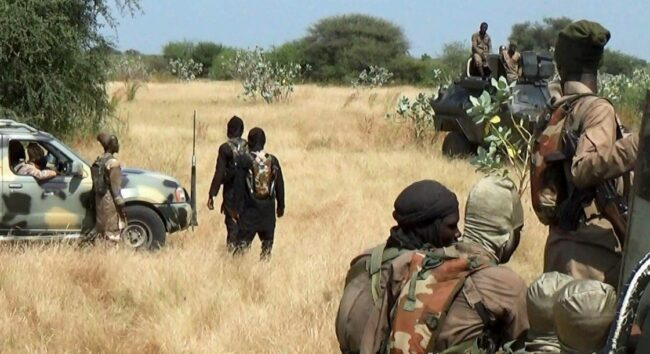
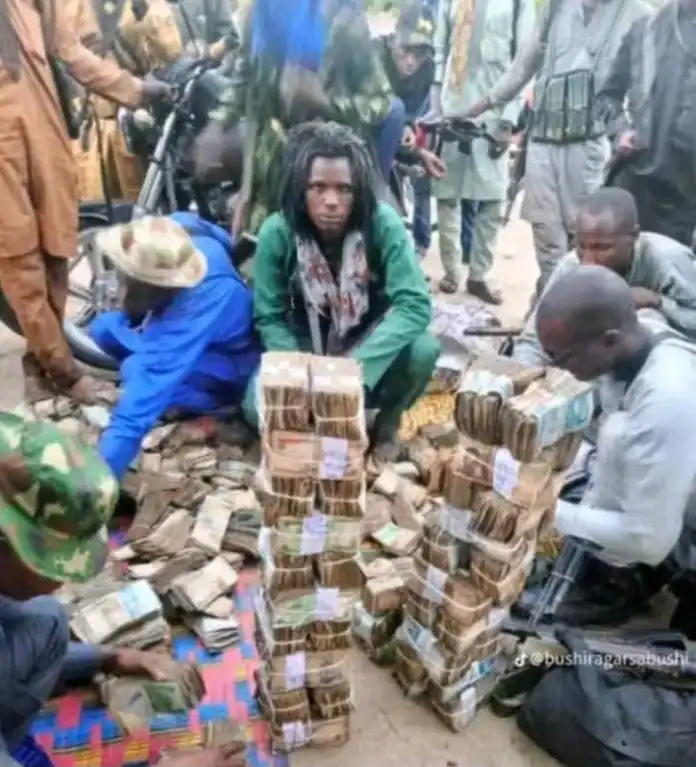
Organised violence in Nigeria has demonstrated an extraordinary capacity to regenerate. Commanders are arrested or killed. Camps are dismantled. New operations are launched. Yet criminal networks repeatedly reorganise, adapt their methods and establish fresh footholds in communities where public authority has weakened. In some places, kidnapping has evolved into a predictable source of income. Elsewhere, armed groups collect levies, regulate access to farmland or dictate movement along rural roads. These are not isolated criminal acts. They are signs of an alternative system of authority emerging where lawful institutions struggle to exercise effective control.
Reducing that reality to a failure of military force would miss the larger picture.
Members of the Armed Forces, the Nigeria Police Force and other security agencies have operated under exceptionally demanding conditions, often at considerable personal cost. Their sacrifices have prevented countless attacks, rescued hostages and reclaimed territory once considered inaccessible. Those achievements deserve recognition. They also illustrate an uncomfortable truth. No military, however capable, can by itself resolve a conflict sustained by economic incentives, weak institutions, inconsistent accountability and deep public distrust.
The conflict has become larger than the battlefield.
It reaches courtrooms where terrorism cases are prosecuted—or fail. It reaches schools where parents weigh the value of education against fears for their children’s safety. It reaches farms abandoned after repeated attacks, markets where traders factor insecurity into the cost of doing business and communities where traditional leaders negotiate access to land because formal authority can no longer guarantee it. The consequences extend into public finance, investment decisions, internal migration and confidence in democratic institutions.
The Constitution anticipated none of these realities, yet it speaks directly to the responsibility they impose. Section 14 declares that the security and welfare of the people shall be the primary purpose of government. The Terrorism (Prevention and Prohibition) Act establishes an extensive legal framework for investigating, prosecuting and punishing terrorism-related offences. Together, they reflect a simple constitutional expectation: organised violence should be confronted by institutions capable of protecting citizens while enforcing the law without fear or favour.
The challenge confronting Nigeria is not the absence of legal authority. It is whether the institutions entrusted with that authority have kept pace with a conflict that has changed faster than the systems created to confront it. That distinction lies at the heart of this investigation.
Over the past several weeks, Law & Society Magazine examined the country’s response to terrorism not simply as a security emergency but as a constitutional test. The reporting considered military operations alongside criminal prosecutions, victims’ rights, legislative reforms, community survival strategies, negotiations with armed groups and comparative experiences from countries that eventually reduced organised political violence. The evidence does not support simple conclusions, nor does it suggest that any single reform will resolve a crisis shaped by years of accumulated failures.
It does, however, point towards a proposition that deserves closer examination.
Violence endures where its rewards continue to outweigh its risks.
Changing that calculation demands far more than operational success. It requires institutions capable of making legality more dependable, more credible and ultimately more rewarding than coercion.
That is where this investigation begins.
To be continued.