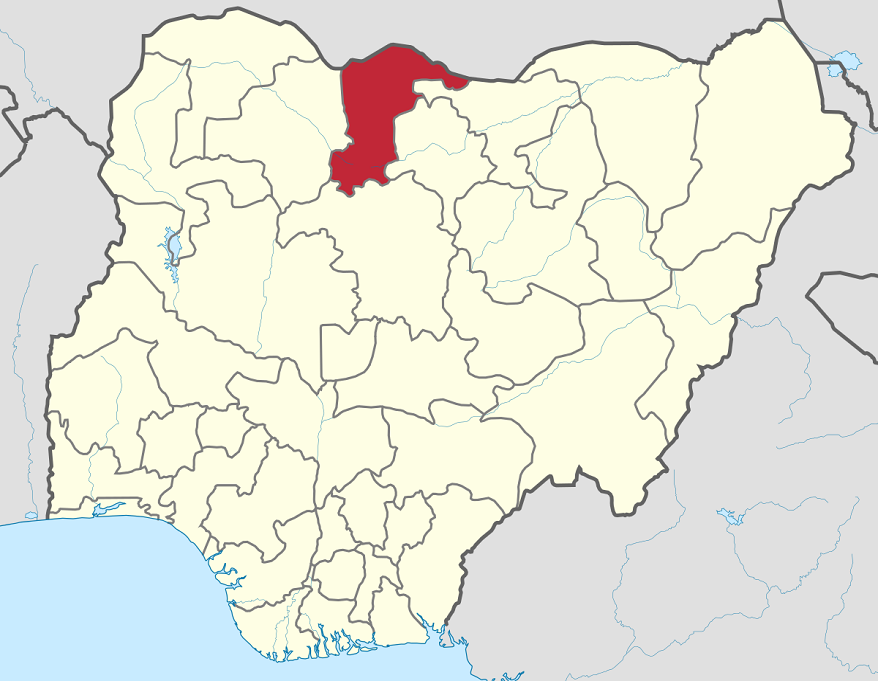
If Katsina State governor, Malam Dikko Umaru Radda, were a Yoruba man, the people would say he is living his name. I do not know what ‘Radda’ means in Hausa, but I know that ‘radarada’ means nonsense in Yoruba.
It was in Katsina under Radda that bandits went to Mecca and came back. The man who first blew the lid over that ‘secret’ is in detention; he has a date in court today.
Dr. Bashir Kurfi told Trust TV two weeks ago that Katsina was so comfortable for bandits that many of them travelled on pilgrimage to Mecca allegedly funded by the state. The Katsina State government promptly said the man lied; what he said did not happen. A week after Kurfi’s ‘expose’, the Federal Government announced with happiness that it had arrested in Katsina “some known bandit leaders” on their arrival from Hajj. The Katsina State government was not happy. It said Kurfi defamed all the citizens of that state by saying what he said. The police stepped in and took him into custody.
He is in court for damaging the name of the state. A lesson for other trouble makers.
Perhaps, loquacious Kurfi had not heard of the Yoruba story of Iwofa Alaba who saw a human skeleton (Akúújù) on the kola nut tree and greeted it “Hello.” Akúújù heard the greeting and said “Iwofa Alaba, it is your mouth that will kill you.” Read T.A.A. Ladele’s Igbi Aye Nyi. It is a long sizzling story that ends with the skeleton’s prediction coming true for Iwofa Alaba. His mouth killed him.
May my mouth not kill me.
I read the Daily Trust with religious devotion to get insight and knowledge into the heart of the North. It was there on Wednesday, 8 July, 2026, that I read Kurfi’s arrest report headlined: ‘Court remands lecturer who accused Katsina of sponsoring bandits to Hajj.’
Read Also: WHEN TERROR PAYS|The Endgame: How do you make terror stop paying?
Some paragraphs from the story:
“A Chief Magistrates’ Court in Katsina has ordered detention of Dr. Bashir Kurfi, a lecturer and public affairs commentator.
“The prosecution claimed that the defendant alleged that the Katsina State government sponsored Hajj pilgrimage for some bandit leaders, a statement it described as false, malicious and capable of tarnishing the image and reputation of the state government and the people of Katsina…
“The magistrate directed that the police continue with their investigation and ordered that the defendant remain in police custody pending the adjourned date.
“The matter was adjourned to Monday, July 13, 2026, for continuation of hearing.”
Governor Radda of Katsina probably thought he owed his people a duty: to prevent the importation of free speech into Katsina lest it rupture the state’s carefully curated reputation for peaceful living.
The irony is striking. Those in power who cannot arrest bandits find it easier to arrest those who speak out against bandits and banditry. As Shakespeare wrote in King Lear, “Plate sin with gold, and the strong lance of justice hurtless breaks.” God is great!
Katsina today presents a frightening picture of a state where bandits increasingly dictate the terms of peace and war.
In a village called Doma, a six-month peace agreement between villagers and armed gangs collapsed spectacularly in February this year when the same gunmen returned, went from house to house and killed at least 21 people. British news agency, Reuters, which carried the story, reported that the massacre exposed the peril of communities negotiating their own survival because they had lost faith in the state’s ability to protect them.
Did the Katsina State governor read the London-based The Guardian of June 9, 2026? It carried a major report on Katsina titled, ‘We are familiar faces’. Among other things, I took particular note of these paragraphs, which should interest the governor:
“Eleven of Katsina’s 34 local government areas (LGAs) have found themselves on the frontline of banditry attacks. Villagers were displaced to towns where they had to adjust to new, costlier lifestyles. On their abandoned farms, bandits led cows to forage on young and mature crops.
“Across the affected areas of Katsina, families would eat dinner as early as 5pm and enter the forest to hide before nightfall, fearing raids. To prevent mass slaughter of entire families, fathers would flee with some children in one direction while mothers took others and bolted in the opposite direction. In the confusion, children would sometimes be forgotten at home or in the bush, where they risked being bitten by snakes.
“In Kurfi, one family dared to stay back during a raid. Bandits raped the mother while the father hid under their matrimonial bed, afraid for his life.”
Dr Bashir Kurfi, the man who was arrested, arraigned and remanded for speaking out against banditry is from that Kurfi.
After reading The Guardian’s report, perhaps Governor Radda should also drag the British newspaper and the author of that piece before his magistrate’s court in Katsina for publishing such “negative” accounts of his state. Radarada!
Truth is a hard companion. We say in Yoruba that “Olóòótọ́ kì í l’ẹni”—the truthful man owns no mat; he sleeps on the bare floor. William Shakespeare understood that too. In King Lear, he gave his Fool one of literature’s most enduring observations: “Truth’s a dog must to kennel; he must be whipped out, when Lady the brach may stand by the fire and stink.” In modern English, those lines would read: “Truth is treated like a dog that must be shut in its kennel and beaten away, while the pampered lapdog is allowed to stand comfortably by the fire despite its foul smell.”
In 2026 Nigeria, we should not have places like Katsina where bandits roam the forests and farms in freedom while the man who barks at them is dragged to the kennel—banished, confined and pushed to the margins.
The views expressed by contributors are strictly personal and not of Law & Society Magazine.