How armed groups are quietly building parallel governments inside Nigeria
By Law & Society Magazine Investigations
How do you recognise a government?
The obvious answers are familiar. Governments make laws. They collect taxes. They protect citizens. They administer justice. They regulate movement. They resolve disputes. Above all, they exercise authority over the territory and people within their borders.
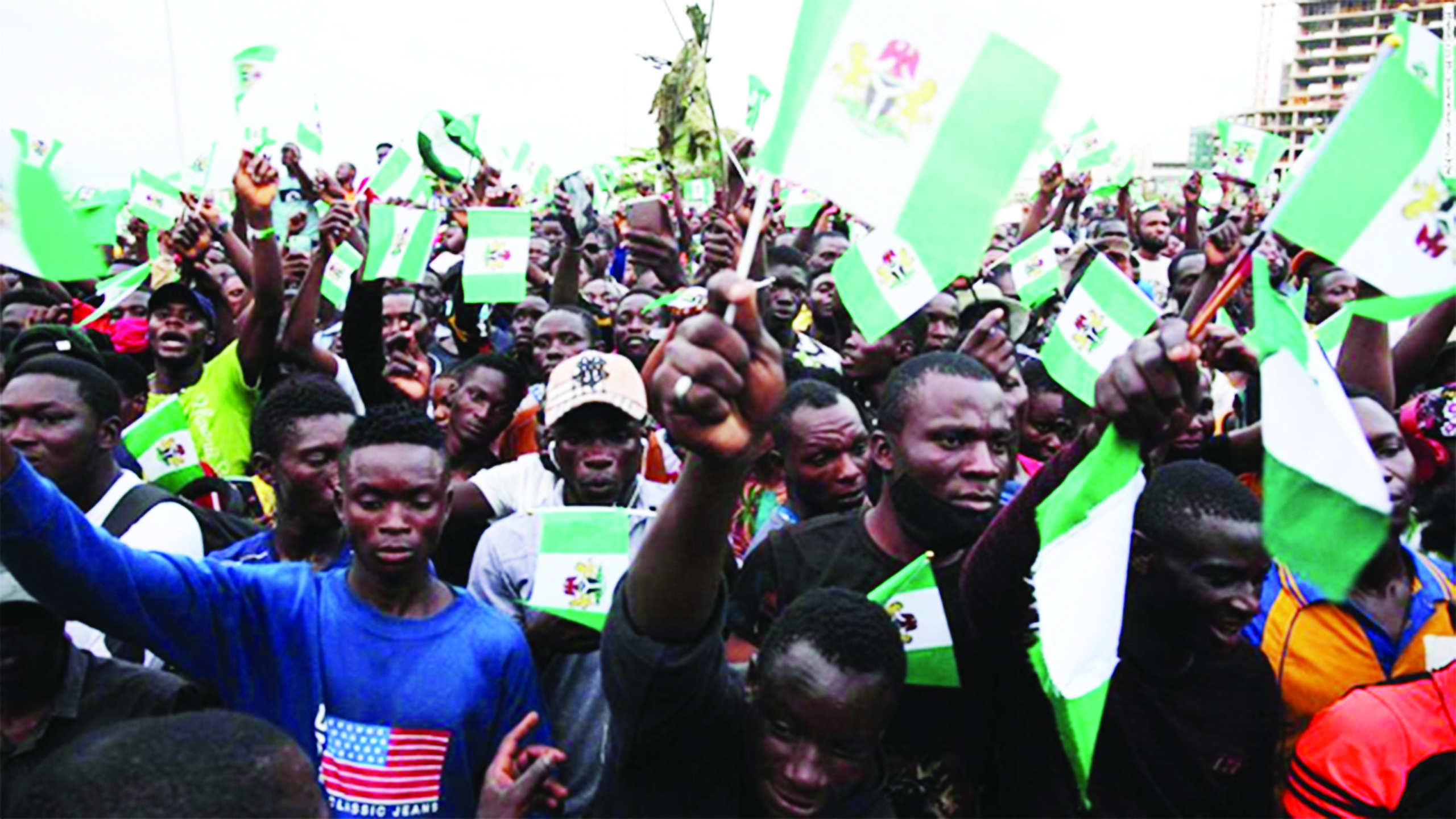
These powers are so fundamental that citizens rarely stop to think about them. They simply assume that the Nigerian state—and no other authority—determines who governs every community from Lagos to Maiduguri, from Sokoto to Calabar.
Yet in parts of Nigeria scarred by years of insurgency, banditry and organised violence, that assumption is facing an uncomfortable test.
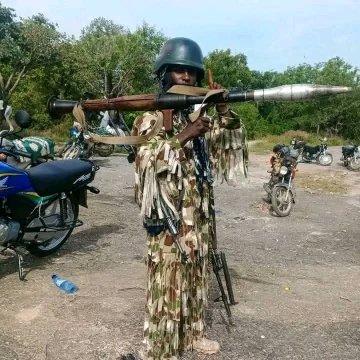
Across some rural communities, according to numerous reports by security analysts, humanitarian organisations, media investigations and testimonies from affected residents over the years, armed groups have done far more than terrorise civilians. In some locations they have reportedly demanded levies before farmers cultivate their fields, imposed charges for harvesting crops, regulated access to forests and grazing routes, controlled movement along certain roads, dictated commercial activity and enforced their own rules through violence and intimidation.
These arrangements are rarely recognised by law. They are born of fear rather than legitimacy.
Yet they raise one of the most profound constitutional questions confronting Nigeria today: when citizens increasingly depend on armed groups—not public institutions—to determine how they live, who is actually exercising authority?
This is no longer merely a security story. It is a story about sovereignty.
When survival replaces citizenship
The Nigerian Constitution is built on a simple democratic premise: that governmental authority derives from the people and is exercised through institutions established by law.
Section 14(2)(b) declares that the security and welfare of the people shall be the primary purpose of government. The Constitution also contemplates a state that alone possesses the lawful authority to enforce order, investigate crime, prosecute offenders and protect lives and property.
In many communities affected by persistent violence, however, daily reality has become considerably more complicated.
For families living under the constant threat of attack, constitutional theory often collides with the demands of survival. When security personnel are absent or unable to maintain a continuous presence, communities sometimes make decisions that would once have seemed unimaginable.
Some negotiate directly with armed groups. Others reportedly pay levies to gain temporary access to farmland. Some abandon entire villages. Others rely on informal understandings simply to avoid further bloodshed.
These choices should not be mistaken for acceptance of criminal authority. They are, in many cases, desperate attempts to preserve life where lawful protection appears insufficient.
But desperation can produce consequences extending far beyond individual communities.
The slow emergence of parallel authority
Political scientists have long observed that armed groups seeking prolonged influence rarely rely on violence alone. History suggests that many eventually attempt something more enduring: they establish systems of control that resemble the functions of government.
The methods vary from one conflict to another. Some collect taxes. Some regulate markets. Some settle disputes. Some determine who may travel through territory under their influence. Some provide rudimentary security—often from rival armed groups. Others enforce their own codes of conduct through fear.
The objective is not simply to defeat the state militarily. It is to make the state increasingly irrelevant in the daily lives of ordinary people.
Across parts of Nigeria, security experts have warned that elements of this pattern have become visible in areas repeatedly affected by banditry and insurgent violence.
Communities have described paying so-called protection levies. Farmers have reported seeking assurances before returning to cultivate abandoned land. Transport operators have spoken of unofficial payments along dangerous routes. In some areas, traditional institutions have found themselves negotiating with armed actors simply to secure temporary peace.
Each arrangement may appear isolated. Taken together, however, they reveal something far more significant. They suggest that organised violence is beginning to reshape relationships between citizens and the state.
When criminals perform governmental functions
Governments derive legitimacy through constitutions, elections and the rule of law. Criminal organisations derive power through coercion. Yet from the perspective of frightened communities, the distinction can become blurred when both claim the ability to determine what people may or may not do.
Who decides whether farmers may harvest crops? Who controls movement through particular forests? Who determines whether traders may enter local markets? Who resolves disputes when police stations are distant or non-functional? Who imposes financial obligations on local residents?
These are not merely criminal acts. They are functions traditionally associated with governance.
That is precisely why constitutional scholars often argue that sovereignty is measured not only by legal authority but also by effective authority.
A constitution may declare governmental powers on paper. The more difficult question is whether those powers are exercised consistently across every part of the country.
Lessons from beyond Nigeria
Nigeria is by no means the first nation to confront this challenge.
In Colombia, the Revolutionary Armed Forces of Colombia (FARC) established extensive systems of taxation, dispute resolution and local administration across territories where state institutions were weak.
Before returning to national power in Afghanistan, the Taliban operated parallel courts that many rural residents reportedly used because they were viewed as faster than formal judicial institutions, even though their procedures attracted widespread criticism for failing to meet internationally recognised human rights standards.
In parts of Iraq and Syria, the so-called Islamic State attempted to create an elaborate administrative structure, collecting taxes, regulating commerce and providing basic public services alongside brutal repression.
These situations differ substantially in history, ideology and scale from Nigeria’s security challenges.
Nevertheless, they illustrate a common lesson recognised in conflict studies: armed groups frequently seek influence not only by defeating governments militarily, but by replacing governmental functions wherever state authority becomes weak or inconsistent.
The constitutional cost
The consequences extend beyond immediate security concerns.
Every unofficial levy paid because government cannot guarantee safe access to farmland weakens confidence in lawful authority. Every community forced to negotiate its own security arrangements raises difficult questions about the practical reach of constitutional governance. Every child growing up believing that survival depends more upon agreements with armed groups than confidence in public institutions inherits a profoundly altered understanding of citizenship.
This transformation is gradual. It seldom attracts dramatic headlines. There is rarely a single moment when sovereignty visibly changes hands. Instead, authority erodes incrementally.
One abandoned police outpost. One inaccessible court. One unsafe highway. One village negotiating alone. One harvest protected by payments to criminals rather than the presence of lawful institutions.
Over time, these individual compromises can reshape public expectations of government itself.
Reclaiming more than territory
Military operations remain indispensable in confronting violent criminal organisations. Security agencies have continued to conduct operations resulting in the rescue of hostages, the neutralisation or arrest of suspects and the disruption of criminal networks. Those efforts remain essential to restoring public safety.
Yet experience from other jurisdictions suggests that military success alone rarely ends prolonged insurgencies or entrenched organised violence.
Territory can be recovered. Public confidence takes considerably longer to rebuild. Communities must once again believe that reporting crimes matters. Farmers must trust they can cultivate land without seeking permission from armed groups. Markets must function under the protection of law rather than negotiated tolerance.
Courts, schools, local governments, health centres and policing institutions must become visible symbols of state authority rather than distant promises.
In the end, sovereignty is sustained not simply by soldiers defending borders but by citizens experiencing the everyday presence of lawful government.
The deeper battle
Perhaps the greatest danger confronting Nigeria is not that terrorists or bandits seek to overthrow the Federal Government in Abuja. Rather, it is that in isolated communities they may gradually persuade frightened citizens that government no longer occupies the centre of everyday life.
Violence then becomes more than an instrument of fear. It becomes an instrument of governance.
History teaches that states seldom lose authority overnight. They lose it slowly, often while their formal institutions continue to function. Courts still sit.Budgets are passed. Elections are conducted. Ministries operate. Yet somewhere beyond the reach of those institutions, another authority slowly begins to emerge—one enforced not by constitutional legitimacy but by armed coercion.
For Nigeria, that is the larger constitutional warning.
The struggle against terrorism is not simply about reclaiming forests, rescuing abductees or neutralising criminal gangs, important as those objectives remain. It is about ensuring that every Nigerian, regardless of geography, experiences the Constitution as the highest and only legitimate source of public authority.
For where citizens must negotiate with armed groups to farm, trade, travel or simply survive, the contest is no longer only over security. It is over sovereignty itself.
Tomorrow (Final Part): WHEN TERROR PAYS – Sunday Magazine Special: The Republic Under Siege | Can Nigeria reclaim the rule of law before terror permanently reshapes the State?