Home Blog Page 16

While Abuja talks elections, Borno shuts school after Boko Haram abducts 42 children

As Nigeria’s political elite intensify behind-the-scenes negotiations ahead of the 2027 elections — trading alliances, calculating primary victories and positioning for power — another school has been emptied by terror.

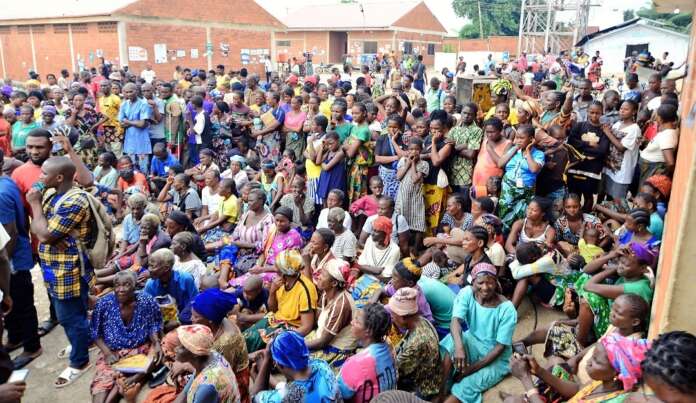
The Borno State Government has ordered the temporary closure and relocation of Government Day Secondary School, Mussa, in Askira/Uba Local Government Area following the abduction of 42 students and children during a suspected Boko Haram attack earlier this month.

The decision, announced by the state Commissioner for Education, Science, Technology and Innovation, Lawan Wakilbe, comes amid growing outrage over renewed attacks on schools and communities across northern Nigeria, even as political attention increasingly shifts toward early campaign maneuvering for the next election cycle.

In a statement released Tuesday by Governor Babagana Zulum’s spokesperson, Dauda Illiya, the commissioner disclosed that the school would be relocated to Government Secondary School, Uba, under the state’s Safe Schools Initiative.

Read Also: Like Oyedokun, we are all decapitated, By Suyi Ayodele

Before arriving in Mussa, the government delegation visited the Emir of Uba, Alhaji Ali Ibn Ismaila Mamza II, before proceeding to the affected community, where they met military officials, community leaders and grieving parents.

According to the statement, the delegation was received by the Commanding Officer of the 115 Battalion, Askira, Lt. Col. Ishola Olufisola, alongside local stakeholders.

Addressing distraught parents, Wakilbe conveyed the state government’s sympathy and assured residents that efforts were ongoing to secure the safe return of the abducted children.

But for many Nigerians, the attack is another grim reminder that years after the Chibok schoolgirls kidnapping shocked the world, schools in parts of northern Nigeria remain dangerously exposed.

The latest abduction also comes against the backdrop of rising insecurity nationwide, including recent kidnappings involving teachers and schoolchildren in Oyo State and fresh waves of mass abductions blamed on armed groups and terrorists operating across the country.

On May 16, suspected Boko Haram insurgents reportedly stormed Mussa Primary and Junior Secondary School in Askira/Uba, abducting dozens of children in a raid that reignited fears over the vulnerability of schools in conflict-prone regions.

Senator Mohammed Ali Ndume, who represents Borno South Senatorial District, said the victims included four secondary school students — two boys and two girls — 28 primary school pupils and 10 other children kidnapped from nearby homes, bringing the total number abducted to 42.

The closure of the school underscores the deepening crisis facing Nigeria’s education system in conflict zones, where classrooms are increasingly becoming frontlines in a prolonged insurgency.

Critics say the renewed attacks expose a troubling disconnect between the country’s worsening security emergency and the political establishment’s growing obsession with 2027 succession politics.

As party leaders strategize over coalitions and presidential calculations, families across parts of Nigeria continue to wait for abducted children to return home.

Leveraging Nigeria’s young population for national growth and development (3)

By Ebun-Olu Adegboruwa, SAN

v) Deploying Spiritual Resources for Youth Global Impact

The Catholic Church runs a Justice and Peace Development Committee (JPDC) manned by seasoned legal practitioners to render pro bono services for its members and the general public who are victims of injustice, oppression or whose rights may have been infringed in one way or the other. The RCCG operates functional rehabilitation homes for drug addicts, the homeless and single mothers. The Redemption City as envisioned by the celebrant (Pastor Adeboye) should further translate into an economic power hub for the teeming youth and the not-too-young with the creation of specific districts to cater to the growing needs of all worshippers, especially the youth.

Recycling of wastes is ongoing, a medical village has been built, a legal village is in the offing, agriculture is being developed aggressively and concessionaires can be created for the church to leverage on its population and growth to establish entities for the production of water and drinks, restaurants for food during evangelism outreaches and other major programmes. There is also a prayer village, which is attracting tourists and visitors. A New Professional District Area should be created within the Redemption City to accommodate professionals like Accountants, Architects, Doctors, Surveyors, Engineers, IT experts, etc who can attend to the growing needs of the city dwellers and thus reduce urban migration. An industrial hub can also be created for factories and industries while ensuring quality control.

The vast size of the land owned by the RCCG here in Mowe, in Abuja, the United States of America, Canada, Australia and other parts of the world may not solely be for church planting, dwelling and residence or else we will keep creating a community of dwellers without capacity and empowerment. With the available infrastructure of electricity, water, security and technology in the Redemption City, regular trips to Lagos, Abeokuta, Ibadan and other neighbouring cities should be a thing of the past. Given the incidence of poor leadership in Nigeria, the church, NGOs, CSOs and other missions will continue to serve as the alternative government and welfare centres for the needy.

Read Also: Leveraging Nigeria’s young population for national growth and development (2)

The Vision and Mission of the celebrant (Pastor Adeboye) for RCCG members to make heaven, to take as many people as possible along with them, to plant churches and to make holiness the centre-point of attaining them is unassailable. But it has to be developed, rebranded and expanded to include capacity building and empowerment of members (young and old) for the benefit of all. This charge is not unique to religious entities alone but it also extends to other levels of mentoring for the youth in political and educational sectors, leading to a realignment of spiritual goals and secular engagements for the growth of the ministry whilst presenting opportunities for the youth to realise their potential.

THE GROWING IMPACT OF YOUTH ON NIGERIA’S POPULATION

A proper understanding of the youth phenomenon is to be prefaced with the population of Nigeria itself as a nation. The history of the population of Nigeria has been enmeshed in controversies, due mainly to allegations of inflation of figures. According to the National Population Commission, the last official census for Nigeria was in 2006, which was projected to be 140 million, as presented by President Olusegun Obasanjo in March 2006. From data of the National Bureau of Statistics, the projected population figure for Nigeria in 2022 was 216,783,381, comprising 108,350,410 males and 108,432,971 females. Presently, Nigeria’s population is projected to be over 230 million, with estimates placing it around 239.9 million in early January 2026, making it Africa’s most populous country and the world’s sixth-largest, with figures projected to reach over 242 million by 2026, with the youth leading the pack.

READ ALSO: Leveraging Nigeria’s young population for national growth and development (1)

THE YOUTH POPULATION

Nigeria has a massive youth population, with estimates suggesting around 70 per cent of its citizens are under 30, translating to over 160 million young people within a total population nearing 230 million (as of mid-2024/early 2025). This makes Nigeria one of the world’s most youthful nations, with a median age of just over 18 years. This is expected to balloon as we advance in years. The statistics and demographics are simply amazing in their dimensions. Data obtainable from the World Bank indicates a youth percentage of about 70 per cent are under 30, while the median age average is 18.1 years and the youngest cohort, the Gen Alpha (under 13) and Gen Z (13-28) combined, make up a huge portion, with Gen Alpha alone representing over 35 per cent of the total population in some analyses.

YOUTH AS NATIONAL ASSET

A young population becomes an asset only when the youth are educated, employed or employable, healthy and have a stake in the system of national life. In the absence of these engagements, the young population becomes a demographic liability, fuelling unemployment, crime, and instability. The following are some of the indices that can enable leveraging Nigeria’s young population for national growth and development.

a. QUALITY EDUCATION:

Deep investment in quality education remains the most critical key to human capital development of the youth. Insofar as it is what goes into the mind by way of education that shapes the whole person of the youth, it is advocated that through all-inclusive public-private partnership, efforts must be geared up to ensure that the young population receives qualitative education at all levels – right from basic to tertiary levels of education. This may be achieved through the offer of free education and availability of bursaries and government fully funded scholarships (as was the case in the past), provision of conducive learning environment, standard world-class learning facilities and equipment, provision of qualified teachers in schools and institutions of learning. Definite actions must be taken by the government to quel the incidence of strikes which cause frustrating stoppages to the academic journey of young persons in schools, thereby discouraging learning.

There has to be a paradigm shift from mere certificate-driven to skill-driven education. Someone puts the idea as a shift from certificate to sabi-ficate” (skill). The main area of skill should focus on digital skills, technical and vocational education, entrepreneurship, how to think critically and innovate rather than spoon-feeding the system of academic theorisation without translating to practical problem-solving application. Educational reforms must be directed to aligning university and polytechnic curricula with labour-market needs, including agriculture, renewable energy, fintech, health, and manufacturing.

b. PRODUCTIVE EMPLOYMENT AND ECONOMIC OPPORTUNITIES:

There has to be a youth-oriented industrialisation, particularly in the area of agriculture. This is very important. Shift away from subsistence farming to Agribusiness, characterised by mechanised farming and the use of technology should be encouraged. This can be achieved through access to land, provision of low-interest loans and grants, simplified business registration under the CAC and tax incentives for start-ups and SMEs, extension services and market linkages and encouragement of youth-led cooperatives and agro-startups.

c. ENCOURAGEMENT OF YOUTH POLITICAL PARTICIPATION AND INCLUSION:

Thanks to CFRN (Fourth Alteration) Act, 2018 (a.k.a. Not Too Young to Run). The intent is to promote youth participation and engagement in politics and leadership. The young population is vibrant, innovative, more inclined to progressivism and dynamic change in keeping with global trends. To this effect, full implementation and expansion of the Not-Too-Young-To-Run Act in practical reality, not just law, is advocated. Deliberate steps should be taken to integrate the young population in governance, policy formulation, thought-leadership and grassroots leadership. Civil inclusion reduces alienation, thereby reducing the incidence of youth unrest, and political violence while fostering accountability.

The unfortunate entrenchment of recycled oligarchic gerontocracy (rule by a few aged), which Africa seems to be cursed with must be jettisoned to pave way for fresh blood in the political space.

d. ENHANCEMENT OF YOUTH HEALTH AND WELL-BEING:

A healthy mind and body of the youth are critical to mining the invaluable wealth of youthful potential. This is why there has to be improved access to youth-friendly healthcare, particularly mental health services. All-out war against the use and abuse of mind-destroying substances such as illicit drugs and intoxicants, pornography, terrorist indoctrination, violence and s3xual harassment against young persons, etc., which lead to depression and sometimes suicidal tendencies, must be mounted.

e. HARNESSING THE DIGITAL ECONOMY:

The youth should be trained to be up to speed with global best practices in the digital space such as software development, data science, cybersecurity, digital marketing and remote work skills. This will set the young population of Nigeria as a global outsourcing and remote-work hub, exporting digital services rather than raw labour. This in turn will boost Nigeria’s GDP, thereby enhancing her economic growth.

f. VALUE-MODELING AND MENTORSHIP:

Part of the undoing of the youth is bad examples of those they look up to both in the temporal and spiritual spheres of our national life. Leaders have modeled the wrong things for the young population to emulate. The allure of life is materialism, the what’s-in-it-for-me-and-my-family syndrome. The unbridled appetite for and love of money have led to dearth of values.

If the young population must be harnessed, then there must be a paradigm shift and refocus on the values and ethos upon which enduring nationhood is built; values that transcend materialism, quest for immediate gratification, indiscipline, and self-aggrandisement.

Like Oyedokun, we are all decapitated, By Suyi Ayodele

“When sorrows come, they come not single spies, but in battalions,” William Shakespeare wrote in Hamlet (Act IV, Scene 5). Long before Shakespeare, the Greek tragedians had warned that when a state loses its moral balance, suffering ceases to be an accident and becomes a national destiny. In Sophocles’ Oedipus Rex, a plague descended on Thebes because leadership failed. In our own Nigeria today, terror stalks everywhere because of a leadership that talks and talks and plays politics.

Citizen Michael Oyedokun chose one of the noblest careers in life. He elected to be a teacher. Teachers are molders of characters and shapers of humanity. They are the ones who take children from the cradle, refine them and make them good ornaments that the world celebrates.

Oyedokun was not just a teacher. He was a core-subject teacher. He taught one of the most difficult subjects an average student like yours sincerely dreads. Mathematics is nobody’s mate! Our Form Five mathematics teacher, a Bendelite, Mr. Okosodin, once asked how I became the Senior Prefect with my not-too-good (or was it non-existent) grades in the subject – may the good Lord forgive him. Oyedokun was good at the subject he taught as he guided his students through Simultaneous Equation, the core algebraic technique of elimination.

Then, Nigeria happened to him. He was eliminated! Not by any identical or opposite coefficients, but by a group of felons the Nigerian State had pampered over the years. The mathematician, Oyedokun, was eliminated by decapitation by children who are probably of the same age as the students he taught mathematics before the cruel fate befell him! His was a tragic irony. How a man who used elimination methods to impact knowledge ended up being eliminated in the most gruesome way leaves a sad memory for us to deal with for the rest of our lives!

Those who are strong at heart watched the video of the decapitation of Oyedokun. I could not bring myself to behold the gory event. I was only strong enough to watch the video of the woman principal who was kidnapped alongside some students, pleading for the government to come to the aid of the victims. The only question I kept asking is: how did we get here?

The mathematics teacher did not commit any crime. He did not engage in any blasphemy, and was not tried, convicted and sentenced by any Sharia court. His only crime was that he chose to be noble in life by earning a living through teaching. Then he was captured, not at the battlefield, but in the classroom, where he was working mathematical sums.

Oyedokun had no chance to escape. In captivity, he must have pleaded for mercy like other captives. His allocutus fell on deaf ears. His captors needed to show the flat-footed government that they meant business. To show that ‘strength’, the depraved minds chose only one way: summary execution of the victim.

And like the Greek god, Gorgon Medusa, who was beheaded before the Greek demigod hero, Perseus, Oyedokun had his head severed. He had no chance to bid family and relations farewell. As the blade penetrated into his skin, cutting the veins and getting to the oesophagus, the mathematics teacher must have wondered where the State was at that moment.

What a pity! There was no way the State would have come to his rescue. Oyedokun and the handlers of our State were not suffering the same ailment at that moment. While the brutally murdered teacher was thinking about his life, the politicians who are in charge of the State were busy doing political permutations that would eventually lead to the elimination of all oppositions towards the 2027 general election!

Read Also: Boko Haram comes south, By Lasisi Olagunju

Read Also: Echoes of Trauma: Two-year-old Christianah, Nigeria’s stolen childhoods and the crisis we refuse to confront

This is the Nigerian State for all of us. The country is already in the forest of the wicked (Igbó Òdájú). Our husbands across the levels of government had already entered the election mode before Oyedokun’s decapitation took place. In the scale of preference, the 2027 election takes precedence over Oyedokun’s safety and life. Theirs is politics first and other things afterwards.

The saddest aspect of this is that Oyedokun is not the only victim of our decayed system. Like him, we are all decapitated. He is even better off in that he is dead and out of the current pain in the land. The dead do not play pun roles (òkú kìí sin’gbà), our elders say. The living are the ones who don’t know what will happen next and are worried. The dead have nothing to worry about

There is a saying among the elders of our land: Kò di ìgbà tí ènìyàn bá kú ló tó kú (It is not when a man dies that he is dead). With the level of insecurity in the land, we are all living dead! We fade away by the seconds because we don’t know what fate has in stock for us.

I was on the Benin-Owo Road over the weekend. The road, an inter-state one, is a Trunk A road. Save for the few patching here and there by the Federal Road Maintenance Agency (FERMA), there is nothing to show any federal presence on the road.

The road, over the years, holds the trophy for kidnapping notoriety! Mentally, as I drove along the lonely road, I could picture the spots where people had been kidnapped in the past. As I approached any of those hot spots, the ‘spirit’ ministered to me that I could be the next victim! The thought became worrisome as I drove without any other private car overtaking me till I got to Oluku, the Benin end of the road.

There were countless security posts on the way. Five or so of such posts were manned by soldiers; the rest by policemen. Of course, only the military posts had their vehicles positioned for immediate action with a soldier behind the wheel while the rest stood at strategic positions.

What about the posts manned by the policemen? We should not discuss that here. If clumsiness were to be a concept for graphic arts, those police posts are living examples. The ‘officers’ only sprang into action whenever a vehicle approached the post by a few metres. And nothing serious happened. All one gets is just a peep into the car and a wave of hand for the driver to move on.

I checked and I saw no vehicle that could convey them for action in case something untoward happened. How would they respond to any distress call when the armed men are as immobile as a congenital lame?! Yet, someone posted them on that lonely road ‘to beef up security.’ Somewhere else, another person signs off the teller for their logistics. Probably too, there are ledgers and vouchers for fuelling and vehicle maintenance expenses, which the accounts department pays regularly!

Until I saw the Nigeria Institute for Oil Palm research (NIFOR) signage by the road, the fear of being kidnapped did not go away. If I had checked into any hospital as I entered Benin City, I had no doubt what my Blood Pressure would have read. I also want to believe that I was not the only commuter that Sunday morning who nursed the same sense of foreboding. Nigerians, all over the country, travel on the nation’s highways as dead but living beings!

From Ilu Abo, a short distance to Akure, the capital of Ondo State, to Sobe and Odigitue in Edo State, to Imope in Ogun State, kidnappers’ activities are no longer limited to the highways. I heard stories and met one or two acquaintances of victims who were kidnapped in their homes. A particular woman, I was told, came down from the car to open the house gate for her husband who was behind the wheel. She noticed that some men were dragging the gate with her. On a closer look, she discovered that she was surrounded by some gunmen and before she could open her mouth to shout for help, she had been whisked into a get-away-car. The unfortunate woman, a civil servant, only saw her family again days later after a N10 million ransom had been paid.

Yet in that neighbourhood, another couple was taking ‘fresh air’ outside their living room because of the excruciating heat caused by lack of electricity supply. Suddenly, some gun-wielding young men showed up and marched them out of their home into the forest. From Owo forest, the victims were taken through the bush to a place in Kwara State. Again, ransom, running into millions of Naira was paid before they gained freedom.

So, like the esoteric leaf of Agbaa tree, which finds no peace either in the house or on the road, Nigerians have become victims of untraceable insecurity that spares no one and no religion. Kidnappers and other felons holding the nation bound to violence have become like the legendary deity that takes over the house, the stream and the farm from us (Òòsà tó gba’lé, gbo’dò, tó tún gbo’ko l’ówó eni). Nowhere is safe; no sanctuary is too sacred for them to invade. Not even the presence of God, whom we call upon in times of distress.

A few days ago, around the Ikiran community of Kwara State, a group of worshippers observing a night prayer meeting were attacked by kidnappers. By the time the dust settled, three of the ‘prayer warriors’ were killed and 15 others taken into captivity. One begins to wonder what the government is doing about the insecurity in Kwara State! Is there really a government in that state or why have bad tales become two for a penny in the state?

But more importantly, why are the people in that locality not circumspect? Which prayer meeting would anybody organise in that axis given the frequency with which kidnappers operate in the area? Why would the government not regulate such large gatherings, especially at night, when it is common knowledge that those notorious men have a penchant to attack crowded environments where they can kidnap scores at a time?

If the Christian Association of Nigeria (CAN), the Pentecostal Fellowship of Nigeria (PFN) and other religious bodies would not take the initiative and be discretionary in their order of services and activities, why would the government not act on their behalf? Why anyone would gather a large number of people on a mountain for prayers dragging till 8.00pm in a security-prone environment like Ikiran and the neighbouring towns and villages beats one’s imagination! Did the organisers of the Ikiran prayer meeting not read in the Bible in Ecclesiastes 10:10 that: “Wisdom is profitable to direct?”

I hold nothing against people organising prayer sessions. As a matter of fact, if there is any time Nigeria needs prayers and God’s divine intervention, it is now. However, one needs to be discretionary. Our husbands in power, from the local government chairmen to the president have no feelings for us; they are just not bothered! We can die in our thousands and be kidnapped in our hundreds; our leaders’ preoccupation at the moment is the 2027 elections!

The latest Kwara Kidnap incident was avoidable. It had no reason to happen but for lack of discretion on the part of the organisers. It is time the leadership of the various faiths came together to redesign their programmes. There is no wisdom where people deliberately offer themselves as sacrifices in the name of prayer meetings. Wisdom, again, is profitable to direct!

The views expressed by contributors are strictly personal and not of Law & Society Magazine.

Video: Delta State man murders infant son for ‘eating too much’

A man has been apprehended in Adeje community, Delta State, for allegedly killing his infant son because the child “eats too much”. 

A video shared online shows the man holding the lifeless naked body of his son whom he reportedly killed. 

The man’s face was swollen, seemingly indicating that he had been pummelled by locals who were questioning him. 

A woman beside him, believed to be the mother of the child, is also seen narrating how the child died. 

They were speaking in their local language and so were the specatators. 

An X user who explained what was going on in the video wrote: “Man kill child in delta state because he ate too much.” 
 

Delta man k!lls his child for


The incident was said to have occurred yesterday, Sunday, May 24. 

Authorities have not officially commented on the incident.

Watch the video here.

Football lessons for our INEC, By Lasisi Olagunju

The English Premier League ended yesterday with Arsenal crowned champions. But that triumph almost slipped away because, two weeks earlier, a stolen goal arrived disguised as a legitimate one.

I watched the West Ham–Arsenal match of Sunday, May 10, 2026. It got me thinking about Nigeria’s past and coming elections. Deep into stoppage time, there was a crowded goalmouth scramble. The ball ended up in the Arsenal net, the referee okayed it and the stadium erupted.

But the celebration was cut short when the referee was called to the VAR monitor.

Replays showed that as the Arsenal goalkeeper leapt to claim the ball, his left arm had been held and impeded by an opposing attacker. The goal, a crucial equaliser, was ruled out for a foul.

Note that the referee initially stood by the decision. Then came protests. He paused the game, consulted technology, reviewed the incident and reversed himself. He was not stubbornly chained to an earlier error. He chose, instead, to stand by the rules of the game.

We should learn a lesson in that episode and weigh in on the relationship between sport, technology, rules and democratic accountability. A last-minute goal was first allowed, then overturned because it had been obtained unfairly.

As I watched the referee, I thought of our INEC; the VAR reminded me of IREV and the courts, and our 2023 controversies. The match officials did not manipulate the rules or sabotage the technology. There was no self-help, no front or backend glitch, and no desperate effort to protect a heist simply because a verdict had already been announced.

Read Also: The Case for the office of Judge Dan Maliki

That is the lesson for Nigeria, its politicians and their politics, and for INEC. Democracy, like football, survives on the integrity of process. When doubts arise, institutions must have the courage to review themselves honestly and correct wrongdoing openly. A bad decision does not become sacred merely because it was confidently declared. What destroys public trust is not human error; it is the refusal to admit and correct errors.

Elections are not different from football. In Nigeria, political heists are rarely committed in the open. They happen in the confusion of numbers, in the invasion, the pushing and pulling around collation centres, in the unseen grip on institutions, and in the calculated obstruction of the people’s will. As we move towards the next elections, INEC should learn from that match. What may appear to be victory amid the noise of celebration may, upon honest review, turn out to be a foul on democracy itself.

The Nigerian voter too must approach future elections with the vigilance of a VAR room. Every suspected inflated figure, every compromised official, every act of voter suppression, every attempt to intimidate observers or mutilate result sheets is a foul hand on the goalkeeper’s wrist. It must be contested until it is redressed.

If football can pause an entire stadium and viewing centres around the world to review an unfair advantage, then a republic must be prepared to pause and review the electoral process at any point whenever the people suspect that the game has been rigged.

This is necessary if what we say we have is a democracy. Democracies do not die only through bullets and coups; they also get murdered through clever, vile manipulations hidden inside crowded political moments.

While I sat impressed by that referee obeying the laws of the game, the Federal High Court in Abuja last Wednesday nullified parts of INEC’s 2027 election timetable, ruling that portions of it violated the law. The court acted the VAR of this game. It held, among other things, that INEC cannot unilaterally fix the timetable for party primaries; cannot abridge the period within which parties submit candidates’ particulars; cannot shorten the lawful window for withdrawal or replacement of candidates; cannot publish the final list of candidates earlier than 60 days before the election; and cannot compel campaigns to end two days before voting.

In effect, the court set aside the timeframes imposed by INEC for party primaries, submission of candidates’ particulars, withdrawal and replacement of candidates, publication of final candidate lists and campaign periods.

The question is: if the Constitution and the Electoral Act are already clear on these timelines, why did INEC choose a route so far removed from the law? Whose interest was that timetable designed to serve? I read somewhere that INEC said it was reviewing that judgment. We wait to see what its reviewers have to say.

Will they say the figures in the Electoral Act are not there or, perhaps the version of the Electoral Act available to them differs from the one available to the rest of Nigeria? We wait.

The views expressed by contributors are strictly personal and not of Law & Society Magazine.

Boko Haram comes south, By Lasisi Olagunju

The military high command has come out to say that the gunmen who abducted schoolchildren and murdered their teachers in Ogbomoso were JAS men. JAS (Jama’tu Ahlis Sunna Lidda’awati wal-Jihad) is a splinter of Boko Haram. One of the kidnapped teachers was beheaded on camera by the terrorists who flung the video into cyberspace to our collective horror. So, finally, in Yorubaland, they have come.

I can count two, three, four people around me who watched that video and fell ill. Yet those who did it felt normal and may do it again because they always do. “Any savage likes to collect heads,” Iris Murdoch writes in ‘A Severed Head’, a story of victims who think they are survivors. And why the head, of all parts of the human body? Murdoch says heads are “the apex of our incarnation.”

Nigeria’s contemporary terror has historical roots. Almost exactly 200 years ago (1826 /1827), in that same Ogbomoso axis, Edun of Gbogun, an Aare Ona Kakanfo, suffered what the murdered teacher suffered at the hands of the Fulani.

Recorded as one of the notable figures of the nineteenth-century Yoruba wars, and the last major shield defending the northern Oyo frontiers against Ilorin, this Aare was defeated in battle by the Fulani, and the unthinkable was done to him. Samuel Johnson, in ‘The History of the Yorubas’, writes that “his head was taken off, put on a pole” and carried “in triumph to Ilorin.”

Because reuniting Kakanfo Edun’s head with his body was necessary if his spirit would rest, Johnson wrote that “Edun’s son afterwards went to Ilorin, and did obeisance to the Emir, who then allowed him to take his father’s head away; it was brought back and buried with the body at Gbogun.” Obeisance was the ransom exacted before the family could complete the Aare’s burial rites.

Now, almost exactly 200 years after that publicly displayed human head and humiliating ransom, the marauders are back. Has the body of the murdered teacher now been released for burial? No. The terrorists are waiting for ransom. Ransom and a severed head? Read Edun’s story and remember history’s record of something similar.

Read Also: As terrorists expand their reach, Nigeria’s politicians plot for 2027

I also read somewhere that the abductors holding the Oyo schoolchildren demanded that the governor speak directly with them. Interesting and intriguing. What really was the motive behind all these? The abduction and the conditions attached to it jointly signal the possible arrival of Boko Haram in Yorubaland. So, unless this household wakes up and drives away the invading army, more heads may yet be hoisted on poles and carried as trophies by triumphant killers.

The president and Commander-in-Chief reacted to the Ogbomoso abduction and murder last Monday. A friend was angry that it took the president four days after the tragedy to react. I told my friend to relax. He should not blame the president. What if he was warned or advised not to say anything until he was cleared to speak?

“Who would clear the president?”

“His advisers.”

“Who?”

Only the naïve ask questions whose answers everyone already knows.

Yesterday, I bought a copy of General Yakubu Gowon’s autobiography. The first “secret” I saw divulged there is the role marabouts played in the running of our country. In the very first chapter, and within the first eight pages, the old man writes about how his office as Head of State was “bombarded with messages by several clerics and marabouts from Dakar, Senegal, and an astrologer from Mali” asking him to be wary of the very people who gave his government meaning.

In the 1990s, we heard stories of how spiritualists from these “religious” countries wielded enormous influence over our leaders, particularly key figures in the government of Sani Abacha. Go out today, don’t go out tomorrow. Hire this man, fire that man. We heard stories that they completely caged Abacha inside the Villa so that he would not die. But because he who wants to save his life shall lose it, Abacha died right inside the Villa.

We have always read that clerics wielded enormous powers, but what many probably never knew is that they also did security work. Gowon said the marabouts were “agents of the French Intelligence Service” whose motive was to infiltrate his government and rule or ruin it from within. He said he ignored them and handed over his life and affairs to God.

Not all leaders avoid marabouts; many court and worship them, often to their ruin. It happened to Afonja, another Kakanfo whose attachment to spiritualists brought Sheikh Alimi into the very centre of his power, and to his sorrow.

How much of that cleric content do we have in our own power bottle today? Gowon said the marabouts who sized him up were French agents; so, whose agents are today’s mystics?

Some ten years ago, Nigerians were told that the country spent N2.2 billion hiring clerics for national prayers. Today, what happens behind the curtains of power? We still have marabouts as drivers of our politics and governments. Many African presidents, we are told, do not sleep, travel or even make appointments without consulting unseen “controllers.”

How much influence do these invisible advisers wield today in Abuja? That is a question worth asking whenever power behaves strangely in Nigeria, especially now that government is afraid to call terror and terrorists by their name.

“I can’t stop thinking of the abducted pupils and their teachers. Many will be traumatised for life. If they were forced to watch the beheading of their mathematics teacher, many will suffer mental health issues. All of them will never be the same again.” An old schoolmate and health practitioner in the United States sent me those words. You should have no difficulty agreeing with her.

I set out to write that Nigeria is the factual setting of the classic horror film or detective novel: bloody, harsh, cold, intriguing and insane. But there is one difference. No matter how long the night of blood and darkness, detective fiction traditionally ends with order restored. The guilty are exposed, justice is served, and society breathes again. Nigeria’s bad story does not end; it remains trapped in the middle chapters where chaos walks forever freely and innocence bleeds till eternity.

Nigeria suffers urban chaos and rural terror. Stand on the terrace of your home and look at the street. What stretches before you is a horizon of insecurity, untamed terror and collapsed social order. The cloud and its storm are not fleeting, yet we individually comfort ourselves with the hope that our own roofs will escape the rain.

The president last Monday expressed similar optimism. He promised bandits and their collaborators hell in the hands of hunters. He said they would face the law. What law? What justice? He spoke as if we do not know that in Nigeria, terrorism moves swiftly while justice limps behind it.

I cite an example. The trial of a kidnapping suspect commenced in an Oyo State High Court only a few days ago. The abduction happened in March 2019. A farm guard from the North masterminded the abduction of his own employers. A ransom of N25 million was paid, one worker was killed, confessional statements were obtained and arrests made almost immediately. Yet, seven years later, the case has only just started crawling through the courts, with witnesses now recounting their ordeal before a judge.

Because terrorism rejects the certainty of punishment, terror in the South-West has now moved from farms to schools. In Yorubaland, schools are inviolable symbols of innocence and civilisation. Strange men with strange ideas have now turned them into theatres of horror.

The first school in Nigeria, ‘The Nursery of the Infant Church’, was founded in Badagry in 1843 by Mr. and Mrs. De Graft. For the first time since that epoch, Yoruba parents are now genuinely afraid of sending their children to school. You blame them? “The wise sees danger and hides himself, but the fool proceeds and suffers for it.”

If the Yoruba child can no longer go safely to school, then the enemy has scored a terrifying victory over the land. The classroom was once where Yoruba society hid its future from danger. We took it for granted that it was the safest place in any modern civilisation. Nigeria’s special breed of terror has now turned the school assembly ground into a hunting ground. It used to be said only of the North-East that gunmen invaded schools with the confidence of landlords returning to their property. Now it has happened in the South-West. Pupils are marched into forests; teachers are abducted and beheaded like plantain trees. The blackboard and gravestone have become frightening companions.

When the sacred is violated, what should the guardian priest do? Befriend the violators? Celebrate them as cousins and pardon them as prodigal sons? The body language of today’s politics increasingly suggests that the wages of sin should not be death — all because of the calculations of election and re-election. Nigeria’s deepest tragedy may therefore not even be terrorism itself, but our growing accommodation of it. The country has become a vast jungle of predators and prey. In that jungle, the hierarchy is fixed: the hunted remain hunted; the spared merely await their appointed hour. No matter the severity of a tragedy, society moves on as if nothing happened. We consume reports of massacres and abductions with weary resignation. We debate horror like football scores. We place lush artificial grass of normalcy over the ugly surface of our nationhood.

In that same Ogbomoso corridor of abduction and beheading, politicians spent last week harvesting primary votes. The ruling APC held governorship and presidential primaries undisturbed. Even in the traumatised Oriire Local Government Area, locals queued while votes were counted. Across the nation, winners sang and danced. That is how Nigeria rolls. It wears the mask of peace while its people live the reality of war. Nigeria will eat its corn meal even while the house burns and robbers roam freely: Bí ilé njó, bí olè njà, won á jè’ko. A dark pall now hangs over the country. Hitherto safe territories are slipping beyond state control; schools no longer feel sacred; roads have become ambush corridors and farms are theatres of war. Bandits even invade homes now to harvest preys.

Nigeria was conceived as a covenant against barbarism. Yet barbarism now walks openly across the land. Unless those who breed these hounds restrain them, the country may soon convulse. Across the South-West, communities increasingly speak the dangerous language of self-help because the Nigerian State appears weak, hesitant and indecisive. Laws, courts and governments exist to prevent society from collapsing into primal violence. The terrorists who abduct children and behead teachers are not ordinary criminals; they are enemies of civilisation itself. Their attack on individuals is symbolic; their true target is the very idea of sanity.

Now, what next? Will this flood stop its southward sweep? That question can only be answered positively if this other one is answered first: Does the present system possess enough competence and moral will to rescue its classrooms, defend its children and reclaim civilisation from the merchants of fear? A state that cannot defend its classrooms has failed at the first duty of civilisation.

America recently shut its embassy services in Abuja. Like competent weather forecasters, they sensed a coming hurricane and took cover. Our own “seers” see nothing; our “hearers” hear nothing. A friend wonders what our intelligence community does beyond searching for threats to power and its temporary occupants. Why are these roaming terrorists never detected before they strike? Should intelligence work prevent disaster or merely arrive afterwards to count corpses? People answer “detective” without interrogating the meaning of the word itself. ‘Word Stories’ in the Oxford English Dictionary takes a deep and scintillating dive into that history. It should interest those whose profession is the detection of evil before evil acts. From Arthur Conan Doyle to Agatha Christie, the classic detective novel presents the investigator who restores moral order to chaos and pursues truth even when society fears confronting it.

Nigeria today desperately needs such intelligence, competence and moral courage. People are paid every month to see danger before it erupts. Why do they arrive only after disaster? My teacher taught me that the old detective stories of English literature were built on a simple assumption: civilisation is fragile; beneath every appearance of order lurks chaos waiting to break loose. That is where the detective comes in. He exists to uncover hidden plots, stop carnage and restore moral balance. But what happens when society itself loses the will, the competence or the courage to confront and punish evil? In such a place and situation, even the watcher becomes helpless. He may see danger clearly, announce it promptly and warn repeatedly, yet because of politics, audacious catastrophe still marches forward unchecked. I pray Nigeria has not reached that tragic point of no return.

The views expressed by contributors are strictly personal and not of Law & Society Magazine.

CSOs warn CBN’s BVN phone number restriction could threaten financial inclusion, data rights

Civil society organisations and digital rights advocates have warned that the Central Bank of Nigeria’s (CBN) reported restriction on changing phone numbers linked to Bank Verification Numbers (BVN) could undermine financial inclusion, weaken trust in Nigeria’s digital identity system and potentially violate citizens’ data protection rights.

Addressing journalists in Abuja on Thursday, Executive Director of Digicivic Initiative, Mojirayo Ogunlana, speaking on behalf of a coalition of civil society and digital rights groups, urged the apex bank to reconsider any policy limiting BVN-linked phone number changes to a single instance.

The coalition argued that such restrictions conflict with provisions of the Nigeria Data Protection Act (NDPA), particularly citizens’ right to correct inaccurate or outdated personal data.

The groups backing the position include TAP Initiative, Avocats Sans Frontières France, Centre for Information Technology and Development (CITAD), Accountability Lab, HerNG Initiative, and Initiative for Research, Innovation and Advocacy in Development.

While acknowledging the CBN’s efforts to strengthen Nigeria’s financial system against fraud, identity theft and cyber-enabled financial crimes, the organisations said anti-fraud measures should not come at the expense of citizens’ access to banking services.

“The ability to update personal information is a continuing right and an essential component of data accuracy, security and access to services,” the coalition said.

The groups argued that Nigerians frequently change phone numbers for legitimate reasons including SIM theft, security breaches, relocation, network changes, device loss and shifting personal or professional circumstances.

According to the coalition, restricting updates to BVN-linked phone numbers could create long-term inaccuracies within the banking identity system and lock millions out of critical financial services.

The advocacy groups further warned that the policy may disproportionately affect vulnerable populations, including displaced persons, low-income Nigerians and citizens living in areas with unstable telecommunications access.

“As Nigeria’s financial and public service infrastructure becomes increasingly digitised, BVN-linked authentication systems now function as critical gateways to economic participation,” Ogunlana said.

The coalition called on the CBN to adopt a “balanced and risk-based” framework that would permit multiple phone number updates while strengthening fraud prevention mechanisms.

Among the measures proposed are enhanced identity verification procedures, stronger authentication systems, risk-based monitoring for frequent changes, improved audit trails and more advanced fraud detection systems.

The organisations also demanded closer collaboration between the CBN and the Nigeria Data Protection Commission (NDPC) to ensure financial regulations align with national data protection laws and international best practices.

In addition, the groups urged the apex bank to establish transparent customer remediation channels, including appeals mechanisms and human review processes for Nigerians facing difficulties recovering or updating BVN-linked credentials.

They also challenged the CBN to publicly disclose the evidence, stakeholder consultations and risk assessments informing the restriction.

“Policies affecting access to financial systems must be transparent, evidence-based and proportionate,” the coalition stated.

New surgeon general’s advisory raises alarm about screen time risks for kids and teens

A new surgeon general advisory examines the effects of "excessive" and "harmful" screen use among children and teens while providing recommendations for families, schools, healthcare providers, policymakers and tech companies. Organic Media/E+/Getty Images)

Too much screen use among kids and teens – including endless social media scrolling, nonstop texting and hours of video games – can be harmful, and it has become a public health concern in the United States, according to a surgeon general’s advisory released Wednesday.

Officials at the US Department of Health and Human Services collaborated on the new advisory, as there is no confirmed surgeon general within the Trump administration.

Click here to continue reading.

Heartbroken father says, “I’ll never forgive the schoolteacher who raped my four daughters

Lawal Ayuba Madaki said he would never forgive the schoolteacher entrusted with the moral and academic upbringing of his four daughters, accusing him of betraying that trust by sexually abusing them.

The victims — three seven-year-old quadruplets, Hassana, Husseina and Hussaina, alongside their five-year-old sister — were allegedly abused by the teacher, identified as Kamal Abdulmuminu, whom the children affectionately called “Uncle Kamal.”

The children’s mother discovered signs that they had been sexually abused and promptly informed their father, leading to the arrest and remand of Kamal.

The father, originally from Nasarawa Local Government Area but resident in Inusawa, Ungogo Local Government Area, said, “I was seated outside my furniture workshop when the mother of the children, who is also my wife, called and informed me of the very sad news.

“We took them to the hospital where, after examination, it was confirmed they had been sexually abused.

“We went to Dantamashe Police Station to lodge a formal complaint. The police later took the children to Murtala Muhammed Specialist Hospital for another round of tests, after which doctors also confirmed sexual abuse. We returned to the school and the suspect, who is their teacher and vice principal, was arrested.”

He said the children revealed that the teacher had abused them on several occasions, usually calling them to his office one after another after break time.

The school was identified as Al-Hadeed Private School, located at Kwanar Dorasa, Inusawa, in Ungogo Local Government Area.

Madaki explained that the children are quadruplets — three girls and a boy — born in 2019.

He said the boy is not currently living with him, while another daughter, aged five, is also enrolled in the same school.

“The suspected teacher is now in custody, and the matter is before a magistrate’s court, which has adjourned the case till June 9,” he said.

He recalled that the children initially complained of stomach aches, but despite medication, the complaints persisted.

It was at that stage that their mother noticed something unusual in one of the girls.

“She observed a discharge from one of the girls’ private parts and, when questioned, the six-year-old confessed that it was their teacher. Thereafter, the mother checked the others and discovered they had all been assaulted,” he added.

Madaki appealed to the local, state and federal governments to ensure diligent prosecution of the case and justice for the children.

He also called on the Emir of Kano and human rights organisations, especially groups focused on women and children, to monitor the proceedings.

“We will never forgive him till eternity,” he said.

Al’yasa Ayuba Madaki, the children’s uncle, who is handling the case in court, said the suspect was arraigned but pleaded not guilty to the charges.

“Because of this, the matter was adjourned till June 9. His lawyer applied for bail yesterday [Monday], but the presiding magistrate held that she could not grant bail at this stage because of the gravity of the offence,” he explained.

He stressed that such an offence should not attract bail, noting that it is a capital offence, especially as the victims are minors

Al’yasa Madaki said the school had not officially commented on the matter, but its management had been pleading with the family to withdraw the case.

“I am the one handling the case because of the father’s illness, and I boldly told them we are not going to withdraw it,” he declared.

Child rights activist Aisha Haruna Kabuga, Kano State and Northern Coordinator of the National Council of Child Rights Advocates of Nigeria, described the incident as unfortunate.

She said civil society organisations would monitor the proceedings and urged the state government to establish a Child Rights Act implementation committee, noting that the Ministry of Women Affairs alone could not handle all cases of child abuse.

Kabuga also observed that there were no effective mechanisms in either private or public schools in Kano State to ensure the protection of children’s rights.

“The sexual abuse of four children from one family should not be treated lightly. Civil society organisations will monitor the proceedings to their logical conclusion to ensure justice,” she said.

Barrister Badamasi Gandu, counsel prosecuting the case, advised parents with children in the same school to examine them to ensure they had not also been abused.

“There is a likelihood that the suspect abused other children,” he warned.

Meanwhile, the Chairman of Ungogo Local Government Area, Tijjani Amiru Bilyaminu, has ordered the closure of Al-Hadeed Private School until further notice.

As terrorists expand their reach, Nigeria’s politicians plot for 2027

By Law & Society Magazine Editorial Board

Nigeria is becoming a country where kidnapped children wait for rescue while politicians prepare for the next election cycle.

Across Kwara, Borno, Oyo and several other states, frightened citizens are appearing in videos released by terrorists and armed groups, pleading for help from captivity. Many of them are women, children and elderly people who now depend entirely on whether the Nigerian state can secure their freedom. Yet, while communities grapple with abductions and repeated attacks, much of the political establishment appears increasingly consumed by calculations for 2027 — coalition talks, endorsements, defections and succession battles.

The contrast is difficult to ignore.

In one part of the country, families are searching forests for missing relatives, schools are shutting down out of fear and rural communities are sleeping in anxiety. In another, politicians are already mapping out electoral strategies for an election still years away.

A nation facing this level of insecurity should not appear so politically distracted.

One of the most heartbreaking symbols of the crisis is Mary Akanbi, also identified as Temitope Mary, a teacher abducted alongside other teachers and pupils of Yawota Baptist Nursery and Primary School in Oriire Local Government Area of Oyo State during a terrorist raid in the community, alongside her 18-month-old daughter, Christianah Akanbi.

In a viral video released by her captors, Mary appeared visibly distressed with the child strapped to her back as she pleaded for help from President Bola Ahmed Tinubu, Governor Seyi Makinde and the Christian community. Her voice trembled as she appealed for urgent intervention.

The image of a nursing mother begging for rescue while holding a toddler in terrorist captivity should have shaken the nation to its core. Instead, the country seems to move quickly from one tragedy to another, with outrage fading almost as rapidly as the headlines themselves.

The abduction was not an isolated incident. Armed assailants attacked Community High School, Ahoro-Esinele, LA/LEA Primary School, Esiele in the same area, abducting dozens of pupils, students and teachers, including numerous toddlers. Among those kidnapped was a mathematics teacher, Michael Oyedokun, who was later beheaded by the attackers.

The victims remain in captivity.

Another haunting example of Nigeria’s heightened insecurity crisis came from Kaiama Local Government Area of Kwara State, where terrorists released a disturbing video showing some of the 176 abducted residents of Woro and Kososo communities still being held in captivity months after they were seized.

The victims — mostly women and children abducted on February 3, 2026 — appeared exhausted, weak and emotionally broken. Dressed in dirty clothes and seated under the watch of armed men, they begged for help in what the terrorists described as their “last opportunity” to appeal to the government and the public.

The footage should haunt the conscience of the nation.

In the background, one of the armed men, speaking in Hausa, openly claimed responsibility for the mass abduction.

“We are the ones who kidnapped the people of Woro and Kososo,” the terrorist said calmly.

He claimed the captives had been indoctrinated and then announced that they were being allowed one final opportunity to speak before authorities.

One young woman, visibly drained and struggling emotionally, stepped forward to address Nigerians directly.

“Today is April 8. Please, we are begging you, this is the last opportunity they gave us,” she said in English. We have small children with us and some pregnant women. Please assist us.”

At the same time, another chilling video surfaced from the Northeast. A faction of Boko Haram known as Jama’atu Ahlis-Sunna Lidda’Awati Wal-Jihad (JAS) released footage showing 416 abductees seated on the ground in an open area.

The captives — mostly women, children and elderly people — appeared exhausted and emotionally drained. Speaking in Hausa, several of them appealed directly to the Nigerian government, the Borno State government and local authorities to rescue them.

Their words carried the desperation of people uncertain whether anyone was still listening.

The terrorists later released another video issuing an ultimatum, reportedly demanding a multibillion-naira ransom or the release of their detained members in exchange for the captives.

The message was calculated and unmistakable: armed groups now feel emboldened enough to publicly negotiate with the Nigerian state through mass hostage videos. That alone should alarm the country.

For years, Nigerians have watched the same cycle repeat itself. Terrorists attack vulnerable communities. Security agencies issue statements condemning the violence. Officials announce rescue operations and promise justice. Then another community is attacked.

What has changed in recent years is the scale of the crisis and the growing perception that the political class is losing focus on the country’s most urgent problem.

The insecurity is no longer confined to isolated conflict zones. Communities across Borno, Kaduna, Katsina, Zamfara, Plateau, Kwara and Oyo have all experienced attacks, kidnappings or mass displacement. Places once considered relatively safe are now confronting the same fears long associated with Nigeria’s most troubled regions.

Rural residents increasingly feel abandoned. Parents are afraid to send children to school. Worshippers fear gathering at remote prayer grounds. Farmers are cut off from their land. Villages are emptying as families flee repeated violence.

Yet national political conversations increasingly revolve around alliances, endorsements and the race for 2027. This is where public frustration is coming from.

Critics, civil society groups and opposition figures have repeatedly argued that the country’s leadership appears more invested in political positioning than in confronting the daily reality of insecurity. Whether entirely fair or not, that perception is becoming widespread. And perception matters.

A government’s first responsibility is the protection of lives. When citizens begin to doubt that responsibility is being treated as the highest priority, trust in institutions begins to erode.

That erosion is already visible in many communities where residents now rely more on vigilantes, local security groups and self-help arrangements than on formal state protection.

History shows that this path is dangerous.

When citizens lose confidence in the ability of the state to secure them, communities begin to fragment along ethnic, religious and regional lines. Distrust deepens. Armed groups exploit fear and abandonment. Violence becomes normalised.

Nigeria must not allow itself to drift further into that reality.

The names of the abducted children in Oyo should not disappear into statistics. Christianah Akanbi is only 18 months old. Other captives are schoolchildren barely old enough to understand the crisis surrounding them.

These are not numbers in a security briefing. They are human beings whose lives now depend on the seriousness and urgency of the state’s response.

The repeated hostage videos emerging from terrorist camps should force a national reckoning. They are not just propaganda tools. They are evidence of a deepening humanitarian and security crisis that can no longer be treated as routine.

No political ambition should overshadow that reality.

There will always be elections in a democracy. There will always be coalition talks, defections and political calculations. But none of those things matter to citizens trapped in forests waiting for rescue.

For the families watching those videos, politics is no longer an abstract debate about power or strategy. It is about whether their loved ones will return home alive

That is the emergency Nigeria should be focused on now.

TIPS