By Kachi Okezie, Esq.
By way of a backdrop, on 29 December, 2023, South Africa’s President, Cyril Ramaphosa, gleefully announced to the whole world that South Africa had filed a case at the International Court of Justice (ICJ), praying it to rule that Israel breached the Genocide Convention by committing or failing to prevent genocide in Gaza. Other reliefs sought by South Africa include an immediate halt to violations, the return of displaced Palestinians as well as an order of reparations and compensation for Gaza’s destruction.
That is about Israel, the defendant in the said case. Now, to the plaintiff, South Africa. For generations, South Africa occupied a unique place in Africa’s collective imagination. It was the nation that emerged from apartheid through reconciliation rather than civil war. It became the continent’s most industrialised economy, one of its strongest diplomatic voices, and a leading advocate for international human rights. South African leaders regularly invoked the ideals of Ubuntu, Pan-African solidarity, and constitutional democracy as pillars of both domestic governance and foreign policy. Today, those ideals are facing one of their greatest tests.
The events surrounding the June 30, 2026 deadline imposed by anti-immigrant vigilante movements, like March and March, represent, in my view, far more than another episode of xenophobic violence. They expose a deeper crisis of governance, political accountability, and continental leadership. Whether measured by the displacement of thousands of African migrants, the deterioration of South Africa’s diplomatic standing, or the apparent inability of regional institutions to respond decisively, the consequences extend well beyond South Africa’s borders.
This is not simply a story about immigration. It is a story about governance. It is a story about political choices. And ultimately, it is a story about what happens when governments fail to solve structural domestic problems and vulnerable outsiders become the easiest targets for public anger.
South Africa’s immigration debate has never existed in isolation. For years, frustration over unemployment, economic stagnation, deteriorating public services, municipal collapse, electricity shortages, corruption scandals, and widening inequality has shaped the country’s political landscape. Millions of South Africans continue to struggle with poverty despite decades of democratic rule, while many municipalities battle declining infrastructure, unreliable water supplies, and failing public administration. These challenges are real. They deserve serious policy responses.
Yet frustration born from governance failures can easily be redirected toward those with the least political protection. Throughout history, governments and political actors around the world have discovered that blaming outsiders often proves easier than confronting complex domestic failures. Immigrants become symbols rather than individuals. They become convenient explanations for unemployment, crime, housing shortages, or pressure on public services.
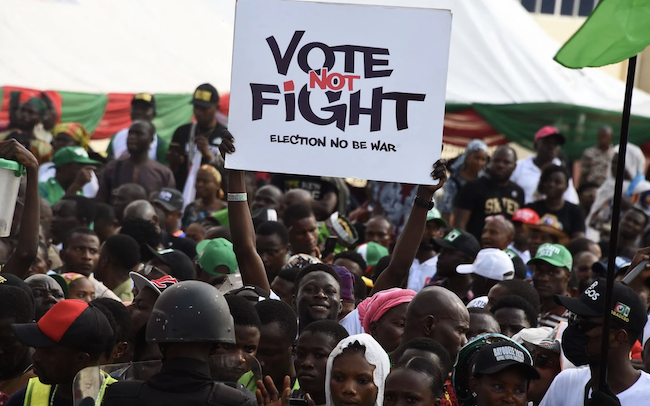
In my assessment, South Africa has increasingly drifted toward this dangerous pattern. Groups such as Operation Dudula have gained prominence by framing migrants as the central obstacle preventing South Africans from achieving economic security. Their campaigns have focused on identifying, exposing, and pressuring foreign nationals in workplaces, businesses, healthcare facilities, and communities.
Supporters present these actions as community activism aimed at enforcing immigration laws. Critics argue that they amount to organised intimidation and collective punishment. Regardless of which description one adopts, the consequences for many migrants have been profound. Families have reportedly fled communities they had lived in for years. Businesses painstakingly built over decades have allegedly been abandoned. Workers have found themselves targeted not because of individual conduct but because of nationality or language.
The greatest tragedy is that many of those affected are themselves Africans who arrived in South Africa fleeing economic hardship or political instability elsewhere on the continent. Zimbabweans escaping economic collapse, Nigerians seeking commercial opportunity, Malawians searching for employment, and Ghanaians building businesses all became part of South Africa’s economic fabric. Many invested their savings. Many paid taxes. Many employed South Africans. Yet during moments of heightened xenophobic tension, these distinctions often disappear. Instead, entire communities become defined by stereotypes.
One of the most troubling aspects of this crisis is the apparent contradiction between political rhetoric and political outcomes. President Cyril Ramaphosa has, on several occasions, publicly appealed for calm and urged citizens not to scapegoat migrants. Such statements acknowledge an important principle: collective blame is incompatible with constitutional democracy.
However, critics contend that words alone cannot substitute for decisive action. A government is ultimately judged not merely by speeches but by whether it protects those living within its borders. If illegal roadblocks emerge, if vigilante groups assume functions normally reserved for law enforcement, or if intimidation becomes normalised, then critics argue, and it stands to reason, that the state’s responsibility extends beyond condemnation. It includes prevention, investigation, prosecution, and the restoration of public confidence.
Leadership requires more than expressing concern after violence has occurred. It requires ensuring that violence does not become politically profitable. This is where many observers believe the South African government has fallen short.
Another concern relates to public messaging. During periods of heightened tension, discussions about undocumented migration have frequently merged with broader narratives linking foreign nationals to crime, drug trafficking, and social disorder. Certainly, criminal activity should be investigated and prosecuted regardless of nationality. Every sovereign state has the right to regulate immigration and enforce its laws. Yet problems arise when criminality becomes associated with entire national communities. Collective suspicion can quickly become collective punishment.
When political discourse repeatedly emphasises crime while simultaneously discussing migrants as a broad category, ordinary citizens may begin treating every foreign accent or passport as evidence of criminality. Such narratives risk legitimising prejudice even if that is not their stated intention. This dynamic deserves careful scrutiny because language matters. Political rhetoric shapes public perception. Public perception influences public behaviour. And public behaviour, when inflamed by fear and economic anxiety, can escalate into violence.
South Africa’s international reputation also hangs in the balance. For decades, Pretoria has positioned itself as an advocate of international justice, human rights, and constitutional governance. It has often spoken forcefully on humanitarian crises elsewhere and sought leadership roles in continental diplomacy.
That moral authority depends upon consistency. Critics argue that any perception of inadequate protection for migrants weakens South Africa’s credibility when speaking on international human rights issues. Whether fair or not, foreign governments inevitably compare external advocacy with domestic practice. A nation cannot easily champion human dignity abroad while facing accusations of failing to protect vulnerable communities at home.
The crisis also raises uncomfortable questions for the African Union. Pan-Africanism was founded on the principle that Africans share common aspirations and responsibilities beyond colonial borders. The free movement of people, economic integration, and continental solidarity remain central aspirations of the African Union’s long-term vision. Yet when African migrants become targets within another African country, those ideals appear increasingly fragile.
Many critics believe continental institutions have reacted too slowly to repeated outbreaks of xenophobic violence over the years. Whether because of diplomatic caution, political sensitivities, or institutional weakness, regional mechanisms have often appeared reactive rather than preventive. If Pan-Africanism is to remain more than political rhetoric, regional institutions may need stronger mechanisms capable of addressing cross-border humanitarian crises before they escalate.
The legal dimension of this crisis may become increasingly significant. Affected governments could seek accountability through available regional and international legal mechanisms where appropriate. Depending on the circumstances and available evidence, disputes concerning property rights, compensation, protection of foreign nationals, and alleged human rights violations could become matters for regional human rights institutions or other judicial forums.
Legal proceedings, however, are only one part of a broader diplomatic challenge. Governments whose citizens have been displaced face difficult questions. How should they assist returnees? How should abandoned investments be documented? How should diplomatic relations with South Africa evolve? Should they prioritise dialogue? Should they seek mediation? Should they pursue legal remedies? Or should economic pressure become part of their response?
Reasonable observers may disagree. Some advocate maintaining constructive engagement, arguing that isolation rarely produces lasting reform. Others believe stronger diplomatic and economic pressure is necessary to encourage meaningful action and demonstrate that attacks on foreign nationals carry regional consequences.
Whatever approach is chosen, one principle should remain clear: protecting human life and dignity must take precedence over political convenience.
Beyond governments lies another constituency with influence—the private sector. South African companies operate across much of Africa, contributing investment, employment, banking, telecommunications, retail, and logistics services. These businesses have benefited enormously from continental markets. Corporate leaders therefore have an opportunity to demonstrate that commerce can reinforce social responsibility. Clear public opposition to xenophobia, support for affected employees regardless of nationality, and investment in community cohesion could strengthen confidence both within South Africa and across the continent.
Civil society likewise has an indispensable role. Religious organisations, universities, trade unions, business associations, journalists, artists, and community leaders possess enormous influence over public discourse. History repeatedly shows that prejudice grows strongest when ordinary people remain silent. Countering xenophobia requires more than policing. It requires rebuilding trust. It requires challenging misinformation. It requires reminding societies that economic frustration does not justify discrimination.
Perhaps the deepest irony of this crisis lies in South Africa’s own history. Across the African continent, many nations provided sanctuary, financial assistance, military training, scholarships, diplomatic recognition, and political support to South Africans resisting apartheid. Countless African governments regarded the struggle against apartheid as their own.
That legacy created a powerful expectation of continental solidarity. When migrants from those same countries later sought opportunity in democratic South Africa, many believed they were entering not merely another labour market but a country whose liberation had been built upon African cooperation. Whether that expectation has been fulfilled remains a matter of intense debate.
South Africa today stands at an important crossroads. It can confront xenophobia decisively, strengthen institutions, prosecute those responsible for violence, reaffirm constitutional protections for everyone within its borders, and rebuild confidence among its African neighbours. Or it can allow cycles of resentment, vigilantism, and political expediency to deepen, eroding decades of diplomatic goodwill and weakening the very ideals that once distinguished the country’s democratic transition.
Ultimately, this crisis is larger than one administration, one political party, or one immigration debate. It asks whether Africa’s commitment to Pan-African solidarity extends beyond speeches and summit declarations. It asks whether constitutional democracies can protect vulnerable minorities even when doing so is politically difficult. And it asks whether governments confronting economic hardship will choose reform or scapegoating.
History will judge that choice. So will future generations of Africans whose faith in continental unity depends not on inspiring rhetoric, but on the willingness of nations to protect one another when it matters most. And a petition to the ICJ, this time against South Africa, for committing of failing to prevent xenophobia attacks on Africans, should not be ruled out.