By Law & Society Magazine Investigations
Will Justice Ever Come?
For decades, Nigeria’s Constitution has spoken with remarkable clarity about the primary responsibility of government.
Section 14(2)(b) declares that “the security and welfare of the people shall be the primary purpose of government.”
It is one of the most quoted provisions of the Constitution. It is also one of the most difficult to reconcile with the lived experiences of millions of Nigerians displaced by banditry, terrorism and mass violence.
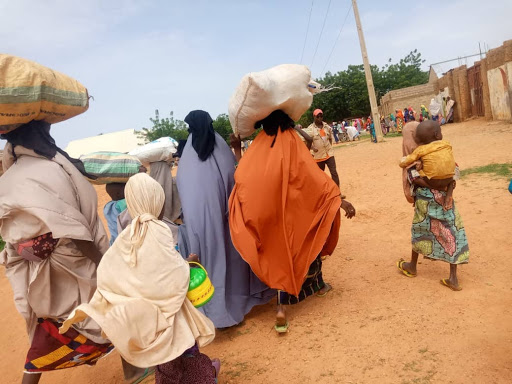
Across the North-West and North-Central, thousands of families remain unable to return home years after fleeing attacks. Entire communities continue to exist in temporary settlements. Farmers cultivate only the land they can reach safely. Children grow up knowing displacement better than stability.
Against that backdrop, successive attempts by state governments to negotiate with armed groups or reintegrate so-called repentant bandits have ignited one of the most profound legal and moral debates confronting the Nigerian state.
Can peace justify foregoing prosecution? Can a democratic state negotiate with men accused of mass murder, kidnapping and terrorism without undermining the rule of law? And perhaps most importantly, where do the victims fit into those negotiations? These questions have no easy answers.
But constitutional lawyers insist they cannot be ignored.
The Constitution’s Promise
Although Section 14 of the Constitution is generally regarded as non-justiciable because it forms part of the Fundamental Objectives and Directive Principles of State Policy, constitutional scholars argue that it nevertheless establishes the moral and constitutional compass by which governments should be judged.
Security, they argue, is not simply another government programme. It is the foundation upon which every other constitutional right depends. Freedom of movement means little where roads are controlled by armed gangs. The right to education becomes meaningless when schools become targets. The right to property offers little comfort to families whose homes have been burned to the ground.
The Constitution therefore imposes more than a political obligation. It creates an expectation that government will protect citizens from organised violence while ensuring that justice remains central to any peace process.
Can Terrorists Be Negotiated With?
Nigeria’s approach to negotiations has always been shaped more by practical realities than by settled legal doctrine. Officials have repeatedly argued that where military operations alone fail to end violence, dialogue may save lives. The argument is not unique to Nigeria. Governments around the world have negotiated with insurgents, separatist movements and armed groups when conflict appeared unwinnable through force alone.
Yet Nigeria’s case presents a unique complication. Many of the groups responsible for mass kidnappings, village massacres and attacks on civilians engage in conduct that falls within offences created under the Terrorism (Prevention and Prohibition) Act, 2022. The law criminalises acts intended to intimidate populations, compel governments, or cause death, serious bodily harm, hostage-taking and widespread destruction.
Legal experts note that while governments may engage in dialogue for strategic reasons, negotiation does not erase criminal liability. The commission of serious offences remains subject to investigation and prosecution unless otherwise addressed through lawful constitutional or statutory mechanisms. That distinction lies at the heart of the current debate.
Talking to armed groups may sometimes be unavoidable. But abandoning accountability is an entirely different matter.
The Rule of Law or the Rule of Necessity?
Civil society organisations have long warned that repeated negotiations risk sending unintended signals. If communities observe that violence attracts dialogue while peaceful citizens struggle to obtain government attention, criminality itself may become incentivised. The concern extends beyond perception.
Where prosecution becomes inconsistent, deterrence weakens. Future armed groups may conclude that the quickest route to negotiations is through spectacular violence. That fear has repeatedly surfaced whenever state governments announce fresh reconciliation initiatives following periods of intensified attacks.
Critics argue that while dialogue may produce temporary reductions in violence, it rarely addresses the structural conditions allowing criminal networks to regenerate. Without accountability, they warn, peace risks becoming merely an interval between conflicts.
The Missing Voices
Perhaps the most striking feature of Nigeria’s reintegration debates is who is often absent. Victims. Negotiations typically involve government officials, traditional rulers, security agencies and intermediaries. Communities devastated by years of violence rarely participate directly in decisions determining whether former attackers should return.
This absence has drawn concern from governance experts, who argue that sustainable peace depends not only on persuading perpetrators to surrender but also on restoring confidence among those expected to live alongside them afterwards. Communities that perceive justice as selective may struggle to embrace reconciliation, regardless of official assurances.
For many displaced families, the issue is not revenge. It is recognition. They want acknowledgement that what happened to them mattered. That their suffering carries legal and moral significance equal to the state’s desire for peace.
Lessons from Beyond Nigeria
Few countries emerging from prolonged violence have escaped the dilemma confronting Nigeria today. Should governments prioritise peace or punishment? History suggests the most durable answers often rejected that as a false choice.
In Colombia, the 2016 peace agreement with the Revolutionary Armed Forces of Colombia (FARC) ended more than five decades of conflict but did not grant blanket immunity.
Instead, the agreement created a Special Jurisdiction for Peace, requiring former combatants to confess crimes, acknowledge responsibility and provide reparations to victims in exchange for reduced penalties. Those who refused faced ordinary criminal prosecution. Victims were not spectators. They participated directly in truth-telling processes that became central to national reconciliation.
Sierra Leone adopted a similarly balanced approach after its devastating civil war. Alongside a Truth and Reconciliation Commission, the country established the Special Court for Sierra Leone, which prosecuted those bearing the greatest responsibility for atrocities, including senior commanders. The message was unmistakable. Peace could coexist with accountability. Neither required sacrificing the other.
Rwanda, following the 1994 genocide, combined international prosecutions with the community-based Gacaca justice system. While imperfect and sometimes controversial, the approach recognised that rebuilding society required confronting the crimes committed rather than simply moving beyond them.
In Northern Ireland, the 1998 Good Friday Agreement secured peace after decades of conflict through political compromise, including the early release of many prisoners affiliated with paramilitary organisations. Yet even today, victims’ groups continue debating whether justice was adequately served. The agreement brought an end to widespread violence. It did not erase the pain of those who lost loved ones.
Each country’s experience differed. But they shared one lesson. Successful peace processes rarely ignored victims. Instead, they sought ways, however imperfect, to place victims at the centre of reconciliation rather than at its margins.
Peace Without Justice?
Nigeria’s security crisis differs from each of those conflicts in important ways. Bandit groups are fragmented. Leadership structures shift constantly. Criminal motives often overlap with ideological, economic and communal grievances. There is no single negotiating table capable of ending the violence nationwide. Even so, international experience suggests one consistent principle.
Peace built solely around perpetrators seldom remains stable. Communities are far more likely to support reconciliation when they believe justice has not been abandoned in its pursuit. For Nigeria, that may prove the defining challenge of the years ahead. Not simply ending violence. But ensuring that the search for peace does not leave its greatest victims behind.
Read Also: WHEN TERROR PAYS (Part IV A): The forgotten Nigerians
The People Nobody Asked
Perhaps the greatest irony in Nigeria’s long search for peace is that those who have paid the highest price have often had the smallest voice. They are seldom invited to negotiation tables. They rarely feature in official communiqués announcing fresh peace deals. Their opinions are almost never sought before governments decide that armed groups deserve another opportunity to reintegrate into society.
Yet they are expected to live with the consequences. The widow whose husband was murdered while returning from his farm. The child who still panics at the sound of motorcycles because they remind him of the men who kidnapped his classmates. The village head who now leads a community scattered across displacement camps instead of the ancestral land his people occupied for generations. The farmer who has not harvested a crop in years because his land now belongs to men carrying assault rifles.
For them, reconciliation is not an abstract policy debate. It is deeply personal.
Many are not demanding revenge. They are demanding recognition. They want to know that the State values the lives destroyed by years of violence as much as it values persuading those responsible to lay down their weapons. Without that recognition, reconciliation risks becoming something done to victims rather than with them.
The Cost of Forgetting
Conflict does not end when the shooting stops. The wounds linger long after the headlines disappear.
Psychologists who work with survivors of mass violence have consistently warned that trauma untreated often becomes trauma transferred. Children raised amid displacement and insecurity carry emotional scars into adulthood. Communities fractured by repeated attacks struggle to rebuild trust. Entire generations grow up believing violence is simply part of life.
Nigeria has spent billions on military operations. Far less has been invested in helping victims rebuild their lives.
In many affected communities, there is little access to trauma counselling, livelihood support, compensation or long-term rehabilitation. Families who lost everything often begin again with almost nothing, relying on humanitarian agencies, religious organisations and local charities rather than structured government support. The imbalance is striking.
Programmes designed to encourage fighters to abandon violence have attracted public attention and government resources. Victims, meanwhile, continue rebuilding their lives largely on their own.
What Real Peace Looks Like
History suggests that sustainable peace is rarely achieved by military victory alone. Nor is it secured simply through negotiations. It requires institutions that inspire confidence, communities that believe justice has been served and governments willing to confront both the causes and consequences of conflict.
That means strengthening intelligence gathering before attacks occur rather than responding afterwards. It means rebuilding police presence in abandoned rural communities. Ensuring that schools, hospitals and farming settlements are protected, not only during security operations but after soldiers leave. It means prosecuting those responsible for the gravest crimes while creating lawful pathways for lower-level participants who genuinely renounce violence and meet clearly defined conditions for reintegration. Above all, it means placing victims at the centre of every peace initiative.
Communities should not wake up to discover that the men accused of terrorising them have returned without consultation, explanation or accountability. If reconciliation is to endure, those most affected must become participants rather than spectators.
Learning From the Past
Nigeria need not reinvent the wheel. Other countries that emerged from prolonged conflict demonstrate that peace and accountability need not be opposing objectives. Truth commissions gave victims an opportunity to tell their stories. Special courts ensured that those bearing the greatest responsibility answered for their actions. Compensation programmes acknowledged that rebuilding lives required more than words. Memorials ensured future generations remembered what had happened.
None of those systems was perfect. Each attracted criticism. But they shared one common principle. Victims mattered. That lesson remains relevant today.
Whether Nigeria ultimately chooses negotiations, prosecutions or a combination of both, lasting peace will depend on convincing survivors that justice has not been sacrificed in pursuit of stability.
The Questions That Will Not Go Away
The arrest of seven suspected Boko Haram and ISWAP commanders at Katsina Airport after returning from Hajj reignited difficult questions that have refused to disappear.
How did individuals suspected of involvement in terrorism obtain travel documents and leave the country without detection?
If Nigeria’s identity management and border security systems have now become sufficiently integrated to identify them upon their return, why did those same systems fail to prevent their departure? Why were they intercepted only after allegations surfaced that bandit leaders had been sponsored for the pilgrimage, allegations the Katsina State Government has firmly denied?
The Federal Government has pointed to improvements in biometric integration, passport verification and data sharing with international security systems as evidence that reforms are beginning to yield results. Those reforms deserve recognition. But they also underscore the challenge.
If technology now exists to identify suspected terrorists, many Nigerians will understandably ask why similar systems were not robust enough to stop them before they boarded outbound flights.
Those questions deserve credible answers. Not because they diminish recent security gains, but because public confidence depends on transparency.
The Republic Still Waiting
Perhaps history will judge this era differently from those living through it. It may conclude that governments acted pragmatically under extraordinary circumstances. It may determine that negotiations prevented even greater bloodshed. It may recognise that military force alone could never have resolved Nigeria’s complex security crisis.
All of those conclusions are possible. But history is likely to ask another question.
What became of the victims? What happened to the families who buried loved ones after massacres in villages that no longer exist? What became of the children whose education ended because their schools became targets? What happened to the farmers who abandoned fertile land and never returned? What became of the millions displaced by violence while political leaders debated the merits of dialogue, amnesty and reintegration?
Those questions cannot be answered through statistics. They can only be answered through lives restored.
When Terror Pays
Throughout this investigation, one distressing theme has repeatedly emerged.
When governments negotiate with armed groups without visible accountability, when communities pay levies to survive, when kidnappers accumulate fortunes through ransom, when victims remain displaced while perpetrators seek reintegration, a dangerous perception begins to take hold.
That violence works.
It is a perception every democratic society must resist. The rule of law cannot survive if organised violence becomes a more effective route to influence than peaceful citizenship. Nor can public confidence endure if victims conclude that the State has become more attentive to those carrying guns than to those forced to flee from them.
None of this diminishes the importance of peace. Peace remains the ultimate objective. But peace built on forgotten victims is rarely sustainable. The measure of success is not simply how many fighters surrender.
It is how many families return home. It is whether children can once again walk to school without fear. It is whether farmers harvest their crops instead of paying taxes to criminals. It is whether communities rebuild the trust that violence destroyed.
Until that happens, the work remains unfinished. Nigeria may eventually defeat banditry. It may dismantle criminal networks, restore security and reclaim communities long abandoned to fear. But if that victory is not accompanied by justice for those who suffered, the country risks replacing one tragedy with another.
The rehabilitation of former fighters may help end a conflict. Only the restoration of victims can truly end a war.
Conclusion
This concludes When Terror Pays, a four-part investigative series examining Nigeria’s evolving response to banditry, the rise of negotiations and reintegration programmes, the legal and constitutional dilemmas surrounding accountability, and the human cost borne by millions of victims who continue to wait for justice, security and the opportunity to return home.