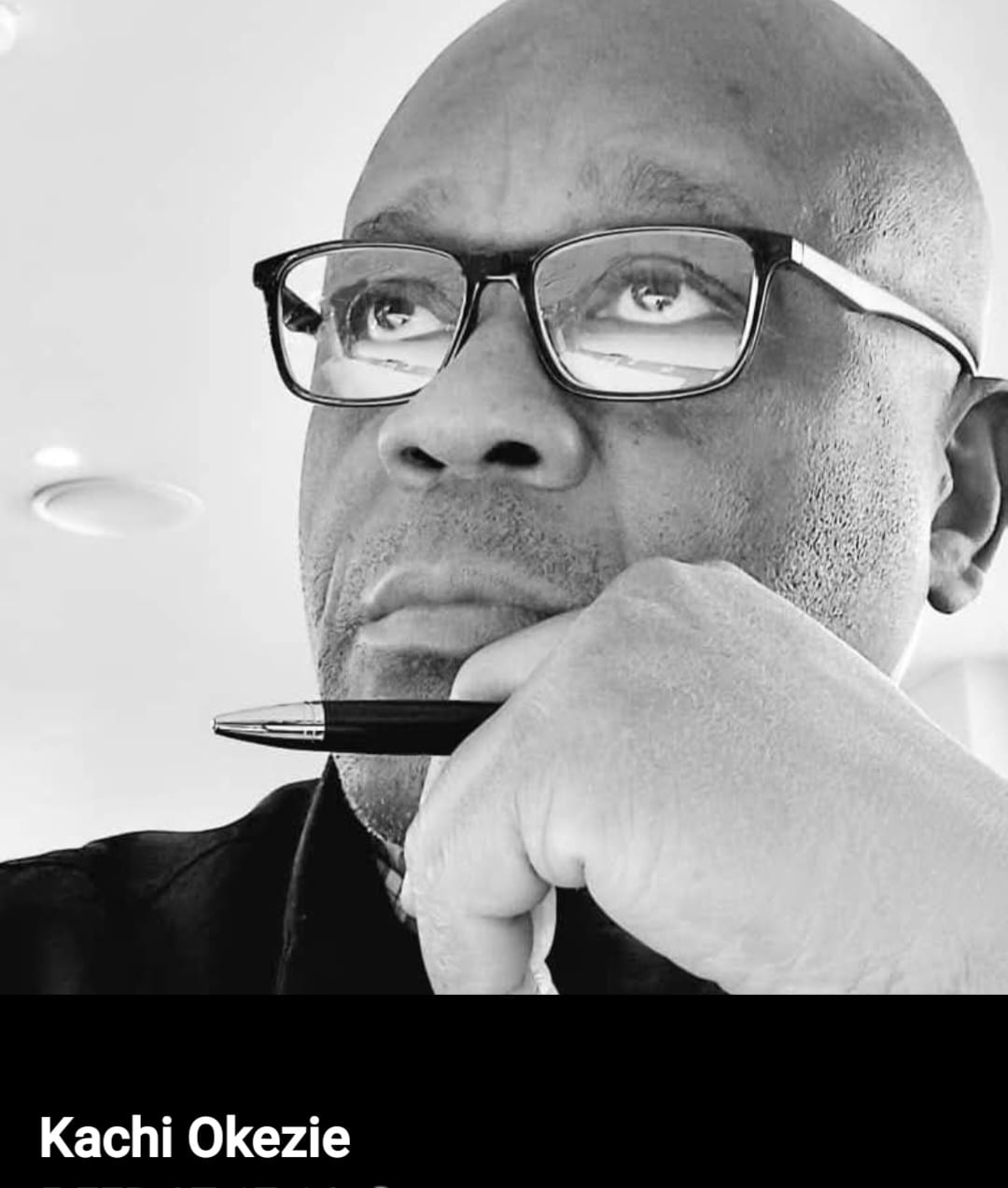
By Kachi Okezie, Esq.
For years in Nigeria, the conversation about autism has lived in whispers. In school staff rooms it was “that slow child.” In churches and mosques it was “spiritual attack.” In many homes it was a secret kept from neighbours. We recognised the behaviour, but we had no language for it, no plan for it, and certainly no system to support it.
That may finally be changing. The call came again this month, clear and urgent, from Mr. Segun Agbaje, CEO of Guaranty Trust Holding Company, at the 16th edition of the annual GTCO Autism Conference in Lagos. His message was not about awareness posters or ribbon pins. It was about classrooms. About teachers. About skills. Schools and educators, he said, must shift focus from simply recognising autism to building practical classroom skills that support neurodivergent pupils.
That distinction matters because recognition without capacity is the grave where good intentions are buried in Nigeria.
We have done the first part. NGOs, parents’ groups, celebrities, and corporate initiatives like GTCO’s conference have dragged autism out of the shadows. More parents now know the word. More paediatricians and specialist professionals can screen. Social media has given mothers in Kano and Enugu and Port Harcourt a community where they can say “my child is autistic” and not be judged. That is progress, and we should not downplay it.
But recognition was the easy part. The hard part starts at 8am on a Monday, in a classroom of 45 pupils in Surulere, or 60 in Onitsha, or 30 in Kaduna, with one teacher, no teaching assistant, no sensory corner, and a curriculum that assumes every child learns the same way at the same speed. What does a teacher do when a bright 7-year-old cannot make eye contact but can recite the entire times table? What does a school do when a child covers his ears and shuts down during assembly, not because he is stubborn, but because the noise is physically painful? What happens when parents are told “we don’t take those kind of children here” not out of cruelty, but out of fear and ignorance?
That is where Nigeria has stalled. We have awareness campaigns but not yet a system. A system looks like teacher training colleges where special and inclusive education is not an elective in year 3, but a core competency from day one. It looks like schools with simple, low-cost accommodation: visual timetables, quiet spaces, peer-buddy systems, and lesson plans that allow for different ways of demonstrating knowledge.
It looks like education ministries tracking how many neurodivergent children are in school, and why others are not. And it looks like school counsellors who know the difference between a tantrum and sensory overload.
For the first time, government is beginning to match that ambition with structure. Dr. Tunji Alausa, Minister of Education, recently announced that the Federal Government plans to expand university training for autism-related specialists from just 2 institutions to 20. Right now only Ondo State University of Medical Sciences and Obafemi Awolowo University run degree programmes in occupational therapy, audiology and speech therapy.
But about 20 other universities have indicated readiness, with 8 already at advanced stages. A national committee involving NUC, TETFund and the Medical Rehabilitation Therapists Board has been set up to fast-track accreditation and curriculum. The goal is to end the acute shortage of therapists that forces parents to wait months for an appointment, or to travel abroad for basic intervention. “There is no cure for autism,” experts remind us, “but early intervention can significantly improve outcomes.” Such framing makes autism out to be a disease. It isn’t. It’s about being different, with recognition and acknowledgement.
That said, intervention cannot happen if we do not have the competent professionals to deliver it.
At the same time, the Senate is considering a Bill to establish a National Centre for Autism in Abuja with six zonal centres across the geopolitical zones. The proposed centres in Kaduna, Bauchi, Enugu, Port Harcourt, Ibadan and Abuja/North Central would provide diagnosis, therapy, education, and research. They would also train practitioners: teachers and carers, and serve as referral hubs for state-level facilities. The sponsor, Senator Natasha Akpoti-Uduaghan, described it as “an act of social justice” and a federal response to a developmental and public health challenge. If passed, it will be the first comprehensive federal law dedicated to autism diagnosis, care and inclusion in our history.
These two moves address exactly the bottleneck Mr. Agbaje identified. You cannot ask schools to build practical classroom skills if there are no trained therapists to support teachers, and no regional centres to diagnose children early. For 16 years GTCO has funded free screenings and consultations and brought together healthcare professionals, educators and families. Now policy is catching up.
The truth is, Nigeria cannot afford to keep getting this wrong. One in 100 children globally is estimated to be on the autism spectrum. With our population, that is hundreds of thousands of Nigerian children. Many of them are gifted with pattern recognition, memory, art, and problem-solving that the economy desperately needs. But a gift that is not nurtured becomes a burden: to the child, to the family and to the country.
Are we ready to confront this in a structured and determined manner? We are at the threshold. The willingness is here. Parents are organising. Corporates like GTCO are funding and convening year after year. Some private schools in Lagos, Abuja and Ibadan are already training staff and creating inclusion units.
Now the Federal Ministry of Education has a plan to grow the workforce, and the National Assembly has a bill to institutionalise care. What remains is execution. Expanding to 20 universities is excellent, but we will need funding, clinical placements, and jobs for graduates so they do not leave the country.
Passing the Autism Centres Bill is vital, but we will need budgets, equipment, and standards so they do not become empty buildings with nice signboards.
Determination will look like this: a headteacher in a public primary school in Bauchi who knows how to support a non-verbal child because a therapist trained in Kano visited her school. A parent in Port Harcourt who can get a diagnosis and therapy plan at the zonal centre instead of flying to Lagos. A government that funds assistive tools the way it funds textbooks, and assesses pupils in ways that measure what they know, not just how they sit still. It will look like moving from awareness to action, as stakeholders have urged ahead of World Autism Awareness Day.
The GTCO conference has done the heavy lifting of keeping the conversation alive for 16 years. The Minister and the Senate have now put policy and infrastructure on the table. The baton must move from the conference hall, to the training college, to the zonal centre, to the classroom.
Nigeria is not fully ready yet. But for the first time, we have no excuse not to be. The knowledge exists. The models exist. Even within Nigeria, there are schools getting it right quietly.
The question before us is no longer “what is autism?” The question now is “what kind of schools and health systems are we willing to build?”
If we answer that question with skills, with policy, with funding and with practice, then yes. Nigeria may finally be ready. Not just to recognise our neurodivergent children, but to teach them, support them, and let them thrive.
-Kachi Okezie, Esq is a legal practitioner and chartered mediator. He’s also a trustee of the Royal School of Educational Therapy Foundation (RSETF).
The views expressed by contributors are strictly personal and not of Law & Society Magazine.