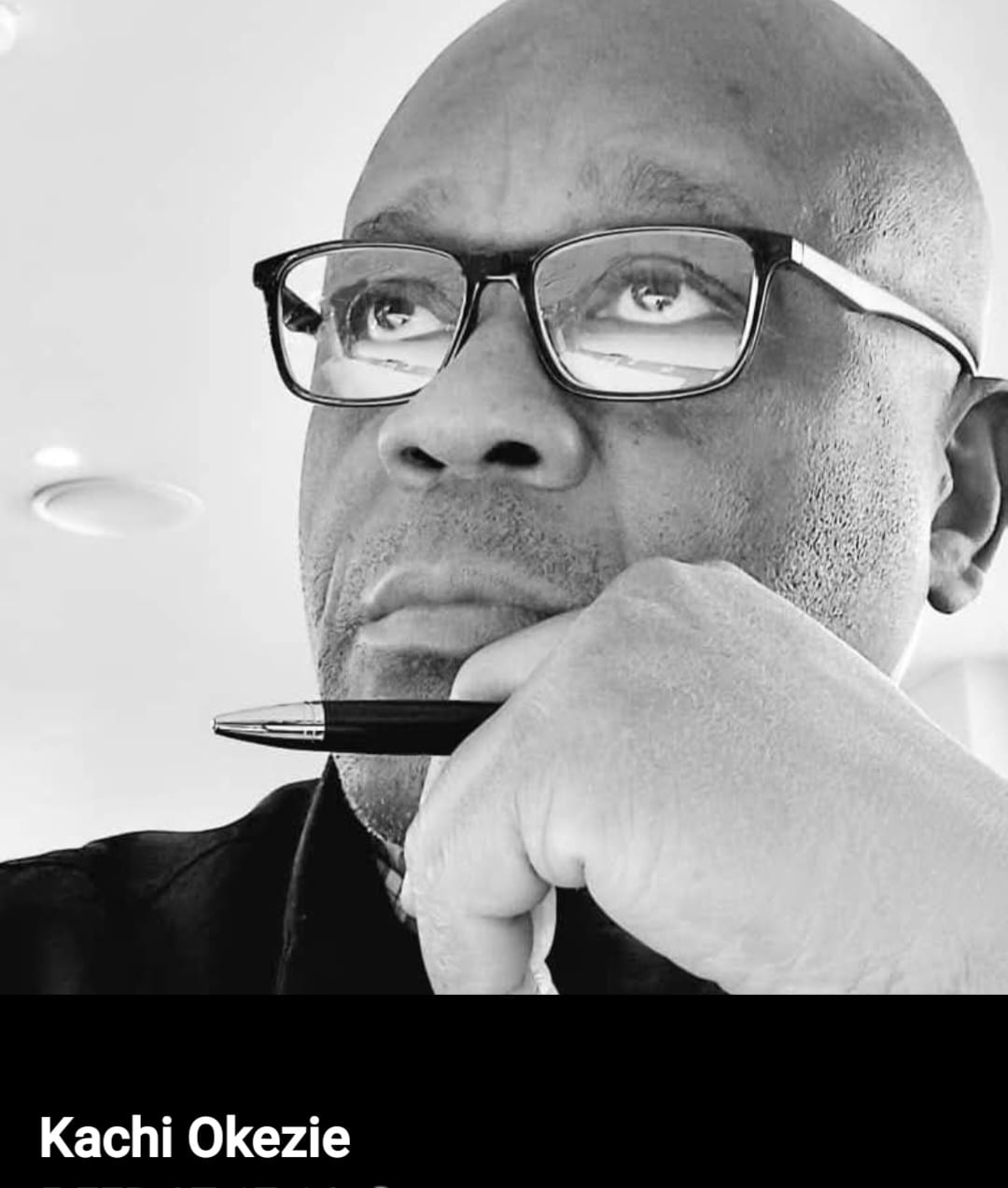
By Kachi Okezie, Esq.
So the news came late in the day: at President Tinubu’s direction, the Economic and Financial Crimes Commission has lifted the freeze on the Osun State Government’s bank accounts. Thus, came the reprieve via a scathing statement by the President, in which he described “the timing of the EFCC’s action, coming about 10 days to the upcoming Osun State governorship election, as deeply embarrassing” to him. On the surface, it is good news. Teachers will get paid. Hospitals will buy drugs. Pensioners will not have to wait another month for what is owed them. For a democracy that was 10 days away from an election, breathing room matters.
But good news can also be dangerous news, because it forces us to ask the question we have been avoiding for 20 years. Who does the EFCC actually work for? Earlier today I argued, and I still believe, that the Commission was within the law when it acted. Section 34(1) of the EFCC Establishment Act gives it power to investigate. Sections 7(6) and 7(7) of the Money Laundering Prohibition and Prevention Act 2022 allow it to place a post-no-debit on an account for 72 hours where suspicious transactions are detected, after which it can run to the Federal High Court for an order to keep the freeze in place pending investigation. Our courts have even stretched that to over 90 days in some cases. By that standard, the letter to First Bank on August 5th was not illegal; it was textbook.
But legality is not the same thing as sagacity, and it is certainly not the same thing as democratic judgment. To freeze a statutory allocation account is to freeze a state. It is to freeze salaries in Ilesa, drugs in Osogbo, and road contractors in Iwo. The people who feel that freeze are not the political appointees in Government House. They are the nurse who has two children in school, the retired headmaster waiting for his pension, the young graduate who just got a teaching job and expects his salary. To do that just ten days to an election, without visible exemptions for essential services, without a public explanation that citizens could understand, was reckless. It was also politically tone-deaf. In a country with our history, optics are not mere vanity; they are oxygen. The moment you touch a state’s money on the eve of an election, you have entered the arena of politics, whether you intended to or not.
Then comes the second act. The freeze is lifted, and we are told it was “at the President’s direction.” That sentence should worry all of us, no matter which party we support. Because if the President can order a freeze, then the President can also order an unfreeze. And if the President can do both, then the EFCC is not an independent law enforcement agency. It is a department in the Villa with a fanciful letterhead.
The Constitution does not say that. The EFCC Act does not say that. The oath that every EFCC officer swears is to the Constitution of the Federal Republic of Nigeria, not to any man in Aso Rock. The entire idea of an anti-corruption agency in a democracy is that it must be insulated from the very power it is meant to check. The moment it becomes an extension of presidential whim, it loses both credibility and legitimacy.
This is the long-held suspicion Nigerians have carried in their hearts. We have seen it in how some cases move at lightning speed while others gather dust for years. We have seen governors under investigation become saints the day they defect. We have seen petitions against powerful people vanish, and petitions against opponents become press conferences. We tell ourselves stories to explain it away. “They had better evidence.” “The other case was weak.” But deep down we know the truth. The hand on the lever is not the law. It is politics.
Now, to be fair, the President may have acted for the right reasons. Perhaps he was told of the humanitarian impact. Perhaps he was briefed that the optics were damaging to the government and to the election. Perhaps he genuinely wanted to prevent suffering in Osun. Those are good motives. But good motives do not cure bad process. In a democracy, process is the point. If the EFCC is independent, then the President should not be giving directions to freeze or unfreeze. If the President can give directions, then let us stop pretending that the Commission is independent and amend the law to say so.
We cannot have it both ways. We cannot cheer when the President intervenes to “save the people” and then turn around and demand that the EFCC be allowed to do its job without interference. Either the law governs us, or men do.
There is also the larger damage. Every time this happens, public trust erodes a little more. The next time the EFCC moves against a state, nobody will ask about the evidence. They will ask, “Whose side is the President on?” The next time an opposition state is investigated, it will be dismissed as a witch-hunt. The next time a friendly state is spared, it will be called a cover-up. That is how institutions die. Not in one dramatic collapse, but in a thousand small decisions that teach citizens that the rules are negotiable.
What should have happened was simple. The EFCC, if it had genuine intelligence of N11 billion in suspicious Ecology and FAAC funds, should have gone to court, gotten an order, and made provisions in that order to protect salaries and essential services. It should have communicated clearly to Osun and to the public what it was doing and why. And once the investigation was done, the court, not the President, should have decided whether to continue or lift the freeze. That is how it works in countries that take both corruption and democracy seriously. We are not there yet. But we can get there if we decide that the Constitution is not just a speech we read on Democracy, Day but a practice we live every day.
President Tinubu did what he thought was right for Osun in the short term. For that, the teachers and pensioners can be grateful. But for the long term, he has handed us a problem. He has confirmed, in action, what critics have only been saying in words: that the EFCC answers to the President and not to the Constitution. That cannot stand. If we want an anti-corruption war that Nigerians will believe in, we must give the EFCC real independence. Security of tenure for the Chairman. Budgetary autonomy. A requirement that all freezes and unfreezes go through the courts, on record, with reasons given. And a clear convention that the President does not pick up the phone to direct cases.
Democracy is not protected by good men making good decisions. It is protected by bad men being unable to make bad decisions because the law won’t let them. Osun’s accounts are open again. That is relief. But the bigger account, the account of public trust in our institutions, remains frozen. And only the law, consistently and courageously applied, can unfreeze it.
Kachi Okezie, Esq is a legal practitioner and chartered mediator; a member of the Abuja branch of the Nigerian bar Association.
The views expressed by contributors are strictly personal and not of Law & Society Magazine.