Home Blog Page 53

Medical School hopeful, Daniella Owoeye Jesudunsin tops 2026 UTME with 372, as JAMB reveals 11 best scorers

  • Runner up Enwere Kingsley Ikenna, scored 370

The Joint Admissions and Matriculation Board (JAMB) has unveiled the top-performing candidates in the 2026 Unified Tertiary Matriculation Examination (UTME), with an aspiring medical student emerging as the overall best.

Here are 11 highest scoring candidates in the 2026 UTME

Owoeye Daniella Jesudunsin (Ekiti State) – 372

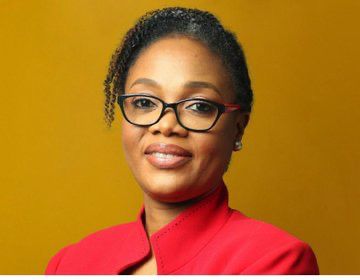
Owoeye Daniella Jesudunsin emerged as the highest scorer in the 2026 UTME with an outstanding 372 marks. The Ekiti-born candidate selected University of Lagos (UNILAG) as her first choice, where she hopes to study Medicine and Surgery (MBBS).

Enwere Kingsley Ikenna (Imo State) – 370

Ranking second is Enwere Kingsley Ikenna, who scored 370. He chose Nile University of Nigeria as his preferred institution, with a focus on Computer Science.

Powered by VidCrunch

Bamisile Ayomide Emmanuel (Ondo State) – 369

Bamisile Ayomide Emmanuel secured the third position with 369 marks. He selected Federal University of Technology Akure (FUTA), where he intends to study Software Engineering.

Olabiyisi Olanrewaju Oluwatimileyin (Oyo State) – 368

Olabiyisi recorded 368 and chose Pan-Atlantic University for Mechatronics Engineering.

Victor-Onyeka Daniel Ifeanyi (Imo State) – 368

Also scoring 368, Victor-Onyeka opted for University of Port Harcourt (UNIPORT), where he plans to study Electrical/Electronic Engineering.

Osagiobare Daniel Osaherumwen (Edo State) – 368

Osagiobare matched the 368 score and selected University of Benin (UNIBEN), aiming for Mechanical Engineering.

Ademiluyi Adebowale Anthony (Osun State) – 368

Ademiluyi also scored 368 and chose Obafemi Awolowo University (OAU) to study Computer Engineering.

Azike Kenechukwu Anthony (Anambra State) – 368

Azike, another top scorer with 368, selected Afe Babalola University (ABUAD) for Software Engineering.

Offorike Michael Okechukwu (Abia State) – 367

Offorike scored 367 and chose University of Ibadan (UI) as his first choice to study Computer Science.

Adebisi Eniola Sonari (Ogun State) – 367

Adebisi also recorded 367, selecting Covenant University for Computer Science.

Umukoro Gift Oghenevovwero (Delta State) – 367

Umukoro rounded off the list with 367 marks and chose Pan-Atlantic University to study Electrical/Electronic Engineering.

Africa’s Growing Xenophobic Culture: A dangerous trend, By Olufunke Baruwa

For a continent that proudly sings the anthem of Pan-Africanism, Africa is increasingly becoming hostile to Africans themselves. From the streets of Johannesburg to troubling incidents in Ghana, Kenya, Libya, Tunisia and counting, a dangerous tide of xenophobia is sweeping across the continent. Africans are turning against fellow Africans with alarming bitterness, violence, intimidation and exclusion. What once appeared as isolated incidents is now evolving into a troubling continental culture.

In recent weeks, diplomatic tensions have risen between Ghana and South Africa following reports and videos of Ghanaians and other African migrants being harassed in South Africa. Ghana summoned South Africa’s envoy over what it described as disturbing xenophobic incidents against its citizens. South African authorities themselves acknowledged the rise in anti-immigrant violence and promised crackdowns on perpetrators.

The Rise of a Dangerous Continental Culture

Yet perhaps the most disturbing development is that xenophobia is no longer confined to South Africa. Ghana itself — a country historically celebrated for Pan-Africanism and hospitality — has recently witnessed disturbing rhetoric targeting Nigerians. Videos and social media campaigns emerged in which some Ghanaians threatened Nigerians and demanded they leave the country. Reports of harassment and inflammatory language exposed an uncomfortable truth: the xenophobic bug is spreading.

South Africa may be the most visible theatre of this crisis, but it is certainly not the only one.

Across North Africa, migrants from sub-Saharan Africa have faced racial attacks, arbitrary detention and even slave-market conditions over the past decade. In parts of West Africa, resentment against foreign traders periodically erupts into hostility. In East Africa, political rhetoric increasingly blames outsiders for economic hardship. Even online spaces have become toxic battlegrounds where Africans attack one another based on nationality, language or ethnicity.

The painful irony is impossible to ignore: Africans who suffered centuries of slavery, colonialism, apartheid and racism are now reproducing similar patterns among themselves.

The contradiction is even deeper when one considers Africa’s liberation history. During apartheid, several African countries hosted South African exiles, funded liberation movements and paid enormous economic and diplomatic prices to support freedom struggles. Nigeria, Ghana, Zambia, Tanzania and others stood firmly with South Africans during some of their darkest years.

Today, many Africans feel betrayed by the erosion of that solidarity.

Why Xenophobia is Growing in Africa

The first driver of Africa’s growing xenophobia is economic frustration. Across the continent, unemployment, inflation, inequality and declining living conditions have created widespread anger and anxiety. In such difficult environments, migrants become convenient scapegoats. Politicians, populist movements and frustrated citizens blame foreigners for crime, job scarcity, pressure on social services and economic decline.

It is easier to accuse a Zimbabwean shop owner, a Nigerian entrepreneur, a Somali trader or a Ghanaian worker than to confront decades of policy failure, corruption and elite capture.

History shows that xenophobia thrives where governments fail to provide economic security and social justice. The foreigner becomes the visible target for invisible structural failures.

Second, Africa suffers from a growing crisis of nationalism without Pan-African consciousness. The dream of African unity championed by figures such as Kwame Nkrumah, Julius Nyerere, Thomas Sankara and Nelson Mandela has weakened significantly. Today, many Africans identify more strongly with narrow national interests than with continental solidarity.

Third, political opportunism is fuelling dangerous narratives. Anti-immigrant rhetoric is increasingly becoming a political tool. Leaders and activist groups gain popularity by presenting themselves as defenders of citizens against “foreign invasion.” Social media has worsened this problem, amplifying misinformation, hate speech and inflammatory propaganda.

Once xenophobia becomes politically profitable, it quickly normalises violence.

Weak institutions and poor migration governance have also deepened tensions. Many African states lack coherent immigration systems, regional labour agreements or social integration policies. Borders are porous, documentation systems are weak and migration flows are poorly managed. This creates public anxiety, suspicion and resentment.

There is also a deeper psychological contradiction at play. Africans routinely demand dignity and fair treatment abroad while denying the same to fellow Africans at home. Africans protest racism in Europe and America but sometimes reproduce tribalism, ethnic hatred and xenophobia within Africa itself.

We cannot credibly condemn global racism while nurturing local intolerance.

The consequences are severe. Economically, xenophobia damages African integration and trade. The African Continental Free Trade Area depends on mobility, cooperation and trust among African nations. Businesses cannot thrive where migrants fear violence and discrimination.

Diplomatically, xenophobia weakens regional relations. Repeated attacks on Nigerians in South Africa, and recent tensions involving Ghana, demonstrate how quickly citizen-targeted violence can escalate into interstate friction.

Socially, xenophobia destroys the moral fabric of African societies. It normalises mob violence, hate speech and exclusion. Children grow up learning suspicion instead of solidarity.

Most dangerously, xenophobia threatens Africa’s long-term political vision. A fragmented continent cannot effectively confront global economic inequality, geopolitical competition, climate crises or technological disruption. Africa’s strength has always depended on collective unity.

So how do we end this dangerous trend?

Rebuilding the Spirit of African Solidarity

First, African governments must stop treating xenophobia as isolated criminal incidents and recognise it as a structural political and social problem. Strong condemnation alone is insufficient. Governments must prosecute perpetrators consistently, dismantle violent extremist groups and enforce laws protecting migrants and minorities.

Second, Africa urgently needs economic reforms that address inequality and youth unemployment. Xenophobia feeds on desperation. Where millions feel economically abandoned, anger will always seek vulnerable targets. Governments must invest seriously in jobs, education, entrepreneurship and inclusive growth rather than symbolic politics.

Third, the African Union must take a more active role. Xenophobic violence should trigger continental accountability mechanisms, diplomatic mediation and coordinated policy responses. Pan-Africanism cannot remain ceremonial rhetoric spoken only during summits and anniversaries. It must become a lived political commitment.

The AU should also strengthen continental migration frameworks that protect migrants while supporting host communities.

Fourth, African education systems must intentionally teach Pan-African history and values. Many young Africans know little about the solidarity that shaped independence struggles across the continent. They are growing up in digital echo chambers filled with nationalist anger, stereotypes and misinformation.

Education must rebuild the consciousness that Africa’s liberation has always been interconnected.

Fifth, media organisations and digital platforms must act responsibly. Sensationalist reporting often inflames tensions by portraying migrants solely as criminals or economic threats. Social media algorithms reward outrage and hate. Responsible journalism and digital literacy are now essential tools against xenophobia.

Finally, Africans themselves must reject the politics of blame and fear. Ordinary citizens must resist the temptation to turn vulnerable migrants into symbols of frustration. A struggling Nigerian in Johannesburg, a Ghanaian trader in Pretoria, a Sudanese refugee in Tunisia or a Somali entrepreneur in Nairobi is not the cause of Africa’s governance failures.

The real enemies are corruption, inequality, weak leadership, underdevelopment and institutional decay.

Africa cannot build continental unity while Africans are hunted for being African.

The tragedy is not only that Africans are attacking one another. The deeper tragedy is that we are forgetting who we are supposed to become together.

Until Africa rediscovers the moral courage of solidarity, Pan-Africanism risks becoming merely a slogan repeated at conferences while fear, violence and division quietly define the continent’s future.

The views expressed by contributors are strictly personal and not of Law & Society Magazine.

“This Amateur Cover-Up Will Fail”: Odinkalu rejects Anambra probe that cleared Governor’s security adviser

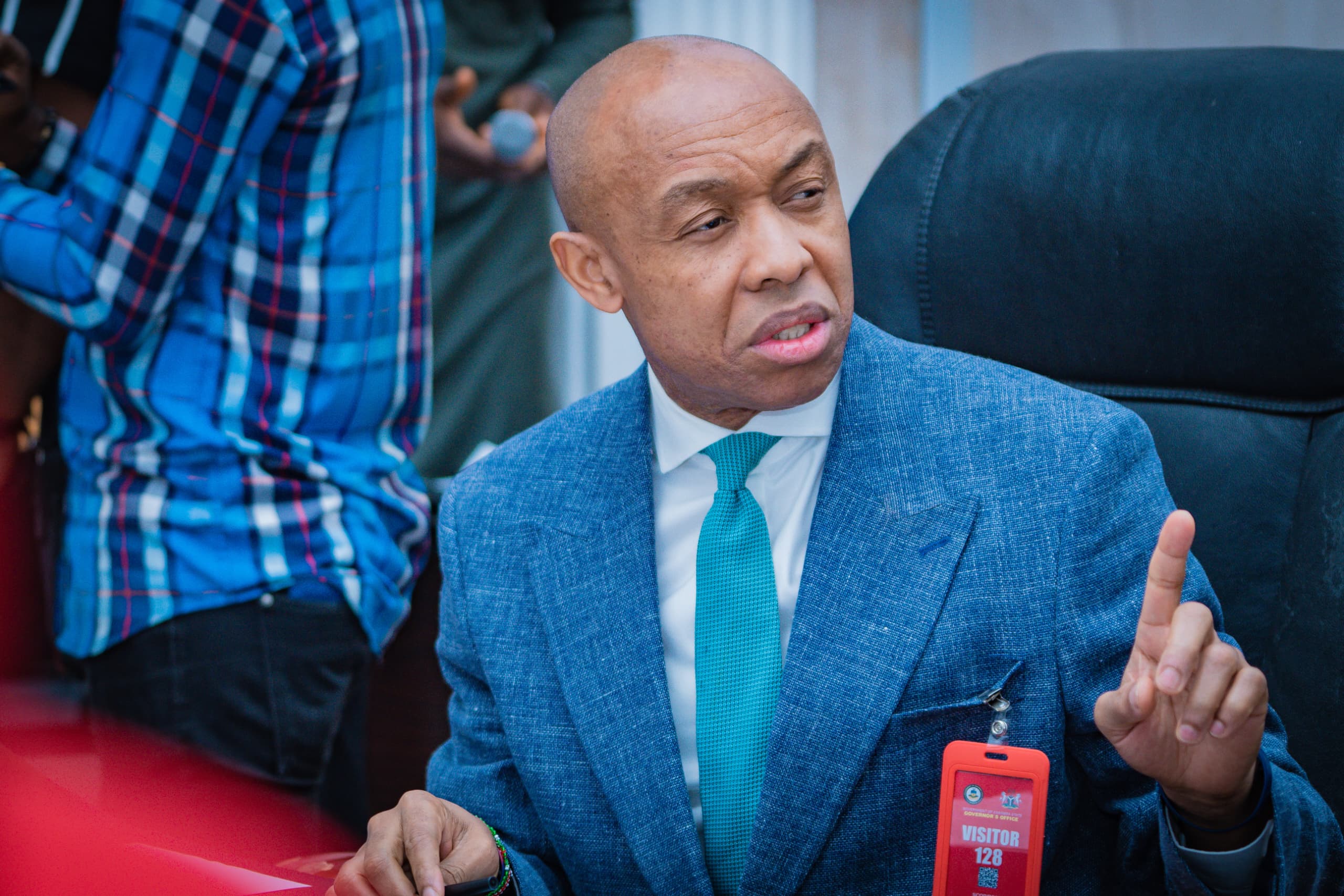
A bitter public confrontation has erupted between the Anambra State Government and outspoken human rights lawyer and public commentator Prof. Chidi Anselm Odinkalu after a state-appointed investigative panel dismissed allegations against Governor Chukwuma Soludo’s Security Adviser, Mr. Ken Emeakayi, as “false and misleading.”

But rather than ending the controversy, the government’s report appears to have detonated a much larger political firestorm.

Within hours of the state’s announcement, Odinkalu fired back in a blistering statement on X, rejecting the probe as an “amateur cover-up” and insisting that his allegations “stand unimpeached.”

The escalating war of words is now exposing deeper tensions around political accountability, elite power networks, and public trust in internal government investigations.

The Allegation That Sparked the Crisis

The controversy began after Odinkalu alleged that a senior security adviser in the Anambra State Government was involved in an improper relationship with Mrs. Mmasi Nwangwu, wife of convicted businessman Chukwudozie Nwangwu, popularly known as “Akwa Okuko.”

The allegation quickly ignited political controversy in Anambra, forcing the state government to establish a Fact-Finding Committee to investigate the claims.

In a statement released on May 11, 2026, the government said the committee — chaired by the Anambra State Attorney General and Commissioner for Justice, Tobechukwu Nweke, SAN — interviewed all parties connected to the allegations, including Mr. Ken Emeakayi, Mrs. Nwangwu, and legal representatives linked to Akwa Okuko.

According to the government, the committee found no evidence of any improper relationship.

“The testimonies were consistent in establishing that Mr. Ken Emeakayi and Mrs. Nwangwu did not have any personal or improper relationship,” the report stated.

The government concluded that Odinkalu’s claims were “false and misleading.”

Officials also accused the professor of ignoring repeated invitations to provide evidence supporting his allegations.

Odinkalu: “I Declined to Dignify Their Transmission”

But Odinkalu is not backing down.

In a lengthy response posted on his X account, the former chairman of Nigeria’s National Human Rights Commission released screenshots of WhatsApp messages allegedly sent to him by Attorney General Tobechukwu Nweke requesting sources for the allegations.

Odinkalu ridiculed the process, questioning why an official government investigation would be conducted through WhatsApp messages rather than formal correspondence.

“It also seemed to me incongruous that an investigation should be run by WhatsApp,” he wrote.

“Surely, an Attorney-General claiming to be a SAN ought to know how to write a letter.”

The professor said he deliberately ignored the messages because he was sceptical about the legitimacy and structure of the committee.

“For the record, the message did not disclose the composition of the so-called ‘we’ or ‘investigation’; the basis of its authority, or its Terms of Reference,” he wrote.

“I declined to dignify their transmission.”

Odinkalu then escalated the confrontation dramatically.

Murder Allegations Resurface

In perhaps the most explosive part of his response, Odinkalu referenced decades-old allegations involving Ken Emeakayi and the killing of a former chairman of the Nigerian Bar Association in Onitsha and his wife.

“For the record,” Odinkalu wrote, “Ken Emeakayi was the suspect named in the vile murder nearly 25 years ago, of the former chairman of the Nigerian Bar Association in Onitsha together with his wife.”

The statement instantly raised the political temperature surrounding the dispute and shifted public conversation far beyond the original affair allegation.

As of the time of filing this report, there was no immediate official response from Emeakayi regarding the revived allegation.

A Government Under Pressure

The Soludo administration has framed the investigation as proof of its commitment to due process and fairness.

“The Anambra State Government reiterates its commitment to due process, fairness, and the protection of the reputation of public officers from malicious and unsubstantiated claims,” the official statement said.

But critics say the government may now face a larger credibility challenge after Odinkalu publicly questioned the legitimacy of the investigative process itself.

The optics of a state government attempting to investigate politically damaging allegations against one of its own senior officials — while relying on informal WhatsApp outreach to the accuser — has already triggered heated debate online.

Political observers say the controversy reflects a growing crisis of confidence in internal state probes across Nigeria, where official investigations are frequently dismissed by critics as exercises in damage control rather than independent accountability.

“I Stand By Everything I Have Said”

Despite the government’s findings, Odinkalu insists the matter is far from over.

“This vain and valiant attempt at a cover-up is all the proof there is as to the credibility of the claims I made,” he wrote.

“I stand by everything I have said.”

What began as a scandal allegation involving a governor’s adviser has now evolved into a full-blown political confrontation, one mixing accusations of misconduct, institutional credibility, elite power struggles, and unresolved historical allegations.

And in Anambra’s already volatile political environment, few expect the battle to end anytime soon.

‘My Daughter Was Stolen’: Family alleges teen girl was forced into Islam and marriage after abduction, while authorities look away

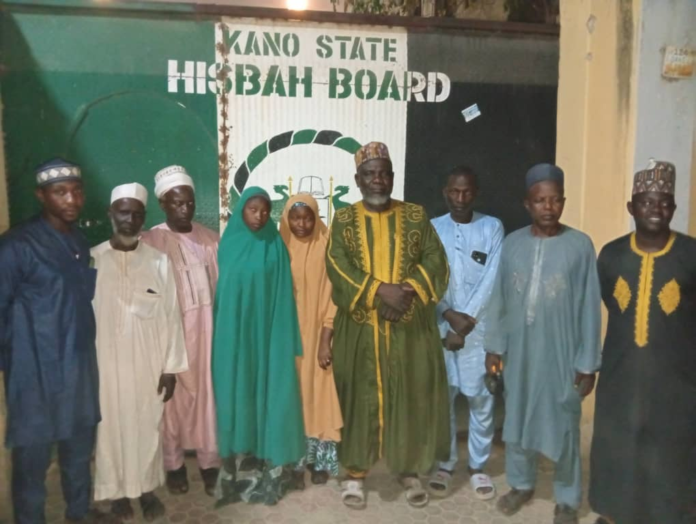
Jinkai Simon in hijab flanked by members of Hisbah board

By Ladidi Sabo

The family of 17-year-old Jinkai Simon says their daughter left home for school on a quiet March morning in Zaria and never came back.

What followed, according to a petition now before the Kaduna State Commissioner of Police, was a disturbing chain of events involving alleged abduction, religious conversion, age falsification, and forced marriage,  a pattern rights advocates say has become frighteningly familiar in parts of Northern Nigeria.

Jinkai, a student of St. Bartholomew’s Secondary School, Wusasa, disappeared on March 9, 2026, while living with her elder sister in the Kuregu area of Zaria, Kaduna State.

Her family says she was last seen with a neighbour identified as Ruqaiya.

Days later, the family alleges, they received shocking information: their teenage daughter had allegedly been converted to Islam, moved to Kano, handed over to the Kano State Hisbah Board, renamed, declared older than her real age, and married off.

In a petition dated May 6, 2026, the family accused authorities and individuals involved in the process of orchestrating what they described as an illegal and deeply coordinated operation.

According to the petition, Jinkai’s name was allegedly changed from “Jinkai Yusuf” to “Aisha Sani” before she was reportedly married to a man identified as Abdulsamad.

Read Also: 9 years after atrocious abduction case, Ese Oruru graduates from university

“She is now going by the name Aisha Abdulsamad,” the petition stated.

The family further alleged that official documents were manipulated to make the teenager appear legally old enough to consent to marriage.

Attached court records reportedly show Jinkai swearing an affidavit in a Kano High Court declaring she was 19 years old — despite her parents insisting she is only 17.

“To perpetrate these illegal acts,” the petition reads, “the Hisbah Board went as far as forging consent documents purported to have been signed by parents.”

The family insists they never consented to either a conversion or marriage. They are demanding an immediate police investigation and the safe return of their daughter.

But for many observers, the case is not simply about one missing teenager. It is about a growing national fear.

“She Left Home and Became Somebody Else”

Across Nigeria, particularly in parts of the North, families have repeatedly alleged that underage girls disappear only to later re-emerge with new religious identities, altered ages, and husbands they never knew.

In many cases, prosecutions rarely happen. Parents file petitions. Police open files. Civil society groups raise alarms. Then silence follows.

One of the most haunting examples remains the case of Ifesinachi Ani, a teenage girl allegedly lured away from her family home in Abuja years ago.

According to reports at the time, the matter reached both the FCT Police Command and the National Agency for the Prohibition of Trafficking in Persons (NAPTIP). Yet despite public outrage, no successful prosecution was ever announced.

Her distraught mother publicly alleged that her daughter had been converted and renamed “Amatullahi.” The case eventually disappeared from public attention, much like many others before it.

Rights groups say that lack of accountability has emboldened networks allegedly involved in coercive conversions, trafficking and underage marriages.

Critics argue that institutions often move swiftly to legitimize controversial unions through affidavits, religious documentation and court procedures, while parents spend years navigating bureaucracy with little success.

A Long and Painful History

The Jinkai Simon case has revived memories of several nationally controversial incidents involving underage girls.

The 2014 abduction of the Chibok schoolgirls by Boko Haram remains Nigeria’s most globally recognized case of mass kidnapping and forced conversion allegations.

Other names, Ese Oruru, Rita Ukeje, Charity Uzoechina, Lucy Ejeh, have periodically surfaced in media reports tied to claims of abduction, religious conversion, and forced marriage.

In many of those cases, families alleged their daughters were isolated from relatives, pressured into conversion, and shielded from recovery efforts.

Human rights lawyers maintain that the Child Rights Act clearly prohibits marriage involving anyone under 18 and criminalizes child abduction and unlawful removal from parental custody. Yet enforcement remains inconsistent across states.

Legal experts also note that conflicting religious, customary and statutory systems frequently complicate such disputes.

“No Girl Should Leave for School and Vanish”

But women’s rights advocates insist the deeper issue is institutional failure.

“No girl should leave for school and vanish into a system that changes her identity before her family can even locate her,” one Abuja-based child protection advocate said.

For many parents, the fear is no longer hypothetical. It is immediate.

The anxiety cuts across religion and ethnicity: That a teenage girl can disappear, and within weeks, official papers emerge declaring her older, renamed, converted, and legally married.

In the Jinkai Simon case, photographs allegedly attached to the petition reportedly show the teenager wearing a hijab alongside individuals linked to the Kano State Hisbah Board.

The family also submitted what they describe as forged birth records and consent documents allegedly used during the process.

The petition has been copied to the Inspector General of Police, the Christian Association of Nigeria (CAN), the Anglican Diocese of Wusasa, Christian Solidarity Worldwide Nigeria, and youth religious organizations.

As of the time of filing this report, no arrests or prosecutions had been announced. For Jinkai’s family, the central question remains painfully simple:

How does a 17-year-old girl leave home for school, and legally become someone else before her parents can bring her back?

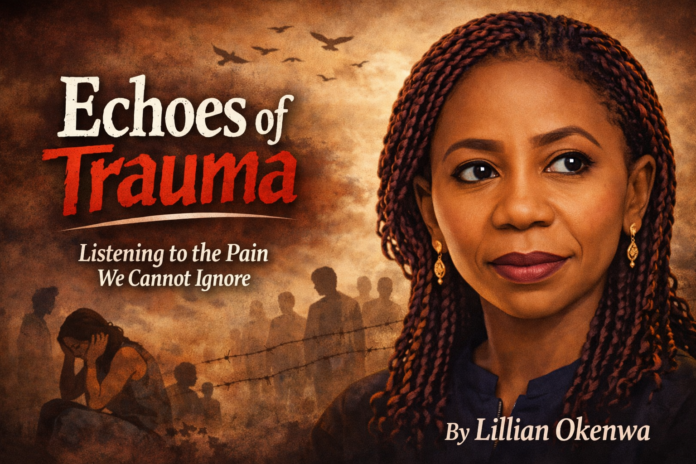
Echoes of Trauma: When Love Turns Lethal: The trauma domestic violence leaves behind

By Lillian Okenwa

Sometimes the bruises are hidden. Sometimes the screams are muffled behind locked doors, loud music, forced smiles and church photographs. But domestic violence leaves traces everywhere. In the eyes of frightened children. In the silence of women too afraid to leave. In the shame of men too embarrassed to speak. And too often, in obituaries that come far too soon.

There is something profoundly heartbreaking about watching people die slowly inside relationships that were supposed to give them safety, companionship and peace.

Not every abusive relationship ends in death, but many leave behind emotional graves. Broken confidence. Fear. Anxiety. Depression. Children who grow up believing violence is normal. Women who lose themselves trying to preserve marriages. Men who suffer in silence because society tells them they are not supposed to be victims.

Read Also: Echoes of Trauma: Born into a battle they did not choose

When gospel singer Osinachi Nwachukwu died on April 8, 2022, Nigerians were initially told she died of throat cancer. What later emerged was far more disturbing. Investigations revealed years of alleged abuse, silence, fear and suffering inside her marriage. Her children reportedly spoke of repeated violence. Eventually, her husband, Peter Nwachukwu, was convicted and sentenced to death by hanging in April 2025. But even with the judgment, what exactly was won?

Read Also: Echoes of Trauma: The silent wounds of Nigerian men, By Lillian Okenwa

Read Also: Echoes of Trauma: When silence becomes complicity, By Lillian Okenwa

Osinachi is gone. Her husband is also facing death. Their children are left carrying trauma heavy enough to last a lifetime. They watched their mother suffer. They reportedly testified against their father. They lost both parents in different ways.

And perhaps that is the cruellest part of domestic violence. Even when justice comes, it often arrives too late.

The recent death of  28-year-old Omerebere Faith Okafor again reopened painful conversations Nigerians keep avoiding. Faith reportedly married at 17 to a much older man and, according to messages she allegedly shared before her death, endured years of violence, humiliation and fear. She reportedly spoke about repeated beatings during pregnancy and feeling trapped with four children and nowhere to turn.

Read Also: Echoes of Trauma: Why Nigeria must confront the trauma of its women, By Lillian Okenwa

Read Also: Echoes of Trauma: When those who defend us are forgotten

Now she is dead too. Again, children are left motherless. Again, people are asking questions after the funeral. Again, society is shocked after ignoring warning signs.

One of the most painful things about abusive relationships is that many victims do not stay because they enjoy suffering. They stay because they are afraid. Afraid of poverty. Afraid of shame. Afraid of starting over. Afraid of raising children alone. Afraid of religious condemnation. Afraid nobody will believe them. Some have been emotionally broken down until leaving no longer feels possible.

Others stay because everybody around them keeps urging endurance instead of escape.

“Manage.”
“Pray harder.”
“He will change.”
“Think about your children.”
“What will society say?”
“No marriage is perfect.”

But what becomes of the children people claim they are staying for?

Nneka, an only child, once described how her parents fought almost every night throughout her childhood. She remembered waking repeatedly to hear her mother muttering in Igbo through tears, “Ọ ka m si je?” “Ọ ka m si je?” “Ọ ka m si je?” (Is this the result of my journey?)

Years later, the emotional scars remain.

Children raised in violent homes often carry invisible wounds into adulthood. Many struggle with fear, anxiety, trust issues, emotional instability and unhealthy relationship patterns. Some grow up normalising abuse because violence was the language spoken at home.

This is why domestic violence is never only between husband and wife. The children are always inside the violence too, whether physically or psychologically.

The tragic story of Felicia Temitope Odu, a lawyer reportedly abused for over two decades before her death, again highlighted how religion and social expectations sometimes keep victims trapped in dangerous marriages. During a memorial walk held in her honour by members of the Nigerian Bar Association Lagos branch, participants stressed that faith should never become a death sentence. That message matters.

Leaving an abusive relationship is not failure. Staying alive is not failure. Seeking safety is not failure. And domestic violence is not only about women.

Men suffer too, though many endure quietly because society mocks male victims or refuses to believe them. The killing of Bilyaminu Bello in Abuja in 2017 by his wife, Maryam Sanda, shocked the country and reminded Nigerians that violence can exist in any direction. Abuse is abuse, whether the victim is male or female.

This conversation should never become a battle between genders. It is about humanity, safety, dignity and emotional wellbeing.

Nigeria’s Violence Against Persons Prohibition Act was supposed to be a major turning point when it was signed into law in 2015. The law criminalises various forms of abuse including spousal battery, emotional abuse and harmful practices. But implementation remains weak and inconsistent.

Too often, police officers still treat domestic violence as a “family matter.” Survivors are encouraged to settle privately with abusers instead of pursuing justice. Some victims are blamed. Others are shamed into silence. Investigations are poorly handled. Shelters are limited. Many states still lack effective structures to support survivors. And even where laws exist, culture frequently overpowers justice.

Some communities still see wife beating as discipline. Some religious teachings are distorted to encourage dangerous endurance. Shockingly, Section 55(1)(d) of the Penal Code still contains language suggesting a husband may “correct” his wife provided grievous harm is not inflicted. That alone reveals how deeply normalised violence has been historically.

But laws alone cannot solve this crisis. The deeper issue is that many people have nowhere to go.

How does a woman with four children leave when she has no income, no shelter, no support system and no family willing to take her in? How does a man report abuse when he knows society may ridicule him? How does somebody emotionally battered for years suddenly find the courage to walk away?

This is why conversations about domestic violence must move beyond outrage after deaths. Nigeria needs functioning shelters, emergency hotlines, trauma counselling, financial support systems, legal aid, relocation support and long-term rehabilitation for survivors and their children.

Victims do not just need rescue. They need rebuilding. Therapy should not be seen as luxury. Children exposed to prolonged domestic violence often require deep psychological support. Many survivors struggle with post-traumatic stress, panic attacks, depression, emotional numbness and fear long after they physically escape abuse.

The truth is painful. Some people survive abusive relationships physically but never recover emotionally. And perhaps this is the question society must finally confront honestly:

Why do we keep teaching people to preserve marriages at the cost of preserving themselves?

Marriage should never become a place where people slowly disappear. No relationship is worth dying for. No child deserves to grow up watching violence become normal. No culture, religion or societal expectation should demand human sacrifice in the name of endurance.

Sometimes the bravest thing a person can do is leave. Sometimes survival is the real success story.

A lawyer and equity advocate, Lillian can be reached at [email protected]

A dream of Nigeria, By Lasisi Olagunju

Monday morning on the pulpit can be very surreal. Today’s lesson is from Camara Laye’s ‘A Dream of Africa’, a 1966 novel of prophecy, the black man and his future. A young man called Fatoman returns for a two-week vacation in Guinea after six years of exile in Paris. He returns to a country whose idea of mystery and power “are no longer to be found where they used to be”; a nation badly fissured by violent partisan politics.

Crestfallen, he goes to his goldsmith father who has lost his trade to wooden objects that lack spirits. Fatoman’s father gives him a sacred white ball of cowrie shells. Father tells son: “Put that inside your pillow-case tonight and ask God yourself to enlighten you about the future of our native land.”

Then he sleeps and in an all-night dream the young man finds himself in prison. He sees what eyes see but the mouth fears to utter. But no word is too big that a knife is needed to slice it. Fatoman wakes up the following morning and tells his father what he saw: “I saw a people in rags and tatters, a people starving to death, a people who lived in an immense courtyard surrounded by a high wall, a wall as high as the sky. In that prison, force was the only law; or rather I should say, there was no law at all. The people were punished and sentenced without trial. It was terrible, because those people were the people of Guinea, the people of Africa!”

Dreams are dangerous, especially when told to the winds. Camara Laye would later die in exile in 1980, another writer punished by history for seeing too much and saying too much. Writers have always been prophets; knowingly or unknowingly, their words often hit the bull’s eye beyond boundaries. The people in the dream are not merely Guineans. Looking at what democracy has done to us, I say they are Nigerians.

Everyone is in a cage built by democracy and democrats. The ruling party has cells for its various inmates. There is hardly any escaping the wall. The warders are the big boys; strong, scented soil men.

The ruling party and the opposition are a consortium of prisons where ambitions are either consummated or cremated. Watch the party primaries across all platforms that are permitted to live.

Yet, the real war will be fought beyond party walls. Southern Nigeria is not prepared for a northern president so soon after Muhammadu Buhari’s eight years. This month and the next will test the tendons of this nation. The party called NDC fired the opening shot two days ago. At the weekend, it played the North-South game of thrones; it zoned the presidency to the South for four years only.

My Igbo friends spent the whole of the weekend celebrating the NDC decision. They thought and still think the NDC ticket is already Peter Obi’s. But the NDC belongs to an Ijaw man who acquired it for a purpose. Goodluck Jonathan is an Ijaw man. Watch him. He is consulting towards 2027. The NDC belongs to his brother, and all politics is local.

American journalist, Chris Matthews, wrote ‘All Politics Is Local’. He said he had the good fortune to be present in November 1989 as the Berlin Wall was being torn down. While there, he interviewed a young East German:

“What is freedom?” he asked the young man.

“Talking to you,” the East German said without pause. “Two weeks ago I couldn’t do it.”

To the ‘imprisoned’, talking to a journalist was the very definition of ‘freedom.’ But the same question was answered differently by several people the journalist interviewed.

So, because all politics is local, regime campaigners asked me to support President Bola Tinubu for re-election. I asked them to tell me why I should. They said it was because he was my brother. I asked them to ask my brother why his first term closed its eyes to the very bad roads to his brother’s state. They said bad roads were not enough to deny one’s daughter the blessing of bosomy beads. They invoked the idi bebere chant of waists and coral beads. They said they would not use my reason to decide where to cast their votes.

I told them that what I want from democracy is not necessarily what they want from it. That is why boys of the same mother do not contribute money to marry one wife.

You cannot wax imperial and expect the street to hail you. Small matters matter as much as big things in politics. The one who attends to basic things about the people gets the basic attention from them. In the 1970s, one U.S. senator cultivated the image of being “every bit… solicitous…” For the sake of politics and power, with him, “no chore was too small… If you took out a pencil, he’d sharpen it.”

Tinubu started his presidency spending heavily on projects that pleased his friends’ fancy while neglecting the backyard of his poor relations. As road users groaned on broken federal roads in the South West, he committed unimaginably vast resources to his Coastal Road. I once called it a road from somewhere to nowhere. That is what the road means to people where I live and where I work. You cannot take all the money to the coast and expect applause from the hinterland. There is no monkey in Idanre again.

But two weeks ago, politics appeared to have given the strong man a change of heart. He presided over a meeting of his cabinet and awarded road contracts that may give the face of his regime a well-done political makeup. He remembered home.

Consider the geography of the approvals. Dualisation of the Ibadan–Ijebu-Ode Road, stretching 56 kilometres at a cost of N295 billion; the Osogbo–Akoda–Gbongan Road, 59.2 kilometres for N101 billion; and the Osogbo–Iwo–Ibadan Road. All in the South West. Other zones, East and North, got theirs. Like Thomas O’Neill, the 47th Speaker of the U.S. House of Representatives, Tinubu is translating a national contest “to the local, retail level.”

Presidents do not need roads; they fly. Which is why we must thank the eagle for remembering creations without wings. We thank those around him who reminded him that those roads exist. We only plead that these awards do not end as weightless paper roads designed as vote-catchers. They will indeed be weightless if they are not done before the elections, or they are started and abandoned after the elections.

An epochal governorship election will hold in Osun State in August this year. The incumbent, Ademola Adeleke, is recontesting and remains deeply rooted on the ground. It will take more than federal might to uproot him. In Oyo State, the incumbent governor, Seyi Makinde, has the state firmly in his grip; he is reportedly eyeing the president’s seat. Both governors are widely celebrated as high performers who belong to opposition parties. For the president’s party to make real impact here, therefore, it must have real positive things to show the people. It is not too late to do so.

Which is why the contracts came at the right time. So, on paper, Tinubu’s contract approvals are infrastructure decisions—big, bold and long overdue. But in substance, they form a carefully plotted map of political warfare. When a government suddenly remembers roads that years of power ignored, it is not governance speaking; it is politics, with timing as its loudest voice. It is the language of a second-term conversation, spoken in concrete and kilometres. Yet, we say thank you. But please, do the work beyond the announcement.

This moment will be read beyond asphalt and contracts. Would these last-minute contracts have been awarded if everyone had migrated into the president’s lair? Politicians often take for granted those they consider their property. Like dogs, they would sleep themselves into death were it not for the fleas of defeat that keep buzzing, threatening to bite.

So, we must keep flashing our voter cards as potential red cards. Sometimes, it works.

In December 1927, Catherine Mitchell Taliaferro asked, “To vote or not to vote?” She ended her piece with a warning that still resonates: “No one ever cleaned a house by deserting it to insects and vermin.”

Taliaferro’s warning was simple: democracies decay when citizens surrender the public space to predators. Nigeria now enters a season in which power will test institutions, friendships and even nerves. From now till January next year, the dreams in Nigeria’s nights will be of wars and rumours of wars.

But is it all gloom without hope of redemption? I go back to Camara Laye’s Fatoman who tells his father: “I also dreamed of a Lion, a great Black

Lion, who saved us, who brought back prosperity to us, and who made all peoples his friends.”

The views expressed by contributors are strictly personal and not of Law & Society Magazine.

How Did This Happen?’ Newly built ₦16.7bn Mokwa culvert already cracking

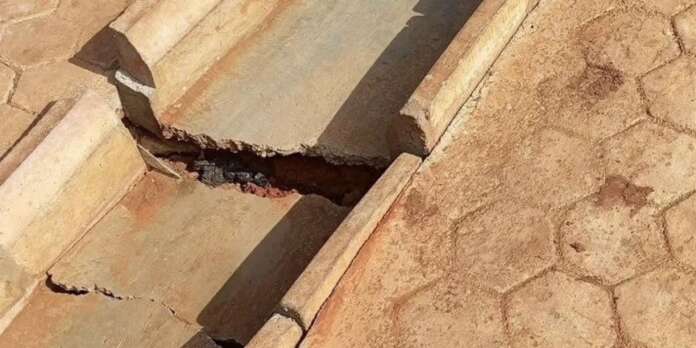
The newly constructed culvert built at the site of the collapsed Mokwa Bridge in Niger State has reportedly begun developing cracks, sparking outrage and fears among residents who warned that another heavy flood could wash away the structure.

Residents of the community accused authorities of replacing the originally approved multi-span bridge project with what they described as a substandard culvert despite the Federal Government’s approval of ₦16.7 billion for the reconstruction of the flood-destroyed bridge.

A resident who spoke to SaharaReporters expressed concern over the state of the project, alleging that the structure already shows signs of deterioration less than a year after approval was announced.

“The bridge in Mokwa that was destroyed by flooding in May last year had a reconstruction approval valued at ₦16.7 billion. However, instead of a bridge, a culvert was constructed at the site, and reports indicate that the structure has already begun developing cracks,” the resident said.

“The development has raised concerns among residents and stakeholders regarding the quality, durability, and suitability of the project for the area’s flood-prone conditions.”

SaharaReporters gathered that community members have become increasingly worried about the integrity of the structure following visible signs of damage on the newly constructed culvert.

To verify the claims, SaharaReporters sent community sources to inspect the project site. Videos and photographs obtained by SaharaReporters reportedly showed portions of the culvert already cracking and deteriorating.

Another resident lamented that the project failed to reflect the scale of funding publicly announced by the Federal Government.

“We were expecting a standard bridge because that was what the government announced to Nigerians. What we got here is something people are already afraid of,” the resident said.

A trader in the area warned that the approaching rainy season has heightened anxiety among locals.

“If serious flooding happens again, this place may be cut off completely. People are scared because the cracks are already visible. The contractor should be summoned immediately before another disaster happens,” the resident said.

Another community source questioned why a culvert was constructed in place of what had been announced as a 10-span bridge project.

“They told Nigerians that ₦16.7 billion was approved for reconstruction of the Mokwa Bridge, but what we are seeing does not look like a bridge of that value. Residents deserve explanations,” the source added.

The Nigerian government had in August 2025 announced the approval of ₦16.7 billion for the “immediate reconstruction” of the Mokwa Bridge, which was washed away by flooding in May 2025.

The Minister of Information and National Orientation, Mohammed Idris, disclosed the approval after a meeting with the Minister of Works, Dave Umahi.

According to Idris, President Bola Tinubu approved the reconstruction of what he described as a “10-span bridge” for the people of Niger State.

“We want to thank Mr. President and we want to thank the Minister of Works. We jointly discussed this and approached Mr. President, who graciously approved it. It means a lot to the people. It’s ₦16.7 billion to reconstruct the bridge — a 10-span bridge,” Idris had stated.

Umahi had also praised Tinubu for approving the reconstruction, saying the president was committed to addressing infrastructure challenges across the country.

The ministers further listed several other bridge reconstruction approvals across states including Taraba, Kogi, Ebonyi, Kwara, Edo and Kebbi.

However, residents of Mokwa now insist that the project delivered at the site does not match public expectations, warning that failure to urgently address the visible cracks could expose the community to another devastating flood disaster.

Police arrest stepmother over killing of 9-year-old Enugu girl

The Enugu State Government has announced the arrest of a woman, Mrs Ogechi John, over the alleged killing of her nine-year-old stepdaughter, Amanda John.

In a statement published on Governor Peter Mbah’s WhatsApp media platform on Monday, the suspect was identified as an indigene of Oderiko in Ikwo Local Government Area of Ebonyi State.

According to the statement, Mrs John was arrested by operatives of the Nigeria Police Force in connection with the death of the child, who was allegedly beaten to death at their residence in Nchatancha, Emene, in Enugu East Local Government Area.

The statement, citing accounts by neighbours, said the incident occurred around 3pm on Sunday. Residents alleged that the late Amanda had been subjected to repeated maltreatment by the suspect before the tragedy.

Did you know there’s a town where almost everyone lives in the same building?

Reacting to the development, the Commissioner for Children, Gender Affairs and Social Development, Ngozi Enih, said the state government would ensure the suspect faced the full weight of the law.

“It is on record that the Governor Peter Mbah administration has zero tolerance for any form of child abuse, let alone child homicide. We swung into action immediately upon learning of this tragedy to ensure the suspect was arrested,” Enih said.

The commissioner added that the government would closely monitor the legal process to ensure justice was served without delay.

“We will be pressing for a thorough and expedited investigation to ensure that justice is not just done, but done swiftly. Nobody should take another person’s life, especially that of a child in Enugu State. We condemn the act in totality,” she added.

The state government reiterated its commitment to protecting minors, warning that anyone involved in child abuse or violence would be prosecuted.

The suspect remains in police custody while investigations continue.

However, the statement did not disclose the police station handling the case or the specific cause of the child’s death.

Leveraging Nigeria’s young population for national growth and development (1)

By Ebun-Olu Adegboruwa, SAN

PREFACE

For over a decade now, statesmen, distinguished scholars, patriots and eminent legal practitioners have converged to brainstorm on key issues of national interest at the annual Pastor E.A. Adeboye Public Lecture, meant to drive positive policies for national growth and development. Permit me to share with you part of my text at the 2026 edition given the nature of the theme and the issues canvassed therein.

INTRODUCTION

It is axiomatic that the glory of young men is their strength. Indeed, youthfulness is usefulness. It is as true as sunrise that youths remain the backbone of nation-building. The youthful demography of any nation represents a deep well and repository of vital energy, fresh ideas, innovation, creative genius, and more. If properly inspired and engaged, the potential of the youth can be tapped for inestimable contribution to national growth and development in all areas of our national life. Without a shadow of doubt, Nigeria’s youth constitute the majority of the Nigerian population.

They are not merely “leaders of tomorrow”; they are drivers of today’s economy. National growth and development depend on intentional policies that empower, equip and engage this vast youthful population. When youth potential is matched with opportunity and good governance, Nigeria’s demographic structure can become its greatest engine of transformation.

THE YOUTH IN RELEVANCE

In drawing global relevance to this unique breed, God proclaims to the youth that “let no man despise thy youth; but be thou an example of the believers, in word, in conversation, in charity, in spirit, in faith, in purity.” Leaders and institutions across the globe have echoed this divine agenda to integrate the youth into global reckoning. In the words of Franklin D. Roosevelt, “we cannot always build the future for our youth, but we can build our youth for the future.” For Mahatma Gandhi, “if we are to reach real peace in this world … we shall have to begin with children.” 

Read Also: 2027: Nigeria’s political dynasties tighten grip as power becomes a family inheritance

The former Secretary-General of the United Nations, Kofi Annan, postulates that “you are never too young to lead, and never too old to learn”, while the Indian rights activist and Nobel Peace Prize Laureate, Kailash Satyarthi, states that the power of the youth is a “commonwealth for the entire world”, highlighting their impact, worldview, enthusiasm, and courage. Dr. Nelson Mandela had once opined that “… young people are the leaders of tomorrow”.

For him, ‘young people are capable, when aroused, of bringing down the towers of oppression and raising the banners of freedom.’ No phrase best highlights the relevance of the youth than the statement of the present Secretary-General of Community of Democracies, Thomas E. Garrett, on the occasion of the International Youths Day on August 12, 2025: “The youth wants to and should be involved, and the role of the governments is to provide them with adequate space and opportunities to advance their civic engagement and political participation at both local and national levels.” It is in recognition of this that today’s topic finds greater relevance as the celebrant and his visions are in tune with this global reckoning for the youth through several policy actions and programmes.

CONCEPTUAL CLARIFICATIONS

MEANING OF YOUTH:

In its basic ordinary meaning, ‘youth’ means “the period of your life when you are young, or the state of being young”. It could also denote young people, both male and female, considered as a group. It means the time of life when a person is young, especially the time before a child becomes an adult. What, however, poses a challenge is how to determine a generally accepted age bracket of the youth. In that regard, the term ‘youth’ is versatile and as such, is not easily amenable to a generally accepted definition, particularly regarding those who qualify as ‘youth’ or ‘young persons.’ Nevertheless, there exist certain qualities or attributes which generally define who falls into the category of ‘youth’. At this juncture, we shall consider some of the definitions of the term ‘youth’, especially with reference to age bracket, according to the following sources:

UNITED NATIONS

The United Nations – for statistical purposes – defines ‘youth’, as those persons between the ages of 15 and 24 years (UN Secretariat/UNESCO/ILO), without prejudice to other definitions by Member States. Moreover, several UN entities, instruments and regional organisations have somewhat different definitions of youth, which the United Nations secretariat recognizes. For instance, the UN Habitat (Youth Fund) defines youth age-group as 15 – 32; UNICEF/WHO/UNFPA defines Young People as those from 10 – 24 years of age and Youth as 15-24 years of age.

THE AFRICAN YOUTH CHARTER

The African Youth Charter (UN regional instrument) defines Youth as those between the ages of 15 to 35 years.

NIGERIAN LAWS:

THE CONSTITUTION, (CFRN), 1999

Although the term ‘youth’ is not expressly defined under the Nigerian Constitution, 1999 (as altered), it however establishes key age thresholds that affect young persons. Thus, such a person becomes a full legal adult with capacity to vote, contract, and enjoy civil rights and eligibility for public office: (House of Representatives/State Assembly – 25 years of age; Senate/Governorship/President: 35. For context, the CFRN, 1999, in its Section 29 (1) & (4) (a), sets the majority (full) age at 18 years and above in the following terms:

“29 (1)   Any citizen of Nigeria of full age who wishes to renounce his Nigerian citizenship shall make a declaration in the prescribed manner for the renunciation.

(4) For the purposes of subsection (1) of this section-

(a) “full age” means the age of eighteen years and above.”

Under and by virtue of Section 77 (2) of the Constitution, as earlier indicated, 18 years is set as the age to be registered to vote.

“77 (2) Every citizen of Nigeria, who has attained the age of eighteen years, residing in Nigeria at the time of the registration of voters for purposes of election to a legislative house, shall be entitled to be registered as a voter for that election.”

YOUTH PARTICIPATION IN POLITICS

With respect to youth participation in politics, the enactment of the CFRN (Fourth Alteration, No. 7) Act, 2018 (a.k.a. Not Too Young to Run Act, 2018) as a constitutional reform intended to reduce the age of qualification for elective public offices, removes age-barriers that excluded young Nigerians from contesting elections, it promotes inclusive democracy and youth political participation has become a significant welcome watershed in respect of youth involvement in politics and governance.

THE CHILD RIGHTS ACT, 2003 (CRA)

The Child Rights Act defines a child as a person under 18 years of age, guaranteeing certain rights to health, education, and protection from abuse/marriage/labour (under 18) and also offering a child-friendly justice system. The legal implication of this definition is that a person who attains the age of 18 is deemed to have attained the age of legal majority and certainly exits the category of ‘child’ and qualifies as a youth. Furthermore, Section 21 of the CRA prohibits marriage for anyone under 18 years and the Marriage Act requires written parental consent for persons under the age of 21. The challenge with the CRA is that only 23 out of 36 States of the Federation have so far adopted it. Most Northern States have not.

LABOUR LAW

Under the Labour Law, a young person includes a person between the ages of 14 to 17 years (with limited employment), while a child is a person under 14 years, (generally prohibited from labour).

THE NATIONAL YOUTH POLICY AND YOUTH RELATIVISM

Perhaps, the most influential definition of the ‘youth’ in terms of age category is the one under Nigeria’s National Youth Policy of 2009 (NNYP). Adopting the definition under the African Youth Charter of 2006,  the NNYP defines ‘youth’ as persons of age from 18 to 35 years.

However, some argue that youth is a matter of the heart and mind, such that even a chronologically older person – say someone above 40 years – may still identify as a youth. The reality, however, is that chronological juvenescence (i.e., the fact of being necessarily within a chronological young age bracket) is the common overarching denominator or element at the core of the meaning of youth, irrespective of the perspective of any society on the subject. Once a person has passed a particular age limit, he may clearly be said not to be a youth any more. Accordingly, the definition offered by the African Youth Charter and National Youth Policy (i.e. 15 to 35 years) shall be our functional/working definition of youth for the purpose of this discourse and we shall use the term ‘youth’ interchangeably or synonymously as the ideal “Young Population.”

NATIONAL GROWTH AND DEVELOPMENT

National growth and development is a comprehensive, long-term process  where a country improves its overall well-being, encompassing economic expansion, social progress, and better quality of life for all citizens, involving structural changes in industry, human capital, governance, and infrastructure. It goes beyond just economic growth (like GDP increase) to include factors like education, health, poverty reduction, technological advancement, and political stability, aiming for a more prosperous, equitable, and sustainable society. Thus, certain cardinal co-efficients and parameters by which national growth and development may be measured, exist. They include but are not limited to the following: economic growth, quality education, food security, social development, human capital, political and institutional strength, infrastructure, technological advancement, etc. While National Growth (or Economic Growth) forms part and parcel of development, focusing on quantitative increases in output; National Development is a broader concept, integrating growth and ensuring that resources are used to benefit society.

A practical example of this is the celebrant’s vision and impact of creating the Redemption Camp at his early age and ministry as a youth and transforming it into the present-day Redemption City in his later years, still as a “youth”, developing durable infrastructure such as stable electricity, water, security, agriculture and thus creating job opportunities through the presence of established institutions such as banks, schools, shopping centres, hospitals, hotels and recreation centres, restaurants, and professional departments (IT Units, Legal Department, Statistics, Urban and Regional Planning, Medical Department, Finance Department, Admin and Personnel, Human Resources, Hospitality, Sanitation, Security, Traffic Mayor, Team Nehemiah, etc, for career advancements for the young and the not too young persons. Constitutionally, the philosophical underpinning of Chapter II of the Nigerian Constitution on Fundamental Objectives and Directive Principles of State Policy is dominantly designed to enhance National Growth and Development at least in theory, a concept which the celebrant imbibed and developed through godly vision, human capital and purpose. If we sustain the campaign to make Chapter II of the Constitution justiciable, it will translate into massive development for our people.

The views expressed by contributors are strictly personal and not of Law & Society Magazine.

Hope, hurt and the coming elections, By Suyi Ayodele

Alexander Pope (1688–1744), the 18th-century English poet and satirist, is known for his numerous famous quotes from his works. However, the one believed to be his most famous is the one referred to as Alexander’s ‘Ninth Beatitude.’ It was part of his October 6, 1727 letter to John Gay (1685-1732), a fellow Tory satirist and member of the Scriblerus Club.

In that famous correspondence, Alexander quipped: “Blessed is he who expects nothing, for he shall never be disappointed.” The poet, regarded as the second most quoted writer in English after Shakespeare, gave the advice while relating his numerous disappointments in America after leaving Zimbabwe for the so-called God’s Own country!

He wrote in the opening paragraph of the famous letter thus: “Yes, of all the emotions that I have experienced since my arrival in America, disappointment is the greatest…. I cannot help but repress a despondent sigh. So this is America? I feel so let down.”

Alexander, the best of the Augustan Literature, posited with the quote that man can achieve inner peace if he let go of rigid expectations, especially from fellow human beings. He encouraged men to reduce expectations drastically, face the realities of their situations, and appreciate life in its present form while not totally abandoning efforts to improve their conditions.

A 15-minute-28-second video of a 99-year-old British woman surfaced on the internet last week. It is one of the most heart-wrenching scenes I have ever come across. In the video, the nonagenarian, who lives in a care home, abandoned by all her three children, narrates how all she laboured for disappeared after her grown-up children coerced her into selling her home, and shared the proceeds among them.

Read Also: ‘Justice for Terrorists, Abandonment for Victims?’ Survivors accuse government of betrayal, as FG defends Boko Haram reintegration

One of the daughters who had promised to accommodate and cater for her for the rest of her life soon ejected her after barely eight months and sent her to a flat paid for by the old woman herself.   According to her, the same daughter, who lives just 20 minutes away from the care home, hardly visits.

The sons, too busy to visit, spend barely 30 minutes with her whenever they visit. The mother of three had hopes while raising the children. She had hoped that at her old age, they would be there to take care of her. That was why she spared nothing to train them, give them good education and cater to their needs, especially after their father’s death in 1998.

 At 99, the poor old woman, already at her departure lounge, had to put herself in a care home when her little reserve got exhausted! She cried at the beginning of the video, but for the duration of the video, she demonstrated high mental stability.

The thrust of her message is for parents to, while playing the good parent roles, also think about their own personal comfort at old age! The African worldview places a premium on the upbringing of the children with a hope of a better future when old age comes. But is that usually the case? Do children meet the expectations of their parents in old age? Should the Black man begin to think about his personal welfare at old age instead of breaking all his limbs for his children while he was still at his prime?

The video in discourse answers the questions. It is as didactic as it is tragic! Only God knows how many parents in their old ages are experiencing what the 99-year-old Briton is going through at the moment. We pray to reap the fruits of our labour. But what happens if the fruits refuse to fall for us to eat? God forbid, you say? No problem. The video in question says you should first forbid yourself!

Some say the video is AI-generated. They may be right. But whether it is AI-generated or a true-life story, the message in it resonates with all here who are 60 years and above, lonely and alone.

Reflecting on the video, I have been able to draw a similarity between the children of the old woman and our politicians. How many of our expectations have the political leaders been able to meet? Are Nigerians not in different ‘care homes’, abandoned by those we placed our destiny in their hands?

What do we get in terms of ‘constituency projects from our politicians? Are they not grinding machines, Okada or Keke, generators and other worthless items? In one South-South state, constituents got four yards of fabric from their senator- packaged as democratic dividends. The people clapped for him. In that same state, a senator has been sharing cutlasses, hoes and some seedlings of cocoa and cashew as empowerment! We appear to be doomed.

Up North is not better. A governor shared wheelbarrows and shovels to his people as empowerment! One federal legislator ‘commissioned’ an electric pole in a state in the North-Central, just as one gave out shoe-making kits to empower those who elected him. When we complain of insecurity, the Federal Government sends rice. When hundreds of people are killed by mindless felons, the government at the centre still sends bags of rice.

We often talk about the economic crunch occasioned by the voodoo economic policies of the Bola Ahmed Tinubu administration. The response we get on each occasion is the 10-kg bags of rice as ‘palliative!’ Which aspect of the nation has been made better by this government? Our roads are in bad shape but the government is spending trillions of Naira on the Coastal highway and the Sokoto-Lagos highway, with the contracts awarded, without any public bid, to the friends and cronies of the President, or to companies where the President or his relations have appreciable interest!

Check our hospitals. They are all death centres. The common man cannot afford the ones that appear to be working because of the high cost. The National Institute of Health, in a recent document listed “Top Chronic & Non-Communicable Diseases (NCDs)” to include: “Hypertension (High Blood Pressure), which affects roughly 1 in 4 Nigerians, acting as a ‘silent killer.’ Stroke (Cerebrovascular Disease): A primary driver of neurological disability, appearing at high rates even in young adults; Diabetes Mellitus: A major cause of chronic illness (approx. 13.9% prevalence in some studies); Chronic Kidney Disease: There is an alarmingly high incidence of this disease, particularly in Northeast Nigeria; Cancer: Common types include breast, cervical, and prostate cancers and Mental Health Disorders: Affects 20-30% of the population, with depression and anxiety heavily under-treated due to stigma.”

Pray, which of these listed ailments can any hospital in Nigeria handle successfully? My town’s man and mentor died at the University Teaching Hospital (UCH), Ibadan, a year ago. We had to transport his remains back to Oyo town for preservation pending his final funeral rites in Ekiti. Why? UCH had no electricity supply for months and the morgue system collapsed. That was the same hospital which had the privilege of treating the King of Saudi Arabia in the early 70s!

Yet we have leaders who promised us life more abundant – leaders who paid lip service to letting the poor breathe while they ended up smouldering life out of the majority and leaving the rest between life and death! Rather than give us what they promised, they abandon our hospitals and embark on health tourism to hospitals in the West! There was a time when the late President Muhammadu Buhari and the former Head of State, General Abudusalami Abubakar, were guests at the same hospital in faraway London, United Kingdom! What can be more shameful!

I checked how many times president Tinubu has visited France since he assumed office on May 29, 2023. The response I got is troubling. Cumulatively, Tinubu has visited France 11 times. In his three-year presidency, he has spent 89 days in France out of the 237 total days he has spent outside the shores of this country. Read the result in its raw form:

“President Tinubu has been outside Nigeria for 237 days since May 2023, about 24% of his total time in office so far. Since taking office in 2023, President Bola Tinubu has spent 237 days outside Nigeria, with France accounting for the largest share at 89 days; no other country comes close. The United Kingdom follows at 28 days, while the UAE, Brazil, and Saudi Arabia trail behind. This pattern points to a presidency that has placed strong emphasis on international engagement, particularly with Europe, and especially with France, which has emerged as his most frequent foreign base.”

How on earth will an ambulant President be able to pay attention to the promises he made to the people. How will he be able to appreciate the fact that in our teaching hospitals, the pain relievers are what patients are loaded with, when, at the slightest discomfort from headache, the President is off to France or London? The President is not the only guilty party here. Half of our state governors stay in Abuja while insecurity reigns supreme in their states!

I heard one of the President’s ‘friends’ argue the other time that former President Olusegun Obasanjo spent half of his first term globetrotting.  The question the fella failed to answer is: did the country record visible gains from Obasanjo’s numerous trips? If yes, can we say the same about Olabisi Ajala’s cousin who currently occupies Aso Rock Villa?!

If the Tinubu administration has nothing to show for the President’s numerous foreign trips, he should be encouraged to learn from the wisdom of the elders that Bí eégún Alaagba bá ròde tí ò bà r’ówó mú wá’lé, tí ò sí lérò léhìn; idán ò tó, òkìtì ò tó ni – if the chief masquerade comes home empty-handed and without the usual crowd, it means his magic was poor and its stunts inadequate.

Promises! Expectations! We are back in season again. Politicking has commenced and governance has taken its usual back seat. Our politicians are on the field now. One, a former senator and two-term governor of Cross River State, Professor Ben Ayade, wept bitterly the other week because the Presidency truncated his return to the senate. Here is a man who made no meaningful impact when he was in the saddle for eight years.

The Nollywood fine boy, Desmond Elliot, is running from pillar to post in his Surulere Federal Constituency 1, seeking for a fourth term in the Lagos State House of Assembly. All his people point out to as his ‘constituency project’ are two latrines at the Ojuelegba Bridge, in Lagos!

Ironically, the man acting as Elliot’s stumbling block is Femi Gbajabiamila, the Chief of Staff (CoS) to the President. Gbajamibiala holds the view that Elliot is not the only competent person from his constituency. Yet, Gbajabiamila was in the House of Representatives for five consecutive terms representing the Surulere Federal Constituency and won his sixth term before he was appointed by Tinubu as CoS! What do they mean by the saying: “The pot calling the kettle black?”

We have lamented the pain inflicted upon us by this government in the last three years. The same set of swarms of locusts is out again asking for our mandate. They are out with a puny faction of our patrimony they appropriated to themselves. Someone sent a video of how our senators arrive at the National Assembly. It is grandiose in its crude form! Nobody would believe the luxury they display given that poverty walks in three-piece suits on our streets!

Now that the same caterpillars and cankerworms are back on the field, are Nigerians going to take the peanuts they are offering and vote for them? Or are the people wiser enough to say no and vote according to their conscience?

Penultimate week, a man parked his clean SUV on the Third Mainland Bridge and took a dive into the ocean! Thankfully, he was rescued. Almost that same time, another young man drove his SUV into the Ikpoba River in Benin City. We have countless cases like that of those who could not face the realities of the hard times we are in.

Businesses fail daily here. People’s finances nosedive because of the daily hyperinflation. Many hopes have been dashed because the leaders who promised 24-hour electricity have since detached Aso Rock Villa from the National Grid in a to-your-tent-oh-Israel manner that left many frustrated! Governors who promised security move about with well-armed escorts. Only the citizens are at the mercy of killer herdsmen, bandits and terrorists. But they are back for our votes.

Thanks to Alexander Pope and the Epicurean and Stoic philosophers of old who cautioned that men ought not to expect so that they would not be disappointed. If I were asked my best Ifa Corpus, I would easily choose Ogunda Meji. That is where Orunmila teaches that one should only hope on one’s destiny (Ori). The Odù Ifá, after asking all the other deities who among them can take man to the expected end, and they all fail, Orunmila turns to Ori (destiny) and pronounces it as the one who has the capacity to take a man to his expected end – Orí nìkan ló tó Alásàán báá r’òkun!

And this is my divination message to Nigerians as they are faced with the no-choice choices facing them in the new political dispensation. The people should take their destiny in their hands. They know those they had tested, trusted and hoped on in the past but who paid them back with failures. Nothing has changed and nothing will ever change.

So, let the people try something new; let them experiment with those who still bear a semblance of innocence. Above all, If I were to divine for Nigerians, again, I would simply ask them to recite the old lines of the ancient Babalawo, who after all efforts failed, asked Orunmila how he made it, and Agboniregun responds: Isé orí rán mi ni mò ún jé/Ònà tí Olúdùmarè là sílè ni mò ún tò (I answer the call of my destiny/I follow the path set before me by my maker).

Nigeria was once great before the locusts came. It can be great again if the people choose wisely and have less expectations. The words of Alexander Pope are still potent!

The views expressed by contributors are strictly personal and not of Law & Society Magazine.

TIPS