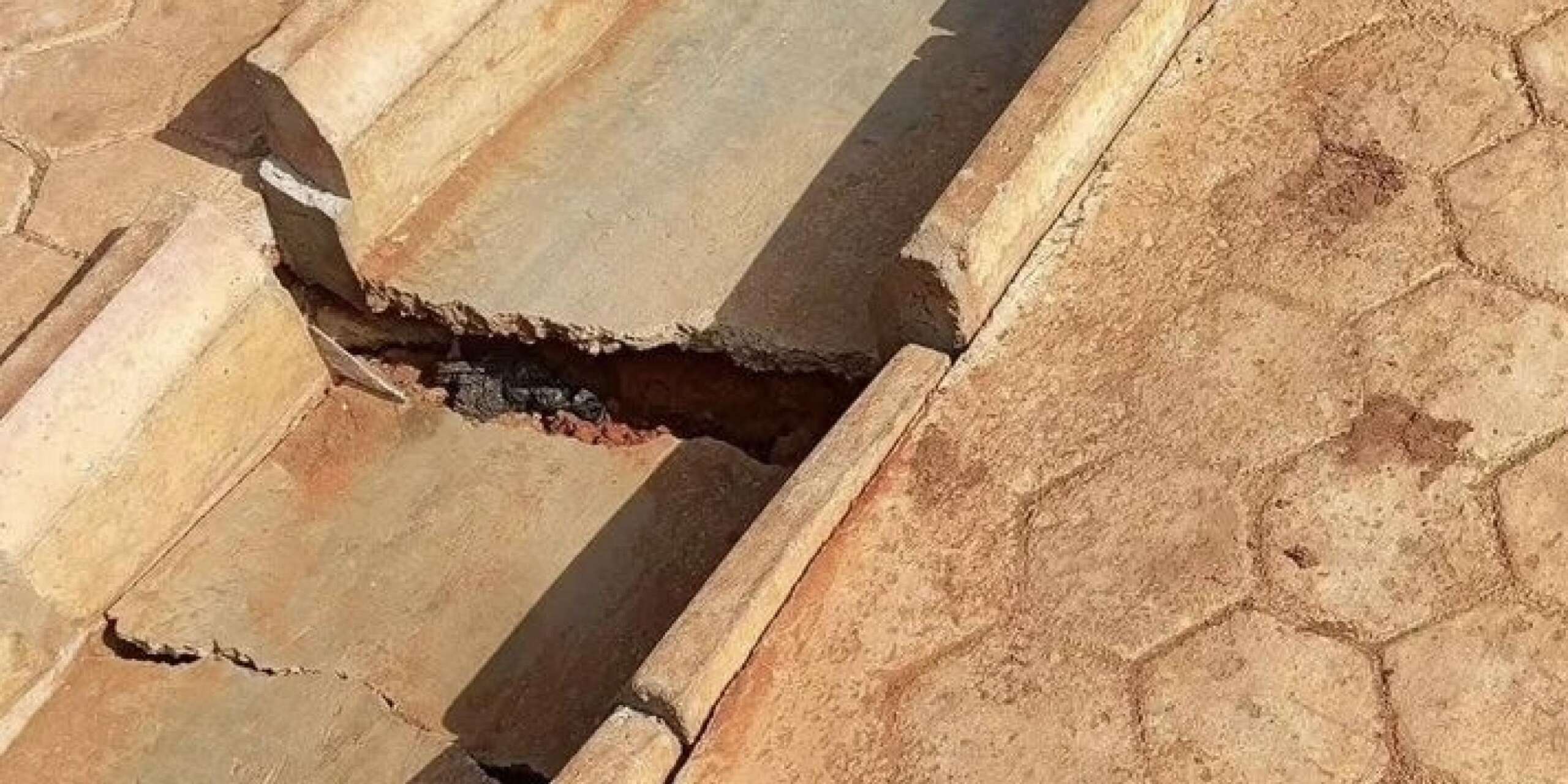
The newly constructed culvert built at the site of the collapsed Mokwa Bridge in Niger State has reportedly begun developing cracks, sparking outrage and fears among residents who warned that another heavy flood could wash away the structure.
Residents of the community accused authorities of replacing the originally approved multi-span bridge project with what they described as a substandard culvert despite the Federal Government’s approval of ₦16.7 billion for the reconstruction of the flood-destroyed bridge.
A resident who spoke to SaharaReporters expressed concern over the state of the project, alleging that the structure already shows signs of deterioration less than a year after approval was announced.
“The bridge in Mokwa that was destroyed by flooding in May last year had a reconstruction approval valued at ₦16.7 billion. However, instead of a bridge, a culvert was constructed at the site, and reports indicate that the structure has already begun developing cracks,” the resident said.
“The development has raised concerns among residents and stakeholders regarding the quality, durability, and suitability of the project for the area’s flood-prone conditions.”
SaharaReporters gathered that community members have become increasingly worried about the integrity of the structure following visible signs of damage on the newly constructed culvert.
To verify the claims, SaharaReporters sent community sources to inspect the project site. Videos and photographs obtained by SaharaReporters reportedly showed portions of the culvert already cracking and deteriorating.
Another resident lamented that the project failed to reflect the scale of funding publicly announced by the Federal Government.
“We were expecting a standard bridge because that was what the government announced to Nigerians. What we got here is something people are already afraid of,” the resident said.
A trader in the area warned that the approaching rainy season has heightened anxiety among locals.
“If serious flooding happens again, this place may be cut off completely. People are scared because the cracks are already visible. The contractor should be summoned immediately before another disaster happens,” the resident said.
Another community source questioned why a culvert was constructed in place of what had been announced as a 10-span bridge project.
“They told Nigerians that ₦16.7 billion was approved for reconstruction of the Mokwa Bridge, but what we are seeing does not look like a bridge of that value. Residents deserve explanations,” the source added.
The Nigerian government had in August 2025 announced the approval of ₦16.7 billion for the “immediate reconstruction” of the Mokwa Bridge, which was washed away by flooding in May 2025.
The Minister of Information and National Orientation, Mohammed Idris, disclosed the approval after a meeting with the Minister of Works, Dave Umahi.
According to Idris, President Bola Tinubu approved the reconstruction of what he described as a “10-span bridge” for the people of Niger State.
“We want to thank Mr. President and we want to thank the Minister of Works. We jointly discussed this and approached Mr. President, who graciously approved it. It means a lot to the people. It’s ₦16.7 billion to reconstruct the bridge — a 10-span bridge,” Idris had stated.
Umahi had also praised Tinubu for approving the reconstruction, saying the president was committed to addressing infrastructure challenges across the country.
The ministers further listed several other bridge reconstruction approvals across states including Taraba, Kogi, Ebonyi, Kwara, Edo and Kebbi.
However, residents of Mokwa now insist that the project delivered at the site does not match public expectations, warning that failure to urgently address the visible cracks could expose the community to another devastating flood disaster.