Home Blog Page 54

Carnage and Confusion: Nigeria reels after deadly Easter attacks across four states

A wave of coordinated attacks across northern Nigeria has shattered Easter celebrations, leaving at least 16 people dead, dozens abducted, and entire communities displaced, while conflicting accounts from authorities and local residents deepen a growing crisis of trust.

From church services in Kaduna to rural communities in Benue, the violence highlights persistent insecurity and raises fresh questions about the effectiveness of security operations in Africa’s most populous country.

Churches Turned Killing Grounds

The most alarming incident occurred in Ariko village, located in Kaduna State’s Kachia Local Government Area, where heavily armed attackers stormed two Christian worship centres during Easter services.

Witnesses say the gunmen opened fire indiscriminately, killing at least five worshippers and abducting dozens into nearby bushland.

The affected churches, First ECWA Church and St. Augustine Catholic Church, became scenes of chaos as congregants fled in panic.

Local official Mark Bawa described the attack as highly coordinated.

“They surrounded the area and began shooting sporadically… many were taken away,” he said.

Army Claims Victory—Community Pushes Back

Shortly after the attack, the Nigerian Army announced what it described as a successful rescue operation, claiming troops freed 31 abducted civilians after a “fierce firefight” forced the attackers to abandon hostages.

But that account has been strongly disputed.

A local community group, the Kuturmi Unity Development Association, rejected the military’s claims, calling them “entirely false and misleading.”

According to its president, J.D. Ariko, families remain in contact with the kidnappers—who reportedly insist the victims are still alive and being held in captivity.

“This clearly invalidates any claim of a successful rescue operation,” the group said in a statement.

The association warned that inaccurate reports could mislead the public, give false hope to families, and undermine trust in official communication.

As of the time of filing this report, the Nigerian Army has not responded to the denial.

Benue Killings: Market Day Turns Deadly

In Benue State, suspected armed herders attacked the communities of Mbalom, Mbatsada, and Agana in Gwer East Local Government Area, killing at least 10 people and injuring several others.

The attack, which occurred during a busy market day, triggered panic as residents fled to safer areas.

Local government chairman Timothy Adi confirmed the incident.

“Nine corpses have so far been recovered,” he said, noting that the attack took place between 5 p.m. and 6 p.m.

Governor Hyacinth Alia condemned the violence as “barbaric” and called for urgent federal intervention.

Renewed Violence in Katsina and Borno

Elsewhere, insecurity continued to spread.

In Katsina State, bandits killed a police officer during attacks on Tangani and Sayaya communities, despite ongoing peace agreements between local authorities and armed groups.

In Borno State, suspected Boko Haram fighters attacked Awapul community in Chibok Local Government Area, burning homes and shops and forcing residents to flee.

The Borno attack came less than 24 hours after another assault on an internally displaced persons camp and a police facility in Damasak and Nganzai, where four police officers and a civilian hunter were killed.

Residents described prolonged attacks carried out by armed men on motorcycles, often lasting more than an hour.

“What we need is protection,” one resident said. “Not food, security.”

Read Also: Nigeria’s Protest Paradox: Government negotiates with bandits, arrests students who protest insecurity

Read Also: Video: How Katsina Lawmaker led delegates to negotiate with terrorists, rescue 45 kidnap victims after ‘peace deal’

Read Also: Shock Video: Outrage as Katsina Lawmaker calls bandit leader “Grand Commander of Peace”

A Growing Crisis of Confidence

Beyond the rising death toll, the attacks reveal deeper concerns about Nigeria’s security architecture—particularly the gap between official statements and realities on the ground.

The dispute over the alleged rescue in Kaduna has amplified concerns about transparency and accountability, with analysts warning that conflicting narratives has added to the eroded public trust and complicated security operations.

Pressure Mounts on Authorities

With no comprehensive official casualty figures released and limited police response so far, pressure is mounting on federal authorities to provide clarity and restore confidence.

For families in Kaduna still awaiting news, however, the situation is painfully clear.

Their loved ones, they say, have not been rescued. And until proven otherwise, they remain in captivity.

Point-and-kill politics, Lasisi Olagunju

Anyone who has watched a hunting party in action will understand what is going on. What we have is a hunting expedition: beaters scour the bush, flushing the political parties—like duikers—towards INEC and the courts, where gunmen are properly positioned to take the killer shots.

The PDP is in Bello Turji’s captivity; the ADC is grappling with Unknown Gunmen; Seriake Dickson’s NDC is being dragged into the àbíkú forest; Accord and the SDP are closely watched by armed, sleeper-cell court cases. Other parties are peaceful because they are well-behaved neutered courtiers in the palace.

In 2026 Nigeria, opposition parties are food for the gods. Like fish in a point-and-kill pond, their days are troubled, nasty, numbered and short.

“Yesterday, I attended the most high-level caucus meeting with the NWC of the African Democratic Congress (ADC) in Abuja…” This was posted on Facebook on July 11, 2025, by Nafiu Bala. He is the plaintiff in the case that activated last week’s attempted murder of the ADC by INEC.

Attached to Nafiu Bala’s Facebook post are three photographs of several men and women at the party leadership meeting. I easily recognised David Mark seated at the centre. Nafiu Bala and Mark appear in the three photos.

I checked the Facebook post yesterday. It was still there on Bala’s timeline. Check. It should still be there as you read this. So, at what point did Nafiu Bala start dragging the national chairmanship of that party with David Mark? What changed, or what forced the change?

Apart from the ruling party, all other parties with the potential to field a presidential candidate in 2027 are in trouble. The courts have become the weapon—the poisoned arrows doing the killing.

Why are the courts allowing their sacred boots to be set upon the profane ground of this march of shame?

A former INEC top shot declared recently that if Nigeria dies, the blood should be traced to the soiled hands of lawyers – “both the bar and the bench.” I have a friend who also told me two days ago that every crisis in Nigeria today is a creation of either the law or lawyers and judges.

Whether in INEC or in the courts; in the executive or the legislature, my friend asked me to check if the bad rats were not, in fact, lawyers. I warned her to desist from such perfidious thinking. I reminded her that the law is an ass—and apart from its braying, what else does an ass offer?

As we argued back and forth, our conversation drifted, as such conversations often do, to those who die yet refuse to die—men whose voices linger long after their bodies have taken leave.

On Thursday last week in Lagos, the fifth memorial lecture in honour of our departed friend and brother, Yinka Odumakin, was held. Speaker after speaker invoked his spirit, saying what he would have said at a moment like this—when the courts have become weapons of mass destruction in the space allocated to democracy.

It was in that mood, at that event, that Mr. Femi Falana, Senior Advocate of Nigeria, sounded a warning on the coming election which may come without a contest, and the bad imprints of courts and lawyers all over the mess.

He said: “Through the manipulation of Nigerian courts and senior lawyers, you may have only one candidate contesting the presidential election in this country. If that happens, Nigeria may not even need to spend money on a presidential election.”

He listed a plethora of instances where courts and lawyers deploy the law as a jackboot, trampling the canvas of justice in service of masters far removed from the chambers of equity and fairness. The ADC case was the peg of speeches at the event.

Falana said: “The Independent National Electoral Commission, headed by a Senior Advocate of Nigeria, issued a statement yesterday that based on the intervention of the court, ‘ADC, we shall not longer recognise you.’ And if a political party is not recognised, its members are not contesting election.

“I say that INEC is wrong because the order granted by the court is, status quo ante bellum. You know, they use such terms to deceive us. What that means is, before the dispute, before the state of the war. So, who was in charge before that fellow went to court? It was David Mark. But that ruling has now been misinterpreted to favour the ruling party.

“When Nigerians say that the Tinubu government, the APC is trying to turn Nigeria into a one-party state, our courts and senior lawyers are to blame.

“I go to another political party that you know about. A man was destroying his political party, campaigning for the candidates of another party, asking the candidates of his own party to step down for the candidates of the ruling party. His party now said these activities were anti-party. The Federal High Court said, ‘Thou shall not suspend or expel him; he shall remain a member of that party, and continue to destroy the party.’ The same man has said, ‘Our party has no presidential candidate.’

“We are making these analyses not because APC, PDP, ADC are better (than one another); they are birds of a feather. But the Nigerian people must be allowed to choose among the oppressors who would govern them.

“What Nigeria is doing is a replica of what is going on in other African countries. A presidential election has just taken place in (one country). Opposition presidential candidates have been killed. Those who are lucky to be alive are in jail. In Tanzania, the most popular candidate was charged with treason, so while the election was going on, he was battling for his freedom.

“Our man who has just left here, (Omoyele) Sowore, of AAC, I’m sure you know he is facing many charges. So, instead of campaigning, Sowore would be making efforts not to be jailed. Even the other leader of the PDP has also been charged with contempt of court. In fact, the court made an order for his arrest, dead or alive, anywhere. They have temporarily suspended that, but he is going to be arraigned for contempt. So, at the end of the day, through the manipulation of Nigerian courts and senior lawyers, you may have only one candidate contesting the presidential election next year.

“My wife has assured me that with what is going on, Nigeria may have to save the money for the presidential election next year, because the way our courts are going, there will be no other candidate to challenge the candidate of the ruling party…”

Falana ended his speech with a call for struggle against the one-man democracy covering our field of play.

A few years ago, when the US Supreme Court was “on the rampage, rolling back progressive gains,” historian David Renton wrote that “rights are won through struggle, (they are) not handed down by the courts.” Indeed, the courts cannot give what they do not have.

As we interrogate the roles being played by lawyers and judges in our politics, and in shaping opposition politics, I think I should draw attention to the danger which a particular book and its author pose to the stability of our nation and the development of its democracy.

Exactly 300 years ago, Jonathan Swift’s ‘Gulliver’s Travels’ was published. It is a book of contempt that should never have been published. Indeed, I cannot understand how it has escaped lawyers’ punishment since 1726, when it was inflicted on humanity.

Like the popular hymn book, Songs of Praise (SoP), a good book should only sing and praise; it should see no evil and speak none. But this one, and its author, lack such wisdom. I read the book thoroughly in secondary school, so I know what I am talking about.

I am more concerned about the book straying into the subversive hands of politicians in Nigeria. Except our courts do something about it very urgently, politicians whose parties have died, or committed suicide, will start quoting from it to attack the courts and the My Lords who man them.

Now, consider this passage in that book of insults: “Judges… are picked out from the most dexterous lawyers, who are grown old or lazy, and having been biased all their lives against truth or equity, are under such a fatal necessity of favouring fraud, perjury and oppression, that I have known several of them to refuse a large bribe from the side where justice lay, rather than injure the faculty by doing anything unbecoming their nature in office” (Jonathan Swift, Gulliver’s Travels, p. 232).

Imagine that! To Jonathan Swift, judges would naturally refuse generous bribes from the innocent, since their professional disposition inclines them toward the discharge of the guilty.

If that is not contempt, then nothing is.

There is also this, again against lawyers and judges: “I said there was a society of men among us, bred up from their youth in the art of proving by words multiplied for the purpose, that white is black, and black is white, according as they are paid. To this society, all the rest of the people are slaves” (p. 231).

All lawyers know what stare decisis is. It is a legal doctrine which requires courts to follow established precedents. The aim is to ensure consistency, stability, and predictability in the interpretation of law.

The Romans expressed it fully as stare decisis et non quieta movere. Black’s Law Dictionary renders it in English as: “To adhere to precedents, and not to unsettle things which are established.” If you ask the lawyer next to your bedroom, he will tell you that the doctrine is the foundation of common law systems.

Now, imagine one audacious writer saying this of that noble doctrine: “It is a maxim among these lawyers, that whatever hath been done before may legally be done again: and therefore they take special care to record all the decisions formerly made against common justice and the general reason of mankind. These, under the name of precedents, they produce as authorities, to justify the most iniquitous opinions; and the judges never fail of decreeing accordingly” (p. 232).

And then this: “That laws are best explained, interpreted, and applied by those whose interests and abilities lie in perverting, confounding, and eluding them.”

We all know those who explain, interpret, and apply the law.

Even the law itself, as powerful as it is, has not escaped the insult of the irreverent writer. The author says in a 1707 essay, that “laws are like cobwebs, which may catch small flies but let wasps and hornets break through.”

Talking about lawyers and jargons. The reigning phrase at this moment in Nigeria is “status quo ante bellum.” Literally, it means “the state of affairs existing before the war.” There is a huge fire as we speak over what the speakers of Latin mean by the status quo ‘jargon’. The meaning is not hidden, but because INEC is headed by a Senior Advocate of Nigeria, the commission has its own unique definition of what it means.

“You know they use such terms to deceive us. What that means is ‘before the state of the war.’ So who was in charge before that fellow went to court? David Mark. Do you understand me? But that ruling has now been misinterpreted to favour the ruling party,” Mr Femi Falana said on Thursday while weighing in on the ADC vs INEC war over “status quo ante bellum.”

Jonathan Swift saw this coming 300 years ago. So he wrote that lawyers take special care to multiply their jargon and, through that, “they have wholly confounded the very essence of truth and falsehood, of right and wrong, so that it will take thirty years to decide whether the field left me by my ancestors for six generations belongs to me or to a stranger three hundred miles off” (p. 233).

To think that all lawyers read Literature in secondary school and were required to pass it with credit at O’Level. If this book escaped their sword when they were in school, why have they not thought of doing something about it since they left school and are now big and powerful?

It is also Swift’s idea that humanity is plagued by a disease: “the nobles seek power, the people seek liberty, the kings seek absolute rule—and civil wars result.” A frightening diagnosis that sounds too close to home.

So, if the ruling party, its president, his INEC, and the courts want to continue enjoying the ransoms they exact from Nigerians, the time to ban that writer, his book and similar ones is now. The government can start the process today; the courts will complete the ban with a midnight judgment and a closed-door ratification. Today.

The views expressed by contributors are strictly personal and not of Law & Society Magazine.

Mr President is far, far away

By Jeff Godwin Doki Ph.D

‘Haipang is not Jos’, ‘We want to see you in Angwan Rukuba’, ‘That’s not the way to show empathy in Africa’, Visit us Mr. President’, ‘Come to Us’. Chants like that ,and many more, filled the air at Angwan- Rukuba on Thursday April 2, 2026 where thousands of Nigerian citizens gathered , eagerly waiting for the arrival of their President. It was a motley crowd but largely dominated by mourners, those who had lost their loved ones in the recent massacre of March 29, 2026. Emotionally devastated, the mourners had hoped that the presence of the President would give them emotional succour. For the poor mourners, it would, at least, have been a huge comfort to have the No.1 citizen of the country coming to console them. But that did not happen.

Africa like any normal society has its own body of customs, traditions and practices that govern individual relationships to the family, the clan and tribe as well as morality, law, worship, politics, social status, economics, etiquette, war and peace. Prominent among this is empathy usually shown through condolence visits to the bereaved. Our rulers are all Africans and they know this for a fact. In Africa, you don’t mourn alone. Sympathizers pay personal visits to console and empathize with the mourners. So, for Mr. President to visit Plateau state with the desire to console residents of Angwan-Rukuba and remain at Haipang Airport is not only insultingly disingenuous, it is also a complete contravention of African ethos and beliefs. Or, has our President forgotten African norms and values because of his exalted office?
One of the most virulent ailments that destroys rulers in Distance. Our rulers do not know ‘We the People’ because of distance. Distance is a very destructive disease. It is a wedge between the ruler and the ruled by the juggernaut of power. There is always a wide distance between ‘We the People’ and our rulers. On the eve of elections, our rulers are very willing to risk their lives even in the dead of night to meet with us, to hold meetings and political rallies with us. On the eve of elections, our rulers come to woo us. They usually put sugar and honey in their tongues. They give us all manner of promises. Vote for us: ‘we shall build schools and hospitals’, ‘we shall bring water to every backyard’, we shall construct roads to every village’, ‘we shall make poverty a thing of the past’, ‘we shall chase all terrorists out of Nigeria’. Sometimes they even promise to build a bridge even where there is no river. But once they assume office distance comes in.

The man of power forgets about ‘We the People’ whose votes legitimize his power. The man of power becomes too honorable to visit us. Even the mouth becomes too honorable to greet. The very same pathways the man of power had driven on when he was seeking our votes are no longer motorable. The local Airports also cannot accommodate his big jet again. The man of power will always have a reason to avoid a face-to-face encounter with us. He knows we have been short-changed and he is afraid.
Another way of putting this is to say that distance makes the rulers forget easily how they crawled to the top. No where is the distance between the ruler and the ruled illustrated with more clarity than in the analogy I once read from the Nigerian Poet, Niyi Osundare. It goes like this:

         There was a day an emperor saw a milling crowd surging
        towards his palace and instantly called for his robes in a euphoric
        bid to join what he saw as a great rejoicing. He had almost reached
        the door when his wife pulled him by the collar and asked him to
        take another look. He did. Not until then did he see the dagger in each
         eye, and the thunderbolt in each voice. The emperor had seen a mob 
         and fancied a rally; he had mistaken a vengeful riot for a
        thanksgiving carnival.

There is no doubt that the people of Angwan-Rukuba are feeling neglected, swindled, abused and angry. But is that the reason the President is afraid of visiting them? Has the President also seen the dagger in the eyes of the people and the thunderbolt in their voices? Or, perhaps, distance has made Oga’s feet to Presidential to step on Angwan-Rukuba soil? It seems clear to me that our rulers do not know ‘We the People’. Consider this: when the President was on a visit to London some weeks ago suicide bombers killed 23 people in Maiduguri. The President only sent a condolence message. In February this year, there was an attack in Woro village in Kwara state, the President did not visit the site. In June 2025, there was an attack on Yelewata in Benue State where close to 200 people were killed. The President did not visit the site citing bad roads as the reason. In the case of Plateau state, the reasons trumped for the President’s inability to visit Angwan-Rukuba are so insulting to the intelligence that you wonder if the President does not have a Media team to help him with the appropriate words or excuses. The Yakubu Gowon Airport at Haipang does not have the facilities for night flight. Ridiculous! Is it not the duty of any responsible Government to repair all the Airports in the country and construct the road to Yelewata and any other village for that matter? But this is just another good example of distance: the man of power has all but forgotten his campaign promises.

Our rulers strut across the country as if ‘We the People’ are the conquered subjects. According to my information, Plateau State Governor had earlier paid a condolence visit to the residents of Angwa-Rukuba. Good. But he did so with a battalion of security operatives that could have intimidated Iran into submission to the US in the on-going conflict in the Middle-East. Residents of Angwan-Rukuba and Nigerians would be less than human not to feel abused and deceived. Where were all the soldiers and police men when terrorists attacked Angwan-Rukuba? Why should one man, with two eyes and one mouth just like any other human being, have a thousand soldiers on his entourage when there is no single policeman in the remote villages of Riyom and Bokkos? Or, if indeed you are a sincere and popular ruler, do you really need any Police man behind you?

We are in a country where rulers are afflicted with indescribable blindness. And that blindness is the refusal to see or analyze and evaluate the enormity of problems currently confronting us, especially the poor.
Our rulers rule as if the people do not matter. Once they barricade themselves in the verandah of power they forget about the people. More than that, our rulers do not know the people and they do not know them because they are far, far away from us.

But mark this: we the people are greater than the ruler. And this is true because terrorists may assault us, they may kill and maim us today but they cannot annihilate us. We may lose our loved ones to terror-related violence today because of neglect and distance. The ruler, as usual, shall have his way as an eternal victor but, but, ‘We the people’, shall always outlast the palace. Nothing lasts forever.

Jeff Godwin Doki, a creative writer, is a Professor of Comparative Literature

The views expressed by contributors are strictly personal and not of Law & Society Magazine.
Justice or Jail First? How Nigeria’s pre-trial system is turning innocence into a prison sentence

Nigeria’s criminal justice system is facing mounting scrutiny after a prominent legal practitioner issued a blistering call for reform, warning that pre-trial detention and remand practices are being “weaponized” to punish citizens before any determination of guilt.

In a strongly worded petition addressed to the The National Assembly and President of the Nigerian Bar Association (NBA), a constitutional lawyer Maduabuchi O. Idam alleges that the current framework allows powerful individuals and malicious complainants to exploit law enforcement and the courts to detain innocent people—often indefinitely and without consequence.

At the heart of the criticism is a system that, according to Idam, enables accusers to trigger arrests and secure remand orders on the basis of weak, exaggerated, or entirely fabricated claims. Once detained, suspects can languish in custody for extended periods while prosecutions stall or quietly collapse.

“The system now serves oppressors,” Idam wrote, arguing that it has drifted far from its constitutional duty to guarantee fair hearing and due process.

A System Prone to Abuse

Legal analysts say the concerns reflect a broader structural weakness: the ease with which civil disputes and personal vendettas can be converted into criminal cases.

Idam detailed multiple cases, including one involving traditional rulers and local officials allegedly arrested at the direction of a state governor despite “no known offence.” According to the petition, the individuals were held beyond lawful limits, arraigned on questionable charges, and effectively left in prolonged detention without meaningful prosecution.

In another case, a retail fraud incident reportedly spiralled into wrongful detention when a suspect, after being caught using a fake payment alert, allegedly manipulated police into arresting the shop owner instead.

Such cases, Idam argues, are not anomalies but symptoms of a deeper institutional failure—one that incentivizes arrest first and investigation later.

“Punishment Without Trial”

Critics say the most troubling aspect is the absence of accountability when cases fall apart. Detainees are often released without compensation, apology, or any immediate remedy for time lost behind bars.

While legal avenues such as fundamental rights enforcement or civil suits for malicious prosecution technically exist, they are widely seen as slow, expensive, and inaccessible to many victims.

“The damage is already done,” a Lagos-based legal analyst told reporters, noting that even short-term detention can carry lasting social and economic consequences.

Proposed Reforms: Pay for False Accusations

In a bid to curb abuse, Idam is proposing a controversial reform: requiring complainants to post a financial bond when filing criminal complaints. If allegations are later found to be frivolous—or if the complainant fails to substantiate them—the bond would be forfeited to the accused.

He also called for a more liberal and evidence-based approach to bail, particularly in cases where charges appear weak or unsupported.

Supporters say such measures could deter malicious complaints and restore balance to a system critics argue has tilted heavily against the accused.

A Growing Debate

The petition is likely to intensify debate within Nigeria’s legal community, particularly as concerns grow over prison overcrowding, prolonged trials, and systemic inefficiencies.

For now, the Nigerian Bar Association has yet to issue a formal response. But with pressure mounting and stories of wrongful detention increasingly surfacing, the call for reform may be difficult to ignore.

As Idam’s letter puts it starkly: without urgent intervention, Nigeria risks normalizing a system where detention is not the consequence of guilt—but a tool of accusation.

The full text of the letter reads:

4th April 2026
The National Assembly
Three Arms Zone
Abuja, Federal Capital Territory
Nigeria

The President
Nigerian Bar Association
29 Aminu Kano Crescent, Wuse Zone 5
Abuja, Federal Capital Territory
Nigeria

Dear sir,

Urgent Reform of Nigeria’s Criminal Justice System: Addressing Pre-Trial Detention and Remand Practices

  1. The pretrial detention of suspects, or the remand of accused/defendants upon arraignment, appears to have weaponized the justice system to serve the interests of oppressors. It currently fails to uphold justice or the principles of a fair trial and fair hearing. Oppressors exploit the system as a tool to secure the abduction or incarceration of their victims, even in cases where no genuine wrongdoing has occurred.
  2. The system effectively enables oppressors to masquerade as complainants, securing the hasty confinement or imprisonment of potentially innocent individuals at the preliminary stage, even before the merits of their cases are examined. Yet, it provides no mechanism for compensating such remandees in the form of damages, whether they are ultimately adjudged innocent at trial or if the prosecution abandons the case after achieving imprisonment without trial.
  3. Cases that underscores the urgent need for this review involves two traditional rulers from my community, a development centre coordinator, and several others, who were arrested despite the absence of any known offence but at the behest of the governor of Ebonyi State. They were held in police custody beyond the permissible period and subsequently arraigned on spurious, fabricated charges designed to prolong their detention without bail, effectively legitimizing their incarceration. To date, the prosecution has shown no diligence in pursuing the matter, resulting in de facto imprisonment without trial, seemingly for the personal interests of the governor rather than for justice.
  4. A similar instance occurred in a matter I came in contact with, where a fraudulent customer purchased goods with a fake alert, and when she was caught and forced to pay, she rushed to the nearest police station to instigate the arrest and detention of her supposed victim—the owner of the shop, claiming criminal intimidation and others. The police officers, eager to satisfy the complaint, initially detained the shop owner before later realizing that she was, in fact, the actual victim. Numerous other such instances abound.
  5. Sadly, in such cases, the detainees are often eventually released and sent home, with no provision for immediate compensation to mitigate the effects of their needless imprisonment.
  6. While one may argue that remedies for wrongful detention and prosecution exist—such as enforcement of fundamental rights or a civil action for malicious prosecution, depending on which is appropriate—I do not disagree. However, an immediate remedy administered through the criminal justice system would more effectively discourage vindictive and malicious use of criminal procedures in Nigeria.
  7. Notably, the system, in its current form, permits oppressors disguised as complainants to transform civil transactions, personal malice, or trivial misunderstandings into criminal complaints, often supported by falsehoods or misrepresentations. These complaints are then processed by compromised law enforcement agencies, inclined to frame charges upon inducement, while the courts—whether acting innocently or otherwise—hastily remand the accused/defendant to a correctional facility, thereby satisfying the complainant’s objective.
  8. I therefore recommend that the criminal justice system be reformed to adopt a more liberal approach to administrative bail and bail pending trial, particularly in cases where a complaint or charge is manifestly unsupported by evidence. In addition, I propose that complainants, upon filing their complaints, be required to enter into a bond of reasonable monetary value, forfeitable to the accused/defendant if the complaint is ultimately found to be frivolous or if the complainant fails to substantiate their allegations after arrest and pre or awaiting trial detention.
  9. May the above recommendation be considered in the overriding interest of justice, as it would discourage frivolous complaints, malicious arrests and detention, or needless remand pending trial—without requiring the victim to separately pursue a cause of action for damages arising from unwarranted detention or trial, or in addition to such an action.

Yours faithfully,

Maduabuchi O. Idam,Esq.
Notary Public
PP: M.O.Idam Attorneys

The Insecurity Triad (III): Terrorism — The ideological ghost and the war for Nigeria’s soul

By Max Amuchie | THE SUNDAY STEW

There is a kind of fear that does not announce itself with gunfire. It does not arrive on motorcycles or through midnight phone calls demanding ransom. It settles quietly, reshaping how people think, what they believe, and even what they dare to hope for. This is the fear that outlives the bullet.
In April 2014, the world woke up to a phrase that would become both a rallying cry and a haunting reminder of Nigeria’s vulnerability: Bring Back Our Girls. In the quiet town of Borno State, over 270 schoolgirls were taken from their dormitories in the dead of night by fighters loyal to Boko Haram.

But the abduction was never just about the girls. It was about what they represented.
Books. Classrooms. The idea that a young girl in Northern Nigeria could sit behind a desk, learn, and imagine a future beyond the boundaries imposed by fear or tradition. In the logic of terror, that idea itself was a threat.

Years later, in February 2018, history echoed in Dapchi, where more than 100 schoolgirls were again abducted. Most were eventually returned. One was not.
Leah Sharibu remained in captivity—her continued detention reportedly tied not to ransom, but to refusal. Refusal to renounce her faith. Refusal to submit.
In that moment, the nature of the conflict became unmistakably clear. This was no longer about money. It was about belief.

From Violence to Ideology

In the third edition of THE SUNDAY STEW, we launched The Insecurity Triad, beginning with kidnapping —the marketplace where human lives are traded. In the second, we confronted banditry—the siege on Nigeria’s land and food systems.
But beneath both lies a deeper, more enduring force. One that does not merely extract wealth or occupy territory, but seeks to capture the mind itself.
This is terrorism—not just as violence, but as ideology. Not just as conflict, but as a competing vision of order.
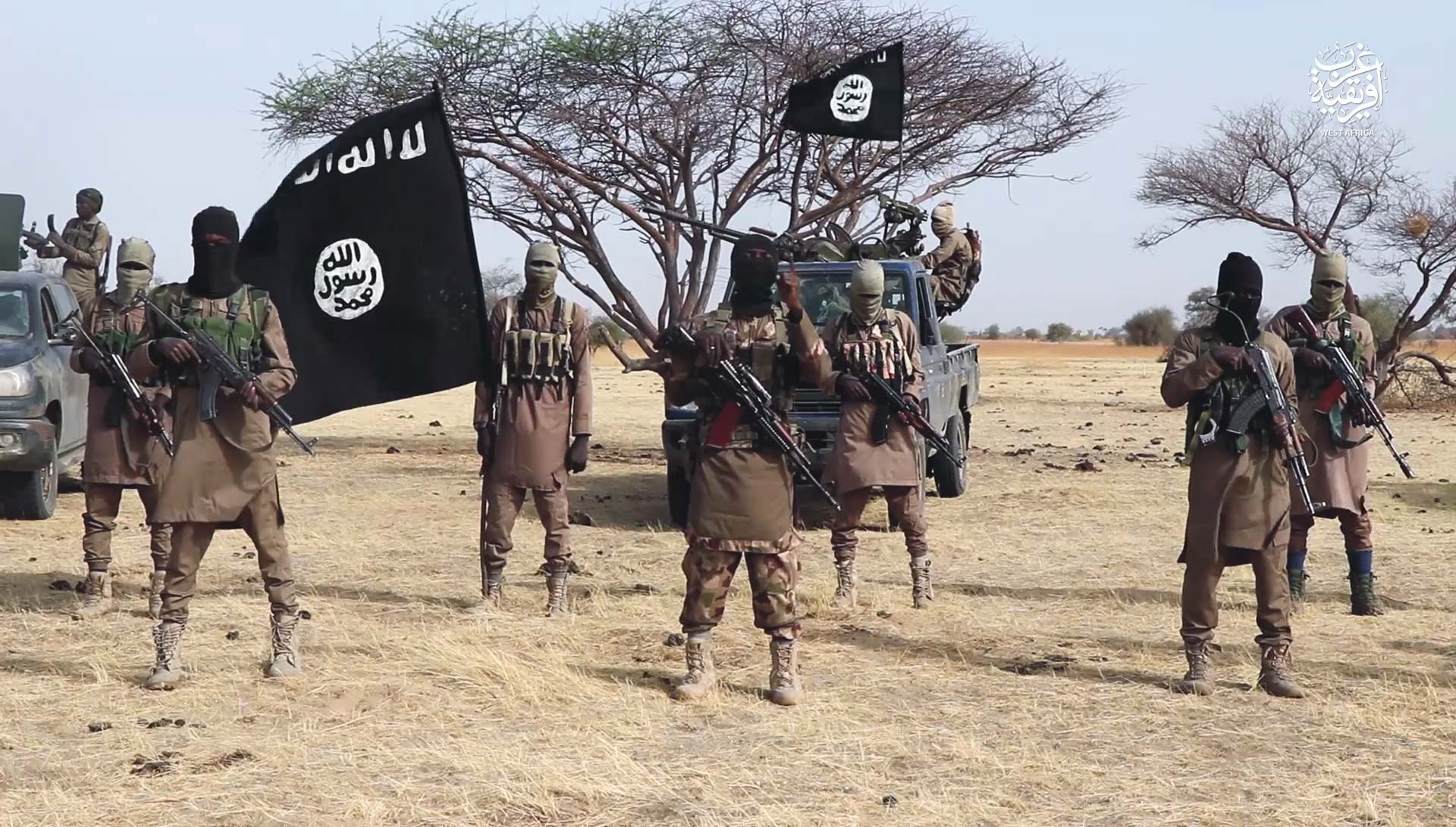
Across parts of Northern Nigeria, the authority of the state is no longer the only voice. In its place, groups like Islamic State West Africa Province and Boko Haram have attempted to construct an alternative reality—one governed not by constitutional law, but by rigid interpretations of belief, enforced through fear.

Unlike banditry, which is driven largely by profit, terrorism is anchored in ideology. Its objective is not simply to coerce—but to convert, to dominate not just territory, but thought.
Where the bandit demands payment, the terrorist demands submission. Where the kidnapper negotiates, the extremist dictates.
This distinction explains why terrorism is often more enduring—and more difficult to dismantle. You can disrupt a supply chain. You can block financial flows. But dismantling an idea—especially one rooted in identity—is infinitely more complex.

By the Numbers: The Expanding Terror Footprint

The scale of terrorism in Nigeria is no longer anecdotal—it is measurable.
Nigeria is now ranked among the four most terrorism-affected countries globally, reflecting a sharp deterioration in its security environment.
In 2025 alone:
•Over 170 terrorist incidents were recorded;
•Fatalities climbed to approximately 750 deaths;
•Nearly 80% of these deaths were linked to Boko Haram and ISWAP.
Even more revealing is the global contrast. While terrorism-related deaths declined worldwide, Nigeria recorded one of the sharpest increases, signaling a crisis that is not just persistent—but intensifying.

Geographically, the crisis remains concentrated—but not contained.
Borno State alone accounts for the majority of attacks and fatalities, yet the pattern is shifting.
The trend is clear: fewer but deadlier attacks, and a widening operational footprint.

The War Against Education

One of the clearest expressions of this ideological war is the sustained attack on education.
The very name Boko Haram loosely translates to “Western education is forbidden.” But beyond semantics, the message is unmistakable: knowledge itself is seen as subversive.

Schools are not just buildings; they are symbols. They represent mobility, empowerment, and the possibility of a future that exists outside extremist control.
To attack a school is to attack the future.
From Chibok to Dapchi, and in numerous smaller incidents across the North-East, the targeting of students has been both strategic and symbolic. It sends a message to communities: education carries a cost—and that cost may be too high to bear.

Parallel Sovereignty

Terrorism thrives where the state recedes.
In many affected regions, extremist groups have moved beyond hit-and-run attacks to establish systems of governance:
They collect levies;
They enforce rules;
They adjudicate disputes,
In doing so, they create what can only be described as parallel sovereignty—a competing structure of authority that challenges the legitimacy of the Nigerian state.
With millions displaced across the North-East, terrorism has already begun reshaping not just territory, but population patterns and governance realities.

The New Frontier: From the North-East to Kwara State

For years, the epicentre of terrorism has been the North-East. But the geography of terror is no longer static. It is expanding.
Increasingly, attention is turning to Kwara State—once considered relatively stable—as a potential new frontier.
Bordering pressure zones and sitting along critical transit corridors, Kwara offers the kind of terrain where non-state actors can establish footholds and expand influence.
Recent intelligence patterns suggest growing movement across the North-Central corridor, linking parts of Niger State, Kogi State, and Kwara.
What begins as sporadic incursions can evolve into:
Embedded cells;
Supply networks;
Ideological penetration.
This is how insurgencies spread—not always through conquest, but through incremental penetration.
The danger is not just isolated attacks, but normalisation.
If the North-East was the birthplace of insurgency, then Kwara represents its next testing ground.
Terrorism in Nigeria is no longer confined to a region—it is becoming a pattern.

Mazrui and the Fracture of Identity

To understand the depth of this conflict, we return to Ali Mazrui. In The Africans: A Triple Heritage, Mazrui described African identity as a synthesis of three forces: Indigenous, Islamic, and Western.
His thesis was one of harmony.
What we are witnessing now is rupture.
Terrorism represents an attempt to violently reorder this balance—rejecting pluralism and imposing a singular worldview.
Where Mazrui saw convergence, the extremist sees contradiction.
Where he envisioned coexistence, the terrorist enforces exclusion.
This is not merely a security crisis. It is a civilisational contest.

The Psychology of Fear

Terrorism operates not only through violence, but through psychological dominance.
The goal is not just to kill—but to condition.
Not just to destroy—but to reshape behaviour.
Communities begin to self-censor.
Parents withdraw children from school.
Expression becomes cautious.
Over time, fear becomes internalised.
This is the true victory of terror: when society begins to regulate itself according to fear.

The Sovereignty Question

At its core, terrorism poses a fundamental question:
Who governs?
Is it the constitution?
Is it elected authority?
Or is it the actor that can most effectively project fear?
A nation does not lose sovereignty only when borders are breached. It loses it when its authority is contested from within.

Breaking the Cycle

Confronting terrorism requires more than military force. It demands a multidimensional response:
•Security Presence: Intelligence-driven, sustained operations;
•Education Protection: Safeguarding schools as national assets;
•Counter-Ideology: Promoting pluralism and coexistence;
•Community Trust: Rebuilding confidence between citizens and the state.
This is not simply a war of weapons. It is a war of ideas, legitimacy, and identity.

Closing Argument: The Final Pillar

If kidnapping commodifies life, and banditry captures the land, terrorism seeks to colonise the mind.
And a nation that loses control of its mind risks losing everything else.
The Insecurity Triad is not just a framework—it is a warning. Each pillar reinforces the other—financially, territorially, and ideologically.
But the urgency has deepened.
What was once a regional crisis is now a national drift. From the classrooms of the North-East to the forests of the North-Central, the geography of terror is widening.
The frontlines are no longer fixed.
The war for Nigeria’s soul is no longer distant. It is moving—quietly, steadily—into new spaces, new communities, and new consciousness.
The question is no longer whether the threat exists.
The question is no longer where it exists.
The question now is whether we have the clarity—and the will—to stop its spread.

As The Insecurity Triad concludes with this edition, new vistas begin to emerge. Chief among them is the need to interrogate the concepts developed in this series within the context of Nigeria’s evolving insecurity—now a single, interlocking system of money, land, and mind, eroding sovereignty, fracturing identity, and placing the nation under siege.

Next week, we will confront it fully.
Don’t miss it.

Happy Easter

Trust is Sacred. Stay Seasoned.

Dr. Max Amuchie is the Founder and CEO of SUNDIATA POST and the developer of The Insecurity Triad analytical framework. He writes THE SUNDAY STEW, a weekly syndicated column on faith, character, and the forces that shape society, with a focus on Nigeria and Africa in a global context.

X – @MaxAmuchie | Email: [email protected] | Tel: +234(0)8053069436.

The views expressed by contributors are strictly personal and not of Law & Society Magazine.
Amupitan and the ruse of law

By Chidi Anselm Odinkalu

In Nigeria, every act of political grubbiness sooner or later ends up before the courts. The kinds of things that come out of the courts in these disputes defy understanding. Colonial rule in Nigeria established a durable method of cleaning up dirty politics. It always found a judge or judicial order to give it the cover of law.

Since the onset of the administration of President Bola Ahmed Tinubu in May 2023, the playbook has become a familiar script, turning Nigerian judges into what has been described as “authors of confusion”. It usually begins with an orchestrated internal leadership dispute in an opposition political party. Then “one faction goes to court, the court issues a vague interim order dressed in Latin, total confusion erupts, INEC is paralysed, and the opposition party is crippled.” It’s the ruse of law.

As the country hurtles supposedly towards national elections in 2027, the judges have become very busy indeed. The latest object of their attentions is the African Democratic Congress, (ADC).

It all began with what looked like a routine playbook of diabolical political sorcery. By the middle of 2025, the former ruling party and then leading opposition platform, the Peoples Democratic Party, (PDP) had all but been hollowed out. The cause or actors in that will be the subject of separate treatment. Leading members of the party decided that it was no longer a viable vehicle for their ambitions. In a country where independent candidacy is precluded, control of a party is the lifeblood of political ambition.

Those of them who desired to quit the PDP had two options. One was to register a new party. For this, they needed the sanction of the Independent National Electoral Commission (INEC) but they knew that an INEC under the control of the ruling party was not going to register a new party capable to making the 2027 elections interesting. So, they settled for the second option of entryism into an existing party. For this project, it appears, they did a deal with the then existing leadership of the ADC.

On 2 July 2025, Ralph Nwosu, the founder and chairman of the ADC announced the resignation of the national executive of the party that he led and threw his support behind a new interim national leadership under former Senate President, David Mark and former Interior Minister, Rauf Aregbesola.

Four weeks later, Nafiu Bala Gombe, who ran on the platform of the party in 2023 as governorship candidate in the Gombe State, proclaimed himself new interim chairman of the ADC. Nafiu Bala claimed that he took that step in his capacity as the Deputy National Chairman under Ralph Nwosu. In a release around 1 August 2025, he dismissed as “entirely false, deceptive, malicious, and fake” a letter dated 18 July 2025, in which he is said to have resigned from the position of deputy national chairman of the party.

One month later, on 2 September 2025, Nafiu Bala initiated a court action at the Federal High Court in Abuja seeking to restrain INEC from recognizing the new leadership of David Mark and Rauf Aregbesola. The case was assigned to Emeka Nwite, a judge. Bala Nafiu followed up his case by applying to the judge to issue an order granting him the orders he sought without hearing the other parties sued. Those were Rauf Aregbesola, INEC, the ADC and Ralph Nwosu.

Very importantly, David Mark was not party to that court case and no one applied to join him. When the application came up for hearing around 4 September, the judge declined Bala Nafiu’s importuning and, instead, asked him to put all the defendants on notice to enable the court make an informed determination of the issues after granting all involved a hearing.

Thereafter, the wheels appeared to come off the facts.

Around 9 September 2025, INEC formally recognised David Mark and Rauf Aregbesola as the new leaders of the party. This is important because it gave them access to the INEC’s portal for the purpose of certifying candidates on the platform of the party in elections.

Thereafter, David Mark, who was not a party to the case at the High Court, lodged an appeal at the Court of Appeal in which he questioned the power of the court to issue the order inviting the parties to respond to Bala Nafiu’s case. My friends who think they know Nigerian law advise – and I verily believe them – that this had them all scratching their heads.

Now, because he was not party to the original case at the High Court, David Mark could not appeal against the decision except with permission of the court. He did not seek nor did he receive one. Having not done so, the conditions for a competent appeal did not exist and the Court of Appeal had no business hearing the appeal.

The only thing more inexplicable than the appeal itself is that it took the Court of Appeal over five months and nearly 60 pages to come to a decision on this case.

Three Justices of the Court of Appeal heard the case. On 12 March, they issued their decision. In a 40-page judgment, Uchechukwu Onyemenam, the senior Justice of Appeal, “dismissed” the appeal with costs assessed at two million Naira.

Thereafter, the judge took initiative to “protect the integrity of the proceedings” before Emeka Nwite at the Federal High Court and ordered the parties to “maintain the status quo ante-bellum” and “refrain taking any step or doing any act capable of foisting a fait accompli on the court or otherwise rendering nugatory the proceedings before the trial court.”

In his own judgment, Okon Abang, the junior Justice of Appeal on the panel whose text ran into 15 pages, initially said he concurred. In fact, he did not. He ruled that having not secured the permission required for him to appeal, David Mark’s appeal was incompetent. Indeed, Okon Abang described the case “a nullity”. That means there was in fact no appeal. It is difficult, therefore, to understand how he could have “dismissed” an appeal that did not as a matter of law exist.

The other Justice of Appeal on the panel was Mohammed Mustapha. To him belonged the privilege of the tie-breaker. But if he issued any judgment, it is yet to be found.

The parties to whom the Court of Appeal directed the order to respect the status quo ante-bellum included INEC. The Commission has a rich supply of senior lawyers on its payroll, both on staff and as external solicitors. Indeed, its chairman, Joash Amupitan, is both Senior Advocate of Nigeria (SAN) and professor of law.

The Commission took all of three weeks to parse this judgment and, at the end of that, sent a journalist, Mohammed Haruna, to announce that out of respect for the order of the Court of Appeal, it had decided to withdraw its recognition of David Mark and Rauf Aregbesola as Chairman and Secretary of the ADC.

The irony was lost on INEC and its leadership that it chose to issue this position on All Fools Day. Party primaries are to begin in three weeks. The parties must submit their membership register to INEC 21 days before their primaries. A party mired in manufactured court disputes cannot do either. That would disqualify it as a platform for the 2027 elections.

Chairman Amupitan knows what he is doing.

To drive that point home, he chose to shred the garb of a neutral umpire or the claim of respecting an order of the Court of Appeal that existed entirely in his imagination, threatening political Armageddon on the ADC if they proceed with a party congress. As if to confirm who the whisperer is, presidential spokesperson, Bayo Onanuga advised the ADC to “please listen to the INEC chairman. He is a professor of law.” Beneath the ruse of law, a malevolent design lurks in plain sight.

A lawyer and a teacher, Odinkalu can be reached at [email protected] 

The views expressed by contributors are strictly personal and not of Law & Society Magazine.

Tales My Patients Told Me: Almost killed by a dead man!

A 57 year old man came in that morning for medical clearance for cataract operation. His cataract is irrelevant to our discussion. I noticed that this man has a limp with crooked back and I asked him for the cause of his disability. “I got run over by a dead man and almost got killed.” “You what?”, I asked incredulously. “Yeah, you heard me right. A dead man almost killed me.”

Our friend was riding his bike merrily on a beautiful Saturday night in South Jamaica, Queens County in New York City when, without warning, he got hit from behind and got swept into the gutter. Police and ambulances were summoned. Unable to move due to his extensive injuries, he was shocked when he saw policemen approach him yelling: “Put your hands up where we can see them! where is the gun? etc. He tried to raise his arms but couldn’t. He was a moment away from being riddled with a hail of bullets. Someone sensed that he was injured and approached him cautiously. He was immediately cuffed.

Why all this drama? It turned out that the guy driving the car which swept him off the road was a dead man. This man was in a night club in South Jamaica, and as he made for his car, got shot in the abdomen. He managed to open his car and yanked the door open, started the engine and raced down the street in an effort to escape his assailants. Down the road, with car still speeding, the guy succumbed to his injuries and died behind the steering. The car swerved and hit the guy riding his bike innocently. He escaped death twice that night: first from the dead man’s car, and then from the police who are quite trigger happy in New York. The cops saw that the driver had been shot, and concluded, wrongly, that our man had shot him!

After recovering from the shock of my patient’s misadventure, I noticed that he is a smoker and still actively smoking. He survived the horrific injuries he sustained from being hit by a dead man’s car, including broken back and a ruined hip. They have had to do a right hip replacement on him twice: first a hemiarthroplasty, then they said, the hell with it and replaced the whole hip. I told him: “you escaped death twice in one night, and now you are trying to kill yourself from smoking.” “I have more lives than a cat,” he replied me cheerfully. Answering him back, I said, “I know, you have nine lives, but you have used eight of them, only one remains!”

Emmanuel O. Fashakin, M.D.,FMCS(Nig), FWACS, FRCS(Ed), FAAFP, Esq.
Attorney at Law & Medical Director,
Abbydek Family Medical Practice, P.C.
web address: http://www.abbydek.com
Cell phone: +1-347-217-6175

“Primum non nocere”

Intimate Affairs: Walking away, By Funke Egbemode

Walking away from a relationship is never easy. The temptation is always to wait for another couple of months and see if he would stop being a leech or if she would stop cheating on you. But too often too late, a player is always a player, cheaters hardly ever stop. As you will soon find out, a leech is a leech. If you have invested in the wrong concern, it is better to divest and move on to more profitable things. Holding on may look like you are brave and long-suffering but please, must you suffer in a relationship that is going nowhere fast? Let go, dear. Walk.

Never ever forget that you can’t force anyone to love you. If you need to beg him or her to stay with you, what you feel is not love and it is time to let go. A man you blackmail not to leave you or you are considering trapping with pregnancy, real or fake, is not your man. Even if he stays, he’s only there in body not in spirit.

Although it feels like it, but the end of a relationship is not the end of life. Not all relationships have happy endings. Love leaves you sometimes. It does not mean you are cursed or jinxed. Just learn the lesson and move on. The right person will come. It may take a while but the right person is always worth the wait. As the saying goes, you must kiss a few frogs before your prince charming comes along.

If you are in a relationship where you are constantly having to sacrifice your happiness to please your partner, you are not on to a good thing. You have to pretend to be a teacher because his mum doesn’t want him to marry a lawyer. You have to pretend you do not have a Phd because his ego is fragile and he’s thin skinned. You have to pretend your brand new car is ‘tokunbo’ because it would make him ‘feel somehow’. You are in the wrong place. You may be managing it now but a few years down the road, you will resent him and what he has turned you into.

A woman who demands but supplies no value to your life is only good for a short ride. If you allow a girl to make more withdrawals than deposits in your life, you will be out of balance and in the red before you know it. You must know when to close the account and take stock. It’s always better to be alone with dignity than in a relationship that constantly requires you to sacrifice your happiness and self-respect.

Is your relationship giving you more pain than joy? Do you wonder more why you are in it than wishing you had met your partner earlier? Don’t be so blinded by the past happy moments that you forget about all the unhappiness it brings you. If your relationship leaves you frustrated, upset, unhappy, miserable more often than not; if it leaves you in tears every so often, perhaps this might not be the right person for you. The relationship you are in now should be one which brings you happiness now. It is simple enough, in business the aim and objective is to make profit. In a relationship it is happiness, and it has no substitute. Any kind of abuse, physical or verbal, are definite no-nos.

If he hits you, slaps you around, punches you to drive his point home, it is time to let him go. Forget the beautiful gifts and nice words he says after, there is clearly something wrong with him and you too for staying in there for this long. If her way of expressing anger is throwing the intercom at the flat-screen television, please start walking and keep walking. What those crazy moments show is something deep that needs addressing. Perception is reality. Emotional abuse is trickier because only the victim feels it. You have told yourself long enough that things will get better. It hasn’t. It won’t. Time to walk away is now.

She believes in God. He believes in science. The two of them aren’t heading in the same direction, so boarding the same train will be a mistake. For any friendship or relationship to work out, the parties involved must share certain fundamental beliefs and values. The values you share are the big rocks which will hold the relationship in place and help you weather through even the toughest storms. Of course you know there are storms ahead, don’t you?

On the other hand, if your core values are fundamentally different, love or no love, when the storm comes, holding your union together will be like jogging uphill or trying to hold the soil of the ground together in a mud slide.

Are you both growing or this relationship is holding one of you down? Indeed if you will be true to yourself, this relationship has altered your plan and desire for your life. You have God’s calling on your life. You know you have special gifts for pastoral work but she has issued an ultimatum that the day you become a pastor is the day she leaves you. So you are hanging in there hoping she will change her mind, praying on seven prayer mountains that God changes her. Bro, you are not married yet. If she’s God’s will for your life, why is she opposing God’s will in your life?

Sisi, you know your ultimate ambition is to become the first female Senior Advocate of Nigeria (SAN) in your village but the man in your life has made it clear that no wife of his will ‘answer sir’ to any man because he makes enough to take care of his family. He told you his woman will not go out to work which is why you are learning cake-making. Take a step back and see the road ahead. Are you where you want to be and do you see a future where you will be happy making cakes? If the only reason you are doing what you are doing is to make him happy and keep him, then you need to think again. He is mean and abusive. He is lazy and unambitious. But he has proposed and his nice ring is on your bruised finger. So you decide to wait it out expecting a better future. Wake up girl. You don’t live in the past, you don’t live in the future. Are you happy now? You need to make it to tomorrow. It is okay to hope for better days ahead but not in this situation. Take a good look at what you have, at him. If he is what he is, why do you think a wedding ceremony will change him?

In all, when you give yourself to someone who doesn’t add value to you, you surrender pieces of your soul that you’ll never get back.

*Egbemode ([email protected])

Exposed: How police “Tiger Base” unit allegedly twists ex parte orders to hold suspects indefinitely

A new investigation by global human rights body, the Amnesty International has raised serious concerns over alleged abuses at the Nigerian police facility in Imo State, known as Tiger Base, accusing policemen of exploiting legal processes to detain suspects indefinitely and impose unlawful bail conditions. 

According to the report shared by the organisation on its official X handle, “Tiger Base officials routinely exploit a prototype ex parte remand order issued by magistrates’ courts.” 

The organisation explained that this legal instrument, which is meant to authorise temporary detention, is allegedly being manipulated to prolong custody beyond lawful limits.

The report states that the order “typically authorises an initial seven-day detention but is drafted to automatically extend for another seven days, then twenty-one days, and indefinitely thereafter.” 

Amnesty International argued that such provisions create a loophole that enables prolonged detention without due process.

It further noted that “this mechanism enables Tiger Base officials to unlawfully detain suspects under the guise of ongoing investigation and to impose extortionate bail conditions,” raising concerns about violations of fundamental human rights, including the right to liberty and fair hearing.

Amnesty International’s findings indicate that the use of these remand orders is widespread in cases handled at the facility. 

“Amnesty International’s investigation confirms that most cases of arbitrary detention at Tiger Base involve the ex parte remand order that effectively permits indefinite detention,” the report said.

The organisation also cited a specific case to illustrate the pattern. “For example, in a recent case, a young man was detained; when his relatives sought his release after 24 hours, a magistrate issued an order extending his detention for another 21 days,” it revealed.

Human rights advocates say the findings highlight systemic issues within the criminal justice process, particularly the role of magistrates’ courts in granting remand orders without sufficient safeguards.

Amnesty International has called for urgent reforms to prevent abuse of the remand system, urging authorities to ensure that detention practices comply with both national laws and international human rights standards.

Earlier, Amnesty International  indicted the Tiger Base police unit in Owerri, Imo State, of engaging in torture, unlawful killings, and cover-ups, following investigations into multiple deaths in custody.

In a statement posted on its official X (formerly Twitter) account, the global organisation described the facility as notorious for human rights abuses and alleged a pattern of brutality against detainees.

“The Tiger Base police unit Owerri Imo state is notorious for deaths in custody,” Amnesty International said.

The organisation cited a 2022 case involving a young man, Okechukwu Ogbedagu, who was handed over to the police by three youth leaders and later died in detention under controversial circumstances.

“Our investigation reveals that in 2022, three youth leaders handed over a suspect to the Tiger Base unit. About three months later, the suspect, a young man, Okechukwu Ogbedagu, died in detention,” the statement read.

According to Amnesty, an autopsy report it reviewed revealed severe injuries to the victim’s neck, including broken bones, bleeding and trauma consistent with intense force.

“These injuries indicate that the neck was forcibly compressed and violently bent or twisted. Such actions would have blocked breathing and blood flow to the brain, leading to suffocation,” the organisation said.

It added that the findings strongly suggest the deceased may have been tortured while in custody.

Whistleblower Punished, Hospitals Crumbling: Inside a growing healthcare crisis in Nigeria’s Southeast

In Nigeria’s Southeast, two unfolding stories, one of a silenced whistleblower, the other of a collapsing healthcare system, are converging into a single, troubling narrative: a system where those who speak out are punished, and those who remain are left to work in conditions many describe as unsafe, undignified, and increasingly unsustainable.

The controversy began in Enugu State, where a young student nurse reportedly exposed the deteriorating state of a public hospital—raising concerns about infrastructure, patient care, and working conditions. But instead of triggering reform, her disclosure appears to have triggered reprisal.

According to a statement by lawyer Ngozi Prince Igbo, the student was suspended from her nursing school shortly after bringing attention to the situation.

The decision has sparked outrage among legal and civil society observers, who warn that punishing whistleblowers sends a dangerous signal across critical sectors like healthcare, where transparency can mean the difference between life and death.

“This is not just about one student,” Igbo said. “It reflects a broader culture where accountability is resisted, and those who raise legitimate concerns are treated as problems rather than partners in reform.”

Silence Over Reform

For many analysts, the incident underscores a deeper institutional challenge: the tendency to suppress criticism rather than confront it.

Healthcare professionals say such actions risk entrenching a culture of fear, where workers—already operating under strain—become reluctant to report deficiencies, even when patient safety is at stake.

“If people are punished for speaking up, others will simply stop speaking,” one medical worker familiar with conditions in the region said. “And when that happens, problems don’t disappear—they multiply.”

A System Under Strain in Anambra

While the Enugu case unfolds, a parallel crisis is deepening in neighbouring Anambra State, where healthcare workers say worsening economic hardship and deteriorating hospital conditions are pushing the system to its limits.

In a statement released by the Elegant Nurses Forum (ENF), health professionals painted a stark picture of life on the frontlines.

According to the group, salaries of nurses, doctors, pharmacists, and other healthcare workers have been significantly reduced, with some reportedly receiving only a fraction of their expected pay—even after continuing to work through difficult conditions, including periods of insecurity.

Signed by the forum’s National Coordinator, Nurse Thomas Abiodun Olamide, the statement alleges that some workers who were injured while trying to save lives were later paid half salaries for months.

For many, the financial strain has become unbearable.

Hospitals in Decline

Beyond wages, the conditions inside public hospitals have raised even more urgent concerns.

The forum described facilities plagued by structural decay—leaking roofs in maternity wards, unreliable electricity, and a lack of basic infrastructure necessary for safe medical practice.

In some cases, nurses reportedly rely on phone torch lights to conduct deliveries at night due to persistent power outages and the absence of functional generators or solar systems.

“These are not just inconveniences,” the statement noted. “They are life-threatening conditions for both patients and healthcare workers.”

The consequences, according to the group, are already visible: worsening maternal and child health outcomes, increased vulnerability to disease, and growing mental health strain among workers and their families.

A Breaking Point for Healthcare Workers

The economic pressure has also spilled beyond hospitals into homes.

With rising living costs and shrinking incomes, many healthcare workers are struggling to meet basic needs, leading to declining nutrition, heightened stress, and reduced access to healthcare—even among those tasked with providing it.

Uniform allowances for nurses, the group added, have remained unpaid since September 2024, further compounding frustration.

Calls for Urgent Action

In response, the Elegant Nurses Forum has called for immediate government intervention, including the restoration of full salaries, payment of outstanding allowances, and urgent rehabilitation of public hospitals.

The group also urged authorities to provide reliable electricity, improve security for health workers, and engage in meaningful dialogue with stakeholders to address the crisis.

“The health of the people depends on the wellbeing of those who care for them,” the statement said.

A Pattern Taking Shape

Taken together, the Enugu whistleblower case and the conditions described in Anambra point to a broader pattern—one where systemic failures persist alongside a shrinking space for accountability.

For critics, the implications extend beyond healthcare.

When institutions respond to exposure with punishment rather than reform, they argue, public trust erodes—and the cost is ultimately borne by ordinary citizens who rely on these systems for survival.

As pressure mounts, one question lingers: in a system where speaking up comes at a cost, who will be left to speak at all?

TIPS