Home Blog Page 5

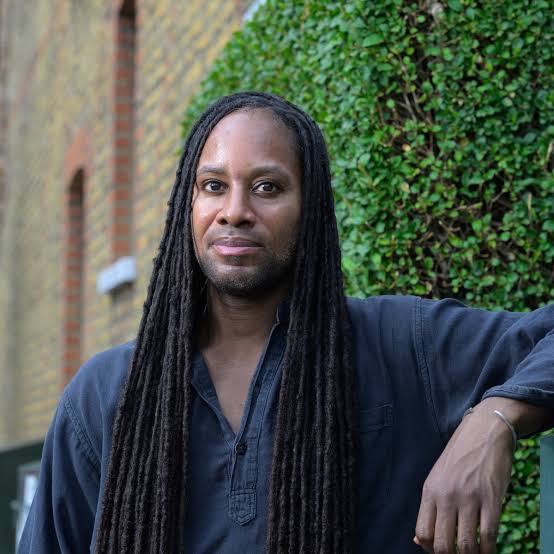
Our English is better than theirs, By Monday Philips Ekpe

There are weightier matters that should engage African leaders more than colonial linguistic affinities, writes MONDAY PHILIPS EKPE

The other day, President William Ruto of Kenya stood before an audience in faraway Italy and declared: ” Our education is good. Our English is good. We speak some of the best English in the world. If you listen to a Nigerian speaking, you don’t know what they are saying; you need a translator…We have some of the best human capital anywhere in the world…”

He was most probably in a light mood and wanted to thrill his listeners a bit.
The backlash that followed, especially from aggrieved Nigerians and other Africans who felt scandalised, made him reverse his earlier stance and said later that Nigeria was home to “excellent English”.

I’m not too sure if President Ruto has the requisite credentials to make such distinctions and judgments but attacking him now would be as misplaced as his own Freudian slip. Even taking him head-on in this circumstance would be disingenuous. But those who link Ruto’s gaffe directly to Nigeria’s President Bola Tinubu’s earlier ill-fated reference to the East African country at a public event may well be on point. He assured his bewildered countrymen and women that they were “better off than those in Kenya and other African countries”.

Whatever purpose that expression was meant to serve, it didn’t go down well with both Nigerians and Kenyans. For the former, their lives were in a huge mess such that comparing the dilemma with what obtained elsewhere, no matter how credible, would be insensitive and painful. On their own part, the East Africans felt that for the leader of another country to ridicule them that way was abusive and provocative. Whether Ruto seized the next available opportunity to hit back is left to conjectures.

Whichever side of the divide one belongs, it’ll be tough to ignore the leadership deficit exhibited by these two heads of some of Africa’s most strategic nations. Apart from being Anglophone, Nigeria and Kenya have several other things in common including, quite unfortunately, despicable social and economic conditions. Till now, Tinubu hasn’t explained the reasons for his conclusion and why he explicitly mentioned Kenya.

By assuming that the Nigerian people fared better, he unwittingly betrayed his disconnect with average Nigerians. He may do well by investigating why, despite widespread reports about the underperformance of his beloved reforms, the citizens haven’t yet trooped to the streets, like their Kenyan counterparts, to forcefully demand transparency and accountability. The findings should shock him.

Like Tinubu, Ruto appears confused about the best way to deliver on his mandate; to convince his people that enjoying the good life or achieving something close is still possible under his watch. And, also, how to truly earn the appellation of ‘statesman’ who is capable of rallying everyone to buy into a country that can make progress or, at least, return to its glorious past. It’s often advised that one should avoid putting the wrong foot forward as apologies could prove difficult or ineffective. This is what has happened here.

A simple knowledge of the influence of host local languages on the domineering foreign ones would have saved him and lovers of the continent this embarrassment. When one chief justice of the Kenyan Supreme Court kept referring to presidential “erection” (election) in her ruling a couple of years ago, I knew at once where her problem was coming from. For me, it wasn’t a chance to laugh at her but to understand without any reservation that phonetic renderings can’t always be taken for granted. Since when did the mastery of acquired imperial languages like English, French, Portuguese and Arabic become a parameter for measuring intelligence, anyway?

Interestingly, an article in Laurea Journal published in September 2022, “English Language and Education in Kenya”, written by Jarmo Mikronen isn’t as enthusiastic and lavish in its assessment of the situation compared with Ruto’s. As he puts it, “The reasons behind poor English skills are well-known. Varying levels of schools (especially between public and private schools), poverty, chronic lack of teachers and lack of reading materials in English besides textbooks have been mentioned. Another reason is that despite its status as a language of learning, English is rarely used by many Kenyan students outside school.

Kiswahili and Sheng are used instead as lingua franca by the young people. Sheng is an informal or slang language that combines words from Kiswahili, English and other languages while using Kiswahili grammar and syntax…. Learning experiences have not always been positive and rules have been strictly enforced.” As expected, this challenging experience isn’t peculiar to Kenya. The task of adopting linguistic systems that are at variance with domestic realities can be daunting.

One aspect of Mikronen’s report is flattering, though. According to him, “in 2021, Kenya ranked 21st, the second-best African country after South Africa (12). For comparison, rank of Finland was 9, Sweden 8, Norway 5 and Denmark 3…. As far as English skills are concerned, British English still remains the ideal in Kenya and English skills form a social divide. Higher education and wealth correlate closely with English skills which is also true in Europe. It also applies when one compares countries: EF noted that its English Proficiency Index correlates with GDP per capita and education.” These statistics ought not to gladden Ruto beyond normal. He should, instead, be guided by the same spirit that enabled our heroes past like Kwame Nkrumah, Julius Nyerere, Nnamdi Azikiwe, Kenneth Kaunda and Muammar Ghaddafi to devote their lives to Africanism.

Let’s be clear. The place of the intellect in being able to master English shouldn’t be downplayed or rubbished. Just as it would be self-sabotaging to ascribe superiority to it. For, literacy, as defined by UNESCO, is truly sobering: “The ability to read and write effectively, enabling individuals to communicate and comprehend written information. This foundational skill is essential in education, as it empowers people to access knowledge, participate in society, and engage in lifelong learning. Literacy also encompasses critical thinking and understanding of various texts across different contexts.”

No particular language, its history, standardisation and domination notwithstanding, is stated here. Meaning, inferiority complex needn’t arise. Any of the indigenous Nigerian and Kenyan languages can actually be developed to meet these communication needs. Surely, it’ll take time to formulate and operationalise the enabling policies. Hard, no doubt, but that’s the way to go, not a return to the mental slavery by the very encumbrances that have perpetually kept Africa’s cultures and sense of self-awareness and dignity in a reverse mode.

Let’s maximise this English crossfire between these two brotherly nations. Identity is a major pillar of international diplomacy and presence. Many developed countries didn’t attain their status by idolising the language of the British. Neither should we. Time has come to be very proud of our mother tongues, beginning from those in leadership positions. That will at least save some of them the misery and discomfiture of struggling to speak English. The merits are unquantifiable.

Ekpe, PhD, is a member of THISDAY Editorial Board
X: @monday_ekpe2

The views expressed by contributors are strictly personal and not of Law & Society Magazine.

Tinubu-Ruto banter as food for thought, by Azu Ishiekwene

Listening to Kenyan President William Ruto diss Nigerians with a smile from faraway Italy, one would think he had taken a page from Amos Tutuola’s The Palm-Wine Drinkard. It was obvious that Ruto assumed Nigerians spoke that variety of unconventional English rendered by Tutuola in his story of magical realism from Yoruba mythology. 

Yes, Tutuola’s English was neither the Oxford lexicon of Ngugi wa Thiong’o, nor, for that matter, the intense mastery of the Nobel-winning Wole Soyinka. It can be argued, however, that like Mark Twain’s The Adventures of Huckleberry Finn, Tutuola didn’t set out to tell a story like Charles Dickens or George Orwell. But he did tell his story – unbounded, in the Nigerian spirit.

Ruto got some respite from the protests about the cost of living and difficult economic policies on the streets of Nairobi and felt comfortable enough to humour the Kenyan community abroad with a jab at Nigerian English. He later tried to walk it back, but the message had landed. 

Who English epp?

While Ruto is browsing Nigerians for translations of English, enterprising Kenyan content creators are online baiting Nigerians for traffic. In fact, if the Kenyan high commissioner in Nigeria is within earshot, he must have overheard countless Nigerians laughing and asking, “Who English epp?”, Nigerian-speak for the vanity of Queen’s English. 

Kenyans may speak the best English (which I doubt), but the economic challenges they face, which Nigerian President Bola Ahmed Tinubu alluded to and drew the clap back, are real. The problems won’t be solved just because Kenyans speak in or mimic the late Queen Elizabeth’s mellifluous tone and accent.

Ruto and Tinubu must brace for the messy, difficult task of fixing their countries’ economies, a task that is not a respecter of fine language. The Kenyan economy, which is largely driven by tourism and agriculture, only approximates to Nigeria’s South-West region. At $2,132, Kenya’s GDP per capita may look better than Nigeria’s $1,378, but Kenyans are more often in riot mode. 

Mother of all protesters

On a state visit to Bayelsa – one of the oil-producing states in the Niger Delta region of Nigeria on April 10, President Tinubu had remarked that despite high fuel prices, which have caused significant economic hardship, Nigerians were still “better off” than citizens in other African countries.

The President was quoted as saying: “Yes, I hear you from various angles of the economy. The fuel price is biting hard, but look around… You are better off. Listen to them in Kenya and other African countries and what they are going through.”

Contextually, the President was not wrong. Perhaps he needed to cite a real, relatable example, and Kenya was handy. 

Since September 2022, Kenya has experienced multiple protests and public outrage regarding the cost of living, tax hikes, and fuel costs. There have been at least six protests between 2022 and 2025, with some accounts citing about 246 police killings connected to public demonstrations. 

Where the shoe pinches

The ongoing war by the US and Israel on Iran has further spiked global oil prices through supply disruptions, significantly raising Kenya’s fuel import costs and further aggravating living expenses. As a net importer of petroleum products, oil prices surged above 25 percent, pressuring pump prices, weakening the shilling, raising transport and production expenses and food prices. 

Inflation rose to 4.4 percent in March 2026 from 4.3 percent exacerbating household strains in an import-reliant economy. 

Nigeria faces a situation practically identical to the one Tinubu’s Kenya analogy sought to downplay. It was the equivalent of an errant father telling his wards that he is not the only parent who defaults on school fees. Nigeria is in a very difficult place, and the suffering threshold of its citizens is often the butt of jokes in many circles.

Tinubu’s hook and Ruto’s refrain are making headlines, obviously because they were heard from the top floor. Downstairs, the rest of Africa loves to spar with Nigeria and Nigerians. For fun, for real and often, for just the heck of it. 

The matter of size

There is a logical basis to it. One out of every six of the estimated 1.58 billion Africans is a Nigerian. That’s about 15.4 percent of the continent’s population, about 63 percent of which is under the age of 25. 

Nigeria’s huge population is about the size of 25 other African countries combined. That’s a demographic variable that comes with inherent advantages and weaknesses. It’s also a variable that makes Nigerians visible on and off the stage.

There’s the regular hee-haw of who has the best jollof rice between Nigeria, Ghana and Senegal. This contest ought to have been resolved when the Guinness World record keepers awarded the chef prize to Nigeria’s Hilda Bassi. Ghanaians, in particular, don’t seem to have heard, seen, or tasted what Nigerians call “party jollof.” They would flood Nigeria on a party pilgrimage if they did.

The Senegalese, the brand owners of jollof, are less vocal about the contest and have, more or less, resigned themselves to watching Nigerians make a greater show of the jollof franchise. Being further to the west coast, and perhaps due to linguistic dissonance, the Senegalese have left the battle for Ghanaians, who are closer neighbours and won’t need “translators” to argue about jollof.

What about the Asian Kenyan variety?

As Kenyans may well know, English, a colonial legacy, is hardly a measure of intelligence or national progress. Otherwise, the British would be the most advanced people on the planet. As former British colonies, both Kenya and Nigeria share English as an official language, but each country has developed distinct spoken varieties with different phonetic structures. 

As Ruto might well know, Asian Kenyans who have been in that country since the 1890s don’t quite have the same English accent as native Luo, Kikuyu or Kalenjin speakers. 

The linguistic or tonal differences reflect the influence of indigenous languages – Nigeria has more than 500 languages, which shape its cadence and intonation. At the same time, Kenya’s peculiarities also give rise to its own accents and adaptations. 

As Nigerian civil rights activist, Shehu Sani, posted on X: “Ruto is mocking the English of the country with a Nobel Prize for literature winner. The nation of Achebe and Chimamanda.” 

Sani might have added that in 2025, a 17-year-old Nigerian student, Nafisa Abdullahi, beat over 20,000 competitors from 69 countries (including Kenyan participants) in English language skills at the TeenEagle finals held in London.

We no carry last!

Nigeria has more English speakers than any other country in Africa. Over time, the language has evolved locally into what is often described as “Nigerian English” – a distinct and widely recognised variety shaped by the country’s history, cultures and everyday usage. Nigerian English continues to influence global English, with Nigerian expressions becoming increasingly common.

Kenyans are very likely aware that apart from marathons, steeple chase and the long distance, Naija no dey carry last – a fact known even as far afield as the Buckingham Palace.

The real trouble is that far more than English, the economy is making both Kenyans and Nigerians miss the humour of these presidential jabs. From a shared colonial past, a youthful population, ethnic diversity and entrepreneurial energy to the love of sports and entertainment, there’s far more that binds both countries than linguistic flair. 

Tinubu and Ruto should face the economy. That is what bothers citizens! 

Na who Queen’s English epp?

The views expressed by contributors are strictly personal and not of Law & Society Magazine.

Democracy in Nigeria: A promise still in the making

By Richard Odusanya

Democracy is more than just a system of government; it is a promise. In Nigeria, that promise carries deep meaning—born out of a long history of colonial rule, military interventions, and the collective struggle for freedom and self-determination. At its heart, democracy is the idea that power belongs to the people. In Nigeria, this means that every citizen—regardless of ethnicity, religion, gender, or social status—has a voice in shaping the nation’s future. Through elections and civic participation, Nigerians are meant to choose their leaders and hold them accountable.

Yet, in practice, democracy in Nigeria remains a work in progress.

While elections are regularly conducted, the true spirit of democracy is often challenged by issues such as electoral malpractice, weak institutions, corruption, insecurity, and limited accountability. Too often, the process of choosing leaders is overshadowed by the struggle to ensure that votes truly count. Even when leaders are elected, the connection between governance and the everyday needs of citizens can appear distant.

This gap between promise and reality highlights an important truth: democracy is not sustained by structures alone but by values.

For Nigeria’s democracy to thrive, three core virtues must take root more deeply:

Courage: Citizens must be willing to participate actively—not only during elections but in demanding transparency, speaking against injustice, and engaging in community and national discourse. Silence and apathy weaken democracy.

Integrity: Public office must be seen as a trust, not an opportunity for personal gain. Leaders, institutions, and even citizens must uphold honesty and accountability in both public and private life.

Devotion to democratic principles: Respect for the rule of law, credible elections, separation of powers, and protection of minority rights must be upheld consistently. Democracy cannot function where laws are selectively applied or institutions are undermined.

In Nigeria’s diverse society, democracy also plays another critical role.

It is the framework that allows different ethnic, cultural, and religious groups to coexist peacefully. When democratic principles are respected, diversity becomes a strength. When they are ignored, division and mistrust can deepen.

Importantly, democracy is not the responsibility of government alone. It belongs to the people. Citizens must move from being passive observers to active participants—asking questions, demanding results, and contributing to solutions within their communities.

Nigeria’s democratic journey has made progress, but the road ahead requires deliberate effort.

  • Strengthening institutions,
  • promoting civic education,
  • ensuring electoral credibility, and
  • rebuilding public trust

Collective Responsibility and Accountability are not optional—they are essential.

Ultimately, the future of democracy in Nigeria will not be decided only at the ballot box but in the daily actions of its people and leaders.

The promise of democracy remains alive—but its fulfillment depends on whether Nigerians, collectively, are willing to defend it, nurture it, and make it work.

In my final reflection on this contribution and following from the above, there are two quotes I would like to use to roundup. The first one being: “Power corrupts and absolute power corrupts absolutely” and the second one being: “The road to hell is paved with good intentions”. In Africa today, many countries in the continent are still fighting for their freedom, whether it be economic, social, political, environmental, or psychological.

Sadly, in many African countries, democracy is under pressure: electoral systems have come under attack, authoritarianism is resurgent, and civic freedoms are shrinking. Against this backdrop, democracy without opposition is not a democracy and should outrightly be considered authoritarianism. Therefore, the “opposition” should in no way be confused with “hostility” to the government.

@richardODUSANYA

[email protected] 

The views expressed by contributors are strictly personal and not of Law & Society Magazine.

APC’s politics of consensus, By Lasisi Olagunju

In a democracy, the joy of victory won through real elections has certain permanence. ‘On Your Mandate We Shall Stand’ was composed and sung for Moshood Kashimawo Olawale Abiola because he submitted his ambition to a competitive process: he had a competent opponent, votes were cast, counted, and he won. The song, its defiance, and resilience followed that mandate because it was legitimate.

Those who chant similar slogans today may find themselves clutching empty matchboxes tomorrow if they continue to sidestep competitive elections. A democratic seat secured through elite manipulation and backroom agreement cannot command enduring popular support, especially when those same elites decide to take it back.

Nigeria today stands in the grip of what is called consensus politics; choosing candidates without the ‘trouble’ of voting. We are even scheming to elect a president next year without the inconvenience of election. Good luck to all of us.

At the Battle of Hastings on October 14, 1066, the Norman king, William the Conqueror, defeated King Harold II and went on to become King of England. Historians note that the victory set off sweeping changes across the British Isles. They say by force of arms, William took the crown and went on to remake the Church, the palace, and the culture of England. They say he did more than change the English crown; his victory remade the English language through a deep infusion of Norman/Latin forms. The consequence is that more than 60 percent of English words now carry Latin parentage.

One such word is ‘consensus’, from the Latin ‘consentīre’—“to feel together.”

The rains started beating that word a long time ago. Language historians note that words which experienced long migration often shed their original sense of shared feeling and acquire more instrumental meanings. So it is with ‘consensus’ in today’s political usage.

Somewhere along its long journey from Latin to modern political speech, ‘consensus’ lost its warmth. The distortion of the word and its meaning is no longer abstract. In our usage today, ‘consensus’ no longer suggests a meeting of minds; it often signals a decision already made; an outcome proclaimed from above and affirmed below. A word that once implied a genuine convergence of minds now describes an order from the throne, delivered through courtiers.

The parties—especially the ruling APC—have stretched and inverted the meaning of the word. In APC’s political dictionary, “consensus” increasingly reads as the will of the president, not the outcome of deliberation.

As we had it in Sani Abacha’s transition programme, we think today’s living parties that make it limping to the ballot in January 2027 should reach an ‘agreement’ and adopt one person as the consensus presidential candidate. That is how rich our imaginative thoughts are and how limitless our capacity for distortion of values is.

Also Read: Intimate Affairs: Where did all the wife materials go?

Read Also: After 14 years of waiting, Nigerian woman dies hours after giving birth to quintuplets

Within both party and polity, the president now embodies what Aristide R. Zolberg calls “the chief executive who is also the supreme legislator (the chief elector), and the ultimate arbiter of conflict.” Because the president is what he has always been, photo ops are staged as proof of order, while his name, cast as the final authority in the APC’s doctrine of “consensus”, is invoked to sanctify outcomes.

In the APC, across the states, the refrain is the same: the abuse of ‘consensus,’ with the president inserted into the process as decider-in-chief.

Oyo State offers a very sharp illustration. Some APC leaders, on Friday, announced Senator Sharafadeen Alli as the party’s “consensus” governorship candidate, invoking the president’s name. Within hours, former minister, Adebayo Adelabu, pushed back, also invoking the same presidency, and declaring that he remained in the race as the president’s “son”. When two rival claims lean on the same authority, what is presented as consensus begins to look like a contest of endorsements, not agreement.

Our fathers say the medicine must match the disease. Bí àrùn búburú bá wòlú, oògùn búburú la fi ńwò ó (When the affliction is severe, the remedy cannot be gentle). That may explain why the rhetoric of resistance has turned harsh. One does not need a keen ear to catch the crudity in what now issues from Oyo APC bigwigs. It is a stream of curses and abuse, imprecations without restraint. And one must ask: why?

Beyond Oyo, across Nigeria, north to south, we hear cries of plots to impose “consensus” candidates. How do you use the words ‘imposition’ and ‘consensus’ in the same sentence? Imposition comes from above; the other grows from below. ‘Imposition’ is force without consent. ‘Consensus’ is agreement without force. The two opposites appearing as companions presents a contradiction, and politics is autological, a self-defining oxymoron. You will likely agree with my linguistic choice if you believe the popular (but etymologically false joke) that “politics” comes from ‘poly’ (many) and ‘tics’ (blood-sucking parasites).

In Nasarawa, former Inspector-General of Police, Mohammed Adamu Abubakar, rejected any move towards “consensus,” insisting that only a direct primary could confer legitimacy. To him and others in the race, what is being dressed up as consensus is little more than unilateralism in softer language.

In Ondo, there are subdued objections to what the party may decide on Ondo South senatorial ticket. Aspirants for the Ondo East/Ondo West federal constituency have raised similar alarms, accusing party leaders of plotting to impose a candidate under the convenient cover of consensus. Their warning is simple: once choice is managed from above, internal democracy is already compromised.

In Yobe State, Senator Ibrahim Mohammed Bomai, Kashim Musa Tumsah, and Usman Alkali Baba—three APC governorship aspirants—have rejected the party’s endorsement of former Secretary to the State Government, Alhaji Baba Malam Wali, as its “consensus” candidate for the 2027 election.

Bomai’s choice of words is telling. He described the “consensus” move as an affront to democratic principles; he warned against the steady replacement of popular choice with elite arrangement. No individual, he argued, regardless of past office or political influence, has the authority to determine the leadership of millions behind closed doors. Leadership, he insisted, must emerge through a process that is free, fair, and transparent—not one brokered in the name of “consensus.” Quoting him directly, he said: “We categorically reject this attempt to subvert due process. We reject the culture of imposition. We reject any scheme that undermines fairness, equity, and the democratic rights of our people.” Those words give voice to what dissatisfied but muted APC leaders and members in Kwara, Ogun and beyond are saying in uneasy, even fearful, silence.

Lagos, for now, appears to be the exception. The emergence of Dr Obafemi Hamzat as the APC governorship candidate quietly followed a process that bore the marks of consultation rather than imposition. Hamzat combines the fine qualities of a gentleman with humble erudition. In a field without a formidable opposition, his path to final victory looks smooth. Congratulations may therefore be in order.

Choice of candidates by consensus is good, cheap and safe if it comes with clean hands. Going far back into our beginning, we find that real consensus is not alien to the African political tradition. Ghanaian philosopher Kwasi Wiredu (1931 – 2022), in his reflections on ‘Democracy and Consensus in African Traditional Politics’, argues that decision-making in pre-colonial African societies was anchored in discussion and agreement rather than imposition.

He draws, for instance, on the words of Zambia’s founding father, Kenneth Kaunda, who observed that “in our original societies, we operated by consensus. An issue was talked out in solemn conclave until such time as agreement could be achieved.” Similarly, Julius Nyerere of Tanzania, in 1961, noted that “the African concept of democracy is similar to that of the ancient Greeks, from whose language the word ‘democracy’ originated. To the Greeks, democracy meant simply “government by discussion among equals.” The people discussed, and when they reached an agreement, the result was a “people’s decision.” In African society, he said, the traditional method of conducting affairs is “by free discussion… the elders sit under the big trees and talk until they agree.”

Our politics has refused to benefit from that past of refined due process. There is no “people” in today’s decisions. And we expect today’s “consensus” arrangement to yield good governance. No. It will not. It can only produce a system that answers to kings, kingmakers, and the capos who guard their power.

When a ruling party actively promotes “consensus” after weakening the opposition, it risks sliding toward a very bad form of authoritarianism. It also strips even its own members of the power to choose their candidates. As Kwasi Wiredu observed, both Kenneth Kaunda and Julius Nyerere defended systems that claimed consensus but, in practice, narrowed choice.

The Yoruba, watching what has become of this democracy in the hands of its custodians, would say: when a wise man cooks yams in a mad fashion, the discerning take theirs with sticks. That is àbọ̀ ọ̀rọ̀—half a word—and for the wise, it is enough.

What passes for consensus in Nigeria today therefore demands closer scrutiny. When outcomes are settled before conversations begin, when dissent is managed rather than engaged, and when unanimity is announced rather than negotiated, consensus ceases to be the product of dialogue; it becomes instead an instrument of control.

“Fair is foul, and foul is fair.” In politics, as William Shakespeare suggests, opposites often blur; good and evil do not always stand apart; they, in fact, reinforce each other. Bernard Crick, in ‘In Defence of Politics’ (1962), reminds us that politics thrives on contradiction, that it is “a creative compromise… a diverse unity.”

All dictionaries insist that “consensus” and ‘coercion’ are not the same. Our politicians, however, behave as though they are—indeed, as though one can be made to pass for the other. Once coercion learns to speak the language of consensus, it no longer needs to persuade; it only needs to declare. And declarations are fast, sweet and cheap.

But there are consequences.

Someone said “every cheap choice is a lost chance at joy.” The quest for easy victory is behind the current ‘consensus’ frenzy. But it may be the death of this democracy.

In Yoruba, some proverbs come as stories. Take this: “All the animals in the forest assembled and decided to make ìkokò (hyena) their asípa (secretary). Ikoko was happy to hear the news, but a short while later he burst into tears. Asked what the matter was, he replied that he was sad because he realised that perhaps they (his electors) might revisit the matter and reverse themselves.”

Professor Oyekan Owomoyela, from whom I got the proverb, explains what it says: “even in times of good fortune one should be mindful of the possibility of reversal.”

The moral is that those who donate victory cheaply through agreement can agree again to whimsically annul the victory without consequences.

The views expressed by contributors are strictly personal and not of Law & Society Magazine.

A Season of Solemn Transitions: AFBA President High Chief Ibrahim Eddie Mark mourns elder brother, Maxwell Mark

The legal community and the ancient kingdom of Omagwa are once again united in a somber embrace as High Chief Ibrahim Eddie Mark, President of the African Bar Association (AFBA), navigates a profound season of transition.

Only months after the grand celebration of life for his matriarch, the Mark family has announced the transition of the family’s eldest scion, Chief Maxwell Mark, who passed on Easter Sunday, April 5th, 2026.

A Pillar of the Patriarchal Home

Maxwell Mark was more than just a brother; he stood as the most senior of his father’s children. Born into the expansive and storied home of the late Mark A. Kanu, Maxwell occupied a unique position of leadership and responsibility within the family hierarchy. Though he was born of a different mother, his role as the first-born son served as a vital bridge between generations, embodying the unity and strength of the Mark lineage.

Resonances of a Recent Farewell

This loss follows closely on the heels of the family’s recent rites of passage for their mother, Mrs. Priscilla Queen Nwanediye Mark. A woman of immense grace, Mrs. Mark passed peacefully on November 16, 2025, at the remarkable age of 95, and was laid to rest by High Chief Ibrahim Mark in a magnificent ceremony in January 2026.

The passing of Maxwell Mark marks the closing of another significant chapter for the AFBA President, as he honours the legacy of those who laid the foundation for his own distinguished career.

The Final Rites of Passage

The family has released the official funeral arrangements to honour the life of Maxwell Mark:

  • Service of Songs: Friday, May 29th, 2026, at Holy Fire Overflow Ministries, Ogba, Lagos.
  • Burial Service: Saturday, June 6th, 2026, at Ihunda Castle, Omuchetu, Omagwa.
  • Interment: To follow immediately at the Reynolds Mezue Mark Compound, Omuchetu, Omagwa.

As the legal titan prepares to lead his family through these final rites, colleagues from across the continent have begun pouring in tributes, recognizing the immense weight of back-to-back losses for the AFBA leader.

Chief Maxwell Mark is survived by his aged mother, wife, children, and numerous siblings, including High Chief Ibrahim Eddie Mark.

Video: “I Can’t Fight You, I Can Only Beg”: Pastor Sarah Omakwu pleads with FCT Minister over Jabi Lake takeover

Her emotional message is striking a chord as fears grow over privatization of public land.

The Senior Pastor of Family Worship Centre, Abuja, Sarah Omakwu, has appealed to the Minister of the Federal Capital Territory, Nyesom Wike, not to allocate the Jabi Lake recreation area for private development.

Pastor Omakwu made the appeal in a video shared on her Instagram page on Sunday, where she was seen kneeling on the pulpit while addressing the minister.

“I cannot fight the minister of the FCT. I cannot. But I go on my knees as a mother in this land that Jabi Lake Recreation Centre should not be given to anybody.

“That is where people go for exercise. That is where people sell. That is where people meet and hobnob and get married.

“That is where people go to watch games. That is where young people go to. I beg you, Mr Minister, in the name of God, as a mother, to not sell that land to anybody,” she said.

She also cited concerns over past developments in Abuja, recalling how public access to Aso Rock was restricted over time.

Omakwu urged the minister to preserve the Jabi Lake area as a public space for residents.

“I can’t fight you. But I can beg you in the name of God Almighty that that land be left for everybody. I beg you. Please heed our call,” she stated.

Despite her appeal, she commended the minister for ongoing infrastructure development in the Federal Capital Territory.

She said, “I want to thank you for all the highways you have built around the city. I thank you. You have made my journey to my home a whole lot easier. Thank you for the other things you are doing. But for this piece of land, I beg you, let it go.”

Her comments come months after the Federal Capital Territory Administration signed agreements with private firms to transform Jabi Lake into a major recreational hub.

In February, the FCTA, under Wike, entered into a development partnership with Suburban Broadband Limited and Akida Hills Limited to upgrade the facility and boost tourism in Abuja.

The minister had said the initiative was aimed at repositioning the nation’s capital as a destination for leisure and economic activities.

Source: The PUNCH

AfBA President Ibrahim Mark Turns a Year Older—A legal powerhouse shaping Africa’s justice future

By Lillian Okenwa

As tributes pour in from across the legal community in Africa and beyond, High Chief Ibrahim Eddie Mark, President of the African Bar Association, is being celebrated today not just for marking another year, but for a career that has steadily reshaped conversations around justice, legal reform, and professional leadership on the continent.

Mark, who was elected AfBA President on October 28, 2024, during the association’s annual conference in Lusaka and formally inaugurated days later, assumed office at a critical time, when Africa’s legal systems face increasing pressure from political instability, economic challenges, and evolving global standards.

His emergence signalled a renewed push for institutional strength, regional collaboration, and a more assertive voice for African lawyers on the global stage.

A native of Omolo-Omagwa, Mark’s journey reflects decades of sustained commitment to law and public service. Called to the Nigerian Bar in 1990 after training at the Nigerian Law School, he further sharpened his leadership credentials at the Harvard Business School in 2014—an experience that would later influence his administrative and strategic roles across multiple institutions.

Over the years, his footprint has spanned some of the most influential legal and professional bodies, including the Nigerian Bar Association (NBA), where he served as General Secretary, and the Body of Benchers of Nigeria, where he holds the prestigious rank of Life Bencher.

His involvement extends internationally through affiliations with the International Bar Association (IBA), American Bar Association (ABA, and other global legal networks—positioning him as a bridge between African jurisprudence and international legal discourse.

Mark’s career has not been confined to the courtroom. From serving on the boards of Council of Legal Education and the Legal Aid Council of Nigeria to chairing the Nigerian Bar Association’s Maiduguri Branch and even leading the Borno State Football Association, his professional life reflects a rare blend of legal expertise, administrative leadership, and community engagement.

Now at the helm of AfBA, he is steering preparations for the association’s 2026 Annual Conference scheduled to hold from September 20 to 24 in Sal Island. The conference, themed “Resilient Africa’s Roadmap for Sustainable Development: Strengthening and Addressing Issues of Military Stability, Security and Economic Stability,” is expected to draw leading jurists, policymakers, and scholars from across the continent and beyond.

The event will feature keynote remarks from Ibrahim Agboola Gambari and will take place at the Hilton Cabo Verde Sal Resort—a venue personally inspected and approved by Mark and his delegation earlier this year to ensure it meets the demands of a major continental gathering.

Colleagues and associates describe Mark as a steady hand in complex times—an advocate for the rule of law who understands both the intricacies of legal systems and the broader socio-political realities shaping them. His leadership, they say, is defined not by rhetoric but by structure, discipline, and a clear vision for institutional growth.

As he marks his birthday, the significance of his role extends beyond personal celebration. For many within Africa’s legal community, it is a moment to reflect on a career that continues to influence policy, strengthen institutions, and amplify the voice of African lawyers globally.

In an era where the rule of law faces increasing tests, Mark’s journey stands as both a testament and a challenge—proof of what sustained leadership can achieve, and a reminder of the work still ahead.

Why South Africans murder Nigerians in cold blood, By Festus Adedayo

A commenter on X, obviously a South African national, with the name Paul, reacted to a CableNews April 27 report that two Nigerians were killed in recent spike in South Africa’s xenophobic attacks on fellow Africans. He said: “They were burnt alive…our country isn’t a playing zone. They (sic) will be more Nigerian criminals to be buried this Saturday.” Paul was writing with the handle, @blewcash.easymoney.referral, with the South African national flag hoisted on his comment. A BBC report had earlier quoted a 43-year-old Democratic Republic of Congo national living in Hillbrow, S.A. as saying he felt lucky to be alive: “My best friend was attacked one morning… He was stoned to death like a dog. Imagine someone runs away from his own land and comes here to find peace but ends up getting killed.”

 A 2017 report cited by Nigeria’s House of Representatives said that 116 Nigerians were killed in South Africa over a preceding two-year period, out of which, roughly 20 were killed in 2016. Though not a recent phenomenon, xenophobic attacks in South Africa have assumed epidemic proportion. As far back as 1994, in the rush for scarce resources,  immigrants face stiff push, leading to violent discrimination. Record has it that in 2008, South Africa harvested 62 deaths from xenophobic uprising and attacks. A 2018 Pew research poll reported that 62% of South Africans believed immigrants constituted social and economic burdens and were responsible for crimes. At the moment, South Africa’s rate of unemployment, ranked as one of the highest in the world, oscillates around 33%. Xenophobia attacks increased after Nelson Mandela and a black majority government deposed white rule, inflicted by assailants who allege that job losses result from foreigners’ infiltration.

Read Also: The travails of Nestoil and the travesties of courts

 Julius Malema, South African opposition politician and leader of the Economic Freedom Fighters, had a stinging remark against such claims. Last Thursday, at the 14th anniversary of Collen Mashawana Foundation, he took a swipe at xenophobia by saying, “I want to challenge you who say ‘Zimbabweans take your jobs, Nigerians take your jobs’ and you march, close shops, and beat up people. Tell us after doing that, how many jobs have you created?… Unskilled men, with no skill whatsoever, say somebody took their jobs. The skill they know is to drink and want to pretend like revolutionaries.”

Read Also: Australia wants to become the first country to eliminate a cancer – can it?

 South African politicians, like ones in uMkhonto weSizwe (MK) led by ex-President Jacob Zuma, latch on this to make xenophobic comments to gain political advantage. Early this year, Zulu king, Misuzulu kaZwelithini, used highly derogatory term for immigrants while calling for their eviction. He spoke by the rocky Isandlwana hill, in a place where history recorded that, 147 years ago, his forefathers, commanding 20,000 Zulu warriors in the Anglo-Zulu war, defeated 1,800 British soldiers in the battle of Isandlwana. 

 The 51-year king said: “The kwerekwere must leave,” kwerekwere being a derogatory word for African migrants. His late father, Goodwill Zwelithini, made similar offensive call in 2015, asking immigrants to “pack their belongings”. This led to a rise in vigilante anti-migrant groups, chief of which is the Operation Dudula (Dudula in Zulu language meaning “to be removed by force”) as well as March on March, with their notoriety flourishing daily.

 There is no way we can locate South Africans’ violence against fellow blacks unless we go into history. In 2019, South Africans unleashed an unprecedented assault on Nigerians which resulted in loss of property worth billions of Naira. To understand this hate, we have to trace its genealogy. It will explain the infliction of horrendous pains on fellow blacks by South Africans.

READ ALSO: Before South Africa’s demons start murdering Nigerians again

Historically, since 1948, Black South Africans have harboured bile, violence and rancid hatred for other races. 1948 was the year Apartheid was institutionalized as a system of white minority rule. It led to acute racial segregation. The Apartheid system also forced non-white into segregated areas, restricted their rights to mingle with whites and took away their voting rights. These further inflicted incalculable damage on their psyche. The  National Party, led by such leaders like Pieter Willem Botha, enforced this oppressive policy of «apartness».

Today, though Apartheid was defeated by the collective voices of the world in 1994, it has not died. While you may see imposing infrastructural relics of white rule in South Africa, its innards are made of up of irreconcilable dysfunction, hate and quest for vengeance of 1948 to 1994.

If you read the works of authors like Mazisi Kunene, Ezekiel Mphalele, Peter Abrahams, Alf Wannenburg and many others, you will understand why South Africans haven’t purged themselves of their bond with violence. 

 I have searched frantically for the lure of the gruesome murders of Nigerians and other African nationals at the drop of a hat by South Africans. My findings revealed a retained savagery of Apartheid. Placing stories of blood spillage under Apartheid with the recent ease with which South Africans hack fellow Blacks to death, a knowledge of the country’s historical development will bail you out of wonderment. If you now read Joseph Conrad’s Heart of Darkness and William Golding’s classic, Lord of the Flies, place the bestiality in the books beside the black-on-black hate in South Africa today and you will agree with white theorists’ submission that the Blackman has within him innate bestiality. Today, South African blacks only need very little provocation to unleash an ancestry of savagery, like Golding’s little boys marooned on an island, whose animalism took the better part of them.

Like Fela Anikulapo-Kuti sang, quoting Botha, Apartheid indeed brought out the beast in South Africans. Today, fellow blacks have replaced whites in their subconscious. The moment the system castrated the Blackman’s manhood, he became a lot less than an animal, with no difference between his behaviour and those of his ape ancestors. If you read the history of the South African liberation struggle, it is replete with macabre and a number of horrendous murders that would make a civilized world shudder. In the name of the struggle, many of those atrocities were excused and overlooked; indeed, they came to the world’s knowledge seldom. The world focused, on the reverse, on the evil regime of Frederick de Clark and the atrocities of segregating white from Indians, the black and coloured. The dastardly act of murdering fellow blacks they labeled Askaris, who were alleged to have betrayed the liberation struggle, were never heard. Thus, we never knew how ignoble and bloodless the hearts of our South African brothers were.

You will recall the trial of Winnie Mandela and the allegation of her involvement in the murder of some youths, who went by the façade of a football club. The murdered boys were alleged to be squealing on the liberation struggle. They were summarily tried by the “Winnie Boys”, sentenced to death and executed, similar to how a Nigerian police officer, ASP Nuhu Usman, was captured on video executing a 28-year-old suspect, Mene Ogidi, last week in Effurun, Delta State. Winnie was eventually tried for these murders which constituted one of the thousands of gruesome killings by blacks under Apartheid.

If you read some of the works of Alex la Guma, like A Walk In the Night, you will encounter District Six, the inner city of Cape Town, home to all sorts of sub-human activities and why horrendous murder became part and parcel of the people’s existence. Mutual knifing, unprovoked arson, murders and all sorts were carried out with a clinical finish that would make a decent man shudder. In Quartet and In the Fog of the Seasons’ End, you will encounter the bestiality that Apartheid wrought on the psyche of our so-called brothers. Many black South Africans lost their humanity in the process.

Umkhonto we Sizwe, the armed wing of the African National Congress (ANC), founded by Mandela in 1961, perpetrated a lot of criminal activities and mindless murders that were swept under the rug while Mandela was in jail. Several South Africans who were accused of betraying the struggle were tagged Askari or “cockroaches” got summarily executed and nobody ever heard of their deaths thereafter.

If Gen Z South Africans who hate Nigerians this much, apparently not born in 1994 or are too young to appreciate the roles Nigeria played to get them the freedom that made them fiefs in their own land, methinks elderly South Africans should retell the story to them. After all, my people say if a child was not alive to witness history (Ìtàn) in manifestation, they will at least hear historical narratives (àróbá). In total, it is said that, from 1960 when Tafawa Balewa made Africa the centerpiece of Nigeria’s foreign policy, to 1994 during Sani Abacha regime, Nigeria wasted an estimated $60 billion on funding the anti-Apartheid struggle.

That Nigerian intervention actually began with the Sharpeville Massacre of March 21, 1960. Police had opened fire on a crowd of protesters outside a police station in the township of Sharpeville. They were protesting Apartheid system’s Pass laws which required Blacks to obtain passes to move around. 72 blacks were killed and about 184 wounded in one fell swoop. In protest, Nigerian university students voluntarily skipped their lunch for a month, and the proceeds remitted to South Africa. It was called the Mandela Tax. Not only did they make fetish of the evil of Apartheid, Nigerian students mobilized public opinion in support of people they felt were their brothers, with many young Nigerians contributing from their little pocket monies in aid of the struggle.

In the same vein, many tertiary institutions formed clubs like Youth Solidarity on South Africa. Nigeria then boycotted the 1976 Olympics and 1979 Commonwealth games, leading to national losses. To get South Africa liberated quickly, Nigeria declined selling oil to the apartheid regime. Aside these, Nigeria played a vital role in the anti-apartheid struggle through music, using powerful songs to mobilize awareness and solidarity across Africa and beyond. Artists like Fela Kuti and Sonny Okosun used their voices to condemn oppression, inspire resistance, and amplify the call for freedom in South Africa.

Apart from frontline states like Zimbabwe, Zambia, Angola, Mozambique and Namibia, no nation could rival Nigeria in contributions to the struggle against apartheid. If you read the book, Diplomatic Soldiering (1987) written by Gen. Joe Garba, Nigeria’s foreign affairs minister under Gens. Murtala Muhammed/Olusegun Obasanjo, you will have an idea of the quantum of fortune Nigeria sank into the liberation of South Africa and South African states. On many occasions, Nigeria single-handedly picked the bills of programmes associated with the struggle. Thousands of South African youths received scholarship to study in Nigerian universities, nursing schools, polytechnics and colleges of education. Frustrated at some point, Obasanjo, as Head of State, once threatened to deploy all means possible to fight Apartheid to a standstill, including invoking what he called the Blackman’s magical power.

 At some point, Nigeria was home to South African freedom fighters like Thabo Mbeki’s father, Govan Mbeki; Albert Luthuli and other ANC leaders who were here on asylum. Nigeria also richly funded ANC’s military wing, Umkhonto we Sizwe. Thabo, Mbeki’s son, was also on exile in Nigeria from 1976 to 1979.

 On May 13, 1990, upon his release from a combination of terms in Robben Island, Pollsmoor, and Victor Verster Prisons which cumulatively stood at 27 years, President Nelson Mandela was on a courtesy visit to Nigeria. At the Murtala Square, Kaduna, he affirmed that Nigeria made the highest donation to South Africa’s liberation. To further underscore this, on April 27, on the Freedom Day which marks South Africa’s first democratic elections in 1994, President Cyril Ramaphosa reminded his country of the debt it owes other nations on the continent who supported their struggle against the racist system of apartheid. 

 The children and grandchildren of Nigerians who made those huge sacrifices are now the ones being killed in South Africa today. As Nigerians, we have our own drawbacks, but violence of the South African kind is alien to us. 

My take is that, if Nigerian governments, from independence to 1994, had spent the estimated $60b frittered on South Africa on the future of Nigerians, their offspring would not be hibernating in South Africa today. South Africans may also jolly well still be in captivity. We owe it a duty to both ourselves and country to make Nigeria too a pleasant country, a country which, travelling out of it would be for mere sightseeing, rather than for economic liberation. The hopelessness at home and the serial plunder of our country by our own kin, the notoriety of which is a tale told in all the four corners of the globe, are reasons we weigh little in the estimation of the world. Again, the criminal lifestyles, drug-pushing and excessive self-underscore that our nationals live abroad cannot but make us objects of xenophobia.

The views expressed by contributors are strictly personal and not of Law & Society Magazine.

The Trinity of State Decay (II): Inside the loop of insecurity

By Max Amuchie | The Sunday Stew

Nigeria’s decoupling is not random — it is engineered. The state wears the mask of authority while its rivals wield the substance of power. In the vacuum, a rival order rises: taxing, renaming, and ruling with a clarity the state can no longer muster.

Part 1 named the condition. This second movement explains its mechanics.
If the Institutional Mirage performs authority and the Shadow Order exercises it, then the question is no longer whether the state is weakening, but how that weakening is organised, sustained, and reproduced.
The answer lies in the Insecurity Triad — not as a collection of crimes, but as an operational system of governance that emerges in the interstices of state withdrawal.
What appears as disorder is structure. What appears as fragmentation is system. What appears as crisis is reproduction.
At the centre of this reproduction is a loop the state does not merely fail to break — but increasingly inhabits as its own mode of survival.

The Structural Interaction: Mirage, Shadow, and the Production of Void

The Institutional Mirage and the Shadow Order are not parallel formations. They are locked in a causal circuit — a self-reinforcing loop sustained by the Insecurity Triad.
The sequence is precise, not accidental.
The Mirage creates the vacuum.
By performing governance without delivering it — convening committees instead of enforcing authority, issuing declarations instead of securing territory, maintaining symbolic centrality while withdrawing from operational peripheries — the Institutional Mirage produces spaces where sovereignty exists in form but not in force.
These are not empty spaces. They are functional voids: zones where authority is declared but not operational, where legality exists but enforceability does not, where the state is present as narrative but absent as structure.
In these voids, legitimacy becomes unanchored from enforcement.
The Shadow does not enter these spaces as disruption.
It enters as replacement infrastructure.
It fills the vacuum through the Insecurity Triad:
Money — ransom economies that convert insecurity into revenue;
Land — territorial governance through coercive taxation and control;
Mind — ideological capture that replaces civic legitimacy with alternative authority systems.

The Triad is not incidental. It is not criminal residue. It is administrative architecture without formal recognition.
Together, these three logics form a rival system of governance that requires no elections, no constitutional validation, no external recognition. It requires only the sustained absence of enforceable state presence.

Constitutional Erasure: The Shadow’s Sovereign Inscription

The functional void produced by the Mirage is not passive; it is actively inscribed by rival authority. What Part 1 established empirically — the renaming of villages, the hoisting of rival flags, and the symbolic reordering of territory — now becomes analytically central as constitutional erasure within the Insecurity Triad loop.
Fanon’s insight is decisive here. To rename is to unmake — to dissolve one sovereign order and inscribe another in its place. The gun secures territory; the name governs it. Constitutional erasure is therefore not adjacent to governance. It is governance in its rival form — counter-constitutional inscription of authority.

Its significance lies in how it restructures perception and compliance. Once a community is renamed, the former constitutional designation becomes politically fragile. To invoke the state’s authority is to invoke an order that cannot enforce itself; to invoke the Shadow’s authority is to invoke one that can. The choice is no longer between legality and illegality, but between enforceable and unenforceable reality.
Constitutional erasure thus converts the Mirage’s vacancy into the Shadow’s jurisdiction. It transforms spatial absence into administrative capture, making subsequent compliance transfer structurally inevitable. The population is not simply governed differently; it is repositioned outside the state’s effective map of enforceability.
The Shadow does not request allegiance. It inscribes it through territorial naming itself.

Compliance Transfer: The Silent Relocation of Authority

As the Shadow consolidates control within functional voids, a second-order transformation occurs: compliance begins to migrate.
This is not ideological conversion. It is practical adaptation.
Populations shift allegiance along lines of enforceability rather than legality:
•taxes are paid to those who can enforce extraction;
•disputes are resolved by those who can enforce outcomes;
•rules are obeyed where consequences are immediate.
What emerges is not rebellion against the state, but rational substitution of authority under conditions of asymmetry.
Each act of compliance transferred is also an act of state erosion — not because the state disappears, but because its authority becomes non-competitive in lived reality.
At this stage, sovereignty is no longer monopolised. It is distributed according to functional capacity.

Dependency Turn: When the State Requires the Shadow

The loop reaches structural maturity when the state begins to adapt to its own displacement.
This is the most critical transition in the entire system.
The state does not confront the Shadow Order as an external adversary alone. It increasingly engages it as an informal stabiliser of governability.
This produces what can be described as Promotional Negotiation — the practice of purchasing temporary stability from a rival authority structure through ransom logic, informal settlements, or negotiated withdrawals.
This is not strategy. It is systemic dependency.
Every negotiation produces three systemic effects:
•It monetises insecurity by validating abduction economies;
•It territorialises Shadow authority by recognising de facto control;
•It legitimises the Shadow as a negotiating sovereign rather than a residual actor.
The paradox is complete: the state stabilises instability by financing its reproduction.
At this point, the Institutional Mirage is no longer merely performing sovereignty.
It is renting functional access to sovereignty from its own rival system.

Theoretical Architecture

The Trinity of State Decay is grounded in a layered theoretical architecture that explains the formation, operation, and persistence of the Institutional Mirage, the Shadow Order, and the Insecurity Triad. At the level of structural formation, Claude Ake and Franz Fanon clarify the inherited constitution of the Institutional Mirage: a postcolonial state that operates primarily as a performative and extractive apparatus, whose authority is unevenly inscribed across territorial space and sustained through symbolic rather than fully enforceable sovereignty.

At the level of mechanism, William Reno and Achille Mbembe explain the operational logic through which the Shadow Order emerges within the functional voids produced by the Mirage. Reno accounts for the relocation of authority to actors capable of enforcing compliance through control of resources and coercive capacity, while Mbembe extends this analysis by showing how coercion becomes a distributed regime of governance over life, survival, and exposure to insecurity.

At the level of persistence, Ali Mazrui and Jean-François Bayart explain why the interaction between Mirage and Shadow stabilises rather than resolves: Mazrui foregrounds the historical continuity of overlapping and non-synthesised authority systems, while Bayart highlights adaptive strategies through which elites and institutions reproduce governance through external linkage and internal accommodation. Together, these perspectives converge within the Trinity as a single analytic stack in which the Institutional Mirage, the Shadow Order, and the Insecurity Triad form a self-reproducing system of fragmented but structured sovereignty.

The Loop as System: Self-Reproduction Logic

The Insecurity Triad stabilises the system through continuous feedback:
Mirage withdraws functional void emerges;
Shadow occupies—authority substitutes
Triad institutionalises—governance stabilises;
Compliance shifts —state capacity erodes further;
Negotiation increases —dependency deepens
Loop intensifies —system reproduces.
There is no external reset mechanism within this system.
It is self-referentially stabilising under fragmentation conditions.

The Trinity of State Decay does not describe collapse. It describes a stable configuration of fragmented sovereignty sustained by asymmetry in enforcement capacity. Its resolution does not lie within the system it describes, but in the restoration of empirical sovereignty capable of reuniting legitimacy and force.

This is not the end of the argument, but the consolidation of its structure. The next and final movement will define the conditions under which the Trinity can be reversed, and the architecture of sovereignty reassembled into a single coherent system.

Trust is sacred. Stay seasoned

Dr. Max Amuchie, CEO of Sundiata Post, is the architect of The Insecurity Triad analytical framework and the Trinity of State Decay theory. He writes The Sunday Stew, a weekly syndicated column on faith, character, and the forces that shape society, with a focus on Nigeria and Africa in a global context.

X — @MaxAmuchie | Email: [email protected] | Tel: +234(0)8053069436

Rejected, Confused, He Left Nigeria With Questions—Now he’s solving a global health crisis

There was no master plan, just curiosity.

Years ago, as a microbiology student at Usmanu Danfodiyo University Sokoto, Muneer Yaqub found himself asking a deceptively simple question: Why do some infections refuse to respond to treatment?

That question would carry him thousands of miles—from northern Nigeria to a top-tier research lab in the United States—and into one of the most urgent scientific battles of the 21st century: antimicrobial resistance.

Today, Yaqub is a PhD graduate of University of Texas at Dallas, where he was named Outstanding Graduate Student (PhD), an elite distinction selected from nominees across six schools. He completed the demanding program at just 27.

But his journey, he says, was anything but straightforward.

“You’re Figuring It Out Alone”

Yaqub didn’t begin with a roadmap to international academia. Like many Nigerian students, he navigated a system where information about global opportunities is often fragmented or inaccessible.

“There were no clear instructions,” he recalls. “You’re figuring things out as you go—applications, funding, expectations—often without guidance.”

Securing a fully funded PhD required persistence, trial and error, and strategic positioning. Even after gaining admission, the transition to life in the U.S. proved equally demanding.

At UT Dallas, independence wasn’t optional—it was expected.

“You’re designing experiments, defending your ideas, thinking critically. No one is holding your hand,” he says. “And beyond academics, you’re also learning a new culture, building a support system from scratch.”

Perhaps the most difficult part? The unwritten rules—how to communicate with professors, navigate opportunities, and advocate for oneself.

The Silent Grind Behind a PhD

A PhD, Yaqub explains, is often misunderstood.

“It’s a quiet journey. Progress is slow, uncertain. Experiments fail. Results don’t always make sense.”

Finishing at 27 came with intense pressure—to perform, publish, and stay on track in an environment where setbacks are routine.

That’s why, when recognition came, it carried deeper meaning.

“As a Nigerian, you’re aware of where you’re coming from,” he says. “You know there are many others with the same potential but fewer opportunities. So it feels like representation.”

Fighting a Global Health Threat

At the Dillon Lab, Yaqub’s research focuses on antimicrobial resistance—specifically Acinetobacter baumannii, a dangerous hospital-acquired pathogen known for its resistance to multiple drugs.

The stakes are high.

These infections are becoming increasingly difficult—and in some cases, impossible—to treat with existing antibiotics.

Yaqub’s work zeroes in on a troubling gap: bacteria that appear treatable in lab tests but survive in real-world clinical settings.

“That disconnect is what we’re trying to understand,” he explains. “Because that’s where treatment fails.”

Beyond the Lab: Leadership and Access

While navigating the pressures of doctoral research, Yaqub also stepped into leadership.

He served as the first Graduate Student Representative in his department and became the pioneer president of the UTD Global Ambassadors program—supporting international students adjusting to life in the U.S.

It was a role shaped by personal experience.

“As an international student, I saw how confusing the system can be,” he says. “I wanted to make that process easier for others.”

That mission extended beyond campus.

He founded ScholarshipHQ (formerly Temple of Scholars), a platform designed to help students, particularly from Africa, secure fully funded graduate opportunities abroad.

The initiative has already helped numerous students access scholarships that once seemed out of reach.

Breaking the “Grades Myth”

One of the biggest misconceptions, Yaqub says, is that academic excellence alone guarantees success.

“Grades matter, but they’re not enough,” he explains. “What really counts is how you present your story, your experiences, your goals, your fit.”

It’s a gap he’s working to close through mentorship and his book, Greener Pasture, which guides students through the scholarship process.

Science Meets Storytelling

In a rare crossover, Yaqub has also written for major outlets including The New York Times and Science Magazine—bridging the gap between research and public understanding.

“Research answers questions,” he says. “Writing helps bring those answers to people.”

“Start Where You Are”

Despite his growing profile, Yaqub’s advice to young Nigerians is grounded in realism.

“You don’t need to have everything figured out,” he says. “But you need to be intentional. Start where you are, build experience, and stay consistent.”

Because, as his own story shows, global impact often begins with a single question—and the refusal to stop asking it.

TIPS