After every attack in Plateau State, the pattern is painfully familiar. The dead are buried. Officials condemn the violence and promise action. Security agencies announce investigations. Communities mourn, rebuild and wait for justice that, for many residents, never comes. Then another village is attacked.
Across Plateau’s battered communities, years of killings, displacement and unresolved grievances are changing how people think about survival, coexistence and the Nigerian state itself. In many places, grief has hardened into anger, while fear is steadily giving way to thoughts of retaliation. Increasingly, residents say they no longer believe the government can protect them.
Over several weeks, FIJ travelled across Bokkos, Barkin Ladi, Mangu, Riyom and Jos North local government areas, speaking with survivors, displaced families, Fulani herders, community leaders, vigilantes and residents whose lives have been shaped by recurring violence. Their accounts reveal a region trapped in an exhausting cycle of attacks, military deployments, official promises and little visible accountability.
For many people living in Plateau’s conflict-hit communities, the fear is no longer whether another attack will happen. It is when.
Nanpan Jonathan*, the wife of a youth leader in Chikam community in Bokkos LGA, was eight months pregnant when armed men residents identified as Fulani attackers stormed the village and killed her. The attackers also hacked her seven-year-old child to death. Her infant son, now six years old, survived with deep machete wounds after the attackers left him for dead.
Mafulul Jonathan*, Nanpan’s husband, said he was ill that night and unable to defend his family when the attackers descended on the community.
“By the time everything had settled, I saw what was left of my family,” he told FIJ. “I knew things were never going to be the same again. Nothing can compensate for the lives I lost that day.”
The April 18, 2025 attack was followed by fresh incidents of violence in the area. Some residents warned Jonathan that he may have been deliberately targeted because of his position as a youth leader and advised him to leave Bokkos for his own safety. He refused.
“It was after they killed my wife and two children that I decided I would never leave,” he said. “I am ready to die for my people, my faith and my land. Experiences like this change a person. If another attack happens, I will stand and defend this community.”
Jonathan’s words reflected a growing sentiment FIJ encountered across Plateau. In many communities, residents increasingly believe survival depends less on the state and more on their own ability to defend themselves.
Across Bokkos, Barkin Ladi, Mangu, Riyom and Jos North, residents told FIJ they no longer trust authorities to prevent attacks or ensure justice afterward. Many communities now view local vigilante groups as their first and sometimes only line of defence.
In April, frustration boiled over in Kassa community in Barkin Ladi, where residents protested against soldiers stationed in the area, accusing security personnel of failing to stop repeated killings. Carrying branches and chanting angrily, the protesters demanded the withdrawal of troops from their communities.
Distrust of security agencies cuts across ethnic lines. Fulani groups have also accused authorities of bias and selective enforcement. Earlier in 2025, the Coalition of Fulani Registered Organisations in Plateau called for an independent investigation into the conduct of security personnel and demanded the removal of a sector commander over allegations of partiality and unprofessional conduct.
Residents across Plateau described the same recurring pattern: attacks occur, villages are emptied, troops arrive afterward, officials promise investigations and, with time, the cases fade from public attention without visible accountability.
Many survivors told FIJ they could not recall any major prosecution linked to attacks that devastated their communities over the past decade.
For many residents, the violence that swept through Mangu in 2023 and the Christmas Eve attacks later that year marked a turning point. The scale and frequency of the killings deepened fears that entire communities had become vulnerable despite the presence of security forces.
In May 2023, violence erupted across Mangu following disputes that escalated into wider attacks and reprisals. Villages were burned, farmlands destroyed and thousands displaced.
Residents said tensions escalated after armed men attacked Kubat, a Mwaghavul community in Mangu, killing residents and destroying property. Witnesses identified the attackers as armed Fulani men, although authorities never publicly confirmed responsibility.
In the days that followed, retaliatory violence spread into Fulani communities, triggering broader clashes and displacement across the area. Between May 15 and 16 alone, at least 87 people were reportedly killed.
Months later, coordinated attacks struck multiple communities in Bokkos and Barkin Ladi during Christmas Eve celebrations. Between December 24 and 26, attackers raided villages, killing residents, burning homes and forcing thousands to flee. FIJ found that more than 160 people were killed during the attacks and in the weeks that followed.
Residents repeatedly described the attackers as “Fulani militias”, “herdsmen” or “marauders”. Some alleged that nearby settlements provided support to the attackers.
The Miyetti Allah Cattle Breeders Association of Nigeria (MACBAN), however, disputed those narratives and argued that Fulani communities were themselves victims of violence and cattle rustling. The group claimed the crisis escalated after an attempted cattle theft targeting Fulani herders on December 23, 2023. FIJ could not independently verify those claims.
The conflicting accounts reflect a crisis in which nearly every side sees itself as a victim abandoned by the state.
The roots of Plateau’s violence stretch back decades. Long before large-scale attacks on villages became common, tensions revolved around disputes over land ownership, political representation and indigene rights.
Under Nigeria’s indigene-settler system, access to land, education, political office and employment opportunities often depends on whether a group is officially recognised as indigenous to a particular area.
For decades, many Hausa-Fulani residents argued they remained politically excluded in areas dominated by ethnic groups such as the Berom, Afizere and Anaguta, despite generations of residence in Plateau.
One of the earliest major outbreaks of violence occurred between 1994 and 1995 during disputes surrounding local government elections in Jos. Tensions over political representation and district boundaries escalated into violent clashes that displaced many residents.
By 2001, religion had become deeply intertwined with the conflict. Violence erupted after the appointment of Alhaji Muktar Mohammed, a Hausa Muslim official, as coordinator of a federal poverty alleviation programme in Jos North. The unrest left around 1,000 people dead, according to multiple reports.
Further violence followed in Yelwa in 2004 and spread more deeply into rural Plateau after the 2008 elections. Farmer-herder disputes increasingly merged with ethnic and religious tensions, making attacks more frequent and harder to contain.
Judicial panels established after major outbreaks repeatedly identified political incitement, arms proliferation and the manipulation of ethnic and religious divisions as major drivers of the crisis. Residents say many of the recommendations were never fully implemented.
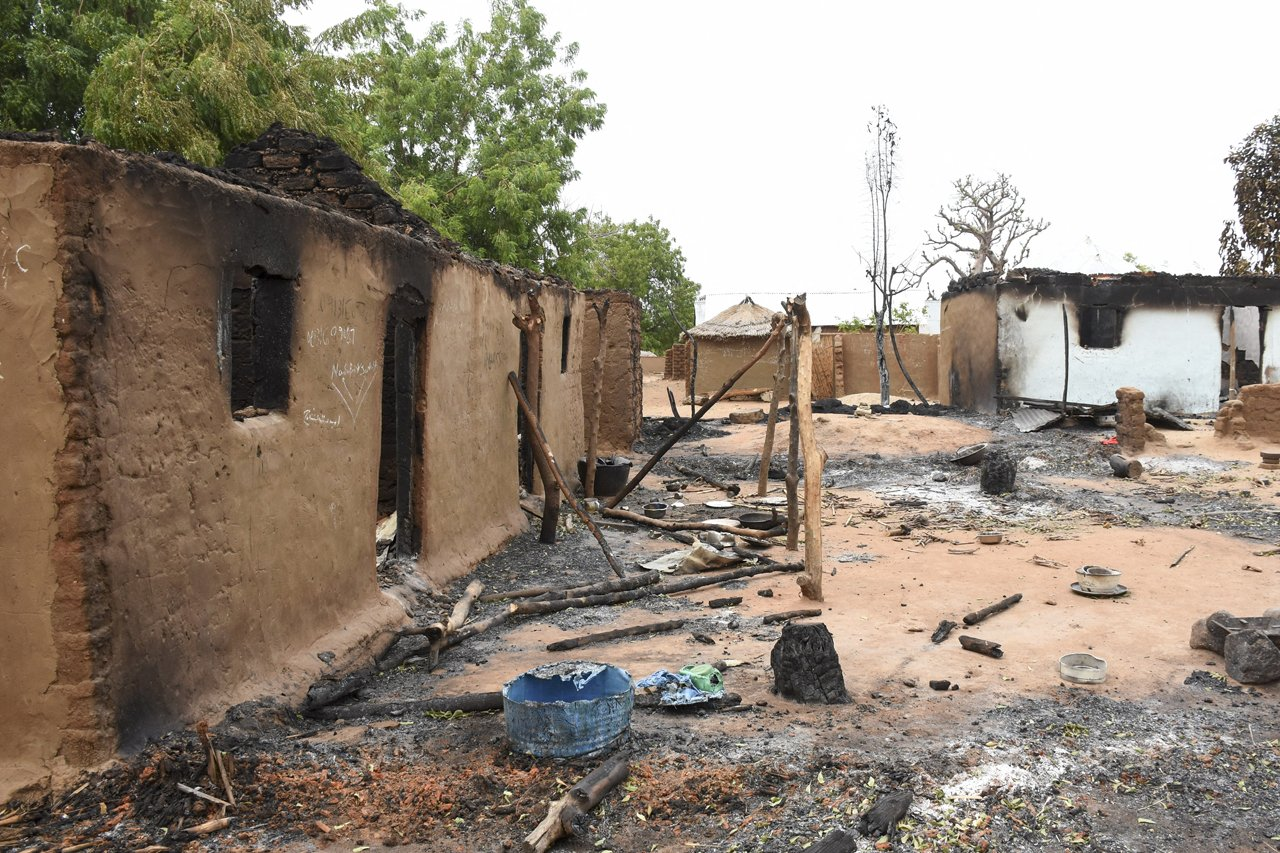
In communities across Plateau, the effects of repeated violence are visible everywhere. FIJ visited abandoned settlements, overgrown farmlands and villages where damaged buildings remain untouched years after attacks.
Rakwork village in Barkin Ladi is one example. Many homes are collapsing, and public infrastructure is largely absent. Residents say the village has steadily emptied over the years following repeated attacks.
Dauda Boyi, a retired soldier who lives in Rakwork, said the community’s decline began after armed men attacked the village in 2014.
“The most severe attack was on November 30, 2023,” Boyi said. “More than four people were killed that day. In 2024, six young men from this community were also killed. Through all of this, we have felt alone.”
In Njevao community in Jos North, residents warned FIJ against visiting the settlement because of security fears. Once home to thousands of residents, the community is now largely deserted.
“The community is empty now,” Augustine Akoh, a former resident, said. “There is hardly any structure still standing. We were told our offence was that we created speed bumps on roads they used.”
He said residents initially continued coexisting with nearby Fulani communities during earlier waves of violence in surrounding areas, but tensions eventually escalated.
“They said they would come back for us,” Akoh recalled. “That night, we moved many children to safety. Even then, people were killed, especially those who could not escape.”
Across Plateau, many residents said they no longer sleep inside their homes at night because of fear of attacks.
“Our houses are no longer safe,” a community leader in Nding, Barkin Ladi, told FIJ. “By evening, people leave and hide in surrounding areas. If attackers find you inside, escaping becomes difficult.”
One striking feature of Plateau’s crisis is that both Fulani communities and indigenous groups describe themselves as victims.
Fulani residents interviewed by FIJ accused authorities of failing to protect them from reprisals and cattle rustling. Indigenous communities, meanwhile, accused security agencies of failing to stop armed groups operating in rural areas.
Abdullahi Idris, a Fulani resident of Mushere district in Bokkos, said Fulani communities also live under constant fear.
“We don’t find it easy,” Idris said. “There have been repeated attacks and harsh treatment because they want to push Fulani people out.”
Dashal Panna, a Mwaghavul resident of Mangu who lost a leg during an attack, said many people in his community believed the violence had become organised.
“It may have started as reprisals, but it felt organised, as if people were being pushed from their land,” he said.
The violence has also reshaped livelihoods across Plateau. Thousands of people have been displaced, farms abandoned and grazing routes disrupted.
Masu Maccu, a Fulani herder originally from Mangu, said his family lost nearly everything during attacks in 2023. Once wealthy, with more than 900 cattle, he now works as a labourer in Bauchi State.
“Four of my brothers were killed and everything we owned was taken,” he said. “My father died after hearing what happened.”
For years, Plateau’s violence has produced familiar official reactions. Governments condemn attacks, impose curfews, deploy troops and promise investigations.
Residents say meaningful accountability rarely follows.
FIJ reviewed public statements issued after major attacks between 2018 and 2025 and found repeated announcements of arrests and investigations, but few publicly documented prosecutions.
Except for the ongoing prosecution connected to the Angwan Rukuba killings, FIJ could not independently verify whether many arrests announced after previous attacks resulted in successful prosecutions.
For many residents, justice means more than punishing perpetrators. It means being able to return home safely, rebuild destroyed property and live without fear.
“What we want is for those responsible to be identified and held accountable,” said Mark Locheng, a farmer in Barkin Ladi. “We want peace to return to our communities.”
Community leaders and clergy warned that years of unresolved violence are increasing the risk of reprisals and radicalisation among young people.
“There is a lot of pain and, in some cases, a desire for revenge,” said Matthew Malau, secretary of St Thomas Catholic Church in Bokkos. “But we continue to preach forgiveness because it is necessary.”
Others fear the long-term consequences of allowing the violence to continue unchecked.
Panam Amuna, a community leader in Mangu, warned that prolonged insecurity had contributed to the spread of weapons and growing criminality in some areas.
“My worry is not only about the present situation, but what happens afterward,” he said. “If weapons remain in circulation, they may eventually be used for other crimes. At that point, the issue may no longer be about identity, but opportunism.”
He paused before adding quietly: “Unless justice is applied fairly, regardless of background or affiliation, it will be difficult to bring this crisis to an end.”