By John Azu
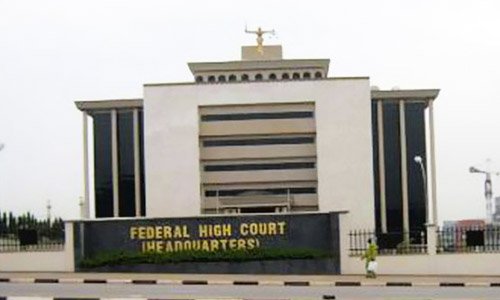
A Federal High Court in Abuja on Thursday delivered a landmark judgment that could dramatically reshape political calculations ahead of Nigeria’s 2027 general elections, ruling that the Independent National Electoral Commission lacks the legal authority to impose certain deadlines and restrictions on political parties beyond what is expressly provided in the Electoral Act.
In the ruling delivered by Justice Mohammed Umar, the court voided INEC’s directive requiring political parties to submit membership registers and databases by May 10, 2026, declaring that the commission cannot abridge statutory timelines through administrative guidelines.
Key Points From the Judgment:
1. INEC Cannot Fix Timelines for Party Primaries
The court held that although INEC has powers to monitor and observe party primaries, it does not have the authority to prescribe when political parties must conduct those primaries.
According to Justice Umar, the Electoral Act does not empower the commission to dictate internal political party schedules beyond statutory requirements.
2. Political Parties Have Until 120 Days Before Election to Submit Candidates
His Lordship ruled that under Section 29(1) of the Electoral Act 2026, political parties are only required to submit the particulars of candidates not later than 120 days before an election.
The court said INEC cannot lawfully shorten that timeline through regulations or election guidelines.
3. INEC Cannot Impose Earlier Deadlines for Candidate Substitution
The court further ruled that INEC cannot set earlier deadlines for withdrawal or replacement of candidates outside the period already provided under Section 31 of the Electoral Act.
Under the law, parties are permitted to substitute candidates up to 90 days before an election.
4. Court Reaffirms Supremacy of Electoral Act Over INEC Guidelines
The judgment emphasized that administrative guidelines issued by INEC remain subordinate to the Electoral Act and cannot override or diminish rights granted by statute.
The ruling reinforces the legal doctrine that subsidiary regulations cannot supersede laws passed by the National Assembly.
5. Judgment Reopens Political Defection Window Ahead of 2027
The decision is expected to trigger major political realignments as politicians now potentially have more time to defect to new parties and secure nominations before the 2027 elections.
Analysts say the ruling could intensify coalition talks, internal party battles and last-minute political negotiations across major parties.
6. INEC’s Regulatory Powers Now Under Judicial Scrutiny
The ruling significantly narrows INEC’s room to impose administrative controls outside the Electoral Act and may force the commission to redesign parts of its 2027 election timetable.
Legal experts believe the matter could eventually reach the Court of Appeal or Supreme Court because of its constitutional implications.
Why the Judgment Matters
The ruling is already being viewed as one of the most consequential pre-election decisions ahead of 2027 because it directly affects:
- party primaries,
- defections,
- candidate substitutions,
- and the balance of power between INEC and the judiciary.
For political actors preparing for 2027, the judgment could fundamentally alter the timeline and strategy of the next election cycle.