Home Blog Page 46

Undeterred by Trump, Pope Leo promises to continue speaking out

Pope Leo XIV said today he has “no fear of the Trump administration” and will continue to speak out after the US president criticized his comments on the war with Iran.

“I will not enter into debate. The things I say are not meant as attacks on anyone,” Pope Leo told reporters on the Papal plane. “I am inviting all people to look for ways of building bridges of peace and reconciliation, of looking for ways to avoid war any time that’s possible.”

The pontiff vowed to “continue on with what I believe is the mission of the Church in the world today.”

“I have no fear of the Trump administration or speaking out loudly of the message of the Gospel, which is what I believe I am here to do, what the church is here to do. We are not politicians, we don’t deal with foreign policy with the same perspective (as) he might understand it. But I do believe in the message of the Gospel, as a peacemaker.”

Trump had delivered an extraordinary broadside against Pope Leo XIV, saying he does not think the US-born leader of the Catholic church is “doing a very good job” and that he is “a very liberal person”, while also suggesting the pontiff should “stop catering to the radical left”.

In response, Leo, who arrived in Algeria on Monday as part of an 11-day tour of Africa, told reporters on the papal flight that he did not fear the Trump administration and would continue to speak out against war.

Flying back to Washington from Florida on Sunday night, Trump used a lengthy social media post to sharply criticise Leo, then continued in comments on the tarmac to reporters. “I’m not a fan of Pope Leo,” he said.

Trump’s comments came after Leo suggested over the weekend that a “delusion of omnipotence” was fuelling the US-Israel war in Iran. While it’s not unusual for popes and presidents to be at cross purposes, it is exceedingly rare for the pope to criticise a US leader – and Trump’s stinging response is equally uncommon.

“Pope Leo is WEAK on Crime, and terrible for Foreign Policy,” the president wrote in his post, adding: “I don’t want a Pope who thinks it’s OK for Iran to have a Nuclear Weapon.” He repeated that sentiment in comments to reporters, saying: “We don’t like a pope who says it’s OK to have a nuclear weapon.”

Later, he posted a clearly AI-generated image of himself as a Jesus-like figure, appearing to “cure” a man.

Leo presided over an evening prayer service in St Peter’s Basilica in the Vatican on Saturday, the day the US and Iran began face-to-face negotiations in Pakistan during a fragile ceasefire. The pope did not mention the US or Trump by name, but his tone and message appeared to be directed at Trump and American officials, who have boasted of US military superiority and justified the war in religious terms.

During the flight to Algeria on Monday, Leo told reporters: “I am not a politician, and I do not want to enter into a debate with him [Trump]. I do not think the message of the gospel should be abused as some are doing. I continue to speak strongly against war, seeking to promote peace, dialogue, and multilateralism among states to find solutions to problems.”

Responding to a question from a US journalist, the pope said: “I have no fear of the Trump administration or speaking out loudly of the message of the gospel, which is what I believe I am here to do, what the church is here to do.”

Trump’s remarks have been criticised by Italian politicians from across the spectrum. Matteo Salvini, the far-right deputy prime minister who has been a staunch supporter of Trump, said: “If anyone is working hard on the issue of peace and conflict resolution, it’s Pope Leo. Attacking the pope, a symbol of peace and a spiritual guide for billions of Catholics, doesn’t seem like a useful or intelligent thing to do.”

Matteo Renzi, the liberal former prime minister, said it was a “duty” to defend the pope. “Not only for Catholics but also, and above all, for the laity,” he said.

“It’s been centuries since we’ve seen such blatant aggression [against a pope],” Renzi said, describing the pontiff as a “bridge builder”, in contrast to Trump, who he described as “a destroyer of relationships and civilisations”.

In a post on social media, the far-right prime minister, Giorgia Meloni, praised Leo for his trip to Africa, where her government has formed strategic relationships, mainly aimed at curbing irregular immigration, and his role in “fostering the return of peace”, but did not mention the attack against him by Trump.

Leo’s criticisms of war have intensified since the US-Israeli strikes on Iran began. In ones of his harshest condemnations, he said God “does not listen to the prayers of those who wage war, but rejects them”.

This was seen as a rebuke to the US defence secretary, Pete Hegseth,who said he prayed for “overwhelming violence of action against those who deserve no mercy”.

Leo has also referenced an Old Testament passage from Isaiah, saying that “even though you make many prayers, I will not listen – your hands are full of blood”.

Before the ceasefire, when Trump warned of mass strikes against Iranian power plants and other infrastructure and that “an entire civilization will die tonight”, Leo described such sentiments as “truly unacceptable”.

In his social media post on Sunday night, however, Trump went far beyond the war in Iran in criticising Leo. The president wrote: “I don’t want a Pope who thinks it’s terrible that America attacked Venezuela, a Country that was sending massive amounts of Drugs into the United States.” That was a reference to the Trump administration ousting the Venezuelan president Nicolás Maduro in January.

“I don’t want a Pope who criticizes the President of the United States because I’m doing exactly what I was elected, IN A LANDSLIDE, to do,” Trump added, referencing his 2024 election victory.

Trump also suggested in the post that Leo only got his position “because he was an American, and they thought that would be the best way to deal with President Donald J Trump”.

“If I wasn’t in the White House, Leo wouldn’t be in the Vatican,” Trump claimed, adding: “Leo should get his act together as Pope, use Common Sense, stop catering to the Radical Left, and focus on being a Great Pope, not a Politician. It’s hurting him very badly and, more importantly, it’s hurting the Catholic Church!”

In his subsequent comments to reporters, Trump remained highly critical, saying: “I don’t think he’s doing a very good job. He likes crime I guess,” adding: “He’s a very liberal person.”

In the 2024 election, Trump won 55% of Catholic voters, according to AP VoteCast, an extensive survey of the electorate. But Trump’s administration also has close ties to conservative evangelical Protestant leaders and has claimed heavenly endorsement for the war on Iran.

Hegseth has urged Americans to pray for victory “in the name of Jesus Christ”. When Trump was asked whether he thought God approved of the war, he said: “I do, because God is good – because God is good and God wants to see people taken care of.”

Video: I am still here but the doctor in me has died a long time ago- Nigerian doctor shares on how poor medical care has broken the spirit of many doctors

Alamin Usman, a Nigerian doctor, has shared a heartbreaking video in which he lamented deeply about the poor healthcare system in Nigeria and how it affects so many doctors working in the country.

In the video which has received so many reactions online, Dr Usman mentioned that the day he recorded the video, he watched the life of a three-year-old slip away just because his mother couldn’t pay N5000 deposit for Oxygen.

‘’N5000! That is the price of a life in Nigeria! I watched him with consultants knowledge in my head and a beggar’s resources in my hands and Malaria doing the job of a firing squad…gone!!! I am just one man doing the job of ten. My heart doesn’t beat anymore, it just thuds., trying to keep up with the 36 hours shift that never seem to end. We ask for Minimum wage and they give us heros speeches while our colleagues collapse and d!e in the cold rooms, from the very exhaustion that we are supposed to treat. Make it make sense”

Dr Usman said he is just tired of trying to make sense of something that doesn’t make sense, make sense.

‘’So you look for the exit. You look at the map and think there must be somewhere elses where my hands could actually matter”

He mentioned that Doctors study for the various examinations like PLAB, USMLE just so they can get a chance to leave Nigeria to a better place where they can practice as doctors, only to be shut out or at best, be given the least opportunities.

‘’You drain your life savings just for a chance to breathe..but the world has grown cold on us. You reach there and they close the gate on your face. ,saying we prioritizing our own now….so a surgeon from Lagos becomes a healthcare assistant in a gray city overseas, wiping spills and cleaning linens just to put the light on…from saving lines to just surviving…what is a healer who has no where else to heal? ‘’

He mentioned that he looks in the mirror now and doesn’t see himself as a doctor but a man who is tired of being the only thing standing between a broken system and a shallow grave.

‘’I used to have this fire in me but now its just ash. I am still here but the doctor in me has d!ed a long time ago”

Watch the video he shared here.

Video: Nigerian Army arrests teenage suspect linked to killing of brigadier-general in Borno

Troops of the joint task force (North-East) Operation Hadin Kai have arrested a 15-year-old suspect simply identified as Tijjani, over his alleged involvement in a deadly attack in Borno state that resulted in the de@th of Brigadier General Oseni Braimah and three other soldier last week Thursday, April 9.

Braimah, commander of the 29 task force brigade under operation Hadin Kai, was killed on Thursday during an attack on a military base by suspected Boko Haram insurgents.

In a video seen online, Tijjani said he was arrested at Ngamdu in Borno state. The suspect, who spoke in Hausa, said he participated in attacks on Benisheik and Ngamdu.

“Before the attack, we came from Jilli and returned there after the attack. I was sent from Jilli yesterday with N850,000 to collect some logistics from Ngamdu, but I was arrested by troops. Yesterday (Saturday), I left other fighters, my colleagues, at Jilli. I don’t know what happened to them there”he said

Watch a video of Tijjani confessing here.

Australia breaks ground with first female army chief as misconduct allegations persist

Susan Coyle poses for photographers after a news conference at Parliament House in Canberra, Australia, on April 13, 2026 [Mick Tsikas/Reuters]

The government of Australia has announced the appointment of its first-ever female head of the army, marking a historic shift in the country’s 125-year military history.

Lieutenant General Susan Coyle has been named the next Chief of Army and is expected to assume office in July, replacing Lieutenant General Simon Stuart, who has held the position since 2022.

The announcement was made on Monday as part of a broader restructuring of the Australian Defence Force (ADF) leadership, according to Al Jazeera.

Coyle, who currently serves as Chief of Joint Capabilities, brings nearly four decades of military experience to the role, having served in multiple senior command positions, including operational deployments in Afghanistan and across the Middle East.

Her elevation comes at a time when the Australian military is grappling with persistent allegations of systemic sexual harassment and gender discrimination within its ranks, issues that have triggered public outcry and legal battles.

Reacting to the development, Prime Minister Anthony Albanese described the appointment as unprecedented.

“From July, we will have the first ever female chief of army in the Australian Army’s 125-year history,” Albanese said.

Defence Minister Richard Marles also underscored the symbolic and practical significance of the decision, quoting Coyle’s own reflection on representation.

“As Susan said to me, you cannot be what you cannot see,” Marles stated, “Susan’s achievement will be deeply significant to women who are serving in the Australian Defence Force today and women who are thinking about serving in the Australian Defence Force in the future.”

Coyle, 55, highlighted her extensive experience across emerging domains such as cyber warfare, noting that her background positions her well for the demands of modern military leadership.

“This breadth of experience provides a strong foundation for the responsibilities of command and the trust placed in me,” she said.

Her appointment is seen as part of a broader effort by the ADF to improve gender representation.

Women currently account for about 21 percent of personnel and 18.5 percent of senior leadership roles. The military has set a target to increase female participation to 25 percent by 2030.

However, the push for inclusivity comes under the shadow of serious allegations.

In October, a class action lawsuit was filed against the ADF, accusing the institution of failing to protect thousands of female personnel from sexual assault, harassment, and entrenched discrimination.

Meanwhile, the leadership reshuffle also affects other top military positions.

Vice Admiral Mark Hammond, the current Chief of Navy, has been appointed as the new head of the ADF, succeeding Admiral David Johnston.

In a related development, Rear Admiral Matthew Buckley, who currently serves as Deputy Chief of Navy, will take over from Hammond as the new head of the naval branch.

The sweeping changes come as Australia accelerates efforts to modernise its military capabilities, investing in long-range strike systems, drones, and advanced technologies aimed at responding to evolving global security threats.

Court clears all parties in death of man who fell while fleeing lover’s husband

Charles Chibesa from Lusaka, Zambia, was able to track his wife’s movement to a hotel room in Jesmondine and found that she was with a man surnamed Mulundika Mukelebai in the middle of the night.

He later pinpoints his wife’s exact location, in the room on the sixth floor of the hotel.

He went on to call three other people to serve as witnesses while he caught the cheating wife and the man in action.

Although the hotel staff refused to give them the room key, they headed over to the room and started knocking.

After knocking for a while, his wife opened the door and Chibesa pushed his way into the room to catch the man with her.

After searching for a while, he was not able to find the so-called cheat in the room.

As he was trying to apologise to his wife for the misunderstanding, his friend who stayed on the first floor told him that there was an accident—he found a lifeless body of a person who seemed to have fallen from the building.

After calling the police emergency number, 110, and police confirming that the man who fell down from the building is indeed the person who entered the room with Chibesa’s wife, Mr. Chibesa, his wife, and the other three people were taken to the police station for questioning.

Chibesa’s wife told the police that she had gone to the hotel room with Mulundika Mukelebai that night.

At around 1:00 am, they heard knocks on the door and on realising that the man knocking was her husband they both quickly put on their clothes.

Mulundika opened the room’s window and saw an air conditioner heat exchanger; he climbed the window and stood on the heat exchanger to avoid getting caught.

Read Also: Intimate affairs: Soft life, hard ends, By Funke egbemode

Read Also: Cape Verde 2026: African Bar Association taps Gambari for 2026 conference as Africa faces security, governance crisis

“At the time, I told him to get back into the room because it was too dangerous, but he insisted that there is a pipe that he can use to climb down the building.” The wife told the police.

After assurance from Mulundika, she closed the window and curtain and she never anticipated that Mulundika would fall down.

What might have otherwise been a straightforward case took a different turn when Mulundika’s family pursued legal action, despite evidence suggesting that his death resulted from his own actions. The evidence presented included an admission of infidelity by his wife and accounts indicating that Mulundika climbed out of the window of his own accord.

Nevertheless, the family advanced an alternative theory and filed a lawsuit against Chibesa, his three friends, the hotel, and Mulundika’s wife, seeking damages totaling 1,300,000.

According to the family, Chibesa and his companions allegedly surrounded and threatened Mulundika, leaving him with no safe means of escape. They argued that, in fear for his safety, he was forced to climb out of the window in an attempt to flee—an action they claim directly led to his death.

The family further contended that the hotel should be held liable for failing to ensure the safety of its guests. They questioned how individuals who were neither registered guests nor staff were able to access the hotel corridor and locate a specific room.

“How were they able to enter the hotel and go to a certain room? Isn’t this a security breach?” a family member asked.

In their conclusion, the family maintained that Mulundika’s death could have been prevented if the hotel had implemented stronger management and security measures.

In response, the hotel argued that it had adhered to all national regulations and standard management protocols. It stated that Mulundika had deliberately bypassed multiple safety measures, including physical barriers designed to prevent guests from exiting through the windows.

The hotel also emphasized that clear warning signs had been placed to discourage such actions, but these were ignored. As an adult, they argued, Mulundika bore responsibility for his decisions and the violations committed during his stay.

The hotel concluded by stating it would accept any penalties if found liable by the court.

Delivering judgment, the presiding judge expressed sympathy for the family, acknowledging the tragic nature of Mulundika’s death and the pain of their loss. However, after reviewing the evidence, the court found that Mulundika had climbed out of the window voluntarily, before Chibesa and his friends entered the room.

The judge noted that, as an adult, Mulundika should have understood the risks associated with climbing out of a sixth-floor window. The court ruled that his death was the result of an unfortunate accident caused by his own actions, rather than coercion by others.

Accordingly, the court held that no other party—including Chibesa, his wife, his friends, or the hotel—could be held legally responsible. The judge further stated that existing laws do not provide protection for actions of this nature.

The case was therefore dismissed.

Abuja: Why are the Americans running? By Lasisi Olagunju

War commanders die cheap deaths; farmers are murdered on their farms, traders in their shops, landlords vanish on their lands, tenants in their rented rooms; students abducted from their studies. What more must happen before we become what Italians would call “Paese dei Morti” (Country of the Dead); “Paese senza memoria” (country without memory)?

When I read last Thursday that the United States had asked all its non-emergency staff to leave its embassy in Abuja, and had followed this by suspending visa issuance in the city, I asked the question everyone had on their lips: why? What did America see that we failed to see? 

The deadliest earthquake in the history of Europe occurred in southern Italy on 28 December 1908 at 5:20 a.m. local time. The epicentre of that tragedy was the city of Messina which was utterly destroyed, losing more than half of its population. The tsunami that followed completed the devastation.

With thousands entombed in the ruins, Messina became the “City of the Dead” (Città dei Morti), as a 2008 centenary report recalls. The devastation it later suffered during World War II earned it yet another haunting alias: “the city without memory.”

In December 1908, shortly before the Messina earthquake, animals behaved strangely: cattle grew restless, horses uneasy, dogs howled, birds took frantic flight. The account, recorded by W. F. Palmer in ‘The American Mercury’ (1938), would later be explained by science as microseismic disturbance. The animals had felt what humans could not.

I owe Alexander H. Krappe for preserving this account, and others like it, in his ‘Warning Animals’ (Folklore, March 1948). There are more from him—further down.

Too many stories today? Perhaps. But when the mouth refuses to stay behind the lips, the jaw pays the price. This jaw has no price to pay, and so I don the armour of that Yoruba wisdom: Òwe l’ẹṣin ọ̀rọ̀—proverbs are the horses of speech. It is why, to tell my own, I turn to old stories of animals and birds that sense danger before disaster strikes, fleeing while humans remain unaware.

There was an earlier warning in the Calabria earthquake of February 9, 1783. Shortly before disaster struck, chickens fluttered in panic, horses reared, cattle trembled, cats fled their homes, and dogs howled. People noticed but did nothing. Only after the catastrophe did the meaning become clear.

I am very uneasy. America did not merely evacuate staff from Abuja on April 8, 2026; it went further, it warned its citizens to stay away from 23 of Nigeria’s 36 states. What did it see beyond what we feel?

Also Read: The renewed dystopia of President Bola Ahmed Tinubu (1)

Also Read: Condolences Without End: Tinubu’s repeated promises meet relentless terror as General, 17 soldiers killed in Borno

A brief check shows that there are 104 foreign embassies and high commissions in Abuja. Yet America appears to be the only one alarmed by something coming to our capital city.

What did America’s birds see coming for Abuja that we, sightless, and the rest of the blind diplomatic world could not see?

To answer that, I returned to Krappe’s ‘Warning Animals.’ Every line reads like an oracle—if you know how to listen. Unlike Oliver Twist’s workhouse master, the folklorist offers some more; and from him, I reproduce and retell them here in today’s English.

He gave us accounts preserved by Cassiodorus and Procopius of Caesarea, in connection with the siege of Aquileia in A.D. 452 by Attila, king of the Huns: Procopius records the episode in vivid detail:

“The city of Aquileia defended itself stubbornly, and Attila had already given up hope of taking it, when he beheld a single male stork, which had its nest on a certain tower of the city wall, suddenly rise and leave the place with its young. Attila interpreted this as foreboding some evil shortly to befall the place. His surmise did not prove false: soon afterwards the very part of the wall which held the nest of the bird, for no apparent reason, suddenly collapsed, and the Huns, entering through the breach took the city by storm.”

A parallel version of the story is given by Jordanes, who reproduces the now-lost account of Cassiodorus. In his telling, the siege has dragged on, and Attila’s soldiers are growing weary. Then the king observes a striking sign: the storks nesting in the gables of houses are carrying their young out of the city into the countryside. He draws his men’s attention to it and interprets the act: “You see the birds foresee the future. They are leaving the city sure to perish and are forsaking strongholds doomed to fall by reason of imminent peril.”

The events that follow confirm his reading: a part of the city wall collapsed, the king’s men regained strength and confidence; the city of Aquileia was taken and utterly destroyed by Attila and his forces.

In ancient Greece, a tradition noted by Aelian (Hist. anim., XI, 19) tells of Helice, where mice, weasels, and snakes fled the city days before an earthquake swallowed it. What seemed odd became, in hindsight, a warning.

Last Thursday, America entered the folklore. It leaked to its people in Abuja what the storks of Aquileia told Attila in A.D. 452.

More stories: In an old Icelandic tradition, a crow once saved a holy bishop from death. The bishop, deep in prayer, was unaware of the danger gathering around him. But the bird spoke—its warning clear to the man of God. He rose at once and left the place, escaping just in time before a landslide crashed down where he had been.

There is a variation of the tale. It tells of a young girl described as “the gentle-hearted daughter of a godless farmer.” A crow beckoned her, drawing her step by step up a hill, farther and farther from home. Trusting the bird, she followed. Moments later, a landslide swept over her father’s farm, sparing her life.

Krappe says there is another strikingly similar story told in Normandy, in the region of Côtes-du-Nord: “At Gros-Moëlan once stood the castle of a lord known for his impiety and fierce disdain for the Church. His contempt was so bold that one day he disrupted the Holy Mass itself, threatening the priest at the altar.

“Among his servants was a devout young girl. Deeply shaken by what she had witnessed, she left the church and hurried home. But no sooner had she arrived than a bird began to sing to her: ‘Gather your clothes! Gather your clothes and flee!’ Alarmed yet obedient, she quickly packed her belongings and ran. She had scarcely gone when an unseen force struck—the castle collapsed in ruin, burying the wicked lord beneath its stones.”

The statement from the US Department of State sounds like an earthquake alarm, then flows like a dossier, each line tightening the frame: warning, risk, threat, displacement. It redrew the map of our country by danger.

Listen to the bits:

“Travel Advisory Update: Authorised Departure of Non-Emergency U.S. Government Employees and Family Members from U.S. Embassy Abuja.”

“Reconsider travel to Nigeria due to crime, terrorism, unrest, kidnapping, and inconsistent availability of health care services. Some areas have increased risk.”

“Do not travel to Borno, Jigawa, Kogi, Kwara, Niger, Plateau, Taraba, Yobe, and northern Adamawa states…”

“Do not travel to Bauchi, Gombe, Kaduna, Kano, Katsina, Sokoto, and Zamfara states…”

“Do not travel to Abia, Anambra, Bayelsa, Delta, Enugu, Imo, and Rivers states (with the exception of Port Harcourt)…”

“Terrorists continue plotting and carrying out attacks in Nigeria… They may attack with little or no warning…”

“Violence in Northeast Nigeria has forced about two million Nigerians to leave their homes.”

“Civil unrest and armed gangs are active in parts of Southern Nigeria… Crimes include kidnapping and assaults on Nigerian security services. Violence can occur between communities of farmers and herders in rural areas.”

It reads like a roll call of a troubled federation: Borno, Yobe, Jigawa, Kogi, Kwara, Niger, Plateau, Taraba and northern Adamawa marked by terror and kidnapping; Bauchi, Gombe, Kaduna, Kano, Katsina, Sokoto and Zamfara burdened by banditry; and in the South, Abia, Anambra, Bayelsa, Delta, Enugu, Imo and Rivers—save Port Harcourt—flagged for crime and instability. It is less a map of a nation than a map of fractures, tears and blood.

Beyond that long list lies a louder silence: the states not mentioned. Benue, Kebbi, Nasarawa, and even southern Adamawa sit outside the advisory’s spotlight. Why are they not mentioned?

You know as I do that Benue, Kebbi and Nasarawa that escaped the US advisory do not escape daily headlines of tears, blood, and death. They have their daily harvests of killings, kidnappings and bandit attacks. The map drawn for us by the US may suggest degrees of danger; lived reality does not.

Omission is not immunity. Never mind that Akwa Ibom, Cross River, Ebonyi, Edo, Ekiti, Lagos, Ogun, Ondo, Osun and Oyo are omitted in the US warning bell. The entire country is an ungoverned territory, vast in tragedy.

How did we get here? A country does not wake up one day and become a warning. It happens slowly, through ignored alarms, normalised violence, and a quiet adjustment to the unacceptable. Then one day, you read your country described in the language of caution: reconsider travel; avoid entire five of six regions; prepare for the worst.

Roman orator and statesman, Cicero, in a letter to Atticus (XIV, 9, 1), adds to this discourse. He notes that mice abandoned two of his shops (tabernae) because they were in poor condition and on the verge of collapse. The animals, it seemed, detected danger before humans did.

As you rue this, remember the words spoken in A.D. 452 by Attila the Hun to his men: “You see, the birds foresee the future. They are leaving the city doomed to perish, forsaking strongholds fated to fall in the face of imminent peril.”

So, what have the mice of America seen? Whatever they have seen does not scare us. Our strength lies not in knowing danger, but in domesticating it, in living with it, naming it, and continuing as if a life under siege were simply our normal.

The wild cat in our backyard has become a leopard. Boko Haram killed a General last week. We are still arguing over how many of his men fell with him.

Since those deaths, how many more have we recorded? We are helpless. The headlines say so—daily.

Our condition is captured in an old proverb: a great stone was thrown and crushed a lizard; the reptile said, “Thus the strong deal with the weak.” An ancestral lesson in power and helplessness.

We do not have an Attila to lead us in battle. What we have is a Nero, lost to his 2027 tambourine. From Lagos to Bayelsa, the emperor held court and waxed lyrical last week. Singing and dancing, he asked us to thank our stars that our darkness is lighter than that of others. The traumatised listened—and gasped. What a leader!

I also listened but I did not gasp. I laughed—and cast him a headline: “Thank God you are luckier than your ancestors.”

Like the Elemoso in Ogbomoso history, the enemy is in the forest killing officers, men and women unmatched. The man we voted to bring back the head of the terrorist stays in the city, harvesting instead the heads of opposition parties. We, the helpless, must do something for ourselves. No one should sit on the fence; it will collapse. There is guilt in inaction. As Elie Wiesel reminds us, “we must take sides. Neutrality helps the oppressor, never the victim.” But what else can we do?

The Americans said they saw something in Abuja and moved last week. They did not tell us what they saw. They also warned their citizens away from 23 of our 36 states. That, at least, we understand.

The Americans moved but we have nowhere to run to. Thrown at the people is Ilé ò gbà á, ọ̀nà ò gbà á (home is hostile, the road is hostile). So, how do we defeat the enemy?

My Christian friend reads his Bible to me—the story of Jericho and its impregnable walls, from the Book of Joshua: “Now when Joshua was near Jericho, he looked up and saw a man standing before him with a drawn sword in his hand. Joshua went up to him and asked, ‘Are you for us or for our enemies?’”

“Neither,” the man replied, “but as commander of the army of the Lord I have now come.

“Then the Lord said to Joshua: ‘See, I have delivered Jericho into your hands… When you hear the long blast of the trumpets, let the whole army shout; then the wall of the city will collapse, and the people will go up, everyone straight in.”

“When the trumpets sounded, the army shouted… and the wall collapsed; so everyone charged straight in…”

My friend says it wasn’t only the shout that crashed the wall: the people worked and sweated for seven days; then with hard labour, they marched round the city seven times and got the prize. We too can defeat the enemy, at home and on the road, if we shame our silence and take the right steps.

The first step is to find a Joshua. You know as I do, that we do not have one —one with a mind clean enough to “keep away from the devoted things,” from the silver and gold, from the bronze and iron of conquest. In high places, those we have are men who reach first for the spoils, and forget the war.

And so, finally, to Nero, fiddling as Rome burns, and to the demons in our forests, one proverb (or is it an incantation): Òru dúdú, ìgbé dúdú; òkùnkùn òru ni ó borí ìgbé – the night is dark, the forest is dark; in the end, it is the night that will swallow the forest.

The views expressed by contributors are strictly personal and not of Law & Society Magazine.

Intimate affairs: Soft life, hard ends, By Funke egbemode

There is a street in every Nigerian city that does not sleep. It hums at night, stretches at dawn, and by evening, it is fully dressed—perfume in the air, lashes fluttering, laughter too loud to be innocent. Some call it survival. Others call it hustle. The girls? They call it “soft life”.

But soft life has a hard ending for many.

Let me tell you about three girls. Not statistics. Not headlines. Girls with laughter, dreams, and mothers who once plaited their hair under dim bulbs.

All Amaka wanted was a quick escape from poverty. She came from a one-room face-me-I-face-you in Ajegunle. Her mother sold akara; her father was a name spoken only in anger. Poverty sat with them at the table and slept in their flat rickety beds

Amaka was beautiful in that careless, effortless way that needs no makeup: skin like morning, eyes that could convince you to sell a freezer to an Eskimo. At 19, she was already tired of her life—tired of hawking, tired of being owed, tired of dreaming small dreams, tired of life passing her by.

Then she met Bose.

Bose wore wigs that entered the room before her. Her phone never stopped buzzing. She always had money—real money, not the kind that needed explanation. “You’re wasting your face,” Bose told Amaka one evening, sipping red wine like she owned the world.

They soon went into business.

The first time, Amaka cried in the bathroom afterwards. The second time, she told herself it was just a transaction. By the third month, she had made enough money to move into an apartment in Lekki and started speaking through her nose.

Money came fast, faster than her senses could keep up with. Each client left her with a little damage to body, psyche.

But fast money has fast shadows.

One night, she followed a “big client” to a private apartment. Big client, big money, small sense. He wasn’t alone. The story changed midway. What was supposed to be a transaction became a trap, group sex and dark ritual.

Amaka was found two days later, broken in body and spirit. No police report. No justice. Just silence and stitches, rumours and rage. The “big client” had vanished into the same Lagos night that once promised her escape. Amaka returned to Ajegunle—not with riches, but with scars no wrapper could hide. Poverty was still waiting. This time, it came with shame.

Zainab didn’t come from poverty. She just wanted to be a star. Her father was a civil servant; her mother, a school teacher. She had options—university, NYSC, a steady climb up the ladder of modest respectability.

But Zainab wanted more.

She wanted the kind of life she saw on Instagram and Facebook: Dubai trips, designer bags, destination birthdays, champagne breakfasts. She wanted to be seen. Not just known, seen.

At the university, she became popular. Not for her grades, but for her glow. Her friends whispered about “runs,” but Zainab didn’t whisper. She upgraded.

She had rules. High-end clients only. No repeat nonsense. Everything neat, controlled, curated like her social media page. For a while, it worked.

Her Instagram was a movie. Soft lighting, hard currency. Comments full of fire emojis. “Baby girl for life,” they called her.

Then one night, the movie cracked.

A jealous “friend” leaked her private chats and videos. Screenshots spread like harmattan fire. Her carefully built image turned into a public spectacle overnight.

The same people who praised her now dragged her.

Her university called her in. “Reputation issues,” they said gently, before showing her the door.

Her parents? That was the real breaking point.

Her father stopped speaking to her. Her mother cried the kind of tears that age a woman overnight. The house that once held her childhood became too heavy to breathe in.

Zainab still had money, yes. But the leaked chat had already ‘spoilt’ things and money cannot buy back dignity once it has been shredded in the market square. Her soft life was funded by rich men. The spotlight she chased became the fire that burned her.

Betty thought she was in control.

She was sharp. Street-smart. The kind of girl who believed she could enter the lion’s den and come out alive.

She didn’t see herself as a victim. Never.

“This is business,” she would say, adjusting her handbag like a CEO. “Men need something. I provide it. They pay. End of story.”

She was disciplined. Saved her money. Invested small-small. She even helped her siblings through school.

If there was anyone who could “do runs” and retire clean, it was Betty.

Or so she thought.

One evening, she met a regular client—quiet, generous, predictable. The kind that made her believe she had mastered the game. But games have hidden levels.

The man became possessive. Calls turned into demands. Gifts turned into chains. Betty laughed it off at first.

“I’m not your property,” she snapped once.

He didn’t argue. He just changed tactics.

Soon, threats followed. Subtle at first. He knew where she lived. He knew her real name, her family.

Soon, Betty started feeling stalked and suffocated and tried to cut him off.

That was when things turned dark.

One night, he showed up uninvited. Words became violence. Violence became a hospital visit.

Betty barely survived—but something inside her didn’t.

Control is a beautiful illusion until it shatters.

She left the city quietly after that. No farewell post. No dramatic exit. Just a girl who once thought she was playing chess, only to realise she had been someone else’s pawn.

It is easy to judge these girls, easier still to dismiss them.

“Na their choice.”

“Yes… and no.”

Amaka chose escape. Zainab chose attention. Betty chose control.

But beneath those choices were deeper currents—poverty, pressure, comparison, the loud drumbeat of a society that celebrates wealth but rarely questions its source.

We live in a time where “soft life” is marketed like pure water. Where patience is mocked and process is insulted. Where young girls are taught—subtly, persistently—that their value can be negotiated.

And so they negotiate.

Some win for a while. A few escape unscathed. But many, like these three, pay prices that no currency can cover.

The body remembers. The mind keeps receipts. Society never forgets.

And the night, that beautiful, dangerous night, always collects its dues.

Because the truth is this: not every fast road leads forward. Some are just shortcuts to places you can never return from.

So when next you see the glitter—the hair, the bags, the curated laughter, look closer. Sometimes, behind the shine is a story struggling to breathe.

Too many times, that story ends badly.

Solar for the Powerful, Darkness for the People: Falana Slams Aso Rock energy privilege amid Nigeria’s blackout crisis

By Johnson Agu

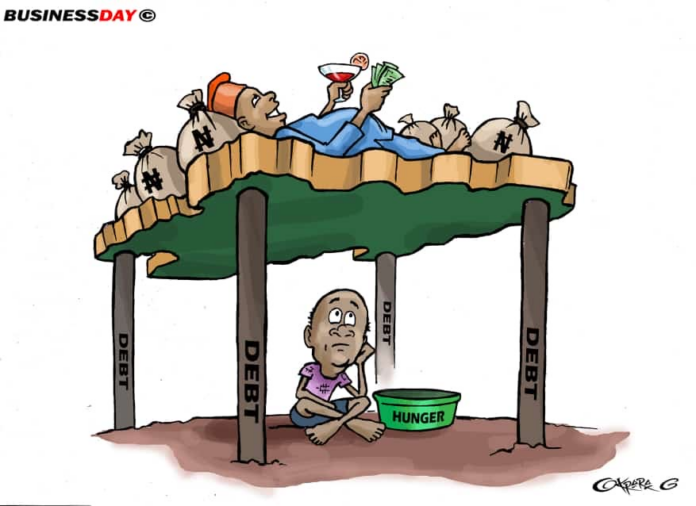
In a country where darkness has become a defining feature of daily life, senior advocate Femi Falana has ignited a fierce national debate, questioning why solar-powered comfort appears reserved for the political elite while millions of Nigerians remain trapped in a cycle of blackout, soaring energy costs and broken promises.

At the heart of the controversy are reports that solar power systems have been installed at the Presidential Villa, Aso Rock—a move that has triggered outrage in a country where millions of households and businesses endure daily blackouts, crippling costs, and a chronically unstable national grid.

Falana’s intervention cuts to a deeper question: if renewable energy is viable and effective for the seat of power, why is it not a national priority for the people?

He argues that if public funds were used to install solar infrastructure at the Villa, then equity demands that similar solutions be scaled across the country—not confined to government enclaves insulated from the harsh realities facing ordinary Nigerians.

His remarks land at a time when public frustration is reaching boiling point. The national grid continues to suffer frequent collapses, plunging cities into darkness and forcing businesses to rely on expensive diesel and petrol generators. For many Nigerians, electricity is no longer a basic utility—it is a luxury.

Yet critics say this moment is not just about access to power, but about years of policy failure, mismanagement, and questionable spending priorities. Successive administrations have poured billions into the power sector with little to show for it, while reports of massive expenditure on generators and alternative power solutions within government circles continue to fuel public anger.

Falana’s position reframes the issue beyond outrage into a constitutional and moral argument: energy access is not a privilege—it is a right tied to dignity, economic survival, and national development.

He insists that renewable energy—particularly solar—offers a practical pathway out of Nigeria’s electricity crisis. But without deliberate government policy to democratize access, it risks becoming yet another symbol of inequality.

The backlash has been swift and widespread. Across social media and policy circles, Nigerians are echoing a common refrain: why should the government enjoy uninterrupted, clean energy while citizens are left to navigate darkness and rising costs?

Still, some analysts caution that scaling solar infrastructure nationwide requires significant investment, coordination, and long-term planning. But even among skeptics, there is consensus on one point—the current system is unsustainable.

As pressure mounts, stakeholders are demanding transparency over the funding and scope of the Aso Rock solar project, alongside a clear, actionable roadmap for expanding renewable energy across Nigeria.

For many, this is more than a policy debate—it is a defining test of governance.

Because in a nation where the lights keep going out, the question is no longer whether Nigeria can fix its power crisis.

It is whether the political will exists to fix it for everyone—not just those at the top.

Introduce your quotations with a persuasive style, By Chinua Asuzu

In legal writing, we use lead-ins to introduce the reader to our quotations. Outgrow stereotyped, bare lead-ins like these:

· As Oputa JSC stated, “…”
· The statute provides, “…”
· The Supreme Court held, “…”
· According to Ben Nwabueze, “…”

Prefer informative lead-ins. Tailor your lead-in to the quotation. “Say something specific. Assert something. Then let the quotation support what you’ve said.” Especially but not exclusively with block and long quotations, “evoke the gist of the quotation in the lead-in,” like these:

· Oputa JSC restated the 4 criteria an applicant must meet for the grant of an interlocutory injunction: “…”
· The statute restricts relief to contexts in which the petitioner has supplied proof of consistent use: “…”
· The Supreme Court pointed out the exceptions to the no-liability-without-damage rule: “…”
· Ben Nwabueze argues that Nigeria’s constitutional bill of rights incorporates freedom of private enterprise: “…”

Lead-ins like these show that you understand the authority you’re about to quote. It shows professional responsibility, diligence, and respect for the reader. It’s also a smart rhetorical device. “[T]he lead-in becomes an assertion, and the quotation becomes the support.” In your lead-in, don’t exaggerate or mischaracterize the forthcoming quote, as that would earn you a backlash from the reader who’ll thence view you with suspicion.

When the context and syntax permit, an upshot can be the best lead-in. An upshot not only precedes the quotation but also paraphrases or summarizes its meaning. With an upshot, you first say in your own words what the quotation will say, and then you quote.

Distinguished legal-writing scholar Judge Mark Painter says you should “lead “into the quote with your paraphrase of what the quote says.” (That’s an upshot right there.) Then quote. “The reader will actually read it to see if you are telling the truth.” Here’s an example:

The Anambra State High Court has held that a private claimant can sue for a public nuisance without the attorney general’s fiat. In Asuzu v Governor of Anambra State, Nwoye J. stated that “when a public nuisance causes more harm to a person than is occasioned to the public, that person can sue. And he or she doesn’t need the Attorney-General’s permission to do so.”

That issue belongs in tort.

Interestingly, a private person can now prosecute a crime in Anambra without the attorney general’s fiat. Relying on section 301 of the Anambra State Administration of Criminal Justice Law, the Supreme Court upheld the right of a private prosecutor in Anambra State.

The upshot method of introducing quotations “has the benefit not only of ensuring that the quotation is read, but also of enhancing the writer’s credibility.”

To punctuate a lead-in, follow these steps. If the lead-in can grammatically stand alone as a sentence, end it with a colon, then quote. (In some cases, you may prefer a period to a colon.)

The Kaduna State High Court explained the statutory procedure for challenging failure of party democracy: “The claimant must set out …”

The Kaduna State High Court explained the statutory procedure for challenging failure of party democracy. “The claimant must set out …”

If the lead-in isn’t grammatically viable as a sentence, isn’t woven in, and the quotation is short, end the lead-in with a comma, then quote.

In explaining the statutory procedure for challenging failure of party democracy, Bello J. said, “The claimant must …”

If the lead-in weaves into the quotation (that is, if the lead-in and the [first clause, phrase, or sentence of the] quotation can be read together as one sentence), don’t insert any punctuation. That is, when the lead-in “moves seamlessly into the quoted material,” don’t punctuate right after the lead-in.

WRITE
Pinnel’s Case is authority for the proposition that “a creditor’s promise to forgo part of a debt must be supported by fresh consideration from the debtor.”

NOT

Pinnel’s Case is authority for the proposition that, “a creditor’s promise to forgo part of a debt must be supported by fresh consideration from the debtor.”

A direct weave makes the quotation part of your sentence, often using a smaller portion of the quoted passage. Instead of quoting “As the State failed to prove intent, I dismiss the case,” you write, The Onitsha High Court dismissed the prosecution because “the State failed to prove intent.”

An indirect weave uses a preceding comma to connect an introductory clause to a quotation. Instead of quoting “As the State failed to prove intent, I dismiss the case,” you write, Maduechesi J. of the Onitsha High Court concluded, “As the State failed to prove intent, I dismiss the case.”

When you interrupt a quotation with a source-identifying phrase or any other phrase, surround the phrase with commas. Commas and periods stay inside the quotation marks.

“As the State failed to prove intent,” held Maduechesi J., “I dismiss the case.”

Minimize this style in legal writing; it’s more appropriate in literary and journalistic work.

Chinua Asuzu, Brief-Writing Master Plan (Partridge, 2022), 469–473.

The Insecurity Triad: Money, land and mind — The capstone

By Max Amuchie | THE SUNDAY STEW

A nation does not collapse all at once. It erodes—layer by layer, system by system—until what once appeared unshakable begins to give way under the weight of forces it can no longer contain.
Over the past three weeks in THE SUNDAY STEW, we have stirred a bitter pot. We have examined the liquidity of kidnapping, the territorial siege of banditry, and the ideological ghost of insurgency. Together, they form The Insecurity Triad—a structural anomaly that has come to redefine the Nigerian experience.
This is not merely a collection of crimes.
It is a system.

The Commodification of Life
In Part I, as the series began on 22 March 2026, we confronted kidnapping—not as isolated criminality, but as an organised economic enterprise. The ransom economy revealed a chilling truth: human beings have become assets in a marketplace of fear.
From highways to homes, from schoolchildren to clergy, the logic is brutally simple—abduct, negotiate, extract.
This is not random violence. It is structured liquidity.
Money flows from victims to networks. Networks expand. Operations scale. And with each successful transaction, the system is reinforced.
Kidnapping, in this sense, is the venture capital of insecurity—the financial engine that sustains the wider ecosystem of violence.

The Capture of Land
In Part II, where we discussed the rural siege, we moved from the highway to the farmland, from individual victims to entire communities. Banditry, we found out, is not merely about raids—it is about occupation.
Across vast stretches of rural Nigeria, the land itself has become contested terrain. Farmers are taxed. Villages are emptied. Harvests are controlled.

The transformation is as quiet as it is devastating: A nation that cannot freely cultivate its land cannot feed itself.
What emerges is a new and dangerous reality—a bandit tax embedded in the cost of survival. From the farmer in Zamfara to the market trader in Abuja, the burden travels along a chain of coercion until it reaches the Nigerian household.
Banditry is the real estate strategy of insecurity—the physical occupation of the spaces that sustain life.

The Colonisation of the Mind
In Part III, we descended into the deepest layer of the crisis—terrorism, which I called the ideological ghost.
If kidnapping trades in bodies, and banditry controls land, terrorism seeks something far more enduring: belief.
Groups such as Boko Haram and ISWAP are not merely violent actors; they are ideological movements. Their aim is not just to disrupt the state, but to replace it—to redefine authority, reshape identity, and impose a new order.
This is the colonisation of the mind. And it is here that the crisis becomes existential.

From Heritage to Fracture
As I noted in previous editions of THE SUNDAY STEW, Ali Mazrui famously described Africa as a convergence of the Indigenous, the Islamic, and the Western—a Triple Heritage that, in its synthesis, held the promise of balance and coexistence.
What we are witnessing today, however, is not synthesis. It is fragmentation.
The forces within The Insecurity Triad do not merely exploit weakness—they deepen division, distort belief, fracture identity, and erode the fragile equilibrium that once held diverse traditions together.
Where heritage once offered cohesion, insecurity now manufactures contradiction.

From Structure to System
To understand the true danger of The Insecurity Triad, we must see it not as three separate threats, but as a single, interlocking system:
Kidnapping generates the money;
Banditry controls the land;
Terrorism shapes the mind;
Each pillar feeds and reinforces the others. This is not a coincidence. It is convergence.

A Nation in Transaction
The most chilling consequence of this system is that Nigeria is drifting from a productive economy into a transactional economy of fear:
When a parent pays a ransom to save a child, they are not simply buying back a child—they are paying a sovereignty tax to a criminal shadow-state.
When the breadbasket is taxed by bandits, we are not merely witnessing rising food prices—we are seeing the slow erosion of the agrarian promise.
The Insecurity Triad is not just a security failure—it is a devaluation of the Nigerian human being.

The Sovereignty Question Lingers
As noted in the 5 April edition, one question bears repeating:
Who governs Nigeria?:
Is it the state—with its constitution, institutions, and laws?
Or is it a network of non-state actors who control territory, extract resources, and shape belief through force?
A nation does not lose its sovereignty only when its borders are breached.
It loses it when its authority is contested from within.

A Reflection: Reclaiming the Sacred
If trust is sacred as we proclaim in Sundiata Post, then the path out of this crisis must begin with restoring that sanctity.
We cannot automate our way out of a crisis of character. Technology—drones, data, surveillance—can monitor the threat, but it is reflective leadership that will dismantle it.
We must re-occupy our ungoverned spaces—not only with force, but with schools, justice, opportunity, and a renewed social contract that treats every citizen’s safety as non-negotiable.

Conclusion: The Stew Still Simmers
The Insecurity Triad is a heavy meal to digest. But we ignore its ingredients at our own peril.
As we move forward in THE SUNDAY STEW, we will continue to search for light in the cracks. Because heritage is not merely inherited—it is defended.
Until we secure the money, reclaim the land, defend the mind, and restore the social contract, the nation remains under siege.

But this reflection does not end at Nigeria’s borders. Across West Africa, similar patterns are emerging—networks of profit, control, and ideology interacting in ways that threaten both state authority and societal cohesion. What appears national is increasingly regional.
Yet the situation in Nigeria calls for urgent concern.

Over the past four weeks, we have examined The Insecurity Triad from multiple levels—its three pillars and now this capstone.

But no framework emerges from nothing. Every serious analytical instrument carries within it the intellectual traditions that make it possible—and The Insecurity Triad is no exception.
Next week, we turn inward—to the pillars of African scholarship that ground the Triad, and to its formal articulation.

Don’t miss it.

Trust is Sacred. Stay seasoned.

Dr. Max Amuchie is the CEO of SUNDIATA POST and the developer of The Insecurity Triad analytical framework. He writes THE SUNDAY STEW, a weekly syndicated column on faith, character, and the forces that shape society, with a focus on Nigeria and Africa in a global context.

X – @MaxAmuchie | Email: [email protected] | Tel: +234(0)8053069436.

The views expressed by contributors are strictly personal and not of Law & Society Magazine.
TIPS