Home Blog Page 45

“They Tracked Me in the Bush”—Chef slams police over failure to catch kidnappers

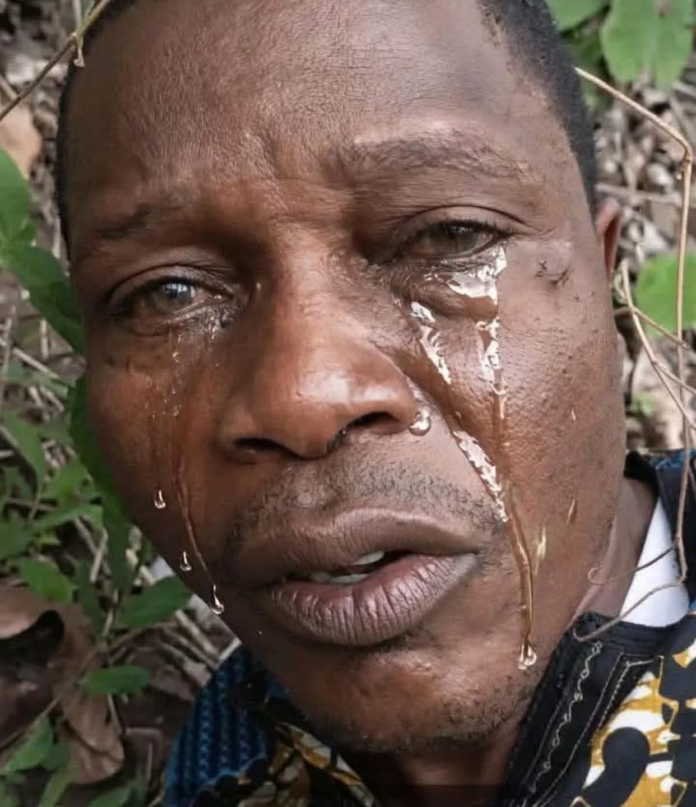
A Nigerian chef has recalled how police managed to trace him to a bush where he was cooking for Chinese miners to arrest him. 

Bawalicious, a chef who specialises in cooking for foreign workers in Nigeria, narrated how an issue with his former boss led to him being traced to a remote location with just his phone. 

He then questioned how kidnappers make phone calls to demand ransom, yet they can’t be traced. 

He concluded that this means kidnappings in Nigeria are “sponsored”. 

He wrote: ‘The Nigerian police can track my phone in the middle of the bush where I was cooking for miners but kidnappers are somehow untraceable? 

‘In 2024 August. I was in Nasarawa State. A small village in Uke. No network half the time, no noise, just bush and survival. 

‘Yet somehow, the Nigerian police tracked my phone down to the exact spot I was cooking in the middle of that bush for some Chinese miners. 

‘The crazy thing is that they sent two Idoma men because from my calls they could tell my tribe and used it to deceive me that I should come outside the company gates and they were my uncle. 

‘I refuse to come out because I was scared because I don’t recognize the number or voice until they forcefully enter into the company and requested the security call me and I am a thief. 

‘My offense? My former boss in Abuja reported that I stole his phone. 

‘The same iphone this man SOLD to me. 

‘I was on my own when he told me he wants to sell one is phone. 

‘When we fell out and I quit working for them, the story suddenly changed. 

‘It became “company phone” and the “bigger boss” now wanted it. 

‘I asked a simple question what about my money because I have been using the phone for 4 months and all of a sudden when I quit working with the company it became company phone. 

‘He told me to go and collect it from the Chinese man who sold the phone to me who was already in China. 

‘I refused. I said no refund, no phone. 

Next thing, police showed up. 

‘No proper investigation. No interest in hearing my side. Just “follow us.” 

‘They seized the phone and were ready to lock me up like a criminal. 

‘If not for my dad, who quickly made some calls and sent people to come through for me, I don’t even know how that story would have ended. 

‘Even with all that intervention, I was still forced to write a statement and pay heavily just to k!ll the case. 

‘That experience broke something in me. I have never really talked about it till now. 

‘But here is what keeps bothering me: If they could track me down to a remote bush in Uke, a place where we were literally mining stones and cooking in the middle of nowhere. 

‘What exactly is the excuse for not tracking kidnappers? 

‘These people collect ransom. They make calls. They move around. 

‘So what really is the problem? 

‘And you still want to tell me these things are not being sponsored? 

‘They can track “yahoo boys” overnight  But kidnappers suddenly become invisible? 

‘I don’t get it. 

‘Maybe one day, we will stop pretending and start asking the real questions.’
 

"Nigerian police can track my phone in the middle of the bush but kidnappers are somehow untraceable" Chef wonders as he recalls his arrest

“We Reported, They Did Nothing”: Benue community lament as herdsmen kill over 40, including priests

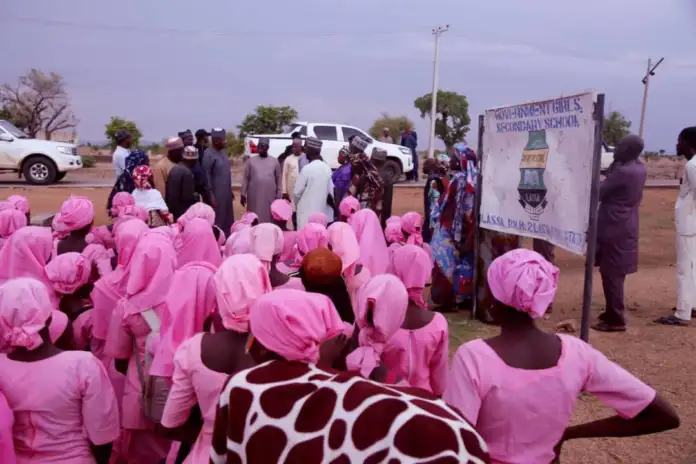
The residents of Mbatsaida community in Benue State have been forced to flee their ancestral homes following a fresh wave of deadly attacks by suspected herdsmen, leaving behind a ghost town now overtaken by fear, destruction, and silence.

When SaharaReporters visited the area, the once-bustling agrarian settlement had been completely deserted.

Homes stood empty, farmlands abandoned, and signs of hurried escape were evident across the community.

Displaced residents have now taken refuge in a neighbouring settlement identified as Agena community, where they struggle daily for survival.

Read Also: ‘We Need Security, Not Food’: Bandits kill medical officer, two police officers, others in Zamfara community, while First Lady launches aid for 600

Read Also: Zamfara Builds Cemeteries as Bandits Kill On: N1bn set aside for graves, not security

Read Also: “Release Our Fighters”: Armed bandits issue chilling warning, claim secret deal with Nigerian government

Speaking during the visit, the village head, Chief Gbakaa Lorpine, recounted a long history of violence, alleging that repeated warnings to authorities were ignored, allowing the attacks to persist over the years.

“I am Chief Gbakaa Lorpine, the village head of Mbatsaida community, where people were displaced on the 4th of this month by a herdsmen attack,” he began.

According to him, the crisis dates back over a decade.

“This issue started long ago, since 2014. We were first attacked by herdsmen on March 24, 2014. It happened in the morning, around 6:20am. The attackers invaded the community, shooting repeatedly and killing 15 people. Several others were injured and taken to the hospital.”

He insisted the violence was unprovoked, blaming it on disputes over grazing activities that had long been reported to authorities without response.

“This did not happen because we offended them. They had been grazing in our community, destroying our farmlands. We made several attempts to report to the police and even to the chief security officer of the state. I personally reported the matter to security advisers, my district head, and other authorities, but no action was taken.”

The attacks, he said, escalated in 2018 with even more devastating consequences.

“The same community, Mbatsaida, a kindred from Malong, was attacked again on May 6, 2018, by herdsmen, killing 18 people, including two reverend fathers. On that same day, another attack occurred in Baikal, within the same district, along Baikal Council Road, where about 18 people were also killed.”

Chief Lorpine said residents again reached out to security agencies in desperation as the attacks unfolded.

“We reported these incidents to the police and contacted security officers while the attacks were ongoing. At the time, Mrs. Comfort Abo was the transition chairman of the local government. I reported the matter to her and other security personnel, but nothing was done.”

Despite the tragic history, the violence resurfaced yet again this year.

“This year, on April 4, there was another attack. About 11 people were killed and several others were injured. We have now been displaced. We have nothing to eat where we are taking refuge. We have lost everything.”

Describing the latest attack, the village head said it occurred in the early evening and caught residents completely off guard.

“The attack happened on April 4 at about 5:12pm. I do not know exactly where the attackers came from. They did not use motorcycles or vehicles. They entered through the marketplace and started shooting. Eleven people were killed, and several others were wounded.”

He narrowly escaped death during the incident.

“At the time, I was in my house. I had to run into the bush wearing only my underwear. I could not go back inside to pick up any clothing because of the attack.”

Beyond the killings, he lamented the total collapse of livelihoods in the community, noting that farming—their primary source of survival—had been destroyed.

“We have nothing to eat where we are taking refuge. Our farmlands have been destroyed. We are struggling to survive. People are afraid to return because there is no security.”

While some individuals and groups have provided limited assistance, he stressed that what the community truly needs is protection and the ability to return home.

“Although some individuals have come to support us, I am appealing to the government to provide security so we can return to our ancestral land. We do not want to remain displaced, depending on aid.”

He revealed that he had personally reached out to government officials in a bid to prevent further attacks.

“I also reached out to the governor through his security adviser, though I cannot recall his name at the moment. I informed him about a route between Omi, Aze Duku, and Agana, which the attackers frequently use.”

According to him, establishing a security presence in that corridor could significantly curb the attacks.

“If the government can establish a permanent presence there, such as a facility or security post, it would help prevent these attacks. That would be more effective than just giving us relief materials.”

He also highlighted the destruction of essential resources, particularly water sources, as part of the community’s suffering.

“In addition, the government should help provide a reliable source of water, as the attackers continue to destroy the only water source we have. That is one of our major challenges.”

Alabra V Min FCT and the pains of land owners (2), By Ebun-Olu Adegboruwa, SAN

The Determination of Whether Action Statute-Barred:

The question as to whether or not an action is statute-barred is dependent on the nature of the action, and the relevant provisions of the statute of limitation. It touches on the jurisdiction of the court. The jurisdiction of the court is determined by the plaintiff’s claim as endorsed on the writ of summons and elaborated in the statement of claim. A cause of action is said to be statute-barred if, in respect of it, proceedings cannot be brought because the period laid down by the Limitation Act or Law has elapsed.

    The Effect Where Action Statute-Barred:

When an action is statute-barred, the plaintiff who might have had a cause of action loses the right to enforce the cause of action by judicial process because the period of limitation had elapsed. An action commenced after the expiration of the statutory period within which an action must be brought is not maintainable. In other words, when a statute of limitation prescribes a period within which an action must be initiated, legal proceedings cannot be properly and validly instituted after the expiration of the prescribed period. Any such action instituted must be struck out as not being properly instituted before the court.

In the instant case, the right of the appellants to commence an action against the respondents for compensation was extinguished by operation of the law – that is, section 6(3) and of the Federal Capital Territory Act 1976 – having not provided any evidence that they indeed wrote an application for compensation within the 12 months period stipulated by the Act. In the circumstances, the trial court was neither competent nor conferred with any jurisdiction to have entertained the appellants’ claims against the respondents since the action was statute-barred. The Court of Appeal was therefore right to have set aside the judgment of the trial court and in holding that the maker of the Act did not intend the issue of compensation to linger ad infinitum.

Read Also: Alabra V Min FCT and the pains of land owners (1), By Ebun-Olu Adegboruwa, SAN

The Need to Comply with Prescribed Statutory Provision in Performance of Duty:

Where a law, in the instant case the Federal Capital Territory Act, provides for the doing of an act with conditions, the courts have a duty to look into the matter to ensure that the conditions were fulfilled. In this case, it was specifically provided in section 6(3) of the Act that claims for compensation by persons affected “shall” be filed within 12 months from the date of the commencement of the Order made under section 2 of the Act. As at 2012 when the appellants commenced their action at the trial court, the Act had been in existence for 36 years. If any of the people, described as indigenous occupiers, failed to file any claim for compensation within the time specified in accordance with the provisions of the Act, such persons would be presumed not to have any valid claim. In the circumstances, the respondents were entitled to maintain that no further claims, apart from those filed within the time prescribed in the Act, were in existence.

    The Limitation Period for Claims in Respect of Right or Interest in Land Comprised in Federal Capital Territory:

 By virtue of section 6(3) of the Federal Capital Territory Act, 1976 any person who claims any right or interest in any land comprised in the Federal Capital Territory shall submit in writing particulars of his claims to the Executive Secretary on or before the expiration of twelve months from the date of commencement of the Order made under section 2 of the Act or such longer period as the President may, either generally or in relation to any particular claim or claims, prescribed by notice published in the Federal Gazette. No claim for compensation shall be entertained by the authority unless a written notice of the claim in accordance with sub-section 3 of the section is served on the Authority within the period specified in the said subsection. The provision operates as a limitation time, prescribing a period within which a party who has a claim for compensation can bring such claim before the Authority.

    Inequitable Deprivation

 Above is the conclusion of the Supreme Court decision in Alabra v Minister of FCT. The policy originally driving the theory of compulsory acquisition of land is common infrastructure and the need for uniformity. In this regard, the government holds land in trust for the people and it is expected to act in good faith to ensure equitable use and distribution of the land. Upon successful acquisition of land, the government may at times allocate it to industries, estate development companies, institutions and other public-related entities, to transform it for the common good. In such cases, the original owners of the land are deprived of their customary heritage and identity. The solution is to make the process inclusive such that the land-owning families themselves are allowed to participate in the development of the land.

    Right of First Refusal

 Prior to or in the process of compulsory acquisition of land, the original land owner should be acknowledged and granted the priority of choice when any part or portion of the land is no longer to be used for public purpose. Where land is acquired to build a road network and for any reason whatsoever there is a change of policy, the original land owner should be granted the primary right of first refusal before such land is allocated for any commercial purpose by the government. That will create a sense of equity. Even though some form of compensation may have been paid prior to the acquisition, since the primary purpose has been defeated, abandoned or altered, continued deprivation of original ownership then becomes inequitable. The policy being one that carried the toga of compulsory acquisition and not voluntary surrender of land, law should not be deployed to sustain a process that perpetuates inequality or deprivation. In such a situation, what the government should do is to give guidelines by way of policy formulation. It is only when the right of first refusal has been exhausted that such land should be available for re-allocation to other private entities.

    Preserving Identity

 A nation is so called because of its people and identity. In Nigeria for instance, most States of the Federation are identified by and traceable to the traditional history of the original land owners. The process of compulsory acquisition of land should thus acknowledge, accept and consolidate the identity of the owners as it was by virtue of their initial occupation or radical ownership of the land that it became available for use in the first instance.

    Adequate and Meaningful Compensation

 When one goes through court cases on compulsory land acquisition, there is always a sad story to tell on behalf of the land owners. What the law has done is to render the issue of adequate compensation virtually ineffective as the original land owner is required to proceed to court to challenge only the adequacy of compensation and not the act of compulsory acquisition. The law allows the government to acquire land compulsorily and pay pittance as compensation because the land is said to be needed for public purpose. It is from the payment offered as compensation that the land owner is expected to fund a court case to prove the inadequacy of compensation, thus suffering double jeopardy. It should be the other way round.

Since land acquisition is compulsory, it should be the responsibility of the acquiring authority to justify the adequacy of compensation before acquisition becomes effective in law. In all cases, compensation paid for compulsory acquisition of land should only be accepted by the courts as meaningful and adequate only when it competes with contemporary market realities. And the burden of such proof should lie squarely on the acquiring authority that is seeking to deprive a legal right over an existing asset.

    Limitation Imposed by Statute

    In many cases, statutes granting power of compulsory acquisition of land prescribe certain limitation periods for challenging the act of acquisition. This should only be valid where the acquiring authority complies with the original purpose of acquisition for the good of the public. Once there is proof of deviation, the limitation should be lifted, granting the original land owners the right of action against any act of abuse or fraud.

    The Land Use Act

The prevailing law is that the Land Use Act has been inserted into the Constitution to become part of it, meaning that it cannot be repealed or amended without following the process of amendment of the Constitution itself. This was a piece of legislation imposed upon the people of Nigeria in 1978 by the military government as part of the relics of military dictatorship. That should not be a document standing side by side with the organic law of Nigeria, given all its deficiencies and inequalities. As a matter of urgency therefore, the National Assembly should extricate the Land Use Act from the Constitution, repeal it and allow each State to develop its own peculiar, suitable and acceptable policy and legislative framework on land management.

    CONCLUSION

    The decision of the Supreme Court in Alabra v Minister of FCT accords with existing legislation and previous court decisions on the point. What is needed is urgent legislative action on all existing laws that seek to appropriate people’s heritage and extinguish their identities compulsorily without first discharging the corresponding obligation to ensure adequate, meaningful and proper compensation.

9-year-old in France found locked by father in van since 2024, malnourished, unable to walk

A 9-year-old boy has been rescued after living locked in his father’s utility van in eastern France since 2024, according to the local prosecutor. The child has been hospitalized, and his father detained.

Police were alerted by a neighbor to the “sounds of a child” coming from a van on Monday in the village of Hagenbach, near the borders with Switzerland and Germany, according to a statement on Saturday from prosecutor Nicolas Heitz.

After forcing the van open, officers found the child “lying in a fetal position, naked, covered by a blanket on top of a mound of trash and near excrement,″ Heitz said.

The boy was clearly malnourished and could no longer walk after being in a seated position for so long, according to the statement.

The boy’s father told investigators that he put the child in the truck in November 2024 “to protect him” because his partner wanted to send the then 7-year-old to a psychiatric hospital, the prosecutor said.

Heitz said there was no medical record that the boy had any psychiatric problems before he disappeared and that he had had good grades in school.

The boy told investigators that he had “big difficulties” with his father’s partner and thought his father “had no choice” but to lock him up, according to the prosecutor. He said he hadn’t showered since 2024.

The father was handed preliminary kidnapping and other charges and kept in custody. His partner denied knowledge that the boy was in the van, according to the prosecutor. She was handed preliminary charges, including for failure to help a minor in danger, and released under judicial supervision.

The boy’s 12-year-old sister and the 10-year-old daughter of his father’s partner were placed in the care of social services.

The prosecutor’s office is investigating whether others were aware of the boy’s detention.

Friends and family told investigators they thought the boy was in a psychiatric institution. His teachers were told he had transferred to a different school, according to the prosecutor’s office.

The authorities have not released the names of the victim or his relatives.

Hagenbach residents contacted by The Associated Press expressed shock on Saturday over the cases and said they were unaware of the boy’s whereabouts, but didn’t want to discuss details.

The prosecutor declined to comment further to AP pending further investigation.

CNN

Star footballer’s baby news stuns fans—Mother is his manager’s daughter

Sheffield United star Oliver Arblaster is expecting a baby with his manager's daughter

Sheffield United star Oliver Arblaster is set to become a father – and the mother is his manager Chris Wilder’s daughter.

Martha Elizabeth Wilder took to Instagram on Sunday night to share her exciting news with a series of polaroid photos of her proudly showing off her growing bump, baby scans and loved-up selfies with Blades midfielder Arblaster, 22.

She captioned the post ‘+1’ alongside a white heart emoji, prompting an outpouring of heartwarming comments in support.

It is unclear how long the young couple have been together, while Blades boss Wilder has yet to comment publicly on the relationship.  

She is the daughter of Sheffield United boss Chris Wilder (pictured holding Arblaster's wrist) She is the daughter of Sheffield United boss Chris Wilder (pictured holding Arblaster’s wrist)

United team-mates Femi Seriki and Louie Marsh congratulated the pair, while Arblaster’s mum appeared to reveal the gender of her grandchild.

‘He will be the most loved gorgeous boy – I can’t wait to be his Nannie.’

Arblaster is one of the club’s most promising young players, having graduated through the academy in recent seasons. 

The 22-year-old made his Premier League debut in 2023/24 and is steadily growing into a regular first-team player with 18 appearances this season. 

His campaign got off to a slow start due to his recovery from a long-term ACL injury, and he has been limited to substitute appearances since the turn of the year.

Wilder is a Sheffield United legend having led the club to the Premier League from the third tier. 

He won’t repeat that feat this season, with the Blades 17th in the second-tier, 14 points adrift of the play off spots. 

Daily Mail

Count your sufferings: Tinubu’s gospel of comparison, By Suyi Ayodele

There is a joke about a child who failed his promotion examination. The child devised a painless get-away way to break the bad news to his no-nonsense parents.

Striding home with all smiles, the child opened the conversation with his parents. First, he asked his father if he remembered Orikogbo Orimoogunje, the brilliant boy who represented the school in a science quiz competition, a year before. The father affirmed that he could picture the boy. Then the child announced: ‘He failed the promotion examination,’ and the parents both exclaimed: “What!”

Next, the smart boy turned to the mother and asked if she remembered Idiileke, the daughter of her friend, Ibadiaran. The mother answered in affirmation. The child asked again if the mother could also remember that Idiileke led her class the previous session, in all subjects, and he got another affirmation. Then he dropped the bombshell: “This session, she came last; at the bottom of the class!”

The bewildered parents then asked the child about his own result to which the child responded: “We should thank God for not allowing me to be at the bottom of the class like Idiileke. At least, I took the 29th position out of the 30 of us in my class.” He dropped his result card and strolled into his room.

The parents were too paralysed to process what had just happened. Before they came back to their senses, their mischievously prodigious child was already out, playing and planning other strategies with which he would outsmart his parents!

I asked Apollo, the Greek god of music, to lend me its golden lyre for the remix of Johnson Oatman, Jr’s (1856-1897), lyrics: Count Your Blessings. The leader of the Muses granted my request. Here is what I produced:

When upon life’s billows Nigerians ‘re economically-tossed/When they are badly battered, thinking all hope is lost/ Let them count their many sufferings, name them one by one/And it will surprise them what Tinubu hath done/

Refrain: Count their sufferings, name them one by one/Count their sufferings, name them one by one/ Count their sufferings, name them one by one/and it will surprise them what Tinubu hath done/

Apologies to my All Saints Anglican Church, Oke-Bola, Ikole Ekiti, choir masters, particularly, Mr. Olowomeye, for my not-too-good rendition of the above lyrics. I may not have turned out to be a fantastic vocalist; but I better pass President Bola Ahmed Tinubu. He could not convey his thoughts in music last Friday in Yenagoa, the capital of Bayelsa State, the way I did here. The proverbial lizard, after jumping down from the high Iroko tree, quips: if nobody praises me, I will praise myself. I know say I sabi sing better pass our President!

The thematic preoccupation of the prodigious child’s joke above finds its missing cousin in President Tinubu’s outing in Yenagoa last week. The President was in his element that Friday. After commissioning some projects executed by Governor Duoye Diri, the President took time to review the pain his administration has subjected Nigerians to since he assumed office in May 2023.

He offered no apologies because he could see a ray of hope for thanksgiving to him and to God Almighty for the lesser pain in the land compared to that of other failed African nations. Hear him:

“Let’s just thank God together that you are better off listening to them in Kenya and other African countries. What they are going through. The fuel prices are biting hard. But look around. We will continue to find ways to ameliorate the suffering of the vulnerable. This is a government that cares. We will look at the numbers with the finance, economic planning and budgeting, and we will see what we can do to ease the burden.”

The above statements by President Tinubu define why nothing appears to be moving in his government. With this kind of failure-redefined posturing, all hope is lost on whether this present administration will ever find any solution to the myriads of economic woes that have been the lot of Nigerians since the government of the All Progressives Congress (APC) came into power in 2015. A President with this type of I better pass my neighbour mentality is surely an open disaster for the citizenry. Unfortunately, this is the philosophy that underscores the Tinubu administration.

Like he did on May 29, 2023, with his spur of the moment ‘subsidy is gone’ declaration, Tinubu again asked Nigerians to compare their living conditions with those of Kenyans and thank God for being better off! Why should Kenya be the parameter to measure good living standards in Nigeria? How did the President conclude that Nigerians are better off than Kenyans?

The World Bank and the International Monetary Fund (IMF) have repeatedly submitted that before the coming of the APC locusts and wasters, Nigeria’s economy had always been far better than that of Kenya. In 2014 under the leadership of President Goodluck Ebele Jonathan, both Kenya and Nigeria underwent a GDP rebasing of their economies having experienced strong economic growth that put Nigeria’s GDP growth at 6.3% and Kenya’s GDP growth at 5.4% to 5.5%

During that period, Nigeria’s economy, the two world bodies said, “was driven by the non-oil sector (particularly services, agriculture, and manufacturing), which grew by over 8% in the first quarter, offsetting declines in oil production”, adding that Kenya’s growth “was broad-based, led by agriculture, finance, and transportation, alongside significant infrastructure investment.

“In 2014, Nigeria rebased its economy, resulting in an 89% increase in its GDP estimate, officially making it Africa’s largest economy at the time. Kenya also rebased its GDP, increasing its size by about a quarter. While Nigeria had a larger overall economy, Kenya’s growth was considered more balanced across sectors, whereas Nigeria remained heavily dependent on oil revenues. Both nations outpaced the regional average in 2014, but Nigeria’s headline growth rate of 6.3% was higher than Kenya’s 5.4%–5.5%.” The report stated.

Another expert report added that: “As is well known, available figures, statistics and ratings show that the Nigerian economy has consistently maintained an unprecedented growth rate of 6-7 per cent under the Jonathan administration. They also show that the Nigerian economy is now the leading economy in Africa and the 26th largest in the world, with a gross domestic product of over $500 billion per annum.”

Now go back to 2016, two years later, when the APC-led government had taken over from President Jonathan, “Kenya’s economy” the world economic bodies stated, “grew by approximately 5.9% to 6%, while Nigeria’s economy contracted by -1.51% to -1.6%, experiencing its first recession in decades. While Kenya was considered one of the fastest-growing economies in Africa that year, Nigeria suffered from a severe economic downturn driven by falling oil prices.

Read Also: Boko Haram strike leaves Nigerian Army reeling as colonel, six soldiers die in ambush

Read Also: Abuja: Why are the Americans running? By Lasisi Olagunju

Read Also:The woman who defied the odds as the first Black nurse in the U.S.

“The Kenyan economy was robust, supported by agriculture, entrepreneurship, and low fuel prices, maintaining a growth rate that outpaced the sub-Saharan African average. Nigeria: The economy contracted significantly due to a sharp decline in oil prices and reduced oil production caused by vandalism in the Niger Delta.” The report added that while “Nigeria struggled with high inflation, Kenya enjoyed better macroeconomic stability.”

The gains recorded in the pre-APC administration through an economy that was driven “by the non-oil sector (particularly services, agriculture, and manufacturing),” were lost when the government of the late General Muhammadu Buhari became flatfooted on the issue of security such that farmers abandoned their farmlands and those who remained paid heavy ransoms to bandits to farm and to harvest that which was planted. Nothing has changed except that the baton changed from Buhari to Tinubu.

How convenient then it is for Tinubu to compare the pain of his voodoo economic policies upon Nigerians with what the Kenyans are going through at the moment? Is the Presidency not aware that by the World Bank/IMF and African Development Bank (ADB) projection for 2025, two years of the President Tinubu administration, “Kenya is projected to experience faster economic growth than Nigeria, continuing a trend of higher, more stable expansion, while Nigeria’s economy faces a slower, recovery-focused growth trajectory?”

By those same projections, while Kenya “Is projected to grow between 4.8% and 5.6%, driven by robust services, agriculture, and construction,” Nigeria, on the other hand, “Is projected to grow at a slower rate of around 3.0% to 3.9%, struggling with high inflation and fiscal constraints, despite expected improvements in oil production.”

The reports, which were put together by these bodies in late 2025 and early 2026, expressly stated further that while “Kenya is benefiting from a more diversified economy and has avoided the severe currency shocks experienced by Nigeria, Nigeria has seen a significant decline in its nominal dollar GDP in recent years, placing it as the 4th largest economy in Africa in 2025 (behind South Africa, Egypt, and Algeria) rather than its previous top spot.”

These are the facts that the President should consider before the skewed comparison. For crying out loud, Kenya only joined the oil-producing countries of Africa in 2012, when it discovered oil in commercial quantities in the Turkana region of the country. It only exported its first batch of crude oil in 2019!

How on earth would our President draw a comparison with Kenya, when Nigeria first discovered oil in commercial quantities on June 5, 1956 and made the first exportation in 1958? Granted that successive governments had made a waste of that natural resource, however, the profligacy of the Tinubu administration cries to high heaven, just as the sleaze, crass impunity and systemic pilfering remain unmatched!

And if we may ask, which other “African countries” are in a worse situation than Nigeria that Tinubu wanted us to be grateful to God for? Is the President, by any stretch of wild imagination, comparing Nigerians’ living conditions with those of war-torn nations like Libya, Angola and the Republic of Congo? Why should the failures of other nations be this government’s barometer to measure its lacklustre outings?

In Angola for instance, petrol sells for $0.328 a litre, which is approximately N509, compared to Nigeria where the same one litre goes for N1,300! Yeah, while Kenya has a higher price of an equivalent N1,800/litre, the cost of living in Kenya is lower than Nigeria’s, with a minimum wage put at N140,000, twice the debatable minimum wage of N70,000 in Nigeria. That differential makes the purchasing power of an average Kenyan to be double that of his Nigerian counterpart. Affordability, elementary economics posits, will no doubt result in better living conditions.

So, how loud does President Tinubu want us to shout that he was not elected president to make comparisons on failure indexes? Here is a man who promised to fix our power problems, with a 24-hour electricity supply guarantee. What do we have now? Despite his covenant that he should be rejected at the poll for a second term if he failed to deliver a 24-hour power supply, has he not turned the entire nation to another dark enclave of the devil?

In demonstration of his lost hope in the revival of the nation’s power problem, the President detached Aso Rock Villa from the National Grid and went for solar. Now, he lives in a daylight environment at the Villa while the rest of us ‘grope in darkness’ with epileptic power supply or no-power-supply in most cases!

The affirmation came when, with crass insensitivity, Tinubu spent less than 10 minutes at the Jos Airport ‘reception’ for the families of the over 20 citizens killed by bandits, because, as the President said: “You have no light here!”

Do we talk about insecurity? Less than 24 hours after insurgents overran the 29 Task Force Brigade in Borno, killing the Brigade Commander, Brigadier-General Oseni Braimah, and many other soldiers, Tinubu was in Yenagoa donning the native Izon attire, telling us to raise our voices in praise for the lesser agony that we experience daily compared to our neighbour! Braimah’s death followed almost the same pattern as Brigadier-General Musa Uba, whose position after he escaped bandits’ ambush was compromised, and he was slaughtered like a ram!

Pray, when shall we put on our dancing shoes for an all-denominational thanksgiving crusade in appreciation of Tinubu for making Nigeria better than Somalia in terms of mass killings?

The views expressed by contributors are strictly personal and not of Law & Society Magazine.

Boko Haram strike leaves Nigerian Army reeling as colonel, six soldiers die in ambush

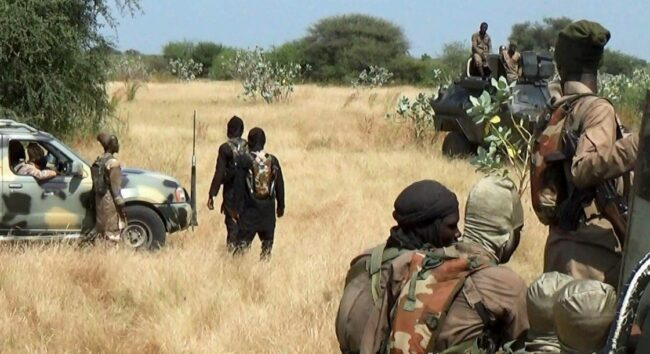
Troops of Sector 3 under the Joint Task Force (North East), Operation HADIN KAI, successfully repelled an attempted infiltration by insurgents at a military position in Monguno, Borno State, before suffering heavy casualties in a separate improvised explosive device (IED) blast shortly afterward, military authorities said.

The incident occurred late on April 12, 2026, at a location identified as Charlie 13.

According to a statement by the Media Information Officer, Headquarters Joint Task Force (North East), Lieutenant Colonel Sani Uba, the troops came under attack from insurgents attempting to breach a forward defensive position.

Read Also: Video: I am still here but the doctor in me has died a long time ago- Nigerian doctor shares on how poor medical care has broken the spirit of many doctors

Read Also: Video: Nigerian Army arrests teenage suspect linked to killing of brigadier-general in Borno

Read Also: Australia breaks ground with first female army chief as misconduct allegations persist

“The fierce exchange of gunfire followed, during which the troops successfully overpowered the attackers, forcing them to retreat and securing the area,” Uba said.

However, he confirmed that tragedy struck shortly after the engagement when the commanding officer, who had moved toward the frontline to assess the situation and boost troop morale, drove into an IED.

“The explosion severely damaged his vehicle, killing him and six other personnel,” he added.

Separate accounts from military sources identified the senior officer as Colonel I.A. Muhammad, who was reportedly leading reinforcement efforts toward a forward operating base under the 242 Battalion when the ambush occurred.

According to frontline soldiers, insurgents had planted a remotely detonated explosive device along the route used by the reinforcement convoy.

“He was on his way to support his men when the vehicle was hit by a controlled explosion,” one soldier said.

The attack underscores the continued use of sophisticated IED tactics by insurgent groups operating in the North-East, even after conventional assaults on military positions are repelled.

Monguno remains a strategic military hub hosting multiple formations under Sector 3 of Operation HADIN KAI.

The latest attack comes amid a renewed wave of violence in Borno State, following recent assaults on military formations in Benisheikh, Kukawa, Bama, and other areas that resulted in the deaths of an unspecified number of soldiers, including a Brig. Gen., Oseni Braimah. The attack happened on April 9, 2026.

On March 9, 2026, Lieutenant Colonel Umar Farouq and some other soldiers were killed when insurgents overran a military base in the Kukawa LGA of Borno State.

On March 6, 2026, during multiple military attacks in the state, terrorists killed Lieutenant Colonel, S.I. Iliyasu, the commanding officer of the 222 Battalion.

On March 1, 2026, terrorists also attacked a military formation in Mayenti, Bama LGA, killing Umar Ibrahim Mairiga, the commanding officer, and several other soldiers.

Military authorities described the fallen commander as a courageous leader whose actions reflected “selfless service and exceptional bravery.”

The Joint Task Force expressed condolences to the families of the deceased and reaffirmed its commitment to ongoing counterinsurgency operations aimed at restoring stability in the region.

While the immediate attack was repelled, officials acknowledged that the incident highlights the persistent threat posed by roadside and remotely detonated explosive devices in the theatre of operations.

Meanwhile, separate concerns have emerged from frontline troops over delayed payments of the Scarce Skills Allowance, a welfare package approved by the Federal Government in 2017.

Some soldiers, speaking anonymously, alleged irregular payment of the allowance, claiming delays have persisted in recent months and affected morale in active combat zones.

Military authorities have not yet publicly responded to the allegations.

The woman who defied the odds as the first Black nurse in the U.S.

A 1879 portrait of Mary Eliza Mahoney, America's first Black professional nurse. Mahoney shattered racial barriers in healthcare.

At a time when Black women were largely excluded from formal training, Mary Eliza Mahoney set a new standard for who could serve in American hospitals.

Sixteen-hour days, seven days a week, scrubbing floors, emptying bedpans, and eventually assisting nurses and doctors. For 15 years, Mary Eliza Mahoney toiled at Boston’s New England Hospital for Women and Children as a maid, cook, and washerwoman. These were the only jobs open to Black women during an era historians now darkly recall as “the nadir of American race relations.”

Click here to continue reading.

ADC names Silas Onu Ebonyi Chairman in strategic push toward 2027

The African Democratic Congress (ADC) in Ebonyi State has elected a new State Working Committee (SWC), installing Barrister Silas Onu as chairman in a move aimed at repositioning the party ahead of the 2027 general elections.

The leadership overhaul emerged as the central outcome of the party’s state congress held Saturday in Abakaliki, signaling a renewed push to strengthen the ADC’s foothold in the state’s political landscape.

Onu, a former senatorial candidate of the Peoples Democratic Party (PDP), will lead the new executive alongside Deputy State Chairman Onyebuchi Chukwu and State Secretary Egbedike Emmanuel.

In a statement issued by the party’s Publicity Secretary, Anya Igu Idika, the new committee was tasked with “providing leadership, direction, and coordination for all party activities in the state,” as well as rebuilding and repositioning the party.

Party officials called on members to rally behind the new leadership, framing the transition as critical to the ADC’s broader strategy to expand its influence in Ebonyi politics.

Other members of the SWC include Vice Chairmen Azubuike Bakare Ogbonnia, Ephraim Eze, and Livinus Nwekpa; Deputy Secretary Nowkporo Emmanuel; and Treasurer Felix Nwankwo.

Onu, a lawyer and political figure from Uburu in Ohaozara Local Government Area, brings a mix of legal and political experience to the role. Before defecting to the ADC in 2025, he served as chairman of the PDP in Ebonyi State and was the party’s candidate in the Ebonyi South senatorial by-election.

An alumnus of the University of Jos and a member of the Chartered Institute of Arbitrators, Onu has built a career in litigation and human rights advocacy, including representing government agencies such as the Corporate Affairs Commission.

In his first remarks after emerging as chairman, Onu pledged to intensify grassroots mobilization and consolidate the party’s structure across the state, positioning the ADC as a competitive force in the 2027 elections.

Video: Ghosts or Glitch? Cybertruck spots figures in empty cemetery

A man living abroad has recounted a chilling experience while driving his Tesla Cybertruck through what he described as an empty cemetery.

According to his account, there were no visible people in the area at the time. However, his vehicle’s infotainment system began detecting and displaying human-like figures—similar to how it typically identifies pedestrians on the road.

Perplexed, he said he carefully scanned his surroundings but found no one present to match the figures appearing on the screen.

Despite the visibly deserted environment, the system reportedly continued to register multiple human forms, leaving the driver confused and unsettled.

The unusual incident has since sparked curiosity online, with some attributing it to a possible sensor glitch, while others speculate about more mysterious explanations.

Click here to watch the video.

TIPS