The International Court of Justice (ICJ) has delivered a landmark advisory opinion affirming that the right to strike is protected under international law, a decision already sending shockwaves through governments, labour unions, employers and legal systems across the world.
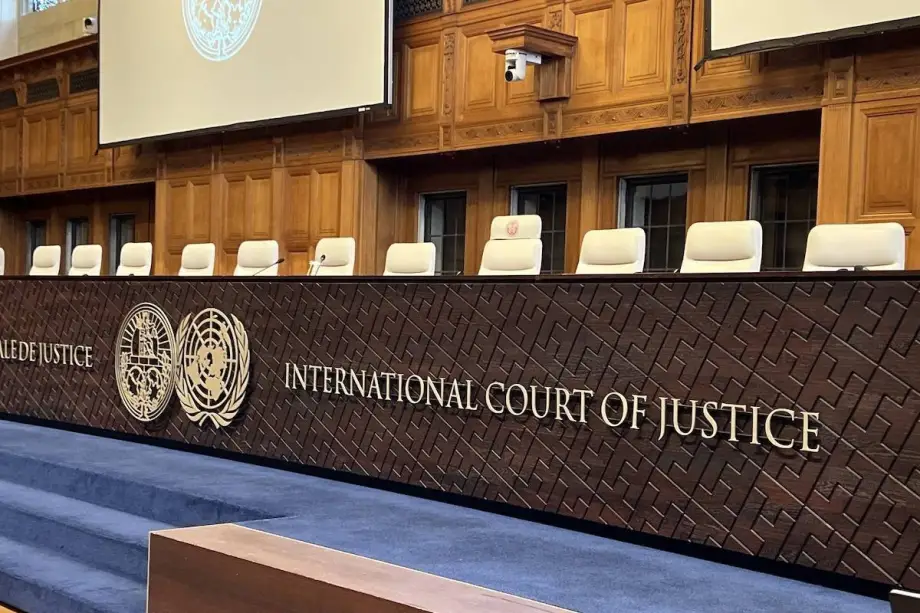
The historic opinion was delivered on Thursday, May 21, 2026, at the Peace Palace in The Hague, Netherlands, following a request by the International Labour Organization (ILO) to clarify whether workers’ right to strike is protected under Convention No. 87 on Freedom of Association and Protection of the Right to Organise.
The ruling is already being hailed by labour advocates as one of the most consequential international labour law developments in decades.
The Court’s position effectively strengthens the argument that workers’ ability to withdraw their labour is not merely a political tool or industrial tactic, but a protected component of freedom of association under international law.
But even as unions celebrate, the advisory opinion has exposed deep ideological and judicial divisions within the world’s highest court, with several judges issuing sharply worded separate and dissenting opinions warning that the majority may have stretched the law beyond its original text.
Judge Georg Nolte, while agreeing with the Court’s conclusion, admitted that the wording of Convention No. 87 remains legally ambiguous on whether it expressly protects strike action. He argued that the treaty’s language could support both a broad interpretation recognizing strikes and a narrower one limited to the internal functioning of workers’ organizations.
Still, Nolte concluded that evolving international practice and widespread recognition of strike rights across nations ultimately tipped the balance in favour of recognizing strike action as protected under the Convention.
Judge Cleveland went even further, declaring that strikes are fundamentally “associational activities” through which workers pursue improved working conditions and workplace justice. She argued that excluding strikes from freedom of association would hollow out the very essence of labour rights protections.
Her opinion emphasized that collective bargaining, labour advocacy and industrial action are interconnected pillars of worker representation in democratic societies.
Yet the decision was far from unanimous.
In a blistering dissent, Judge Hmoud accused the majority of effectively beginning with a predetermined conclusion before assembling legal reasoning to justify it. He warned that the Court had inverted the proper judicial process and relied too heavily on interpretations from external treaties and labour supervisory bodies that were never expressly binding on all member states.
According to Hmoud, neither the wording nor the negotiating history of Convention No. 87 conclusively establishes a right to strike. He maintained that the Convention’s primary purpose was to protect organizational freedom rather than industrial action itself.
The dissent also raised concerns that the Court’s reliance on broader international human rights instruments risks expanding treaty obligations beyond what states originally accepted.
Despite the internal disagreements, the advisory opinion is expected to carry enormous political and legal influence globally, especially in countries where governments have increasingly cracked down on labour strikes, protests and union activities amid rising inflation, economic hardship and political unrest.
Legal analysts say the ruling could strengthen labour litigation worldwide and embolden unions challenging restrictive labour laws in both developing and industrialized economies.
For workers’ movements across Africa, Latin America, Europe and Asia, the decision is already being viewed as a powerful symbolic victory at a time when organized labour faces mounting economic and political pressures.
The opinion may not automatically rewrite national laws overnight, but experts believe it significantly reshapes the global legal conversation on labour rights, democratic participation and the limits of state power over workers’ collective action.
At its core, the ruling revives a question now echoing across courtrooms, union halls and presidential palaces worldwide: if freedom of association exists without the power to strike, is it truly freedom at all?
Click here to download the judgement.