How Nigeria’s search for security has opened a fierce debate over amnesty, accountability and the rule of law
By Law & Society Magazine Investigations
Every nation confronted by prolonged violence eventually reaches a crossroads. One path demands relentless military pressure until every armed group is defeated. The other accepts that wars rarely end on the battlefield alone and leaves room for negotiation. Governments often choose the second path because they believe talking can save lives. Nigeria has spent nearly two decades walking both roads at the same time.
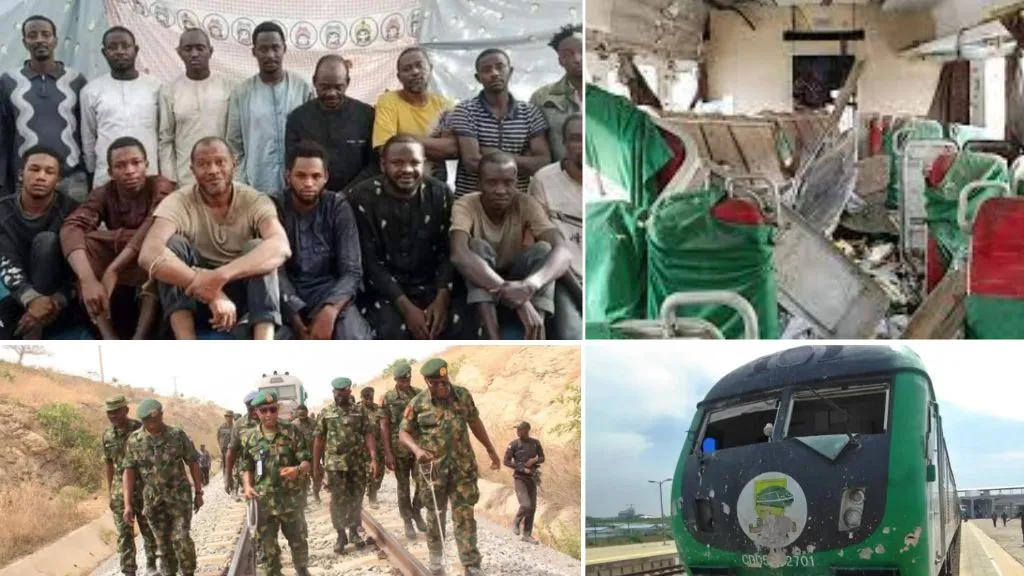
Troops have launched major offensives against Boko Haram, ISWAP and armed bandit groups across the North-East and North-West. Fighter jets have bombed camps hidden in forests. Thousands of suspected insurgents have been arrested or killed. Yet alongside the military campaign has emerged another strategy, one that remains deeply divisive: dialogue, rehabilitation and reintegration.
Supporters insist the approach has prevented further bloodshed and persuaded hundreds of fighters to surrender. Critics argue it has created a dangerous perception that mass violence can become a pathway to negotiation rather than punishment. That debate has returned with renewed force.
In June, the Federal Government announced that seven suspected Boko Haram and ISWAP commanders had been arrested at Katsina Airport after returning from the Hajj pilgrimage in Saudi Arabia. Interior Minister Olubunmi Tunji-Ojo said the suspects were identified through improved biometric integration linking immigration records with Nigeria’s national identity database.
The arrests were welcomed as evidence that technology is strengthening border security. They also raised questions that remain unanswered. How did individuals now suspected of links to terrorist organisations obtain travel documents, leave Nigeria and complete one of Islam’s holiest pilgrimages before attracting the attention of security agencies only upon their return?
Those questions became even more uncomfortable because the arrests came barely days after allegations, strongly denied by the Katsina State Government, that public funds had been used to sponsor bandit leaders for Hajj.
Read Also: When Terror Pays: Inside Nigeria’s controversial experiment with “repentant” bandits
Read Also: When Terror Pays: How Nigeria’s search for peace left thousands waiting for justice
The state government dismissed the allegation as false, politically motivated and completely without foundation. Whether true or false, the controversy exposed a much larger national anxiety. Many Nigerians are no longer asking only whether government should negotiate with armed groups. They are asking whether the country has gradually normalised impunity.
A Country Still Under Siege
The debate is unfolding against the backdrop of relentless violence.
Across Zamfara, Katsina, Sokoto, Kaduna, Niger and parts of Kebbi, armed groups continue to attack villages, abduct schoolchildren, impose illegal taxes, burn farms and demand multimillion-naira ransoms from communities already trapped by poverty.
Only days after the Hajj controversy dominated national headlines, residents of Dekara District in Niger State recounted how communities allegedly contributed ₦10 million demanded by bandits in exchange for peace. The agreement did not last.
According to residents, the same armed men later invaded the district headquarters and set the community’s primary school ablaze. Elsewhere, fresh attacks in Shiroro claimed lives and led to more kidnappings.
In Zamfara, fifteen villagers were buried after another deadly raid on Tungar Bore. The chairman of Talata Mafara Local Government broke down in tears during the funeral, publicly pleading for urgent federal intervention as grieving families lowered their loved ones into the ground.
In Katsina, another survivor described how armed men tied him up, poured petrol over his body and set him on fire after demanding money he did not have. He survived only because he repeatedly rolled across the sand until the flames died before a passer-by found him. These are not isolated tragedies.
They form part of a wider pattern that continues despite years of military operations, peace negotiations and reintegration programmes. For many communities, peace remains something they hear about in government statements rather than experience in their daily lives.
From Battlefield to Reintegration
Nigeria’s reintegration policy did not emerge in a vacuum. Governments around the world have long recognised that some conflicts cannot be resolved solely through force. Military victories may destroy camps and eliminate commanders, but they rarely erase the social, economic and ideological conditions that sustain insurgencies. This thinking has influenced several initiatives across Nigeria.
In the North-East, former Boko Haram members have participated in rehabilitation programmes designed to encourage defections and reduce recruitment into extremist groups. Several northwestern states have also experimented with dialogue involving traditional rulers, religious leaders and community mediators in an effort to persuade bandits to surrender.
Officials defending the strategy argue that every fighter persuaded to abandon violence represents fewer attacks on innocent civilians. They point to communities where temporary ceasefires reduced bloodshed and allowed displaced residents to begin returning home. Yet those gains have often proved fragile.
Some groups that accepted negotiations later resumed attacks. Others fragmented into smaller criminal networks beyond the reach of earlier agreements. The result has been an uncomfortable cycle in which governments repeatedly announce peace deals only for fresh massacres and kidnappings to expose their limitations. It has also left victims asking a question that grows louder after every new attack.
If those responsible for killing, kidnapping and extorting communities can eventually negotiate their way back into society, what becomes of justice?
Dialogue Is Not the Same as Amnesty
One of the greatest misconceptions surrounding Nigeria’s security debate is the tendency to treat dialogue and amnesty as identical concepts. They are not. Governments negotiate every day. Police negotiators speak with kidnappers to save hostages. Military commanders negotiate humanitarian access during armed conflicts. States negotiate ceasefires to reduce civilian casualties. Negotiation is a tool. Amnesty is something entirely different.
Amnesty carries legal consequences because it shields offenders from criminal liability, either partially or completely. That distinction matters because international law increasingly discourages blanket amnesties for crimes involving widespread killings, crimes against humanity and systematic attacks against civilians.
The United Nations has consistently maintained that peace agreements should not become mechanisms for protecting perpetrators of the gravest international crimes from accountability. Nigeria therefore faces an unusually complex legal challenge. Can government negotiate to persuade armed groups to surrender? Most legal scholars would answer yes.
Can it permanently excuse crimes involving mass murder, abduction, torture and sexual violence without undermining the rule of law? That question has become far more contentious.
The Constitution Meets the Battlefield
Every democratic government carries two obligations that sometimes collide. The first is to protect lives. The second is to uphold justice. During prolonged insurgencies those responsibilities often pull governments in opposite directions. Military commanders naturally prioritise ending violence. Victims demand accountability. Political leaders seek stability. Human rights advocates insist that peace built upon impunity rarely endures.
Nigeria’s Constitution does not expressly create a framework for negotiating with terrorist organisations. Instead, terrorism is addressed principally through statutory law, including the Terrorism (Prevention and Prohibition) Act, 2022, which criminalises membership, financing, recruitment and support for designated terrorist organisations. The legislation reflects a basic constitutional principle. Serious crimes should ordinarily attract investigation, prosecution and judicial determination. That expectation explains why reintegration programmes have remained controversial.
Many Nigerians accept that lower-level recruits who were coerced into joining armed groups may deserve rehabilitation after careful screening. Public concern becomes sharper when senior commanders accused of orchestrating attacks appear to receive rehabilitation without transparent judicial processes. Critics argue that this risks creating two justice systems: one for ordinary citizens and another for those who command enough firepower to force government into negotiations.
Falana’s Constitutional Warning
Among the strongest legal voices questioning Nigeria’s approach is senior human rights lawyer Femi Falana, SAN.
Speaking during Amnesty International Nigeria’s Annual General Meeting in Abuja earlier this year, Falana argued that negotiating with groups already designated as terrorists raises serious legal concerns under Nigeria’s anti-terrorism legislation. His concern extends beyond policy. It goes directly to constitutional governance.
According to Falana, governments cannot selectively suspend criminal law simply because perpetrators possess weapons or control territory. If terrorism has been criminalised through legislation enacted by the National Assembly, those accused of committing terrorist offences should ordinarily be investigated and prosecuted in accordance with the law.
His position does not reject dialogue in every circumstance. Rather, it questions whether negotiations can lawfully replace accountability where grave criminal offences have allegedly been committed. The argument resonates with many victims’ groups who believe justice has gradually become secondary to political expediency.
Every announcement welcoming “repentant” fighters back into society inevitably revives painful memories among families still searching for missing relatives or rebuilding communities destroyed by violence.
The Accountability Gap
The controversy surrounding reintegration is not simply about whether former fighters deserve a second chance. It is about what happens before that second chance is granted. In many established transitional justice systems around the world, reintegration follows structured legal processes.
Truth is established.
Victims are heard.
Responsibility is acknowledged.
Reparations are considered.
Only then does society debate forgiveness.
Nigeria’s experience has often appeared less structured. Announcements of rehabilitation programmes frequently generate more public information about benefits available to former fighters than about justice available to victims. That imbalance has fuelled widespread resentment. Communities that lost schools, farms, markets and family members frequently ask why those who destroyed their lives seem to receive greater state attention than those forced to survive the consequences.
For displaced families living in temporary shelters years after fleeing attacks, reconciliation without accountability can feel less like peace and more like abandonment.
A Dangerous Signal?
Security experts remain divided over whether repeated negotiations unintentionally encourage further violence. One school of thought argues that offering reintegration creates incentives for defections and weakens insurgent organisations from within. Another fears precisely the opposite.
If armed groups conclude that sustained violence eventually attracts negotiations, financial incentives or rehabilitation packages, criminality itself may become a bargaining tool. That concern has grown in parts of the North-West where bandit groups have repeatedly entered discussions only to resume attacks months later. Each failed agreement deepens public scepticism. Each fresh kidnapping strengthens the perception that violence carries few lasting consequences.
That perception, whether accurate or not, may ultimately prove as dangerous as the violence itself.
End of Part A
Part B will examine how other countries confronted similar dilemmas, comparing Nigeria’s approach with Colombia, Sierra Leone, Rwanda and Northern Ireland, before exploring why many transitional justice experts argue that lasting peace depends not only on persuading fighters to lay down their arms, but also on ensuring victims are seen, heard and given justice. It will conclude by asking the defining question at the heart of Nigeria’s security crisis: Can a nation defeat terror if accountability remains negotiable?
To be continued.