By Lillian Okenwa
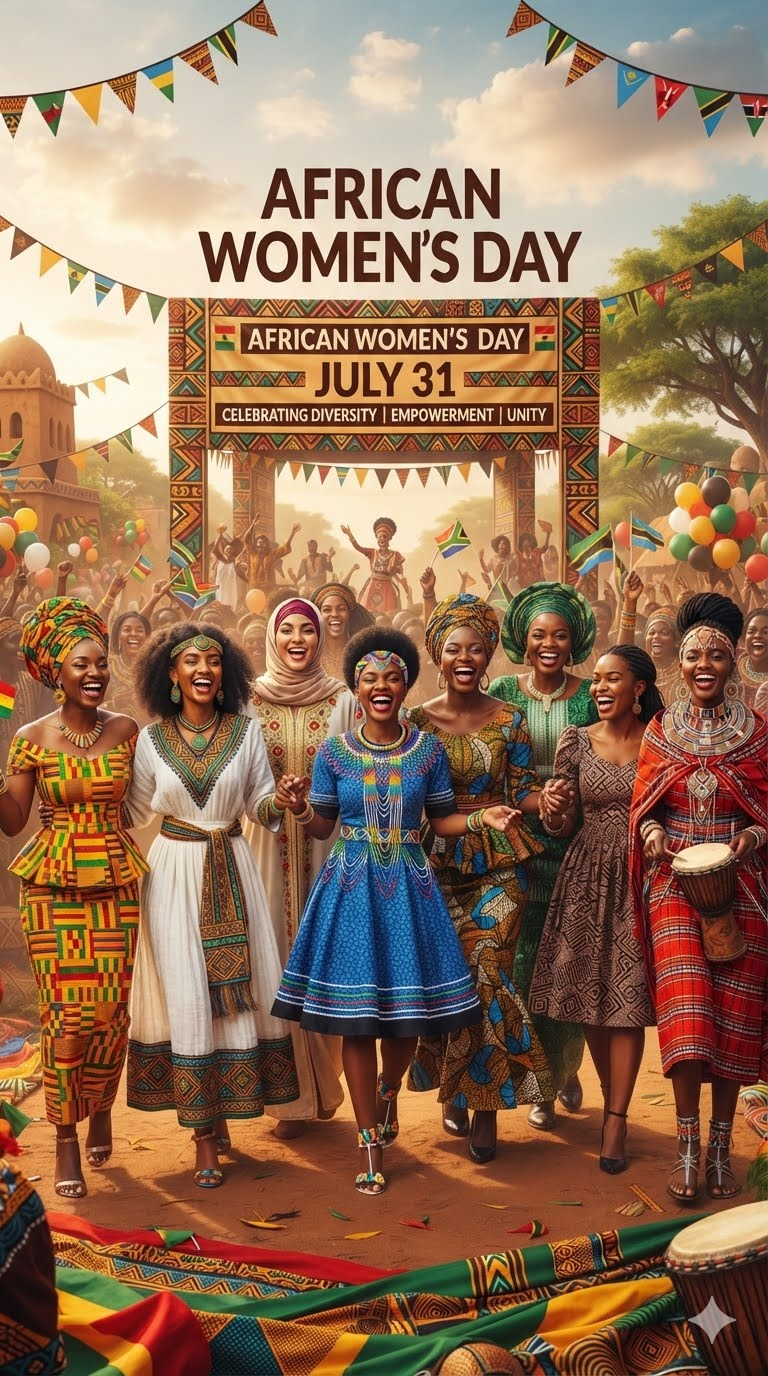
Every year on July 31, Africa celebrates the women who have shaped its history, defended its freedoms, built its economies and held together families and communities through some of the continent’s most turbulent moments. Yet African Women’s Day has never been intended as a ceremonial date on the calendar. It was born as a movement for justice.
Sixty-four years after women from across the continent gathered in Dar es Salaam to establish the Pan-African Women’s Organization (PAWO), the ideals that inspired that historic meeting remain as relevant today as they were in 1962. The language may have evolved—from liberation to inclusion, from empowerment to gender equality—but the central question has changed little: How much progress has Africa truly made for its women?
The answer is both encouraging and disconcerting.
Across the continent, African women are breaking barriers that once appeared insurmountable. They are leading constitutional courts, managing multinational corporations, driving scientific innovation, commanding universities, building technology startups, negotiating peace agreements and shaping public policy. Women increasingly occupy spaces that were once almost exclusively reserved for men, proving that opportunity—not gender—is the true measure of leadership.
Yet these achievements exist alongside a more painful reality.
Millions of African women continue to confront barriers that limit their potential long before talent or ambition can be tested. Gender-based violence remains pervasive. Maternal mortality continues to claim lives that could be saved through accessible healthcare. Girls in many communities still face interrupted education because of poverty, child marriage, insecurity or cultural practices. Access to finance remains a major obstacle for women entrepreneurs, while unequal inheritance rights and discriminatory customs continue to deny many women economic independence.
Perhaps nowhere is this contradiction more visible than in political representation.
Although women constitute nearly half of Africa’s population and play indispensable roles in national development, their presence in legislative chambers, executive offices and other centres of political decision-making remains disproportionately low in many countries. The result is not merely an issue of representation; it is a question of whether public institutions adequately reflect the societies they govern.
The legal profession tells a similar story.
Across Africa, women have risen to become judges, attorneys-general, senior advocates, law professors and presidents of bar associations. Their growing influence demonstrates that competence has never been the obstacle. Opportunity has.
In Nigeria, recent years have witnessed notable milestones, with more women assuming leadership positions within the judiciary, public institutions and professional bodies. Each breakthrough expands possibilities for younger generations, yet many female lawyers and professionals continue to speak of structural barriers, unequal opportunities and workplace cultures that still require reform.
African Women’s Day therefore presents more than an opportunity to celebrate individual success stories. It invites governments, institutions and society to examine whether the legal protections already enshrined in constitutions and statutes are translating into meaningful change in the everyday lives of women.
The conversation extends beyond politics and law.
African women remain central to food production, healthcare delivery, education, commerce and the informal economy. Across rural communities, they cultivate farms, operate small businesses, manage households and provide unpaid care that sustains economies but rarely appears in national accounts. As digital technology reshapes global commerce, ensuring women have equal access to education, digital skills, finance and innovation will increasingly determine Africa’s economic competitiveness.
Climate change has added another dimension to the challenge. Droughts, flooding, displacement and resource conflicts disproportionately affect women, particularly those whose livelihoods depend on agriculture and natural resources. Building resilience therefore requires gender-responsive policies that recognise women not merely as victims of climate change but as indispensable partners in developing sustainable solutions.
The observance also carries profound implications for justice.
Laws prohibiting discrimination, protecting women from violence and promoting equal opportunities have multiplied across the continent. The greater challenge now lies in enforcement. Rights that exist only on paper cannot transform lives. Effective institutions, accessible courts, responsive law enforcement and sustained political commitment remain essential if legal guarantees are to become lived realities.
This is why African Women’s Day continues to matter.
It reminds the continent that equality is not achieved through annual speeches or symbolic gestures. It is reflected in whether a girl can remain in school without fear, whether a woman entrepreneur can obtain credit on equal terms, whether survivors of violence receive justice without intimidation, whether mothers have access to quality healthcare, and whether leadership positions are determined by merit rather than gender.
The women who founded the Pan-African Women’s Organization understood that Africa’s liberation could never be complete while half of its population remained excluded from full participation in national life. More than six decades later, their message still resonates.
African Women’s Day is therefore not simply a celebration of what women have accomplished. It is a measure of what nations have yet to achieve.
The continent’s future will not be secured solely by the resources beneath its soil or the size of its markets. It will depend on whether Africa succeeds in unlocking the full potential of its people.
That future cannot be built by leaving women behind.