LAW & SOCIETY MAGAZINE SPECIAL REPORT
PART I
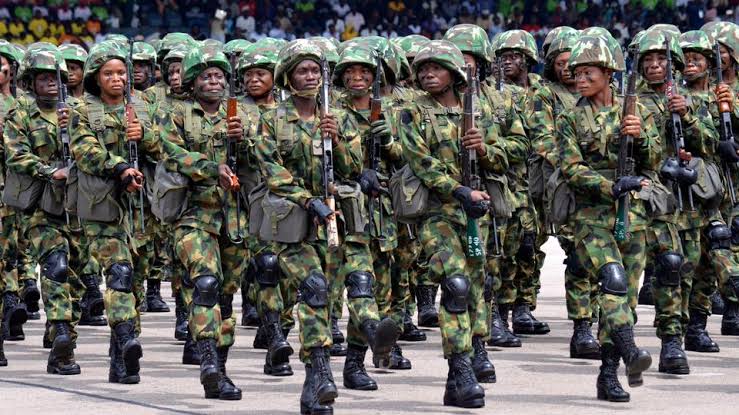
As former Boko Haram fighters reportedly undergo Army recruitment screening, frontline soldiers are asking a question that has haunted Nigeria’s counterinsurgency campaign for years: Who can truly be trusted in a war where the enemy often seems one step ahead?
By all accounts, Nigeria’s counterinsurgency campaign has entered a new phase.
Thousands of Boko Haram fighters have surrendered. Camps that once housed hardened insurgents are now being transformed into rehabilitation centres. Government officials speak increasingly about reconciliation rather than perpetual warfare. The Borno State Government proudly points to what has become known as the “Borno Model”—a programme designed to persuade insurgents to abandon violence, undergo rehabilitation and return to civilian life.
On paper, it is a strategy rooted in pragmatism. Wars rarely end solely through bullets. Many conclude when combatants surrender, reconcile and return to society. Yet, away from policy documents and official speeches, another conversation is unfolding inside military barracks across Nigeria’s North-East.
It is a conversation shaped less by theory than by memory. Memory of colleagues killed in ambushes. Memory of military formations overrun in the dead of night. Memory of commanders whose movements appeared uncannily known to insurgents before attacks were launched.
That conversation has resurfaced with unusual intensity following reports that at least 40 rehabilitated former Boko Haram members were shortlisted for the Nigerian Army’s 91st Regular Recruits Intake and underwent medical screening at the Army’s 7 Division Military Hospital in Maiduguri.
Military authorities have yet to publicly explain the reports. But among serving soldiers, the development has reopened old wounds and uncomfortable questions. Not because rehabilitation itself is objectionable. But because trust, once shattered by years of insurgency, is extraordinarily difficult to rebuild.
A War That Changed Nigeria
When Boko Haram launched its insurgency in 2009, few imagined it would become one of Africa’s longest-running security crises. Entire communities across Borno, Yobe and Adamawa were emptied. Thousands of schools closed. Markets disappeared. Villages were burned. Families were scattered across internally displaced persons’ camps. Children grew into adulthood knowing little except conflict.
The human cost has been staggering. Tens of thousands of civilians have lost their lives. Millions have been displaced. Entire local economies have collapsed under the weight of prolonged violence. But civilians have not been the only victims. The Nigerian Armed Forces have paid an equally heavy price.
Over the years, soldiers have repeatedly found themselves confronting an enemy that evolved faster than many expected. What began as a loosely organised extremist movement gradually transformed into a sophisticated insurgency capable of coordinating complex assaults, deploying drones for surveillance, manufacturing improvised explosive devices and launching simultaneous attacks on multiple military locations.
For troops on the frontlines, every deployment became a journey into uncertainty.
The Officers Who Never Came Home
Every military institution prepares its personnel for sacrifice. What no military can easily absorb, however, is the repeated loss of experienced commanders. Over the past decade, Nigeria has lost scores of senior officers in combat, ambushes and terrorist attacks.
Among the most symbolic was the killing of Muhammed Ali, the Theatre Commander of Operation Lafiya Dole, who died in an ambush in Borno State in 2021 alongside several officers while leading operations against insurgents. His death shocked the country. Here was one of the military’s most experienced battlefield commanders, personally leading troops against insurgents—and paying the ultimate price.
More recently came the tragic death of retired Rabe Abubakar, who died after being abducted by armed bandits. His killing underscored another unsettling reality. Nigeria’s insecurity is no longer confined to the North-East.
Banditry in the North-West has evolved from cattle rustling into an organised criminal enterprise capable of confronting security forces, collecting taxes, occupying forests and challenging state authority across vast rural territories. The death of such senior officers sends shockwaves through military ranks.
It is not merely the loss of distinguished careers. It is the loss of institutional memory, battlefield experience and leadership forged over decades. Every fallen commander leaves behind soldiers who ask themselves the same question: How did the attackers know?
The Trust Deficit
That question now hangs heavily over the latest controversy.
According to multiple serving officers who spoke anonymously, concern inside military formations is not driven simply by the prospect of former insurgents joining the Army. It is driven by uncertainty over verification.
How were the candidates screened? What documentation supported their applications? Who vouched for them? What intelligence assessment concluded they no longer pose a security risk? Those questions matter because counterinsurgency is unlike conventional warfare.
The battlefield is not always defined by guns. It is defined by information. Knowing when troops will move. Knowing which road they will take. Knowing where helicopters will land. Knowing which commander is leading an operation. Those pieces of information can determine whether soldiers return home—or walk into an ambush.
Military officers interviewed for this story stop well short of accusing rehabilitated insurgents of compromising operations. But many acknowledge an unmistakable reality. Trust cannot be manufactured by policy. It must be earned over time.
Can People Truly Leave Extremism Behind?
Supporters of the Borno Model argue that rehabilitation is not an act of charity. It is a security strategy. Every fighter who abandons the battlefield potentially weakens insurgent organisations. Every defector can provide intelligence about terrorist structures. Every successful reintegration reduces the pool of active combatants.
Internationally, deradicalisation programmes have been used in countries ranging from Saudi Arabia to Indonesia and Colombia, although with varying degrees of success. Security experts generally agree that military force alone rarely defeats insurgencies. But they also acknowledge something equally important.
Deradicalisation succeeds only when accompanied by rigorous monitoring, careful vetting and sustained community confidence. That confidence remains fragile in Nigeria. Victims who watched relatives murdered struggle to accept former fighters returning to nearby communities. Soldiers who buried colleagues remain wary of sharing operational spaces with men who once fought against them.
Neither concern can simply be dismissed as emotional resistance to reconciliation. They reflect the lived experience of a conflict that has lasted more than sixteen years.
The Questions Government Must Answer
The latest controversy is not fundamentally about forty men. It is about transparency. If former insurgents are indeed being considered for military service, Nigerians deserve to understand the legal and security framework governing such a decision.
Was it approved by the Nigerian Army? Were intelligence agencies consulted? What additional vetting measures were applied? What safeguards exist against infiltration? And perhaps the most important question of all: How does the military reassure serving troops that operational security will never be compromised?
Until those questions receive credible answers, speculation will continue to fill the vacuum. That may prove almost as dangerous as the insurgency itself. Wars are fought not only with weapons. They are also fought with confidence. And confidence once lost, is among the hardest things for any army to recover.
To be Continued.
Coming in Part II: “The Enemy Who Knows Too Much” — We examine the disturbing pattern of military ambushes, the deaths of senior officers, the recent claims by bandit leader Kachalla Maha that he receives advance warning of troop movements, and what security experts say about insider leaks, intelligence failures and the evolving tactics of Nigeria’s armed groups. We’ll separate battlefield reality from propaganda while asking why some of the country’s most wanted terrorist and bandit leaders continue to communicate so openly despite years of military offensives.