A deleted WhatsApp message. A convincing deepfake video. A voice recording generated entirely by artificial intelligence. A hacked database exposing millions of personal records.
Not long ago, these belonged to the realm of science fiction. Today, they are becoming evidence in courtrooms across the world, forcing judges to answer questions that would have seemed unimaginable only a decade ago. Increasingly, the challenge is no longer confined to determining what happened. Courts must also decide whether the digital evidence before them is genuine, manipulated or entirely fabricated.
As artificial intelligence reshapes communication, commerce and public administration, it is transforming the justice system as well. Courts are increasingly called upon to determine disputes involving privacy, cybercrime, digital surveillance, online harassment, data protection and AI-generated evidence. The principles of justice remain unchanged, but the technologies through which rights are exercised—and sometimes violated—are evolving at remarkable speed.
Recognising this reality, DigiCivic Initiative, in partnership with the National Judicial Institute (NJI) and the National Human Rights Commission (NHRC), with support from Luminate, convened the Digital Rights Judges Workshop for judicial officers from Nigeria’s South-West geopolitical zone. The programme forms part of a broader effort to strengthen judicial capacity as technology increasingly shapes the legal disputes coming before Nigerian courts.
As the Administrator of the National Judicial Institute, Hon. Justice B.A. Adejumo, OFR, observed, “The judiciary must continue to evolve alongside technology if justice is to remain accessible, relevant and effective in the digital age.” His remarks reflected a growing consensus within legal circles: while technology may change rapidly, public confidence in the administration of justice depends on the judiciary’s ability to understand and respond to those changes.
A New Landscape for the Courts
The digital revolution has altered almost every aspect of daily life. Banking, healthcare, education, employment and even political participation increasingly take place online. Inevitably, the disputes arising from these activities are finding their way into courtrooms.
Judges today may be asked whether an AI-generated recording is authentic, whether deleted social media posts recovered through digital forensics are admissible, or whether facial recognition technology has wrongly identified a suspect. Questions surrounding online surveillance, encrypted communications, digital contracts and data breaches have also become regular features of litigation in many jurisdictions.
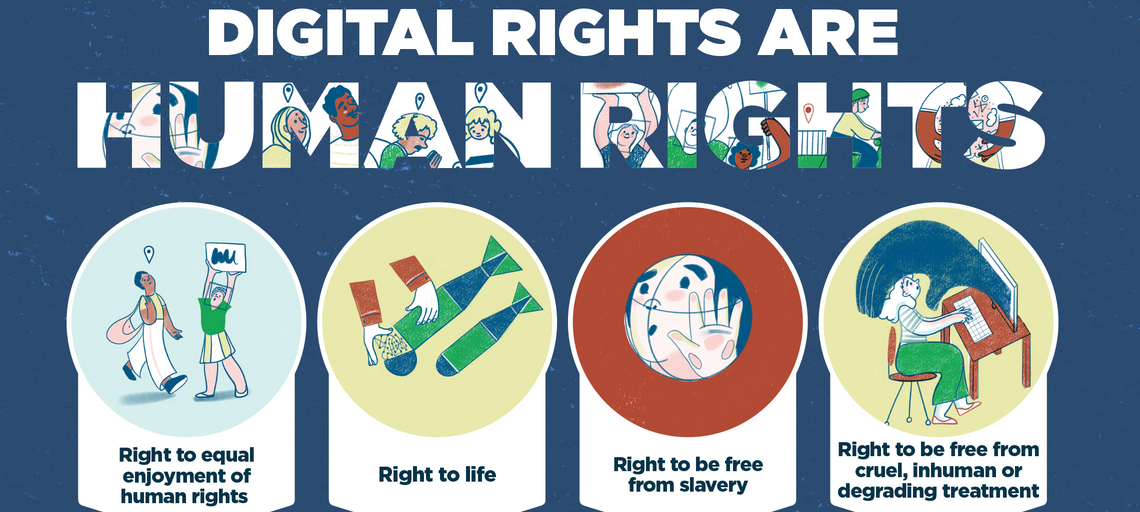
What makes these cases distinctive is that they rarely require entirely new rights. More often, they demand that long-established constitutional guarantees—privacy, dignity, freedom of expression, fair hearing and access to justice—be interpreted within technological environments that lawmakers could scarcely have imagined when many statutes were enacted.
It is this evolving legal landscape that informed the design of the workshop.
Learning Through Practical Experience
Rather than approaching digital rights as an abstract policy discussion, the organisers grounded every session in practical courtroom realities.
Participants considered disputes involving artificial intelligence, electronic evidence, cyber investigations, online gender-based violence, digital surveillance and constitutional rights. Throughout the discussions, emphasis remained firmly on judicial decision-making: how should courts approach these cases, what legal principles already exist, and where should caution be exercised as technology continues to evolve?
The conversations repeatedly demonstrated that while technology changes rapidly, the core principles of justice remain remarkably resilient. In many cases, the task before judges is not to invent new law but to apply familiar legal doctrines to unfamiliar facts.
Every Digital Action Leaves a Trail
One of the workshop’s most practical sessions examined digital footprints and their growing significance in litigation.
Many internet users assume that private browsing modes, encrypted messaging applications or Virtual Private Networks (VPNs) provide complete anonymity. Participants were shown why those assumptions are often misplaced. Metadata, server logs, location information, browsing histories and cloud backups frequently survive long after users believe their activities have disappeared.
For the judiciary, understanding these digital traces has become increasingly important. A photograph may contain hidden metadata revealing where and when it was taken. Mobile devices continuously generate location records. Electronic communications often leave forensic evidence capable of corroborating—or contradicting—witness testimony.
As digital technology becomes more deeply embedded in everyday life, evidence is no longer limited to paper documents or eyewitness accounts. Increasingly, it exists in complex digital ecosystems that require judges to understand both technological processes and the legal principles governing admissibility and authenticity.
Artificial Intelligence and the Challenge of Authenticity
Artificial intelligence featured prominently throughout the programme, reflecting the growing concern among courts worldwide about its impact on the administration of justice.
Advances in generative AI have made it possible to create convincing fake videos, cloned voices and fabricated documents with unprecedented ease. This presents courts with an entirely new evidentiary challenge. Visual or audio material that once appeared self-authenticating can no longer be accepted at face value.
Participants examined what legal scholars describe as the “liar’s dividend”—the growing tendency for genuine evidence to be dismissed simply because someone claims it was produced using artificial intelligence. The consequence is a double-edged problem: AI can manufacture false evidence while simultaneously undermining confidence in authentic evidence.
Facilitators emphasised that AI detection software should be approached cautiously. Such tools offer probability rather than certainty, making corroborative evidence, forensic analysis and proper chain-of-custody procedures more important than ever. The message throughout the discussions was that artificial intelligence should enhance the search for truth rather than weaken evidentiary standards.
Privacy in a Data-Driven Society
The workshop also explored the practical implications of Nigeria’s Nigeria Data Protection Act (NDPA) at a time when personal information has become one of the world’s most valuable commodities.
Financial institutions, healthcare providers, educational establishments and government agencies routinely collect enormous quantities of personal data. The legal challenge is no longer whether information will be collected but whether its collection, storage and use comply with constitutional guarantees and statutory safeguards.
Participants examined principles such as lawful processing, informed consent, transparency, purpose limitation and accountability while considering the remedies available where personal information is unlawfully disclosed. These discussions underscored the judiciary’s increasingly important role in balancing technological innovation with the protection of individual rights.
When Online Harm Becomes Real Harm
Another major focus of the programme was Online Gender-Based Violence (OGBV) and the broader question of digital abuse.
The discussions recognised that harassment occurring online frequently produces devastating offline consequences, including psychological trauma, reputational damage, economic loss and threats to personal safety. Participants considered the legal remedies already available under Nigerian law, including the Violence Against Persons (Prohibition) Act, alongside the practical difficulties involved in preserving electronic evidence before it disappears.
The workshop reinforced an important principle: harm inflicted through digital platforms is no less real because it occurs online.
Preparing the Judiciary for the Future
At the conclusion of the programme, participants identified priorities for strengthening Nigeria’s judicial response to emerging digital challenges. These included expanding judicial education on artificial intelligence and cybercrime, strengthening standards for authenticating digital evidence, reviewing legislative frameworks governing privacy and electronic evidence, accelerating the digitalisation of court processes, and improving secure technological infrastructure across the justice sector.
These recommendations recognise that judicial preparedness cannot be achieved through a single workshop. As technology continues to evolve, continuous education and institutional collaboration will become increasingly important in ensuring that courts remain capable of delivering fair, informed and effective justice.
Justice Must Evolve With Society
The Digital Rights Judges Workshop illustrates how collaboration between DigiCivic Initiative, the National Judicial Institute, the National Human Rights Commission and Luminate is helping prepare Nigeria’s judiciary for the legal realities of the digital age.
Artificial intelligence, digital surveillance, electronic evidence, online platforms and data protection are no longer emerging issues waiting on the horizon. They are already shaping litigation before Nigerian courts. Ensuring that judges possess the knowledge and confidence to address these questions is therefore not simply a matter of technological literacy. It is an investment in the rule of law itself.
As society becomes increasingly digital, the enduring responsibility of the courts remains unchanged: to apply timeless principles of justice fairly, consistently and independently, regardless of how rapidly technology transforms the world around them.