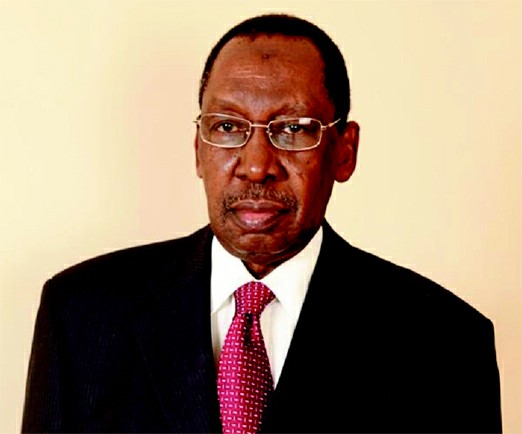
By Lillian Okenwa
From Nigeria’s prisons to the leadership of NBA-SPIDEL, her career has been defined by an insistence that the law must reach beyond the courtroom and into the lives of people who are easily forgotten.
There are many ways to build a career in law. Dr Uju Agomoh chose one that took her into places most lawyers rarely see: prisons, detention centres, rehabilitation facilities and the difficult terrain where human rights meet the criminal justice system.
Today, as she marks her birthday, her professional journey offers something more substantial than a list of qualifications, appointments and awards. It is the record of a woman who has spent decades asking whether Nigeria’s justice system works for people who have little money, little influence and nobody powerful to speak for them.
That concern has taken her from correctional reform to public-interest law and now to the chair of the Nigerian Bar Association Section on Public Interest and Development Law.
But the roots of that work lie much further back.
The prison became her classroom
Agomoh’s work in correctional reform began in the 1990s and led to the establishment of Prisoners’ Rehabilitation and Welfare Action, known as PRAWA, an organisation that promotes human rights, rehabilitation and reintegration for people in correctional centres, former inmates, torture survivors and young people at risk.
Her approach was different from simply campaigning from outside the prison gates. She went inside, listened to inmates, documented conditions and worked with institutions to find ways of changing the practices that produced them.
Over the years, that work expanded into prison reform, non-custodial measures, juvenile justice, torture prevention, rehabilitation and access to justice.
It also brought her into the policy process.
Agomoh became one of the voices behind the shift from Nigeria’s old prison model towards a correctional philosophy based on rehabilitation, reintegration and alternatives to incarceration. The Nigerian Correctional Service Act 2019 formally established that new direction.
But legislation, as Nigeria repeatedly demonstrates, is only the beginning.
A law can provide for rehabilitation while a prison remains overcrowded. It can recognise non-custodial measures while courts and other institutions continue to rely heavily on imprisonment. It can protect the dignity of detainees while people awaiting trial remain trapped for years.
Agomoh has spent much of her career confronting that gap between what the law says and what people experience.
The numbers tell their own story
Nigeria’s correctional crisis has never been simply about the condition of prison buildings.
It is also about who is inside them and why.
Agomoh has repeatedly drawn attention to the large proportion of inmates who are awaiting trial, arguing that congestion cannot be solved without addressing the wider failures of the criminal justice system.
That means looking beyond prison walls to policing, prosecution, bail, legal representation, judicial delays and the failure to make effective use of alternatives to imprisonment.
Her work has consequently never been confined to the welfare of inmates.
It has been about the justice system that puts them there.
A correctional centre can only deal with the people sent there. If the courts, police, prosecutors and other institutions continue to send people into custody who could lawfully be dealt with outside prison, overcrowding will persist no matter how many new facilities are built.
The Independent Investigative Panel on allegations of corruption, abuse of power, torture and cruel, inhuman and degrading treatment within the Nigerian Correctional Service offered another significant chapter in Agomoh’s long engagement with the sector.
She served as secretary to the panel, which examined complaints and practices across the correctional system and produced a reform blueprint addressing corruption, human-rights violations, congestion, infrastructure, staff welfare, data management and the implementation of the Nigerian Correctional Service Act. The panel’s final report was presented to the Minister of Interior in June 2026.
It was, in many respects, a return to familiar territory.
Only this time, the task was not simply to document what was wrong but to help map out what should replace it.
From prison reform to public-interest law
Her move into the leadership of NBA-SPIDEL is therefore less a departure than an expansion of the same body of work.
Public-interest law deals with the places where individual rights collide with institutional power: unlawful detention, access to justice, discrimination, abuse of authority, electoral rights, the rights of vulnerable groups and the accountability of public institutions.
Those issues have long been present in Agomoh’s work.
The new position simply gives her a larger platform from which to address them.
Under her leadership, SPIDEL has placed public-interest law, democratic accountability and justice-sector reform high on its agenda. Its activities have included discussions on electoral reform and the role of lawyers in strengthening democratic institutions.
That direction is significant at a time when public confidence in institutions is under pressure and many Nigerians experience the law not as a shield but as something distant, expensive or difficult to reach.
For lawyers, the challenge is particularly uncomfortable.
It is easy to speak of the rule of law as an ideal. It is harder to make it meaningful to the person who cannot afford counsel, the detainee who has waited years for trial, the woman whose rights are ignored or the citizen confronting the power of the state.
Agomoh’s career has largely been spent in that harder space.
A reformer who stayed close to the ground
There is a temptation to describe accomplished professionals through their titles.
Agomoh has accumulated plenty: lawyer, criminologist, psychologist, researcher, human-rights advocate, correctional reformer, author, policy adviser and now Chair of NBA-SPIDEL.
But the titles tell only part of the story.
The more revealing fact is where she has chosen to spend her professional life.
She has worked with prisoners and former prisoners. She has dealt with torture prevention. She has advocated rehabilitation rather than punishment for its own sake. She has worked with government agencies while retaining the independence to question them. She has taken part in investigations into the very institutions she has spent years trying to reform.
That combination is not always comfortable.
Reform requires access to institutions, but meaningful reform also requires the courage to tell those institutions when they are failing.
Agomoh has operated in that space for years.
PRAWA’s stated mission captures much of the philosophy that has underpinned her work: a justice system should be effective, humane and accessible, while recognising rehabilitation and support for offenders, victims and communities.
It is a deceptively simple proposition.
Nigeria has spent decades discovering how difficult it is to practise.
The work is far from finished
The reforms she has advocated have not erased the problems that first took her into correctional centres.
Nigeria still has serious congestion in its custodial facilities. The use of non-custodial measures remains uneven. Access to justice remains unequal. The treatment of people in detention continues to demand scrutiny, while the gap between progressive legislation and implementation remains one of the country’s most persistent institutional problems.
The recent investigative panel made the same point in stark terms: Nigeria already has a substantial legal framework for correctional reform; the harder task is making it work.
That may be the most appropriate backdrop against which to mark Agomoh’s birthday.
Not with the suggestion that the work is complete, but with recognition that she has stayed with it.
For more than three decades, she has continued to return to the same uncomfortable territory where law, power and human vulnerability meet.
What remains after the applause
Birthday tributes usually come with familiar wishes: greater success, good health, more achievements.
All of those are deserved.
But there is another way to look at a career such as Agomoh’s.
Its value lies not only in the institutions she has led or the reforms she has helped shape. It lies in the people who became harder to ignore because somebody was willing to enter the places where they had been forgotten.
A prisoner is still a citizen.
A person awaiting trial is still presumed innocent.
A detainee does not surrender the right to dignity at the prison gate.
A person who has served a sentence does not cease to deserve a place in society.
And a poor litigant is entitled to justice just as much as a powerful one.
These principles are familiar in the language of the law. Agomoh’s career has been about pushing them closer to reality.
That is perhaps the most fitting tribute today.
Not that she has solved Nigeria’s justice problems. She has not.
But that she has spent a remarkable part of her professional life refusing to accept them as normal.
And now, from the leadership of NBA-SPIDEL, she has an even larger arena in which to continue that work.
Happy birthday, Dr Uju Agomoh.