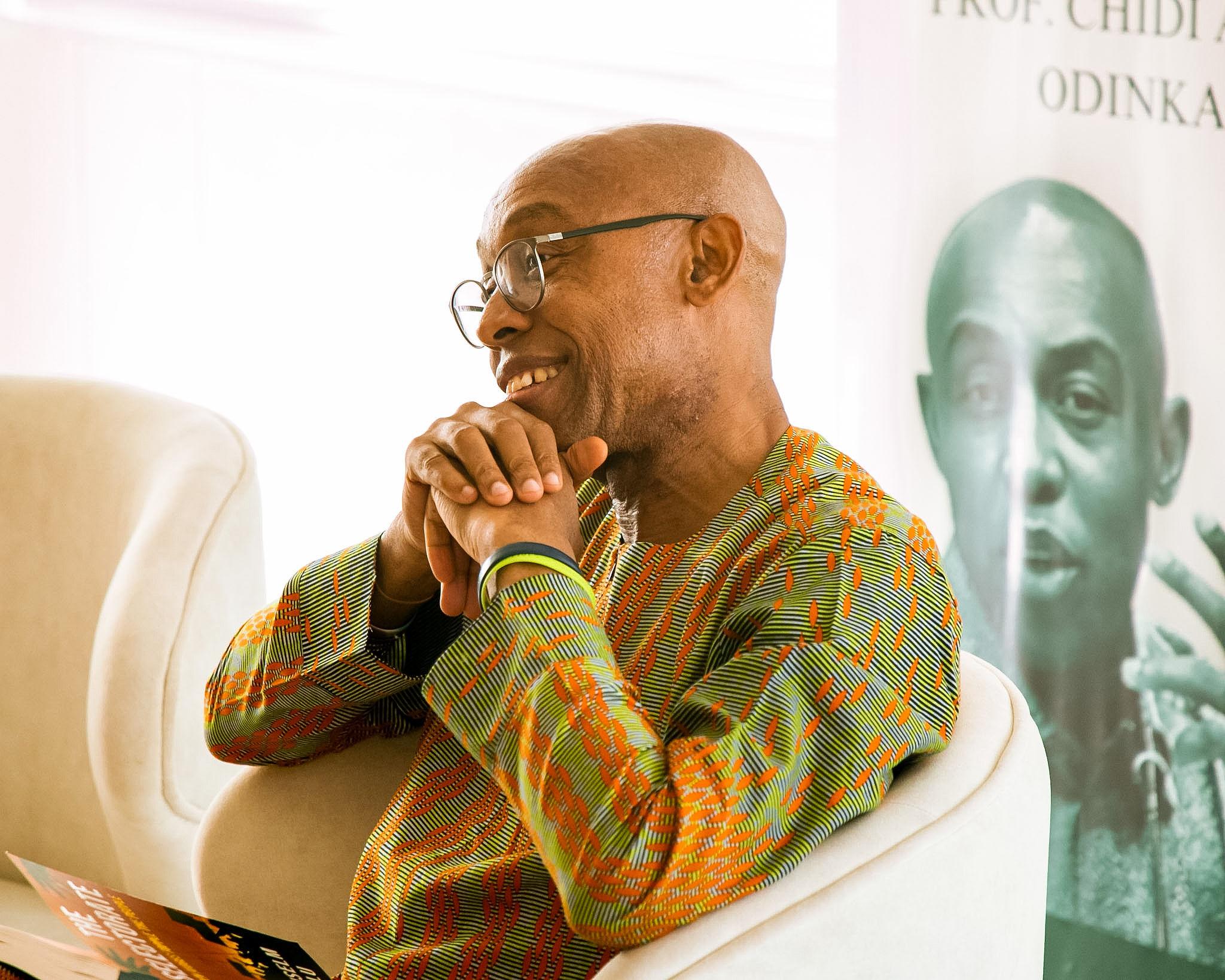
By Chidi Anselm Odinkalu
“The first method for estimating the intelligence of a ruler is to look at the men he has around him.” Niccolo Machiavelli, The Prince, Chapter XXII (1513)
In April 2006, the Hamas-led new government of the Palestinian National Authority in Gaza appointed a new director-general to head the para-military “Executive Force” in charge of security in the Strip. The new director-general, Jamal Abu Samhadana, was no ordinary militant. He had lived for a majority of the preceding quarter century in exile, spent 19 months as a detainee of the Palestinian Authority, and was reportedly the second name on Israel’s “most wanted” list. Gideon Meir, spokesperson at the time for Israel’s Foreign Ministry, likened his appointment to “allowing the fox to guard the chicken coop.”
Anambra State in south-east Nigeria is an unlikely theatre for a re-enactment of this plot of the fox guarding the chicken coop. Unlike the story of Jamal Abu Samhadana, the fox in the Anambra re-make cannot be accused of a cause.
The story begins a quarter of a century ago. Nigeria had returned to elective government after 15 years of unbroken military rule. In many states of the federation, the transition threw up grave security challenges. Few states struggled with this like Anambra State.
The governor of the State was Chinwoke Mbadinuju. To address rampant insecurity in 2000, he assented to the Anambra Vigilante Services (AVS) Law. Into this new legal space, the governor invited the Bakassi Boys, a murderous gang described by Human Rights Watch at the time as a “legitimization of murder and torture.”
According to the Nigeria Police Force, a standard practice of the Bakassi Boys was “hacking suspected criminals with machetes and then setting their bodies ablaze.” They were known to be “completely unaccountable.”
The fear of the Bakassi Boys created a chilling effect conducive to keeping a lid on public criticism of the prevailing misgovernance. For long stretches from 2001, workers in the public sector in the state were routinely unpaid.
In 2002, unpaid teachers declared industrial action for the full school year. State civil servants were similarly on strike for many months as were judiciary staff. The prolonged strike action by judiciary workers in the state resonated on the kitchen tables of lawyers in one of the most litigious states in the country.
Onitsha, the leading centre of commerce in southern Nigeria, is also the site of the largest collection of lawyers in the state. In 2002, Barnabas Igwe, a senior lawyer, led the Onitsha Branch of the Nigerian Bar Association (NBA). His wife, Amaka, was also a lawyer.
Read Also: THE IGWE FILE (Part II): The State, the Bakassi boys and the politics of fear
Read Also: THE IGWE FILE (Part III): Twenty-four years later, the bar comes home again
As the leader of the foremost branch of the bar in the state, Mr. Igwe was under pressure from the evident stress on the livelihoods of his members. In August 2002, he called an emergency meeting of the senior leadership of the NBA in Onitsha. Invited to the meeting were all former chairmen of the branch; all Senior Advocates of Nigeria (SANs) and lawyers with over 30 years of practice experience in the city; and the elected leadership of the branch.
Rising from the meeting, the Onitsha Branch of the NBA issued a 21-day ultimatum to the state government to discharge the backlog of salaries owed to judiciary workers and public service workers in the state or face an escalation. If the State governor could not do so, Mr. Igwe declaimed, then he should resign.
Very quickly, Mr. Igwe’s leadership galvanized hitherto quiet voices around the state. The governor had a problem.
This was the situation when Barnabas and Amaka Igwe departed Onitsha in the last week of August 2002 to Ibadan, Oyo State, for the 42nd Annual General Conference of the NBA. Amaka Igwe was pregnant with what would have been her fourth child. She was already the mother of one daughter and two sons.
On the last day of August 2002, they returned from Ibadan to Onitsha. It was their last trip out of the city.
Two days later, both Mr. Igwe and his wife were dead, hacked in a gruesome attack involving guns and matchetes on Oraifite Road on the outskirts of Onitsha. The attackers were elements from the Bakassi Boys.
The double murder of the Chairman of a leading branch of the NBA and his pregnant wife drew swift and widespread outrage. Inspector-General of Police, Tafa Balogun, was in his fifth month in office.
In Charge no. O/60C/2003, The State v. Francis Nzekwe (alias Francis Nzewe Ibekwe), and 10 others, the government of Anambra State initiated criminal proceedings to bring to account 11 suspects in connection with the double murder.
One of the suspects was one Ken Emeakayi. At the time, he was the Commissioner for Works in the cabinet of Governor Mbadinuju. His reputation around the state was settled. Witnesses appeared to have identified him as the man in command of the gang that liquidated Barnabas and Amaka Igwe.
The Onitsha Branch of the NBA secured permission (fiat) from the Ministry of Justice enabling its ablest lawyers to lead the prosecution. The case began before Kalajine Anigbogu, a judge of the High Court of Anambra State. In short order, he recused himself citing determined interference from un-named “high places” in the state.
It was thereafter reassigned to another judge in Onitsha, Peter Umeadi, before being transferred to Cecilia Uzoewulu then sitting at the High Court in Ekwulobia.
In 2005, the High Court inexplicably decided to grant bail to Ken Emeakayi in the double murder trial. This was most implausible because murder cases are notoriously not bailable. Around 22 February 2006, a prison break freed the remainder of the suspects from pre-trial detention in the Onitsha prison. In this engineered confusion, the records were disappeared from both the courts and the Ministry of Justice. So, the case was never brought to a conclusion.
I know because I went looking.
In 2022, the Governor of Anambra State asked me to lead a Truth, Justice, and Peace Commission (TJPC) into the unrest in south-east Nigeria. Membership of the Commission included the then Attorney-General of the State, Professor Sylvia Ifemeje. Nigeria’s current Minister of Foreign Affairs, Bianca Odumegwu-Ojukwu, served as the secretary.
The TJPC had a mandate going back to 1999, which brought the double murder of Barnabas and Amaka Igwe within its purview. When it reported in March 2024, the Commission called attention to the especially heinous character of the double murder of Barnabas and Amaka Igwe. It specifically referred to the unfinished prosecution of Mr. Emeakayi and asked the state government to review the case with a view to ensuring effective accountability. It also recommended an official apology and symbolic compensation to their children.
The Governor promised “swift action based on the Commission’s recommendations.”
Six months later, instead of accountability, the same Governor appointed the same Ken Emeakayi as his Special Adviser for Community Security. At the beginning of 2025, the State Government created a new vigilante militia called “Agunechemba” ultimately under the command of Mr. Emeakayi.
Anambra State’s road to enthroning the fox as the king of the chicken coop was complete.
With Mr. Emeakayi now safely ensconced in his new role, those with opinions about the brutal cynicism of his rehabilitation by the governor who promised different turned mute. Such is the palpable fear around the state of his long service in the enterprise of gratuitous violence with impunity.
How a man credibly suspected of involvement in the murder of a pregnant woman and in orphaning her children can be enabled by a former Governor of Nigeria’s Central Bank is one of the many miracles of Nigerian politics. In normal society, that is sacrilege.
This week marks 24 years since Barnabas and Amaka Igwe were liquidated. It is possible that the current Governor of Anambra State has lost the capacity to be affronted by the murder of a pregnant woman. If so, he should stop complaining about insecurity. But he cannot put the security of the state in the hands of a man like Ken Emeakayi and still pretend that insecurity worries him.
A lawyer and a teacher, Odinkalu can be reached at [email protected]
The views expressed by contributors are strictly personal and not of Law & Society Magazine.