By Lillian Okenwa
June 12 is one of those dates that means many things to many Nigerians. It evokes memories of a stolen mandate, a people’s insistence on democracy, and a continuing conversation about justice, accountability and the rule of law.
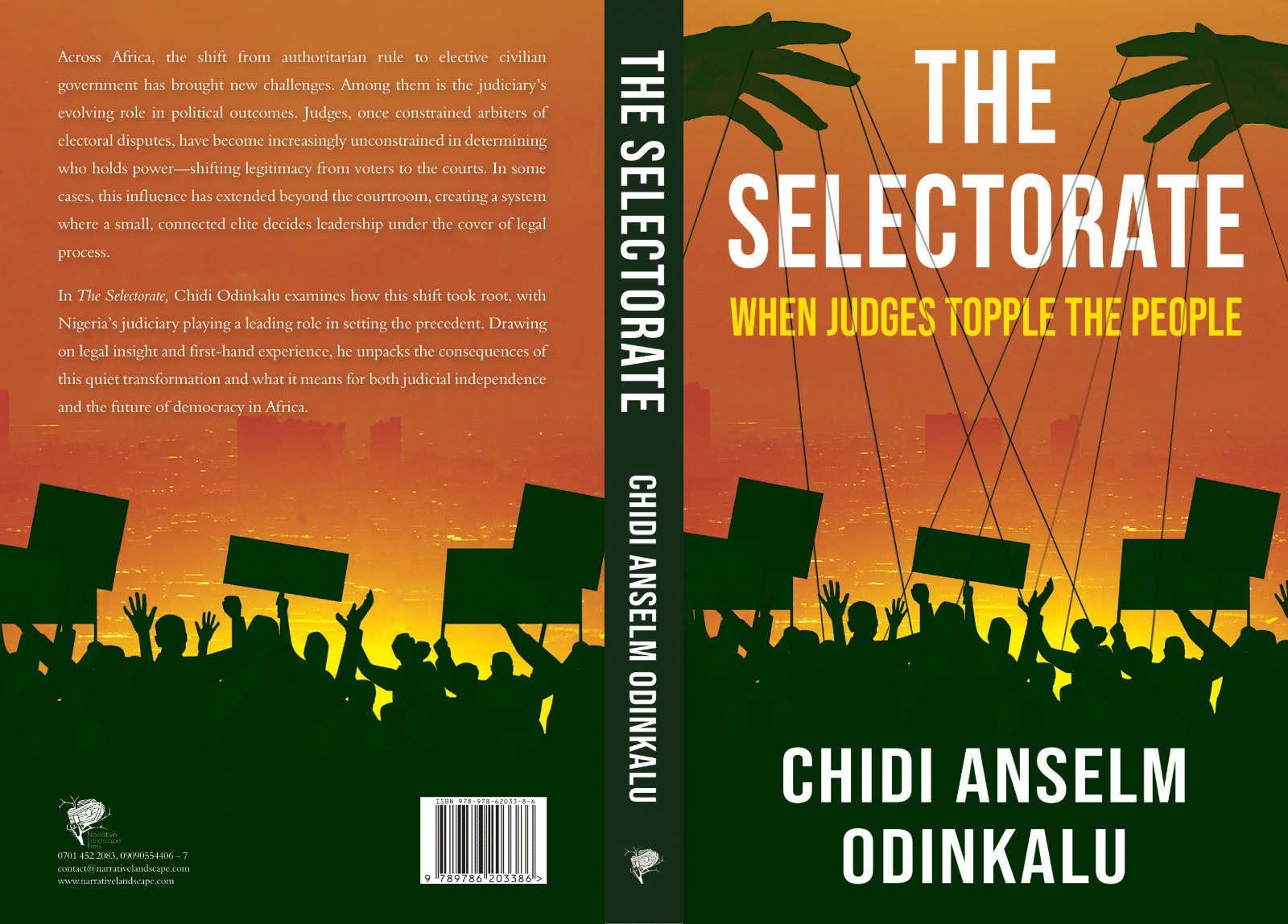
It is perhaps fitting that it is also the birthday of Professor Chidi Anselm Odinkalu. For many years, he has spent his professional life arguing for the same values that the day has come to embody: constitutionalism, human rights, accountability and the rule of law.”
For decades, Odinkalu has occupied a distinctive place in Nigeria’s public life—not because he sought elective office or cultivated political patronage, but because he has consistently chosen to speak when silence might have been easier and more profitable.
That choice has come at a cost.
As a legal scholar, human rights advocate, former Chairman of the National Human Rights Commission and public intellectual, he has often found himself challenging entrenched interests and asking uncomfortable questions. Whether writing on constitutionalism, security, judicial accountability or governance, his interventions have rarely been designed to flatter those in power. Instead, they have sought to provoke thought, encourage scrutiny and remind institutions of the standards they are expected to uphold.
Agreement with him has never been a prerequisite for respecting him.
Indeed, one of the marks of an independent mind is the willingness to advance arguments that invite debate rather than applause. Professor Odinkalu has never appeared particularly interested in popularity for its own sake. He has been content to let his ideas stand or fall on their own merit.
There is also something admirable about his consistency. In an environment where convictions are sometimes traded for appointments and criticism softens in the presence of influence, he has maintained an uncommon willingness to interrogate authority regardless of who occupies office.
His contributions have extended beyond commentary. Through teaching, advocacy, research and institutional leadership, he has helped shape conversations on human rights and democratic governance within Nigeria and beyond. Many younger lawyers, activists and scholars have encountered his work long before meeting him in person, drawing from his scholarship and public engagement an understanding that the law is not merely a collection of statutes and precedents but an instrument for protecting human dignity.
Those who know him also recognise his sharp wit, intellectual curiosity and capacity to move effortlessly between rigorous legal analysis and everyday conversation. He has an enviable gift for distilling complex constitutional questions into language that ordinary citizens can engage with, making public discourse richer in the process.
No public figure is beyond criticism, and Odinkalu himself would likely welcome robust disagreement over uncritical adulation. Yet even his critics would struggle to deny the energy, courage and persistence with which he has pursued the causes he believes in.
As Nigeria continues its often-difficult journey toward deeper democracy and stronger institutions, voices willing to question, challenge and insist on accountability remain indispensable.
On this June 12, as Professor Chidi Anselm Odinkalu marks another birthday, there is reason not merely to celebrate the passing of another year but to acknowledge a career devoted to ideas, public service and the enduring belief that justice is worth defending, even when doing so is inconvenient.
Happy birthday, Prof. May you continue to ask difficult questions, challenge comfortable assumptions and remind us that democracy is sustained not by ceremonies alone, but by citizens willing to hold power to account.