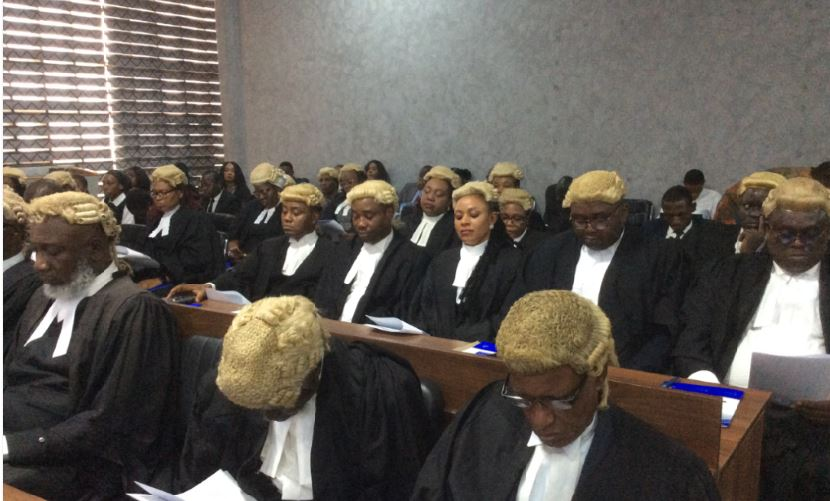
Access to justice remains a global challenge for the poor and marginalized.
Pro bono legal services are closing that gap by offering free or low-cost assistance.
At the 2025 Law for Humanity Summit, experts explored how pro bono can drive reform without lowering ethical standards.
Ehusani Abel Simpa presented a groundbreaking paper highlighting practical pro bono models and their success across continents.
From Ukraine to Rwanda, lawyers are helping bridge justice gaps through community mediation and free legal defense.
In Malawi and Kenya, paralegals are trained to handle disputes, cutting court congestion by nearly half.
Rwanda mandates legal representation for all appeal cases, ensuring no one faces justice unrepresented.
In Nigeria, pro bono work by the Bar Association and NGOs has achieved milestones but still faces deep-rooted apathy.
Lawyer indifference, limited resources, and inconsistent engagement slow the nation’s justice efforts.
Simpa calls for reforms like mandatory pro bono assignments and automated systems to match lawyers with clients in need.
He proposes a “National Pro Bono Hall of Fame” to celebrate outstanding contributions.
The reforms also encourage duty solicitor schemes and legislative drafting support to decongest prisons.
Pro bono, he argues, must extend to civil cases—like family, land, and environmental disputes—not just criminal ones.
Such efforts could reduce crime by addressing underlying social and emotional issues early.
Ethics remain central, with lawyers urged to handle pro bono cases with the same passion as paid work.
The paper also highlights pro bono’s role in promoting restorative justice over punitive systems.
By aligning with the UN’s Nelson Mandela Rules, pro bono can improve prison welfare and human dignity.
Simpa calls on lawmakers to integrate correctional reforms into state laws through volunteer-driven drafting.
He envisions artificial intelligence tools that connect lawyers, automate pro bono matches, and monitor case outcomes.
A proposed “Distinguished Pro Bono Advocate” rank would honor lawyers who champion justice for the vulnerable.
In conclusion, Simpa’s message is clear—justice must not depend on wealth but on will, ethics, and compassion.
With innovation, accountability, and empathy, pro bono can turn justice from a privilege into a shared right.
Click here to download the paper, Productive Pro Bono Models and Practical Solution for Reform
Click here to download the PowerPoint slides.