The landmark Nestoil-Neconde ruling could reshape debt recovery, receivership practice, investor confidence, and the future of commercial justice in Nigeria.
For years, many of Nigeria’s largest businesses have quietly feared a legal phenomenon that rarely captures public attention until it is too late: the ex parte order.
Designed as an emergency judicial tool, ex parte orders allow courts to grant temporary relief without hearing the opposing party. In principle, they exist to prevent imminent harm. In practice, critics have increasingly argued that they have evolved into something far more consequential—a mechanism capable of reshaping corporate control before a dispute is ever fully heard.
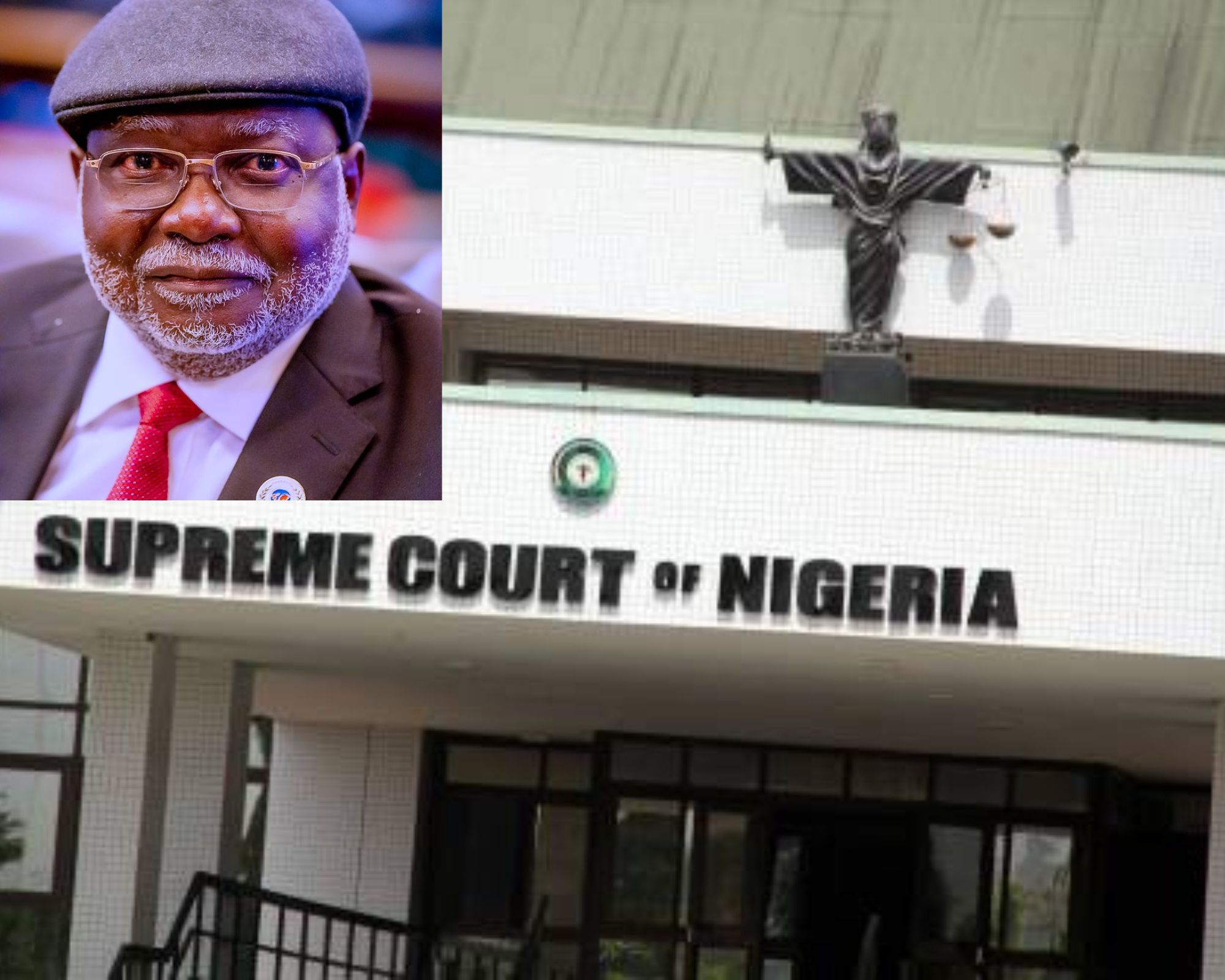
On Monday, June 1st, Nigeria’s Supreme Court issued what may become one of the most consequential commercial judgments in recent years. In doing so, it delivered a blunt message not only to banks and creditors, but also to lawyers and judges across the country: interim judicial powers cannot be transformed into instruments of economic conquest.
The decision arose from the sprawling dispute involving Neconde Energy Limited, Nestoil Limited and a consortium of lenders led by FBNQuest Merchant Bank. Yet the significance of the ruling extends far beyond the parties involved.
At stake was a question that reaches into the heart of Nigeria’s investment climate: can a company effectively lose control of critical assets through judicial orders obtained before it has had a meaningful opportunity to be heard?
The Supreme Court’s answer was unmistakable.
No.
The Court’s Extraordinary Rebuke
The language deployed by the Supreme Court was remarkable.
The apex court did not merely disagree with the Court of Appeal’s actions. It described the proceedings as a “judicial tragedy,” a phrase that immediately elevated the case from an ordinary commercial dispute into a broader institutional reckoning.
The justices dismantled a series of ex parte orders that had granted extensive relief to creditors, including measures that effectively altered the status quo and shifted commercial control before the underlying issues had been determined.
Most significantly, the court rejected the notion that what was labelled a “restorative” order could escape scrutiny simply because of its name.
Substance, not terminology, governs judicial action.
What the Court of Appeal granted was, in practical effect, an interlocutory injunction. Under long-established legal principles, such relief should not have been issued without hearing the parties whose rights were directly affected.
The Supreme Court’s intervention was therefore about more than procedural correctness. It was about preserving the constitutional foundation of due process.
The Rise of Judicialized Corporate Warfare
The ruling lands at a moment when concerns have been mounting within Nigeria’s business community about the increasingly aggressive deployment of interim judicial remedies in high-value commercial disputes.
Banks unquestionably possess legitimate rights to recover debts. Credit agreements are enforceable. Security interests exist for a reason.
But debt recovery and due process are not mutually exclusive concepts.
The concern highlighted by this judgment is that interim remedies have increasingly been used not merely to preserve assets pending litigation, but to secure outcomes that closely resemble final victories.
A single ex parte order can freeze operational accounts, halt production, trigger defaults under financing agreements, destabilize contractual relationships, undermine management authority, and destroy market confidence.
By the time a substantive hearing occurs, the commercial damage may already be irreversible. The legal dispute may continue, but the business may not.
That reality is what makes the Supreme Court’s decision so important.
The court appears to be signaling that Nigeria’s judicial system cannot permit emergency procedures to become substitutes for adjudication itself.
The Pattern Investors Cannot Ignore
What gives the Nestoil-Neconde litigation broader significance is that it does not exist in isolation.
Over recent years, several major commercial disputes have generated controversy over receiverships, enforcement actions, asset seizures, and emergency judicial interventions.
The General Hydrocarbons dispute raised questions about the scope and consequences of aggressive enforcement measures involving strategically important oil assets.
The Aiteo litigation became emblematic of how prolonged legal battles can intersect with financing disputes and operational uncertainty in one of Nigeria’s most important economic sectors.
Other disputes involving major indigenous enterprises have similarly exposed the vulnerability of large businesses to court-driven disruptions before substantive legal issues are resolved.
The facts differ from case to case. The names change. But the underlying concern remains consistent: the increasing ability of litigants to obtain commercial leverage through interim judicial mechanisms.
For investors, this concern transcends any individual company. Investment decisions are fundamentally assessments of risk. And nothing increases risk more rapidly than uncertainty about the predictability of legal institutions.
Chidi Odinkalu’s Broader Warning
Human rights lawyer and public affairs commentator Chidi Odinkalu has framed the Nestoil-Neconde saga as something larger than a dispute between lenders and borrowers.
In his assessment, the controversy exposes how dysfunctional dispute resolution can become a structural obstacle to economic development.
His argument deserves attention.
Nigeria has spent decades attempting to attract investment, deepen local enterprise, and build indigenous capacity in sectors historically dominated by foreign interests.
Companies such as Nestoil and Neconde emerged from that broader national project.
Together, they represent billions of dollars in assets, thousands of jobs, and significant participation in Nigeria’s energy sector.
When disputes involving such enterprises become consumed by years of procedural warfare, competing injunctions, emergency applications, appeals, counter-appeals, receiverships, and jurisdictional battles, the consequences extend beyond the parties.
The cost is borne by the broader economy.
Potential investors watch.
Lenders watch.
International markets watch.
And they draw conclusions.
A Judgment About More Than Law
The Supreme Court’s ruling is ultimately about far more than technical procedural rules. It is about the role courts play in a modern economy. Judges are not debt collectors. They are not receivers.
They are not instruments through which one commercial actor can obtain overwhelming leverage over another before the merits of a dispute are examined.
The legitimacy of the judicial system depends on maintaining that distinction.
The Supreme Court appears to understand that when courts permit interim processes to produce effectively final outcomes, public confidence begins to erode. Businesses lose faith in legal certainty. Investors question institutional reliability. And economic growth suffers.
The court’s message is therefore constitutional, commercial, and institutional all at once.
No party—regardless of financial strength or influence—should be able to achieve through an emergency application what it cannot justify in open court.
The Stakes for Nigeria
The implications of the judgment are likely to reverberate far beyond this litigation.
For banks, it signals closer judicial scrutiny of aggressive enforcement strategies. For lawyers, it serves as a warning against procedural overreach. For the lower courts, it establishes a powerful precedent limiting the use of ex parte relief to alter substantive rights.
For investors, it offers reassurance that Nigeria’s highest court recognizes the dangers posed by unchecked judicial intervention in commercial affairs.
Whether that reassurance translates into lasting institutional reform remains to be seen. The deeper challenge is not simply correcting one controversial case. It is preventing the recurrence of a pattern.
The Supreme Court has now drawn a clear line. The question facing Nigeria’s legal system is whether the rest of the judiciary will follow it.
This is because if interim court orders continue to function as instruments of corporate control rather than temporary safeguards, the consequences will extend far beyond individual litigants. They will shape how the world evaluates Nigeria itself.
And in a fiercely competitive global economy, that may be the most important verdict of all.