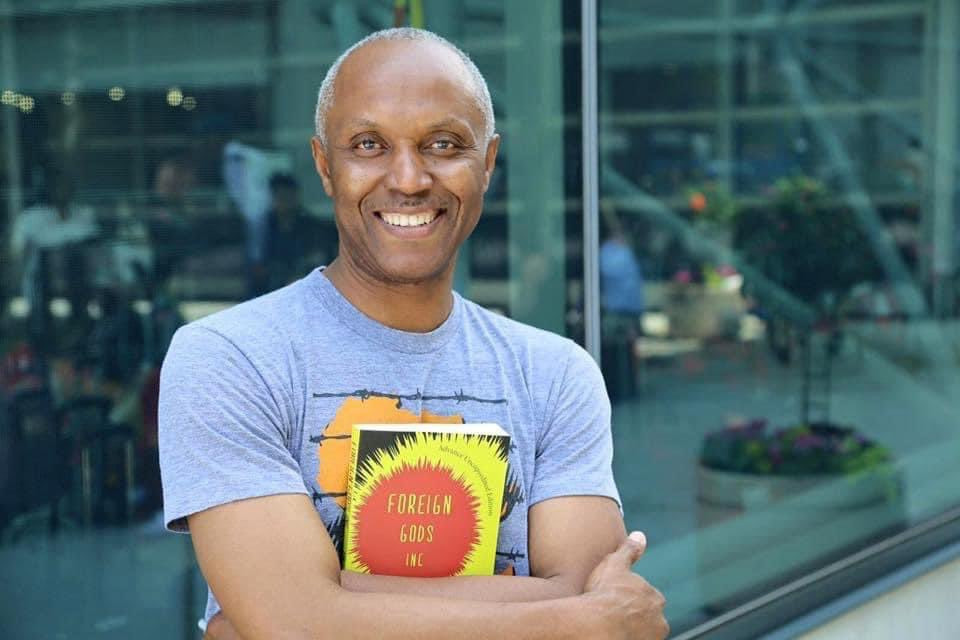
ABUJA, Nigeria — Fresh concerns over civic freedoms in Nigeria have emerged following reports that renowned author, academic and public intellectual, Prof. Okey Ndibe, was detained by operatives of the Department of State Services (DSS) shortly after arriving in the country from the United States.
The acclaimed Nigerian novelist and journalist was reportedly arrested upon arriving in Nigeria this morning at Murtala Muhammed International Airport, Ikeja, and is believed to remain in the custody of the secret police.
The claim was first made by writer and commentator Maxim Uzoatu, who alleged that Ndibe was being held by the State Security Service and that officials told those making inquiries that they were awaiting “orders from above” before releasing him.
As of the time of reporting, there had been no official confirmation from the DSS regarding the alleged detention, while the circumstances surrounding the incident remained unclear.
Nevertheless, the development has reignited debate over what rights advocates describe as a steadily shrinking civic space in Nigeria, where journalists, academics, activists and government critics increasingly complain of harassment, intimidation, arrests and prolonged detentions.
Yet the reported detention is drawing attention for another reason.
It comes at a time when hundreds of Nigerians remain in the custody of terrorists, bandits and insurgents across several states, with desperate families still pleading for government intervention months after their loved ones were abducted.
Across northern Nigeria, entire communities have been devastated by mass kidnappings and attacks that continue to expose the scale of the country’s security crisis.
On January 3, gunmen attacked Kasuwan Daji community in Niger State’s Borgu Local Government Area and abducted 57 residents.
On February 3, armed men invaded Woro village in Kaiama Local Government Area of Kwara State, reportedly killing about 200 people and abducting 176 others, many of whom remain in captivity.
A month later, Boko Haram fighters attacked Ngoshe town in Borno State’s Gwoza Local Government Area, abducting more than 400 residents and effectively laying siege to the community.
During the first week of March, gunmen stormed Kurfa Danya and Kurfan Magaji villages in Zamfara State’s Bukkuyum Local Government Area, kidnapping approximately 150 people, most of them women and children.
On March 19, Boko Haram fighters reportedly seized more than 100 displaced persons working near Kumbul Forest in Borno State, while three days later gunmen attacked churches in Kaduna State’s Kachia Local Government Area and abducted dozens of worshippers.
The list is long.
As long as the line of hungry almajirai waiting for food in a northern city.
And for the families involved, these are not statistics. They are mothers, fathers, children, neighbours and breadwinners whose lives remain suspended between hope and despair.
The Ngoshe hostage crisis has become one of the most troubling examples.
Federal authorities and security agencies are facing mounting pressure to rescue more than 400 residents, predominantly women, children and elderly persons, abducted when fighters from the Jama’atu Ahlis Sunna Lidda’awati wal-Jihad (JAS) faction of Boko Haram overran the community on March 3.
Weeks later, the insurgents released a disturbing video showing scores of captives pleading for government intervention while issuing a reported ₦5 billion ransom demand.
Local intelligence reports have since suggested that some female captives may have been selected for distribution among insurgent fighters, heightening fears about the fate of those still being held.
Although a handful of victims have reportedly escaped or been rescued, the overwhelming majority remain in captivity.
Civil society organisations, including Amnesty International Nigeria and local advocacy groups, have criticised what they describe as the slow pace of rescue efforts, while families continue to appeal directly to President Bola Tinubu and Borno State Governor Babagana Zulum to exhaust every available option to secure the release of their loved ones.
The crisis has also reached Nigeria’s classrooms, dealing a devastating blow to the country’s fragile Safe Schools initiative.
In Oyo State, armed bandits reportedly launched coordinated attacks on three schools in Oriire Local Government Area, abducting pupils and teachers from Baptist Nursery and Primary School, L.A. Primary School and Community Grammar School.
In neighbouring Borno State, heavily armed Boko Haram and ISWAP fighters reportedly raided schools in Askira-Uba Local Government Area and dragged dozens of children into the Sambisa forest corridor.
Among those reported abducted are toddlers barely old enough to understand the violence that has engulfed their lives.
The attacks triggered outrage across the country. Reports of horrific abuse in captivity, coupled with the reported killing of mathematics teacher Michael Oyedokun, deepened public anger and intensified calls for urgent action.
The response from the education sector has been unprecedented.
On June 1, the Oyo State chapter of the Nigeria Union of Teachers (NUT) commenced an indefinite strike, effectively shutting down public primary and secondary schools across the state.
Teachers, parents and civil society organisations have since marched through Ibadan demanding the immediate rescue of the abductees and warning that no classroom can be considered safe while pupils and educators remain in the hands of kidnappers.
The anguish was particularly evident during this year’s Children’s Day celebrations.
Across social media platforms and communities, many Nigerians insisted there was little cause for celebration while children remained in forests and insurgent camps.
Civil society groups in Borno have also raised concerns over what they perceive as unequal attention to different hostage crises, arguing that communities in remote parts of the North-East often receive far less national attention despite suffering equally devastating losses.
President Tinubu has maintained that the abducted children have not been abandoned, approving additional security deployments and directing intensified search-and-rescue operations.
But for families keeping vigil, official assurances offer little comfort while their children remain missing.
Against this backdrop, rights advocates say reports of security agencies targeting perceived critics of government inevitably raise difficult questions about priorities, resource allocation and the balance between national security and constitutional freedoms.
The issue is not whether security agencies possess the authority to investigate individuals where legitimate concerns arise. Rather, critics argue that at a moment when terrorists, kidnappers and insurgents continue to hold hundreds of Nigerians hostage, the overwhelming focus of the nation’s security machinery should be on rescuing vulnerable citizens and dismantling violent criminal networks.
Whether the reported detention of Prof. Ndibe ultimately proves justified or not, the episode has reignited a broader national conversation about governance, accountability and priorities in a country confronting one of the most serious security crises in its history.
For the parents of abducted children, the families of missing teachers, the relatives of worshippers taken from churches and the communities emptied by mass kidnappings, the question is painfully simple:
Who is fighting hardest to bring their loved ones home?
Until that question is answered, the debate over civic freedoms and state power is unlikely to fade.