By the Law & Society Magazine Editorial Board
As Sheikh Sani Yahaya Jingir’s religious rhetoric triggers outrage, the silence—and apparent amusement—of political leaders seated behind him raises a more disturbing question about what Nigeria’s politicians are willing to tolerate for political advantage
A religious cleric stood before a gathering of political leaders and spoke in the language of religious numbers, political loyalty and “infidels”. What followed was not an immediate rebuke from those occupying some of the most powerful political offices in Northern Nigeria, but images of leaders seated behind him, some appearing to smile as the controversial remarks were being delivered.
For many Nigerians who watched the footage, that background may have been more troubling than the speech itself.
The controversy surrounding Sheikh Sani Yahaya Jingir has therefore moved beyond what one Islamic scholar said at a political gathering. It has become a question about the political class that listened, the leaders who have remained largely silent and the price Nigeria may eventually pay when religious rhetoric becomes an acceptable instrument of electoral politics.
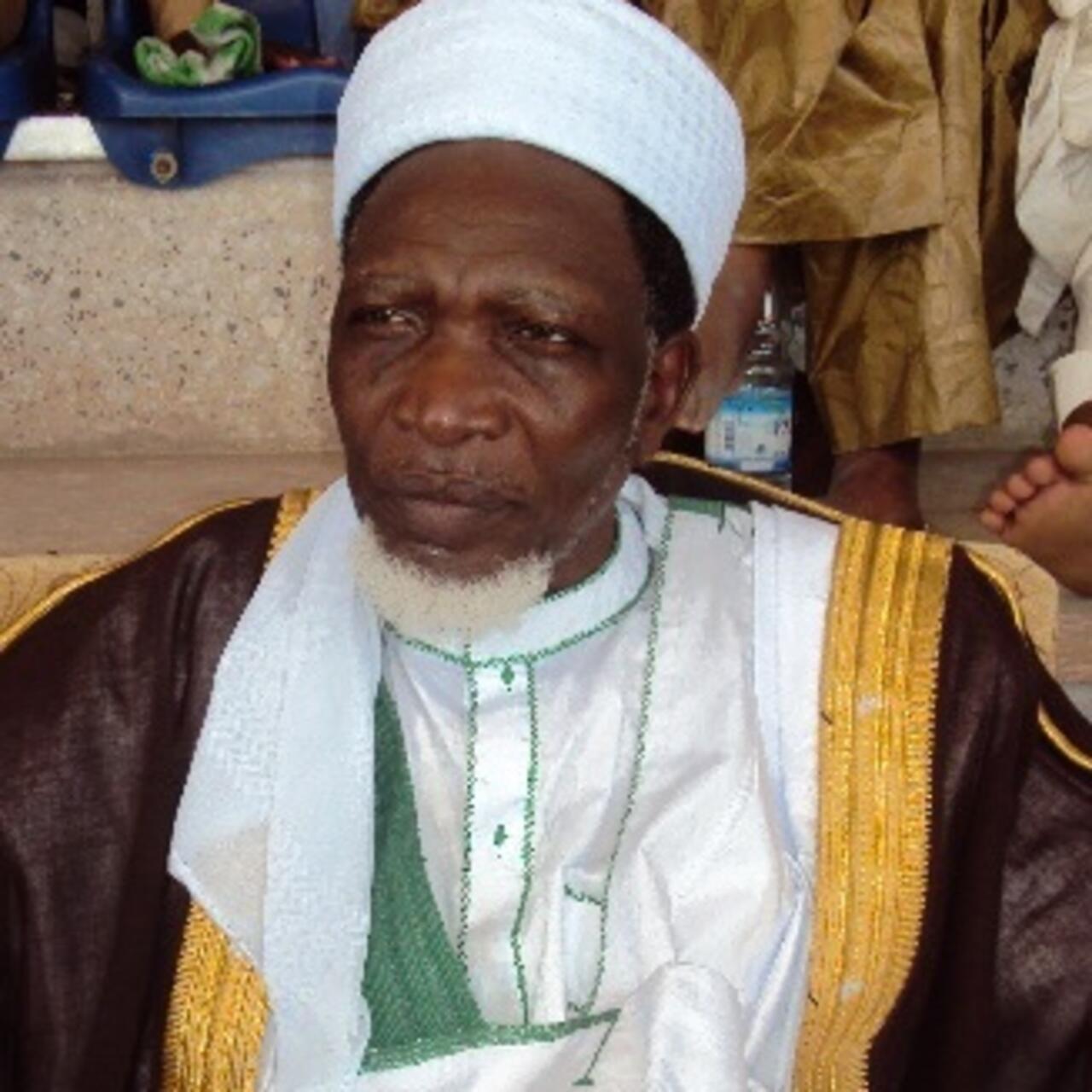
Jingir, the influential National Chairman of the Council of Ulama of Jama’atu Izalatil Bid’ah Wa’ikamatis Sunnah (JIBWIS), has long been an outspoken supporter of the Muslim-Muslim ticket. In February, he publicly reaffirmed his support for President Bola Tinubu and Vice-President Kashim Shettima, telling supporters that Muslims had voted for the ticket and should continue to support it.
But his latest intervention has generated a much sharper reaction because of the language used in making the political argument.
According to the account of the gathering published by a number of news websites, Jingir urged his audience to mobilise politically behind Muslim-Muslim candidates and referred to non-Muslims as “infidels”, while arguing from the numerical strength of Muslims. The gathering was attended by Kano State Governor Abba Kabir Yusuf, Katsina State Governor Dikko Umar Radda, Jigawa State Governor Umar Namadi and other political figures.
The question now being asked is not simply why a cleric would speak that way in a country where Muslims and Christians have lived together for generations. It is why politicians sitting within earshot of the remarks did not appear to find the language sufficiently disturbing to interrupt, correct or publicly distance themselves from it.
Malam Baba Yusuf, a policy strategist who subsequently discussed the incident on Arise Prime Time, said he deliberately watched the people in the background rather than concentrating only on Jingir.
“What I saw, for me, was worse than the statement of Jingir,” Yusuf said, describing the demeanour and facial expressions of the governors and other leaders seated behind the cleric. He said what troubled him further was that days had passed without a clear counter-position from political leaders.
His criticism goes to the heart of the controversy.
A politician can disagree privately with a cleric. A governor can also choose not to engage in an argument from the podium. But when a statement touches the religious identity of millions of citizens and is delivered in a political setting attended by elected officials, silence can easily be interpreted as acceptance, particularly when the cameras capture leaders appearing relaxed or amused.
Northern CAN Chairman, Rev. John Hayab, has similarly criticised the conduct of the governors, arguing that their reaction should have been different. The concern is not about denying Jingir the right to express a political or religious opinion; it is about whether elected officials have a responsibility to draw a line when rhetoric threatens the sense of belonging of fellow citizens.
Nigeria’s legal framework leaves little room for ambiguity about the constitutional status of religion. The Constitution neither establishes Islam nor Christianity as the religion of the Nigerian state and prohibits discrimination on religious grounds. Section 38 guarantees freedom of thought, conscience and religion, while the National Human Rights Commission describes freedom of religion and peaceful assembly as constitutionally protected rights.
The implication is profound: Nigeria may be deeply religious, but it is not the private property of one faith.
The danger in allowing political competition to become a contest between religious identities is that elections cease to be primarily about competence, accountability, security, jobs, education and the economy. Voters are instead invited to see one another first as Muslims and Christians, northerners and southerners, insiders and outsiders.
That is precisely the concern raised by Dr Emmanuel Nkanta of the Catholic Policy Research Institute and the Kukah Centre, who warned that the timing of Jingir’s intervention is particularly sensitive with the 2027 elections approaching. He said the message could be repeatedly translated, distorted and passed from one audience to another until the political argument becomes an emotional religious confrontation.
Prophet Isa El-Buba has also publicly condemned Jingir’s rhetoric, warning against the use of religious language while northern communities continue to battle poverty, banditry, drug abuse and criminality. His intervention was notable because it challenged the idea that religious mobilisation should take precedence over the everyday problems confronting ordinary citizens.
There is another reason the episode deserves more than the usual cycle of social-media outrage.
Jingir is not an obscure preacher speaking to a handful of followers. He is an influential Islamic scholar with a long public record of intervention in national affairs. His earlier positions have also attracted controversy. During the COVID-19 pandemic, for example, he was reported to have dismissed the virus as a Western plot designed to interfere with Islamic worship.
His influence makes the political setting in which his latest remarks were delivered particularly significant.
Religious leaders have enormous power to shape public opinion in Nigeria. Political leaders have enormous power to convert that influence into votes. When the two forces meet, the consequences can be considerable.
And that is why the governors’ reaction matters.
The country does not need politicians to police every sermon or silence every controversial religious figure. It does, however, need public officials who understand that their office belongs to every citizen—Muslim, Christian, traditionalist or non-believer.
President Tinubu’s administration has itself repeatedly affirmed Nigeria’s constitutional commitment to religious freedom. In November 2025, the Presidency said Nigeria was governed by constitutional guarantees of religious liberty and that the country opposed religious persecution. The President also said all Nigerians should be able to live, worship and pursue their aspirations in safety and dignity.
Those assurances now sit alongside an uncomfortable picture from a political gathering in Kano.
If a cleric speaks of fellow Nigerians in language that appears to reduce them to religious outsiders, what should a governor do?
Smile?
Remain silent?
Or stand up and say that whatever the political calculations of 2027, no Nigerian is a stranger in his own country?
That is the question the Jingir controversy has left behind.
And perhaps the most troubling image is not the man at the microphone, but the men behind him.