


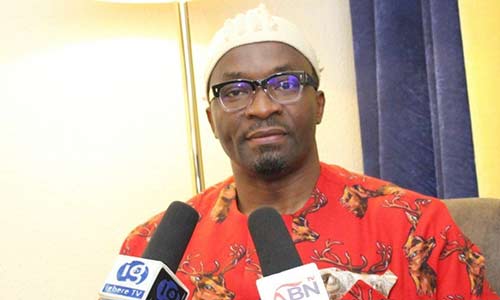
Hon. Benjamin Kalu, the Deputy Speaker of the House of Representatives, has renewed calls for the urgent passage of the Special Seats Bill.
Speaking at a stakeholder engagement on Friday in Abuja, Kalu stated that increasing women’s representation could raise Nigeria’s GDP by nine per cent.
He explained that the proposed legislation is not merely about inclusion but represents a strategic economic and democratic decision that Nigeria can no longer afford to delay.
“We are losing nine per cent growth by excluding women,” he said.
Kalu urged both lawmakers and citizens to view the bill as a national investment rather than a favour to women.
He called on Nigerians to rally behind the proposed Special Seats Bill, which seeks to reserve additional legislative seats for women at the national and state levels.
Describing it as a historic path to equity, innovation, and national prosperity, Kalu emphasized that Nigeria’s democracy cannot flourish without the full inclusion of women.
“We are not just pushing for fairness. This is a strategic investment in Nigeria’s development,” he added.
According to Kalu, the Special Seats Bill proposes 37 additional seats in the Senate—one per state and one for the FCT—and 37 more in the House of Representatives.
Additionally, the bill seeks to create 108 extra seats across State Houses of Assembly, with three seats allocated per state to accelerate gender parity in Nigeria’s legislature.
“In total, the bill aims to create 182 women-only legislative seats, without affecting existing constituencies or limiting women from contesting on regular platforms,” he said.
“We are not taking anyone’s seat. These are additional seats for women, and they will carry equal status, voting rights, and responsibilities.”
Kalu noted that the bill includes a sunset clause—an inbuilt review mechanism that would assess its impact after four electoral cycles (16 years) to determine whether to continue, adjust, or repeal the law.
He added that greater female representation leads to more gender-sensitive legislation, improved outcomes in education and health, and stronger democratic leadership.
Regarding funding, he said the financial impact would be minimal, estimated at just 0.072 per cent to 0.226 per cent of the national budget.
“But the cost of excluding women is enormous,” Kalu warned.
Ambassador Gautier Mignot, Head of the European Union Delegation to Nigeria and ECOWAS, described the bill as a Nigerian-led solution to a Nigerian problem.
“This is not a foreign agenda. Countries like Mexico, Rwanda, Kenya, and even Morocco and Egypt have made progress. Nigeria must not lag. Nigeria is meant to lead,” Mignot said.
Rep. Busayo Oluwole-Oke, the longest-serving federal lawmaker from Osun State, commended Kalu’s leadership.
“As one of the oldest in the parliament, I have seen constitutional amendments come and go. But this one is different. Kalu is leading a people-centred approach that includes our mothers, sisters, and daughters,” Oluwole-Oke said.
Rep. Bolaji Olagbaju, Deputy Speaker of the Ekiti State House of Assembly and Chairperson of the Nigerian Female State Assembly Members Forum, described the bill as “a turning point.”
“We are 48 strong women across the 36 states; five of us are deputy speakers. We stayed back in Abuja just for this moment. We are ready to push this bill from the grassroots,” Olagbaju said.
She also highlighted Ekiti State’s strong record in female leadership, including a woman serving as deputy governor, Secretary to the State Government (SSG), accountant-general, and 49 female special assistants.
“We want to clap now, but we will clap harder when this bill becomes law,” she said.
Dr. Maryam Keshinro, Permanent Secretary of the Federal Ministry of Women Affairs, expressed the Ministry’s full support.
“We will break our imbalances, deepen our democracy, and inspire future generations of women to lead with confidence. Let us see this not just as a bill, but as a turning point in the history of our great nation,” Keshinro said.
She also praised the First Lady, Senator Oluremi Tinubu, and President Bola Ahmed Tinubu for their commitment to gender sensitivity and political will.
Dr. Matthew Ayibakuro, Governance Advisor at the Foreign, Commonwealth & Development Office (FCDO), described the process as one of the most energising democratic initiatives in Nigeria.
He reaffirmed the support of the FCDO, European Union, and other development partners for Nigeria’s democratic progress.
Earlier, Mr. Clement Nwankwo, Executive Director of the Policy and Legal Advocacy Centre (PLAC), called the bill a critical reform designed to address deep-rooted governance gaps, particularly the under-representation of women.





Interesting development! The proposal for additional seats for women in the House of Reps could potentially bring about significant positive change. The argument that it would boost GDP and promote national prosperity is compelling. Increased representation often leads to more inclusive decision-making. Let’s see how this unfolds!