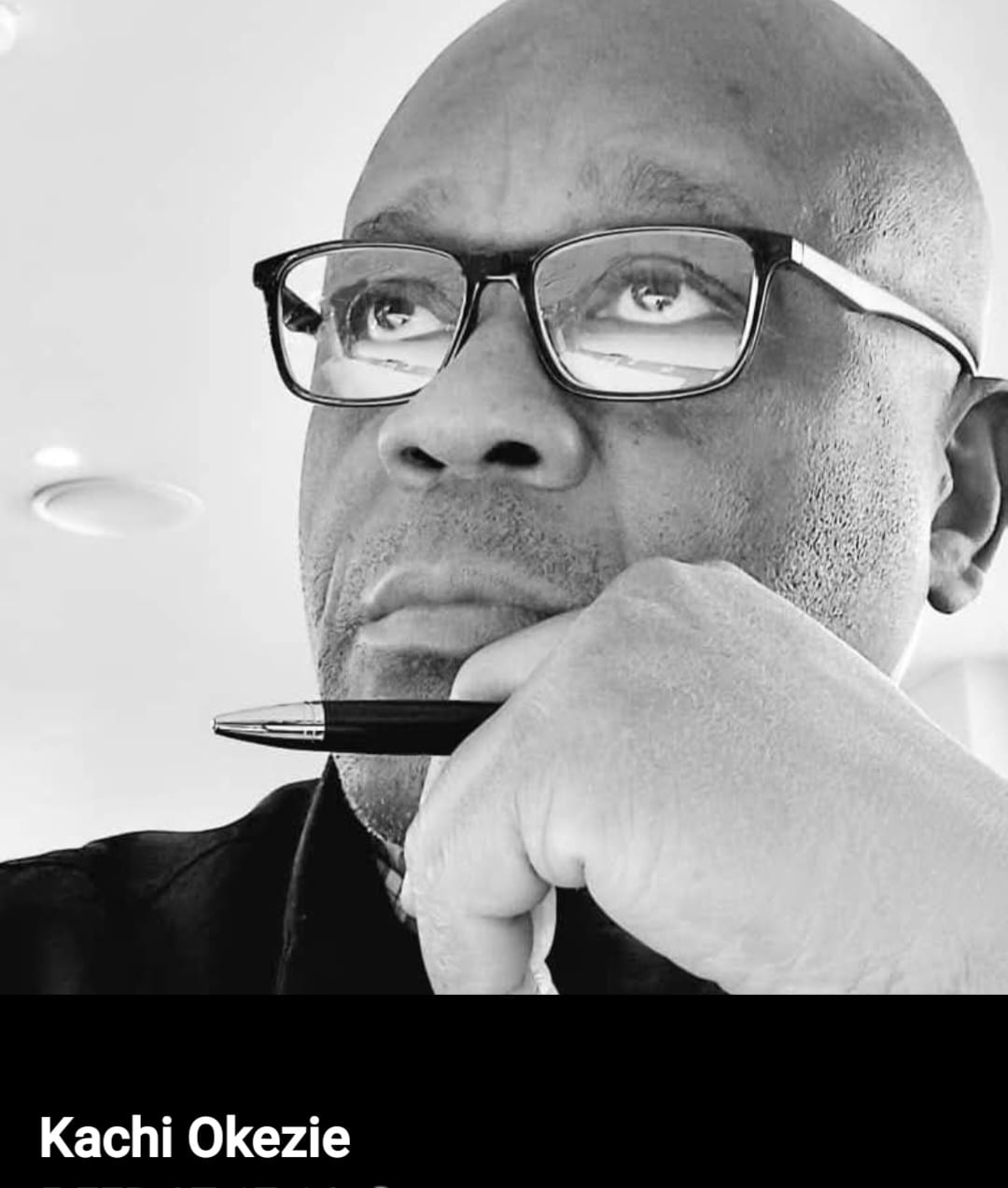
By Kachi Okezie, Esq.
The 66th Annual General Conference (AGC) of the Nigerian Bar Association (NBA) in Port Harcourt has sparked an intense public and professional debate following the decision to invite social media activist Martins Vincent Otse, popularly known as VeryDarkMan (VDM), as a panellist for a high-profile plenary session. His inclusion on a panel titled “Known Gun Men”, alongside senior security officials, legal practitioners and policy leaders, immediately became a source of controversy.
In my nearly four decades at the Bar, I have managed only three AGCs, none of which left me with positive memories of any sort, as each was dogged by one controversy or another. Having since found solace in the Section on Business Law (SBL) which has adequately met my Continuing Professional Development (CPD) and business networking needs, I have since kept well away from the AGC fray. I can therefore empathise with many learned colleagues who make substantial financial commitments to attend the NBA’s annual conference: registration fees, flights, accommodation and other expenses to perform the annual ritual. For some of these colleagues, the presence of a highly controversial internet personality sharing a platform with the Inspector-General of Police and the Director-General of the State Security Service (SSS) was viewed as a troubling departure from the professional standards traditionally associated with the Bar.
Critics argued that the decision to include VDM on this particular panel risked diminishing the intellectual character of a forum that ought to be anchored in legal scholarship, evidence and policy. In their view, a discourse intended to shape national policy had been turned into a spectacle in which publicity, controversy and social-media influence appeared to compete with professional expertise and experience.
At the heart of the reaction is a strong sense of professional identity. Lawyers spend years studying jurisprudence, constitutional principles, evidence, procedure and the administration of justice. They are trained to distinguish allegation from proof, opinion from evidence, and rhetoric from legally sustainable argument. Consequently, when a social media influencer whose public persona is built largely around provocative commentary and allegations, many of which may not have undergone the scrutiny expected within formal legal processes, is placed alongside heads of major state institutions, the distinction between rigorous professional analysis and unfiltered digital commentary can become easily blurred.
Some members of the profession have expressed embarrassment and questioned whether members’ financial contributions, including practising fees and other dues, were being used to promote programming driven more by publicity than by intellectual substance. The controversy also recalled previous concerns about the invitation of viral entertainers and social-media personalities to professional events.
Beneath these complaints lies a more fundamental concern: institutional endorsement. Giving someone a prestigious platform can be interpreted as conferring legitimacy on the methods and claims associated with that individual. Where those methods involve bypassing established procedures, making sweeping allegations or relying on public pressure rather than verifiable evidence, the professional consequences deserve careful consideration.
Yet, on closer examination, there is the another side of the argument. The NBA’s decision cannot simply be dismissed as an abandonment of professional standards or an indulgence in sensationalism. Nigeria’s security crisis is too serious and too pervasive to be discussed exclusively within the confines of courtrooms, conference halls and academic literature.
Insecurity is no longer an abstract subject for legal scholars. It affects judges, lawyers, law-enforcement officers, communities and ordinary citizens on a daily basis. It shapes questions of constitutional rights, due process, policing, accountability and access to justice. Against that backdrop, VDM’s contribution was arguably intended not as a conventional legal lecture, but as a representation of experiences encountered at the grassroots and in communities where institutional responses to insecurity may be very different from what appears in official reports.
Those defending his inclusion could therefore argue that the legal profession risks becoming an echo chamber if it listens only to lawyers, academics, senior civil servants and institutional leaders. There is value in hearing from people who interact directly with victims, communities and citizens who believe that public institutions have failed them. Such voices may lack formal legal training, but they can illuminate realities that professional discourse sometimes overlooks.
The challenge, therefore, is not necessarily whether an unconventional voice should be heard. The more important question is how that voice should be situated within a professional forum. The confrontations that followed, particularly the sharp exchanges between security officials and the activist over serious allegations of corruption and institutional misconduct, exposed both the potential value and the considerable risks of bringing radically different forms of discourse together.
The problem may not have been the decision to hear from a grassroots activist. Rather, it may have been the framing; the manner in which the engagement was structured.
An activist, a practising lawyer, a senior military officer, a police chief and a senior civil servant do not necessarily approach a subject using the same methodology. Each possesses a different form of expertise and a different relationship with evidence, institutions and public accountability. Presenting them as though they occupy identical professional positions can create unrealistic expectations and unnecessary confrontation.
A responsible professional conference can accommodate different perspectives without pretending that all perspectives carry the same evidential or methodological weight. If serious allegations are made against institutions or individuals, particularly in a forum associated with the legal profession, there should be mechanisms for testing, contextualising and responding to such claims. Without those safeguards, a potentially valuable conversation can quickly descend into accusation, denial and confrontation rather than producing meaningful recommendations for policy or institutional reform.
The lesson should therefore not be that the Bar must insulate itself from uncomfortable or unconventional voices. Rather, it should be that inclusion must be accompanied by intellectual discipline.
That said, one must consider the broader context in which this debate is taking place and ask: Is this really the debate lawyers should be having at this time? On deeper reflection, it would appear that there is a more important question for the Nigerian legal profession to confront: the extraordinary pace at which artificial intelligence is entering the legal domain.
AI is rapidly transforming how information is generated, analysed and communicated. Its implications for the legal profession extend far beyond the use of chatbots to draft letters or summarise documents. Artificial intelligence has the potential to affect legal research, contract analysis, litigation strategy, evidence assessment, document review, case management and access to legal information. Its impact will inevitably extend into the broader administration of justice.
This raises profound questions that deserve sustained attention at the highest levels of the Bar.
What happens when AI-assisted systems influence decisions affecting people’s liberty, property, reputation or fundamental rights? How should courts and public institutions deal with algorithmically generated information? Who bears responsibility when an AI system produces inaccurate or discriminatory conclusions? What standards should govern the use of AI-generated evidence? How can confidentiality and legal professional privilege be protected when lawyers use artificial intelligence tools to process sensitive client information?
There are equally serious questions concerning the protection of fundamental rights. Artificial intelligence can amplify surveillance, facilitate profiling, reproduce discriminatory biases and make decisions about individuals without sufficient transparency. If an algorithm contributes to determining whether a person receives a public service, is subjected to enhanced scrutiny or becomes a target of law-enforcement attention, what mechanisms exist to challenge that decision?
The implications for governance and regulation are just as significant. Nigeria will need effective frameworks for regulating AI while avoiding unnecessary restrictions that could stifle creativity and innovation. Public institutions themselves will increasingly become users of AI, raising questions about accountability, procurement, transparency, data protection, cybersecurity and institutional oversight.
These are quintessentially legal questions. They concern rights, responsibilities, evidence, accountability, regulation and the limits of state power. They demand the attention of lawyers not merely as observers, but as architects of the rules that will govern the technology.
The legal profession should therefore be asking whether Nigeria is adequately prepared for an era in which machines increasingly participate in activities once performed exclusively by human beings, including replacing physical courts and tribunals with virtual ones. The question is not whether AI will permeate the legal profession. It already has. The real question is whether the law will shape its development or simply react to its consequences after they have occurred.
The controversy in Port Harcourt nevertheless offers the NBA an opportunity to rethink how it designs its public conversations. Professional excellence and lived experience should not be treated as mutually exclusive. There is room at a major national conference for judges, lawyers, academics, security officials, technologists, civil-society actors, journalists, community representatives and even controversial public figures. What matters is that each participant’s role, expertise and evidential basis are properly identified.
Future panels should therefore distinguish clearly between policy experts, institutional decision-makers, legal scholars, practitioners, researchers and “citizen witnesses”. Such categorisation does not diminish the contribution of any participant. Instead, it allows the audience to understand the nature and limits of the contribution being made.
A grassroots activist may provide invaluable testimony about what citizens experience. A police chief can explain institutional policy and operational constraints. A lawyer can analyse constitutional and statutory implications of policies and measures. A technology expert can explain the operation of an algorithm. An academic can place the issue within a broader body of research. The value of the discussion lies in bringing these perspectives together without confusing one form of expertise with another.
The NBA should also be cautious about symbolic gestures that may be interpreted as premature endorsement. Awards, honours and other forms of institutional recognition should be considered independently from the decision to provide a platform for discussion.
Ultimately, the NBA must protect the intellectual and professional standards that give the legal profession its authority while remaining sufficiently open to the realities experienced outside the courtroom.
The VDM controversy will eventually pass. The larger challenges confronting the legal profession will not. Among them is the emergence of artificial intelligence and its rapidly expanding influence over law, justice and public administration. That is a conversation the Bar cannot afford to postpone.
The central issue, therefore, should not simply be who deserves a place on the stage. It should be what questions are important enough for the legal profession to confront before events overtake it.
If the 66th AGC is to provide a lasting lesson, perhaps it is this: the Bar should neither surrender its intellectual standards to popular culture nor retreat into professional isolation. It should create forums capable of hearing difficult voices while maintaining rigorous standards of evidence and analysis and, above all, devote serious attention to the emerging challenges that will determine the future of justice itself.
The views expressed by contributors are strictly personal and not of Law & Society Magazine.