For nearly three decades, Anthony “Tony” Forson Jr. made his reputation persuading judges. Now, as he seeks a seat on Ghana’s Supreme Court, the country’s lawmakers wanted to know whether one of its most accomplished advocates could leave advocacy behind and embrace the harder discipline of judging.
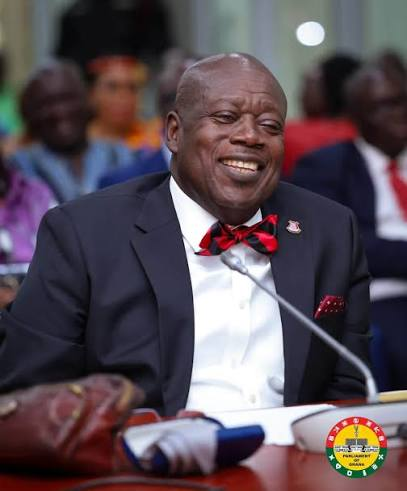
ACCRA — Every judicial nomination reveals something about a country’s courts. Some expose ideological fault lines, others become contests over politics or constitutional interpretation. Anthony “Tony” Forson Jr.’s appearance before Ghana’s Appointments Committee offered something different: a window into how one of the country’s best-known commercial lawyers believes experience, ethics and technology should shape the work of a Supreme Court justice.
Forson, a former President of the Ghana Bar Association (GBA), appeared before Parliament following his nomination to Ghana’s highest court, becoming one of the relatively few nominees in recent years to make the journey directly from private legal practice rather than through the appellate judiciary.
That professional background dominated much of the day’s proceedings.
For nearly three decades, Forson built a career representing corporate clients, financial institutions and private litigants. The committee wanted to know whether those years in practice would become an asset on the bench or a source of unconscious bias.
His answer was striking, not because he denied the influence of experience, but because he acknowledged it.
“Unconsciously, they will influence my decisions—that is human nature, because that has been my experience for the past 29 years. My experience with commercial practice is what has shaped my worldview. But as to whether or not I’ll have a bias towards them, my professional responsibilities will not allow that… The law is the law.”
It was an unusually candid reflection on judicial decision-making.
Judges do not approach disputes as blank slates. Every judge arrives on the bench with a professional history that inevitably shapes the way legal problems are understood. Forson argued, however, that experience should inform legal reasoning without compromising impartiality.
Where a case involves a client previously represented by him or his former law firm, he said, recusal would not be optional.
“I will excuse myself,” he told the committee, drawing a clear ethical line between prior professional relationships and judicial responsibility.
Beyond the courtroom
The committee’s questioning ranged well beyond ethics.
Members turned to one of the most persistent challenges confronting courts across Africa: delay.
Forson’s answer reflected his experience modernising the Ghana Bar Association during his tenure as its president.
Technology, he argued, is no longer a luxury for judicial administration but an operational necessity.
He advocated wider deployment of digital case-management systems, describing information and communications technology as one of the judiciary’s strongest tools for reducing case backlogs and improving efficiency.
He also suggested that the courts should consider afternoon sittings to increase judicial productivity, acknowledging that such a proposal would likely encounter resistance within sections of the legal profession accustomed to traditional court schedules.
The suggestion reflects a wider debate taking place across Commonwealth jurisdictions, where courts continue to grapple with growing caseloads, limited judicial resources and increasing public frustration over delays in civil and criminal proceedings.
Artificial intelligence belongs in the courtroom—but not on the Bench
The discussion inevitably turned to artificial intelligence.
As courts and law firms increasingly experiment with AI-assisted legal research, committee members sought Forson’s views on whether technology could fundamentally alter legal practice.
His response was measured rather than enthusiastic.
Artificial intelligence, he said, is a valuable research assistant capable of improving efficiency, but it remains dependent on the quality of the information supplied to it and the judgment of the lawyer using it.
“AI is an aid. It can never replace human effort because it is fed by human beings.”
The observation echoes a growing consensus within the legal profession.
Around the world, judges and bar associations have welcomed AI as a tool capable of accelerating research and document review while warning that lawyers remain professionally responsible for every authority they cite and every argument they advance. Hallucinated authorities and fabricated citations generated by AI systems have already prompted sanctions in several jurisdictions, reinforcing the view that technology can support legal analysis but cannot replace professional judgment.
The size of the Supreme Court
The committee also explored broader constitutional questions.
One of them concerned periodic calls to place a numerical limit on the number of justices who may serve on Ghana’s Supreme Court.
Forson opposed the proposal.
His argument was rooted less in institutional preference than in workload.
The Supreme Court exercises extensive constitutional, supervisory and appellate jurisdiction. Until those responsibilities are significantly reduced, he argued, imposing an arbitrary cap on the court’s membership could undermine its ability to dispose of cases efficiently.
The position reflects an enduring debate within constitutional democracies.
Supporters of fixed court sizes often argue that smaller courts promote consistency and institutional cohesion. Opponents contend that the size of an apex court should reflect the demands placed upon it rather than an abstract numerical ideal.
Local government and constitutional restraint
Committee members also invited Forson to express his views on local government reform, particularly proposals to elect Metropolitan, Municipal and District Chief Executives.
He resisted the temptation to prescribe policy from the witness chair.
While acknowledging that local politics often assumes a partisan character in practice, he maintained that the existing constitutional arrangement remains the governing framework unless Parliament decides otherwise.
The answer reflected a recurring theme throughout the vetting.
Forson consistently distinguished between his personal observations as a lawyer and the constitutional responsibilities he would assume as a judge.
A lawyer’s approach to judging
The day’s exchanges revealed less about how Forson might decide particular cases than about how he understands the judicial role itself.
He repeatedly returned to professional discipline, constitutional fidelity and institutional responsibility rather than personal conviction.
For lawyers following the proceedings, perhaps the most revealing moment came when he accepted that professional experience inevitably shapes the way judges see legal questions while insisting that fidelity to the law must ultimately prevail over personal familiarity, commercial background or former professional associations.
It was an answer grounded in realism rather than idealism.
No judge arrives on the bench without experience.
The constitutional challenge is ensuring that experience becomes a source of wisdom rather than preference.
Forson’s nomination now moves to the next stage of Ghana’s constitutional appointment process.
Whether confirmed or not, his appearance before Parliament offered a thoughtful contribution to a question that extends well beyond Ghana: how should experienced advocates make the transition from representing clients to dispensing justice?
For a profession that increasingly finds itself balancing tradition against technological change, judicial independence against public expectation and efficiency against fairness, the discussion could hardly have been more timely.