Nigeria’s first elected female NBA president inherits an association bruised by a contentious election and promises to make membership, professional welfare and institutional unity the measure of her tenure.
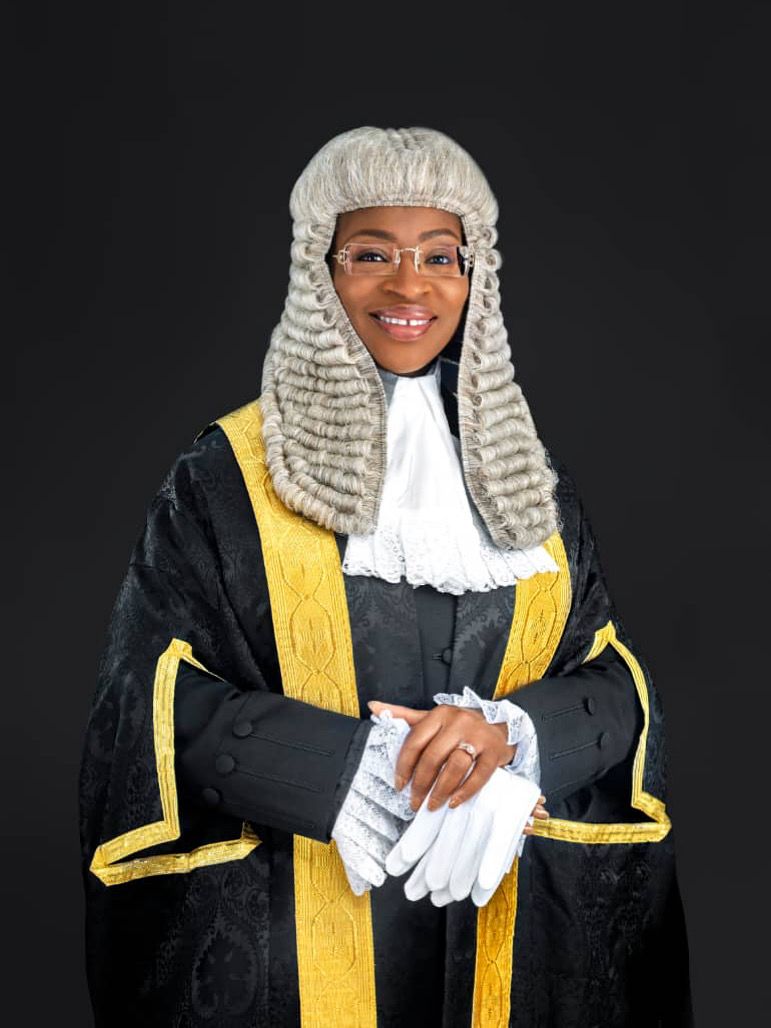
PORT HARCOURT — For nearly seven decades, the Nigerian Bar Association has been one of the country’s most influential professional institutions, speaking on constitutional government, judicial independence and the rule of law. On Friday, the Association entered another chapter in its history when Oyinkansola Badejo-Okusanya, SAN, took the oath of office as its 33rd President.
She did not spend much of her inaugural address celebrating the historic nature of her election.
Instead, Badejo-Okusanya spoke about responsibility, inclusion and the lawyers who had never quite found a place within the corridors of the Association’s power. She described her election as a door “held open for everyone whose competence may once have been overlooked.”
The words carried significance beyond gender.
Badejo-Okusanya, who defeated fellow Senior Advocates Lateef Akangbe and Olumuyiwa Akinboro in the July presidential election, assumes office after one of the most closely contested NBA elections in recent years. She secured 12,317 votes, or 47.18 per cent of the 26,106 valid votes cast. Akangbe received 7,934 votes, while Akinboro polled 5,855.
Her victory made her the first woman elected directly by NBA members to lead the Association and only the second woman to hold the office, after Priscilla Kuye.
It also handed her an Association carrying unresolved questions about its electoral system, the cost of internal politics and the growing economic pressures on lawyers.
The ceremony in Port Harcourt therefore marked more than a change of leadership. It marked the beginning of an administration that will have to turn an emphatic electoral victory into an inclusive presidency.
A presidency born out of a bruising contest
The election produced a clear winner, but the contest did not end with the announcement of the result.
Questions were raised about the electronic voting system, technical problems encountered during the poll and the transparency of the electoral process. Legal action was also initiated in an attempt to stop the inauguration and challenge aspects of the election.
Those disputes have left the new President with an obvious responsibility: bringing supporters of the three candidates back under one institutional roof.
Badejo-Okusanya addressed that question directly in her inaugural speech.
“I will be President not only of those who voted for me but of every member of the Nigerian Bar Association,” she said. “The Bar remains my constituency.”
She went further, declaring that there were “no victims and no vanquished” in the Association, but one Bar, one profession and a shared responsibility to leave it stronger.
It is a generous formulation, particularly after an election in which the candidates fought hard for the votes of the same lawyers they must now work alongside.
The practical question will be how that promise translates into appointments, policy and access to the administration for lawyers who backed her opponents.
The politics of money
One of the most revealing debates at the NBA’s Annual General Meeting came not from the inauguration but from the discussion of how much it now costs to win the presidency.
Rotimi Iseoluwa Oyedepo, SAN, told delegates that the financial demands of an NBA presidential campaign had become so high that a candidate could require as much as ₦1 billion to mount a serious contest.
His argument was uncomfortable for an organisation that routinely criticises the influence of money on Nigerian politics. If the Bar expects politicians to answer questions about campaign spending, he argued, it should be prepared to examine the same culture within its own electoral system.
Outgoing President Afam Osigwe, SAN, acknowledged that election expenses had become excessive but pointed out that members themselves had rejected constitutional proposals intended to curb campaign spending.
The exchange exposed an issue that the new administration cannot easily avoid.
The NBA’s elections have become major political contests, complete with extensive travel, meetings, social events and elaborate mobilisation. That environment can favour candidates with substantial financial resources and make the presidency less accessible to otherwise capable lawyers without comparable backing.
Electoral reform is therefore likely to remain part of the Association’s internal conversation throughout Badejo-Okusanya’s tenure.
What does “members first” mean?
Badejo-Okusanya has placed “members first, always” at the heart of her administration.
For many lawyers, that slogan will be judged against ordinary professional realities rather than speeches from the national secretariat.
Young lawyers face particularly difficult conditions. Building a practice can be expensive, opportunities are unevenly distributed and income is often uncertain during the early years of practice. Even established practitioners contend with rising operating costs and the wider economic pressures affecting clients and businesses.
Badejo-Okusanya has promised to address the welfare of lawyers, particularly younger members, and has spoken of building an NBA in which lawyers can “earn better, live better, and practise better.”
That agenda places professional welfare alongside the Association’s traditional role as a defender of the rule of law.
It is a sensible shift.
The NBA’s national interventions matter, but the Association’s relationship with its members is ultimately shaped by what lawyers experience in their daily practice: access to opportunities, continuing professional development, technology, welfare programmes and the quality of services provided by the organisation for which they pay annual dues.
The significance of the first woman elected
There is no escaping the historic significance of Badejo-Okusanya’s election.
Priscilla Kuye became the first woman to serve as NBA President more than three decades ago. Badejo-Okusanya has now broken a different barrier by winning the office through a direct vote of the Association’s members.
But she has been careful not to present the achievement as belonging exclusively to women.
Her reference to a door being held open for people whose competence had previously been overlooked suggests a broader idea of representation. It encompasses lawyers who may have talent but lack the traditional networks through which influence within professional organisations has often been built.
That promise will have to be visible in the composition of her administration and the opportunities available to members outside established centres of influence.
The symbolism of her election is powerful. Its lasting value will depend on what it makes possible for those who follow.
A Bar that must still speak with authority
Badejo-Okusanya also inherits an institution whose influence extends far beyond the legal profession.
The NBA remains an important voice whenever questions of constitutional rights, judicial independence, access to justice or the conduct of public institutions arise. Its statements can shape public debate, influence policy and, at times, put significant pressure on government.
That role carries its own demands.
The Association’s criticism of public institutions is most persuasive when its own processes withstand scrutiny. Its advocacy for accountability also carries greater weight when members believe that the same values are being applied internally.
This is particularly important after an election that generated arguments about voting technology and transparency.
The new administration therefore has an opportunity to settle those questions through reforms that are credible, transparent and acceptable across the Association’s various constituencies.
Turning campaign promises into policy
One of the more constructive signals from Badejo-Okusanya has been her willingness to consider useful ideas advanced by her opponents during the election.
She has indicated that she studied their manifestos and would adopt proposals that could benefit the profession, while giving credit to their authors.
That approach could help move the NBA away from the familiar winner-takes-all character of internal elections.
Akangbe and Akinboro did not disappear when the ballots were counted. They represent lawyers who supported different visions for the Association, and some of the ideas presented during their campaigns may prove valuable to the new administration.
A presidency confident enough to borrow a good idea from an opponent is less likely to be trapped by the politics of victory.
The work after the photographs
The inauguration supplied the historic photographs: the oath of office, the transfer of leadership from Osigwe and the arrival of the first woman elected by NBA members to occupy the presidency.
The photographs will endure.
The more consequential record will be written in the years that follow.
Badejo-Okusanya must now govern an Association that contains sharply different professional interests and political loyalties. She must keep the Bar’s voice strong on national questions while responding to lawyers who want tangible improvements in their professional lives. She must address the concerns exposed by the election without allowing electoral disputes to define her administration.
Most importantly, she must make the idea of “one Bar” more than an inaugural slogan.
Her election has already changed the picture at the top of the Association.
What follows will determine whether it changes the institution itself.
Badejo-Okusanya has described her victory as a door held open for those whose competence may once have been overlooked.
She now has two years to decide how wide that door becomes.
Watch a review of this election on YouTube, which offers valuable legal commentary on Oyinkansola Badejo-Okusanya’s historic victory and the future of the Nigerian Bar Association.