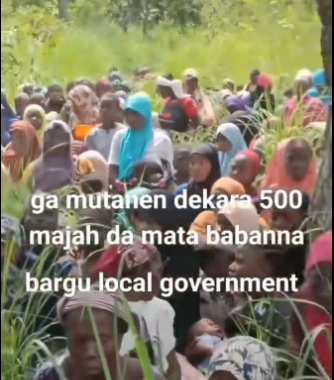
State says abductors have made no contact with families as authorities struggle to determine how many worshippers were taken in a coordinated assault linked to suspected Lakurawa and Boko Haram fighters.
Nearly a week after gunmen stormed a mosque during Friday prayers and abducted scores of worshippers in Niger State’s Borgu Local Government Area, the silence from the terrorists has become as unsettling as the attack itself.
The Niger State Government says the abductors have neither contacted the families nor opened any line of communication, even as security agencies continue efforts to trace the victims and determine the full scale of one of the state’s most disturbing mass abductions in recent months.
The assault, which unfolded on August 21, was not confined to a single village. Armed men struck at least three communities in Borgu, including Gidan-Zana and Kpenya, where they invaded the Kpenya Mosque during Juma’at prayers and whisked away worshippers before disappearing into the surrounding forests.
Speaking on Channels Television’s The Morning Brief on Thursday, Niger State Commissioner for Information, Obed Nuhu, said the government had yet to hear from the kidnappers.
“No such (contact with the kidnappers) has happened. We have not had any interactions with them, but the suspicion is the Lakurawas, as they call themselves, and the Boko Haram. It happened in three different locations around that kingdom,” he said.
The absence of any communication has deepened the anxiety of families whose relatives disappeared during the coordinated attacks.
Unlike many high-profile kidnapping cases in which abductors quickly establish contact to negotiate ransom, the Borgu attack has been marked by complete silence, leaving relatives with little information about the condition or whereabouts of the victims.
Government yet to verify number of abductees
Another troubling aspect of the attack is that authorities are still unable to state exactly how many people were abducted.
Although community leaders and local residents have circulated varying figures, the Niger State Government says it will not speculate until all reports have been verified.
Nuhu said officials were still gathering information from the affected communities before releasing an official figure.
That caution reflects the confusion that often follows large-scale attacks in remote communities, where survivors flee into surrounding forests, communication is poor and security agencies require time to reconcile conflicting reports.
Initial police reports confirmed that worshippers were abducted during the mosque attack but stopped short of giving a precise number. Subsequent accounts from local officials suggested the number could be significantly higher, though the government has yet to authenticate those claims.
A coordinated assault
The government believes the attack bears the hallmarks of a coordinated operation rather than an isolated kidnapping.
According to Nuhu, the assailants struck three different locations across the Borgu axis before retreating, prompting suspicions that the attackers were linked to Lakurawa militants working alongside Boko Haram elements.
While investigations are continuing, the suggestion underscores growing concern among security officials that insurgent groups are expanding their operational footprint beyond their traditional strongholds and exploiting the vast forests straddling Niger State and neighbouring regions.
The attack has also reinforced fears that places of worship, once regarded as sanctuaries even in conflict-prone areas, are increasingly becoming targets for heavily armed groups.
A familiar pattern
The Borgu abductions fit a pattern that has become disturbingly familiar across parts of northern Nigeria.
Schools, highways, farming communities and now places of worship have all become hunting grounds for armed groups seeking hostages.
For security analysts, the significance of the Borgu attack extends beyond the fate of those missing.
It demonstrates the ability of heavily armed groups to move across multiple communities, strike civilian targets in broad daylight and withdraw with captives before security forces can intercept them.
The result is more than another kidnapping.
It is a reminder that in parts of Nigeria’s rural hinterland, terrorists are increasingly dictating where citizens can travel, farm, learn—and now, even pray.
As families continue to wait for news of their loved ones, the silence from the abductors has only intensified the uncertainty surrounding an attack that has once again exposed the growing reach of terror networks operating across Nigeria’s vast forest corridors.