Home Blog Page 92

One Love: Ramadan and Lent

By Jeff Godwin Doki Ph.D

The late Alhaji Yusuf Maitaima Sule (1929-2017) (also known as Dan Masani of Kano) once said to my hearing that ‘I am a Muslim by faith, a Christian at heart, but love is my religion’. As one of Nigeria’s foremost politicians, statesman and diplomat, his words conferred respect on the two dominant religions namely: Islam and Christianity. As a country, Nigeria is an enigmatic mix of the beast which repels and the beauty which keeps perpetually attracting. Nigeria is a beautiful ,and at the same time an ugly, country. Lamentably, its beauty and ugliness are usually perpetrated by religion and tribe.

As a matter of fact, nothing in Nigeria’s political history captures her problem of national integration more graphically than the chequered fortune of the two words: religion and tribe. In Nigeria, tribe and religion have been used especially by the political class as instruments of mobilization especially during elections. Nigerian citizens know the power of religion. Nigerians know that religion has a double-edged sword because of its ability to trigger conflict as well as to serve as an instrument for peace. But, only this year a huge coincidence has occurred as both Nigerian Muslims and Christians began fasting on the same day. Now, what is the significance of this coincidence? Does Almighty God or Allah has a purpose for such a coincidence? How religious are Nigerian citizens? What lessons can Nigerians learn from this coincidence? Many questions could be asked but only a few answers could be gotten.

To the main point. Islam and Christianity are undeniably the world’s most popular religions. In a similar manner, they all form part of identity like regionalism and ethnicity. In Nigeria, Islam arrived before Christianity and spread quickly to different parts of the country especially in 1804 during the jihad of Usman Dan Fodio, a Fulani cleric from Sokoto. Christianity, on the other hand, arrived West Africa through a combination of many factors prominent among them the abolition of the Atlantic Slave trade, and the desire to promote conditions necessary for legitimate trade. Generally speaking, the missionaries made a lot of converts, they also established schools that taught literacy and practical skills. It is left to be said that Christian missionary activity arrived Northern Nigeria during the amalgamation of the north and south protectorate in 1900. But from very early times both religions, though foreign, had certain values in common namely: trade, education, conversion and, over and above all, the propagation of love and peace.

Let us turn to the doctrines and observances of these two Religions. Common to both Christianity and Islam is fasting also known as Lent and Ramadan which is a spiritual practice. Both religions use fasting for spiritual growth and self-reflection. Both religions use fasting as a period to seek a closer connection with God. In both faiths fasting involves abstaining from food and drinks. Fasting in both faiths also involves alms-giving and most fundamentally, fasting is a period to share love and peace. In a nutshell, both faiths are erected on the foundation of love. So, to the question: why the hate among these two groups? Again, let me provide some insights about peace and love.

The first similarity is the treatment of strangers, aliens or non-believers. The Christian holy Book, the Bible, recognizes the need for mutual co-existence, togetherness and how to treat non-Christians. Moses gave very clear guidelines about how to treat aliens in the books of Exodus and Leviticus:
The alien living with you must be treated as one of your native- born. Love him as yourself, for you were aliens in Egypt. I am the Lord your God (Exodus 22:21).Similarly, the holy Book of Islam, the Quran, also recognizes this kind of unity and the spirit of togetherness. Oh mankind! We created you from a single (pair) of male and female and made you people (or nations) and tribes that you may know one another. (Quran Surah Al- Hujurat 49:13).
Apart from this Quranic verse one of the other core values that underpins the Islamic conception of peace is known as Tawhid. It seeks primarily to emphasize the principle of unity of God and all beings.

The second principle common to these two religions is that of forgiveness. Forgiveness is of primary centrality in both holy books. It is also a core value and tenet of both religious. The Quran for example, calls on all Muslims to forgive in order to reconcile. Very many verses in the Quran indicate that there is a clearly articulated preference in Islam for non-violence over violence and for forgiveness (afu) over retribution. But whoever forgives and thereby brings about a reestablishment of harmony, his reward is with God and God loves not the wrong doer. (Quran 42:37).

The whole of the New Testament and for the most part, the teachings of Jesus Christ emphasize the idea of forgiveness and no verse starkly brings out this idea more than the one known as turn the other cheek and the golden rule found in the Gospel of Luke:If someone strikes you on one cheek, turn to him the other also. If someone takes you cloak, do not stop him from taking your tunic… do to others as you would have them do to you. (Luke 6: 27-30).Most importantly,, the principle of forgiveness finds memorable expression in the encounter between Peter and Jesus as rendered in the gospel of Matthew: Then peter came to Jesus and asked “Lord how many times shall I forgive my brother when he sins against me? Up to seven times?” Jesus answered, “ I tell you, not seven times but seventy-seven times” (Matthew 18:21-22.).

Besides, Islam and Christianity are all united on the issue of Compassion and mercy. As a matter of fact, the concepts of compassion and mercy occupy a prominent place in both Christianity and Islam. One of the fundamental Christian principles is to assist the weak, helpless and vulnerable in society. In this regard, it is instructive to note that the first actions of the first church outside of Jewish territory was to send aid to the people in Jerusalem who were suffering from a famine. This same principle finds adequate expression in the Book of James.The Religion that God our father accepts as pure and faultless is this: to look after orphans and widows in their distress and to keep oneself from being polluted by the world (James 1:27).

This trend runs through in the book of John who is reputed to have written the last of the New Testament document: If anyone has material possessions and sees his brother in need but has no pity, how can the love of God be in him? (1 John 3:17). In a similar manner, one of the core values of Islamic tradition of Peace is known as Rahmah (compassion) and Rahim (mercy). So central are these two terms in Islamic religion that they are invoked by every Muslim before they take any action by reciting: Bi Ism- i Allah al- Rahman Al -Rahim, meaning (in the name of Allah who is Compassionate and merciful.). Also, in the Hadith (another source of Islamic principles and values) Allah States unambiguously that “without doubt my mercy precedes my wrath”.Again, the Quran refers to Prophet Mohammed as “Mercy of the World” (Quran 21:107): meaning that as a messenger of God, Prophet Mohammed represents Universal Mercy.

Furthermore, both Islam and Christianity have enormous respect for Humanity. The concept of humanity as conceived by the two religions is meant to influence attitudes towards those who are non-believers. The first book of the holy Bible is very explicit about this principle: So God created man in his own image, in the image of God he created him, male and female He created them (Genesis 1:27). The obvious implication of this passage is that God made human beings in some way after the pattern of his life.

The deeper meaning is that if human beings are made in God’s own image, every human therefore has absolute value irrespective of what religion they practice.
In Islamic religion this principle of humanity is known in Arabic as Fitrah and it is also one of the core Islamic values that underpin the Islamic conception of peace. According to the principle of Fitrah every human being is created in accordance with “the form and image of God. Again, just like in Christianity, the principle of Fitrah acknowledges the fact that all human beings are good in spite of differences in religion, ethnic, racial background or gender. These principles therefore serve as a safe guard against dehumanizing the other. Other approaches to peace common to both Christianity and Islam include the recitation of beads (rosary) during prayers, love, kindness, benevolence, wisdom and knowledge, dignity of human life, sacredness and sanity of human life, quest for peace and harmony, patience, collaboration, solidarity, participation and unity, among others.

Finally, it could be perceived that the similarities between Islam and Christianity are so obvious. In tis year therefore, the coincidence of fasting by these two faiths is an act of God. It is a call for all adherents to reflect deeply about these similarities Another way of putting this is that the Holy books are similar. Our problem in Nigeria is our spiritual leaders who have developed a strong habit of reading the Holy books upside -down. It is this misinterpretation of the holy books that is responsible for religious violence in Nigeria. During this period of Lent/Ramadan, our creator is asking us to spread love. Love is the bridge that connects hearts and unity is the strength that binds us. Love, respect and unity are the keys to a peaceful world. Let us celebrate our diversity and stand together as one. One Love.

Jeff Godwin Doki is a Professor of Comparative Literature at the University of Jos (UNIJOS), Nigeria

The views expressed by contributors are strictly personal and not of Law & Society Magazine.

Enough is Enough: A legal reckoning for football’s governing powers

By Kachi Okezie, Esq.

To FIFA.

To UEFA.

To CAF.

To every affiliated federation, league, and disciplinary committee operating under your authority:

The era of symbolic gestures is over.

For decades, racism has poisoned the global game while governing bodies have responded with fines so trivial they are absorbed as operational costs. Empty-stadium orders. Partial closures. Token campaigns. Slogans. Meanwhile, the abuse continues — in stadiums, online, and within club cultures that have never been meaningfully compelled to change.

This is no longer a public relations issue. It is a governance failure. And governance failures invite litigation, arrests and prosecution. FIFA should know. At least 33 of its officials or close associates have either pled guilty or been convicted of various corporate offences since 2001, mostly following action by the U.S. Department of Justice (DOJ). Their offences include corruption, bribery, racketeering, wire fraud, money laundering, conspiracy, tax evasion. A good number have also been sanctioned for match-fixing offences. But, notably, none for racism.

Likewise, no fewer than five individual UEFA-appointed match officials — referees or assistants — have received severe bans, including life or long-term suspensions, for direct match-fixing. Even clubs and countries have been sanctioned by UEFA when it so wished. But only for the “right” offence. Clearly not racism. According to UEFA’s own publicly available records, Turkey had the highest number of clubs punished for match-fixing, followed by North Macedonia, Croatia, Greece, and the Czech Republic. In 2022, following its invasion of Ukraine — an entirely non-football related offence — all Russian national teams and clubs were suspended from UEFA competitions.

Racism is not a “fan problem.” It is a governance breach. You regulate financial fair play. You regulate match-fixing. You regulate licensing, transfers, and ownership tests. You impose strict liability when it suits commercial integrity. Yet when racism persists—often from clubs with documented histories of repeated offences—you retreat into performative sanctions.

That contradiction is no longer defensible. If corruption triggers lifetime bans and competition exclusion, then systemic racism must trigger equivalent consequences. Anything less signals that commercial stability ranks above human dignity.

Vicarious liability must become the standard. Clubs must be held legally and competitively responsible for the environments they create and tolerate. Not symbolically responsible. Not rhetorically responsible. Competitively responsible. If supporters racially abuse players, the club is liable. If players engage in racist conduct, the club is liable. If institutional cultures enable repetition, the club is liable.

This is not radical. It mirrors corporate governance principles applied in every serious commercial sector. Employers are liable for discriminatory environments. Boards are accountable for compliance failures. Why should football be the lone global industry insulated from that standard?

Where governing authorities fail to impose robust frameworks, they risk being viewed as complicit through inaction. Eligibility must be conditional—not automatic. Participation in elite competitions organised by FIFA, UEFA, and CAF is a privilege, not a right. That privilege must be predicated on demonstrable anti-racism compliance.

Clubs—particularly those with repeated or historical racism violations — must post substantial financial or insurance-backed good behaviour bonds as a condition of participation in competitions. Further incidents should trigger forfeiture. Repetition should trigger escalating bond requirements. Persistent failure should result in exclusion. Financial incentives shape behaviour. Football already proves this daily.

Racism must also carry competitive sanctions that actually matter. Automatic points deductions. Disqualification from knockout competitions. Relegation risks for repeat systemic failures. Stadium bans tied to escalating thresholds. Fines that do not alter league position do not alter conduct.

At the same time, clubs demonstrating sustained compliance, audited anti-racism governance, and zero-incident seasons should receive earned competitive advantages. Bonus league points. Seeding advantages in draws. Financial distribution uplifts. Reduced licensing burdens. Compliance should not merely avoid punishment — it should confer tangible benefit.

The legal consequences of continued inaction are not theoretical. The commercial ecosystem of football is built on broadcasting contracts, sponsorship agreements, and cross-border regulatory frameworks. Continued failure to address systemic racism invites civil litigation grounded in tort for negligence and discrimination principles, claims of breach of duty of care, sponsor withdrawal under reputational clauses, and human rights-based actions in domestic and international courts. Where governing bodies possess regulatory power but fail to exercise it adequately, they risk expanded exposure.

The next phase of accountability will not be negotiated in press conferences. It will be argued in courtrooms.

This is not extremism. It is alignment. Afterall, when corruption scandals emerged, FIFA overhauled compliance structures. When financial integrity was threatened, UEFA introduced Financial Fair Play. Football has proven it can act decisively when revenue streams are endangered. The question now is whether it will act decisively when human dignity is endangered.

Supporters are no longer placated by hashtags. Players are no longer willing to be symbolic ambassadors while absorbing abuse. Sponsors are increasingly intolerant of reputational contamination.

The next evolution of this movement will be strategic, legal, and structural. A structure is being set up to actualise this movement. This is not a request for reform. It is notice that reform is overdue.

The beautiful game does not belong to governing bodies. It belongs to humanity. And if its regulators will not enforce meaningful accountability, others will compel it through law.

Enough is enough.


Kachi Okezie, Esq.
Sports Lawyer

The views expressed by contributors are strictly personal and not of Law & Society Magazine.

Nasir Agbógungbórò el-Rufai

By Suyi Ayodele

He was meant to be second-in-command to the Owa Obokun of Ijesaland; in reality, he was the town’s de facto ruler.

Ògèdèngbé Agbógungbórò (he who goes to war bearing his deity along) was the great 19th-century Ijesha warrior whose steel had been tempered in the furnace of the Yoruba wars. A hard man in a hard age, he first bore the fierce praise-name A-ké-ré-ko-rò-abì-jà-wà-rà (small, sharp-tempered, and explosively spontaneous).

Properly counted among the Ijesha kingmakers, he was more powerful than the king and all of the other kingmakers combined. His huge frame confirmed his immense authority. He was a law unto himself; even the king could not question him.

When he died in 1910, it was said that the reigning Owa Obokun danced in relief and proclaimed himself king in truth at last. For all along, the monarch had known where power truly resided —not in the palace, but in Ògèdèngbé.

His appellation “Ògèdèngbé” captured his combustible readiness to confront any challenge with raw, unfiltered anger. On the battlefield, his steadfastness earned him the praise title Atìponponlójúogun (the one who never blinks before war). His huge stature, quick temper, and lightning responses fused into that richly onomatopoeic epithet, Abì-jà-wà-rà bi Ekun (explosively spontaneous like the Tiger). His given name was Orisarayibi Ogundamola. But history remembers deeds, not baptismal names. And so it remembers Ògèdèngbé.

In today’s Nigeria, amid the turbulence of contemporary politics, one is tempted to see a reincarnation of that warrior spirit in the Kaduna-born politician, Nasir Ahmad el-Rufai. The former governor shares with the legendary Ijesha strongman not a similar build, but a volatile temperament, and a reputation for bold, even audacious confrontation. He, too, might answer to A-ké-ré-ko-rò-abì-jà-wà-rà.

Yet there is a divergence. Unlike Ògèdèngbé, el-Rufai is diminutive, but like him, he is quick to the fray, his interventions often sudden and unsparing. But where the warrior’s fury was forged in the clangour of existential battles, the modern politician’s combat sometimes carries an added edge — an unmistakable bitterness that sharpens his hubris and defines his style.

Nasir el-Rufai is a middle-aged man. But he is not in any way wise like Ògèdèngbé. I say this without any intention of insulting the ex-minister, ex-governor and now one of the leaders of the opposition African Democratic Congress (ADC). Or maybe I should say he is a man that is not well-grounded in the philosophy of the ages. Who do we blame for that?

My countryside orientation tells me that kingmakers are usually not the favourites of the Throne. Those who made kings what they are don’t usually benefit from the milk and honey that flows from the Crown. In ancient days, we were told, growing up, that two sets of people don’t stay in the same town with the king after his coronation.

The first set is those who are childhood playmates of the king. Once the king is crowned, his age mates are expected to leave the town. Why? Because they share the same childhood experiences with the king. The belief is that those chaps are not likely to show the Throne the respect it deserves. That attitude, in modern-day parlance is known as see-finish. Familiarity, the saying goes, breeds contempt. Monarchs are absolute, they are death (Ikú), they are disease (Àrùn); kings are misfortune (Òfò), and they are great loss (Àdánù). To avoid contempt from the King’s contemporaries, his age mates vacate the town after his coronation. Staying in the same town with one’s playmate as the king portends danger. The men of old were wise.

The second set of people are those who influenced the ascension of the king. Here, there is a difference between the traditional kingmakers whose responsibility is to select and crown the king and those who influenced the ascension. In Yorubaland, those ones are known as Afobaje. In most Yoruba towns and villages, the Afobajes are usually six in number. That is why they are called Ìwàrèfà.

But there is another set of kingmakers who are not occupying the position traditionally. These ones are the powers-behind-the-throne; the influential members of the community who make things happen. They provide the logistics and ensure that their favourite gets to the throne. In doing that, they deploy everything they have to enthrone their preferred candidate as king.

Every king knows who enthroned him. Every king equally knows that he who assists the Tortoise in climbing the tall tree also has the capacity to bring it down (Eni tó gbé Alábahun gun igi lè gbe wá’lè). So, kings always resolve to cut every power-behind-the-throne to size. A Yoruba philosophy speaks to that: Afobaje ni oba maa únkókó pa (the king kills first the one instrumental to his enthronement).

What does a wise unofficial Afobaje, a power-behind-the-throne, do immediately when a king is crowned? Native intelligence says he either leaves town or lives as if he is not in town. He stays off the palace. He talks to no one about the king and his conduct on the throne. He, like the proverbial Benin three wise monkeys, sees no evil, says no evil and hears no evil about the Crown. That is the only way a power-behind-the-throne can live in the same town with the king he helped in enthroning and still keep his life. All the Afobajes who challenge the Throne don’t live to tell the tales. Examples abound.

This is the wisdom that is lost on el-Rufai. I don’t know how his recent confrontation with the government of the day will end. Only God knows tomorrow. But I know that the former governor of Kaduna State is on a bloody battlefield. He had been in government before. He knows well enough that he is up against something bigger than the proverbial game caught in Nte’s trap.

Nasir el-Rufai is a bitter man. Yes! He is bitter because the government he played a major role in bringing to power has not been fair to him. I hope nobody is denying the fact that the Kaduna big man was a major factor in bringing the Bola Ahmed Tinubu Presidency to a reality. He, the records have it, galvanised the North to support Tinubu in 2023. From the All Progressives Congress (APC) presidential primaries to the general election, el-Rufai stood behind Tinubu like the mountains surrounding Jerusalem. Every labourer deserves his rewards. The Holy Writ supports that. el-Rufai should not be an exception. The same way the head of the monkey was moulded is the same way that of the baboon was shaped!

If he asked for a chunk of the big elephant meat that the Presidency is, he is adequately justified. Politics, a not-too-nice friend of mine, says is workchop – where one works and chops (eats). Having supplied the bullets that killed the elephant, it is totally wrong for those in power today to have shut out el-Rufai from the dining room. The man is justifiably bitter over that.

It is even worse for the former Minister of the Federal Capital Territory (FCT) to have been disgracefully shut out of the dining room when he had already washed his hands preparatory to the sumptuous dinner, the way Godswill Akpabio-led senate screened him out of the ministerial nomination. Truth be told: if indeed President Tinubu had wanted el-Rufai in his cabinet, a thousand and one Akpabios could not have denied him that slot!

So, el-Rufai has every right to be bitter about the shabby treatment he got from Tinubu after he ‘worked’ like an uncircumcised donkey to ensure the Lagos man became president. This bitterness led to anger and at the moment, the man from Kaduna has reached the end of his tether. He is ready to go down, and he will drag anyone along with him. Again, this is where the lack of wisdom on his part comes in.

God bless those formative years I spent in the countryside. In my cradle, I learnt that power is like the venison of Àgbìgbò (hoopoe). It is the sweetest of all venison. You may wish to confirm this fact from the next native hunter to you. No hunter, no matter how generous he may be, wants to share the meat of the hoopoe. When hunted down, the hunter hides it in the inner pouch of the hunting bag! This is why, when the legendary Tortoise got one and his friends came when he was about to devour it, he had to climb a tree, feigned a fight with his wife and refused to climb down until the wife cleared the pot of soup.

That is the native intelligence that is lost on el-Rufai, when he thought that Tinubu would share the power of the Presidency with him after winning the 2023 general election. How el-Rufai failed to realise, with his acclaimed intelligence, that Tinubu would not bring him close to the seat of power, knowing his (el-Rufai’s) ambition and the ambivalence surrounding his personality, interrogates the man’s acuity.

And true to type, el-Rufai did not allow the dust of his humiliation by the senate to settle when he assumed the position of opposition leader to the Tinubu Presidency. Think of a man who is ambulant in his thoughts and decisions, get a picture of el-Rufai! That character instability justifies, more than anything else, the decision of Tinubu to send el-Rufai on a wild goose chase to the Senate by nominating him as a minister only to pull the rug off his feet at the confirmation session! An accountant friend once volunteered that whenever he gets an approval from the company’s owner to pay a voucher, he checks the back of the paper to see what the real instruction is. That was what happened to el-Rufai. Akpabio checked the back of the nomination paper to read the President’s real instructions! Politics? It is neither a game for the simple nor sport for the lily-livered. Too bad; too sad!

What we are seeing today in el-Rufai is a man who felt cheated, humiliated, used and dumped and he is now bitter and angry. What makes him more dangerous to himself than the Nigerian society is the agglomeration of bitterness and anger in him. There is nothing wrong with a man being angry, especially when he feels cheated. But when one allows anger to produce bitterness, the carrier of those two vices is both a danger to himself and the society he lives in.

The last one week has really brought out the beast in the Kaduna politician. It started with the silly move by the Department of State Security (DSS) to arrest him on his arrival from a trip outside Nigeria. How a supposed intelligence agency could behave the way the DSS did in its failed airport arrest of el-Rufai tells more about the inefficiency of the ones we commit our security to! How on earth the agency felt that it could achieve that with a king of drama like el-Rufai beats my imagination.

And I must confess: I love the calm way the man lectured the errand boys on procedures. His “not even the President can tell me what to do” response ‘sweet my belle’! That was a cretinous move that the bovine head of the agency should be ashamed of! Who does that, especially with a connate demagogue like el-Rufai? When I saw the video footage of that airport encounter, something told me that Nigerians would be treated to an unending drama in the days to come. Now, the theatre of the absurd has begun.

Hours after the DSS flop, el-Rufai took the drama to its scene two. In an interview on Arise TV last Friday, he announced, to the embarrassment of the entire nation’s security architecture, that he had the information that the National Security Adviser (NSA), Mallam Nuhu Ribadu, ordered his arrest. Asked how he got to know that, the ‘bold’ man (so his friends called him) said that someone “tapped” the telephone line of the NSA, listened to his conversation and informed him that it was Ribadu who orchestrated the airport melodrama with the DSS!

Whoever might have watched that interview could not have missed the seriousness of el-Rufai while admitting that the telephone line of the NSA had been compromised! I take a bet: el-Rufai was not playing drama! He said what I sincerely believe is the naked truth! This is Nigeria. Anything happens here! This is a country where bandits threatened to shoot down the presidential aircraft and the Presidency was said to have paid a huge sum of money to buy off the grenade launcher from the bandits!

While we were still trying to unravel what could have happened such that our NSA has become so vulnerable that his telecommunication conversations are no longer secure, el-Rufai dropped another bomb. The NSA, this time around, he wrote, had imported a 10-kilogramme of Thallium Sulphate to Nigeria. This is more than a serious allegation, given the potency of the poison Thallium Sulphate.

The United States National Institute of Health’s National Library of Medicine (NIH/NLM), in a piece published in PubMed Central (PMC), the “free full-text archive of biomedical and life sciences journal literature”, says: “Acute thallium poisoning is a severe condition that typically leads to death within 5 to 7 days, although fatal outcomes can occur anywhere from 40 hours to over 2 months depending on the dose. Rapid ingestion of high doses (several times the lethal 8–12 mg/kg) often results in death within 2–4 days.”

In essence, el-Rufai, in his January 30, 2026 letter to the NSA, which was received on February 11, 2026, is asking Ribadu to explain why he imported Thallium Sulphate, which the PMC article adds: “While 5–7 days is a common timeline for severe cases, some fatalities have been reported as early as 40–48 hours. …The first phase involves acute gastrointestinal distress, including vomiting, diarrhea, and abdominal pain”, leading to a neurological phase of two to five days with “Significant neurological symptoms (coma, seizures, paralysis) appear as the metal affects the central nervous system, often leading to respiratory failure.” Even if the “victim survives the initial days”, the article says the effect of Thallium Sulphate can lead to “Alopecia” (partial or complete hair loss) within “two to three weeks post-exposure.”

This, no doubt, is a grave allegation that the NSA and the Presidency must not treat like the usual unfounded outcry from the opposition. Like el-Rufai said in his letter to the NSA, the alleged importation of this deadly substance raises genuine concerns about public safety. More importantly, the fear of Nigeria sliding to a one-party State and the possibility of the President becoming an unrestrained tyrant, makes it exigent for the government to get to the bottom of the allegation.

The response from the office of the NSA, as endorsed by Brigadier-General O.M. Adesuyi, denies the allegation of procurement and states that “…the allegation has been formally referred to the Department of State Services for a comprehensive investigation. Your Excellency and other parties involved, who may possess relevant information relating to this claim will be duly invited by the Service to provide any evidence that may assist in an in-depth investigation, establishing the facts and ensuring due diligence.” This, to me, is not sufficient!

I subscribe to the democratic principle that in any democracy, the opposition must be allowed its due voice. Most valuable, I, at the same time, strongly endorse the fact that morality places a burden on the opposition to be reasonable, responsible and be conscious of public peace. Being in an opposition is not a liberty to raise asinine alarm that can trigger an upheaval! This is why, no matter the sentiment anyone may wish to advance, I am of the strong opinion that el-Rufai must be taken in to prove ‘beyond reasonable doubt’, this grave allegation that the NSA had procured poison from Poland to Nigeria!

The NSA owes it a duty to all of us that his office is not another “nest of killers”. He must demonstrate to us that we can go into the 2027 general election without any fear that a killer substance is lurking in a corner to snuff life out of us. He will only discharge this all-important responsibility by ensuring that this allegation is not swept under the carpet; but one that is professionally, thoroughly and transparently investigated.

No blackmail should derail this onerous responsibility; no political sentiment should persuade the NSA from the resolve to solve the riddle. Ribadu and the entire security architecture must save us the agony of the mental torture of ascribing any death to an imaginary inhalation of a deadly substance released to the atmosphere by the government. Nigerians’ problems should not be compounded by an addition of imaginary ‘chemical warfare’ in the hands of those employed to protect them!

And for el-Rufai and the other members of “the political opposition leadership” who have the information about the importation of the poisonous substance, I pray they have enough evidence to prove that the allegation is true! I hope el-Rufai realises that by the allegation, he has raised the perturbation among the citizenry to an all-time crazy level! I pray, and fervently too, that this is a claim that can be substantiated! Oloungbo!, I fervently pray and hope this is proven beyond any iota of doubt.

The views expressed by contributors are strictly personal and not of Law & Society Magazine.

“No More Impunity”: Kaduna victims demand full accountability for El-Rufai era

A coalition of survivors and victims’ families has issued a blistering public statement demanding a full, independent investigation into alleged human rights abuses during the eight-year tenure of former Kaduna State Governor Nasir El-Rufai.

Speaking from Abuja and Kaduna on Monday, the Kaduna Victims’ Coalition said communities across the state endured “profound hardship, terror, fear and loss” between 2015 and 2023, and warned against what it described as attempts to “rewrite history” by portraying the former governor as a defender of due process.

“Our sole demand is accountability under the rule of law: thorough, independent investigations; prosecutions where evidence warrants; and closure for traumatised victims and families,” the coalition said.

Symbolic Cases: Agwam Adara and Dadiyata

Among the cases highlighted is the 2018 abduction and killing of His Royal Highness Dr. Maiwada Raphael Galadima, the Agwam Adara. The monarch was kidnapped in October 2018 and later murdered despite ransom payments. His death came amid controversial reforms that restructured traditional institutions in Southern Kaduna.

The coalition said suspects arrested in connection with the killing have yet to be successfully prosecuted and that their current status remains unclear.

The statement also revisited the disappearance of Abubakar Idris, widely known as Dadiyata, a lecturer at the Federal University Dutsinma who was abducted from his Kaduna residence on August 2, 2019.

Nearly seven years later, his whereabouts remain unknown.

The coalition noted that August 2026 would mark the seventh anniversary of his disappearance — a timeline that, under Nigerian law, may trigger a statutory presumption of death.

It also referenced a controversial social media post by Bashir El-Rufai, son of the former governor, made shortly after Dadiyata’s abduction — a post widely interpreted at the time as dismissive of calls for his safe return.

Pattern of Alleged Abuses

Beyond high-profile cases, the coalition alleged a broader pattern of arbitrary arrests, persecution of critics, reprisal violence, unlawful demolitions, mass dismissals of civil servants and forced displacement.

“These acts bypassed constitutional safeguards and Nigerian law, turning gubernatorial immunity into unchecked impunity,” the statement said.

The coalition said its members include community and business leaders, traditional rulers, faith leaders, lawyers, journalists and civil society organisations — reflecting what it described as a cross-section of Kaduna society.

“We Will Cooperate Fully”

Signatories include prominent human rights advocate Chidi Anselm Odinkalu, lawyer Gloria Ballason, activist Audu Maikori, journalist Luka Binniyat and several civil society organisations.

They pledged to cooperate with law enforcement agencies, judicial bodies and human rights institutions by providing testimonies and evidence to support any investigations.

The statement comes amid heightened political and legal tensions surrounding El-Rufai, who has consistently denied allegations of wrongdoing and previously described various probes into his administration as politically motivated.

A Battle Over Memory and Justice

The coalition framed its intervention not merely as a political dispute, but as a moral obligation to speak for those “killed or disappeared who cannot speak.”

By invoking hashtags such as #JusticeForKadunaVictims and #WhereIsDadiyata, the group signalled that the campaign for accountability is far from over.

Whether the demands translate into formal investigations or prosecutions remains to be seen. But the message from survivors and families was unequivocal:

“No more impunity. No more silence.”

Something just happened in Apaara

By Funke Egbemode

Apaara, like any sleepy town was a community where gossip travelled faster than motorcycles and truth arrived limping behind it. The consolation was that, limping or crawling, the truth always arrived. Just like the fate of darkness, the reign of the night is never forever. In this town once lived a man called Fapo. No, he was not named Fapo on the day when as an infant palm oil, water and honey were dropped on his tiny lips. His real name was Fapohunda, meaning: the oracle changed its opinion’.

But life has a way of renaming people. Fapo swept through trouble the way a broom sweeps through dust. When he was not drawing trouble, he was hanging out with mischief. Nothing about him was light or straight from dawn till dusk. He was always looking for or doing something that would draw attention to himself

Every old and experienced man and woman in Apaara knew Fapo would not end well. They called and warned the young Fapo about what the gray hairs on their ageing heads told them. Fapo laughed and told them he knew what he was doing. He sneered and said he was not willing to do life the way the old people did it. When threats and cajoling failed. Friends and family let Fapo be.

Fapo’s choices were bent like a goat’s horn.

As a young man, he joined a secret society known as the Alatupa Oru (The Owners of Night Lanterns). The members met at odd hours, wore darker-than-dark expressions, and spoke in whispers that make the uninitiated tremble like nervous palm fronds. To the villagers, they were “those boys”. To themselves, they were “The Fear of the Fearless”.

Like many cultists, the lust for power, money and influence was their driving force. They did whatever they had to do to get ahead. Indeed, the rumour mill said shedding blood was not beyond them. They were feared. But like most fearsome things, members of Alatupa Oru feared failure and exposure most. Nobody really knew for certain who the members were. There were a lot of wild guesses but no concrete proof. Until one of them goofed and squealed.

The cult had a shadowy trade syndicate people simply called “The Cabal”. And no, they dealt not in vegetables or fish, but in secrets, smuggling, and schemes as tangled as fishing nets.

Fapo rose quickly among them. He had quick feet, quicker lies, and a smile that could convince a hen to babysit a fox. He did not hide his sudden wealth and influence. He strutted. He partied. He loved the women as much as they loved him. The day of reckoning was not far.

One night, the wind changed.

The cult had ordered fast-rising Fapo to deliver a package sealed with red wax. “Do not open it,” warned Chief Cobra, the Alatupa Oru leader, with eyes still as stagnant water.

Now, if you tell a man not to open something, curiosity grows teeth.

Fapo waited until the moon had spread its beam sky-wide. Then he broke the red seal. Was he expecting to find gold, diamonds or rubies? He found something heavier. It was a ledger.

Names of people who disappeared suddenly and were eventually declared missing.

Payments to known thugs, scary groups. Deals. Bribes. Even the name of the Apaara’s most pious deacon sat comfortably beside suspicious numbers.

Fapo’s stomach tightened like he had just drunk a bowl of water after running 20 kilometres, yes. Like the beginning of ‘aworoko’.

He had thought himself a fox among chickens. But now he realised he was merely a chicken among crocodiles.

The cabal was not just a group. It was a web with everyone, from councilor to catechist, tangled somewhere in its silk.

Still clutching the ledger, Fapo ran to the compound of Mama Erelu, his late mother’s sister, the only one he could trust on a night like that.

“Maami,” Fapo whispered, “if a man has walked too far into darkness, can he return?”

His aunt did not look up from the herbs she was pounding.

“Did you borrow the darkness,” she asked, “or did you buy it?”

“I invested in it,” Fapo replied weakly, cold sweat running down his back.

She finally looked at him, eyes sharp as pepper.

“Then return you must return it with interest.”

Now, how does one return darkness with interest?

Fapo thought long and hard. He could run away. But the Cartel had legs longer than rumour. He could stay silent. But silence feeds monsters. He could confess publicly. But that had never been known to end well. There were stories of cases where such confessions were followed by grave diggers getting called in.

But he was determined to do something. He was done with this lantern that served only darkness.

He took the ledger and went early to the market square, and called out to people that were on the way to their farms and market. He spoke until his throat felt sandpapered. He revealed the secrets of the members of Alatupa Oru. He named them one by one.

Arrests began quietly. One councillor and catechist vanished during Sunday service.

Fapo was summoned “for questioning”, which in official language means “come along with your toothbrush.”

The town buzzed like a disturbed hive.

So these are the good men during the day and demons at night? Fapo became a pariah.

Mothers cautioned their children, ‘Don’t run errands for Fapo lest you disappear.’

‘He had a dungeon in that evil compound. Don’t go and fetch water for him.’

Alatupa Oru dissolved like sugar in hot tea. Some members claimed they had only joined for the friendship. Others said they were lured and blackmailed. Many started calling for help from other lands.

One day, Mama Erelu visited Fapo in his lonely hut.

“So,” she said, “did you return the darkness with interest?”

Fapo nodded. “I added a little light.”

She chuckled. “The journey ahead will be hard because it is uphill. Remember, my son, the town forgives slowly, but it forgets even slower.”

Now to today’s class.

I know you have seen the ripple effects of the outbursts from the former governor of Kaduna State, Malam Nasir El-Rufai. I am also sure you have been generous with your comments on social media. Well done. However, in this class, you will hold your lips and learn. Here, your comments don’t mean a thing. Here we go.

Public outbursts by political leaders often spark controversy, debate, and reflection. When a figure as prominent as Nasir El-Rufai speaks passionately—especially in moments of anger or frustration—the reactions are swift and far-reaching. Beyond the headlines and social media arguments, such moments offer important lessons about leadership, communication, and public responsibility. Here are ten key lessons drawn from Nasir El-Rufai’s outburst.

1. Words are like eggs

An emotional outburst may feel momentarily satisfying, but its impact will linger far longer than intended. Leaders should know they are leaders round the clock, not just when they choose. Angry statements when spoken is like a broken egg that cannot be gathered.

2. Emotional Intelligence Is Essential

Leadership is about emotional control. Even when faced with the unexpected microphone, a smart leader must pause, reflect, and respond thoughtfully. How a leader responds under pressure reveals more his intelligence and competence than the number of courses he took at Harvard or Stanford.

3. Big boys in politics can’t afford to lose focus

The person we are looking up to cannot be caught watching the Agemo dance troupe. Even when provoked, leaders are expected to model composure. Outbursts only expose a leader’s weakness.

4. Candid vs Combative

There is a fine line between being candid and being combative. When not handled carefully, emotion-driven communication often shifts attention from the message to the manner in which it was delivered.

5. The Power of Media Amplification

In a digital era, whatever an A-line politician says will go viral in minutes. What might once have been a limited exchange can quickly become national or global news. Leaders must assume that every comment could become headline material.

6. Reputation Is Fragile

Years of public service can be overshadowed by a single viral moment, especially for political opposition figure. Whether fair or not, public perception is influenced strongly by dramatic incidents. Protecting one’s reputation requires consistent discipline.

7. Accountability Matters

When outbursts occur, how a leader responds afterward is critical. Acknowledging a misstep is not a weakness. Clarifying intentions, or offering apologies when necessary, are important because that is the only way he can restore public trust, not signing more combative statements.

8. Critics Are Part of Leadership

Political figures cannot avoid criticism. While reacting strongly to critics with colourful lines may energise supporters, it can also deepen divisions. Smart leaders develop strategies to address opposition without personal attacks.

9. Leadership Sets the Tone

How leaders carry themselves influences their followers. If leaders communicate aggressively, supporters may mirror that tone. Conversely, calm and constructive engagement can encourage healthier public discourse.

10. Moments of controversy are learning curves

Controversial episodes can become turning points. They provide opportunities for reflection, growth, and recalibration. Leaders who learn from heated moments often emerge more measured and strategic in the future.

The big lesson here? Nasir El-Rufai’s outburst just shows that he is human, like the rest of us. He can cause trouble like any wife of a policeman or any of my gender with a shop at any motor park. We are all human. It’s just that political leaders are held to higher standards.

The soup an elder carries in his stomach must not move, even when he stumbles.

Class dismissed.

The views expressed by contributors are strictly personal and not of Law & Society Magazine.

Monarch hacked to death after palace siege as gunmen storm Ondo community

A traditional ruler in southern Nigeria was brutally killed Wednesday evening after armed men stormed his palace in what authorities describe as a coordinated attack, deepening concerns about the spread of bandit violence beyond the country’s northern strongholds.

The daughter of the Alagamo of Agamo, Oba Kehinde Jacob Falodun, said suspected bandits invaded the monarch’s residence in Ondo State’s Akure North Local Government Area shortly after 6 p.m., firing gunshots that sent residents fleeing.

According to the monarch’s wife, the attackers arrived moments after the king returned from Akure and sat outside the palace to rest.

“He was seated in front of the palace. He went to Akure and came back, saying he would want to rest a bit,” she said tearfully.

About 10 armed men reportedly entered the palace compound. Three positioned themselves at the entrance while others advanced inside, shooting sporadically. The Olori said she fled into a nearby bush as one of the assailants pursued her.

“I was shot at but it did not affect me,” she said.

She alleged that the attackers dragged the monarch away despite his protests. “He kept telling them he was a king,” the couple’s daughter recounted. The assailants allegedly beat him repeatedly and attempted to abduct him before attacking him with a sharp object outside the palace.

“They carried him three times while shooting into the air,” she said. “Later, they brought out something like a knife and attacked him.”

The monarch was found dead a few metres from the palace, with severe injuries to his head and stomach, witnesses said. Blood reportedly gushed from his head.

Family members claimed the attackers spoke Hausa and wore clothing resembling that of Fulani herders. They allegedly entered the community through the Itaogbolu axis. A female guest at the palace was beaten and had her mobile phone seized during the assault.

The Ondo State Police Command confirmed the killing, stating that officers received a distress report around 7:50 p.m. on February 18, 2026, that armed men had taken the monarch from his residence.

“The victim was later found a few metres away with gunshot wounds and was confirmed dead at the scene,” police spokesperson Abayomi Jimoh said.

Tactical teams, in collaboration with Amotekun operatives, local hunters and vigilantes, have launched a search of nearby forests for the suspects.

“Efforts are ongoing to track down and arrest the fleeing suspects. Monitoring and surveillance activities have been intensified to ensure the safety of residents,” the police added.

Security Tightens in Kwara

The killing comes amid heightened security concerns across parts of Nigeria, with officials warning that violent groups traditionally active in the north appear to be expanding southward.

In neighbouring Kwara State, the Nigeria Security and Civil Defence Corps (NSCDC) has launched a 24-hour surveillance operation across Ilorin metropolis and other sensitive locations.

Newly deployed Kwara State Commandant Bala Bawa Bodinga announced the intensified measures on Thursday, shortly after assuming office.

“We have commenced 24-hour surveillance within Ilorin metropolis. There has not been a single night without patrol since I assumed duty,” he said.

Bodinga said the new strategy, directed by Commandant-General Ahmed Abubakar Audi, is intelligence-driven and designed to reinforce protection of critical national assets, public infrastructure and places of worship.

“All Jumu’ah prayers on Fridays must have adequate security coverage. The same applies to churches during Sunday services,” he stated.

Additional personnel have been deployed to Kaiama following recent concerns, while surveillance and inter-agency collaboration have been expanded statewide.

As communities mourn the slain monarch, residents and security analysts warn that the attack signals a troubling shift in Nigeria’s security landscape—one that increasingly threatens traditional institutions and rural communities far from the country’s long-troubled northern conflict zones.

Born in War. Built for Peace: The untold story of Dr Ogwu James Onoja at 58

War is loud. War is violent. War destroys.

Yet on February 19, 1968, as bombs thundered across Nigeria during the civil war, a baby was born in Idah, now in Kogi State. The town was bombed the very day he arrived.

He was named Ogwu, the Igala word for “war”.

But the child who would become Ogwu James Onoja grew into something entirely different: calm, deliberate, disciplined, a man whose greatest weapon would be integrity.

On February 19, 2025, Dr Onoja turned 58. His life reads like a novel — one stitched together by bombs, betrayal, faith, football, law and an almost stubborn refusal to cut corners.

A Child of Chaos

His birth story is the kind history rarely pauses to record.

Moments after his first cry pierced the air, Idah came under attack. In the confusion, his father fled, a decision that would become family folklore.

Years later, his parents divorced. He was seven.

Relatives who encouraged his mother to leave later turned against her. Stability disappeared. Security faded. What remained was a young boy who understood early that survival would not be handed to him.

So, he made a decision.

“Through education and football, I would get my liberty,” he would later say.

He became football captain everywhere he went — from primary school to the Faculty of Law at the University of Jos. Leadership, even then, followed him.

He was called to the Nigerian Bar at just 22.

Orphaned, Alone — and Unbroken

Life tested him relentlessly.

He lost his father. Six months later, his mother died. Then came the deaths of his siblings. By his early thirties, he felt alone in the world.

At one point, he considered changing his name.

But he kept it.

And then came the season of hunger.

When he married, he had no car. The driver who brought them from their village wedding dropped them by the roadside in Yaba, Lagos. He carried his wife’s luggage on his head.

They sold wedding gifts to survive.

They sold old newspapers to suya sellers for extra cash.

And yet, they refused to fail.

“We knew people were waiting for us to fail,” he recalled. “So, we had every reason to make it work.”

The Integrity That Changed Everything

Working at a Lagos law firm in the early 1990s, he earned N600 monthly.

On trips, he returned every unused kobo to his principal. He refused hotel stays, sleeping instead at relatives’ homes to save money for his employer.

Colleagues thought he was naïve.

God, he believes, was preparing him.

Then came the turning point in 1998 — a failed bank tribunal brief. Though he lost the case, negotiations later earned him N400,000 — a fortune at the time.

His wife, heavily pregnant, climbed 18 floors to collect the cheque because there was no elevator.

The next day, their child was born.

He bought his first Mercedes 200.

But the real breakthrough came from something far less flashy: honesty.

After completing a property transaction, both buyer and intermediary vanished, leaving the original documents with him. Many would have kept silent. He searched for four years to return them.

When the rightful owner finally met him, his first words were telling:

“People like you are no longer available.”

That relationship changed his life. By 1999, he was a millionaire.

Today, he still attributes everything to integrity — not luck.

Scholar. Builder. Philanthropist.

Now a Senior Advocate of Nigeria, Dr Onoja holds a doctorate in law from Nasarawa State University and recently received an honorary Doctor of Laws from Salem University.

At the ceremony, presided over by Archbishop Sam Amaga, he did what defines him: he gave back.

The author and Agenyi Attah of the Igala Kingdom announced scholarships for law students.

The auditorium erupted.

Dr Onoja is the founder of the forthcoming Fortlugard University in Abuja, part of his mission to expand educational access and fight unemployment.

He is the Principal Partner at Dr O.J. Onoja, SAN & Associates. CEO of Bar and Bench Publishers. A benefactor to countless students.

Yet, ask him the secret.

“It’s not luck,” he says. “It is integrity, skill, contentment, and God.”

The Irony of His Name

In his culture, children named Ogwu were born during war. It is not considered an attractive name.

Few name their children after him.

And yet, perhaps no name fits better.

Because war did not define him.

It refined him.

From bombs in Idah to the corridors of power in Abuja, from selling newspapers to managing multi-million-naira properties, from orphaned youth to legal luminary — Dr Ogwu James Onoja turned chaos into character.

At 58, the boy born under air raids stands as proof that sometimes the fiercest battles are won quietly.

Not with noise.

But with integrity.

“Weigh Evidence, Don’t Count It”: Customary court judges urged to rethink customary law justice

Nigeria’s customary courts — where millions of disputes over land, inheritance, marriage and community rights are decided — are not bound by the strict technicalities of the Evidence Act.

That was the blunt message delivered at a high-level judicial refresher course at the National Judicial Institute in Abuja.

In a lecture that could reshape how lower courts handle disputes across the country, His Worship Emmanuel J. Samaila, Judge of the Upper Customary Court, Kafanchan, warned that rigid reliance on technical admissibility rules risks miscarriages of justice in customary proceedings.

Samaila, who was the facilitator for the refresher course —Evidence under Customary Law: Handling Oral Testimony, Conflicting Traditions, Appellate Ambiguities, and Weight of Evidence —organisedfor judges of the lower courts on management of evidence in trial in collaboration with Judicial College of England & Wales stressed that “Technical justice must yield to substantial justice.”

Evidence Act “Guides — But Does Not Fetter”

Customary courts operate differently from superior courts of record. Their proceedings are informal, community-based and heavily reliant on oral testimony.

While the Evidence Act 2011 may offer guidance, it does not strictly bind customary adjudication.

Undue reliance on its technical provisions, participants were told, can become a ground for appellate reversal — a recurring problem in Nigeria’s lower courts.

Oral Testimony Takes Centre Stage

Unlike in common law proceedings, where documentary evidence often dominates, customary disputes are typically proved through:

  • Family elders
  • Traditional leaders
  • Community members
  • Neighbours

A single credible witness — male or female — may suffice to establish a fact or even a custom.

But judges were warned: credibility must be weighed carefully.

Demeanour, internal consistency, possible bias, community practice and corroborating circumstances all matter.

“Evidence must be weighed, not counted,” Samaila emphasised.

No One-Size-Fits-All Custom

One of the most striking reminders from the session: there is no universal customary “common law.”

Customary law is:

  • Flexible
  • Unwritten
  • Context-specific

What applies in one community may not apply in another — even within the same ethnic group.

Judges were cautioned against assuming the existence of a custom without proof, a mistake that has triggered appellate reversals in the past.

Where conflicting traditions are presented, courts must prefer the version that is credible, widely accepted and consistent with actual community practice.

However, any custom found to be repugnant to natural justice, contrary to public policy, or incompatible with written law remains unenforceable.

Why Decisions Get Thrown Out on Appeal

The lecture outlined common pitfalls that frequently lead to decisions being set aside:

  • Failure to resolve material contradictions in oral evidence
  • Improper evaluation of testimony
  • Over-reliance on procedural technicalities
  • Denial of fair hearing
  • Sitting with a non-statutory panel

Appellate courts generally respect findings of fact made by trial courts — but only where evidence has been properly evaluated.

Push for Reform and Training

The refresher course, organised in collaboration with the Judicial College of England and Wales, also highlighted the need for:

  • Continuous judicial education
  • Clearer procedural guidelines for customary adjudication
  • Stronger training in handling non-statutory evidence

The event was held under the leadership of the Chief Justice of Nigeria, Honourable Justice Kudirat Kekere-Ekun, who chairs the NJI’s Board of Governors.

For a legal system serving diverse communities across Nigeria, the stakes are high.

If customary courts mishandle evidence, justice is delayed, decisions are nullified, and disputes linger for years.

But if judges properly weigh oral testimony, resolve conflicts clearly and prioritise substantive justice over technicalities, Nigeria’s grassroots justice system may yet become stronger — and harder to overturn on appeal.

Click here to download the paper.

Evidence-under-Customary-Law.-Handling-Oral-Testimony-Conflicting-Traditions-Appellate-Ambiguities-and-Weight-of-evidence-1

From Job Offers to Frontline Deaths: Nigeria warns citizens after 5 of 36 reportedly recruited into Russia’s military die

At least 36 Nigerians have been recruited to fight for Russia in its war against Ukraine, with five confirmed killed, according to a new investigative report that has prompted a stern warning from Nigeria’s federal government.

The report, published in February 2026 by investigative group All Eyes on Wagner and titled “The Business of Despair: The Russian Army’s Recruiting of African Fighters,” alleges that vulnerable young Africans—including Nigerians—have been lured with promises of lucrative jobs and migration pathways, only to be funnelled into frontline combat operations.

Drawing on a database of 1,417 African recruits between 2023 and mid-2025 obtained from Ukrainian sources, the report claims Russia expanded recruitment efforts across Africa after launching its full-scale invasion of Ukraine in February 2022.

Nigerians were among those allegedly deployed in high-risk assault units described in the report as “cannon fodder.”

The average age of African recruits was 31, with many reportedly coming from economically distressed backgrounds.

Five Nigerians Confirmed Dead

Among the confirmed Nigerian fatalities listed in the report are:

  • Abdoulaye Issaka Ismael, 27
  • Agbo Moses Omale, 43
  • Adamu Abdulai Ismail, 25
  • Mikael, 47
  • Fajobi Taiwo Omoniyi, 50

The report states that at least 316 African recruits have died, though it warns the figure may be higher, citing additional fatalities verified through social media investigations.

On February 12, 2026, Ukraine’s Defence Ministry released photographs of two Nigerians—Hamzat Kazeem Kolawole and Mbah Stephen Udoka—who were reported killed in combat in the Luhansk region.

According to Ukrainian authorities, both men had signed contracts with the Russian military in 2025 and reportedly had no prior military training before being deployed.

Lured by Promises of Jobs and Citizenship

The investigation alleges that recruitment pipelines relied heavily on social media campaigns across Facebook, Instagram, Telegram and TikTok. Videos and images reportedly showcased luxury lifestyles in Moscow—skyscrapers, expensive cars, and symbols of wealth—aimed at attracting job seekers.

Travel agencies in Africa and Russia allegedly advertised “fast-track procedures,” offering discounted flights and assistance with visas.

Recruits were reportedly promised:

  • Signing bonuses of several thousand dollars
  • Monthly salaries between $2,000 and $2,500
  • Higher pay for “specialists”
  • Health insurance
  • Fast-tracked Russian citizenship upon contract completion

However, the report says many fighters reported unpaid wages, withheld funds, or payments significantly below what had been promised.

“We Were Forced to Sign”

Families of affected Nigerians, particularly in Rivers and Ogun states, have expressed grief and anger.

In a video posted on X, a Nigerian man captured by Ukrainian forces claimed his phone was confiscated and that he was forced to sign enlistment papers written in Russian without an interpreter.

He said he believed he was travelling for training in his professional field before being abruptly deployed to the battlefield.

He recounted the case of another Nigerian, identified as Abubakar, who allegedly suffered a heart-related episode during training and refused to comply with deployment orders after realising he had been conscripted.

Separately, Abubakar Adamu, through his legal representatives, has petitioned the Nigerian government for urgent intervention, claiming he was lured to Moscow in October 2025 on a tourist visa for what he believed was a civilian security job.

His lawyers argue he signed documents he did not understand and is currently being held in a Russian military camp after refusing deployment to Ukraine.

They have demanded the return of his travel documents and his repatriation to Nigeria.

Nigeria Issues Warning

Nigeria’s Ministry of Foreign Affairs expressed “grave concern” over what it described as rising cases of citizens being misled into signing foreign military contracts under false pretences.

Spokesperson Kimiebi Ebienfa said victims were pressured into agreements in foreign languages and had their travel documents confiscated upon arrival.

The ministry warned that Nigerians who participate in foreign armed conflicts without government approval could face serious legal consequences.

The Nigerians in Diaspora Commission (NIDCOM) stated that its official repatriation program related to the Russia-Ukraine conflict concluded more than three years ago.

NIDCOM spokesperson Abdulrahman Balogun said individuals who voluntarily enlisted would have done so independently.

Alleged Recruitment Hub Denies Involvement

The report also names St. Fortunes Travels and Logistics, a Port Harcourt-based travel agency, as a suspected recruitment conduit.

The company’s owner, Fortune Chimene Amaewhule, denied recruiting Nigerians to fight in Russia.

He acknowledged that his firm once handled Russia-related travel packages but said the offering was discontinued after learning that some travellers were switching to military enlistment upon arrival.

“It was for teaching opportunities in Kazakhstan,” he said, adding that his company never directly facilitated recruitment into the Russian military.

Earlier this week, Russia’s Ambassador to Nigeria, Andrey Podyolyshev, denied any official Russian government involvement in recruiting Nigerians.

“If anybody has this information, we are ready to send it to Russian law enforcement authorities so they can investigate those cases,” he said in Abuja.

A Growing Transnational Pattern

In 2025, Ukraine’s Foreign Minister Andrii Sybiha said more than 1,400 nationals from 36 African countries were fighting for Russia, with some currently held as prisoners of war.

The All Eyes on Wagner report frames the recruitment drive as part of a broader strategy to supplement Russian troop numbers through foreign contracts, particularly targeting economically vulnerable regions.

Nigeria’s government has urged citizens to verify overseas job offers through official channels and to report suspicious recruitment activity.

As the war in Ukraine enters its fourth year, the investigation underscores how the conflict’s reach extends far beyond Europe—into African communities grappling with unemployment, migration pressures, and the allure of opportunity abroad.

From Death Trap to Lifeline: Otti breaks 45-year curse as Omenuko bridge opens in emotional Abia ceremony

For decades, the phrase “no near route to Arochukwu” was more than a saying in Abia State; it was a warning.

It captured years of isolation, fear and fatal accidents linked to the crumbling Omenuko Bridge and the treacherous Bende–Abam–Ohafia–Arochukwu corridor.

Last week, that phrase was symbolically buried.

The commissioning of the newly reconstructed Omenuko Bridge and the 30-kilometre Amuvi–Ndi Okereke, Abam–Arochukwu Road marked what many described as the end of a 45-year cycle of neglect — and the beginning of a new chapter under Governor Alex Otti.

A Crowd Fuelled by Memory

From the moment the governor’s convoy arrived, the atmosphere was electric.

The old Omenuko bridge

Traditional ogene rhythms pierced the air. Ikpirikpi egwu dancers stamped the earth in unison. Chants rose from every corner:

“Record Breaker!”
“History Changer!”
“Son of Abam!”

But beneath the celebration was something heavier.

Many in the crowd had lost relatives on the old bridge — a narrow, barrier-less structure that had become synonymous with tragedy. Some came to celebrate progress. Others came to confront painful memories.

Among them were students, elders, business owners and families who had long avoided returning home because of the dangerous crossing.

For some, the day was personal.

One attendee recalled abandoning plans to marry from Abam years ago after turning back at the sight of the deteriorating bridge. “I would rather remain a bachelor than take that risk,” he had once said. This time, he came to see for himself if history had truly changed.

Delegating Glory

In a gesture that surprised many, Otti handed the honour of cutting the ribbon to retired General Azubuike Ihejirika, a former Chief of Army Staff who marked his 70th birthday that day. The project plaques bore Ihejirika’s name.

For political watchers, the move signalled a leadership style willing to share credit rather than monopolise it.

Observers noted that in a climate where political capital is fiercely guarded, the symbolism stood out.

An Emotional Breaking Point

If the commissioning signalled transformation, the governor’s speech defined the day.

As Otti addressed the crowd, he acknowledged those who had died on the bridge over the years — including families and schoolchildren lost in accidents tied to its decay. He called for a one-minute silence.

The mood shifted.

Celebration gave way to grief.

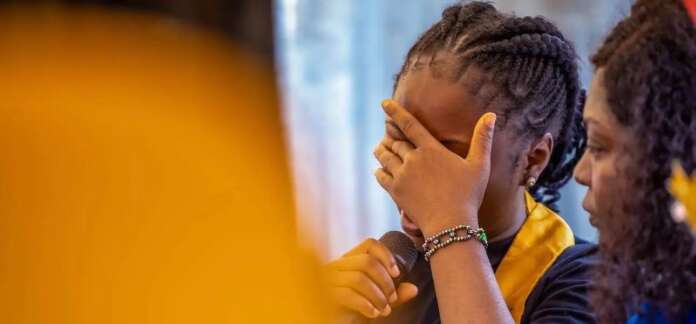
Then, visibly overwhelmed, Otti struggled to continue. His voice trembled. He paused. He wept.

For many present, it was the defining moment.

In that instant, infrastructure ceased to be concrete and steel. It became about human lives — about mothers who disembarked from vehicles to cross the bridge on foot, about families who never made it home, about communities cut off from opportunity.

“Leadership met humanity,” one attendee said afterwards.

Development and Political Momentum

The ceremony also carried political undertones.

During the reception, community leaders publicly pledged ₦500 million toward Otti’s re-election campaign — following a ₦100 million donation from another regional bloc weeks earlier. The announcement drew cheers and underscored the administration’s growing grassroots support.

Yet for many residents, the deeper significance lay beyond politics.

For over four decades, administrations came and went without resolving the Omenuko crisis. The bridge’s deterioration was widely seen as a symbol of governance failure.

Its reconstruction, residents argue, represents more than infrastructure — it signals responsive leadership capable of delivering tangible change.

A Test of Transformational Governance

Across Nigeria, decaying infrastructure often mirrors broader frustrations about governance. In Abia, the Omenuko Bridge had become shorthand for abandonment.

By reopening it — alongside the 30km arterial road linking Amuvi, Ndi Okereke, Abam and Arochukwu — the state government has altered economic prospects for trade, education and emergency access in the region.

The event also reignited a broader debate: can empathetic, responsive leadership translate into sustained transformation?

For the thousands who gathered, the answer seemed clear.

As drums echoed and traffic flowed across the new span, one message resonated through the crowd:

Arochukwu is no longer far.

And for many in Abia, that may be the most powerful transformation of all.

TIPS