Home Blog Page 93

Civil Rights titan Jesse Jackson dies at 84, marking the end of an era in American activism

The Rev Jesse Jackson, the civil rights campaigner who was prominent for more than 50 years and who ran strongly for the Democratic presidential nomination in 1988, has died. He was 84.

“Our father was a servant leader – not only to our family, but to the oppressed, the voiceless, and the overlooked around the world,” the Jackson family said in a statement.

“We shared him with the world, and in return, the world became part of our extended family. His unwavering belief in justice, equality, and love uplifted millions, and we ask you to honor his memory by continuing the fight for the values he lived by.”

No cause of death was given.

Jackson had had progressive supranuclear palsy (PSP) for more than a decade. He was originally diagnosed with Parkinson’s disease. He was also twice hospitalised with Covid in recent years.

A fixture in the civil rights movement and Democratic politics since the 1960s, Jackson was once close to Dr Martin Luther King Jr.

In an interview with the Guardian in May 2020, Jackson said: “I was a trailblazer, I was a pathfinder. I had to deal with doubt and cynicism and fears about a Black person running. There were Black scholars writing papers about why I was wasting my time. Even Blacks said a Black couldn’t win.”

Jesse Jackson
Jackson became involved in politics at an early age as he navigated the segregated south. Photograph: Jeff Zelevansky/Reuters

Twenty years after his second run for president, the first Black president, Barack Obama, saluted Jackson for making his victory possible. Obama celebrated in Chicago, also home to Jackson.

“It was a big moment in history,” Jackson told the Guardian, 12 years later.

During the Covid pandemic, he campaigned against disparities in care and outcomes, asking: “After 400 years of slavery, segregation and discrimination, why would anybody be shocked that African Americans are dying disproportionately from the coronavirus?”

Jesse Jackson: ‘Having the biggest military has no meaning in this kind of germ warfare.’

He also said all past presidents had failed to “end the virus of white superiority and fix the multifaceted issues confronting African Americans”.

Born on 8 October 1941 in Greenville, South Carolina, Jackson became involved in politics at an early age as he navigated the segregated south. He was elected class president at the all-Black Sterling high school, where he also excelled in athletics. In 1959, he received a football scholarship to the University of Illinois. The Chicago White Sox offered the young Jackson a spot on their baseball team, but he decided to focus on his education instead.

During winter break his freshman year of college, Jackson returned home to Greenville and tried to obtain a book needed for his studies from the white-only Greenville public library, but he was turned away. The experience stayed with him. A few months later on 16 July 1960, Jackson and seven Black high school students entered the Greenville library for a peaceful protest. After browsing the library and reading books, the group later known as the Greenville Eight were arrested for disorderly conduct and later released on a $30 bond. A judge eventually ruled that they had the right to use the publicly funded institution, and the Greenville library system became integrated in September 1960.

Jackson did not return to the University of Illinois after his first year, and instead transferred to the historically Black North Carolina Agricultural and Technical College in Greensboro, where he playerd football as a quarterback, was the national officer for the Black fraternity, Omega Psi Phi, and was elected the student body president. While earning a sociology degree, he also continued his activism by participating in sit-ins at restaurants in Greensboro.

“My leadership skills came from the athletic arena,” Jackson told the Washington Post in 1984. “In many ways, they were developed from playing quarterback. Assessing defenses; motivating your own team. When the game starts, you use what you’ve got – and don’t cry about what you don’t have. You run to your strength. You also practice to win.”

During college, Jackson met his future wife Jacqueline, whom he married in 1962 and later had five children with – Santita, Jesse Jr, Jonathan Luther, Yusef DuBois, and Jacqueline Jr. He would later go on to have a sixth child, Ashley, during an extramarital affair with Karin Stanford in the early 2000s.

Jackson first met King, who would become his mentor, at an airport in Atlanta in the early 1960s. King had followed Jackson’s student activism from afar for several years.

In 1964, Jackson enrolled at the Chicago Theological Seminary, as he continued to be involved in the civil rights movement. Jackson travelled with his classmates to Selma, Alabama to join the movement after he watched news footage of Bloody Sunday, where King led nonviolent civil rights marchers across the Edmund Pettus Bridge in Selma, Alabama, who were then beaten by law enforcement. Impressed by Jackson’s leadership at Selma, King offered him a position with the civil rights group that he co-founded, the Southern Christian Leadership Conference (SCLC).

After a couple of years, Jackson put his seminary studies on hold to focus on SCLC’s Operation Breadbasket, an economic justice program that harnessed the power of Black churches by calling on ministers to put pressure companies to employ more Black people through negotiations and boycotts. In 1967, Jackson became Operation Breadbasket’s national director, and was ordained as a minister a year later.

“We knew he was going to do a good job,” King said at an Operation Breadbasket meeting in 1968, “but he’s done better than a good job”.

Tragedy struck soon after Jackson gained a leadership position at SCLC. On 4 April 1968, Jackson witnessed King’s assassination from below the balcony at the Lorraine Motel in Memphis, Tennessee.

The four men stand in a line
Hosea Williams, Jesse Jackson, Martin Luther King and Ralph Abernathy on the balcony of the Lorraine Motel in Memphis, Tenness on 3 April 1968, a day before King was assassinated. Photograph: Charles Kelly/AP

The experience stayed with Jackson for the rest of his life. “Every time I think about it, it’s like pulling a scab off a sore,” he told the Guardian in 2018. “It’s a hurtful, painful thought: that a man of love is killed by hate; that a man of peace should be killed by violence; a man who cared is killed by the careless.”

Following King’s death, Jackson continued to work for SCLC until 1971, when he created his own organization to improve Black people’s economic conditions, People United to Save Humanity (Push). The organization hosted reading programs for Black youth and helped them find jobs, and also encouraged corporations to hire more Black managers and executives.

In 1984, Jackson ran as a Democratic candidate for president, becoming the second Black person to launch a nationwide campaign following Shirley Chisholm more than a decade earlier.

“Tonight we come together bound by our faith in a mighty God, with genuine respect and love for our country, and inheriting the legacy of a great party, the Democratic party, which is the best hope for redirecting our nation on a more humane, just, and peaceful course,” Jackson told an audience at the 1984 Democratic National Convention in San Francisco, California.

“This is not a perfect party. We’re not a perfect people. Yet, we are called to a perfect mission. Our mission to feed the hungry, to clothe the naked, to house the homeless, to teach the illiterate, to provide jobs for the jobless, and to choose the human race over the nuclear race.” He lost the Democratic nomination to former vice-president Walter Mondale, with the incumbent Republican president Ronald Reagan ultimately winning the election.

After his first presidential run, Jackson created the National Rainbow Coalition to push for voting rights and social programs. In the mid-1990s, Jackson merged his two organizations together to form the multiracial group Rainbow Push Coalition, which focuses on educational and economic equality. Throughout the years, the coalition has paid more than $6m in college scholarships, and gave financial assistance to more than 4,000 families facing foreclosures so that they could save their homes, according to their website.

Jackson ran for the Democratic nomination for president a second time in 1988, performing strongly but losing out to Michael Dukakis, the Massachusetts governor, who was beaten heavily in the general election by George HW Bush.

Jackson and Scott King amid a crowd of mourners
Jesse Jackson, centre of the second row, stands behind Coretta Scott King at the funeral of her husband, Martin Luther King Jr. Photograph: Bettmann/Bettmann Archive

“I cried because I thought about those who made it possible who were not there … People who paid a real price: Ralph Abernathy, Dr King, Medgar Evers, Fannie Lou Hamer, those who fought like hell [at the Democratic National Convention] in Atlantic City in 64, those in the movement in the south.”

In 2000, the then president, Bill Clinton, awarded Jackson the nation’s highest civilian honor, the Presidential Medal of Freedom for his decades of work focused on increasing opportunities for people of color.

Jackson took King’s work forward, staying to the fore in the worldwide civil rights movement through a tumultuous half-century of American history, through to the election of Donald Trump and the rise of Black Lives Matter.

“Dr King believed in multiracial, multicultural coalitions of conscience, not ethnic nationalism,” Jackson said in 2018. “He felt nationalism – whether Black, white or brown – was narrowly conceived, given our global challenges. So having a multiracial setting said much about his vision of America and the world, what America should stand for as well as the world.

“The arc of the moral universe is long and it bends towards justice, but you have to pull it to bend. It doesn’t bend automatically. Dr King used to remind us that every time the movement has a tailwind and goes forward, there are headwinds.

“Those who oppose change in some sense were re-energised by the Trump demagoguery. Dr King would have been disappointed by his victory but he would have been prepared for it psychologically. He would have said: ‘We must not surrender our spirits. We must use this not to surrender but fortify our faith and fight back.’”

Source: The Guardian

El-Rufai remains in EFCC in N432bn probe as FG files cybercrime charges over alleged NSA phone interception

Nigeria’s political arena was thrust into fresh turmoil on Monday night after former Kaduna State Governor Nasir El-Rufai was detained at the headquarters of the Economic and Financial Crimes Commission (EFCC) in Abuja following hours of interrogation over an alleged N432 billion corruption probe.

The detention came as the Federal Government simultaneously filed criminal charges against him before the Federal High Court in Abuja over the alleged unlawful interception of phone communications belonging to the National Security Adviser, Nuhu Ribadu.

The convergence of corruption allegations, cybercrime charges and a reopened disappearance case marks one of the most consequential legal crises faced by a former Nigerian governor in recent years.

EFCC Grilling Over N432bn Allegations

Multiple sources within the anti-graft agency confirmed that El-Rufai arrived at the commission’s Jabi headquarters around 10 am in response to an invitation and was questioned over allegations arising from the 2024 report of the Kaduna State House of Assembly.

The legislative report accused his administration of misappropriating loans, violating due process in contract awards and plunging the state into heavy debt between 2015 and 2023.

A senior EFCC source said investigations had been ongoing for about a year.

“As a commission, we don’t just rush to invite suspects. Persons accused are always the last; that is, after we might have done our investigation to an advanced stage,” the source said, adding late Monday that the former governor remained in custody.

The EFCC spokesperson, Dele Oyewale, confirmed that El-Rufai honoured the invitation but declined to comment on the details of the interrogation.

What the Kaduna Assembly Alleged

In 2024, an ad hoc committee of the Kaduna State House of Assembly alleged that roughly N423bn was siphoned under El-Rufai’s administration, alongside disputed cash payments and contracts exceeding N155m and the alleged diversion of N1.37bn earmarked for a light rail project.

The committee recommended investigation and prosecution over alleged abuse of office, reckless borrowing, money laundering and contract irregularities.

El-Rufai has consistently denied wrongdoing, describing the probe as politically motivated and insisting that all loans were lawfully appropriated for infrastructure, education, healthcare and security reforms.

Cybercrime Charges Over Alleged NSA Phone Interception

As the EFCC interrogation unfolded, the Federal Government filed a three-count charge marked FHC/ABJ/CR/99/2026, accusing El-Rufai of offences under the Cybercrimes (Prohibition, Prevention, etc.) Amendment Act, 2024 and the Nigerian Communications Act, 2003.

Prosecutors allege that during a February 13, 2026 appearance on Prime Time on Arise TV, El-Rufai admitted that he and unnamed associates intercepted communications linked to Ribadu.

In one of the counts, the government alleges he failed to report those involved in the interception. Another count accuses him of using technical systems in a manner capable of compromising public safety and national security.

During the interview, El-Rufai claimed he learned of an alleged plan to arrest him through a leaked conversation from the NSA’s phone, stating: “The government thinks they are the only ones who listen to calls. But we also have our ways.”

Legal analysts warn that, if substantiated, unauthorised interception of a sitting National Security Adviser’s communications could constitute a grave breach of national security laws.

No date has yet been fixed for his arraignment.

DSS Reopens Dadiyata Disappearance Case

In a parallel development, the Department of State Services (DSS) has reportedly reopened investigations into the 2019 disappearance of government critic Abubakar Idris, popularly known as Dadiyata.

Security sources said investigators are probing El-Rufai and his sons over the unresolved case. His passport was reportedly seized at the Nnamdi Azikiwe International Airport to prevent foreign travel while inquiries continue.

El-Rufai has repeatedly denied any involvement, maintaining that he neither knew Dadiyata personally nor had any reason to target him.

Protests Erupt in Abuja and Kaduna

Monday’s dramatic developments triggered protests at the EFCC headquarters in Abuja and at the Kaduna State House of Assembly.

In Abuja, demonstrators demanded accountability over the alleged N432bn probe, while supporters of the former governor gathered nearby, chanting solidarity slogans.

In Kaduna, civil society groups pressed lawmakers for updates on the legislative findings that prompted the anti-graft referral.

Political Reactions and Presidential Backing for Ribadu

Opposition figures questioned the timing of the charges, with some suggesting the unfolding legal drama could heighten political tensions ahead of the 2027 elections.

Meanwhile, President Bola Tinubu publicly praised Ribadu during a visit to Adamawa State, describing him as “honest, bold, courageous and committed,” and vowing continued support in the fight against terrorism and banditry.

The statement came days after El-Rufai accused the Office of the National Security Adviser of procuring a toxic chemical, an allegation the office denied and referred to the DSS for investigation.

A Defining Legal Battle

Once a central figure in Nigeria’s ruling establishment and a vocal national commentator, El-Rufai now faces simultaneous investigations into alleged financial mismanagement, cybercrime and security-related controversies.

Whether the cases ultimately amount to lawful prosecution grounded in evidence or political persecution, as his allies contend, will be tested in court.

For now, the former governor remains in EFCC custody — his political future uncertain as Nigeria edges closer to another election cycle.

District 9127 prepares grand reception for Rotary International President Francesco Arezzo

Rotarians, Rotaractors and friends of Rotary across District 9127 are set to roll out the red carpet for the President of Rotary International, Francesco Arezzo, and his spouse, Anna Maria Arezzo-Criscione, as they arrive in Abuja on Tuesday, February 17, for the final leg of their Nigeria-wide tour.

President Arezzo, who arrived in Lagos on February 13th and has since engaged with Rotary stakeholders in different parts of the country, will fly into Abuja from Port Harcourt to a colourful, carnival-like welcome at the Nnamdi Azikiwe International Airport.

In a statement signed by Dr. Max Amuchie, District 9127 Media Relations Chair, the Chairman of the Reception Planning Committee, Dr. Goddy Nnadi, disclosed that elaborate arrangements have been concluded to accord the Rotary leader a befitting reception. “Rotarians adorned in Rotary regalia, alongside cultural dance troupes, will be on ground to receive President Arezzo and his entourage in a vibrant display that reflects the warmth and hospitality of our district,” he said.

Among those expected in the presidential entourage are Rotary International President-elect Rotarian Yinka Babalola and his spouse, Preba Babalola; Trustee of The Rotary Foundation, Rotarian Ijeoma Pearl Okoro and her husband, Rotarian Kingsley Okoro; as well as the other five District Governors in Nigeria.

District Governor Dame (Dr.) Joy Okoro, host of the visit, expressed excitement at welcoming the global Rotary leader. She noted that the entire District 9127 family has mobilised to ensure a memorable and impactful visit. “We are honoured to receive President Arezzo in Abuja. This visit underscores Rotary’s commitment to service, peacebuilding and disease eradication, and we are fully prepared to showcase the impactful work of our district,” she said.

Following airport formalities, President Arezzo is scheduled for a private dinner later in the evening with philanthropist and Rotary leader, Sir Emeka Offor.

On Wednesday, the Rotary International President will visit Polio House in Area 2, Abuja, where he will address the press and receive a comprehensive briefing from the Nigerian National PolioPlus Committee (NNPPC) on the country’s polio eradication efforts. He will subsequently proceed to a Primary Healthcare Centre in Area 2 to participate in a symbolic polio immunisation exercise, reinforcing Rotary’s decades-long commitment to eradicating polio worldwide.

At noon, President Arezzo will address Rotarians of District 9127 at the Sir Emeka Offor Hall, Rotary Centre, Abuja, where he is expected to outline Rotary International’s vision, priorities and strategic direction. The visit will also include a courtesy call on President Bola Tinubu at the Presidential Villa, further strengthening collaboration between Rotary and government in advancing humanitarian and development initiatives.

President Arezzo will depart Nigeria on Thursday, February 19, marking the conclusion of a significant tour aimed at deepening Rotary’s impact and partnerships across the country.

District 9127, which covers the Federal Capital Territory and several states in North-Central Nigeria, continues to play a leading role in Rotary’s service areas, including disease prevention and treatment, maternal and child health, basic education and literacy, economic empowerment, and peacebuilding.

Taliban legalise domestic violence under sweeping new Afghanistan laws

Afghanistan has ‘legalised’ domestic violence in a troubling crackdown on women’s rights.

A new 90-page penal code introduced by the Taliban allows husbands to physically punish their wives and children, as long as the abuse does not result in “broken bones or open wounds”.

Under the new laws, a husband faces a maximum of just 15 days in prison in cases of “obscene force”, such as visible fractures or injuries. Convictions will be sought only if the wife can successfully prove the abuse in court.

A married woman can also now be jailed for up to three months if she visits her relatives without her husband’s explicit permission.

The law uses language effectively, treating wives as the “property” or “slaves” of their husbands, and strips away vital protections, such as the 2009 law on the Elimination of Violence Against Women (EVAW), which was introduced during the previous US-backed regime. 

Campaigners from exiled Afghan human rights group Rawadari, who obtained a copy of the Taliban’s new penal code, warned in a statement that it would legitimise the “abuse, maltreatment, and punishment” of women and children – and expose them to “continued domestic violence”. 

Its new limits on women’s rights to see their families also remove one of the few protections available in a country where there are few “formal and legal remedies”, they added. 

Rawadari demanded the “immediate halt of the implementation of the criminal procedure code” by the Taliban courts, and called for the international community, the United Nations, and “other relevant international bodies” to “utilise all legal instruments” to prevent it coming into force.

Works Minister Umahi brags about forcefully taking over woman’s land for challenging him

David Umahi (Credit: BBC)

A video has surfaced where Nigeria’s Minister of Works, David Umahi, openly boasted about how he ordered the forceful acquisition of a woman’s land because she challenged his actions.

In the video sighted by SaharaReporters on Tuesday, Umahi, a former governor of Ebonyi State, was heard recounting how a dispute with a female land owner escalated into a government takeover of her property by force. 

According to him, the decision to acquire the land was not initially part of the plan but was triggered by the woman’s resistance.

“I didn’t want to take the woman’s remaining land, but when she started making troubles, I said they should go and acquire the land. I’m the one, not any other person else,” Umahi said in the video.

The minister’s remarks suggest that the land acquisition was carried out as a direct response to the woman’s opposition, raising concerns about abuse of power, intimidation of citizens, and the misuse of government authority.

Although Umahi did not disclose the location of the land or provide details of any legal process followed before the acquisition, his statement showed deliberate human rights abuse that he and other officials in power carry out in the country. 

A diaspora investor and CEO of Winhomes Global Services Limited, Stella Okengwu, had raised a public outcry against Umahi, alleging the forced takeover of her 20-hectare estate in Lagos. The dispute involves the Lagos-Calabar Coastal Highway project, with the developer claiming her legally acquired property was destroyed despite being outside the original designated legal corridor. 

In December 2025, SaharaReporters reported how grief became a familiar visitor to Umuchima, the most populous of the 14 communities that make up Uburu in Ebonyi State’s Ohaozara Local Government Area, where Umahi hails from.

Residents lamented that their troubles deepened shortly after Umahi assumed office as governor in 2015. 

As he serves as Minister of Works, community members lamented that a chain of demolitions, land seizures, and violent confrontations, carried out under government authority, has left them traumatised, uprooted, and bereaved.

Residents alleged that forced demolitions of homes, ancestral compounds and farmlands, purportedly for government purposes, have led to severe psychological trauma, poverty and, in several reported cases, death.

Before Sunrise, the Shooting Began: Inside Niger State’s latest massacre

  • As politicians spar, villagers bury their dead

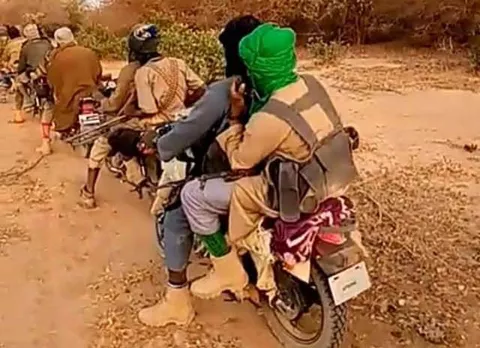
They came before dawn — dozens of armed men riding in formation on motorcycles, engines slicing through the silence.

By sunrise, at least 29 people were dead.

Gunmen stormed the villages of Tunga-Makeri, Konkoso and Pissa in Borgu Local Government Area of Niger State early Saturday, unleashing a wave of killings, arson and abductions in what officials fear could mark another escalation in Nigeria’s expanding rural insurgency.

Emergency authorities say the toll may rise as search teams comb surrounding forests for the missing.

“People fled into the bush,” said Musa Saidu, head of the Niger State Emergency Management Agency. “We are still accounting for them.”

A Calculated Operation

Security sources say the attackers arrived on 41 motorcycles, each carrying two or three heavily armed men — a level of coordination that suggests planning, not spontaneity.

In Tunga-Makeri, six residents were gunned down. In Konkoso and Pissa, at least 20 more were killed. Homes were torched. A police station was set ablaze.

Survivors insist the attackers were not looters.

“They were not interested in stealing,” said Abdullahi Rofia, who has been sheltering displaced residents in a neighbouring community. “They came to kill and terrorise.”

The assault occurred near the site of another massacre earlier this month, where more than 100 people were reportedly killed in a similar ambush — raising fears of a widening operational corridor for armed groups once concentrated in Nigeria’s north-west.

Terror Without Borders

For years, criminal gangs known locally as “bandits” have plagued rural communities with kidnappings and ransom operations. But security analysts say the violence is mutating — becoming more lethal, more brazen and less economically motivated.

The line between banditry and insurgency appears increasingly blurred.

Residents say daily life has collapsed.

“No one goes to the farm. No one goes to market,” Rofia said. “People are traumatised.”

Authorities have imposed emergency measures, including restrictions on late-night movement and a ban on commercial motorcycles after 8 p.m. Joint security teams have been deployed. Rescue operations are ongoing.

But in Borgu, official reassurances ring hollow against fresh graves.

‘We See Their Movements’: Zamfara Governor Points to Deeper Failure

As violence ripples across northern Nigeria, Zamfara State Governor Dauda Lawal argues that the crisis is not rooted in a lack of intelligence, but in the failure to act on it.

“We track their movements in real time,” Lawal said in a recent interview, describing the use of drones and satellite monitoring to trace armed groups. “Every movement is communicated to the relevant agencies.”

His frustration is palpable.

“You are telling me a bandit is superior to the state? That is not possible,” he said. “The first duty of government is to protect lives and property.”

Lawal inherited a state battered by a decade of killings, unpaid salaries and institutional collapse. He says his administration has stabilised finances and rebuilt schools — but security remains the existential challenge.

Without safety, he admits, investment and recovery are illusions.

“There is no investor that will put money where it is not secure,” he said.

Pressure Mounts on Abuja

Nigeria’s federal government faces mounting scrutiny as violence spreads beyond traditional flashpoints.

Security forces are battling jihadist factions in the north-east, armed gangs in the north-west and central regions, and separatist unrest in the south-east — a multi-front crisis stretching resources thin.

Last month, officials said 200 suspected bandits were killed in an operation in Kogi State. Weeks earlier, more than 250 children and staff were abducted from a Catholic school in Papiri in one of the largest recent mass kidnappings. Though they were later released, the episode underscored how vulnerable rural communities remain.

International involvement has added another layer of complexity. U.S. forces conducted Christmas Day strikes against Islamist militants in Sokoto State, with President Donald Trump warning of further action if attacks continued.

Yet many victims of jihadist violence in Nigeria are Muslim, according to monitoring groups — complicating simplistic narratives about the conflict.

Surveillance Politics, Insecurity Reality

Meanwhile, a domestic political storm over alleged wiretapping of senior officials has ignited debate about state power and misplaced priorities.

Columnist Lasisi Olagunju wrote pointedly that while political elites feud and monitor one another, “the people suffer unrelenting violence.”

“While the big men bicker, the people suffer unrelenting violence. El-Rufai, his friends and the government are very erect listening to conversations and banters across classrooms and newsrooms, but they are limp when bandits and terrorists carry on their business online and offline…

“When those entrusted with state power treat surveillance as sport, and those outside power treat it as justified revenge, when interception becomes culture, privacy becomes casualty. What we treat as bravado is actually erosion of trust, of law, and of the fragile peace that holds this democracy together.”

For villagers in Niger State, such debates feel distant.

Their concern is immediate: who protects them when the motorcycles return?

A Fragile State of Fear

The attack in Borgu is not just another statistic in Nigeria’s long security ledger. It is part of a pattern — coordinated, expanding and increasingly audacious.

Each raid chips away at public confidence.
Each delayed response fuels suspicion.
Each unprotected village deepens the sense of abandonment.

Before dawn on Saturday, the engines roared.
By morning, families were burying their dead.

And across Nigeria’s rural heartland, one question lingers in the smoke:

If the state can see the threat coming, why does it keep arriving?

Firestorm in the North: Lawmakers clash over US troops as terror surges ahead of 2027

Nigeria’s security crisis has ignited a fierce debate in Abuja — one that now stretches from the insurgency-ravaged North-East to the halls of the United States Congress.

At the centre of the storm is Borno lawmaker, Ali Ndume, who stunned political circles by openly endorsing the deployment of American troops to assist Nigerian forces battling insurgents and bandits.

Appearing on Politics Today on Channels Television, Ndume described the reported presence of US troops as a long-awaited breakthrough in a war he says Nigeria cannot win alone.

“Now that we have this window of opportunity, we must utilise it,” he declared, arguing that American technology and resources — reportedly provided at no cost — could plug critical operational gaps.

House Divided: ‘Capacity Gap’ or Sovereignty Risk?

Inside the House of Representatives, opinions are sharply split.

Chairman of the House Committee on Defence, Babajimi Benson, struck a pragmatic tone. For him, the debate is not about troop numbers but capability.

“The issue is not additional or fewer numbers, but what role and capabilities they are bringing,” he said, emphasizing training and technology transfer.

Benson posed a pointed rhetorical question: would critics prefer Nigeria “continue to haemorrhage” under terrorism and mass kidnapping?

But Kano lawmaker and Chairman of the House Committee on Air Force, Alhassan Rurum, firmly rejected the proposal.

“Our Armed Forces are capable. We only need proper funding and modern equipment,” he insisted.

The split underscores a deeper national dilemma: is foreign intervention a lifeline — or a slippery slope?

Middle Belt Backs Intervention, Warns of Internal Compromise

The Middle Belt Forum threw its weight behind Ndume’s proposal, citing escalating attacks across central Nigeria.

Its president, Bitrus Pogu, warned that any foreign force must navigate Nigeria’s complex intelligence terrain carefully — particularly concerns about internal compromise within security ranks.

Spokesman Luka Binniyat framed the situation bluntly:

“The Middle Belt cannot afford hesitation in confronting terror.”

The group suggested a hybrid model: Nigerian troops handle ground combat while US forces leverage air superiority and surveillance technology.

Arewa, Northern Groups Seek Clarity

The Arewa Consultative Forum stopped short of endorsement, citing constitutional concerns. Its spokesman, Tukur Muhammad-Baba, stressed that foreign troop deployment would require National Assembly approval.

Meanwhile, the Coalition of Northern Groups expressed a conflicted stance — supporting anti-terror efforts in principle but wary of foreign boots on Nigerian soil.

The debate has exposed an uncomfortable truth: insecurity may be uniting Nigerians in fear, but not in strategy.

Kwankwaso Named in US Sanctions Bill — Political Shockwaves Erupt

As the military debate intensifies, a separate controversy has electrified Nigeria’s political class.

A proposed US bill — the Nigeria Religious Freedom and Accountability Act of 2026 — reportedly identified former Kano governor Rabiu Musa Kwankwaso among individuals who could face visa bans or asset freezes under the Global Magnitsky framework.

Kwankwaso, national leader of the New Nigeria Peoples Party and a 2023 presidential candidate, has not been formally designated by the US government. But mere mention of his name triggered political aftershocks.

The bill also referenced the Miyetti Allah Cattle Breeders Association of Nigeria.

Sharia Controversy Resurfaces

Part of the uproar centres on claims that Kwankwaso was the “originator” of Sharia implementation in Nigeria, an assertion many analysts dispute.

The early 2000s expansion of Sharia criminal codes is widely associated with Ahmed Sani Yerima in Zamfara State, before other northern states — including Kano — followed through legislative processes.

Legal experts argue that isolating one individual from a broader constitutional development risks oversimplification.

NNPP Pushes Back: ‘False and Politically Motivated’

The NNPP and the Kwankwasiyya movement dismissed the proposal as baseless and politically charged.

Party spokesman Ladipo Johnson described the allegation as “false and misleading.”

Political analyst Farooq Kperogi offered a provocative theory: Kwankwaso’s inclusion may stem from his outspoken criticism of Washington’s religious freedom designation of Nigeria.

Former senator Shehu Sani urged US lawmakers to verify facts before escalating tensions.

NNPP chieftain Buba Galadima went further, alleging the controversy is designed to weaken Kwankwaso ahead of 2027.

2027 Calculations: Liability or Launchpad?

In Kano, reactions split sharply along partisan lines. Loyalists frame the controversy as foreign interference; critics demand transparency.

Yet political observers note a paradox: international scrutiny can elevate a regional heavyweight into a national figure.

With divisions persisting within major northern blocs, Kwankwaso’s disciplined grassroots base — symbolised by the red caps of the Kwankwasiyya movement — could become pivotal in coalition politics.

And as for the US bill? Congressional proposals often evolve or stall entirely.

But in politics, symbolism matters.

Whether it fades quietly in Washington or reshapes alliances in Abuja, the twin debates over US troops and US sanctions have already redrawn Nigeria’s political conversation, intertwining security, sovereignty, and the high-stakes race toward 2027.

‘Where Will We Go?’: Panic in Ibeju-Lekki as 150-metre coastal highway setback sparks fresh demolition fears

A fresh storm is brewing along the Atlantic corridor.

Communities in Ibeju-Lekki, Lagos State, an axis already reshaped by bulldozers, are raising alarm over what they describe as a new federal plan to enforce a 150-metre setback on both sides of the Lagos-Calabar Coastal Highway.

For residents who have already watched homes, shrines, and family compounds reduced to rubble, the markings feel less like planning and more like a prelude.

“If they take another 150 metres left and right, what will be left of our communities?” asked Chief Adebayo Agbabiaka, speaking on behalf of affected villages.

A Legacy Project Meets Local Anxiety

The Lagos-Calabar Coastal Highway is one of President Bola Tinubu’s flagship infrastructure projects — a roughly 700-kilometre coastal artery expected to link Lagos to Calabar, traversing Ogun, Ondo, Edo, Delta, Bayelsa, Rivers, Akwa Ibom, and Cross River states.

Residents insist they support development. Many praised the vision as transformative.

But they say repeated realignments have come at a staggering cost.

Entire villages, including multi-storey buildings erected long before modern road access reached the area, have reportedly been displaced. Some homeowners claim compensation ranging between N9 million and N10 million — sums they argue are insufficient to secure land in today’s Ibeju-Lekki property market, let alone relocate extended families.

“We are not fighting anyone. We are appealing for a waiver,” Agbabiaka said. “Even if they compensate us, where are we expected to go?”

The fear is not just about property. It is about identity — ancestral shrines, communal land, generational homes.

Businesses, Investors, and Jobs at Risk

Beyond heritage, the economic stakes are rising.

The coastal corridor has become a magnet for real estate investment, hospitality, and tourism ventures. Previous demolitions along the beachfront — including the high-profile case of Landmark Beach Resort — ignited national debate over balancing infrastructure with private enterprise.

Owned by businessman Paul Onwuanibe, the $200 million resort reportedly housed more than 80 businesses, supported over 4,000 direct jobs, and paid upwards of N2 billion in annual taxes. The property welcomed more than one million guests in the year before its demolition notice.

For many in Ibeju-Lekki, that episode remains a cautionary tale.

“Development should not mean destroying livelihoods without clear engagement,” said one resident, who warned that fresh demolitions could destabilise small businesses already grappling with inflation and economic uncertainty.

Survey Markings, But No Demolition — Yet

A source within the Federal Ministry of Works, speaking anonymously, said the recent markings were conducted by the Office of the Surveyor-General of the Federation to indicate that structures within 150 metres on either side of the corridor sit on federal land.

“They are not demolishing the marked buildings,” the source said, framing the exercise as informational rather than operational.

Still, residents say bulldozers followed previous assurances.

The Zonal Director of Survey Coordination in Lagos declined to comment when contacted.

Transparency Questions Resurface

The controversy echoes earlier tensions over route realignments and disclosure.

Minister of Works Dave Umahi had previously confirmed that a proposed diversion of the coastal highway would not proceed, partly due to submarine cable infrastructure risks that telecom operators warned could trigger nationwide network outages.

At the same time, Umahi said the Environmental Impact Assessment would not yet be made public, citing Section 15(b) of the Freedom of Information Act — a provision allowing denial of access to certain third-party information.

For affected residents, limited transparency fuels anxiety.

A Delicate Balancing Act

Infrastructure megaprojects often demand sacrifice. But in Ibeju-Lekki, the scale of potential impact — ancestral displacement, business disruption, shrinking communal land — has sharpened calls for consultation and flexibility.

Community leaders are urging both the Federal Ministry of Works and the Lagos State Government to clarify the final alignment and setback provisions, engage openly with affected villages, and consider waivers for long-established settlements.

At stake is more than land.

It is the question confronting many fast-growing economies: how to build the future without erasing the foundations of the past — and without pushing citizens and businesses to the brink.

For now, the red markings remain.

And so does the fear.

Poison, Power, and The Public Trust: Nigeria must confront the Thallium question

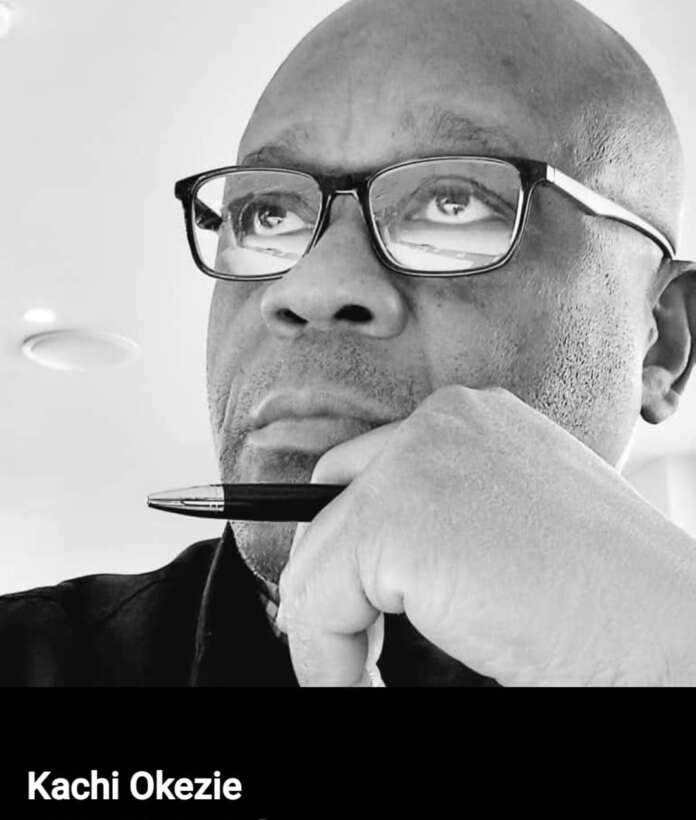
By Kachi Okezie, Esq.

Nigeria stands at a crossroads where silence is no longer an option.

Allegations by former Kaduna State Governor Nasir El-Rufai that the National Security Adviser, Nuhu Ribadu, imported thallium sulphate—a substance notorious for its lethal toxicity—without public disclosure have ignited a storm that cannot be brushed aside. In a democracy, such claims demand more than whispers and denials. They demand clarity, accountability, and proof.

Thallium sulphate is not an ordinary chemical. It is a potent poison capable of causing excruciating suffering and death in minute quantities. Historically associated with covert assassinations and criminal poisonings, its name evokes fear precisely because of its deadly efficiency. The shadow of its past looms large, including the widely reported poisoning of Alexander Litvinenko, a case that stunned the world and underscored how toxic agents can be weaponised in geopolitical conflicts.

This is not a trivial matter of bureaucratic oversight. If the allegations are true, the implications are grave. The importation of such a substance—particularly without transparency—raises urgent questions about Nigeria’s national security framework, regulatory oversight, and compliance with international obligations.

Nigeria is a signatory to the Organisation for the Prohibition of Chemical Weapons and bound by the Chemical Weapons Convention, which strictly regulates the development, acquisition, and use of toxic chemicals. Across the globe, thallium sulphate is heavily restricted; the European Commission has prohibited its use in pesticides due to its extreme danger to humans and the environment. These safeguards exist for one reason: substances of this magnitude carry catastrophic potential when misused or mishandled.

Nigerians are entitled to answers.

What was the intended purpose of the importation?
Which agency authorised it?
Where is the substance stored? What safety and security protocols are in place? Was the legislature informed?

These are not partisan questions—they are constitutional ones.

Around the world, the misuse of toxic agents has left devastating consequences. Each case reinforces a universal lesson: when governments fail to communicate transparently about hazardous materials, public trust erodes rapidly. And once trust is lost, it is painfully difficult to rebuild.

The burden of proof rests squarely on the government. A vague dismissal will not suffice. A credible response requires documented evidence, independent verification, and, if necessary, a transparent investigation open to legislative and international scrutiny.

Silence feeds suspicion. Transparency restores confidence.

At stake is more than the reputation of one official or administration. Equally, at stake is Nigeria’s credibility on the global stage, its adherence to international law, and the safety of its citizens. In an era where misinformation spreads quickly and public skepticism runs deep, proactive disclosure is not weakness—it is strength.

Nigeria’s democracy cannot thrive in the shadows. The people deserve openness from those entrusted with power. If there is nothing to hide, then there should be nothing to fear from full disclosure.

The moment calls for courage, not concealment.

Nigeria must confront the thallium question—clearly, decisively, and transparently—because public trust, once poisoned, is far harder to cure than any toxin.

The views expressed by contributors are strictly personal and not of Law & Society Magazine.

El-Rufai: Tinubu’s angry kingmaker, By Lasisi Olagunju

Alhaji Shehu Shagari first met General Murtala Mohammed in August 1974. Newly appointed Federal Commissioner for Communications, Murtala, wrote a memo for cabinet approval and needed financial clearance from Shagari, then Commissioner for Finance.

Shagari recalled the encounter: “I studied the memo carefully and made a number of comments and suggestions. He replied it was too late to make any amendments given the urgency. Thereupon, I expressed my regret for being unable to support the memo. He took leave of me, apparently disappointed. When the memo came before the cabinet, it was debated but rejected. Murtala was very angry. The following morning, he came into my office filled with remorse. He said to me, ‘Mr Commissioner, I have come to eat my words. I am sorry to have refused your advice, but I am now all the wiser. Please, tell me how best to modify my memo in order to make it acceptable to the Council.’”

Shagari said he was “deeply touched by his modesty and courtesy.” His office revised and redrafted the memo to secure approval.

Later, Murtala asked Shagari to present the revised memo to the Cabinet on his behalf, as he would be on pilgrimage to Mecca before the next meeting. Shagari agreed. But when he attempted to present it, General Yakubu Gowon, the Head of State, objected. Gowon argued it was inappropriate for someone who had previously opposed the memo to present it, especially as it sought allocations from his ministry.

On his return, Shagari briefed Murtala on Gowon’s rejection of the memo and expressed regret at being unable to fulfill his request.

Murtala flared:

“Don’t mind him! We shall soon change him. We put him there and we can remove him any time!”

Shagari replied, “Please don’t. We need peace and stability in Nigeria.”

Murtala smiled, shook Shagari’s hand warmly, and left.

“I never thought that he was serious about the threat,” Shagari later wrote — until, a few weeks later, when it was carried out.

All the above are carefully recorded by Shagari on page 178 of his autobiography, ‘Beckoned to Serve’.

When kingmakers turn angry, they are rarely quiet about it. Wounded influence can ferment into insurgent energy; those who once built thrones sometimes feel compelled to test the pillars that frame them. Throughout history, sufficiently aggrieved makers of kings always probe, and even shake, the very structures they help hold and stabilise the throne.

I remembered to go back to Shagari’s book and then searched for the page after I watched Mallam Nasir El-Rufai’s Abuja airport drama on Thursday, and his fiery Friday appearance on Arise News television. In temper and outburst, Murtala and El-Rufai, like Caesar and Danger, are “two lions littered in one day”; both of them deadly. In power relations, El-Rufai did for Tinubu in 2023 what Murtala did for Gowon in July 1966. The short man from Kaduna is now as angry as the Kano General who sacked Gowon in July 1975.

The jilted man has even added scarlet letters to his scud missiles. In politics, as in drama, affection curdled into estrangement does generate a force more combustible than the flare of hell. Centuries ago, William Congreve anticipated such metamorphosis in ‘The Mourning Bride’:

“Heaven has no rage like love to hatred turned,

“Nor Hell a fury like a woman scorned.”

I saw the way angry El-Rufai bluffed off security at the airport and the daredevilry he displayed on live TV on Friday night. I remembered Murtala Mohammed, his bloody godfather role in getting Gowon into power, his open threat to sack the boss, and his putsch that ended Gowon’s reign.

To what end was Mallam Nasir El-Rufai’s huff and puff of last week? The end, he said, is to remove Bola Tinubu from power. “This government is gone by the grace of God,” he declared on television. “We are going to surprise this government and give Nigerians a very credible alternative platform and a candidate that will defeat the incumbent in the next election.” It was a promise delivered in his familiar register.

What followed that promise was vintage El-Rufai — small frame, large combustion engine. He sensationally announced that he had participated in bugging the telephone line of Tinubu’s National Security Adviser. A poisonous letter followed at the weekend.

This is not the first time El-Rufai’s words have outrun restraint. He has a reputation for boasting about enthroning and dethroning presidents. There was a time he threw a verbal party in celebration of the death of a president who had the effrontery to jilt him.

In January 2017, Daily Nigerian, an online newspaper published by journalist Jaafar Jaafar, quoted him from an interview audio as saying: “Now, regarding the question about Umaru Yar’Adua, yes, I am grateful to God because I am alive and Umaru is dead.” Around the same period, at an APC stakeholders’ meeting at Murtala Mohammed Square in Kaduna, he boasted that he had fought two presidents: Umaru Musa Yar’Adua, who “ended up in his grave,” and Goodluck Jonathan, who “ended up in Otuoke.”

That was in 2017. In 2023, he was central to the coalition of northern governors that frustrated President Muhammadu Buhari’s preferred succession direction, a move that substantially cleared the path for Bola Tinubu’s APC candidacy. Now, El-Rufai says he “ought to have retired” from politics but for “the disaster that I contributed to imposing on Nigeria.” That “disaster,” in his telling, is the Tinubu presidency which he has vowed to terminate at the next election.

When men who helped enthrone a president now vow to dethrone him, and invoke methods that corrode the law; the issue becomes larger than politics. It becomes a matter of acute national interest.

Yet the man who El-Rufai is threatening to de-crown is very well schooled in the hard, wise Yoruba ways of power. One proverb Tinubu once deployed while angling for where he is was: Ojú bòrò kó ni wọ́n fi ń gb’ọmọ l’ówó èkùró — you do not use a soft eye to extract palm kernel from its mother, the hard shell. Unless you have seen how kernels are wrested from rock-like shells, you may not grasp the warning in that proverb. Tinubu’s friends would say he is not Jonathan who was cooked in his very presence. They would insist that he is not Yar’Adua whose nimble fingers were cut off the soup plate before his time. They would say he is not Muhammadu Buhari, an overhyped General with balls made of rubber. Tinubu is Bola Ahmed Tinubu — a truly hard man blessed enough to make law and process bend before the weight of his ambition. More appropriately, he is Ogboju Ode, the intrepid hunter who has walked forests thicker than the wild dread of D.O. Fagunwa’s Forest of a Thousand Demons.

But El-Rufai also has a history of snatching meat from the jaws of lions. If I were Tinubu, I would know that this man deserves close scrutiny. What kind of man says what he says and gets away saying them? All his engagements last week left no one in doubt that he is ready for the state. He get mind!

His witch is one battle axe who never denies his witchery. On Friday, while threatening to sack Tinubu as Murtala said of Gowon, El-Rufai made the whole nation gasp. He admitted that someone close to him had tapped the telephone line of the National Security Adviser. “He (NSA) made the call because we listened to their calls. The government thinks they are the only ones that listen to calls but we also have our ways. He made the call and gave the order. Someone tapped his phone. The government listens to our calls all the time without a court order. Someone tapped his phone and told us that he gave the order.” The man had just confessed to committing a crime.

When someone says what El-Rufai said, the Yoruba would quietly wonder whether he is not under a spell. They call it Èèdì.

In Yoruba thought, the spiritual affliction called Èèdì describes destructive hubris. It is different from the other no less costly spell called àsàsí; àsàsí harms from outside, Èèdì works from within. It pushes and incites its victim toward self-sabotage. The afflicted person becomes the instrument of his own undoing.

So, when a man publicly normalises what should alarm him; when he boasts of practices that drench him in petrol for his enemy to set alight, the Yoruba mind may not first think of law or politics. It may think of Èèdì — the quiet force that leads a person to injure himself with his own hand and tongue.

But whether èèdì or àsàsí, El-Rufai does not give a damn. He is a witch who eats the heart and liver of his victim in the open marketplace. He said what he said about phone tapping calmly as if it was a national duty he faithfully carried out. His excuse was that government also does phone tapping illegally. Now, can two criminalities cancel each other out? No. Two wrongs do not neutralise themselves; they compound the injury. Reciprocal criminality does not cure the disease, it makes the cancer metastatic.

In Nigeria, unlawful interception of communications is not a grey area. It does violence to what Australian jurist, Richard Blackburn, called “the most comprehensive of rights and the right most valued by man… the right to be left alone.” It violates Section 37 of Nigeria’s 1999 Constitution – privacy of correspondence and telephone conversations. It breaches the Cybercrimes (Prohibition, Prevention, etc.) Act 2015. It offends the Criminal Code and established telecommunications regulations.

It may be illegal but who will convince the tempest that his tumultuous ocean should not breach the beach of law and decency? Who will tell our big man that illegality does not become lawful because it is reciprocal?

When crime and crime play table tennis (ping-pong) across the net, peace packs its bags and leaves in a hurry. Every retaliatory strike sends the ball back harder, faster, and more reckless than before. No one wins the game. The table collapses. The racket tears. Even the ball turns to bubble and bursts.

What Mallam El-Rufai blithely dropped as a contest has personal and institutional ruin as its end. The players will be left standing in debris, surveying the wreckage of institutions needed for national stability.

Despite what my ears have heard about government, until El-Rufai broke the table, I never knew there was a parallel private power strong enough to compete with the state in that act of infamy. When you are truly strong, you would know you are strong. El-Rufai uttered that heavy stuff and slept in his house that Friday and throughout the weekend. Like Julius Caesar, he is made of sterner stuff.

While the big men bicker, the people suffer unrelenting violence. El-Rufai, his friends and the government are very erect listening to conversations and banters across classrooms and newsrooms, but they are limp when bandits and terrorists carry on their business online and offline. The eunuch of the feuding husbands is very impotent in threading his own woman, yet he boasts he can thread any needle in the dark.

When those entrusted with state power treat surveillance as sport, and those outside power treat it as justified revenge, when interception becomes culture, privacy becomes casualty. What we treat as bravado is actually erosion of trust, of law, and of the fragile peace that holds this democracy together.

In 1952, Professor of Public Law and Government at Columbia University, Alan F. Westin, in his ‘The Wire-Tapping Problem’ hinted that once surveillance becomes routine in government hands, it rarely remains confined there; it spreads to private actors, political rivals, corporations, and eventually becomes an industry. He wrote: “Telephone monitoring is frequently used by private persons for purposes as diverse as labor espionage and assuring a wife’s domestic fidelity.” That trajectory is precisely what makes normalisation dangerous. If the government taps phones unlawfully, it violates the Constitution. If private citizens tap phones, they commit a crime. If both do it, there are simply two violators — two criminals.

When you do what El-Rufai confessed being accessory to, lawyers and the police would say you have committed a crime. “Government does it to me” is not a legal justification. It is an allegation of state misconduct. The remedy for misconduct is legal challenge, not imitation. Otherwise, the rule of law is replaced with competitive espionage. Retaliatory illegality is not self-defence; it is escalation of criminality. In law, illegality by one party does not legalise illegality by another. Two criminalities cannot cancel each other out. They will simply multiply themselves.

In a trending 2017 video, El-Rufai states his creed with chilling clarity: “Anybody that tries to criminalize Nasir El-Rufai should know that he has a battle on his hands till one of us drops dead. And if they have any doubt, they should go and ask Umaru Yar’Adua. I will fight you until I’m dead or you’re dead.” Every era produces its apt actors. This is the new opposition leader framing his convictions in the language of mortal combat. I can only exclaim: What an era!

Literature has long imagined such characters as we have in this drama. As F. C. Tilden observed, literature interprets life; and as Richard Eldridge notes, serious literature responds to the complexities of modern existence. Listening to El-Rufai, one literary character comes readily to mind: Esu Kekere Ode (the Little Devil of the Street) in Igbo Olodumare by D. O. Fagunwa.

If one were to extend the metaphor, Nigeria’s incumbent president might be cast as Olowo-Aiye, the Rich Man of the World — adventurous, wealthy, and audacious. In Fagunwa’s tale, Olowo-Aiye strays into the domain of Esu Kekere Ode, who taunts him with dreadful boasts: that the spot Olowo-Aiye stands is his death place; that the skulls of greater men fill his cooking pot; that the backbones of the thoughtless lie in his room; that his seat is fashioned from the bones of those who had come before Olowo-Aiye. The encounter, as translated in Bernth Lindfors’ ‘Amos Tutuola: Debts and Assets’ (1970), is theatre — dark, dramatic, foreboding.

A duel between a short, unyielding Esu and a daring man of money and power would be an epoch. And what is an epoch if it is not a decisive turning point — a thunderclap that alters the course of conflict, history, and power relations?

From what we heard from Nasir, he is not alone in the mission to block Tinubu’s Suez Canal, his route to victory in 2027. People who had the capacity to do the unthinkable of tapping the telephone line of a whole National Security Adviser will do more than what they did and stand by it. It is clear that what is coming is not merely an electoral battle; it is lightning and thunder and rain shrieking, crashing, and seeking to reshape history. The real question, therefore, is not who wins this fight; it is who survives it.

The views expressed by contributors are strictly personal and not of Law & Society Magazine.

TIPS