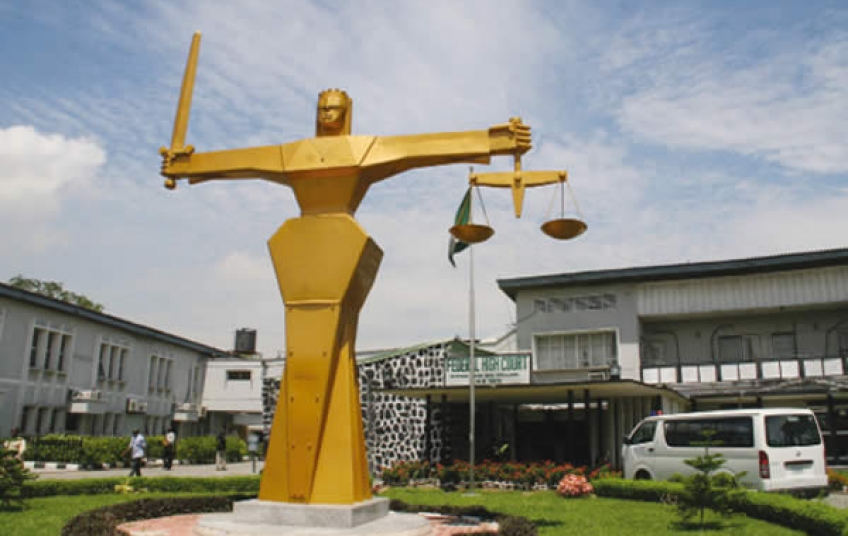
A high-profile ₦10 billion fraud trial took a dramatic turn on Thursday after a Federal High Court judge ordered an investigation into alleged tampering with key evidence, including the deletion of WhatsApp messages from a device submitted in court.
Justice James Kolawole Omotosho directed the Nigeria Police Force and the Department of State Services (DSS) to probe the court’s registrar, Nasiru Onimisi Zubairu, alongside a defendant in the case, Daudu Sulaiman, over the alleged interference with exhibits.
The exhibits—mobile devices and digital records—were tendered by the Economic and Financial Crimes Commission (EFCC) as part of its case against Ali Bello, Chief of Staff to the Governor of Kogi State.
Confession in Open Court
The order followed a startling disclosure by the judge that the court registrar had privately confessed to him that Sulaiman allegedly approached him to alter evidence.
According to Justice Omotosho, the registrar admitted that he was asked to delete specific WhatsApp messages from a phone already admitted as an exhibit before the court.
“I have to disclose it… We have zero tolerance for this kind of conduct,” the judge said, emphasizing the court’s policy of transparency and early disclosure.
In a rare move, the judge played the registrar’s confession in open court and directed him to recount the incident publicly.
Taking the stand, Zubairu told the court he was promised a house in exchange for deleting certain messages.
“I was asked to delete some WhatsApp messages in the exhibit, with a promise that I would be given a house,” he said, citing personal accommodation challenges as a factor.
Missing Messages Raise Red Flags
An EFCC investigating officer, Mohammed Audu Abubakar, revealed that several messages originally extracted from the device were no longer present.
The deleted chats, spanning 2020 to 2022, reportedly included conversations referencing large cash movements, with entries such as:
- “Hudu will bring it now”
- “Hudu is bringing ₦100 million”
- “₦60m is on transit”
- “Hudu is on his way to Abuja with ₦30m”
The court was told that some of the missing messages also referenced individuals linked to the Kogi State Government, with noticeable gaps in chat records between key dates.
Abubakar stated that the messages were intact during the investigation phase but had since been erased from the device submitted as evidence.
Prosecution Demands Action
Reacting to the revelation, Director of Public Prosecution of the Federation, Rotimi Oyedepo (SAN), described the situation as deeply troubling and indicative of possible deliberate interference.
He urged the court to order an immediate probe, calling it an “urgent and irresistible suspicion” of evidence tampering.
The prosecution also applied for the revocation of the defendant’s bail and requested a forensic examination of the device to determine the full extent of the deletions.
Defence Urges Caution
Defence counsel expressed shock at the allegations but appealed to the court to allow due process, urging that conclusions should await the outcome of the investigation.
Court Orders Probe
In his ruling, Justice Omotosho directed both the police and the DSS to conduct a thorough investigation and report back to the court.
The case was adjourned to February 9, 2026, for continuation.
Wider Implications
The development has raised fresh concerns about the integrity of judicial processes in high-stakes corruption cases, particularly those involving digital evidence.
Legal analysts say the outcome of the probe could have far-reaching implications, not only for the ongoing trial but also for public confidence in the handling of sensitive exhibits within Nigeria’s judicial system.