Home Blog Page 871

Who Will Pray For Me Again, By Martins Oloja

That was a thorny question one of my sisters was asking emotionally as the undertakers were lowering the casket bearing the remains of my father last Friday afternoon. I was shaken that I would not see the ‘Baba Aladura’ again. Every one of the ten surviving children was sobbing, muttering nonsensical things as we were bidding him goodbye at the graveside. The question: ‘who will pray for me again? re-echoed while the pastor who prayed for the family in the house reminded the widow about the significance of that emotional outburst when he (the pastor) reminded me and the widow about how to fill the gap my father left behind as the chief priest for the family.All the testifiers from neighbours, through relations to the children recalled at the modest but remarkable wake-keep on Thursday Papa’s unique role as a prayerful father and arrowhead. As soon as you appeared before him over the years, his first assignment was a word-based prayer: he always prayed directly from the word of God especially in Psalms. He demonstrated in his prayers at all times that our Creator should be praised and adored first before asking for anything. Yes, he knew how to praise God in most of the names the scriptures have revealed to us. We were always ever willing to kneel before Him to hear more names of God. My dad knew the power in praise more than prayers for material things. As that my sister, Itunu asked that question, who will prayer for her again, I realised too that there would be no one to pray for me too in Psalms, Ecclesiastes, Proverbs and the exact words of Christ from His sermon on the Mountain.

Pa Michael Oloja Lemikan

Uundoubtedly, we will all miss the man who taught me how to manage my emotions even in the face of crisis. Yes, Pa Michael Oloja Lemikan was never angry about anything. Even when you deprived him of anything and even cheated him, he would only smile and ask God to be with you. No one heard any harsh words from him. He was always quite witty. He was a clean man who also cherished a good dress-ence. He would always remind you about a clean God who would not tolerate dirty environment. Before returning to the significance of my father who just left me to my devices, I would like to thank friends and relations who made me realise that despite the harsh environment that our duty bearers have just imposed on us, there is still love in my country. My friends and relations most of whom were never invited honoured me in my modest town, Ajagba which is about 30 minutes away from Ore where the civil war ended in 1973 in today’s Ondo state. I would like to be grateful to the late Olusegun Agagu who as Governor of Ondo State opened up the Ore-Irele-Omi-Ajagba-Agadagba axis road networks. May the good Lord continue to bless the memories of Agagu who also made our neighbours, the Ilaje to be able to drive to their ancestral homes since creation. Anytime I travel home I pray for repose of the soul of Agagu. May the good Lord continue to bless his family. My guests from Abuja and Lagos could not lament getting to my town In Irele Local Government. They got there on good roads. I hope more governors could get accolades when they are no longer there. I hope more people in power would learn to number their days so that they could apply their hearts to wisdom – that there will be the judgment of men too here on earth before they face their Creator for the consequences of their stewardship. May Agagu’s soul continue to Rest In Peace! Sorry about the digression, no thanks to the way Agagu actually broke the power of road transportation darkness over the old Okitipupa Division. I can’t continue to mention all the names of those who were there physically. I would also like to say, Thank you’ to those who sent messages to me across digital platforms. I thank those who inquired about the promised virtual participation. There were technical hitches, which made that impossible. Accept my sincere apologies. I am still overwhelmed by emotions including those from my national media family. And The Guardian family’s pleasant surprise…Who am I that The Guardian family has been mindful of me? They came to Ajagba, they saw my sleepy, modest town and painted the place red. They helped me to pay my father the last respect. I had never seen anything like that before: 55 of them from all the departments of the flagship of the Nigerian press were there. They contributed and bought a cow for me. They organised without leaking it to me. They brought the cow live through our Ondo State Correspondent.  The Lagos and Abuja integrated newsroom did this to me. The Business Operations situation room also did wonderful things. Some individuals in the same commercial sections contributed to bring their preservation facilities with food items from Lagos. They also brought Plan B drinks – just in case of their ‘anti-social’ chief servant’ could lack in capacity to play host to too many people. They brought the day’s newspaper issue. I was sober. They made me realise the significance of an ancient word that there are some friends who stick closer than brothers. I am  overwhelmed by the outpouring of love by the ‘The Guardian’ great family.  All I can say is that I am very, very grateful to the Board that made this happen. I will forever remain grateful to the Alex-Uruemu Ibru family that built this great media empire, which has remained credible and influential. I will forever remain grateful to the God of all flesh who has supplied the grace to sustain One Love that has kept us together. The covenant-keeping God will not allow us to fail. He will not allow us to falter. He will not allow us to fall from grace. His grace will continue to be sufficient for us in Rutam House where we have all pledged to work together for the rise and rise of ‘The Guardian’. Who am I really that ‘The Guardian’ family rose for me at the weekend in a remote village? I will continue to probe the question: who am I that my people in Rutam House were mindful of me this last weekend? My Significant Dad My father wasn’t a prominent person but he was part of those Rick Warren would like to tag as significant persons who don’t have to be prominent anyway as so many prominent people in this our broken world are not significant to God and mankind. He was born some 93 years ago to the family of  Pa Eyinmonoren Lemikan and Mama Medunrunmonen Lemikan, both of Blessed memory. They were peasant farmers. Principally, Elder Oloja was literate to some extent. Pa Oloja was a farmer, hunter, a trained local medicine dispenser and an itinerant chemist who would keep his medications in a box. He was a local musician and a very artful dancer. He served as Chairman of the Parents Teachers Association of Local Authority Primary School, Gboroye, Ajagba (I attended) for so many years before relocating to Ode Ajagba. He was a community leader of some sort. My father became a Christian very early in life by joining a Baptist Church in Gboroye Village and used his knowledge of the scriptures to serve God. He was indeed a devout Christian who dedicated himself to cultivating peaceful relationship with people across ethnic groups, which resulted in extending his friendship beyond ethnic and tribal groups. My dad could speak English, Edo, Urhobo and Itshekiri, among others. He was a compassionate father to all his children and younger ones within the nuclear and extended family settings. He was not just a preacher of the word, he was a peacemaker and dispute resolution expert throughout his lifecycle. Note this: my dad never used forceful words or arms on anybody. There is a sense in which we can conclude that he was busy throughout. There was no dull moment for him even in his old age, in his house. The got married to the late Mrs Alice Oloja as his first wife and later married Mrs Ruth Oloja Lemikan, the only surviving wife. He left behind ten children, many grandchildren and great grand children. In his prime time, he kept four bossom friends outside his community. They were Aghonenbaren from Kiribo, a town in present Ese-Odo Local Government Area in Ondo State, Elder Kosoko from Igbekebo in the same Ese-Odo LGA, Elder Peletu from Igbotu in the same Ese-Odo and Uwenmajega who hailed from the Urhobo-speaking Delta state. They were always exchanging visits when they were younger. I believe this was why my dad’s favourite delicacy till his demise was unripe plantain cooked with pepper-soup source made of dry or fresh fish. But all the aforementioned friends of my dad had died earlier. My father joined them on September 14, 2021.My dad who had a sobriquet ‘Bebebokaja’ for his dexterity in dancing would be sorely missed as a man who didn’t like chieftaincy titles either in the church or in flesh. He hated anything that could be interpreted to mean worshipping of idols or other gods he regarded as the works of men. That was why all of us his children could have asked that question: who will pray for us now that our prayer warrior had gone to be with His creator? Certainly, as the Lord liveth, I think as the firstling (the one who opened the womb of the wife of his first love) the answer should not blow for too long in the wind. Thank you all for your messages of love and hope. May the God of all grace teach us in the end to number our days, that we may apply our hearts to wisdom. I can’t forget all the Ministers of First Baptist Church Ajagba, Ode Irele, Akotogbo,  especially Pastor Babafemi Omolade Aiyela who is the Minister-in-Charge of First Baptist Church, Ajagba for their services at the wake-keep and the final funeral service. Thank you all. Good Night my significant dad!

Five Factors Will Determine #Nigeriadecides2023

By Chidi Anselm Odinkalu

Despite recent advances in Malawi and Zambia, elective government stutters and sputters to the uncertain rhythms of pathogens and politicians across Africa. The onset of 2022 has served notice that Nigeria’s 2023 general election, #NigeriaDecides2023, is likely to be the most complex and most watched in a brutal biennium for elective governance in the continent.

In Mali and Guinea, these uncertainties have produced military coups. In Ethiopia, it has led to a civil war. The electoral landscape in Africa over the next biennium reads like a minefield. Among the countries scheduled to vote, “Libya, Somalia, Mali, Guinea, and Chad are all tentatively scheduled to hold elections that have been delayed or disrupted by coups or conflict.” Some of these may slip. The general elections in Kenya and Angola in 2022 will also be closely watched.
In 2020, at the beginning of the COVID-19 pandemic, Steven Levitsky and Lucan Way wrote that Africa was increasingly a hotbed of “competitive authoritarianism”, which they describe as “a type of regime in which the coexistence of meaningful democratic institutions and serious incumbent abuse yields electoral competition that is real but unfair.” Nigeria is among the 21 African countries which fall into this category. The one time there was a let up in 2015, the country experienced electoral alternance.
On 27 April 2021, Nigeria’s Independent National Electoral Commission, INEC, served a 660-day notice of the date for the next general election, which will occur on 18 February 2023.
Nigerian politicians like to claim that an election is a game of numbers. That is not actually accurate; elections are about counting and accounting. As a country, Nigeria has historically not distinguished itself in either enterprise.
You can have numbers without counting. In June 2020, Andy Uba manufactured entirely fictional numbers for a party primary that took place only in his imagination to emerge candidate of the All Progressives Congress (APC) in the governorship election that took place in November 2021. In the case of Rtd. Cpt. Ahmed Haladu Bichi & PDP v. Alhaji Ibrahim Muazzam & Others, Petition No. EPT/KNS/HR/29/07, the election petition tribunal in Kano accused INEC of indulging in institutional “abracadabra”. In Chief (Mrs.) Edith Ejezie v. Hon Ralph Okeke & Others., Petition No. EPT/AN/NAF/HR/13/2007, a separate tribunal in Anambra found INEC guilty of “generating of results for an election that did not hold.”
Competitive authoritarianism is a system that seeks to confer legitimacy on electoral abracadabra through mechanisms of incumbency, including coercion, menace and institutional forgeries. Electoral abracadabra is not an event. It is the result of a multi-system process usually set up over an election cycle. It has many actors and components, nearly all of them within the state sector. Whether Nigeria will continue with this squalid tradition in 2023 will depend on several factors. Five will be pivotal.
First, the independence of INEC itself. 2023 will put to test whether INEC has improved from its default for abracadabra. Electoral systems at the end of the day are run by human beings. When they are crooked or lacking in independence and integrity, the elections are compromised. Already there are reports of “serious concerns in INEC that preparation for the 2023 general elections may not command public confidence.”
The ruling party APC has clearly not been wanting in intent to compromise INEC. Last July, the National Assembly reluctantly rejected the unlawful nomination for the position of INEC Commissioner of a card-carrying member of President Buhari’s ruling APC. The ruling party has used attrition to get rid of INEC’s independent commissioners. Credible sources within INEC report that during the Anambra governorship election, a state governor in south-east Nigeria repeatedly threatened an INEC Commissioner from the same region that he would be replaced if he did not comply with the need for the governor’s party to corrupt the election. His party lost the election. The Commissioner has recently been replaced with a nominee who is himself a staff of INEC. In 2019, the regime sought to intimidate the same commissioner by deploying the State Security Service (SSS) to arrest him in the middle of the general election. His crime was that he could not be bought or sold. The Commissioner for logistics, a retired Air Vice Marshall, has also been replaced. In July and August 2022, the tenure of at least 23 Resident Electoral Commissioners (RECS) will lapse. Their replacements will have less than six months to bed in before the 2023 elections. If this trend of replacing experienced commissioners of integrity continues, INEC will not be able to salvage any credibility from the 2023 elections.
Second, technology. INEC has been quite voluble about the Bi-Modal Voter Accreditation System (BVAS) as its answer to Nigeria’s chronic problems of voter accreditation and ballot collation. This system had its first major outing in the Anambra governorship election last November. BVAS is geospatially dependent. It is also broadband dependent and needs 4G to guarantee functionality. Anambra is Nigeria’s second smallest state at 4,844 km², with a dense population, in which communities live cheek-by-jowl with one another. The next two states in which INEC will audition BVAS before the 2023 presidential election, Ekiti (6,353 km²) and Osun (9,251 km²), combine for only 15,604 km² of landmass or nearly the size of Lagos State smaller than the smallest state in northern Nigeria, Gombe State (18,768 km²).
By contrast, Niger State, the biggest state in (northern) Nigeria at 76,363 km² is about two and a half times the size of Oyo State, which at 28,454 km² is the largest state in southern Nigeria but only the 14th in the country. In Anambra, INEC could get away with the electoral frustrations of BVAS but they are unlikely to do so in Zamfara State with 39,762 km² or in Taraba State’s 54,473 km². Despite its evident geospatial sensitivities, BVAS will only have been tested in three relatively small states of southern Nigeria before the 2023 elections but nowhere in the north. A situation in which BVAS can only be deployed in Southern Nigeria in 2023 but not in the North will rather problematic, to put it mildly. With 4-G coverage of Nigeria realistically unlikely to break 65% in the next year, the elections could be decided in Nigeria’s telecommunications blindspots.
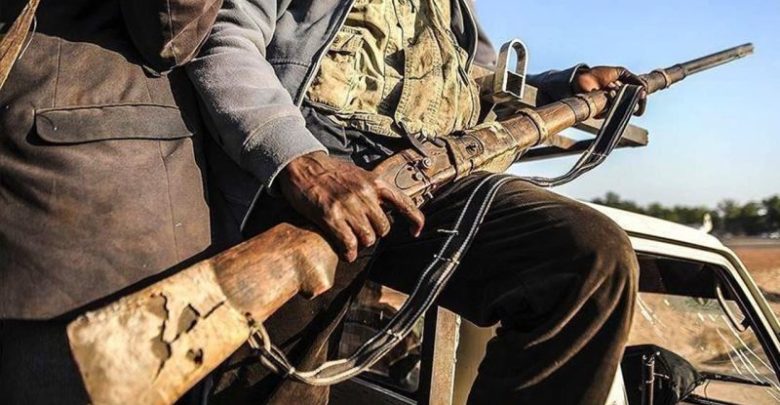
Third, violence. 2021 recorded the worst toll in deadly violence in the country since 2015. The United States Holocaust Memorial Museum’s Early Warning Projections for 2021-22 ranks Nigeria 8th in the global list of countries at risk of mass killings. Access to illegal firearms has been democratized. At the beginning of 2022, the Auditor-General of the Federation reported “the total number of lost firearms (from the Nigeria Police Force) as reported as at December 2018 stood at 178,459 pieces. Out of this number, 88,078 were AK-47 rifles.” The numbers are likely to have grown vastly since 2018. To police the Anambra election last November, the country deployed nearly 14% of active-duty police assets, supplemented by other security agencies. There will not be this proportion of assets available in a general election. In the absence of any credible ideas for diminishing the current trajectory of violence in Nigeria, INEC will struggle to find election administrators and numbers will be manufactured from places where no voting can take place.
Fourth, judicial capture. Every election cycle in Nigeria has three seasons. The campaign season belongs to the parties, the politicians and their godfathers. This is followed by the voting season, during which the security agencies and the Independent National Electoral Commission hold sway. Thereafter, matters shift to the courts for the dispute resolution season, which belongs to the lawyers (mostly Senior Advocates of Nigeria, SANs) and judges. Invariably, the judges will cast the final votes in the 2023 elections. The politicians know this and they have been busy getting their judicial inoculations and boosters in a competitive game of judicial capture at different levels of the judicial hierarchy. As Supreme Court Justice, Centus Nweze, pointed out in March 2020, Judges can do a lot of damage by arrogating to themselves decisions that only the collective of voters in any constituency are allowed by the constitution to make. Imo State under Hope Uzodinma provides tragic proof. The judges who have accused INEC of procuring electoral abracadabra are themselves avid exponents of the dark art of judicial abracadabra. In 2023, this jurisprudence of abracadabra could cost us the country.
The final factor could be the Electoral Act. Nigeria’s current Electoral Act is in arrears. In six years in power, President Buhari has never seen an Electoral Act that he could assent to. As Owei Lakemfa has pointed out, on four occasions in that period, Buhari has, under different artifices, declined assent to the Electoral Bill passed by the National Assembly. The design seems clear: by enabling a tyranny of artisanal manipulation, he configures an electoral landscape favorable to the party that controls the official mechanisms of coercion and the state violence. That is his party. If he continues on this path, Nigeria’s 2023 election could be a tragic farce with deadly consequences for the country and beyond.
The landscape is still in flux and will evolve. Nigerians – civics, politicians, organisations and all – and Nigeria’s international friends and partners can enhance the odds on a credible contest in 2023 by affecting each, some or all of these factors. The stability of West Africa and beyond could depend on how much they succeed or fail in doing so.
A lawyer and teacher, Odinkalu, can be reached at [email protected]

The Rights of a Child in Nigeria

By Nneamaka Onyema

Introduction

The rights of a Nigerian child are enshrined in several metropolitan laws and global instruments.

Who is a child in Nigeria?

The term “Child” has been defined in various terms to adjust to areas for which a purpose is served. For instance, Section 29(4) of the 1999 Constitution of the Federal Republic of Nigeria (FRN) defines a child as any person under the age of 18.

The United Nations Convention on the Rights of the Child defines child as a human being below the age of 18 years unless under the law applicable to the child, majority is attained earlier.

The term “Children in conflict with the law” refers to anyone under 18 who comes into contact with the justice system as a result of being suspected or accused of committing an offence.

These various laws and instruments are made based on sure fundamental ideologies connecting to the advancement of human continued existence, avoidance of hurt, promotion and sustenance of human dignity and the enhancement of human development. These ideologies identify the intricate theory that the child is the foundation of humanity and he or she guarantees its continuity.

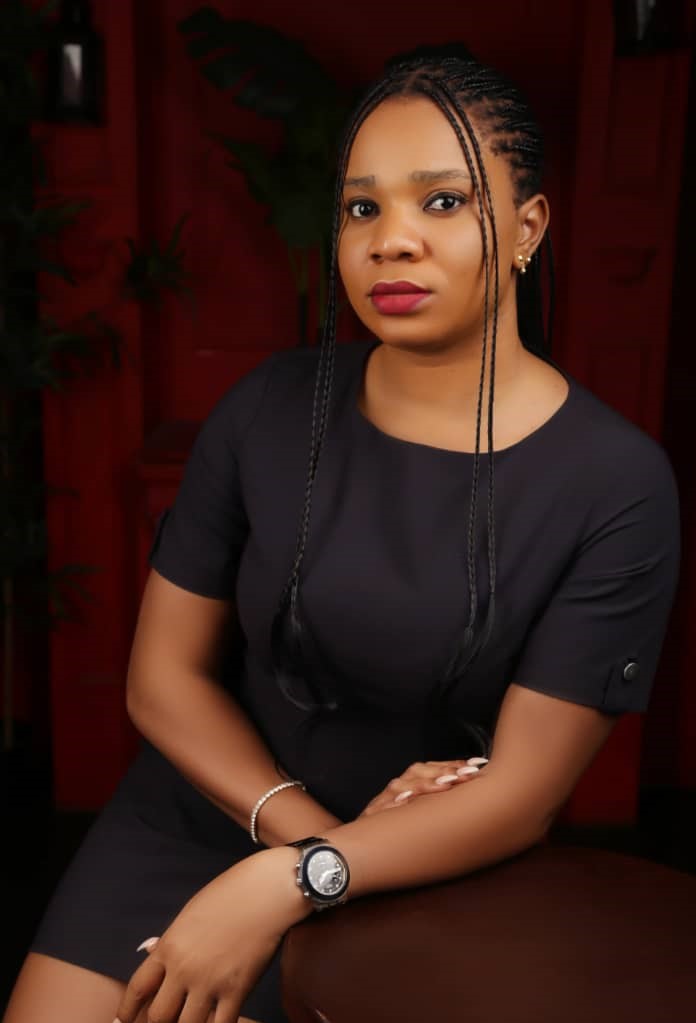
Nneamaka Onyema

The Legal Rights of a Child as enshrined in Nigerian Laws

Chapter IV (Section 33 – 46) of the 1999 Constitution of the Federal Republic of Nigeria (FRN) provides for the fundamental rights of every person including children.

These rights include:

  1. The Right to life (Section 33)
  2. The Right to dignity of the human person (Section 34)
  3. The Right to personal liberty (Section 35)
  4. The Right to fair-hearing (Section 36)
  5. The Right to privacy and family life (Section 37)
  6. The Right to freedom of thought, conscience and religion (Section 38)
  7. The Right to freedom of expression and the press (Section 39)
  8. The Right of freedom of movement (Section 40)
  9. The Right to freedom from discrimination (Section 41)
  10.  The Right to acquire and own immovable property anywhere in Nigeria (Section 42)
  11.  The Right against compulsory acquisition of one’s property without compensation (Section 43)

In addition to the rights provided by the Nigerian Constitution, the Child’s Rights Act of 2003 expands and provide for more defined rights specific to the protection of the rights of the Nigerian Child.

The Child’s Rights Act (2003) is the law that guarantees the rights of all children in Nigeria, providing for the best interest of a child to be of paramount consideration in all actions. It also provides for a child to be given protection and care necessary for his or her wellbeing.

The rights and responsibilities of a child are enshrined in Part II (Section 3 – 20) of the Child’s Rights Act 2003

These rights include:

  1. Application of Chapter IV of 1999 Constitution (Section 3)
  2. Right to survival and development (Section 4)
  3. Right to name (Section 5)
  4. Freedom of association and peaceful assembly (Section 6)
  5. Freedom of thoughts, conscience and religion (Section 7)
  6. Right to private and family life (Section 8)
  7. Right to freedom of movement (Section 9)
  8. Right to freedom from discrimination (Section 10)
  9. Right to dignity of a child (Section 11)
  10. Right to leisure, recreation and cultural activities (Section 12)
  11. Right to health and health services (Section 13)
  12. Right to parental care, protection and maintenance (Section 14)
  13. Right of a child to free, compulsory and universal primary education, etc.(Section 15)
  14. Right of a child in need of special protection measure (Section 16)
  15. Right of the unborn child to protection against harm, etc. (Section 17)
  16. Contractual rights of a child (Section 18)
  17. Responsibilities of a child and parent (Section 19)
  18. Parent, etc. to provide guidance with respect to child’s responsibilities  (Section 20)

The CRA 2003 further provides for punishment for child marriage and betrothal, child trafficking, use of children in criminal activities, abduction, exploitative labour, forms of sexual abuse and exploitation, tattoos and skin marks, harmful publication, exposition to narcotic drugs and psycho-tropic substance, recruitment of children into the armed forces amongst other exploitations and unlawful engagements of a child.

The law also provides for immediate provision of safe foster care and shelter for a child endangered in his or her immediate environment.

Several States, including the Federal Capital Territory (FCT), have adopted the CRA. However, some States in Nigeria are yet to domesticate the Child’s Rights Act and it is expedient that they do so without further delay for the protection of children in their States.

ONYEMA, Nneamaka Esq., Legal Practitioner| Chartered Mediator & Conciliator| Girl-Child Advocate| Humanitarian is based in Abuja.

Ritual killing: How Oba Samuel Adeniran Asusumasa Atewogboye II was sentenced to death in 1949 for killing a baby

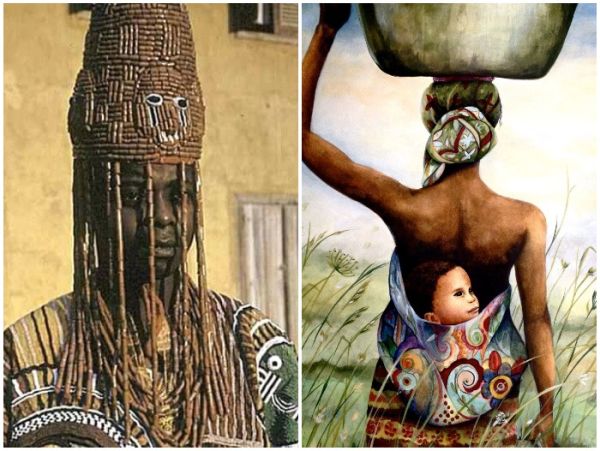
Oba Samuel Adeniran Asusumasa Atewogboye II Photo Credit: Ekohotblog

Oba Samuel Adeniran Asusumasa Atewogboye II was sentenced to death in 1949 for killing a baby for ritual.

On a Monday morning that started out like every other day, the 10th of January, 1949, something unbelievably nasty was to occur. An event so brutal it shook the helpless community to its very core. In the rustic compound of Mr. Ojo was a 15-month-old baby girl whom he and his adorable wife joyfully named Adediwura (meaning royalty or crown has turned to gold). Not bothered with any problem in the world, she was busy playing.

Unknown to the family, the crown of the Efon-Alaaye was soon going to turn their own crown into a calabash of blood. All of a sudden, someone noticed the little girl playing within the compound was nowhere to be found. It was as if she just vanished. Ha!

What type of a bad joke is this, the father must have mused. But it was no joke. After checking every plank and crevice in the compound, the parents knew something terrible was amiss. Their child was gone! Just like that!

By that moment, the mother was already on the edge of lunacy. As the sun became hotter and the day entered afternoon with her daughter nowhere to be found, the frenzied woman burst into full-scale madness. She just could not bear it anymore. She heaved her whole body in the air and landed on the ground, throwing herself all over the place several times with hot tears streaming down her face, her non-stop wailings attracted bystanders, neighbours, and sympathizers. Who was playing this crazy joke with a child?

Her hormones boiled, the maternal instincts kicked in, she ran out of the house into the sun and she let out a piercing cry:

“My child has been kidnapped!”

 Confused and equally worried, her husband and other concerned members of the compound and family quickly mobilized a small army, had a swift meeting and they all agreed the next thing was to approach the number one person in charge of their welfare, their beloved king – the Alaaye of Efon Alaaye. After all, the king is the father of everyone and if any child in the community is missing, it is the king’s child who was missing.

 With the speed of light, the chaotic party was soon at the palace. With pitiful tears in their glassy eyes, hot mucus meandering down their nostrils, and glistening sweat covering their dark tropical skins now utterly covered with dust and worry, they outlined exactly in weak voices what happened to the king. With the crown of his ancestors perched on his head, the Alaaye listened with rapt attention to the tragedy that was unfolding before his very throne. He told them to return home that the issue will be looked into.

After several hours, the Alaaye of Efon-Alaaye, Kabiyesi Oba Samuel Adeniran Asusumasa Atewogboye II, organized a search party to sniff out the missing child. But it was all a waste of time. They searched every nook and corner of the kingdom, called for help from the villagers and police but nothing that remotely resembled the child was even found. Exasperated, the colonial representatives and police messaged Lagos for further help from the Central Investigations Department (CID).

 But where was the child?

Well, you will recall that the girl was playing in the compound while her parents busied themselves with house chores. It was in an instant that an herbalist pounced on the girl and kidnapped her. He must have been surveying the compound to know precisely when to attack. He hid the tiny child under his flowing traditional garb called an agbada and whisked her off to his house.

At night, he then told his wife to carry the child on her back to the house of another person. The next day, while the parents of the child could not sleep, the kidnappers took the child straight to the palace. The girl was brought before the king, Kabiyesi Oba Samuel Adeniran Asusumasa Atewogboye II. With a wave of his authority, the poor girl was butchered right in his presence.

After the bloody slashings, the king then brought out kolanuts and made everyone present to swear to an oath of secrecy. Anyone who leaked the secret was expected to die, according to the useless covenant they had. The corpse was then mutilated and dismembered, her eyes were gouged out of their sockets and put in a container carried by a first individual. Then her tongue was sliced off and put in another container held by a second individual. Both individuals then ferried these body parts through a door that led to the living quarters of the Oba To Ba Lori Ohun Gbogbo (king). What evil can be greater than a leader betraying his own people?

Photo Credit: Daily Advent Nigeria

After completing this phase of their criminal operation, they took what remained of the lifeless body of the girl to the forest around the Christian Missionary Society (CMS) Church and buried it there.

 The police swing in and a dramatic trial ensues

The parents remained traumatized and on the 10th of February, 1040, a team of police detectives (Chief Inspector Aruah, Sergeants Sule Agbabiaka, and Olawaiye and Police Constable Ariyo) stormed Efon-Alaaye. They commenced work without wasting time and within 48 hours, they were able to establish that the cute Adediwura may have fallen a victim to the antics of ritual murderers.

On Monday 14th February 1949 (a day of celebration of love), the Daily Times newspaper blew its trumpets as it reported the criminal case nationwide. The people of the British protectorate of Nigeria shuddered with terror and recoiled with shock at such brutality. But unknown to them, the worst was yet to come.

Not long after the detectives arrived, three suspects linked to the murder were rounded up and arrested. They were Enoch Falayi, Gabriel Olabirinjo, and Daniel Ojo. Falayi was the native doctor and herbalist mentioned earlier, he was the personal spiritualist and consultant to the Alaaye (king), he was the one who kidnapped the girl as she was enjoying her play. The other two suspects were his messengers.

In early April, the coroner inquest to the murder opened at the Obokungbusi Hall in Ilesha under Magistrate W.O Egbuna, he was the one in control of that particular jurisdiction.

But then, something very interesting happened. The case assumed a new twist when one of those in police custody decided to leak everything and damn the consequences of the covenant they had. He confessed and nailed the royal coffin as he mentioned the name of the king as being the brain behind the whole violent crime. Kabiyesi Oba Samuel Adeniran Asusumasa Atewogboye II was immediately arrested. I want to repeat here that at this time, there was no country called Nigeria, it was a protectorate of the British Empire under King George VI but the justice system was incredibly efficient and it was obvious no one was above the law – not even the king, the second-in-command to the gods. Representing the Crown at this trial was Mr. Lloyd Crow.

As the people of Efon-Alaaye were trying to recover from the shock that their arrested monarch could be the brain behind the most savage killing in the land, the case was then transferred to Akure High Court. The stage was set for the trial of the decade.

Justice NS Pollard was the trial judge and before him were 21 witnesses ready to vomit all forms of evidence. One of them was Aina Ola and she wasted no time in revealing that it was Enoch Falayi the herbalist who grabbed Adediwura and stuffed her under his agbada.

To make things worse for the ritualist masquerading as a herbalist and native doctor, his own wife, Owomobi, also provided further evidence saying the child was kept in their house, and in the cover of darkness, she was forced to carry the child on her back to the residence of the second accused, Gabriel Olabirinjo.

In a testimony that added more nails to the royal casket, Ojo Olofa on his own testified that the child was taken to the palace the following day and it was in the presence of the king that the innocent kid was murdered with brutal cuts. He also gave further details of what happened to her body parts and subsequent burial, all mentioned earlier.

Once all the witnesses gave their evidence, the Crown counsel, Mr. Crow proceeded to submit that the statements of the three principal witnesses – Aina Ola, Owomobi, and Ojo Olofa were more than enough for the conviction of Falayi, the crooked herbalist.

But the legal drama was just starting. The defence counsels launched their own counterattacks as they insisted that the three witnesses were accomplices and therefore, their evidence needs to be corroborated.

However, the trial judge, Justice Pollard, ruled that he was satisfied that Aina Ola could not be considered as an accomplice, and as such, her evidence was enough corroboration of the concealment of Adediwura at Falayi’s house and the subsequent transfer of the child to the palace. Thus, Falayi was pronounced guilty. Gbagam!

That was not all, the Crown counsel Crow also submitted that the confessional statement provided by Gabriel Olabirinjo and Ojo Olofa’s evidence was a total corroboration of the second accused person’s guilt. And it gets more interesting as his lawyer, Bode Thomas, argued that his client made the statement under duress and so it should not be accepted as evidence. But again, Justice Pollard disagreed. He stated that he was satisfied that the accused evidence was made voluntarily and freely. And without wasting time, the judge slammed him with a guilty verdict too. But Daniel Ojo was lucky, he was acquitted for lack of substantial evidence again him.

So what happened to the criminal king? As for Kabiyesi Oba Adeniran, the Crown counsel submitted that the evidence revealed clearly that he did not only have the intention to kill but also took part in the ritual murder of baby Adediwura. He then directed the court to the evidence of Ojo Olofa and Owomobi. The prosecuting counsel further prayed to the court to take into consideration the countenance of the Oba which he said, already showed him as someone with guilty mind. Okay, now wait for this.

The lawyer to the king, Chief Obafemi Awolowo (yes the same African chief on the N100 naira note) fired back. He argued that since the king rendered helped the parents of the deceased and the parents by organizing a search part. Awolowo said that alone was enough to wash the royal robe clean of all blood. He did not stop there, he said as an Oba, it was possible that some of the enemies of the king wanted to deal with him by involving him in the gruesome killing. Awolowo dismissed all the evidence presented against his client: he branded them as circumstantial.

However, to the disappointment of Awolowo, Justice Pollard did not agree with him. The judge said that saying some enemies in the town vowed to implicate the king in the murder was nothing but a baseless afterthought. In short, the judge gave Awolowo and legal park well. The worst was yet to come for Awolowo and his client. The stern trial judge dropped the bomb when he eventually found the king guilty. The king must have thought he was having a bad dream when Justice Pollard sentenced him to death. Also sentenced to the graves were the other accused persons.

NB: Also integrally involved in this case is a particular Mr. Oye, said to be a first-class criminal case investigator who made the success of the prosecution possible.

The accused persons were like “lae lae kole happen! do you know who we are” and so they marched straight to the West African Court of Appeal (WACA) where they appealed the decision of the trial court. At WACA, they stood before the Chief Justice of Nigeria, Justice John Verity who presided with two other justices.

The appellate court listened to their pleas and reached the following conclusions:

  • Although the disappearance of the child was reported to the Oba early in the afternoon, he as the head of the town did nothing until twilight.
  • Five days after the disappearance, the Oba sent for the constable to say he had information that the child will be found at the forest near CMS compound.
  • Upon the arrest of Enoch Falayi, he ordered his release because he claimed that Falayi was his ‘doctor’.
  • The corps found the mutilated body exactly where the Oba said the police would find it.
  • The court held that even though these findings were circumstantial, the statements of other accused persons, and the ones read to him by the police which he confirmed, have already proved his guilt. The court specifically quoted Gabriel Olabirinjo’s statement read to the Oba by Sergeant Agbabiaka which the Oba, the Alaaye of Efon-Alaaye did not deny. The statement went thus:

‘I was in the palace of Alaaye of Efon at night, I saw Enoch carry one girl under his gown into the palace. He placed the girl under the staircase in the palace…Enoch left to call Alaaye…Alaaye came and saw the girl. He said Enoch should do her as he said he would do her….He carried the cigarette tin (in which the eyes and tongue were contained) to Oba Alaaye…The following night Oba Alaaye asked whether the corpse of the girl had been cleared…’

Justice Verity then concluded: 

‘With acceptance of that statement as evidence of tacit admission of the facts therein, there is not only ample corroboration of the evidence…it goes further and is evidence of admission of facts from which no other conclusion is possible than that the appellant counseled and procured the murder of this child and was rightly found guilty thereof.’

Upon this final pronouncement, Kabiyesi Oba Samuel Adeniran Asusumasa Atewogboye II, the 43rd Alaaye of Efon-Alaaye, his herbalist and one of his servants and Gabriel Olabirinjo, were all hanged to death. The year was 1949.

NB: John Verity (1892 – 1970) was a British expatriate judge who was Chief Justice of Zanzibar from 1939 until he was appointed the Chief Justice of British Guiana in 1941. He was appointed the Chief Justice of Nigeria in 1945. After the end of his tenure in Nigeria, he was Commissioner of Law Revision, Nigeria co-authored a report with Chief Atanda Fatai Williams (later Chief Justice of Nigeria from 1979 – 1983) on the revised laws of Western Nigeria.

 REFERENCES

ABIYAMO
Selected Judgments of the West African Court of Appeal, Volume 12, West African Court of Appeal, Government Print Department, 1946, page 492.
Oba Sentenced To Death For Ritual Killing by Mustapha Ogunsakin
The Origin, Growth and Development of Efon Alaaye Kingdom by Adeware Alokan, Timade Ventures, 2004.

Official Website of Efon Alaaye http://www.efon-alaaye.ekiti.com/

Originally published on https://www.gbetutv.com/oba-samuel-adeniran-asusumasa-atewogboye-ii-sentenced-to-death-for-killing-a-baby-for-ritual-in-1949/

“Use/Demand for Foreign Currency in Nigeria is a Crime”.

DAILY LAW TIPS
By Onyekachi Umah,Esq.
(Tip 117)

The only allowed currency in Nigeria is Naira. It is an offence punishable with 6 months imprisonment or fine of #50,000.00 for any person(Nigerian or Foreigner), business, professional, school, church, hotel, company, consultant, agency or group, etc (whether locally or internationally owned) to pay, offer, demand, receive or use any currency other than Naira in Nigeria. The Central Bank of Nigeria has power to exempt and has in writing exempted some government agencies from this law.

See section 20 of The Central Bank of Nigeria (Establishment) Act.

Mummy G.O And Jonathan’s Rumoured Return, By Reuben Abati

“How far? Is it true that your boss is going back to Aso Villa? I read that some of his aides, I don’t know whether you are one of them, are advising him not to come back because you don’t trust President Muhammadu Buhari who seems to be his chief promoter?”

“Do you have any concrete evidence that President Goodluck Jonathan wants to be President again? I thought in 2015, you people argued that he had done two terms and allowing him again would amount to a violation of the 1999 Constitution. I am surprised that the same people who did not want him in 2015, are the same ones now saying he is the best man for the job?”

“I didn’t say so. I asked you a question”

“I have nothing to say to you.”

“But you must know something”

“I don’t know anything”

“But you must have an opinion”

“I don’t have any opinion. What I can say to you is that in a recent interview President Muhammadu Buhari disclosed that he really has no interest in who succeeds him in 2023, and he then contradicted himself when he said that even if he has a preferred candidate, he would rather not name him, so that the person would not be eliminated before the election.”

“But we all know he and President Jonathan have been holding meetings. Your boss is a regular guest in the Villa.”

“How regular, if I may ask?”

“We see the photos in the media. They seem to be very close, these days. Don’t you think there is something to it, the same President Jonathan that the Buhari administration used to blame for everything that went wrong with Nigeria, now he and his successor are always seen together.”

“And you have a problem with that? Is it not a good thing that the predecessor and his successor are seen to be working together? Both of them are members of the Council of State. They are both statesmen. They have a bigger stake in this country than you and I put together.”

“Forget about stake, please. We are all entitled to just one vote. What we are saying is that President Buhari wants President Jonathan to succeed him to complete the remaining four years of a maximum of two terms that he can legitimately lay claim to.”

“God, you are wonderful!”

“What has God got to do with this?”

“Our God lives. Jehovah, you are the Lord, you are the most wonderful Lord..”

“Are you okay?”

“Can’t you see it? I never knew a day would come when the same people who demonized President Jonathan, the same people who called him clueless, the same persons who abused and harassed his aides would turn around to praise him, and seek his return to the Presidential Villa. So it is true what our leaders say, that the mouth that the snail uses to abuse the ancestral spirit, it is the same mouth it would use to scrub the floor at the shrine.”

“Who is discussing snails with you? I am drawing your attention to practical politics. I understand President Buhari does not want some of the names being thrown up from the South West. I hear he does not want a South West President because that would mean that the South West would have been in power for eight years of Obasanjo, 8 years of Osinbajo as Vice President and then another 8 years. Someone told me he does not want the North either. And because of IPOB and the Biafra secessionist agitation, the East is completely ruled out. If he can get a candidate from the South South, preferably President Jonathan, then that would just be 4 years of a Jonathan Presidency. The only condition I hear is that President Jonathan has to defect to the APC.”

“You should join them in Nollywood. You will make a good writer of fiction.”

“I know what I am talking about”

“You certainly don’t. What would it look like, if President Jonathan were to suddenly abandon, the People’s Democratic Party (PDP), the party through which he made history as the first Nigerian ever to be a Deputy Governor, Acting Governor, Governor, Vice President, Acting President and President. No other Nigerian alive today has had the privilege of such distinction. He is the main historical symbol of the PDP. He should walk away from all that?”

“The PDP has not been nice to him. The members betrayed him in 2015. They have also not treated him nicely since he left office. Even if he is interested in returning to office, the forces in the PDP will not give him the ticket. And I don’t even see President Buhari supporting a PDP candidate.”

“So, you want him to join APC, the Special Purpose, hate-driven vehicle which they used to push him out of power in 2015? You mean President Jonathan and Alhaji Lai Mohammed can possibly be in the same party? Imagine that. How? And what tells you he will get the APC Presidential ticket? You want him to go and hustle against all the entrenched interests in the APC? Asiwaju Tinubu. The Vice President and all the other worms, that will still crawl out of the woods!”

“This is Nigeria. Anything is possible. If the owners of Nigeria decide on what the future of Nigeria should be and they take a decision, that is exactly what will happen.”

“Nobody owns Nigeria. We all own this country together. I am nobody’s slave.”

“Keep deceiving yourself, Oga the owner”

“Besides, the people of the Niger Delta will not accept the insult that their man will be given four years, to satisfy the narrow interests of the Fulani hegemony. You think people like Rotimi Amaechi or Timipre Sylva will be happy, when they can do eight years if the whole idea is about the South South coming to power?”

“Dey there. If the Jonathan project works, you’d be surprised Amaechi and Sylva will be glad to be given a role to paste posters on every wall from Port Harcourt to Lake Chad.”

“But all of you that are talking about the likely return of President Jonathan, what do you want him to return to?”

“He knows Nigeria. He can fix it. He has had seven years of reflection. Even if he made any mistakes in the past, he won’t repeat the same mistakes. He is strong, energetic, and healthy. He already has a team that he can call up, back to service, and hence, hit the ground running”.

“You people and your conspiracy theories are just looking for a sacrificial lamb. When President Jonathan left office in 2015, Naira-Dollar exchange rate was N150 per dollar, today it is N413 per dollar. Everything else has gone up. Inflation rate is 15.9%. Unemployment is over 30%. If the fuel subsidy is removed, the pump price of petrol would be about N340 per litre. Herders-farmers conflict is now so bad that a cow that we used to buy at N70, 000 is now N300, 000 per cow. After turning the country upside down, you people want President Jonathan to come and take the blame. Una try well, well.”

“But do you know what he wants? Or what his wife, Mama Peace wants? Nigerians miss Dame Jonathan. They want her back too.”

“I don’t know. I have no clue. But I thought some people said what Nigeria needs right now is a Josef Stalin or Hitler or a combination of both.”

“No. We don’t need a Hitler. We need a man who is a bridge builder. A peace-maker”

“But I thought some of you argued that President Jonathan was too gentle. He has suddenly become the stone that the builder rejected which has now become the cornerstone of the building”

“Who is talking about stones? My friend, learn to talk straight. Stop twisting everything. What do you think? Should we go and consult Mummy G. O.?”

“Who is so called?”

“Mummy G. O. of the Rapture Proclaimer Evangelical Church of God (RAPEC), in Ota, Ogun State.”

“I only know of one Mummy G.O and Daddy G. O, the original G.Os and they are not in Ota.”

“Ha. There is a new Mummy G. O. in town and this one is a celebrity of the pulpit. Have you not seen her videos? She is the self-appointed Gatekeeper of the Road to Hell. The female preacher who says you will go to Hell if you play football, wear make-up, or jewelry, seductive clothes, beads, eyelashes, miniskirts, or worldly hairstyle. She has been featured on BBC, and she is all over the social media. End-time preachers are all over the place. That was how one of them came up many years ago to say that to watch television is a sin. Today, all members of the church now watch television. They wear jewelry and the owner of the church has built a big auditorium. ”

“I hear people are trooping to her church in large numbers in search of the route to Heaven. I guess in their kind of business, you have to say something dramatic to attract the congregation. Mummy G.O. of Ota has carved a niche for herself in the Church of Nigeria with her unique style of saving people from going to Hell.”

“There is never a short supply of gullible people in this country. I am sure if you ask her, she would probably tell you every Nigerian politician will end up in Hell. The question is: has she been to Hell before?”

“She actually said she spent 990 years there before she came back to the world.”

“Please can we discuss something serious? Nigerians are so distracted, so disoriented they will follow any tale bearer.”

“Well, we don’t need to consult Mummy G. O. I can tell you for free that her verdict would be that people like you, who know one or two things and who refuse to say the truth, will definitely go to Hell and rot there.”

“And I can tell you nobody is scared. Mummy G. O. of Ota provides good entertainment. Some people have even taken over her narrative to create many memes in her name. That was how I ran into one pretty young lady the other day and paid her compliments. She asked if I was aware that any married man who looks lustfully at any pretty woman would go to Hell, according to Mummy G.O!”

“I think I have an idea of the people who should go to Hell.”

“Like who and who?”

“Since you have refused to tell me what you know about the politics of the race to 2023, I don’t have to tell you what I know too.”

“Look, the politics of the 2023 Presidency in Nigeria is one of the foggiest items on the calendar. Nobody is sure of anything. One year to the 2015 general election, we had an idea who the main candidates were and all the games being played. In 2019, it was clear that the APC was not willing to relinquish power. The 2023 election is just about a year away, nobody can put a finger on anything.”

“I can”

“I am listening”

“INEC says even if the Heavens fall, the elections will hold. I can put my finger on that. I can also put my finger on the fact that Asiwaju Bola Ahmed Tinubu, former Governor of Lagos State and Chieftain of the ruling APC has informed President Buhari formally that he is in the race. He made it very clear yesterday that it is his life ambition to be President of Nigeria and that he has the capacity. I can also put my finger on the fact that Aare Dele Momodu, the publisher of Ovation magazine and ThisDay newspaper back-page columnist, also wants to be President. Others who have shown interest include former Vice President Atiku Abubakar, Vice President Yemi Osinbajo, by proxy, in his own case, Governor Yahaya Bello of Kogi State, Dr Doyin Okupe, Kingsley Moghalu..”

“You don’t get it. People don’t become President of Nigeria by just printing posters or through social media announcements. It is far more complex. What is the emerging consensus? Nobody knows. Will the President come from the North or the South, or the North Central? Nobody knows. What are the key issues on the table? All I hear is aspirants saying they can do the job. And now you claim some people are pushing for the return of President Jonathan. I just hope some people are not trying to play southerners against one another to achieve a hidden agenda.”

“One year is a long time in politics. You never know.”

“We should know. Nigeria cannot afford to end up with an accidental President. That would be disastrous, especially as the two major political parties do not appear to be ready. We don’t even have an electoral framework in place yet.”

“That is not a problem. The President says he would sign it as soon as the National Assembly removes the portion dealing with direct primaries.”

“But the security situation in the country is getting worse, and there are radical groups threatening to prevent any future election in any part of the country.”

“Don’t worry. Nigeria has a way of surviving. We are a country where the unexpected happens, the strangest of all things occur, and yet the people adjust and move on. The next elections would be no different.”

Insecurity: When Truth Hurts, By Ebun-Olu Adegboruwa

Our expectations are high for the year 2022 and this is expectedly so, for many reasons. The year gone by was a very difficult one for many, especially in the area of dwindling economic capacities, given all the variables of inflation, the climbing exchange rate, unemployment and the consequences of the global pandemic. Ordinarily, many are on the fringes, barely managing to survive the biting effects of recession and the economic downturn, even though constant promises from the leadership reverberated to cushion the effect, with little or no tangible results. The major challenge as it were, is the crippling effect of insecurity, which has more or less put the nation at a standstill. The reason why the Constitution in section 14 (2) (b) gives priority attention to security as the yardstick to measure governance is because of its strategic importance to human existence. A society where life is not secure, where living has no guarantee and where the fear of death grips the larger populace would necessarily experience slow development. So, we cannot exhaust discussions on security since it is the primary purpose of the government.

Without any doubt, one of the reasons that led to the ouster of the previous administration was the growing insecurity in the land at the time and the seeming inability of that government to contain it. The emergence of an infantry expert, a war hero and an experienced soldier gave hope to many, but things have not changed much. Even though serious acts of terrorism have been contained and limited to the base of the insurgents, we do not seem to be getting out of the woods, going by spate of attacks in recent times. The nation at large has wondered why the President has not been able to tackle the security challenges facing the nation headlong, given his experience and knowhow, on the subject. On March 24, 2018 during the convocation ceremony of Taraba State University, another war veteran, General Theophilus Danjuma (Rtd), shocked the nation when he stated pointedly that the Nigerian armed forces were colluding with insurgents and killer herdsmen, saying that Somalia would become child’s play, should the President fail to act promptly. He called on the people to rise up to defend themselves.

“The Armed Forces are not neutral. They are conniving with armed bandits that kill people. They facilitate their movement. They cover them. You must rise to defend yourselves from these people. If you are depending on the armed forces to protect you, you will all die one by one. I ask every one of you to be alert and defend your country. Defend your territory, defend your States, because you have nowhere else to go.”

As usual, government propaganda went agog, vilifying the retired general, until reason prevailed and the President had an audience with him, after which everything returned to business as usual. We have heard stories (though not verified) of helicopters with military men said to be aiding terrorists and bandits with supplies of weapons and foodstuffs, in line with General Danjuma’s assertions. In answer to this malady, military intelligence can be deployed effectively to combat the connivance, if indeed it is true, or else we may just be going round in circles. Long after the dust gathered on General Danjuma’s explosive revelation, a former Naval officer, Commodore Kunle Olawunmi (Rtd) on August 26, 2021 on national television, stated that terrorists named current governors, senators and Aso Rock officials as their sponsors during interrogation by the military authorities. He said the government had not been able to prosecute the sponsors because it was partisan. You then wonder how low things can go. Let’s hear him.

“I told them that the centre of gravity of Boko Haram in Nigeria is the sponsors of the programme. It was beyond us because the job we needed to do was kinetic but we cannot resolve issues of sponsors of Boko Haram that were in Buhari’s government that we know them. That was why we couldn’t pursue that aspect that could have resolved the issue because we need to arrest people.”

The late former Deputy Governor of the Central Bank of Nigeria, Obadiah Mailafia, said in August 2020 that repentant terrorists revealed that a serving northern governor is a Boko Haram leader. So, why is the government pretending not to know what to do? This matter is not peculiar to terrorists though but also extends to armed robbers, kidnappers, fraudsters and other criminal elements, who all make society ungovernable. What is needed to tackle them is the will power from those who are in authority. This is why the solution of state police or community policing as the case may be, should be embraced by the government holistically. The Neighbourhood Watch in Lagos State has proved to be an excellent idea, just as the Amotekun Corps in Ondo and Osun States have proved effective in combating the festering crisis of kidnapping. This should be replicated in other parts of the country, with necessary modifications.

Commodore Olawunmi had stated that most military formations had been compromised by the infusion of religion into the system, which the insurgents exploit to maximum advantage. When criminals invade religious places of worship, it becomes easier for them to take advantage of the spiritual atmosphere to perpetrate their evil deeds. Recently, two ex-convicts who were absorbed into a church for rehabilitation, turned around to kill the pastor in order to rob him of money belonging to the church. Though a delicate choice to make in the prevailing circumstance of present-day Nigeria, the government must nonetheless insulate all military formations from religion, at least in profiling the civilian populace that throng these centres to perform their spiritual obligations. This concern was recently confirmed by the former Chief of Army Staff, General Tukur Buratai (Rtd) who was reported to have said that “there is a strong religious affinity between the people in the town and the bandits and terrorists in the forests.”

Soldier of the Nigerian Army

According to the United Nations Development Programme (UNDP), as at June 2021, Boko Haram terrorists killed about 350,000 people in the North-East alone, 90 per cent of whom were children. The crisis is compounded in the South-East, where officers who sacrifice themselves to protect others have become targets of brutal attacks by so-called unknown gunmen, whom we now understand are being sponsored by politicians to settle scores. In the final analysis, it all boils down to the will power of the government to tackle the issues headlong, or else there is a failure of government. The President along with the governors of the states all pride themselves as chief security officers over the people and huge sums of money go to service this nomenclature without accountability, annually, in the name of security votes. This then leads us to the issue of conspiracy of corruption by the leaders. Given all that we now know from Dasukigate, it is actually possible for leaders in power to collude with terrorists, bandits, unknown gunmen, pipeline vandals, kidnappers and armed robbers, to fuel insecurity in order to loot the common purse. That is the way it would seem to us, if this particular government cannot rein in this monster.

Unfortunately, the situation seems to be slipping out of the hands of the government, given the scenario of greed, corruption, collusion and religious affiliations that have been unveiled to us by those who should know. Nigerians did not elect bandits, terrorists and criminals as their leaders. People with known identities canvassed for votes from us upon certain promises. Let them brace up to the challenges of their offices and secure the country.

The government should be bold to adopt the concept of state police nationally as a first step towards tackling this menace. Since those who are colluding are all known to the government, they should be relieved of their positions in order to cleanse the system. Going by the declarations of the Katsina State Governor, the situation is already deteriorating. That is from the home State of the President himself, so it cannot be said that leaders are immuned from the crisis. Right Honourable Aminu Bello Masari once presided over the House of Representatives before he was elected governor in 2015 and he is currently serving his second tenure in office. If such an influential leader should confess to helplessness in begging the people to buy guns to defend themselves, then the government has failed.

“It’s Islamically allowed for one to defend himself against attack. One must rise to defend himself, his family and assets. If you die while trying to defend yourself, you’ll be considered a martyr. It’s surprising how a bandit would own a gun while a good man trying to defend himself and his family doesn’t have one.

“We’ll support those who come with the initiative to procure arms because residents need to also complement the efforts of security agencies. These people (security agencies) don’t have the number to protect the people … Count it yourself, how many policemen do we have in this country? How many soldiers do we have? Even if we say every policeman should go back to his home state, it’ll still not be enough. So, if we fold arms and decide to do nothing, we’ll be the ones to suffer the most.”

In a way, the governor is right, to the extent that the concept of a federal military might is insufficient to combat the gravity of the issues surrounding insecurity in our land. This then takes us to the issue of restructuring, in amending the Constitution to take away the exclusivity of security as a federal agenda. The National Assembly has the golden opportunity through the pending constitutional amendment to balance the forces on the side of state police. In the same vein, it is anachronistic to have the governor of a State as Chief Security Officer when he is really not in charge of security.

He has no control over the operations of the security within his state, legally speaking, since the Constitution puts the operations and command of all security agencies in federal officers. In the meantime, Nigerians will be delighted to see an active Commander-in-Chief that will rise up to tinker with the security architecture to end insecurity in the new year.

Happy new year all.

• Adegboruwa is a Senior Advocate of Nigeria (SAN)

Hanged versus Hung

By Chinua Asuzu

Blazers, coats, and jackets are hung in your closet; paintings and pictures are hung on your living-room wall.

In some jurisdictions, juries unable to reach a verdict may be said to be hung.

Convicts sentenced to death are hanged in some jurisdictions. Hanged always means that a killing has been accomplished or attempted, by suspending the victim by the neck with a cord or rope.

Hanged is thus not the right word in the absence of intention to cause death. If a corpse is suspended by the neck, it is hung, not hanged. If a person is so suspended as part of horseplay or theater, he or she is hung, not hanged.

BRIEF ETYMOLOGY AND CHANGING MEANING OF ‘BRIEF’

Traditionally, in the advocacy context, the word ‘brief’ meant written argument submitted to an appellate court. This nomenclature is historically based. When written arguments were first required or even desired at all in litigation, they were restricted to ultimate courts—there, they were and still are called ‘briefs’. Then they were extended to intermediate appellate courts—here, they were and still are called ‘briefs’. It took decades after their introduction to ultimate and appellate courts for written arguments to be required or welcomed at trial courts. Here, they got an unnecessarily differentiated name ‘written addresses’ or ‘written submissions,’ if interlocutory; and ‘final (written) addresses,’ if terminal. (And why the adjective ‘written,’ when the reader is holding the document?)Join me in dropping this linguistic differentiation. Let’s assign the name of ‘brief’ to all written arguments submitted to a court or tribunal, in interim, interlocutory, or substantive proceedings, at first instance or on appeal. Let’s have not only appellate briefs, but also motion briefs and trial briefs. Your written addresses or written submissions in aid of applications to courts become ‘motion briefs’; and your final (written) addresses become ‘trial briefs.’

Chinua Asuzu, BRIEF-WRITING MASTERCLASS, Partridge, 2017.

Who are elite?

By David Hundeyin

Back in 2005, I was in Year 10 at Grange School, I had a close friend called TJ. I was a typically weird 15 year-old trying to figure out who I was and my place in the world, so I was a bit up-and-down. I was a great athlete, a rambunctious character and a precocious, albeit totally uninterested student. TJ was the only person who seemed to really connect with me at the time, and we used to spend literally hours on the phone everyday back when instant messaging was not a thing.

One day, TJ turned up at my house unannounced while my parents were out. Now my parents were strict Jehovah’s Witnesses and I was not normally allowed to have visitors, but this was TJ so I smuggled him in.

He was supposed to be there for a pre-exam study session, but we ended up spending an hour touring my house. TJ could not believe it – you live here David?

Your family owns this house? This whole house? I never processed why he was so surprised until a couple of years later when I had a chance conversation with an ex-classmate and it came out – apparently, the word on the street was that my family was poor.

Poverty is in the Eye of the Beholder

Not poor poor, but apparently well short of some unstated ‘Grange standard.’ I asked why, and the answers that came back were as hilarious as they are relevant to what I will explore in this article.

First of all, my school uniform was obtained from the school’s recommended supplier ‘The School Kit Shop’ in Ikeja GRA, which cost the best part of N60,000 for 3 shirts, 2 pairs of trousers and a blazer.

Apparently though, that was a sign of poverty.

Everyone knew that you were only supposed to get your uniform from Marks & Spencer on Oxford Street.

Anything less was poverty.

Then my Bic, Schneider and Eleganza stationery also marked me out as ‘poor’ because you were only supposed to get your stationery from W.H. Smith – come on, everybody knows that. My shoes were another telltale sign of poverty because they were also from The School Kit Shop, while only Somalian refugees did not know that you were only supposed to buy your shoes at Clarks or Debenhams.

What especially marked me out as poor was that my dad used to drop me off and pick me up everyday in a 1989 Peugeot 505, while the others had drivers coming with Toyota Prados, Honda CRVs and the occasional Rolls Royce Phantom. The others had dedicated drivers because their parents were much too busy, while my apparently jobless dad showed up everyday in his beat-up 505, sometimes listening to the “MTN Nigeria Top 10 Countdown” on Cool FM.

Apparently, it was not until TJ visited me at home and saw that I lived in a shamelessly deluxe 8-bedroom mansion with five other (significantly pricier) cars spread across two indoor and outdoor garages that the news started to go round at school that David was not in fact, poor.

According to my source, some even had conspiracy theories that my parents were probably into something illegal and were intentionally hiding their wealth by presenting an unspectacular appearance to the world.

Brutal Honesty: The D.F. Hundeyin Way

There were two reasons why throughout my time at Grange, I never realised that I was the apparently poor kid who was actually better off than 95 percent of my schoolmates. The first was that I grew up in a tightly constricted environment where I basically went nowhere except school and church. As a result, I had very little reference for how other people lived. I assumed all my mates also lived in 8-bedroom houses built across two and a half plots.

I assumed they also had dads who worked from home and had time to do whatever they wanted like mine. I assumed they all had six cars at home too. It wasn’t until I spent a year at Igbinedion University between 2007 and 2008 that I began to fully comprehend just how far removed my experience was from 99 percent of Nigeria’s reality, and I became very self conscious about revealing any personal information. This blissful ignorance helped me breeze through high school without realising that I was supposed to be the poor kid.

The second and more important reason why I had no idea about my apparent poverty was that my dad was always completely transparent with me about how he made money, the sacrifices he had to make for his kids, and his journey to where he was. He made it very clear to me that while he was technically from an aristocratic family in Badagry, “I get am before no be property.” From the age of 16 after leaving secondary school, he had to take his life into his own hands and struggle to make a future for himself.

His mother and sisters sponsored him through his A level program at the Federal School of Science in Yaba, Lagos by weaving and selling rafia mats at the market in Badagry. When he completed his A level program with two A’s and a B, he was offered a generous American scholarship which he used to send himself to university and sponsor his two sisters to nursing school, after which they would become Matrons and highly successful women in their own right. After university, he found a job in the civil service and rose through the ranks through sheer doggedness and hard work, triggering his hereditary high blood pressure and diabetes in the process.

After retiring early at just 39 in 1990, he used his accumulated benefits to set up an extremely successful business flipping real estate in the exploding Lekki area of Lagos. At every step of the way he would tell me, there was pressure to signal to the world that he had “arrived” in the typical Nigerian sense, but he fought it and instead spent most of his money giving his five children the very best education money could buy. He was always very clear about what his responsibility to me was – to provide for me and to give me the best tools to make something of myself in future.

He was never the ostentatious type and he always remarked that even the monstrosity we lived in was my mom’s idea – left to him, the family would still be in a 3-bedroom bungalow in Amuwo-Odofin while he sent his kids to Atlantic Hall and Oxbridge. I lost count of the number of times I heard this sentence while growing up: “Your education is my legacy.”

While we knew that he had a significant real estate portfolio and other assets, he made it brutally clear to us that we should never expect that our future livelihood would come from anything other than the work of our own hands.

“Your education is your inheritance.”

Newsflash: Merely Being Somebody’s Spawn is not an Achievement

This upbringing did two important things for me. First, it made me develop a strong sense of independence and adventure. The closest thing I can liken it to was the ancient Igbo culture where a young man was expected to leave his village and make his fortune by establishing a new one. I cannot remember ever thinking for one minute that after school, my plan would be for daddy to do something for me. In fact after university, we had a religious disagreement and didn’t speak to each other for more than a year, but I was able to find my way and take care of myself because I was raised to be independent and self-reliant.

The second and more important thing this upbringing did for me was that it completely shielded me from the idea that I was special and that the mere fact of having been born to certain people meant the world owed me something. Like dad who left the comfort of his hometown where he could live like a prince, and worked his way up to succeeding in Lagos, I have always had the idea that I have something to prove and that I will need to fight to get it – nothing will be handed to me.

These two life pillars are central to how I think people from similar socio-economic backgrounds in Nigeria have got their worldview terribly wrong. *In my assessment, while this group of people have world class education, skills and talents to drive various positive agenda, they lack the audacity, tenacity or mental fortitude to actually be ‘elite’ in the proper sense of the word. *Bear in mind that ‘elite’ does not refer to the state of having superior financial circumstances to other people. ‘Elite’ in a general societal context refers to cultural, social and economic leaders.

The purpose of an elite in any country is to embody the purpose and self-image of the country, and to give everyone in the country an example to emulate. Jeff Bezos is an American economic elite because he embodies the American dream of free enterprise creating personal fulfillment and economic growth.

Sir David Attenborough is a British cultural elite because he represents the UK’s self-image of having a central role in human knowledge and advancement.

Nelson Mandela was a South African political elite because he embodied the spirit of the post-apartheid Rainbow nation.

In Nigeria, we already know that we have no real surviving heroes. The old folks have thoroughly compromised themselves and bequeathed a broken country – this is not news. The question is who are the new elite?

Who are the budding cultural, political and economic leaders under 40 who honestly represent a positive national self-image? Atlantic Hall for example, has over its 30-year history graduated no fewer than 2,500 alumni – people from privileged backgrounds who have received a world class education and international exposure. Even allowing for emigration and brain drain, where are these people? And it’s not just Atlantic Hall.
Where are the Loyola students? Grange? British International School? Lekki British International School? American International School? Vivian Fowler Memorial College? Lagoon Secondary School? Greensprings? Corona? Dowen? Chrisland? Olasore? Avi-Cenna? Oxbridge? Igbinedion? Adesoye?

Where are all these privileged, well educated young people? What are they doing with their privilege and education? What cultural impact are we having on Nigeria? What new industries are we building? What political change are we spearheading or catalysing?

What organisations are we building to create and advance a vision for what we want our lives to look like? How many of us are coming together to form political action groups, think tanks, NGOs and disruptive businesses to demonstrate the very purpose of our existence as supposed ‘elites?’

‘Elite’ is a Way of Life, Not an Identity Tag

I am currently active in five different alumni associations and I hold positions in two of them – head of interim publicity committee of the Atlantic Hall Alumni Association and President of the Oxbridge Tutorial College Alumni Association.

These two educational institutions have produced some of Nigeria’s best known cultural and economic elites from the younger generation – Kemi Adetiba, Ada Osakwe, Mark Okoye, Jemima Osunde, Okechukwu Ofili, the list goes on. Yet the simple act of turning up to an Alumni meeting is apparently too much of a bother for most members.

When it is advertised as a ‘Hangout,’ the attendance figures shoot up, but when general meetings are called, potentially bringing dozens of Nigeria’s most enlightened, powerful, educated and well-heeled young people into a room where they can actually create something positive, only a tiny minority actually show up. In fact the last Atlantic Hall alumni general meeting recorded just four people in attendance – something that led the Exco to call an emergency meeting to chart a new way forward.

What manner of ‘elites’ do not understand the importance and power of an alumni association? How exactly are we ‘elite’ if we have all of the network, knowledge, money and capacity we claim to have as individuals, but we cannot pool these things together like the older folks do all the time – even for our own benefit?

Why did our parents spend all those millions of naira on our education, if only for us to end up in little individual silos and cliques, keeping up appearances in public while struggling to get by and relying on them well into our 30s?

If you are from this group of people and you were to die today, how would give an account for all that you have been given in your life up to the present? How would you justify the ‘elite’ status you claim to have by the uncontrollable accident of your birth? What did you do with the tools your birth bestowed on you? Did you use this status to boast about $2,000 shoes on Twitter and post flight itineraries for the admiration of poor Nigerians who will never see the inside of a plane until they die?

Was the point of having all this to merely enable you extend that pathetic high school ‘Oxford Street’ culture into your 20s, 30s and 40s while the country literally crumbles around all of us? Is it your existential purpose to police who wears what and hangs out where, like back in high school 14 years ago?

Are you using your status only to buff your ego by creating exclusive spaces for you and your high school buddies to revel in low quality elitism under the guise of transparently pretentious subcultures? What useful change are you driving in Nigeria?

In the interest of not being a hypocrite, I must answer these questions for myself, so here goes.

In June this year, I wrote, produced and directed an investigative documentary and article about the horrible state of Badagry General Hospital. The story produced results, with increased oversight from the Lagos State Health Service Commission and a change in personnel at the hospital. Maternal mortality for Caesarian section deliveries dropped from 40 percent to under 20 percent – which is still too high, but lives were saved.

In November, I wrote an investigative story about illegal raids by a rogue agency under the FCT Ministry targeting young women in Abuja. Three days ago, Justice Binta Nyarko of the Federal High Court Abuja found in favour of the complainants including one of the women in my story, declaring all such raids purportedly targeting sex workers illegal and granting compensation to the victims. My story was repeatedly cited in the course of the historic trial which has effectively made Nigeria a slightly safer place for women.

By my reckoning, my parents spent nothing less than N25 million on my education from nursery school through university across two continents. Such society-shifting results are what justify the expense – not the new car we bought, or the flight we booked to our January Dubai getaway or the pair of shoes worth Nigeria’s per capita GDP that we wore to a concert. If I want to justify the assumed ‘elite’ status I had in my lifetime before the hypothetical posthumous judgment panel, these are among the proofs I will cite – because *what makes one an ‘elite’ as against merely a privileged jackass is that they express their privilege in service to something bigger than themselves.

The vagina you happened to fall out of does not make you ‘elite.’

What you do with the unearned opportunities bestowed by the birth lottery is the test.

TIPS