Home Blog Page 84

Two Brutal Stabbing Incidents Leave Maiduguri and Lagos in Horror — Father on the Run, Lagos Suspect Arrested

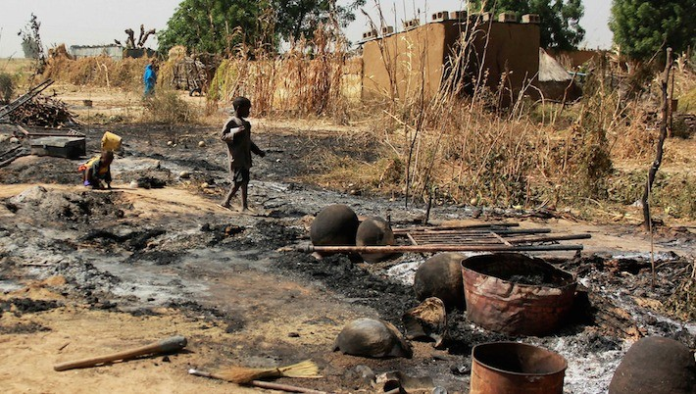
Two separate stabbing incidents in Borno and Lagos states have left one young man dead and a teenager hospitalised, prompting police investigations and renewed concern over domestic and neighbourhood violence.

Fatal Altercation in Maiduguri

In Borno State, a 21-year-old man, identified as Alhaji Mohammed Lawan, was allegedly stabbed to death by his father following a domestic altercation in the Umarari area of Maiduguri.

According to sources, the incident occurred at about 9:00 p.m. on February 25, when an argument reportedly broke out between the victim and his father, Chairman Mai Maya, whose age has not been officially confirmed.

Security analyst Zagazola Makama first reported the incident via social media, stating that the father allegedly stabbed his son twice in the back during the confrontation.

Officers from the Ite Division responded to the scene and reportedly found the victim lying in a pool of blood. He was evacuated to the State Specialist Hospital in Maiduguri, where medical personnel pronounced him dead at approximately 5:15 a.m. on February 26.

His body was later released to the family for burial in accordance with Islamic rites.

Police confirmed that the suspect remains at large. The Borno State Police Command has launched a manhunt, while the State Criminal Investigation Department (SCID) in Maiduguri is leading the investigation.

Teen Slashed in Lagos

In a separate incident in Lagos State, police arrested a woman accused of stabbing 16-year-old boy multiple times during a confrontation in the Ijegun area of Alimosho Local Government Area.

The incident occurred on the evening of February 26 on Amosu Street.

According to posts shared on X by the victim’s cousin, identified as Febechi, the altercation began after the teenager allegedly attempted to correct the suspect’s child for playing outside late.

The situation escalated, and the woman allegedly attacked both the teenager and his mother.

Woman arrested for allegedly st@bbing 16-year-old boy in Lagos

Images shared online showed multiple cuts on the right side of the boy’s face, including one near his eye, as well as deep wounds on his chest and forearm.

In emotional posts, the cousin expressed outrage and called for justice, questioning why police had allegedly delayed immediate arrest.

The Lagos State Police Command confirmed on Sunday that the suspect had been taken into custody and that the teenager is receiving medical treatment.

“The boy is receiving treatment at the hospital, and the suspect is presently in police custody,” police said in a statement.

Rising Concerns

While the two incidents are unrelated, both have drawn public attention to the dangers of domestic disputes escalating into violence.

In Maiduguri, authorities are continuing efforts to apprehend the fleeing suspect. In Lagos, the case is expected to proceed through the criminal justice system as investigations continue.

For grieving families in both cities, however, the legal process offers little immediate solace.

One young life has been lost. Another has narrowly survived.

Police say justice will take its course.

Tinubu Renews NSCDC Boss Ahmed Audi’s Tenure Amid Ethnic Bias Allegations

President Bola Tinubu has renewed the appointment of Ahmed Audi as Commandant-General of the Nigeria Security and Civil Defence Corps (NSCDC) for another five-year term, a move that comes amid internal controversy over leadership transition within the paramilitary agency.

The reappointment, which took effect Friday, was announced Saturday in a statement by the President’s Special Adviser on Information and Strategy, Bayo Onanuga. According to the presidency, Audi will resume duties Monday with a renewed mandate to strengthen the Corps’ role in Nigeria’s security architecture.

But the extension follows allegations that the outgoing Commandant-General had declined to hand over to the most senior Deputy Commandant-General (DCG) after his initial tenure elapsed, a development that has reportedly triggered tension within the NSCDC headquarters in Abuja.

Alleged Handover Dispute

Audi’s first five-year tenure ended Friday upon reaching the mandatory retirement age. Under established paramilitary protocol, the most senior DCG is typically expected to assume leadership in acting capacity pending formal directives from the Federal Government.

Multiple sources within the Corps alleged that the expected handover to DCG Dr Nnamdi Nwinyi, who heads the Intelligence and Investigation Department at the national headquarters, did not occur.

Some officers, speaking on condition of anonymity, claimed the decision not to transfer authority was linked to Nwinyi’s South-East origin — an allegation that has not been independently verified.

“A DCG is supposed to take over from the outgoing CG as the most senior officer,” one senior source alleged. “Up to today, that handover did not happen.”

Efforts to obtain official clarification from NSCDC headquarters were unsuccessful as of press time.

Presidency’s Position

In its statement, the presidency did not address the alleged succession dispute. Instead, it emphasized continuity and reform.

President Tinubu charged Audi to reposition the Corps to play a more significant role in national security, particularly as the Nigeria Police Force refocuses on core duties such as combating banditry, kidnapping and terrorism.

The NSCDC, established to protect critical national infrastructure and support internal security operations, has seen its mandate expand in recent years amid rising insecurity nationwide.

Who Is Ahmed Audi?

Born September 30, 1967, in Laminga, Nasarawa State, Audi joined the NSCDC as a volunteer in 1996 before rising steadily through the ranks.

He holds a PhD in Public Administration from Nasarawa State University, Keffi, a master’s degree in Public Administration from the University of Calabar, and a master’s in Law Enforcement and Criminal Justice from Ahmadu Bello University, Zaria.

He was first appointed Commandant-General in 2021 by former President Muhammadu Buhari.

Broader Questions on Federal Character

The controversy has reignited debate over Nigeria’s “federal character” principle, an informal but influential doctrine aimed at ensuring equitable regional representation in public service appointments.

Over the past decade, civil society groups and political commentators have raised concerns about the perceived underrepresentation of officers from Nigeria’s South-East in top security positions.

Leadership transitions within paramilitary agencies, including the Nigeria Police Force, Immigration Service and Customs Service, have historically generated tension, particularly where seniority rules are bypassed, or federal intervention precedes internal handovers.

For now, Tinubu’s decision effectively resets the succession clock at the NSCDC. But within the ranks, and beyond, questions remain about protocol, equity and the delicate politics of security leadership in Africa’s largest democracy.

Chaos in Onitsha as Soludo Begins Market Demolition Despite Court Order

Tension gripped Anambra State on Sunday after Governor Chukwuma Soludo commenced the demolition of sections of the Onitsha Main Market, despite a High Court order directing parties to maintain the status quo pending the hearing of a substantive suit.

The move has triggered outrage among traders and legal observers, with critics accusing the governor of disregarding judicial authority in a dispute that now threatens to escalate into a broader rule-of-law confrontation.

Court Order vs. Bulldozers

The High Court of Anambra State had ordered all parties in the matter to preserve existing conditions until March 16, when the substantive suit filed by traders is scheduled for hearing.

In the ruling delivered by Justice J. I. Nweze, the court restrained the state government from proceeding with demolition plans affecting traders in the Human Fence Zone One Line of the Onitsha Main Market.

However, on Sunday, March 1, bulldozers reportedly moved into the market, igniting scenes of panic and despair among traders who say nearly 10,000 shops could be affected.

Legal watchers described the development as troubling, warning that any perceived defiance of a subsisting court order risks undermining confidence in the judiciary.

Traders Cry Hardship

The Traders Association had previously condemned what it described as the “harsh and inhumane” nature of the demolition plan, arguing that many small business owners would be financially crippled.

Some traders suggested phased redevelopment or expansion into adjoining areas rather than outright demolition.

A memo from the Mayor of Onitsha had earlier indicated that traders would be granted an additional week before any enforcement action. Sunday’s demolition, therefore, came as a shock to many.

“We cannot survive this,” one trader told reporters. “Many of us borrowed money to stock our shops.”

Another trader, Jude Nwafor, warned that the action could destabilize the fragile economic and security improvements in the state.

Soludo’s Position

Governor Soludo has defended the planned restructuring, describing the market’s condition as “deplorable” and inconsistent with global commercial standards.

During a recent meeting with community leaders, he signalled that a “painful” but necessary overhaul would be undertaken to transform the market into a modern commercial hub, citing Taiwan as a benchmark for redevelopment.

The governor has maintained that the exercise is part of a broader urban renewal strategy aimed at restoring Onitsha’s status as a leading commercial centre in West Africa.

Elders, Rights Groups Raise Alarm

The United Igbo Elders Council appealed to the governor to reconsider, proposing alternative solutions such as building extension markets or relocating specific sections.

The council also called on President Bola Tinubu to ensure that security agencies are not drawn into what it described as a civil dispute over livelihoods.

Some traders and civil society voices argue that the issue transcends urban planning and touches on fundamental rights, including property protection and access to justice.

Rule of Law at Stake?

At the heart of the controversy is whether the demolition contravenes the High Court’s directive to maintain the status quo.

Several traders described the court order as a safeguard for their constitutional rights and an affirmation that executive actions remain subject to judicial oversight.

As the March 16 hearing date approaches, the Onitsha Main Market crisis is fast becoming more than a redevelopment dispute; it is evolving into a high-stakes test of executive authority, judicial independence, and the economic survival of thousands of small business owners.

For now, bulldozers have moved. But the final word may yet belong to the courts.

Benue killings: New tears as FG exhumes Yelewata’s 105, By Ikeddy Isiguzo

Tears have been normalised in Benue for years. People are killed, butchered, burnt and buried at intervals as bandits, mainly Fulani herders, attack communities with an ease that governments’ inactions keep enabling.

Sometimes the frequency of the attacks demands that tears are rolled over from one funeral to the other. That too is becoming normal. There are also times that the people run out of tears; their sorrow too suffocating to afford tears.
What is not normal is for them to cry twice for the same dead, watch the dead being exhumed in states that assault what is left of their humanity.

Memories they have been fighting to blot out of their minds returning as the putrid remains of their relations are raked up to confirm that they were really killed.
The search for the truth, more evidence, proof that people were killed in Yelewata in June 2025 took a bizarre turn with the exhumation that began on Tuesday 24 February 2026.

Could the exercise also be used to confirm if enough people were killed to provoke governments’ reaction?
The exhumation was conducted by a federal forensic team in connection with the 13 June 2025 attack on Yelewata.
During proceedings at the Federal High Court in Abuja, Justice Joyce Abdulmalik said forensic evidence was necessary to ensure a fair trial for nine suspects arraigned on 2nd February 2026.

Prof. Saad Ahmed from the Office of the Attorney-General of the Federation, AGF, led the team. The Intelligence Response Team, the Presidential Medical Delegation, and the Benue State Emergency Management Agency, BENSEMA, provided support for the operation which doused the IDPs camp, near the new international market in Makurdi, in new sorrows.
When hints got to the camp on Monday, the sorrows of the IDPs knew no bounds. They thought it was a proposal that required their opinion. They opposed it as they could, with all they had – their tears running a full course.

We thought they would allow them rest in peace. Some wondered aloud. What purpose will exhuming them serve? Justice? What justice?
Yelewata is under 10 kilometres outside Makurdi, the Benue State capital. Its IDPs are so close to their devastated homes, the sites where the blood of their relations were spilled without consequences.
Their chilling stories detail how soldiers camped in their village offered no assistance during the attack, and policemen tried to repel the attackers but ran out of bullets. The soldiers refused to be involved. They claimed they had no “orders” to save Yelewata.

IDPs who braved it to Yelewata to witness the exhumation of their relations were appalled by the operation.BENSEMA, which cannot feed IDPs, that has no medical facilities even at the IDP camps in Makurdi, and cannot provide water or toilets at the camps, was fully at work in Yelewata with an enthusiasm that suggested that exhuming bodies in Yelewata was its major mandate.

“No orders to act” or “orders to withdraw” are not new. The latest one facilitated the abduction of schoolgirls in Maga, Kebbi State in November 2025. The orders do not respect personalities too.
Gabriel Suswan, was on a visit to Yelewata in 2014 as Governor of Benue to assess an attack on the village. He almost lost his life when his convoy came under attack.
Soldiers accompanying him to Yelewata pulled out moments before he was attacked. They said they were acting on instructions to withdraw. Policemen saved the day. Who ordered the withdrawal? The same question, which has become rhetorical, is still being asked today.

IDPs who braved it to Yelewata to witness the exhumation of their relations were appalled by the operation.BENSEMA, which cannot feed IDPs, that has no medical facilities even at the IDP camps in Makurdi, and cannot provide water or toilets at the camps, was fully at work in Yelewata with an enthusiasm that suggested that exhuming bodies in Yelewata was its major mandate.
Uncaring governments in Abuja and Makurdi fail to react to the intelligence that preceded these attacks. Yelewata indigenes took their worries to their governor in 2025 when the usual signals of an attack on their village – strange faces, armed youth in the forests – appeared. Their government did nothing or filed the complaints away.

Former Governor of Benue State George Akume, former Minister, current Secretary to Government of the Federation, and Senator for eight years, represented Benue North-West, which includes Yelemata.
Have his positions and prominence helped Yelewata? He visited on 17 June, four days after the 2025 attack. Has he spoken about Yelewata since then?
Here is an account of a man who made it to Yelewata while they were exhuming bodies-
“I want to Yelewata yesterday, those people went and removed the bodies of my children and wife,” said the survivor of the June 2025 attack, in a phone message to a friend
“Yes, I was there with them, they give me things to cover my face and my nose. Since I came back yesterday, I have never gone outside. I am indoors.
“Yes, I saw the bodies of my family, they first removed my first son Samson, before the other one,” he trailed into incoherence.
As you read this and move to other stories, Yelewata is about human beings, the living, the dead. Yelewata is about people whose lives have been truncated by those who live above the law.
Yelewata represents the negligence of our people by those in Abuja and Makurdi, in this instance.

The blessings of a federal appointment with Akume in the centre of power is meaningless. Proximity to Makurdi is a curse as it offers no protection or support for Yelewata people to return to their homes soon.

When Akume and Governor Hyacinth Alia fight over control of Benue State, their concerns are not for Yelewata and other communities in Benue that bandit attacks have reduced to rubbles.
They fight to get a second term or decide who becomes governor in 2027. More importantly, they fight to be in the good books of President Bola Ahmed Tinubu who is sequestrated in Abuja painting the picture of the genocide in Yelewata as a communal clash.

Since they want to make the President happy, how dare they suggest by any action that more than a few people were killed in Yelewata? Would even a whimper from either of them not upset the President?
The happiness of a hapless President is more important than the postponement of normalcy in the lives of the people of Yelewata who tell the story of Benue in the putrescence that the exhumation poignantly made public.
When will the living from Yelewata know peace if we cannot allow their dead to rest in peace?

Finally…
MASTERS of what game? People are playing with our lives, present and future, by manipulating elections and we reward them with titles like “master of the game”, and “strategist”? Is anything more hopeless than the oppressed admiring the methods of their oppressors?

PETER Obi was shot at in Benin City and some of the remarks I have heard indicate that we are gone too far in a blindness to issue. The remarks – What was he doing in Benin City? Can’t he stay in one place? He doesn’t use a bullet-proof bus. The questions should have been, who shot at Peter Obi’s vehicle and who sent them? When will the police arrest them?

UNEXPECTED chaos has become part of the permutations about which officers would be retired following the unexpected stepping aside of Dr. Kayode Egbetokun as the Inspector-General of Police. The records of the Nigerian Police seem unclear about seniority of its officers. Some, making cases for who should not be in the retirement gale that can sweep away 29 officers, have paved different routes to retirement of officers.

ISIGUZ0 is a major commentator on minor issues

The views expressed by contributors are strictly personal and not of Law & Society Magazine.

‘If It Was Natasha, I’d Be Bolder’: Umahi responds as sexual harassment accuser is arraigned

Nigeria’s Minister of Works, Dave Umahi, has dismissed allegations of sexual harassment and unpaid campaign debts levelled against him by a businesswoman, escalating a controversy that has spilled from social media into the courtroom.

The accuser, Mrs. Tracyniter (Tracy) Nicholas Ohiri, was arraigned before a magistrate court in Wuse Zone 2, Abuja, on a defamation charge after publicly accusing the former Ebonyi State governor of sexual harassment, intimidation, unlawful detention and refusal to pay for campaign materials she claims to have supplied.

She pleaded not guilty and was granted bail in the sum of N1 million with two sureties. The case was adjourned for further hearing.

The dispute has triggered viral online reactions, including a public confrontation between Umahi and activist and former presidential candidate Omoyele Sowore, who accused authorities of targeting Ohiri after her arrest.

The Allegations

Ohiri alleges her business relationship with Umahi dates back to the period before his election as Governor of Ebonyi State. According to her, she was contracted to produce corporate gift items for campaign purposes after submitting presentations and quotations.

She claims she proceeded with production despite not receiving mobilisation funds, financing the project through personal savings and loans. The goods, she said, were delivered to Umahi’s residence at her expense.

The businesswoman alleges that she was never paid the initial N25.4 million owed, which she claims has ballooned to N304 million with accumulated interest.

More explosively, Ohiri alleges that during one of her visits to Ebonyi for business discussions, Umahi entered her hotel room wearing only a towel and made advances toward her — claims the minister strongly denies.

She further alleges that after repeated demands for payment and threats to protest publicly, she received intimidation and was later arrested by security operatives following social media posts about the matter.

Umahi’s Response: ‘I’m Not Worried’

In a video response, Umahi dismissed the claims as baseless and politically motivated.

“As party chairman, I owed nobody,” he said. “Deputy governor, governor for eight years — nobody ever said I harassed them.”

The minister said he remains unfazed by the social media storm.

“What you read on social media, I’m not worried about it. It makes me stronger. I have fought many battles. This is nothing.”

In remarks that quickly drew attention online, Umahi referenced Senator Natasha Akpoti-Uduaghan while addressing insinuations about alleged advances.

“There’s nothing wrong to say, oh, you are chasing a woman,” he said.

“But if it is Natasha that is accusing me of chasing her, then my face will be bolder.

“But not any how person that will accuse this handsome man of chasing him for 12 years. That person must be the Queen of England.

“Because even one man cannot chase Senator Natasha for 12 years. So, it’s just to make social media to be alive.

“But I think we can turn our attention to the war in Iran now, and then allow Dave Umahi to rest”, he said, dismissing the claims against him.

His comments sparked debate, particularly as Akpoti-Uduaghan herself previously made sexual harassment allegations in 2025 against Senate President Godswill Akpabio, claims Akpabio has denied.

Police Investigation and Political Theatre

Umahi’s media office insists the minister did not deploy the police to settle personal scores. In a statement signed by his Senior Special Assistant on Media, Francis Nwaze, the minister said police acted on a petition submitted by his lawyer and followed standard legal procedures.

The statement described Ohiri’s claims as “inconsistent, contradictory, and lacking coherence,” and accused Sowore of staging “performative activism” by confronting the minister publicly.

Meanwhile, Sowore and other activists have rallied in solidarity with Ohiri, demanding transparency and due process.

As investigations continue, the controversy has evolved into more than a personal dispute, raising broader questions about power, accountability and the intersection of politics, business and gender in Nigeria’s public sphere.

For now, the courts, not social media, will determine what comes next.

Remembering Ambakina Moses Jitoboh

By Chidi Anselm Odinkalu

Ambakina Moses Jitoboh died suddenly on 28 December 2025. He was born on 1 June 1970 to a father from Trofani, in Sagbama Local Government Area of Nigeria’s Bayelsa State. Jitoboh’s death occurred in the week before he was due to travel out of the country for a break. The journey that he eventually got to make was, tragically, unplanned and to the Great Beyond. In the events of the past week in the Nigeria Police Force (NPF) – in the service of which Jitoboh spent his professional life –  his quiet commitment to fairness has bestowed his life with a timeless legacy that is unlikely to be easily forgotten.

Moses Jitoboh graduated with a degree in geography and regional planning from the University of Calabar in 1992. Two years later, in June 1994, he was commissioned into the NPF as an Assistant Superintendent of Police. Ten years later, he found himself the Aide-de-camp (ADC) to the Deputy Governor of his home state, Goodluck Ebele Jonathan.

When he was translated into the office of the Vice-President in 2007, Goodluck Jonathan sought and retained Jitoboh as his ADC. Less than three years later, Jonathan was president. In that capacity, he was also the Commander-In-Chief of the Armed Forces and his ADC became a soldier. Jonathan turned to Jitoboh and made him the Chief Security Officer to the President.

A rapid coincidence of events outside his control conspired thereafter to accelerate Jitoboh’s rise up the ranks of the Nigeria Police Force. 16 years into his service, by November 2010, Jitoboh had attained the rank of Assistant Commissioner of Police. 10 years later, in December 2020, he became an Acting Deputy Inspector-General of Police (DIG).

In July 2021, the Police Service Commission (PSC) confirmed Ambakina Moses Jitoboh as a substantive DIG. At 51, he was the youngest person to attain that rank since the return of the country to civil rule in 1999. He still had nine years to serve in the rank before the compulsory retirement age of 60.

In the third week of his presidency, on 19 June 2023, President Bola Ahmed Tinubu designated Dr. Kayode Egbetokun as the Inspector-General of Police in acting capacity. Upon his elevation to the rank of DIG two months earlier in April 2023, Dr. Egbetokun was the most junior of the five officers of that rank in the NPF. However, upon being elevated to become IGP, he superseded them.

On 25 August 2023, the Chairman of the Police Service Commission, Dr. Solomon Arase, issued a letter to the four DIGs then in service requiring them all to proceed on “compulsory retirement from the service of the Nigeria Police Force with immediate effect from 25th August 2023.” The Commission did not find any of the officers guilty of any mis-conduct. Instead, it said that its instruction was “premised on the fact that you were senior to the Acting Inspector-General of Police prior to his appointment on 19th June 2023.” The letter cited what it called an imperative need “aimed at discouraging status reversal which is inherently dangerous to the exercise of authority by the Inspector-General of Police.”

The PSC did not exactly explain what it meant by “status reversal”. At the time, Dr. Arase was the latest in a succession of Chairmen of the PSC whose route to the position was paved by their having previously served as IGP. It was not supposed to be so.

The 1999 Constitution created the PSC as an independent police oversight institution.

When it began functioning in 2001, its inaugural chair was Simon Okeke, a civilian. However, when Chief Okeke’s five year tenure came to an end in 2006, then IGP, Sunday Ehindero, successfully persuaded President Olusegun Obasanjo that it was safer to hand the headship of the Commission over to retired police chiefs. This, it was believed, was to make the Commission more amenable to the machinations of the leadership of the NPF contrary to the clear design of the constitution. Ironically, that development produced the opposite result and the PSC and IGP sued one another up to the Supreme Court.

Back to the story; of the four affected DIGs, Dan-Mallam Mohammed, Hafiz Inuwa and Bode Adeleke complied and proceeded on compulsory retirement.

In October 2023, Moses Jitoboh sued. In the proceedings before the National Industrial Court of Nigeria, he argued through his lawyer, Silas Joseph Onu, that the PSC exceeded its powers in terminating his service in the NPF before the mandatory retirement age of 60 years or 35 years in service, and asked the court to set aside the Commission’s decision.

Bayelsa State Governor, Douye Diri, would later reveal that following the onset of this litigation, he met with Jitoboh and “urged him to drop his case against the Nigeria Police but he explained that he did not do it for himself but for the sake of justice.” He would get his wish – posthumously.

16 days after his death, on 13 January 2025, Osatohanmwen Ayodele Obaseki-Osaghae, a judge of the National Industrial Court of Nigeria, handed down judgment in Moses Jitoboh vs. PSC. The Court found as a fact that Jitoboh had served in the NPF with distinction and without blemish.

But it was the findings of the court concerning the institutional practice of the Police that were to become revolutionary. The court found that “it is not the custom of the Nigeria Police, and there is no policy that senior officers are expected to tender their resignation on the appointment of their junior as IGP.” The PSC’s notice of compulsory retirement, the court held,  was contrary to both the Public Service Rules and the Police Act, “which read together provide that the compulsory retirement age for all grades of officers in the public service shall be 60 years or 35 years of pensionable service whichever is earlier.”

Additionally, it also found that “in the history of the NPF there is in existence evidence that when a junior officer is appointed to a higher rank, his seniors are not compulsorily retired but allowed to serve in different capacities until retirement.”

The court, therefore, declared the compulsory retirement of Moses Jitoboh from the rank of DIG to be “unlawful, null and void and of no effect”, ordered him to be reinstated in the same rank and awarded him 50 million Naria in damages, in addition to costs assessed at 750,000 Naira.

On that day of the judgment, Ambakina Moses Jitoboh was in his 16th day in the morgue. The judgment had sadly been delayed by one month from its original date of delivery in December 2024. It is only a matter for speculation what the effect could have been on his fate if the delay had not occurred.

The PSC chose not to appeal against the judgment.

In the past week, following the resignation of Dr. Egbetokun from the position of IGP and the appointment of Tuni Disu, an Assistant Inspector-General to replace him, much ink was spilt in pitted arguments over whether or not eight DIGs and 21 AIGs who were considered senior to the new helmsman should be cleared out of service. Many claimed that it was “the tradition of the police”, unaware that a court of competent jurisdiction had ruled that no such tradition existed and that, even if it did, it would have been considered unlawful.

A country in a life-and-death struggle with insecurity could ill have afforded such waste of experience and expertise. At the end of the week, it was reported that President Tinubu had moved to rule that out. It was the ultimate tribute to the memory of Ambakina Moses Jitoboh, the police officer who refused to accept injustice for an answer.

A lawyer and a teacher, Odinkalu can be reached at [email protected]

The views expressed by contributors are strictly personal and not of Law & Society Magazine.

Blame the legal profession, not the politicians, for the indiscriminate defections in Nigeria’s political space

I agree entirely with President Tinubu’s position that he should not be blamed for the recent wave of defections into the APC. Come to think about it. Did the President compel anyone to join his party?

Did he coerce governors or legislators to abandon their platforms? Clearly, no. The President himself declared during an interfaith Iftar with senators at the Presidential Villa in Abuja on 27 February 2026 that “…they accused me of killing the opposition, but didn’t have a gun,” implying that he did not force or hold anyone at gunpoint to defect to his own political party.

Governors and lawmakers are not political minors. They are experienced public office holders, elected into office by the people and fully empowered by law to make political decisions. If they conclude, rightly or wrongly, that aligning with the ruling party serves their interests or those of their states, that is a choice for which they must bear responsibility.

Nigeria may indeed be passing through difficult times, but attributing the phenomenon of cross-carpeting to one individual speaks to a far deeper institutional problem. The real problem lies not in politics, but in law, specifically, in how the Nigerian legal profession has interpreted constitutional provisions on defection.

Judicial Interpretation, Not Presidential Influence, Enables Indiscriminate Defections

  1. At one point, Hon. Justice Inyang Ekwo delivered what many regarded as a bold and principled decision: that a governor who defects from the political party under whose platform he was elected ought to vacate his office. That reasoning aligned with the spirit of political accountability and party discipline, giving hope that Nigerian democracy might begin to mature ideologically rather than function as a marketplace of convenience. However, that decision did not stand. The Supreme Court set it aside, holding that governors and their deputies do not lose their offices upon defection in the same way legislators might. That interpretation fundamentally altered the landscape of political responsibility.
  2. Even with respect to legislators (where the Constitution appears stricter), the expected sanctions have rarely materialised. Why? Because, in the Rivers State line of cases, as an example, the Supreme Court introduced an additional threshold: that defection is not complete until the lawmaker’s name appears on the membership register of the new party. This requirement is not expressly found in the Constitution, yet it has become the operational test. The practical effect has been profound. It created a legal grey zone wide enough for political actors to manoeuvre freely, defect strategically, and avoid constitutional consequences.

It’s accordingly seen that political actors behave according to the incentives and restraints established by law. Where the law is firm, discipline emerges. Where it is elastic, opportunism flourishes.

Nigeria’s current culture of defections did not arise in a vacuum. It grew out of judicial doctrines that diluted the constitutional intention of preserving electoral mandates and party accountability. In other words, the legal environment has made defections low-risk and high-reward.

The Blame Lies Squarely With The Legal Profession

This brings us to the often-overlooked role of the legal profession in shaping democratic culture. Lawyers do not merely espouse rules; they shape governance outcomes. Courts do not only settle disputes; they define the moral architecture of political conduct. Through advocacy, interpretation, and adjudication, members of the legal profession serve as the guardians of constitutional discipline. Where that guardianship is assertive, politics becomes structured and principled. Where it is hesitant or overly technical, politics becomes transactional. By prioritising narrow legal formalism over constitutional purpose, the members of the legal profession established a legal system that inadvertently signalled to political actors that party loyalty is optional and electoral mandates are transferable commodities.

Democracy Requires Normative Guidance, Not Just Legal Technicalities

A developing democracy such as Nigeria’s, requires jurisprudence that strengthens institutions, not merely resolves disputes. Courts are expected to interpret the Constitution in a manner that advances stability, accountability, discipline, and the sanctity of the ballot, not one that unintentionally rewards political fluidity. When legal interpretation weakens consequences, political behaviour adjusts accordingly. Hence, if defections are now widespread, the explanation lies not in presidential influence but in the permissive legal architecture that governs political mobility. Politicians operate within the boundaries the law allows. The law, in turn, is shaped by lawyers and judges. Therefore, the conversation must shift from personalities to institutions.
Blaming one political leader for a structurally enabled phenomenon distracts from the deeper reform Nigeria urgently needs: a jurisprudence that restores discipline, fidelity to mandates, and respect for the electoral platform through which power is obtained.

Nigeria’s democratic future will not be secured merely by changing leaders. It will be secured when members of the legal profession consciously embrace their role as architects of political responsibility and constitutional order.
Respectfully,
Sylvester Udemezue (Udems).
08109024556.
[email protected]
(28 February 2026)

The views expressed by contributors are strictly personal and not of Law & Society Magazine.

Pastor Ikeotuonye hails airports revamp as sign of a ‘new Nigeria’

A prominent Nigerian pastor and health & wellness expert, Dr. Jackie Ikeotuonye, has publicly lauded the significant improvements witnessed at key international airports, specifically Nnamdi Azikiwe International Airport in Abuja and Murtala Muhammed International Airport in Lagos.

Her commendation comes after a recent return to Nigeria from the United States, offering a stark contrast to her experiences from 2018.

Dr. Ikeotuonye, in a press statement released today, described a remarkably efficient and welcoming arrival experience at Abuja airport on February 25th.

“What I experienced this time was truly mind-blowing,” she wrote, detailing a swift immigration process utilising passport scanning technology, eliminating the traditionally lengthy queues and intrusive questioning.

She also commended the professionalism and orderliness of customs and NDLEA (National Drug Law Enforcement Agency) officers.

“I paused and asked myself, Where am I? Is this really Nigeria?” Dr. Ikeotuonye recounted, expressing her surprise at the positive change.

Her observations extended beyond her personal experience. Dr. Ikeotuonye also shared a conversation with a group of foreign visitors who described Nigeria as a “gold mine,” highlighting a disconnect between the perception of the country abroad and the often-critical narrative within.

The Pastor specifically praised the Federal Airports Authority of Nigeria (FAAN), acknowledging the leadership of its Managing Director, Mrs. Olubunmi Kuku, and the efforts of FAAN Customer Service lead, Mrs. Obiageli Orah.

She also extended recognition to the Minister of Interior, Dr. Olubunmi Tunji-Ojo for overseeing the positive transformation in the Immigration services.

“While it is important to keep holding the government accountable… it is equally important to acknowledge progress where it exists,” Dr. Ikeotuonye stated.

She emphasised the need for continued improvement in areas like education and healthcare, but stressed the importance of recognising and building upon existing advancements.

Dr. Ikeotuonye concluded her statement with a call for national unity and positive discourse, adopting the American slogan “America First” with a patriotic twist: “Nigeria First.”

She urged citizens to refrain from negativity and actively contribute to building a stronger, more prosperous nation.

The improvements highlighted by Dr. Ikeotuonye come as the Nigerian government continues to invest in infrastructure and streamline processes at its international gateways, aiming to attract foreign investment and improve the travel experience for both citizens and visitors

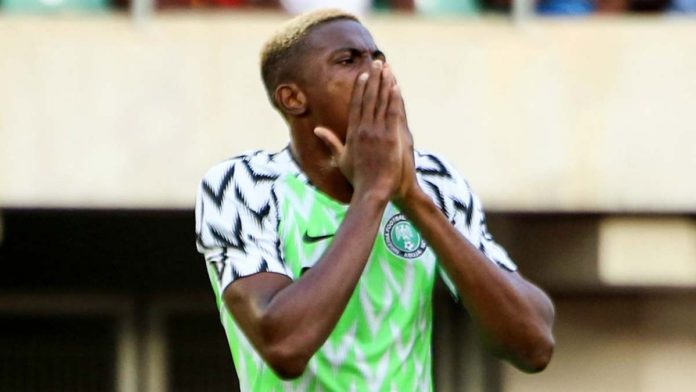
“You’re Dreaming”: Emmanuel Emenike sparks national debate as kidnappings grip Ondo

Former Super Eagles striker Emmanuel Emenike has ignited fierce debate after delivering a blunt assessment of Nigeria’s trajectory, arguing that citizens are “dreaming” if they believe the country will improve under what he described as its current “oppressors.”

In a strongly worded Instagram post shared Thursday morning, the ex-international lamented rising insecurity, shrinking civic space and what he called a leadership class riddled with “criminals.”

“There are no more road trips,” he wrote, referencing the surge in kidnappings across parts of the country. He further alleged that critics of government policies risk being “set up and arrested.”

His remarks come as fresh abductions and deadly attacks deepen anxiety in Ondo State, underscoring why his comments are striking a chord.

Read his post below

?No more road trips, kidnapping everywhere ? -  Former footballer, Emmanuel Emenike speaks on the state of the nation

Highway Protest After Late-Night Abduction

On Saturday, February 21, 2026, residents of Ilu Abo community in Akure North Local Government Area barricaded the busy Owo/Benin Highway in protest against what they described as relentless kidnappings.

The trigger: a late-night attack in Olaribigba Estate on Friday.

A butcher, Jamiu Olawale, and his wife were reportedly abducted while returning home in an ash-coloured Toyota Camry. Eyewitnesses said gunmen also shot a neighbour, Patrick Ilumaro, who was sitting outside his residence. He was rushed to hospital.

The Ondo State Police Command confirmed investigations had commenced. Spokesperson DSP Jimoh Abayomi said efforts were underway to rescue the victims and apprehend the attackers.

But by dawn, frustration had boiled over.

Protesters blocked the highway for hours, stranding motorists and halting commercial activity. They insisted the road would remain closed until authorities delivered concrete security guarantees.

₦80 Million Ransom Demand

According to a source cited by The Nation, the abductors have demanded ₦80 million for the couple’s release, ₦40 million each.

Residents say kidnapping has become almost routine.

“In the past few weeks, no fewer than 10 persons have been abducted in Akure North alone,” one protester, Adekunle Adeleye, said. “We pay taxes. It is the government’s responsibility to protect us.”

Many households, he added, have resorted to self-help security arrangements, though such measures remain limited without state support.

The latest abduction came just days after suspected gunmen reportedly killed a traditional ruler, Oba Kehinde Falodun, during a failed kidnap attempt in Agamo community, an attack that further heightened fears.

Governor Lucky Aiyedatiwa condemned the killings and directed security agencies to pursue those responsible.

“Nigeria Could Be UAE”

Emenike’s criticism went beyond security.

He argued that Nigeria, given its resources, could rival the United Arab Emirates in development, but is held back by entrenched political interests.

It is a comparison that reflects a familiar narrative among frustrated citizens: immense potential undermined by governance failures.

Nigeria’s kidnapping crisis has morphed from isolated incidents into a lucrative criminal enterprise in many regions, targeting commuters, farmers and even traditional rulers. For rural communities dependent on agriculture, the consequences are existential. Farmers fear venturing into fields; traders dread highway travel.

The result is an atmosphere where fear dictates daily life.

Athlete as Activist?

Public figures speaking out against governance in Nigeria is not new. But when a high-profile athlete like Emenike weighs in, the message carries added resonance, particularly among younger Nigerians who view sports stars as symbols of global success.

His comments have drawn both praise and backlash online. Supporters applaud his candour. Critics accuse him of oversimplifying complex security challenges.

Yet the timing is unmistakable.

With highways blocked in protest, ransom negotiations unfolding, and communities pleading for intervention, Emenike’s warning taps into a broader national unease.

A Nation on Edge

The Ondo protests illustrate a deeper reality: insecurity is no longer a distant headline—it is a lived experience.

When residents risk confrontation by shutting down major roads, it signals not just anger but desperation.

For many Nigerians, the question is no longer whether crime exists. It is whether the state can decisively contain it—and whether governance reforms can restore confidence.

As Emenike’s viral post circulates, it reflects more than celebrity commentary.

It mirrors a country grappling with insecurity, economic pressure and an increasingly vocal demand for accountability.

And for communities like Ilu Abo, the urgency is immediate: safety first, politics later.

Acting IGP Disu redeploys controversial ACP Bukola Kuti to NIPSS Kuru

The Acting Inspector-General of Police, Olatunji Disu, has reportedly removed ACP Bukola Yemisi Kuti from her position as Principal Staff Officer 2 (PSO2) to the former Inspector-General of Police, Kayode Egbetokun, and redeployed her to the National Institute for Policy and Strategic Studies (NIPSS) in Kuru.

Multiple sources within the police hierarchy confirmed to SaharaReporters that the redeployment took effect immediately and has already stirred intense discussion among senior officers and rank-and-file personnel.

According to a senior police source familiar with the development, “The Acting IGP has removed ACP Bukola Kuti as PSO2 to the former IGP and redeployed her to NIPSS in Kuru.”

ACP Kuti had served as Personal Staff Officer 2 (PSO2) and alleged mistress to former IGP Kayode Egbetokun, a position considered highly sensitive and influential within the Force. 

Her appointment and earlier promotion had drawn public scrutiny, with critics alleging irregular advancement and undue influence within the upper ranks of the Nigeria Police Force.

Sources told SaharaReporters that Kuti’s rise and close working relationship with the former police boss were the subject of controversy both within and outside the Force.

The source said, “In a move already generating intense discussion, the Acting Inspector-General of Police, Tunji Disu, has reportedly removed ACP Bukola Kuti from her position as PSO2 to the former IGP, Kayode Egbetokun and redeployed her to the National Institute for Policy and Strategic Studies (NIPSS) in Kuru.”

Kuti’s earlier promotion and proximity to the former Inspector-General had been the subject of public controversy, with critics alleging irregular advancement and undue influence within the upper ranks of the Nigeria Police Force.

Her reassignment is being interpreted in some quarters as a corrective administrative step, while others see it as a soft landing designed to ease tensions and “save face.”

On February 21, 2026, SaharaReporters reported that Kuti has allegedly taken control of the Nigeria Police Force Headquarters and spearheaded efforts to drag the Anambra State government into a controversial lawsuit filed against media organisation, SaharaReporters and human rights activist, Omoyele Sowore.

The suit, according to multiple senior sources familiar with the matter, is connected to Sowore’s description of Egbetokun as an “illegal IGP” and allegations that Victor Adewale, Egbetokun’s son received a total of ₦100million from the Anambra State government’s security vote account at a time when the state was grappling with severe security challenges.

The Anambra State government, however, declined overtures to join the legal action and made it clear that its name should not be included in the suit.

Kuti, whom an insider described as an “iron lady,” is said to wield enormous influence within the Nigeria Police Force Headquarters, particularly over matters relating to promotions. 

According to the source, she not only exercises significant control over the promotion process but has also used her position to advance her own career, elevating herself to the rank of Principal Staff Officer 2 (PSO 2).

Kuti joined the Nigeria Police Force in 2012. Despite having colleagues who entered the Force eight to 10 years before her and are yet to attain similar ranks, she has continued to rise rapidly through the hierarchy.

Sources within the Force disclosed that she is now on the verge of being promoted to the rank of Deputy Commissioner of Police (DCP), a development that has reportedly generated discontent among some senior officers who believe the promotion process lacks transparency and fairness.

The controversy around her intensified after SaharaReporters published an investigative report exposing the circumstances surrounding the proposed promotion. 

The report raised questions about the criteria used in recommending her advancement and highlighted concerns from officers who felt sidelined despite their longer years of service.

Following the publication, the planned promotion allegedly came under increased public scrutiny, with critics demanding clarification from the Police Service Commission and the Force Headquarters regarding the standards and procedures applied in her case.

The insiders further claimed that her influence extends beyond the promotion, alleging that she effectively controls key decisions at the Force Headquarters and has substantial sway over the Inspector-General of Police, Kayode Egbetokun.

“She controls promotions at the PSC and has promoted herself to PSO 2,” the source said. “She even controls IGP Egbetokun.”

At the heart of the controversy are claims that Victor Adewale Egbetokun was paid ₦100 million from the state’s security vote account — funds typically earmarked for urgent and confidential security operations.

The allegations surfaced in reports published by SaharaReporters. 

Source: SaharaReporters

TIPS