Home Blog Page 83

ICPC uncovers alleged wiretapping equipment in El-Rufai investigation

  • El-Rufai family denies ICPC allegations, cites right to silence

The Independent Corrupt Practices and Other Related Offences Commission (ICPC) said it recovered equipment allegedly capable of tapping conversations and sensitive security documents from the Abuja home of former Governor Nasir el-Rufai.

The commission also said it obtained a legal order from a Magistrate Court in Bwari in the Federal Capital Territory (FCT) to detain el-Rufai for 14 days, which is due to expire on Thursday, according to reports by The Nation.

The anti graft commission denied allegations of arbitrary detention and repression of the former governor.

This is as the commission has asked the High Court of Justice of the Federal Capital Territory to dismiss el-Rufai’s application alleging violation of his fundamental human rights.

ICPC said the former governor has corruption allegations to answer, including questions over the whereabouts of €1.4 million; 180 suspicious payments totalling N2,158,799,199 from a Consolidated Revenue Account linked to Kaduna State’s IGR account; and transfers to undisclosed accounts amounting to N428,122,180.18, among others.

The commission confirmed that an aide of the former governor, allegedly linked to the matter, has left the country.

ICPC made the claims in an affidavit deposed to by a Litigation Officer, David Efuk, before the High Court of Justice of the Federal Capital Territory, where el-Rufai is seeking redress and release from detention.

The commission said all the suspected items were retrieved in the presence of the former governor’s wife, Hadiza, and his son, Mohammed.

The agency also alleged that the former governor declined to cooperate with investigators, opting to remain silent until he is brought before a court.

It added that an aide of the former minister linked to the investigation had escaped from the country.

The anti-graft body made the claims in processes filed before the court, seeking the dismissal of the fundamental human rights enforcement suit.

ICPC said: “On the 18th day of February, 2026, at about 7 pm, the applicant was released to the DSS by the EFCC to be handed over to the commission.

“On the 19th day of February, 2026, the commission obtained a remand order to keep the applicant in its custody for 14 days, which will lapse on the 5th day of March, 2026.

“The commission has since confronted the applicant with the retrieved documents during its preliminary investigation activities, but the applicant has refused to respond to interviews to date.

“On the 19th day of February, 2026, the commission executed a duly signed search warrant on the premises of the applicant at No. 12 Mambila Street, Aso Drive, Asokoro District, Abuja.

“During the search, which was witnessed by the applicant’s wife, Hadiza Isma el-Rufai, and his son, Hon. Mohammed Bello el-Rufai, the commission retrieved sensitive security documents capable of compromising national security.

“The applicant, on national television (Arise Television), admitted to tapping telephone conversations of the National Security Adviser, Mallam Nuhu Ribadu.

“During the search operations, the commission retrieved electronic magnetic equipment allegedly capable of tapping conversations.

“He was asked to give consent to enable the commission access the equipment, but he refused. A copy of the consent form is attached and marked Exhibit ICPC 5.

“The search also retrieved sensitive security documents of various security agencies of the government.

“The applicant is also allegedly threatening likely prosecution witnesses, and one such witness has written to the commission seeking protection. A copy of the letter is attached and marked Exhibit ICPC 6.”

The ICPC insisted that el-Rufai was lawfully detained pursuant to a remand order issued by a Magistrate Court in Bwari, FCT.

It said the court granted the commission 14 days to keep him in custody to enable it conduct investigations.

It said: “Contrary to the depositions of the applicant in his supporting affidavit, he is lawfully held in the custody of the commission, and the commission has not breached any of his fundamental rights as claimed.

“ICPC does not arbitrarily arrest or detain suspects unlawfully, nor pose any physical danger to them.

“ICPC’s mandate is to investigate cases of corruption, abuse of office and related offences, and where there is prima facie evidence, prosecute alleged offenders.

“ICPC can only charge a person to court when investigations are concluded.

“Where investigation is ongoing, ICPC may request an alleged offender to report to its office daily until investigations are concluded or, where necessary, remand the alleged offender pending conclusion of investigations.

“ICPC undertakes to draw up charges against the applicant before the 5th of March, 2026, when the detention order will lapse.

“It is in the interest of justice to dismiss his application for lacking merit and allow the commission to investigate the allegations thoroughly in the public interest.”

ICPC said it followed due process in inviting el-Rufai based on a petition alleging corrupt practices.

It said: “The commission received a petition against the applicant, a former two-term Governor of Kaduna State.

“Thereafter, the commission began preliminary investigations into the allegations contained in the petition and retrieved relevant documents from banks and other government institutions.

“Upon conclusion of preliminary investigations, the commission made several efforts to invite the applicant to confront him with documents retrieved during the investigation.

“Every attempt to invite the applicant via formal letters proved abortive.

“On the 5th day of February, 2026, the commission received information about the applicant’s arrival at the Nnamdi Azikiwe International Airport, Abuja.

“Operatives of the Department of State Services were contacted to assist in arresting him, but the attempt was unsuccessful.

“The commission later located the applicant’s residence at Aso Drive, Abuja, and formally served him with an invitation letter to appear before the commission on the 13th day of February, 2026, at 10am.

“The applicant, through his legal representatives, requested to honour the invitation on the 18th day of February, 2026.

“Before the agreed date, he had honoured an invitation by the Economic and Financial Crimes Commission (EFCC) and was detained.

“He was later granted administrative bail but was unable to meet the conditions and remained in EFCC custody.”

The petition against el-Rufai alleged serious discrepancies in the state’s debt profile.

Cash withdrawals in foreign currency amounting to €1.4 million, with the purpose allegedly unclear.

Alleged diversion of public revenue by failure to remit funds into the TSA account.

Use of a debit card on a revenue bank account, with total transactions amounting to N721,672,854.88.

Alleged violation of Section 3.3.1 of Kaduna State Financial Policies and Procedures Manual 2016.

Diversion of funds to individuals and companies amounting to N393,752,670.05.

Transfers to undisclosed accounts totalling N428,122,180.18.

Suspicious payments (180) amounting to N2,158,799,199 from a Consolidated Revenue Account linked to Kaduna State IGR.

The petition further alleged: “The past administration collected about N98.912 billion as domestic loans for developmental projects in Kaduna State.

“The past administration also collected over $7,366,070,222.5 as foreign loans to be serviced by the people of Kaduna State.

“Our findings showed that while the Kaduna State Government between 2015 and 2023 embarked on ambitious projects, some were allegedly executed in contravention of procurement laws.

“It is alleged that only a few projects were completed, while several were abandoned despite full payment to contractors.

“Of concern was the alleged disregard for the Kaduna State Public Procurement Law, 2016.”

In a statement on oath to the ICPC, el-Rufai said he was being persecuted as an opposition figure.

He stated that he would exercise his right to silence until arraigned before a court.

He said: “I am a leading member of the African Democratic Congress (ADC), which I consider the only surviving opposition party in Nigeria, and that is the real reason I am being investigated.

“Regarding this question and any other questions, I have, on the advice of counsel, decided to exercise my right to silence.

“I believe that after nearly two years of intensive investigation, the ICPC should present its findings before a judicial tribunal and not to me.

“I will respond to any allegations only in a court of law. I do not believe these investigations amount to law enforcement.

“This is political persecution which only a judge can decide upon.”

EL-Rufai’s Family Fights Back

However, the family of former Kaduna State governor, Nasir El-Rufai, has dismissed allegations, describing the claims as false and politically motivated.

In a statement issued on March 2, 2026, and signed by Mohammed Bello El-Rufai, the family accused the anti-corruption agency of conducting a smear campaign and misrepresenting the outcome of a search carried out at the former governor’s property.

The family defended El-Rufai’s decision not to respond to investigators, stating that the Nigerian Constitution guarantees every citizen the right to remain silent.

They rejected claims that his silence amounted to non-cooperation, insisting that no negative inference should be drawn from the exercise of a constitutional right.

According to the statement, El-Rufai had repeatedly challenged authorities to file charges if evidence existed against him.

The family also denied the ICPC’s claim that sophisticated phone-tapping equipment and sensitive security documents were recovered during the search.

They maintained that only old personal mobile phones, flash drives, and laptops — common personal devices — were seized, describing the alleged equipment as fictitious.

The statement further alleged that the search was based on a forged warrant, claiming it was fraudulently issued by a magistrate purportedly acting with High Court authority.

The family said their legal team has challenged the warrant in court, arguing that any evidence obtained through an unlawful search is inadmissible.

The El-Rufai family said it would pursue all available legal remedies to challenge what it described as defamatory statements and executive overreach, expressing confidence in the Nigerian judiciary to uphold their rights.

They also called for peace and prayers during the Ramadan period, urging Nigerians to promote unity and stability across the country.

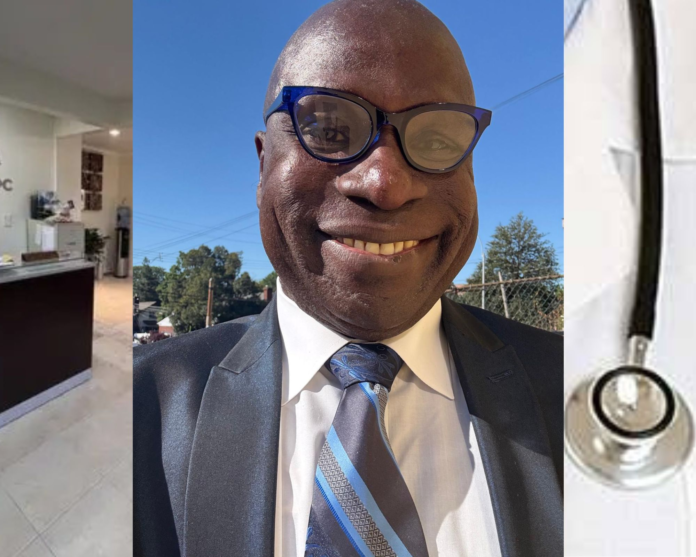
Tales My Patients Told Me: A very good man who never listened!

By Emmanuel Fashakin

Dateline: January 2012.

My spouse, Abby, had just qualified as a Nurse Practitioner. Her New York State license was pending.

“Perfect!” I told her. “Come with me to the office and sit behind me as I see patients. By the time you get your license, you will be the best Nurse Practitioner in the State of New York!”

In the second week of her apprenticeship, on a cold Monday morning, I glanced at my appointment list and saw Charlie’s name.

Charlie was hypertensive but rarely kept his appointments and never complied with his medications. Yet he was a very good man, a fine gentleman. Six feet tall, with charming sideburns. He never argued, no matter what you said. He would smile and nod in understanding, and then never follow the advice.

He had last been scheduled months earlier but never showed up. Despite repeated calls and promises, he stayed away until now, nine months since the last appointment.

In previous visits, his pattern was the same. His blood pressure would be dangerously high because he had stopped taking his medications. I would treat him, counsel him about hypertension being a silent killer, adjust his prescriptions, and ask him to return in a few weeks or months.

Occasionally, he surprised me by showing up. When he did, his blood pressure would improve significantly. I would encourage him and schedule a routine follow-up.

Then he would disappear again.

Charlie was a successful businessman. He owned a security company supplying guards to various organizations. Although he made good money, he never purchased medical insurance, despite my repeated advice. Instead, he enrolled in my practice’s subsidized program for self-pay patients, paying a modest annual fee for unlimited visits.

He would pay for the entire year, make one visit, and vanish.

Even when I grew exasperated, the smile never left his face. He nodded in agreement, in acquiescence.

Sadly, he never changed.

That morning, his blood pressure was 206/110, dangerously high, though not the worst I had seen on him. What concerned me more was his electrocardiogram. It now showed evidence of left ventricular strain, a change that had not been present before.

Charlie insisted he felt fine.

I told him he wasn’t. Under ordinary circumstances, I would have called an ambulance immediately. But he had no insurance, and hospitalization would cost thousands of dollars.

He refused outright. The expense would be too much. We argued.

Finally, we reached a compromise. I renewed his medications, which he had not taken for months, added a beta-blocker, and instructed him to return in two days. He was not to go back to work until I cleared him. I also referred him to a cardiologist.

He agreed.

Two days later, he did not show up.

We called. He said he felt okay and had returned to work. He promised to come the following week. I pleaded with him, but it made no difference.

The next day, Thursday, the hospital called.

As soon as they mentioned his name, my heart sank.

Charlie had collapsed after work. He could not be resuscitated. He died in the emergency room.

They were asking about his next of kin.

His closest relative, a brother, lived in the United Kingdom. His wife and children were in Nigeria. He had no immediate family in the United States.

I wondered why he had not brought them over. Perhaps immigration issues. Perhaps that was why he avoided insurance. Perhaps that was why he feared the hospital.

But why not take his medications? Why not keep his appointments?

I thought of the security company he had worked so hard to build. What would become of it now?

I do not know.

When Abby heard the news, she screamed and wept like a child. She had seen Charlie only once, but he left an impression, tall, handsome, unfailingly pleasant.

He was a very good man.

He just never listened.

Emmanuel O. Fashakin, M.D., FMCS(Nig), FWACS, FRCS(Ed), FAAFP, Esq.
Attorney at Law & Medical Director,
Abbydek Family Medical Practice, P.C.
Web address: 
http://www.abbydek.com
Cell phone: +1-347-217-6175
“Primum non nocere”

Middle East Crisis: Mahmoud Ahmadinejad, ex-Iranian president killed in missile strike

Iranian authorities announced on Wednesday that former president Mahmoud Ahmadinejad had been killed in a missile strike carried out by Israel and the United States.

According to Iranian reports, Ahmadinejad was killed alongside his bodyguards during an attack allegedly launched by Israel in coordination with the United States. No independent confirmation of the incident has yet been provided.

Iranian officials did not immediately release further details regarding the location or timing of the strike, while neither Washington nor Tel Aviv issued an official response to the accusations.

Ahmadinejad served as president of Iran from 2005 to 2013 and was closely associated with the country’s nuclear programme during his time in office, a period marked by heightened tensions between Tehran and Western powers.

The reported killing comes amid escalating regional confrontation and growing fears of wider military escalation in the Middle East.

Middle East Monitor

Gulf Skies in Chaos:  How Middle East escalation could hit oil and inflation

By Ladidi Sabo

The downing of three U.S. fighter jets by allied air defences in the Gulf is more than a battlefield embarrassment; it is a warning flare over global energy markets and an already fragile world economy.

According to United States Central Command, the F-15E Strike Eagles were mistakenly shot down by Kuwaiti air defences during “active combat” operations under Operation Epic Fury, as Iranian aircraft, ballistic missiles and drones crowded regional airspace.

All six American aircrew survived. Strategically, however, the implications are far larger.

Because this incident did not happen in isolation.

It unfolded as Saudi Arabia battled drone threats near the Ras Tanura refinery, operated by Saudi Aramco, and as Beirut absorbed fresh explosions linked to Israeli strikes targeting Hezbollah positions.

Taken together, the events signal a widening conflict footprint stretching from the Gulf’s oil arteries to the Mediterranean.

And markets are watching.

Oil in the Crosshairs

Ras Tanura is not just another refinery. It is one of the world’s most critical oil processing and export hubs. Even “minor damage,” as Saudi authorities described it, carries psychological weight in global commodity markets.

Energy analysts say the real risk lies not in isolated strikes, but in cumulative escalation.

If drone interceptions begin failing, or if shipping lanes in the Strait of Hormuz are disrupted, crude prices could spike sharply.

Roughly one-fifth of global oil consumption passes through Hormuz daily. Any sustained threat could:

  • Push Brent crude well above current benchmarks
  • Raise global shipping insurance premiums
  • Trigger precautionary stockpiling by major economies
  • Reignite inflation pressures that central banks have struggled to tame

A senior Gulf-based energy strategist, speaking on condition of anonymity due to market sensitivity, said:

“The market doesn’t need a refinery destroyed. It just needs uncertainty. A miscalculation in the Gulf can add $10–$20 to oil overnight.”

That surge would not stay in the Middle East.

Higher oil prices feed directly into transport, food distribution, manufacturing and electricity costs, particularly in import-dependent economies across Europe, Asia and Africa.

For central banks already navigating post-pandemic inflation and tight monetary cycles, a Middle East supply shock could complicate interest rate strategies and delay planned easing.

In short, war risk equals inflation risk.

Military Miscalculation and Coalition Strain

Beyond markets, the friendly fire incident raises difficult operational questions.

Modern air defence systems are designed to detect, track and neutralise fast-moving threats, especially ballistic missiles and low-flying drones. But in saturated airspace, identification errors become more likely.

The fact that Kuwaiti defences were actively responding to Iranian threats suggests the skies were already operating under extreme stress.

That matters because the Gulf hosts a dense network of U.S. bases across Kuwait, Bahrain, Qatar and the United Arab Emirates. Any perception of fractured coordination among allies could embolden adversaries or invite further testing of regional defences.

Beirut and the Northern Front

Simultaneously, explosions in Beirut attributed to Israeli strikes on Hezbollah-linked targets indicate another axis of escalation.

The Israel–Hezbollah exchange risks drawing Lebanon deeper into confrontation, potentially widening the conflict beyond the Gulf theatre.

Strategists warn that multi-front escalation increases the probability of:

  • Supply chain disruptions in the Eastern Mediterranean
  • Missile spillover into energy infrastructure
  • Greater involvement from proxy militias aligned with Iran

The more theatres activated, the harder it becomes to compartmentalise risk.

Global Economic Domino Effect

The geopolitical danger is not merely military — it is systemic.

If oil prices surge significantly:

  • Emerging markets face currency depreciation
  • Fuel subsidies strain government budgets
  • Food inflation intensifies
  • Shipping bottlenecks reappear
  • Global equities react sharply to energy volatility

For economies still recalibrating after years of pandemic stimulus and supply shocks, another energy crisis could reverse fragile stabilisation gains.

A London-based commodities economist summarised the stakes bluntly:

“The Middle East doesn’t need a full-scale war to shake markets. Persistent drone threats and one refinery strike are enough to inject a risk premium into every barrel traded.”

A War With Shrinking Margins

The friendly fire downing of American jets underscores a dangerous reality: this conflict is expanding not only in intensity but in complexity.

Iranian missile barrages. Drone swarms. Israeli-Hezbollah exchanges. Coalition intercepts. Oil infrastructure under threat. Allied air defences are firing under pressure.

Each layer adds friction. Each friction point adds the possibility of miscalculation.

And in today’s interconnected global economy, miscalculation does not stay local.

It travels through oil futures, inflation data, bond markets and household fuel bills.

For now, Washington and its Gulf allies are projecting unity. Investigations are underway. Aircrew are safe. Refineries remain operational.

However, as smoke rises over the Gulf and Beirut, the strategic question is no longer whether this conflict affects the global economy.

It is how long markets can absorb the shock before the price of war is paid at the pump and at the checkout counter worldwide.

The war of hubris in Iran

By Lasisi Olagunju

Nigerians when they cry, even the bereaved gets scared. Because they are an impossible people; everything divides them. The Iranian crisis is the latest divider. I see Trump supporters across the Middle Belt and the South. I read anger across parts of Nigeria’s Muslim North. Some who once applauded the brutal, deadly suppression of Shiites in Kaduna (even unleashing street mobs on their corpses) now rage that the arch-enemy has killed a Shiite supreme leader in Iran.

Hubris sits in the house as ‘Stand Straight,’ while its servant walks the world as ‘The Unbending.’ Imperfect translation of a perfect Yoruba saying. But that is the simple story of America and Iran — of Donald Trump and Ali Khamenei — and the collision of pride that has brought the world to the perilous moment which started on Saturday.

The war that began on Saturday was unnecessary and avoidable. Pride and prejudice bear much of the blame. Where courtiers and kings are consumed by hubris, war becomes inevitable.

Fruit and root are inseparable. Modern Iran did not emerge in a vacuum; its identity is deeply rooted in imperial self-importance. Iran’s ancestors believed that they were a special creation; their descendants say they must stand in all places and at all times on their own terms. That explains Iranian policies marked by defiance, pride, and an unbending resolve.

A little history here. Today’s Iranians descend from a king who once tried to punish the sea.

King Xerxes’s father, Darius I, was a great king. He died, his son took over and promised himself that he was going to do what his father could not do.

In 480 BCE, Xerxes prepared to invade Greece with imperial confidence. He cut a canal through the Mount Athos isthmus and ordered pontoon bridges across the body of water called the Hellespont. Ask Geography and the maps. I did: Hellespont is today’s Dardanelles, a narrow strait in north-western Turkey, linking the Aegean to the Black Sea via the Sea of Marmara and the Bosporus. It is the natural boundary between Europe and Asia.

Xerxes built his bridges and was happy. He boasted that he was invincible and taunted Greece with a waiting defeat. Then the unexpected happened. A storm wrecked the bridges. The historian, Herodotus, wrote that when Xerxes saw what remained of his impregnable bridges, he flew into a rage and famously ordered that the sea be “punished” with 300 lashes and chains. A king lashing at nature itself for defying his will.

Oxford classicist, E. R. Dodds, defined hubris as “arrogance in word or deed or even thought.” It is that fatal overreach, the belief that power can bend even the elements, that shaped Xerxes’s campaign which ended in shame, defeat and disgrace.

Hubris, history warns, does not respect time or geography.

Today, centuries later, the excesses of antiquity reverberate in the geopolitics of a restless region. And this is not just about Iran and its leadership; it is also about the leadership of the US and Israel, its 51st state.

In June last year, after the 12-day war with Israel, Iran’s Ayatollah Ali Khamenei said his country emerged victorious over Israel and “delivered a slap to America’s face.” Khamenei said that the US “achieved no gains from this war.” He told the world that America came into the fight because “it felt that if it did not intervene, the (Israeli) regime would be utterly destroyed.” He spoke with his full balls.

“Have more than you show; speak less than you know” is a famous maxim delivered by the Fool in Shakespeare’s King Lear (Act 1, Scene 4). The character urges restraint, humility, and strategic silence. The Iranian leader did not benefit from that counsel from Shakespeare’s Fool. This past weekend, Iranian state media confirmed that Ayatollah Ali Khamenei had been killed in a joint U.S.-Israeli operation.

May our enemies not catch up with us.

Iran prepared for war at night but war sauntered in and conquered it in daytime. In the Ayatollah’s death we see a modern echo of the lethal arrogance that has courted ruin before: pride and overreach wreaking the unraveling not just of regimes, but of nations. So, what next? Analysts say that whether Iran stabilises under an interim council and new leadership or slides into deeper conflict and chaos will depend on forces far beyond Tehran — and far beyond the ambitions of any one man.

When the elephant dies, the forest slips into silence. Iran has entered a 40-day period of national mourning. What happened to that country has been described as the most devastating attack on that soil in decades. Across the nation, grief mingles with fear as the country confronts a fraught leadership transition and the looming shadow of further conflict.

Ambition outran prudence when Xerxes crossed into Greece in 480 BCE. I can say the same of Iran of 2026 and its fight with the United States, a confrontation of pride and peril.

Old Persia is modern Iran. For centuries the world used the name ‘Persia’, they insisted that their country was Iran. In the twentieth century, Iranians successfully got the country to be known and called Iran — the name their ancestors gave them and which they used for themselves. That shift was more than semantic; it reflected the nation’s long memory and deep sense of identity. Today, that identity is being threshed in an arena of pride, where heavyweights pound each other with deathly blows.

Khamenei’s three-plus decades in power were marked by internal repression, mass protests violently suppressed, and decades of confrontation with Western powers over Iran’s nuclear programme and regional influence. His leadership was never just about Tehran; it helped shape the geopolitical contest across the Middle East, backing proxy networks and challenging U.S. and Israeli interests. Now, an era has ended.

It is a war about armament and disarmament. The West, particularly America, the police of the world, said Iran was desperately involved in a nuclear weapon programme. Of course, it cannot be allowed to enter that premier league; only privileged initiates play on that field.

I have heard questions such as: If others have nuclear weapons, why can’t Iran? That is the rational question that can only be asked in a world competing on a level playing field. It is worse for Iran now that a pretender to Christianity occupies the White House.

I am alluding to what end-time interpreters call Iran’s role in the final days. Some argue that hardliners are moving from geopolitics into theology, treating apocalyptic texts literally and geopolitically rather than symbolically. They take their lessons from 20th-century writers like Christian Zionist and dispensationalist Hal Lindsey, author of ‘The Late Great Planet Earth’ (1970), and from later U.S. prophecy teachers.

I asked and was told that scripture and scholars of Ezekiel 38–39 suggest modern Iran (ancient Persia or Elam) will join a coalition, which will include Russia, Sudan and others, in an assault on Israel during the Great Tribulation. And they believe that if they do not move now, the tribulation they dread will be here and now.

They see Persia’s enduring presence in the region, from Babylonian conquest to the Medo-Persian Empire and through the New Testament era, as reinforcing its prophetic significance. Complicating matters, Iran and its current leadership are mostly Shia Muslim, whose doctrine holds that the Hidden Imam, or Mahdi, will return at the end of time, preceded by major turmoil in the region.

When a people carry the weight of such spiritually foreboding significance, the possession of nuclear weapons becomes an even more dangerous proposition. Especially in a Trump era ruled by hubris, superstition and conspiracy theories.

It is a messy affair. As Eric Abrahamson and David Freedman observe in ‘A Perfect Mess’, a little disorder can make systems not weaker but stronger, more adaptable, more resilient, and, paradoxically, more effective. Perhaps Iran, and indeed the world, needs this current madness: the chaos, the overreach, the collisions of ambition and belief, to build a sane world. Maybe (and I mean, maybe) the very disorder we dread is the teacher we cannot ignore.

The death of the Ayatollah ended an era, but the war is far from over and may not end soon. History shows these people do not fight, lose and go home — witness the Iran-Iraq War of the 1980s. Go further back and the record is just as telling: the Greco-Persian Wars, a series of conflicts between the Greek city-states and the Persian Empire, lasted roughly 50 years, from 499 BCE to 449 BCE.

The world should brace for a long engagement of missiles, warships, and warplanes, with all the social, political, and economic disruptions that follow. Nigeria, in particular, must remain vigilant.

Because of who the killers of the Iranian leaders are, I fear complications in areas and regions that shed blood when the victim sheds mere tears. The anger in northern Nigeria is not confined to Nigeria; it echoes across sympathetic corridors stretching from the Sahel to the streets of the Middle East. We need to be very careful. Localising the conflict here will be an ill wind.

To underscore vigilance and the lesson of caution, I anchor all this on what the mother bird tells her chick: a storm will not kill a bird if it listens to the precautions the storm teaches. An expanded conflict may push humanity toward the very precipice it has long struggled to avoid. It can.

The views expressed by contributors are strictly personal and not of Law & Society Magazine.

Oil Before Lives? As Northern Nigeria Bleeds, Army Trains Fresh Troops to Guard Pipelines

At a time when terrorists and bandits are brazenly attacking military formations, kidnapping soldiers, and even abducting and killing a serving general, the Nigerian Army has quietly trained 60 newly recruited soldiers, not for deployment to the embattled North, but to protect oil installations in the Niger Delta.

The move has triggered outrage among public affairs analysts who describe it as a stark symbol of the Nigerian state’s skewed security priorities.

Across Northern Nigeria, from Zamfara to Kaduna, Niger to Katsina, bandits and jihadist factions have intensified attacks on communities and military bases. Villages are razed. Schoolchildren are kidnapped. Farmers are driven from their lands. Soldiers are ambushed. In one of the most chilling episodes, a Nigerian general was abducted and killed, an act that underscored the boldness of armed groups and the fragility of state control.

Read Also: Army Major Killed as ISWAP Launches Pre-Dawn Assault on Borno Military Base

Read Also: Benue killings: New tears as FG exhumes Yelewata’s 105, By Ikeddy Isiguzo

Yet, while insecurity spirals, the Army’s latest training cycle has focused on safeguarding pipelines.

Fresh Recruits, Oil Mandate

The 60 soldiers, drawn from the 89 Regular Recruit Intake, completed their seven-week training barely two months after passing out from the Nigerian Army Depot. The exercise took place at the headquarters of the 3 Battalion in Delta State and was monitored by the Commander of 63 Brigade, Morounfolu Shonibare, alongside the Commanding Officer, Abdulaziz Haruna.

The curriculum: crowd control, peace enforcement, anti-terrorism drills, all tailored primarily toward protecting oil and gas infrastructure in the Niger Delta.

At the graduation ceremony, Shonibare described the programme as foundational to their careers and aligned with the Chief of Army Staff’s philosophy of building a “professional, adaptable, combat-ready” force.

Haruna reinforced the message, stressing the importance of defending oil installations and maintaining synergy with other security agencies and private surveillance firms such as Tantita Security Services Limited.

The message was unmistakable: oil remains a national priority.

Meanwhile in the North: Bandits Fund Themselves With Gold and Lithium

While pipelines receive fortified protection, vast swathes of the North West and North Central have effectively become criminal mining enclaves.

Armed bandit networks have seized control of gold and lithium-rich areas in states including Zamfara, Niger, Kaduna, and Katsina. These groups:

  • Use armed force to expel legitimate artisanal miners
  • Tax local operators or force them to work under duress
  • Receive sponsorship from politically connected elites
  • Collaborate with foreign actors to smuggle minerals out of Nigeria

Over 80 percent of Nigeria’s artisanal mining sector remains unregulated. Attempts at bans have largely failed, leaving abandoned sites that are quickly taken over by armed groups.

Security sources and regional officials have warned that illegal mining has become a major funding artery for banditry — financing weapons procurement, recruitment drives, and sustained attacks on civilians and military targets.

In some areas, bandits have reportedly turned mining zones into “no-go territories,” laying explosive devices and mounting armed patrols to deter military incursions.

The result: billions of naira in lost government revenue, environmental devastation, humanitarian displacement, and a conflict economy that perpetuates insecurity.

The Constitutional Question

Section 14(2)(b) of Nigeria’s Constitution is unequivocal: “The security and welfare of the people shall be the primary purpose of government.”

Yet critics argue that what Nigerians are witnessing is the prioritisation of economic infrastructure over human security.

Oil theft undeniably drains national revenue and destabilises the Niger Delta. But analysts question whether the optics, and perhaps the reality, suggest that protecting crude output ranks above protecting lives in rural communities under siege.

Northern governors have called for a six-month suspension of mining activities to disrupt the financial lifeline of bandits. Implementation remains uncertain.

Meanwhile, communities continue to fall. Military formations are attacked. Soldiers are kidnapped. Civilians are massacred.

And in Delta State, 60 young recruits stand ready, not for Zamfara’s forests or Kaduna’s troubled highways, but for pipeline corridors.

A Security Strategy Under Scrutiny

Defenders of the deployment argue that oil remains Nigeria’s economic backbone and that revenue protection is critical to national stability. Without oil income, they say, funding security operations elsewhere becomes even more difficult.

But critics counter with a blunt question: What is the value of protecting infrastructure if the citizens who own it are unprotected?

As insecurity deepens, Nigeria’s security architecture faces a defining test, whether it is structured primarily to defend state revenue streams or the lives of the people the Constitution compels it to protect.

For many Nigerians in the North, the answer already feels painfully clear.

Ondo CP Blames Abducted Pregnant Women for Being in Church Instead of Hospital

Adebowale Lawal, the Ondo State Commissioner of Police, blamed the pregnant women for being in church instead of a hospital or maternity home when they were abducted at the Celestial Church of Christ in Uso.

“I do not know when a church became a maternity home or hospital. If someone is pregnant, the best place should be a hospital or maternity home,” Lawal was quoted by journalists on Friday.

“It is easier for us to monitor religious activities during the day than at night. We have advised religious leaders — Muslim, Christian and traditional worshippers to suspend night worship for now because of the prevailing security challenges.

“If they want to do anything, they should carry us along so we can give expert advice on whether it is safe for their congregation and possibly provide security for them.”

Click here to continue reading.

Army Major Killed as ISWAP Launches Pre-Dawn Assault on Borno Military Base

A Nigerian Army Major has been killed, and several soldiers are feared dead after suspected fighters from the Islamic State West Africa Province (ISWAP) attacked a Forward Operating Base in Borno State early Sunday morning, military sources have confirmed.

The assault targeted troops stationed at Banki Junction along the Bama–Gwoza Road — a volatile corridor near Nigeria’s border regions that has witnessed repeated insurgent activity.

According to sources, the attackers struck at about 4:00 a.m., advancing in multiple groups and firing heavily at the base. The intensity of the assault reportedly overwhelmed personnel on duty.

Among the casualties was Major U.I. Mairiga. An unspecified number of other soldiers were also killed, while some reportedly retreated into surrounding bushland during the firefight.

“The corpses are being moved to 7 Division Military Hospital in Maiduguri,” one source said.

As of press time, the Nigerian military had not issued an official statement.

Pattern of Renewed Assaults

Sunday’s attack marks the latest in a series of increasingly bold operations by ISWAP fighters in Borno State.

In February, insurgents struck an Army outpost in Jakana along the Maiduguri–Damaturu highway, reportedly killing several soldiers, destroying armoured vehicles and seizing ammunition.

Weeks earlier, seven military personnel — including a newly promoted Lieutenant Colonel — were killed in an ambush en route to Damasak. Sources said explosives and heavy gunfire were used, with several troops still listed as missing.

The repeated targeting of military formations suggests a shift toward high-value, symbolic strikes aimed at eroding operational confidence and capturing weapons.

ISWAP’s Growing Footprint

Following the death of former Boko Haram leader Abubakar Shekau, ISWAP has consolidated control around the Lake Chad basin, absorbing defectors and strengthening its logistical network.

Security analysts warn the group has evolved into a more structured insurgent force, capable of coordinated raids against fortified positions — a development that raises fresh concerns about the long-term trajectory of the conflict.

Political Optics and Security Reality

The latest attack comes at a delicate moment, as national political actors begin positioning ahead of the 2027 general elections.

Critics argue that despite repeated official claims that insurgents have been “technically defeated,” recurring base overruns in Borno tell a different story.

For residents of the northeast, the pre-dawn assault underscores a grim reality: nearly 15 years after the insurgency began, Nigeria’s most battle-hardened region remains vulnerable.

And as investigations continue into Sunday’s losses, questions are once again mounting, not just about troop preparedness, but about the broader direction of Nigeria’s counterinsurgency strategy.

Two Brutal Stabbing Incidents Leave Maiduguri and Lagos in Horror — Father on the Run, Lagos Suspect Arrested

Two separate stabbing incidents in Borno and Lagos states have left one young man dead and a teenager hospitalised, prompting police investigations and renewed concern over domestic and neighbourhood violence.

Fatal Altercation in Maiduguri

In Borno State, a 21-year-old man, identified as Alhaji Mohammed Lawan, was allegedly stabbed to death by his father following a domestic altercation in the Umarari area of Maiduguri.

According to sources, the incident occurred at about 9:00 p.m. on February 25, when an argument reportedly broke out between the victim and his father, Chairman Mai Maya, whose age has not been officially confirmed.

Security analyst Zagazola Makama first reported the incident via social media, stating that the father allegedly stabbed his son twice in the back during the confrontation.

Officers from the Ite Division responded to the scene and reportedly found the victim lying in a pool of blood. He was evacuated to the State Specialist Hospital in Maiduguri, where medical personnel pronounced him dead at approximately 5:15 a.m. on February 26.

His body was later released to the family for burial in accordance with Islamic rites.

Police confirmed that the suspect remains at large. The Borno State Police Command has launched a manhunt, while the State Criminal Investigation Department (SCID) in Maiduguri is leading the investigation.

Teen Slashed in Lagos

In a separate incident in Lagos State, police arrested a woman accused of stabbing 16-year-old boy multiple times during a confrontation in the Ijegun area of Alimosho Local Government Area.

The incident occurred on the evening of February 26 on Amosu Street.

According to posts shared on X by the victim’s cousin, identified as Febechi, the altercation began after the teenager allegedly attempted to correct the suspect’s child for playing outside late.

The situation escalated, and the woman allegedly attacked both the teenager and his mother.

Woman arrested for allegedly st@bbing 16-year-old boy in Lagos

Images shared online showed multiple cuts on the right side of the boy’s face, including one near his eye, as well as deep wounds on his chest and forearm.

In emotional posts, the cousin expressed outrage and called for justice, questioning why police had allegedly delayed immediate arrest.

The Lagos State Police Command confirmed on Sunday that the suspect had been taken into custody and that the teenager is receiving medical treatment.

“The boy is receiving treatment at the hospital, and the suspect is presently in police custody,” police said in a statement.

Rising Concerns

While the two incidents are unrelated, both have drawn public attention to the dangers of domestic disputes escalating into violence.

In Maiduguri, authorities are continuing efforts to apprehend the fleeing suspect. In Lagos, the case is expected to proceed through the criminal justice system as investigations continue.

For grieving families in both cities, however, the legal process offers little immediate solace.

One young life has been lost. Another has narrowly survived.

Police say justice will take its course.

Tinubu Renews NSCDC Boss Ahmed Audi’s Tenure Amid Ethnic Bias Allegations

President Bola Tinubu has renewed the appointment of Ahmed Audi as Commandant-General of the Nigeria Security and Civil Defence Corps (NSCDC) for another five-year term, a move that comes amid internal controversy over leadership transition within the paramilitary agency.

The reappointment, which took effect Friday, was announced Saturday in a statement by the President’s Special Adviser on Information and Strategy, Bayo Onanuga. According to the presidency, Audi will resume duties Monday with a renewed mandate to strengthen the Corps’ role in Nigeria’s security architecture.

But the extension follows allegations that the outgoing Commandant-General had declined to hand over to the most senior Deputy Commandant-General (DCG) after his initial tenure elapsed, a development that has reportedly triggered tension within the NSCDC headquarters in Abuja.

Alleged Handover Dispute

Audi’s first five-year tenure ended Friday upon reaching the mandatory retirement age. Under established paramilitary protocol, the most senior DCG is typically expected to assume leadership in acting capacity pending formal directives from the Federal Government.

Multiple sources within the Corps alleged that the expected handover to DCG Dr Nnamdi Nwinyi, who heads the Intelligence and Investigation Department at the national headquarters, did not occur.

Some officers, speaking on condition of anonymity, claimed the decision not to transfer authority was linked to Nwinyi’s South-East origin — an allegation that has not been independently verified.

“A DCG is supposed to take over from the outgoing CG as the most senior officer,” one senior source alleged. “Up to today, that handover did not happen.”

Efforts to obtain official clarification from NSCDC headquarters were unsuccessful as of press time.

Presidency’s Position

In its statement, the presidency did not address the alleged succession dispute. Instead, it emphasized continuity and reform.

President Tinubu charged Audi to reposition the Corps to play a more significant role in national security, particularly as the Nigeria Police Force refocuses on core duties such as combating banditry, kidnapping and terrorism.

The NSCDC, established to protect critical national infrastructure and support internal security operations, has seen its mandate expand in recent years amid rising insecurity nationwide.

Who Is Ahmed Audi?

Born September 30, 1967, in Laminga, Nasarawa State, Audi joined the NSCDC as a volunteer in 1996 before rising steadily through the ranks.

He holds a PhD in Public Administration from Nasarawa State University, Keffi, a master’s degree in Public Administration from the University of Calabar, and a master’s in Law Enforcement and Criminal Justice from Ahmadu Bello University, Zaria.

He was first appointed Commandant-General in 2021 by former President Muhammadu Buhari.

Broader Questions on Federal Character

The controversy has reignited debate over Nigeria’s “federal character” principle, an informal but influential doctrine aimed at ensuring equitable regional representation in public service appointments.

Over the past decade, civil society groups and political commentators have raised concerns about the perceived underrepresentation of officers from Nigeria’s South-East in top security positions.

Leadership transitions within paramilitary agencies, including the Nigeria Police Force, Immigration Service and Customs Service, have historically generated tension, particularly where seniority rules are bypassed, or federal intervention precedes internal handovers.

For now, Tinubu’s decision effectively resets the succession clock at the NSCDC. But within the ranks, and beyond, questions remain about protocol, equity and the delicate politics of security leadership in Africa’s largest democracy.

TIPS