In the end, it was not just a legal fight—it was a collision between law, suffering, family, and the limits of autonomy.
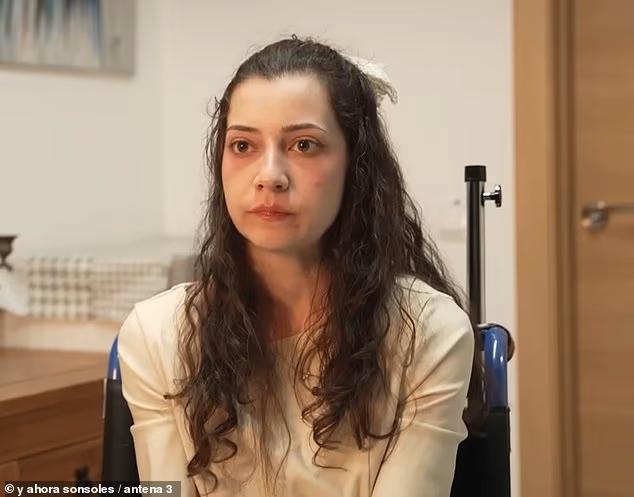
A 25-year-old Spanish woman, Noelia Castillo, whose life was irrevocably altered after a sexual assault and a failed suicide attempt left her paraplegic, has died by euthanasia following a protracted and deeply polarizing legal battle that reached the highest courts in Spain and beyond.
Her death, carried out at a care facility in Sant Pere de Ribes, Barcelona province, marks the conclusion of a case that has reignited global debate over assisted dying, mental health, and the boundaries of personal choice.
A Life Defined by Trauma—and a Decision to End It
Castillo’s path to euthanasia began in October 2022, when she jumped from a fifth-floor building days after a gang rape. The fall left her with a severe spinal cord injury, confining her to a wheelchair and subjecting her to chronic, debilitating pain.
But her suffering, she insisted, went far beyond the physical.
“I just want to go peacefully now and to stop suffering,” she said in a final televised interview. “There’s nothing I want to do. I don’t want to go out, I don’t want to eat.”
Diagnosed with borderline personality disorder and obsessive-compulsive disorder, Castillo had struggled with mental illness since adolescence. She had previously attempted suicide multiple times. For her, euthanasia was not an impulsive decision—it was, she argued, the only remaining assertion of control over a life she no longer recognized as her own.
The Family Divide—and a Father’s Fight
At the heart of the case was a bitter and highly public conflict between Castillo and her father, who fought relentlessly to block the procedure.
Backed by the ultra-conservative legal advocacy group Christian Lawyers, he argued that his daughter’s psychiatric conditions undermined her ability to make a fully informed, rational decision as required under Spanish law.
He maintained that her suffering did not meet the legal threshold of being “unbearable” and warned that permitting her death could set a dangerous precedent.
Castillo, however, rejected his intervention in stark terms.
“He hasn’t respected my decision and he never will,” she said. “Why does he want me alive? To keep me in a hospital?”
The dispute exposed not just a legal dilemma, but a deeply human fracture—between a father’s instinct to preserve life and a daughter’s insistence on ending her own.
Courts Clear the Way
Spain legalized euthanasia in 2021 under strict conditions, allowing individuals with “serious and incurable” or “chronic and disabling” conditions to seek medical assistance to die—provided they are deemed capable of making the decision.
Castillo’s application was approved by Catalan authorities in July 2024. What followed was a cascade of legal challenges.
Her father’s appeals were rejected at every level of the Spanish judiciary, including the Supreme Court and the Constitutional Court. A last-minute bid to halt the procedure at the European Court of Human Rights also failed, clearing the final obstacle.
Though the European court is expected to continue examining broader legal questions, it declined to delay Castillo’s death.
A Final Choice—On Her Terms
In the days before the procedure, Castillo spoke candidly about how she wanted to die.
“I want to die looking beautiful,” she said. “I’ll wear my prettiest dress and put on makeup.”
She invited her family to say their goodbyes—but chose to be alone when the lethal injection was administered.
On the evening of March 26, her wish was granted.
Her final message, delivered shortly before her death, was as stark as it was personal: “I don’t want to be an example for anyone. It’s simply my life.”
A Case That Will Not End
Even in death, Castillo’s case continues to reverberate.
Christian Lawyers has launched further legal complaints against medical professionals and officials involved in approving the euthanasia. Meanwhile, the European Court of Human Rights is expected to rule on whether her case involved any violations—ensuring that the legal and ethical questions it raised remain unresolved.
Spain’s euthanasia law has already been used by over 1,100 people since 2021. But Castillo’s case stands apart—not just for its legal complexity, but for the raw, uncomfortable questions it forces into the open:
Who decides when suffering becomes unbearable? Can autonomy exist alongside mental illness?
And where does the law draw the line between protection and control?
For now, those questions remain unanswered.