Home Blog Page 78

International Women’s Day 2026: AWLA Nigeria calls for a culture of giving to achieve true gender equity

As the world marks International Women’s Day 2026, the President of the African Women Lawyers Association (AWLA) Nigeria, Caroline Ibharuneafe, has called on individuals, institutions, and governments to embrace the spirit of generosity, mentorship, and collective responsibility toward advancing the rights and opportunities of women and girls.

Speaking in commemoration of this year’s theme, “Give To Gain,” Mrs. Ibharuneafe emphasized that meaningful progress in gender equality can only be achieved when society deliberately invests time, resources, and opportunities in empowering women.

“The theme ‘Give To Gain’ reminds us that progress in society begins when we invest in women. When we give women access to justice, education, leadership opportunities, and protection under the law, we do not lose anything as a society, we gain stronger families, resilient communities, and sustainable development.

“Giving is not merely an act of charity; it is a commitment to building a more just and inclusive society,” she said.

The AWLA Nigeria President noted that women lawyers across Africa continue to play critical roles in promoting access to justice, defending human rights, and supporting vulnerable members of society, particularly women and children facing discrimination, violence, and systemic barriers.

She urged legal professionals, policymakers, and community leaders to intensify efforts toward strengthening laws and institutions that protect women’s rights while creating platforms that enable women to contribute fully to national development.

“As women, professionals, and advocates, we must continue to give our voices, our knowledge, and our solidarity to the cause of justice and equality. By lifting others, we ultimately lift our nations,” she added.

She reaffirmed that AWLA  Nigeria will continue to champion legal advocacy, mentorship, and policy reforms aimed at protecting the rights and dignity of women and girls across the country.

“As we celebrate International Women’s Day, let us remember that when we give support, opportunity, and justice to women, the entire society gains,” she said.

The problem with voter indifference

MONDAY PHILIPS EKPE writes that the worsening case of complacency among the Nigerian electorate should be urgently arrested

First, an arguably wild, probably unempirical, seemingly alarmist, but potentially valid statement: Today’s Nigerian political office seekers are far less bothered with what the electorates think about them compared with their counterparts in the previous republics and even those at the earlier stages of this Fourth Republic. The game of politics, once dominated by aggressive but sincere wooing of the voting crowd is now giving way to ignoble and blatant occurrences like “votes delivery”, phoney landslides, rushing for solace and protection in the “winning, largest party in Africa” and the “go to court!” retort from those declared winners by the not always transparently free Independent National Electoral Commission (INEC).

I’m almost certain that any Google search for last month’s council elections in the Federal Capital Territory (FCT) would reveal “voter apathy” as a leading key phrase, not necessarily because it was a scientifically proven case of disinterestedness but mainly due to the heavy sentiments that were popularised by politicians in the opposition and also many residents of the federal capital who had cause to conclude that their interests were not among the considerations of the electoral umpire in carrying out that statutory responsibility. The election day movement restriction imposed by the FCT Minister, Mr Nyesom Wike, also didn’t help matters one bit. It would be difficult to fault those who claimed that they couldn’t move to their polling units due to the long distances. Many others also complained about their inability to access the new units assigned to them by INEC without any prior notice.

Former Vice President Atiku Abubakar, in particular, declared that the below average voter turnout was a “damning verdict” on what he described as the mismanagement of the nation’s affairs by the administration of President Bola Tinubu and the ruling All Progressives Congress (APC). You may call that the ranting of a rival but the Wazirin Adamawa is not alone in fingering Tinubu and his party for the perceived underperformance of this off-cycle voting. Very much like what previous opposition politicians did to the incumbents before. INEC has argued repeatedly that this year’s Abuja polls are actually better than 2022’s, as approximately 240,000 voted in the recent exercise while 149,000 did so four years ago. None of these data means anything to those who seriously feel that the sanctity of the election was roundly abused.

Feelings on their own do not win elections, however, even in very organised and progressive societies and countries. If it so obtains in such advanced places where people are more assertive about their civic rights and duties, what hope exists for Nigeria where citizens often sit on one spot, whining about their misfortunes and the recklessness of the political class, without lifting a finger? Quite frankly, the prospects aren’t assuring, even for diehard optimists.       

And in case you’re still wondering where our voters are in the scheme of things, they’re practically down below. Yes! Way under the level where the quest for survival is king but the chances of succumbing to despair are equally seductive. For many, voting is simply a useless piece of action. The last general poll further confirmed some of my fears concerning genuine public involvement in elections and, by extension, the sustenance of this democratic dispensation. I engaged my students – both undergraduate and postgraduate – to figure out their degree of awareness and anticipation. It was high. They were tired of the “old brigade”. Many of them pursued voter registration with every seriousness they could muster.

They would not put up with leaders who were running Nigeria aground any longer and were ready to vote younger, more active and dynamic candidates into positions of authority. Particularly for the presidential slot, majority of them rooted for Mr Peter Obi of the Labour Party (LP). For them, he had all it took – agility of the mind and body and more – to lead the country out of the woods. Well, the D-Day came and went. The rest is now history. I share this experience, not exclusive by any stretch of the imagination, because of the feelers I received directly from those students.

The shocker and the attendant disappointments produced by the outcome of that poll culminated in the resolve of many of them to stay away from subsequent elections. They might be suffering from expectation management deficiency but those whose business it is to bother about the nonchalance of most Nigerian voters shouldn’t ignore the factors responsible for that sort of avowed aloofness.    

I’m worried about the average Nigerian voter and, indeed, the future of our democracy itself. Frustrations with our voting systems are real, widespread and enduring. Rigging, results-doctoring, open and covert sabotage of stipulated procedures, and undisguised impunity have continued to loom large in people’s consciousness. There is hardly anything in the horizon which indicates that we’re anywhere near viable solutions. Efforts are sometimes made by relevant agencies like INEC, National Orientation Agency (NOA), some private institutions and political parties. Those attempts are clearly inadequate, sadly. In the midst of this huge civic deficit, there’s one nagging concern that’s truly troubling. I haven’t read everything in the Nigerian constitution and the Electoral Act 2026 but I doubt if any of their clauses stipulates the minimum number of voters required to validate any voting exercise. Like legislating a quorum for voters. One can’t even see that as a shortcoming or lacuna in our laws since there’s hardly any such provision anywhere on earth.

Perhaps, scholars and developers of democracy should seriously look at this aspect and try to proffer ways of enhancing the functionality and acceptability of this system of government that has been received by the democratic world as the most ideal. Only one million voters or less can even determine who becomes the president of Nigeria. Yes! In a country of an estimated population of over 200 million people and about half of this figure registered to vote, that would be legally tenable. But not morally cool. If this sounds exaggerated and far-fetched, the statistics of the presidential election three years ago should sober everyone. Only 26.7 percent of the registered voters performed the onerous social duty in that epic encounter. And it became one of the country’s most miserable outings in terms of voter attendance and participation.

In whatever form voting complacence takes, it is a clear and present danger to the representative government we’ve adopted but which we keep making a poor job of deepening. In fact, some work tirelessly to undermine it. The real ‘wahala’ with this growing voter impassivity is that politicians may soon perfect it fully and install structures that can galvanise the process of achieving a much higher percentage of lethargy among voters. After all, just about anything that can earn them certificates of return is okay. Head or tail, the average citizen, most likely eligible to vote, pays the vicious, wretched price.      

Dr Ekpe is a member of THISDAY Editorial Board

X: @monday_ekpe2

The views expressed by contributors are strictly personal and not of Law & Society Magazine.


3:32 PM 

Hansatu Zannah adds voice to gender parity & empowerment as women globally commemorate 2026 IWD

The widow of Zannah Umar Mustapha, former deputy Governor of Borno State, Hajia Hansatu Goldben Zannah, has called for an increased and deliberate investment in women and girl-child, describing the laudable move as a purposeful strategy for national progress and cohesion.

She made this assertion in a statement she made available to newsmen on Sunday to commemorate the 2026 edition of International Women’s Day which is celebrated March 8, of every calendar year.

The statement reads, “I feel so fulfilled and elated to be identified with my fellow women across the globe as we collectively commemorate the 2026 edition of International Women’s Day. For me it is an opportunity to celebrate every woman, daughters, sisters, aunts, mothers, grandmothers and also great grandmothers, for their resilience, doggedness, passion, courage, etc that brought us thus far and more importantly adding significant value to humanity.

“The theme for year 2026 resonates deeply –“Give To Gain.” It’s a call to action while also highlighting the power of giving support, opportunities, knowledge and resources to advance women’s empowerment. It further encourages a mindset of generosity and collaboration which must be respectfully upheld in its entirety at local, sub-national and at national levels. Without doubt, investing in women, not as charity, but a strategy to build the future of our dear nation, Nigeria.

“It will really be a thing of joy seeing Nigeria to be at par with comity of nations in line with international standards, norms, or practices that advance women empowerment and greatness and of course this will largely make our country to be recognized and respected globally, especially when international benchmarks are met, and as we play significant role in global affairs that deepen the interest and success of women and girl-child.”

The statement added, “All relevant stakeholders across board owe the female gender the duty to forge gender equality through right legislation, abundant giving etc, thankfully this year’s theme encourages a mindset of generosity and collaboration. It also emphasizes the power of reciprocity and support. When people, organizations, governments and communities give generously, opportunities and support for women increase. Giving is not a subtraction, it’s intentional multiplication. When women thrive, we all rise and this is better for the society at large.

“Whether through donations, knowledge, resources, infrastructure, visibility, advocacy, education, training, mentoring, or time, contributing to women’s advancement helps create a more supportive and interconnected world. This is also an opportunity for us all to come together, bond and love one another. It is also the pathway to genuine and much anticipated progress for sociatal excellence. I charge all women; just pull a sister up, one at a time. You will be amazed what we can achieve collectively, with amazing milestones.”

The Accountability of Thought: A Debt I Owe Chris Asoluka, By Max Amuchie

The Sunday Stew Column

The Accountability of Thought: A Debt I Owe Chris Asoluka, By Max Amuchie

There are debts that cannot be quantified.

They are not financial. They do not accrue interest. They send no reminders. Yet they settle quietly on the conscience and refuse to leave.
 This is one of them.

Some people also enter your life almost silently, almost accidentally, yet leave impressions so enduring that you only recognise their depth in their absence. Dr. Chris Asoluka was one such person.

Dr. Asoluka, who passed away on 10th May 2025, at age 70, was an economist, a public servant, and a technocrat of rare intellect. He served as a member of the House of Representatives in the Third Republic and as commissioner for finance and economic development in Imo State from 1994 to 1996. Later, he became Chairman and CEO of Nipal Consulting Network, a firm that provides strategy and policy development for national and subnational governments. He bridged public service, private enterprise, and intellectual engagement — a rare combination of principle, precision, and practice.

The first time I encountered his name, I did not meet him. I was a postgraduate student accompanying a course mate – whose name now escapes me – to his kinsman’s residence in Festac Town, Lagos, to collect books for a thesis. It was my course mate who mentioned, almost casually, “This is Chief Chris Asoluka’s house.”

He was not home. We collected the books and left.

The name lingered, then slipped quietly into memory.

 Shortly after, I joined ThisDay newspaper. I found myself in the orbit of Professor Pat Utomi — political economist, restless intellectual, and at the time a faculty member at the Lagos Business School. As part of a book project on him, we drew up a list of key voices to interview. Chris Asoluka’s name resurfaced.

 That was the beginning of a relationship that would quietly shape my understanding of accountability, leadership, and intellectual rigour.

My fuller interaction with him deepened during Professor Utomi’s first presidential bid ahead of the 2007 election. By 2006, the Lagos Business School had become a hub for strategy sessions — long hours of debate about economic direction, governance, and the temperament leadership requires.

Dr Asoluka was the arrowhead driving the entire strategy. He was measured and precise. He was never theatrical, never one to dominate a discussion for effect. But when he spoke, arguments gained structure. He anchored them in evidence, numbers, and logic. He demanded clarity where enthusiasm risked becoming vague and challenged assumptions politely but firmly.
 It was my first sustained exposure to technocratic discipline applied to politics — and it permanently shaped how I perceive leadership, strategy, and responsibility.

During those Lagos years, our interactions extended beyond formal meetings. Asoluka’s office in Apapa was not far from  ThisDay office, and I often dropped in, sometimes with purpose, sometimes simply to converse. He welcomed dialogue without pretence. Our discussions ranged from policy and economy to literature, ethics, and society.

 I served as Features Editor at ThisDay for over five years. For three of those years, I wrote the Saturday back-page column, a space to reflect, interrogate, and provoke thought beyond breaking headlines. It was during this period that Dr Asoluka began reading my work.
 He responded, sometimes briefly, sometimes analytically, often with questions that sharpened thought. When someone of disciplined intellect reads your work, you write more carefully. You test assumptions. You refine conclusions. He did not flatter; he engaged. That engagement was accountability.

While in ThisDay, I was head-hunted to Truetales Publications Ltd, publishers of Hints magazine, as CEO/Editor-in-Chief to lead a turnaround team. It was a brief but pivotal period. The challenge was organisational: reviving structures, restoring focus, and implementing strategic corrections.

From Truetales, I moved to BusinessDay as a member of its Editorial Board, where I resumed opinion writing, this time on Wednesdays. The platform changed, but the discipline of thinking aloud remained. It was from BusinessDay that I relocated to Abuja in 2011.

 Distance altered rhythm. Writing slowed. Columns became occasional, then irregular, then silent. Life, with its multiplicity of responsibilities, filled the spaces once devoted to thought.

Writers rarely stop dramatically. They taper. They postpone. They drift. I drifted.

 In 2024, at the Congress Hall of  Transcorp Hilton in Abuja, our paths crossed again. Time had left its mark: there was a walking stick to aid his movement. Yet his mind was sharp, his speech measured, his curiosity intact.
 After pleasantries, he asked a simple question:
 “Why did you stop writing?”
 It was not accusatory. It was observational. He had noticed the silence. He had been reading me, following my work, and he expected the continuity of a voice that had once spoken publicly and consistently.
 I offered explanations – distractions, responsibilities, the usual language of postponement. None satisfied me.
 In that moment, I felt the weight of quiet expectation, not from a critic, but from a mentor who believed that a voice once committed to reasoned discourse should not drift casually into silence.

 I promised to resume.
 I did not keep that promise in time.
 When news of his passing came, the unfinished promise returned with unusual force. There is a grief attached not merely to a loss, but to deferred action; to knowing that a debt to someone who shaped your thought remained unsettled.

Dr. Chris Asoluka was more than a technocrat. He was what the Italian philosopher, Antonio Gramsci, called an “organic intellectual” – one embedded in society, shaping institutions, translating abstract principles into applied practice.

 In a society like ours, where noise often outpaces nuance, the organic intellectual performs an indispensable function. He tempers passion with evidence, insists that arithmetic matters, and reminds power that clarity must precede charisma. He insists that personality shapes policy, temperament informs decisions, and values must guide action.

Asoluka expected consistency. That expectation lingers.

Our national conversation obsesses over events. Beneath every event lies personality. Beneath every policy lies character. Every decision emerges from a constellation of pre-formed values. Institutions matter, yes – but the people who inhabit them matter more.
 We do not always control the circumstances that interrupt us. But we control whether interruption becomes abandonment. That is one lesson I have learnt.

The question he asked in that Transcorp Hilton hall has not faded:
 “Why did you stop writing?

Today, I answer not with explanation but with action. This column is not just my answer; it is my commitment.
 
 This first edition of The Sunday Stew is my attempt to honour that debt, not through nostalgia, but through consistency. It is my way of responding to a standard quietly set before me.

This column will examine faith, leadership, culture, personality, and the unseen forces shaping our society’s visible outcomes. It will appear every Sunday, unhurried, unfiltered, and thoughtful.

Some weeks it will challenge you.
 Other weeks, it may unsettle you.
 Occasionally, it may simply provoke a smile.

But it will always be honest.


 Addendum
 That this debut aligns with March 8, International Women’s Day, is unplanned, yet fitting. If this column speaks of influence and accountability, it must acknowledge that many of Nigeria’s most enduring influences are steady and formative, often embodied by women whose contributions sustain our institutions without spectacle.

Tomorrow, March 9, marks the first anniversary of my mother’s passing. Lolo Angela Iheomahialam Amuchie departed on 9th March 2025. Her life, like that of many women of her generation, was not performed on public stage. It was lived in quiet consistency — in faith, discipline, sacrifice, and the shaping of values long before they found expression in public spaces.

The lessons she taught, alongside my father, the late Chief Emmanuel Ikonne Amuchie, still guide the steps of my siblings and me.

Influence needs not be loud to be lasting. It is visible in the mentors, the colleagues, the educators, and the family members whose work shapes lives quietly, profoundly, and consistently.

 Therefore, as this column begins, I honour not only mentors like Chris Asoluka who sharpened my thought, but also those — like my parents — whose diligence, insight, and steadfast values quietly shape society in ways that often go unacknowledged.

 Stay seasoned. See you next week.
 — X @MaxAmuchie | Email: [email protected]

 Readers’ reactions are welcome. Selected responses may be edited for clarity and length.

The views expressed by contributors are strictly personal and not of Law & Society Magazine.

Nigeria’s War Far From Over: Two army commanders killed as insurgents intensify attacks in Borno

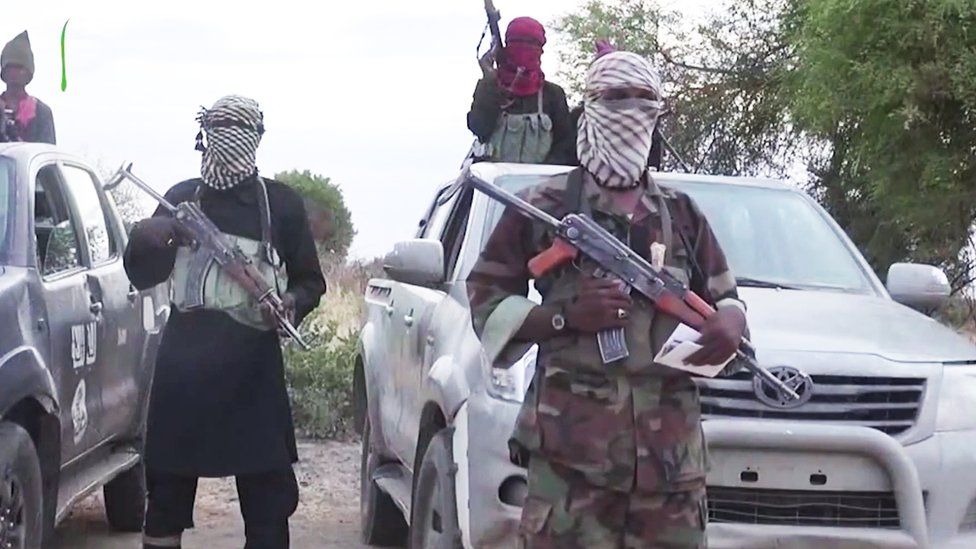
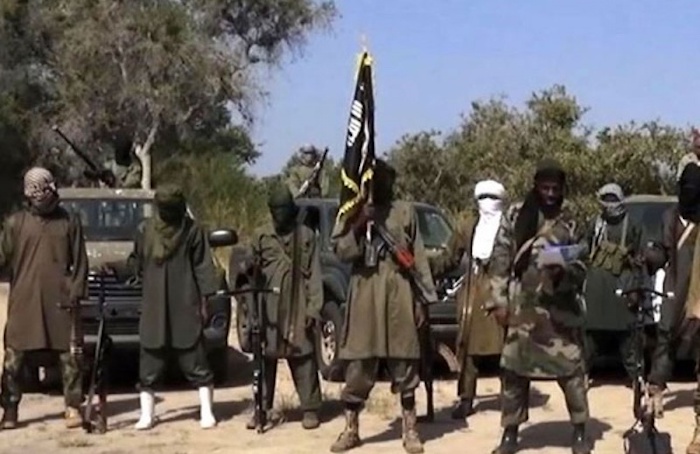
Nigeria’s long-running war against jihadist insurgents in the northeast is showing troubling signs of escalation after militants killed two senior military officers and overran several military bases in Borno State within days.

Among those killed was Umar Farouq, a lieutenant colonel and commanding officer in the Nigerian Army, who died when fighters linked to the Islamic State West Africa Province (ISWAP), a breakaway faction of Boko Haram, launched a coordinated assault on a military base in Kukawa.

Military sources said insurgents stormed the base with heavy gunfire, forcing troops to retreat before burning military vehicles and carting away weapons and ammunition.

“The commanding officer and some of his soldiers have been confirmed dead,” a security source said, describing the attack as “devastating.”

Second Commanding Officer Killed

Farouq’s death came just days after another commanding officer, S. I. Iliyasu, who led the 222 Battalion, was killed in a separate insurgent attack in Konduga, also in Borno State.

Security sources say the insurgents carried out near-simultaneous attacks on four military bases in Konduga, Mainok, Jakana, and Marte, destroying armoured vehicles and seizing military equipment.

More than 40 soldiers were reportedly killed in the assaults, though the Nigerian military has not released official casualty figures.

Insurgents Capture Military Equipment

Footage circulating online and attributed to ISWAP showed fighters storming military installations and displaying captured weapons and vehicles.

The video, shared by conflict researcher Brant R. Philip, showed militants celebrating what they claimed were captured military assets.

“All the vehicles you see here belong to the Nigerian Army,” one militant voice said in the video.

Military analysts say such propaganda is designed to demonstrate strength and boost recruitment.

Civilians Also Targeted

The attacks have not been limited to military facilities.

In Ngoshe in Gwoza Local Government Area, insurgents attacked a military outpost before moving into the community, killing residents and abducting women.

Another attack at Banki Junction along the Bama–Gwoza road reportedly killed several soldiers, including Major Ibrahim Mairiga.

A War That Refuses to End

Nigeria has battled jihadist insurgency in the northeast since 2009, with the conflict spreading across the Lake Chad basin.

Despite repeated military offensives and claims that insurgents had been “technically defeated,” attacks have persisted.

The military currently conducts operations under Operation Hadin Kai, the latest campaign aimed at dismantling insurgent networks.

However, security experts warn that militant groups have adapted their tactics, relying on mobility, coordinated raids, and attacks on poorly defended outposts.

Growing Questions Over Security Strategy

The latest attacks are likely to intensify scrutiny of Nigeria’s security architecture, particularly as troops complain about insufficient equipment, delayed reinforcements, and weak air support from the Nigerian Air Force during some assaults.

For communities in Borno, the violence has become a grim cycle.

While politicians begin positioning themselves for the 2027 elections, residents of the northeast continue to face the daily threat of insurgent attacks.

For many Nigerians, the latest killings raise a difficult question: after more than 15 years of war, why does the insurgency still appear far from defeated?

Justice Beyond Media Trial: Was Orient Petroleum MD jailed for 14 years for N25 billion fraud?

By Stephen Azubuike

The news which recently made the rounds is that the Anambra State High Court, Awka Division, had “convicted and sentenced the Managing Director of Orient Petroleum Resources Plc, Nnaemeka Nwawka, and the Registered Trustees of Sage Nebefeife Foundation to 14 years imprisonment each for fraud involving N25 billion.”1

The Economic and Financial Crimes Commission (EFCC)—the prosecuting agency ofthe government involved in the case—also published the news on its verified socialmedia handles.2 Interestingly, to my knowledge, none of the media outfits made available a certified true copy of the court Judgment. It is hoped that the Anambra State Judiciary would adopt the technological drives of the National Industrial Court of Nigeria in ensuring speedy web upload of court judgments.

Was there a conviction for “N25 Billion Fraud”?

A careful perusal of the media reports raises a certain degree of doubt concerning the accuracy of the report against the Defendants. For instance, while the reports claimed that the Defendants were convicted for “N25 billion fraud”, the reports also stated that the Court ordered them “to refund the sum of N140,900,000 (One Hundred and Forty Million, Nine Hundred Thousand Naira) to Orient Petroleum Resources Plc.“ This is less than 0.6% of N25 billion. Thus, looking at the huge difference, it is quite doubtful whether indeed the Court expressly convicted the Defendants for “N25 billion fraud” as claimed by the reports.

Curiously, the possibility of inaccurate reporting becomes more probable when one considers the information at the tail end of the reports where it was stated that the criminal prosecution itself was instigated by a petition submitted to the EFCC by one investor, Cletus Ibeto, who had alleged that he was a victim of fraud having invested N25 billion in Orient Petroleum Resources Plc.

Going by this, a reporter who is not sufficiently meticulous may easily conclude that the Court’s conviction verdict aligns with the complainant’s claims or allegations. But this is not always the case. Indeed, it is one thing for a complainant to make an allegation, and another thing for the court to make a definite finding of fact after hearing the case and evaluating the evidence before it.

You may wonder whether the amount of money which is the subject of an alleged fraud is relevant. The truth is, the amount of money involved in a fraud case is critical, as it directly impacts the legal classification. It is also reckoned with when considering the severity of sentencing. The scope of recovery efforts may also be influenced by the amount of money involved. As a matter of fact, the EFCC has little interest in investigating an allegation of fraud bordering on sums the agency considers meager or insignificant.

It is true that an act of fraud by someone in a high position of trust (e.g., a CEO) can affect one’s reputation irrespective of the exact amount involved. But interestingly, the greater the amount of money involved in a fraud case, the more severe the reputational damage to the fraud perpetrator. More so, larger amounts of money tend to generate more media coverage, which ultimately raises increased public concern and professional ruin.

In view of the foregoing, one is justified to inquire into the issue of whether the figure of N25 billion as widely reported by the media formed an integral part of the Court Judgment or verdict in the case of the Managing Director of Orient Petroleum Resources Plc; or whether the huge sum was quoted in the headlines to drive wider media coverage with its attendant increased reputational consequences.

Were the Defendants Jailed?

Again, the reports stated that the Defendants were jailed for 14 years. This can be seen right from the title of the reports. The natural implication of this is that the individual involved is expected to have found himself a new home in prison where he would be spending the next 14 years. There was nothing in the report which talked about whether the Court granted the Defendants an option of fine. Meanwhile, information from a reliable source is that the Defendants were given an option of fine by the Honourable Court which was immediately paid and that the MD walked home free without serving a minute of jail term. If this is true, the public deserves to know the reason the media excluded the information about the option of fine. Was this deliberate or a mere inadvertence?

Another crucial question is, if a defendant was given an option of fine after conviction as an alternative to imprisonment, and the fine is paid, can the defendant still be rightly said to have been jailed? The answer is no. The defendant is not considered to have been “jailed” in the strict sense of it. People who have been jailed are found in prisons serving their jail terms or in their homes following a release from prison after serving their terms.

Aside from the issue of jail term, and option of fine (which was excluded from the media reports), the reports also stated that “the Defendants were convicted on a 10-count charge.” This information tends to suggest that the Defendants were convicted on all 10 counts in the charge. But the information from a reliable source is that the Court dismissed 6 counts but convicted the Defendants on 4 counts upon which the option of fine was given, taken, and paid. And nonetheless, an appeal has been lodged on behalf of the Defendants against the Court’s decision on those counts.

Justice Beyond Media Trial

Media trial or trial by media refers to media coverage of court cases, mostly criminal matters, in a manner that creates or influences public perception of guilt or innocence of an accused person before or after court judgment. In his paper3 , Hon. Justice Peter Akhihiero of the High Court of Edo State observed that “Trial by media” is a phrase which refers to the impact of media coverage on a person’s reputation by creating a widespread perception of guilt or innocence before, or after, a verdict in a court of law.

Thus, trial by media goes beyond media coverage before judgment is delivered to include post-judgment coverage. Trial by media generally has the potential of interfering with the course of justice and threatens the constitutionally guaranteed presumption of innocence. Where it involves post-judgment coverage that inaccurately reports court’s verdict or misrepresents judicial pronouncements in a given case, trial by media may prejudice the rights of an accused person or even a convict.

Under Nigerian law, an accused person still enjoys certain rights. Notwithstanding criminal conviction, the person retains fundamental rights including the right to human dignity. This right protects against inaccurate or sensationalized media reporting of the court verdict. The law permits media freedom for the reporting of judicial proceedings in public interest, and in order to ensure transparency, accountability, and public trust in the judicial system. However, in exercising this freedom, the reporting must be fair, accurate, and without malice.

The fact that a person has been held criminally liable does not automatically deny such a person the benefit of a fair and accurate reportage devoid of any trace of malice. More so, a defendant still reserves the constitutional right of appeal against any unfavourable court decision.

Media trial is a common practice in Nigeria. But the courts have warned against such practice. In fact, in 2017, Justice Gabriel Kolawole of the Federal High Court in Abuja (as he then was) had halted the trial of Colonel Nicholas Ashinze, a former aide to the ex-National Security Adviser, Colonel Sambo Dasuki (rtd.), along with seven others for an alleged N1.5 billion corruption case. The Court at the time insisted that it would not resume until the EFCC retracts the misrepresentation of the court’s proceedings that the defendants were being tried for N36.8 billion fraud instead of N1.5 billion. In its publication, the EFCC also wrongly referred to Nicholas Ashinze as a retired military officer, whereas he was a serving army colonel at the material time. The court alsocriticised the EFCC and other news media for dishing out falsehood to the general public.4

Flowing from the above, it is clear that if, as reasonably suspected, the Managing Director of Orient Petroleum Resources Plc was not “jailed for 14 years for N25 billion fraud” as was reported in the media, that would amount to falsehood which should be strictly discouraged. The Defendants are entitled to a fair and accurate reporting of the Court’s verdict by the media.

Conclusion

Persons involved in fraudulent activities must face the law and the media may play their role. Nevertheless, it is of significant importance to preserve and promote the integrity of media reporting of judicial proceedings in public interest. The fundamental rights of accused persons including those found criminally liable must be respected. Accordingly, there is a need to uphold the established principles of fairness, accuracy and absence of malice in media reporting of court proceedings and verdict

  1. https://www.premiumtimesng.com/news/headlines/860264-court-jails-orient-petroleum-md-foundation-14- yrs-for-n25bn-fraud.html; https://gazettengr.com/orien; https://gazettengr.com/orient-petroleum-md-mwawka-associates-bag-14-year-jail-for-n25-billion-fraud/
  2. https://x.com/i/status/2027457281357730071
  3. https://edojudiciary.gov.ng/wp-content/uploads/2017/05/THE-IMPACT-OF-%E2%80%9 CMEDIA-TRIAL%E2%80%9D-ON-THE-CONSTITUTIONAL-PRESUMPTION-OF-INN OCENCE.pdf
  4. https://www.thisdaylive.com/2017/04/14/again-court-insists-efcc-must-retract-false-statement-on-dasukisaide/

The views expressed by contributors are strictly personal and not of Law & Society Magazine.

Bíòbákú’s party and Tinubu’s other malapropisms, By Festus Adedayo

The way things are panning out, by the time President Bola Tinubu finishes his course, he will be competing with Mrs Malaprop in serial gaffes. Last week, again, he relapsed into his usual malapropism. At the breaking of fast with members of the House of Representatives at the Villa, he admitted that the “heat was high voltage from the critics” but he and his political party, the APC, eventually weathered the storm. While promising the parliamentarians a second term, subject to an agreement between the APC and the political parties the legislators belonged, he was emphatic that it would be to the exclusion of “the Biobaku party.” Everybody laughed. Someone at the gathering, in the din of grovelling laughter, could be heard wondering what the president meant again by this. What is the “Biobaku party”?

Mrs. Malaprop was a character in Richard Brinsley Sheridan’s 1775 play, The Rivals. Her name was derived from the French phrase mal à propos, which translates to “inappropriate”. In the play, Mrs. Malaprop was notorious for her frequent misspeaks which gave comic effect to the play. 

My childhood friend, Osasere Adagbonyin, gave me my first encounter with malapropism. In Ilesa, Osun State in 1984, shortly after we left high school, he recounted to me the story of a man whose wife was barren but who, in a bombast, and a total deflection from what he meant, upon meeting the doctor, said, “Dr., my wife is un-bear-able; she is in-conceive-able; she is impregnable!”

In the run-up to the 2023 elections, presidential candidate Bola Tinubu was embroiled in a dozen of such speech blunders. It was so bad that opposition political parties cheekily claimed his recurring faux pas indicated he was not mentally fit to administer Africa’s most populous nation. For a finicky people, unpretentious about their choices of sanity in leadership, Nigerians are consensus ad idem with the Òkò-Ìrèsé tribe. They would not want an embarrassment in the Aso Rock Villa.

Òkò-Ìrèsé are a sub-Yoruba group who can be found in Kwara and Oyo States. Oral history, as well as traditional accounts, attribute Òkò’s founding to a hunter prince who was in search of a fertile land. Late Ilorin bard, Odolaye Aremu, popularized Òkò-Ìrèsé people’s carefulness in choices, especially in their historical commercial activities of buying and selling of slaves. Their Oríkì, praise poetry, speaks to those finicky choices made by their forebears, especially their historically recognized meticulous nature in commercial slave sale and purchase transactions. At slave markets for human purchase, their forebears were picky, lest they purchase slovenly slaves who periodically decorated their cheeks with whitish, early morning caked saliva called lala. In chanting the Òkò-Ìrèsé’s Oríkì, Odolaye articulated those finicky and careful choices. They were “Oko Irese ọmọ wòyírà, kò má ba r’ẹrú k’ẹrú, ẹrú k’ẹrú abilala l’ẹnu…”

In January 2022, while addressing some market women who came visiting him, Tinubu announced to them that their Permanent Voter Card (PVC) had expired. “In case they do not announce to you on time, the PVC you have has expired,” he said. INEC had to promptly counter him, resulting in an apology by one of his aides. Again, in March of that year, during his 69th birthday colloquium celebrated in Kano, Tinubu urged Muhammadu Buhari’s Federal Government to recruit 50 million soldiers as booster for the security forces. The suggested recruits, he pontificated, “will eat cassava, àgbàda (real word in Yoruba for corn being àgbàdo) in the morning, yam in the afternoon…” 

As if it was one month, one gaffe, in April of same year, the then presidential aspirant then asked, “Do you know how many of you are tweeting on WhatsApp right now?” Then, on October 15, he said his ally-now-turned-political-foe, then Kaduna State governor, Nasir El Rufai, had “turned a rotten situation into a bad one.” By November 17, he had turned the confetti of gaffe into a way of life. On that day, at a town hall meeting he had in Imo State, Tinubu uttered the infamous doggerel, “Bala Blu, Blu, Bulaba”. Till today, no one can tell what it meant.

On November 25 of the year, eight days after the Imo indecipherable words, the blunder that came thereafter was utterly embarrassing. At Oporoza, Gbaramatu Kingdom, the presidential candidate said then Deputy Senate President, Ovie Omo-Agege, would be the next governor of the “Niger Delta” State. Tinubu then crowned his blistering gaffes at the October 17, 2022 Arewa Stakeholders meeting in Kaduna. Asked of his take on the global climate change by reporters, he said it “is a question of how do you prevent a church rat from eating a poisoned holy communion?”

Many of his supporters were worried. What could be the catalyst for these blunders? While some say it was a calculated attempt to paint himself as an underdog to be pitied and dissemble the ranks of the opposition. Tinubu’s erstwhile estranged deputy as Lagos governor, Femi Pedro, attributed the malaprops to “slips of tongue” which he said were buoyed by fatigue and high campaign pressure. Some also said that as a human being, Tinubu was prone to gaffes. On their face value, the gaffes are potentially fatal.

My initial comparison of Nigerian finicky choice of leadership with the Òkò-Ìrèsé sounds contradictory nevertheless. If they were finicky in their choices of leaders and abhorrent of a leader who constantly descended into malaprops, why did they choose Tinubu?

 At the time when, as presidential candidate, Tinubu offered Nigerians gaffes a la carte, the people were just emerging from similar malapropism afflictions under Buhari. The Daura-born ex-soldier sometimes waffled into nothingness, far away from the content of his engagements. You will recall that in October, 2016, on a visit to Germany, while he stood beside the world’s most powerful woman, Chancellor Angela Merkel, Buhari was asked by journalists to react to his wife, Aisha’s consistent harangue of his government. He had replied: “I don’t know which party my wife belongs to, but she belongs to my kitchen and my living room and za oza room.” If you watched the telecast of that event, fix your gaze at Merkel: She seemed to glare at this inappropriateness from a fellow world leader.

Many people have subjected President Tinubu’s “Biobaku” ad-lib statement to rigorous scrutiny. Their submission, parodying Ola Rotimi’s famous play, is that our president has gone Malapropos again. Three words appeared within the radar that Tinubu could probably be referencing. One is the name of famous pre-independence and post-independence scholar of history, Professor Saburi Oladeni Biobaku. The second he might have meant was “Àbíkú” and the third, “Abóbakú”. The three are Yoruba words. Whichever he meant, it was in bad light and as such, in searching for peripheral linkages to his mind construct among the three, our choice word must not convey positivity.

Professor  Biobaku, known for his rhythmic initials, SOB, the most famous bearer of that name the president referenced, evokes nostalgic, positive historical memory. A Nigerian scholar, historian, and politician who lived between 1918 and 2001, an ex-boy of Government College, Ibadan, was taught by Chief Obafemi Awolowo in his primary school days at the Ogbe Methodist Primary School, Abeokuta. He later became Awolowo’s Secretary of the Premier Executive Council (SPEC) in the Western Region. He was also the first African Registrar of the University of Ibadan. In fact, when Chief Obafemi Awolowo was to actualize his dream of bringing together the then fractious Yoruba people, Biobaku was one of the historians he consulted to establish the Yoruba language society. 

 The most famous story associated with Biobaku is the jostling for the Vice Chancellor position of the University of Lagos in 1965. Having earlier been appointed VC of the University of Zambia, he was dissuaded from accepting the offer by Nigeria’s Prime Minister Abubakar Tafawa Balewa and was instead offered the University of Lagos. It became a huge cauldron of inter-ethnic animosity between the Yoruba and Igbo. At this time, the animosity had reached feverish height.

Apart from campaign ground statements which he made that became instant headlines in the Sketch, Akintola’s visceral campaign against the Igbo involved pun-twisting the name of Ikejiani into a sarcastic Yoruba adaptation, so as to suit his pillory of the race. Akintola, reputed orator and very deep in Yoruba morphology, in this “ìkejì á ní” (second will have) punning, was wont to ask his audience, “The first (Igboman) would have, the second (Igboman) would have; what have you got?” This was used by him to underscore the nepotist character of not only Dr. Ikejiani, but the Igbo man. 

This inter-ethnic battle and allegations of tribal patronage in early Nigerian higher education was notorious in the 1965 battle for the Vice-Chancellorship of the University of Lagos. Playing on both professors’ names, Akintola was said to have told the university academic audience that “we said we would give you a man who would not die (Yoruba translation of Bíòbákú), yet you insisted that it is the man who eats the dead (Yoruba literal translation of Eni Ńjòkú) that you want!”

 On June 8, 1965, Biobaku, then newly appointed VC, was stabbed by a student, Kayode Adams. Adams was an old boy of Ibadan Grammar School. His appointment came at the cusp of non-renewal of the VC tenure of professor of Botany and first vice chancellor of the university, Eni Njoku. Not only was Njoku loved by the entire university, the school felt that Biobaku’s appointment was aimed at feathering Yoruba ethnic nest. The decision led to demonstration by students and request to the then Minister of Education, Chief Richard Akinjide, to rescind the decision. With the help of Chair of Council, Prof Horatio Oritsejolomi Thomas, Biobaku sneaked into the school. 

As narrated by Biobaku himself in his autobiography, When we were no longer young (1999), he was stabbed after his address to the students at Idi-Araba. Biobaku had earlier penned When we were young (1992). Though he later pleaded not guilty, citing insanity, Adams only suffered judicial retribution. This was because of the attempt to life he was charged with, in accordance with sections 229 and 230 of Criminal Procedure Act (CPA). None of his rioting colleagues was touched. The court confined him to the Yaba psychiatry but in October, 1969, Adams was found dead at the Bar Beach.

 So, was it Saburi Biobaku, that highly-placed scholar, one of Yoruba’s most highly placed icons, that Tinubu was referencing in that bad light? It was not likely.

 Could the president have meant the “Àbíkú party”? In poems written by two Nigerian literary prodigies, Wole Soyinka and John Pepper Clark, in their 1967 and 1965 poems, respectively, they explored the Yoruba concept of belief in a spirit child called Abiku. In Yoruba cosmological belief, that child is destined to die and get reborn repeatedly, as a plague to its mother.  Was this what the president meant? Have the “Àbíkú ” political parties become such a pest on the president? Was he interceding with them to retreat from haranguing him like J.P. Clark’s or daring them like Soyinka’s Abiku?

The third of what Tinubu could have meant was “Abóbakú,” also referred to as the Olókùn esin. Meaning, “he who dies with the king,” it is the relic of a practice in the old Oyo Empire. In it, an individual, most times the Aremo, the king’s eldest son, at his demise, was traditionally designated to accompany the monarch on a journey of no return by being buried alive with the Alaafin. The Abóbakú practice was formally halted around 1946, at the death of Alaafin Siyanbola Ladigbolu 1, who reigned from 1911 to 1944. As the Olókùn esin was about to be interred with Oba Siyanbola, the British Colonial Resident, Captain William Ross, intervened, forbidding the reluctant Abóbakú from being buried alive with him. A cow substitute was immediately and subsequently used for the rites. So, did Tinubu mean that the opposition were Abóbakús? Not likely.

Many have read the Tinubu “Bíòbákú party” comment to mean that he was mocking the coalition-backed ADC due to what he regards as its multiple personal interests. But this still does not answer to this particular “ç” word usage. I personally think something is wrong somewhere. It could be a throwback to an ancient Yoruba saying. When a plantain is ripening, it is doing one of two things. Transiting from its unalluring greenery into a beautiful, yellowish colour, the plantain is, at the same time, in preparation for a decay. When you then clap excitedly that the plantain is ripening, you are looking at it with myopia. My people then say, “Ógèdè ńbàjé, è l’ó ńpón”. It is the message of the Agidigbo drum. Only the wise dance to it and the scholarly understand it

The views expressed by contributors are strictly personal and not of Law & Society Magazine.

Nigeria, Iran and the next election, By Lasisi Olagunju

On August 2, 1100, England’s King William II went hunting in the New Forest in southern England. During the chase, an arrow shot at a stag by his companion, the Norman nobleman Walter Tirel struck an oak tree, ricocheted, and pierced the king’s chest. The king died right there. The spot where he fell is today marked by the Rufus Stone.

History records the episode as an accident. Yet the story has endured for nearly a thousand years as a powerful illustration of unintended consequences. An arrow meant for a stag struck a king instead.

And that is how events far away — sometimes aimed at something else entirely — end up wounding those who thought themselves safely out of range.

It offers a lesson for anyone in Nigeria who thinks a crisis anywhere, especially the ongoing war in Iran, is too far away to hurt them here.

The negation of a Yoruba proverb captures the inevitability of distant consequences: igi kìí dá l’óko k’ó pa ará ilé—a tree does not fall in the bush and kill the city dweller. Events rarely harm those who are truly untouched by them. But in an interconnected world defined by oil, the fall of a tree in the Gulf can shake the political ground in Abuja. The Yoruba also say the ceiling does not cave in and kill the wayfarer (Àjà kìí jìn kó pa èrò ònà). Again, this is working for Nigeria and Nigerians in the reverse.

Donald Trump started the war in Iran because he wanted (wants) a new regime there which will be answerable to him. The war will miss its intended target if history remains a faithful mocker of all-powerful men like Donald Trump. It may even do worse: and, it is already doing it on a global scale. In Nigeria, hundreds of miles away from Iran, personal wellbeing is being upended; family finances are facing ruins because of petrol and its combustible price.

Yet, it may get worse.

A classic warning from the cockpit captures Nigeria’s moment: “We are about to enter a zone of turbulence. Please fasten your seat belts and remain seated.”

The celts of thunder from the Middle East has reached every home. On Saturday, fuel queues returned to major cities in Nigeria. The Nigerian National Petroleum Company Limited raised the pump price of petrol again—its second increase in four days. Iran is the culprit.

The widening crisis around the Strait of Hormuz may seem distant from Nigeria’s politics, but history teaches that events in the Persian Gulf often echo loudly in oil-producing states. When tension grips the Gulf and the shipping lanes tremble, the first reaction of the global market is almost instinctive: the price of crude rises.

And what I read is that global oil prices are rising. Brent and West Texas Intermediate climbed above $90 per barrel at the weekend. Ordinarily, Nigerians should celebrate this as good news, but because we are Nigerians, the development can only be celebrated with paradox and oxymoronic songs and dance steps. We sell yam and use the proceeds to buy pounded yam. We cannot profit from increased earnings from our labour tilling the land. NNPC read what I read of global oil price and its domestic petrol price moved from ₦960 to ₦967 per litre, and this was after an earlier jump from ₦875.

The tremor is getting stronger as the Iranian crisis worsens, and lengthens. Reports said on Sunday that across the country, filling stations quickly adjusted their meters. In parts of Southern Nigeria, petrol now sells for about ₦1,080 per litre. Earlier in the week, the Dangote Refinery also raised its gantry price. The cause is the same: higher crude costs driven by war shrieks in the Middle East.

Nigerians, like passengers in rough air, can only brace for rougher bumps ahead.

With spiked petrol prices, homes grappling with sick finances may soon gasp for life as cost of living takes a bash. And that should not be seen as a thief in the night. For a country like Nigeria, whose public finances lean heavily on petroleum exports, and imports, the political consequences of a shift in the price of the economy’s oxygen can be profound. And I can safely make a prediction: Even with a struggling opposition, oil prices abroad may become hostile votes at home in Nigeria. Whether as windfall or hardship, the Iranian crisis may yet tinker (or tamper) with the ballot boxes of Nigeria’s 2027 election.

I say so because where I come from, I grew up to know that afẹ́fẹ́ kìí fẹ́ kó má kan igi oko l’ára—the wind does not blow through the forest without touching the trees of the forest. And a strong wind that blows without ceasing will do more than touch the trees; it will break the branches of the strong and waste the fruits of the fruity.

So, if regime change is Trump’s primary goal in Iran, his arrow may miss the stag and hit kings in all countries where petrol is the giver of life.

I wrote last week that this war may be a long haul. It looks like I may be right. From a war of ego it is morphing into a war in defence of independence for Iran. Donald Trump has openly tied his offensive in Iran to regime change. In an interview with American news site, Axios, he suggested he should be involved in choosing Iran’s next leader. He said he wants “someone that will bring harmony and peace to Iran.”

Days after saying that, Trump doubled down. He loudly called on Iranians to overthrow their government, warning that the alternative is “absolutely guaranteed death.” On Truth Social, he declared that there will be no deal with Iran except “unconditional surrender.”

The irony is striking. During his 2016 campaign, Trump promised to end the American habit of remaking other nations. He vowed to “break the cycle of regime change” and abandon the reckless interventions of the past. In 2019, he repeated the pledge, declaring that America’s era of “never-ending war, regime change, and nation-building” was over and that the U.S. military was not meant to be “the policeman of the world.” Now, the man has become the ultimate kingmaker, and Inspector General of the world, and he flaunts it. What is the definition of discordance if this is not it?

In Venezuela, Trump abducted a president. In Iran, he killed the spiritual and political leader. After Venezuela and Iran, Trump has said he is “looking forward to a great change that will soon be coming to Cuba.” There was no diplomacy in his statement of objective: regime change. He said: “Cuba is at the end of the line. They’re very much at the end of the line. They have no money, they have no oil. They have a bad philosophy. They have a bad regime that’s been bad for a long time. Cuba is in its last moments of life as it was. It’ll have a great new life, but it’s in its last moments of life the way it is.”

The world president has said what he wants from, and with Cuba, and he may get it. But can he succeed with Iran? If he succeeds with Iran, what will be the definition of that success? Will he not be transiting from the house of disease to the home of death? How about a harder anti-American hardliner succeeding today’s unyielding theocrats?

What Trump’s current fixation risks illustrating is what sociologist Robert K. Merton famously described as the law of unintended consequences. Merton argued that political actions often produce outcomes their authors never anticipated. Literature in sociology reminds us that unintended consequences can be positive (unexpected benefits), negative (unplanned harm), or perverse (when an action makes the original problem worse). In Iran, the louder the external calls for regime change, the stronger the regime’s nationalist legitimacy may become. Trump has not benefited from the teachings of that law.

The more one reads Iran’s contemporary political history, the clearer it becomes why America remains a hard sell to large sections of the Iranian public.

It may be true that many Iranians see their regime as repressive, corrupt and unfeeling. Western television networks may keep showing crowds of Iranians cheering American and Israeli strikes against symbols of state power. But wars have their own logic. We have seen how the same conflict has produced a powerful backlash, especially after the mass killing of Iranian schoolgirls early in the fighting. Moments like that often awaken a deeper instinct: when a nation feels attacked from outside, even its fiercest internal critics may close ranks.

Deeper still on the regime change rhetoric of Trump is the question: can a nation whose political identity was forged in resistance to foreign domination truly have its leadership determined from abroad? History suggests the answer may expose the futility of Trump’s objective.

My point is that the US-Iran conflict is more structural and historical than religious. I cite an example. In 1962, the Iranian parliament passed a law granting law-breaking American expatriates living in Iran immunity from prosecution in Iranian courts. A young cleric, Ruhollah Khomeini, (who later became Ayatollah Ruholah Khomeini) reacted with fury. The cleric said, by that law, “If any of them (Americans) commits a crime in Iran, they are immune. If an American servant or cook terrorises your source of religious authority in the middle of the bazaar, the Iranian police do not have the right to stop him. The Iranian courts cannot put him on trial or interrogate him. He should go to America where the masters would decide what to do. . . .

We do not consider this government a government. These are traitors. They are traitors to the country.” Scholars J. S. Ismael and T. Y. Ismael, writing on ‘The Political Thought of Ayatollah Khomeini’ in June 1980, brought in the above lines and further observed that this confrontation helped transform clerical dissent into a wider nationalist resistance movement. It got worse such that by late 1970s, the outrage had matured into a powerful ideological narrative: that Iran must never again become subordinate to external powers. The reality of, and hatred for, American power already embedded in Iran’s political vocabulary crystalised into the action that birthed the 1979 revolution. I do not think that forty seven years after, historically proud Iranians would happily exchange the theocratic dictatorship of a home-bred Ayatollah for a contraption put together by an erratic, exploitative godfather reigning abroad.

This should not be too blurry for me to see, and cannot be too complex, knotty, for me to untie; history explains it: Because the present Iranian state was built on the rejection of foreign domination—especially American domination—external attempts since 1979 to reshape Iran have often reinforced the regime’s founding narrative rather than weakened it. Trump’s present intervention may simply allow the regime in Iran to present and entrench itself as a defender of Iran’s sovereignty against the banditry of outside manipulation.

In other words, Iran’s historical memory of humiliation means that Trump’s loud, lousy attempt to reshape the country in his own image may produce the opposite effect. A revolution born in resistance to foreign privilege rarely surrenders its autonomy to foreign proxies. The louder his calls for regime change, the stronger the regime’s ideological justification may become.

Back to Nigeria and its share of this problem. Non-partisan political economists will warn that if the exchange of bombs in Iran escalates further and the Gulf’s energy arteries remain constrained, if global shipping disruptions deepen and freight costs surge, inflation at home will worsen even as oil prices climb. The paradox would be bitter: our nation earns more from crude while its citizens struggle with higher prices of food, transport and medicine.

One article in the Financial Times yesterday said “oil market prepares for $100 a barrel as Middle East producers cut output.” Another published same day explained “why oil at $200 a barrel is no longer unthinkable.”

Put the mathematics of the two together and the answer is simple: global economic — and possibly political — turmoil. I pity Nigeria, and the Mr Jones of its animal farm who still believes the farm is insulated from the storm.

This is where politicians should worry. Elections are less than twelve months away. A hungry electorate can be costly to court — and even more expensive to buy. Keeping them is costlier still. Yet bribery does not always win. Robert C. Brooks’ The Nature of Political Corruption (1909) warned long ago about the limits and consequences of that path. Nigerian politicians, of course, are not strangers to Philip Nel’s provocative essay, ‘When Bribery Helps the Poor’. Their own takeaway from Nel, appears simpler: in Nigeria, bribery is “the only thing that works.” And indeed, on election day, it often does.

So, the government will continue doing what it does best: ignoring spiralling prices of petrol, etc, advertising dubious statistics as proof of a good life. But elections are rarely decided by macroeconomic indicators; they are decided by how daily life feels to the voter.

Still, politicians are incurable optimists. Even in violent turbulence, they insist the aircraft will land safely. Their counter-incantation in the storm comforts them: Ìjì kìí jà kó da omi inú àgbọn nù— no storm rages fiercely enough to spill the coconut water inside its shell.

They insist that elections are not decided by how daily life feels to the voter. They ask: in our country, is election not ultimately a matter of cash? What money cannot buy, more money will. One day, it just won’t.

That is why we say every action or inaction has consequences. Prebendal optimism has. What happened in the New Forest nine centuries ago reminds us that consequences rarely travel in straight lines. An arrow meant for a stag killed a king. In the same way, a war meant to reshape Iran may yet reshape politics in countries far beyond the Persian Gulf — and that includes Nigeria.

The views expressed by contributors are strictly personal and not of Law & Society Magazine.

In Nigeria, a judge is not above or beyond investigation

By Chidi Anselm Odinkalu

“Judge not, that you be not judged. For with what judgment you judge, you will be judged….”

Bible, Matthew 7:1-2 (NKJV)

In the first six months of 1986, Nigeria’s Supreme Court delivered two judgments with far reaching consequences for the lives and careers of two senior judges of the High Court. If the facts were to recur today, forty years later, neither of these cases would come to trial. This fact says a lot about how the standards of judicial conduct and ethics as well as accountability for both have evolved – for worse – over the intervening period.

Donald Ikomi was a judge and Chairman of the Armed Robbery and Firearms Tribunal of Bendel State when – together with his cook, Reuben Udoh, and one Martins Ekezoka – he was arraigned in December 1985 on a charge of murder.

The case began on 5 July 1985, when Reuben Udoh discovered on the premises of 3 Obeahon Avenue in Benin GRA where Justice Ikomi lived, the remains of the Police Orderly to the judge, Uanlie Agbede. Parts of the body were missing. A post-mortem later revealed that the cause of death was “strangulation and excessive blood loss.”

At the time of the murder, Justice Ikomi was presiding over the trial of Kingsley Eweka, a member of the infamous robbery gang of Lawrence Anini. The coincidence was not immediately apparent to an undiscerning public, caught in the unusual maelstrom of a judge under suspicion for a heinous crime. In November 1985, citing a need “to uphold the dignity of the judiciary”, Ibrahim Babangida’s military regime relieved Justice Ikomi of his judicial appointment.

The following month, on 11 December 1985, the Attorney-General secured permission from the High Court for his trial to begin. In May 1986, the Supreme Court presided over by Anthony Aniagolu threw its not inconsiderable weight behind that decision.

Following a ten-day trial, on 15 July 1985, the High Court of Bendel State discharged and acquitted Justice Ikomi (and his co-defendants). His daughter, Timeyin Baiyekusi, would later reveal that her dad was framed by George Iyamu, a Deputy Superintendent of Police, who “had already succumbed to pressure from (Lawrence) Anini to help ‘kill’ the case (against Kingsley Eweka) in the armed robbery and firearms tribunal headed by Justice Ikomi.”

Earlier in January 1986, a full panel of the Supreme Court presided over by Chief Justice Ayo Irikefe, overturned the conviction of Paul Anyebe, a judge of the High Court of Benue State, on charges of illegal possession of firearms. Following his conviction by the lower court, the Advisory Judicial Committee (AJC), the predecessor to the National Judicial Council (NJC), had Justice Anyebe relieved of his judgeship. He was, however, reinstated after his acquittal, retiring thereafter as an honorable judge.

These two cases showcased the immense challenges associated with accountability for allegations of serious malfeasance against judges. On the positive side, justice was served. Justice Ikomi, in particular, received full exoneration and his family and children retrieved their name with pride and honour. However, his life was ransacked. Born on 14 September 1935, Donald Ikomi died on 11 January 1992. It is difficult not to believe that the circumstances surrounding his trial for murder that he did not commit assuredly contributed to his untimely death at the age of 56.

Both Justice Anyebe and Justice Ikomi had impeccable judicial reputations before their respective ordeals. Yet, rather remarkably, no one suggested then that their office, status, or reputations afforded them immunity against the charges.

In the past week, echoes of aspects of the controversy around accountability of judges in Nigeria have returned as the Code of Conduct Bureau has reportedly begun an investigation into asset declaration compliance by the serving Chief Judge of the Federal High Court, John Tsoho. This followed a report that he had “violated Nigeria’s Code of Conduct law by failing to declare some of his bank accounts in his asset declaration form.” The undeclared assets reportedly included accounts in different banks denominated in both the Naira and in foreign currencies.

Following upon this report, the President of the Nigerian Bar Association (NBA), Afam Osigwe, a Senior Advocate of Nigeria (SAN), reportedly wrote to the Chairman of the CCB to tell him that “the bureau lacked constitutional authority” to investigate John Tsoho.

Backing up their president, three branches of the NBA in Benue State followed up in similar language to assert immunity from investigation for John Tsoho, asserting that the CCB “lacks the constitutional authority to summon a sitting Chief Judge. It is settled law that only the National Judicial Council can investigate or discipline a serving judicial officer.” John Tsoho comes from Benue State.

Sadly, however, the claim that the NBA makes under guise of judicial and constitutional authority does not exist in Nigerian law. For clarity, three lines of cases emerged in the 20-year period from 2002 to 2022 to define the scope of law applicable to the accountability of judges in Nigeria.

First, in May 2002, the Supreme Court decided in a case initiated by Chief Gani Fawehinmi that although Governors as state chief executives were immune from legal process under the constitution, that did not preclude institutions of law enforcement from investigating them even while they were in office. In effect, assertions of immunity do not trump the power of investigation.

Second, ten years later, in April 2012, the Supreme Court decided in a case arising from the attempt by the governor and House of Assembly of Kwara State to strong-arm former state Chief Judge, Raliat Elelu-Habeeb, out of office that a Chief Judge could not be removed from office except upon the advice of the NJC.

Third, another ten years later, in May 2022, the same court decided in a case concerning Hyeladzira Nganjiwa, a judge of the Federal High Court, that a serving judge could not be prosecuted except upon a dispositive decision by the NJC. The decision in this case arose from the effort of the Economic and Financial Crimes Commission to prosecute the judge on charges of money laundering, corruption, and perverting the cause of justice. The decision was controversial because an investigation committee of the NJC headed by a former Justice of the Supreme Court, Emmanuel Ayoola, had indeed found the judge guilty of serious infractions of the judicial Code of Conduct in 2019.

In raising concerns about the reports swirling around the Chief Judge of the Federal High Court, the NBA recalled the playbook leading to the unlawful removal from office of Chief Justice of Nigeria, Walter Onnoghen, in 2019. The removal of Chief Justice Onnoghen did not pretend, however, to have anything to do with law or legal process. It should not be repeated as a model for judicial accountability nor cited as reason for claims that have no basis in law or common sense.

Part 1(A) of Schedule III of Nigeria’s 1999 Constitution establishes the CCB and endows it with powers to, among other things, “receive complaints about non-compliance with or breach of the provisions of the Code of Conduct or any law in relation thereto, investigate the complaint and, where appropriate, refer such matters to the Code of Conduct Tribunal.” The NJC’s own judicial Code of Conduct requires judges to be “true and faithful to the Constitution and the Law”, while the constitution of the NBA requires it to promote the rule of law.

The position of a High Court judge is high constitutional office. The law requires occupants of the office to make asset disclosures and the constitution confers on the CCB an explicit mandate to investigate and verify such disclosures. The idea of an impunity carve-out for judicial officers from this power of investigation of the CCB is contrary to the constitution, the judicial Code of Conduct; and the NBA Constitution. It is thus clearly unsustainable.

If, however, the CCB’s investigation discloses serious infraction, the state of the law is that they should first file their findings by way of a complaint with the NJC for disciplinary action against any judge involved. That is the only way to balance the interests of the public, the judiciary, and individual judges in this complex landscape of shifting values in search of a judiciary worthy of the name.

A lawyer and a teacher, Odinkalu can be reached at [email protected]

The views expressed by contributors are strictly personal and not of Law & Society Magazine.

Hero to Hardship: Police Officer Allegedly Unpaid for 28 Years


* Rights group accuses Nigeria Police of “institutional cruelty” after officer who disarmed criminal in 1998 faces eviction.

A Nigerian police officer who allegedly disarmed a dangerous criminal nearly three decades ago is now at the centre of a disturbing human-rights controversy, after a rights group claimed she has gone 28 years without salary and now faces eviction from her official residence.

The advocacy organisation Women’s Aid Collective (WACOL) says the officer, Grace Ohiaeri, has endured decades of what it described as “institutional cruelty” by the Nigeria Police Force, despite remaining technically in service since 1998.

Speaking in Enugu during activities marking the 2026 International Women’s Day, themed “Rights. Justice. Action. For All Women and Girls.”, WACOL director Joy Ngozi Ezeilo, SAN, warned that the case represents “a national disgrace and a failure of the justice system to protect those who risk their lives for society.”

Ezeilo, SAN, a former United Nations Special Rapporteur, described the case as “a national disgrace”, saying Ohiaeri’s ordeal began shortly after she disarmed a dangerous criminal in 1998 in order to protect civilians.

Heroism Followed by Hardship

According to WACOL, the officer’s actions at the time involved disarming a notorious suspect allegedly linked to a senior police officer.

Instead of commendation, the group said Ohiaeri’s salary was abruptly stopped that same year without any formal disciplinary action, even though she was never officially dismissed from the force.

“In 1998, Officer Grace Ohiaeri performed a heroic act. Her reward was not commendation but malice and institutional cruelty,” Ezeilo said.

“Today she is elderly and frail, and the Police Force is evicting her from her official quarters under the guise of renovations, leaving a national hero with nowhere to go.”

Allegation of Diverted Relief Funds

WACOL also alleged that a ₦20 million relief donation made by billionaire philanthropist Arthur Eze to assist the embattled officer never reached her.

According to the group, the funds were allegedly diverted by some of her superiors.

“When a Good Samaritan, Chief Arthur Eze, donated ₦20,000,000 for her relief, those funds allegedly vanished into the pockets of her superiors,” Ezeilo said.

The group said it has formally petitioned the Inspector-General of Police, Olatunji Disu, and the Enugu State Commissioner of Police, Bitrus Giwa, demanding immediate intervention.

Among its demands are:

  • Payment of 28 years’ salary arrears
  • Official recognition of her service
  • A promotion to enable a dignified retirement

Another Family in Crisis

During the press conference, WACOL also highlighted another case involving a woman identified as Faith Odoh and her four children.

The organisation said Odoh’s family is trapped in extreme poverty and now faces eviction after a traumatic series of events involving the alleged sexual assault of her 12-year-old daughter by multiple men.

According to WACOL, the final suspect in the case, a local pastor who also serves as a neighbourhood watch chairman, had been providing the family temporary accommodation.

The suspect is currently awaiting trial.

“These traumatised children are now out of school and desperately need a safe sanctuary,” Ezeilo said.

‘Give to Gain’ Campaign

To address both crises, WACOL announced the launch of a fundraising initiative called Give to Gain.”

The campaign aims to secure permanent housing for Officer Ohiaeri and the Odoh family while also establishing sustainable livelihoods for the latter.

Ezeilo urged the Nigerian government and corporate organisations to move beyond symbolic gestures during International Women’s Day and take concrete action.

“We cannot, and will not, allow a lifetime of service to end on the streets,” she said.

TIPS