- Fresh Plateau Attack: Gunmen slaughter eight, including family members, many injured
A chilling new video released by fighters linked to Boko Haram has laid bare the scale of Nigeria’s deepening security crisis—showing hundreds of abducted civilians, mostly women and children, pleading for rescue from captivity in the country’s embattled northeast.
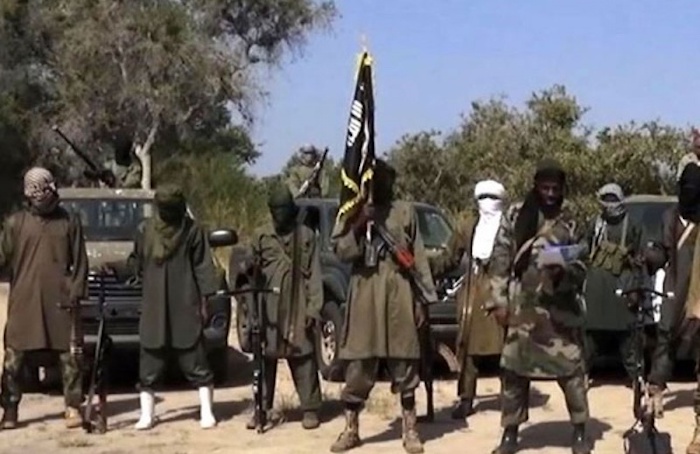
The footage, reportedly filmed in Ngoshe, a community in Borno State’s Gwoza axis, features at least 416 hostages seated in the open, surrounded by armed militants affiliated with Jama’atu Ahlis-Sunna Lidda’Awati Wal-Jihad. Some fighters mask their identities. Others stand openly, gripping rifles, projecting control.
Read Also: Shock, Shock! Boko Haram victim jailed for 9 years after spending 10 years in detention
The message is unmistakable: the captives are alive—but their fate now hangs on negotiations, political will, and a fragile security architecture that critics say is failing Nigeria’s most vulnerable.
Proof of Life—or Propaganda?
The video, obtained by SaharaReporters, was reportedly produced after pressure from a regional group demanding evidence that abducted residents were still alive. In it, insurgents choreograph a grim spectacle—inviting victims to speak, answer questions, and appeal directly to authorities.
“We are alive and in good condition,” one woman says, her voice steady but strained. Around her, children sit silently. Others clutch one another.
But beneath the surface of that message lies a more unsettling reality.
The captives describe psychological distress, separation from families, and fear of the unknown, even as they cautiously acknowledge access to food and shelter. Their repeated pleas are not about comfort—they are about freedom.
“Our children are distressed. We are distressed. Our families do not know if we are alive,” one spokesperson says. “We want to go home.”
A Community Overrun
The mass abduction traces back to a coordinated assault on Ngoshe earlier this year—one of the most brazen attacks in recent months in Nigeria’s long-running insurgency.
Security sources say militants launched a pre-dawn offensive, overrunning a military base and torching an internally displaced persons (IDP) camp. Armoured vehicles were destroyed. Ammunition was seized. Civilians and soldiers were killed.
The attackers moved with precision—and, according to multiple accounts, little resistance.
“It was a complete overrun,” one source said. “They came in large numbers, burned everything, and took people away.”
For residents, the attack marked not just another tragedy—but a turning point.
A Pattern of Escalation
The Ngoshe footage surfaces amid a wider surge in coordinated violence across Nigeria’s north-central and northeastern regions, underscoring fears that armed groups are expanding both reach and confidence.
In Plateau State, gunmen recently killed at least eight members of a single family in a late-night assault in Bokkos. Survivors say the attackers operated for hours without intervention.
“The shooting went on, and no security came,” said a local community leader. “People are losing faith.”
Days earlier, a separate Palm Sunday attack in Jos triggered curfews and renewed military deployments—but also fresh criticism of the government’s reactive posture.
The Politics of Response
The video’s release has intensified scrutiny of President Bola Ahmed Tinubu and security authorities, with critics arguing that Nigeria’s counterinsurgency strategy is increasingly outpaced by evolving threats.
For the captives, the appeal is direct and urgent.
They name political leaders—from the presidency to local officials—calling for intervention, negotiation, and immediate action.
But analysts warn that such videos often serve a dual purpose: proof of life and psychological leverage.
“This is about pressure,” one security analyst said. “It’s a message to the government and to the public—look at the scale, look at the human cost, and decide what you will do.”
A Nation on Edge
More than a decade into the insurgency, Nigeria’s conflict zones are no longer defined solely by battlefield dynamics. They are shaped by displacement, trauma, and a growing sense of abandonment among civilians.
For the women and children in Ngoshe, the crisis is deeply personal.
Their words, repeated again and again in the video, cut through the noise of politics and strategy:
“War is not good. It only brings suffering.”