The African Court on Human and Peoples’ Rights is stepping up efforts to expand access to justice for indigent victims across the continent, moving to operationalise a long-awaited legal aid framework aimed at dismantling one of the most persistent barriers to human rights litigation: cost.
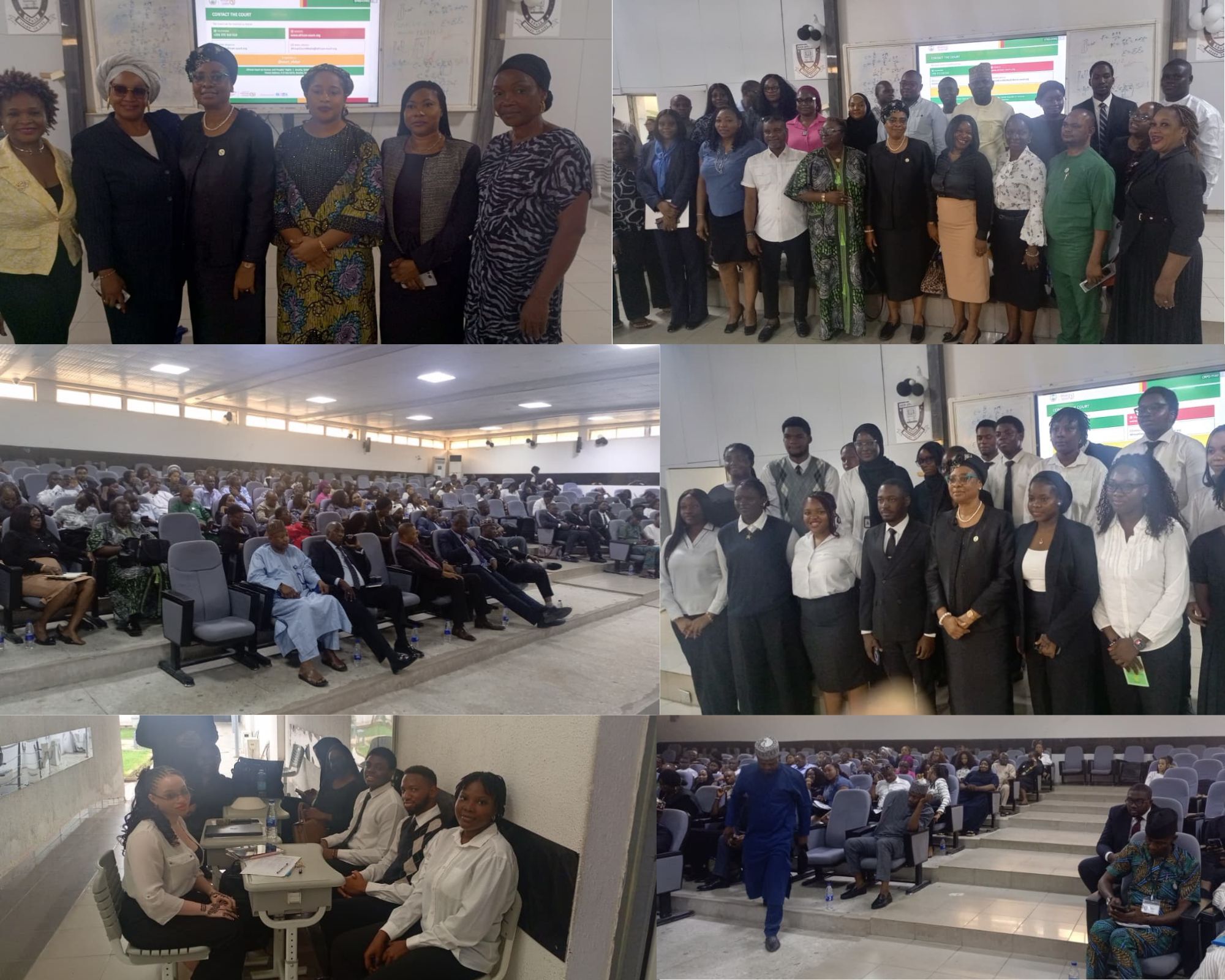
Speaking at a high-level public lecture marking the Court’s 20th anniversary at Baze University in Abuja, Justice Stella Anukam outlined an ambitious push to strengthen the Court’s Legal Aid Fund, describing it as essential to “democratizing access to justice” for victims who would otherwise remain locked out of the system.
“The cost of bringing a case before the Court remains a major obstacle for many victims,” she said. “It is, therefore, essential to operationalize and strengthen the Legal Aid Fund.”
The initiative, she explained, will rely on increased financial contributions from the African Union and development partners, expanded collaboration with NGOs offering pro bono legal services, and deeper engagement with academia and legal professionals to widen the pipeline of support for applicants.
The lecture, which drew legal scholars, practitioners and students, also became a moment of reflection on the Court’s evolving role in Africa’s justice architecture. Setting the tone, Mrs. Ozioma Izuora, author, fellow of the Chartered Institute of Arbitrators and law lecturer at Baze University, who served as compere, paid glowing tribute to Justice Anukam, describing her as a woman of “exceptional intellectual depth, quiet strength and unwavering commitment to justice.”
Izuora noted that Anukam’s career reflects the very ideals the Court seeks to institutionalise across the continent—integrity, courage, and fidelity to the rule of law—adding that her presence at the anniversary event was both symbolic and instructive.
“At a time when access to justice remains uneven and, in many cases, elusive for ordinary Africans, voices like hers remind us that the law must not only exist, it must work for the people,” she said, urging governments and stakeholders to match judicial progress with concrete action.
A Court Built on Promise—and Pressure
Established under a 1998 protocol to the African Charter on Human and Peoples’ Rights and operational since 2006, the Court was designed as the continent’s binding judicial authority on human rights—filling the enforcement gap left by the largely recommendatory powers of the African Commission.
Over two decades, it has developed a growing body of jurisprudence shaping democratic norms, freedom of expression, electoral integrity, environmental justice, and the protection of vulnerable groups. Its rulings—legally binding on member states—have driven legislative reforms, freed wrongfully imprisoned individuals, and expanded rights protections across multiple jurisdictions.
Yet, beneath these gains lies a more complicated reality.
Access Still Restricted
Despite its continental mandate, access to the Court remains sharply limited. Individuals and NGOs can only bring cases directly if their country has made a special declaration under Article 34(6) of the Court’s protocol—a provision many states have refused to adopt, or have actively withdrawn.
Out of 34 countries that have ratified the protocol, only a handful currently allow direct access. Several—including Tanzania, Rwanda, Benin, Côte d’Ivoire, and Tunisia—have reversed course, effectively shutting their citizens out of the Court’s jurisdiction.
The result is a paradox: a court designed to serve African citizens, but one that millions cannot directly access.
Justice Anukam did not mince words on the implications, stressing that political will from governments remains the single most decisive factor in determining the Court’s effectiveness.
A Dual Mandate, A Growing Burden
The Court operates with a dual mandate—adjudicating human rights violations and issuing advisory opinions on the interpretation of the African Charter. This dual role positions it as both an enforcement body and a norm-setting institution within the African human rights architecture.
However, that expanding influence has not been matched by commensurate institutional support.
Experts warn that without stronger financial backing, improved compliance mechanisms, and restored access for individuals, the Court risks becoming a powerful institution on paper but limited in practical reach.
Compliance: The System’s Weakest Link
Even where the Court delivers landmark judgments, enforcement remains inconsistent.
Several states have delayed or outright ignored compliance with binding rulings—undermining the authority of the Court and raising broader questions about accountability within the African Union system.
Analysts argue that without enforceable consequences for non-compliance, the credibility of the Court—and by extension, the continent’s human rights framework—remains fragile.
Legal Aid as a Turning Point
Against this backdrop, the push to operationalise the Legal Aid Fund is being framed as a potential turning point.
By lowering financial barriers, the Court aims to expand its reach to marginalized populations—particularly victims of systemic abuses who lack the resources to pursue justice through domestic or international channels.
The strategy also signals a shift toward a more inclusive model of continental justice, one that relies not only on state cooperation but also on civil society, legal practitioners, and academic institutions to sustain its momentum.
The Bigger Question: From Promise to Action
The anniversary theme— “Moving from Promises to Action”—captures the Court’s current crossroads.
Two decades after its creation, the institution stands as one of Africa’s most significant legal achievements. But its future impact will depend less on jurisprudence and more on political commitment.
Governments, experts say, must go beyond symbolic support—by restoring direct access, funding the Court adequately, and embedding its rulings into national legal systems.
Until then, the gap between promise and reality remains.
And for many victims across Africa, justice—though legally guaranteed—may still be just out of reach.