The statement came swiftly, as it often does.
President Bola Ahmed Tinubu expressed sorrow. He praised courage. He promised resolve. He assured Nigerians the sacrifices “will not be in vain.”
But by the time the words reached the public, Brigadier General Oseni Omoh Braimah and at least 17 soldiers were already dead.
In the early hours of Thursday, suspected fighters of the Islamic State West Africa Province (ISWAP) launched coordinated assaults on multiple military formations across Borno State, striking Benisheikh, Ngamdu and Pulka in a deadly sequence that has once again exposed the widening gap between official assurances and the reality on the ground.
The attack on the 29 Task Force Brigade Headquarters in Benisheikh proved the most devastating. Insurgents stormed the base with heavy gunfire and explosives, engaging troops in a prolonged firefight that lasted hours.
By dawn, the brigade commander, his officers and several soldiers had fallen.
Residents described a night of terror that extended beyond the military installation. Vehicles were set ablaze, travellers caught along the Maiduguri-Damaturu road were killed, and panic spread through surrounding communities.
“It was overwhelming,” one local source said. “They came in large numbers. The soldiers fought, but the casualties were heavy.”
A Familiar Script
The presidency’s response followed a pattern Nigerians have come to recognise.
In a statement issued by his spokesperson, Tinubu described the fallen troops as heroes and insisted the insurgents’ attack was a sign of desperation in the face of sustained military pressure.
“The government will never forget their sacrifices,” he said.
It is a message Nigerians have heard before.
From Borno to Plateau, from ambushed patrols to overrun bases, each major attack has been followed by similar language: praise for bravery, vows of victory, assurances of support.
Yet the attacks persist. And, increasingly, they appear to be escalating.
Braimah’s death marks the second killing of a brigadier general in less than five months, following the death of Brigadier General Musa Uba in November 2025—an alarming pattern that analysts say signals a dangerous shift in the conflict.
Unlike previous phases of the insurgency, where attacks were largely asymmetric, recent operations suggest insurgents are increasingly capable of targeting hardened military formations and senior commanders.
“This is no longer just a rural insurgency—it is evolving into a direct confrontation with state forces,” one security analyst noted.
In just weeks, several commanding officers across the northeast have died in coordinated assaults or ambushes, raising concerns about intelligence failures and insurgent momentum.
The Pattern Beneath the Promises
Security analysts say the repetition is no coincidence.
“There is a dangerous pattern emerging,” said Dr Musa Usman Konduga of the University of Maiduguri. “When you begin to lose commanders at this frequency, it tells you something is fundamentally wrong in the operational environment.”
He warned that the killings go beyond battlefield losses.
“It affects morale. It affects confidence. And for civilians, it raises a deeper fear: if generals are not safe, who is?”
That fear is no longer abstract.
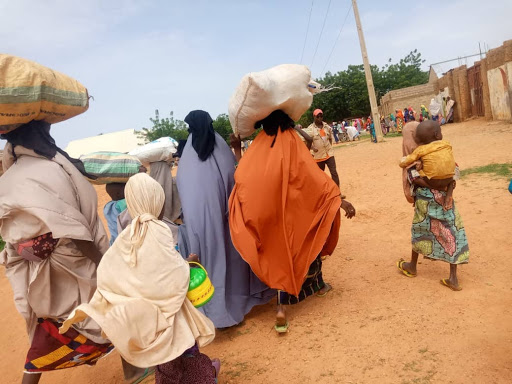
Across affected communities, civilians continue to bear the brunt of the violence. Villages are attacked, families displaced, and entire populations forced into survival mode as insurgents move with increasing mobility.
Anger Boils Over
For many Nigerians, the frustration is no longer just about insecurity. It is about what they see as a cycle of tragedy followed by ritualised response.
The Trade Union Congress (TUC) put it starkly.
“People are killed, statements are issued, visits are made, and then it continues,” said TUC President Festus Osifo. “It is becoming a norm.”
He described the killings as “one too many,” urging the government to move beyond rhetoric and urgently equip troops with modern technology and intelligence capabilities.
“It is appalling,” he said. “Lives must matter more than statements.”
A War That Refuses to End
Despite years of military operations across the northeast, insurgent groups continue to demonstrate resilience, coordination and the ability to strike strategic targets.
Recent offensives in areas like Ngoshe and repeated attacks on military formations suggest a shift from survival to sustained offensive capability.
For the troops on the frontline, the stakes are immediate.
For communities caught in the crossfire, the consequences are devastating.
And for the government, each new attack sharpens an uncomfortable reality.
The words are no longer enough.
The Question That Won’t Go Away
As Nigeria mourns yet another round of fallen soldiers, one question continues to echo beyond the statements, beyond the condolences, beyond the promises:
Insisting that President Bola Tinubu’s assurances are beginning to ring hollow, public affairs analysts are asking a harder question: how many more lives must be lost, how many more communities destroyed, before decisive action replaces repeated promises?