Home Blog Page 55

Man reenacts crucifixion for 37th and final time on Good Friday, declines whipping this year

A carpenter has been nailed to a wooden cross for the last time after 37 years of reenacting Jesus Christ’s suffering in a brutal tradition.

Ruben Enaje, 65, decided it was his final “sacrifice” after enduring the gory ritual for over three decades.

For this year’s Passion of Christ drama, he requested not to be whipped, kicked or slapped by village actors dressed as Roman soldiers in the Lenten reenactment of the Way of the Cross.

Ahead of the “crucifixion”, Enaje and two other devotees carried their crosses on their backs for half a mile in the scorching heat. This year, he carried a slightly lighter cross weighing 20kg, which he was then nailed to.

Man nailed to cross for 37th and final time in brutal Good Friday

Only his palms were nailed this time, sparing his feet from being pierced by alcohol-soaked steel nails, after his wife told how she’d begged her carpenter husband to halt the annual spectacle, due to his weakened lungs.

The annual event has turned Enaje into a village celebrity, with devotees flocking to the three rural communities in Pampanga province, north of Manila, in the Philippines, to witness the grim ceremony.

He had previously wavered, saying he was getting too old. But he admitted he has struggled to turn down requests from villages to pray for sick family members as he carries out the spectacle.

This year, he spoke of his hope for world peace, telling Inquirer.Net: “Only three countries are in conflict, yet they affect the whole world.”

He has previously raised similar issus, including the war against Ukraine.

He said at the time: “If these wars worsen and spread, more people, especially the young and old, would be affected. These are innocent people who have totally nothing to do with these wars.”

He added: “This is why I always pray for peace in the world.”

Ruben began the crucifixion event after he miraculously dodged death when he fell at a construction site when he was 25. He said it was important for him to make a “sacrifice” to thank God for his “second life”.

In the 1980s, Enaje survived nearly unscathed when he accidentally fell from a three-story building, prompting him to undergo the crucifixion act as thanksgiving for what he considered a miracle. He extended the ritual after loved ones recovered from serious illnesses, one after another, and he landed more carpentry and sign-painting job contracts.

During the previous crucifixions, which took on a dusty hill in Enaje’s village of San Pedro Cutud in Pampanga and two other nearby communities, he and other religious devotees carried heavy wooden crosses on their backs for more than a kilometre (more than half a mile) often in the scorching summer heat, while wearing thorny crowns.

Village actors dressed as Roman centurions later hammer 4-inch (10-centimetre) stainless steel nails through their palms and feet, then set them aloft on wooden crosses under the sun for about 10 minutes as a large crowd prays and snaps pictures.

The carpenter told Review of Religions: “It all started in 1985, when I fell from the third floor of a building and miraculously escaped death.

“At that moment, I made a vow to God that I will make a sacrifice to pay for my second life; I wanted to do that by re-enacting the act of the crucifixion as thanksgiving. One year after my accident, I joined the Senakulo (re-enactment of crucifixion), where I carried the cross to the Burol (Hill of Crucifixion).”

The carpenter added: “From what I have heard from my grandfather, the re-enactment rituals have been carried out in the Philippines since 1945 or the 1950s.”

In the meantime, a second-year law student at Kampala International University, Dennis Zziwa, sustained injuries while portraying Jesus Christ during a Good Friday Way of the Cross procession at Our Lady of Africa Church, Mbuya, Uganda.

Dennis sustained injuries from the beatings he received during the intense scenes of the reenactment.

He received immediate first aid from Red Cross responders and was later taken to Lamone Health Center in Luzira for further medical attention.

Osimhen named Turkey’s best player after outstanding season with Galatasaray

Victor Osimhen has been named Footballer of the Year at the prestigious 72nd Milliyet Sports Awards, capping another outstanding spell in Turkish football.

The award, widely regarded as one of the highest individual honours in Turkey, recognises Osimhen’s pivotal role in Galatasaray’s domestic double-winning campaign last season.

The prolific striker delivered remarkable numbers, scoring 26 league goals and providing four assists in 30 appearances for the Yellow and Reds. He further underlined his importance by adding seven goals in the UEFA Europa League and five more in the Turkish Cup.

Osimhen has maintained his fine form this season, registering 19 goals and seven assists in 29 matches across all competitions, reinforcing his status as one of Europe’s most consistent forwards.

Recently, the Super Eagles and Galatasaray striker, recounted how a senior Nigerian international player turned him away from a hotel room door during his first call-up to the national team in 2017, before Kelechi Iheanacho intervened and welcomed him inside.

He Osimhen Named Turkey’s Best Player After Outstanding Season With Galatasaraymade the revelation during a Twitch livestream with comedian Carter Efe in the early hours of Saturday, speaking from Nigeria where he is recuperating from a broken arm sustained during Galatasaray’s UEFA Champions League match against Liverpool.

The Galatasaray forward said he had approached Iheanacho’s hotel room intending to pay his respects to the then-Manchester City striker, only to be turned away at the door by his roommate.

“When I came, I met Iheanacho. And I told him, ‘ah, see me, I’m gonna carry your boots.’ So he said I should come to his room so, he gave me his room number.

“So, as I got to his room — I don’t just want to mention the name — he had a roommate. So, as I knocked on the door, the roommate opened the door. So, he like bounced me out of the room,” Osimhen said.

Osimhen declined to name the player who sent him away but noted that the individual was a prominent figure in Nigerian football at the time.

Iheanacho, he said, was displeased when he discovered what had happened.

“Iheanacho showed up and was angry at him, saying, ‘you see that someone came to see me in my room and you are chasing him from my room.’ So Iheanacho took my hand and took me inside,” he said.

The incident dates to 2017, the year Osimhen made his early appearances in the Super Eagles set-up before establishing himself as one of Africa’s foremost strikers.

Grief at a Distance: Tinubu faces backlash over Jos airport condolence, as bandits ravage Kwara and Nasarawa, slaughter soldiers

While families are still reeling from the Palm Sunday massacre in Plateau State, the situation in parts of Kwara has also deteriorated. Nightfall no longer comes quietly, it arrives with gunfire, panic, and the growing fear that help may not come.

Meanwhile, critics have described President Tinubu’s condolence visit at Jos airport as distant and insufficient, questioning whether it reflects the urgency of the situation on the ground.

In Kwara state, at least five residents, including three soldiers, were killed when heavily armed bandits launched a coordinated attack on the twin communities of Mari and Dina in Patigi Local Government Area. Beyond the immediate death toll, the assault has exposed a more troubling reality: entire communities are being deserted, families are fleeing en masse, and there is a deepening sense that the state is losing control of its most vulnerable areas.

A Calculated Assault—and a Deadly Trap

Residents say the attackers arrived in large numbers, moving with precision and confidence. Gunfire erupted without warning, sending villagers scrambling into nearby bushes in a desperate bid to survive.

“It was chaos,” one local source said. “People were running in every direction. Some were shot while trying to escape. Nobody knew where the bullets were coming from.”

Several residents were reportedly abducted, including women and children, and marched into surrounding forests. Their whereabouts remain unknown, adding to the anguish of families already reeling from loss. But the violence did not end there.

When troops from the Forward Operational Base in Patigi mobilised in response to distress calls, they walked straight into a deadly ambush. The attackers, apparently anticipating the military response, had positioned themselves strategically along the route.

Three soldiers were killed in the ensuing gun battle. A military patrol vehicle was set ablaze. “It was a trap,” another source said. “The bandits were waiting.”

Communities Under Siege

Eyewitness accounts suggest the attack was not random. Residents describe it as highly coordinated, raising fears that armed groups are becoming increasingly sophisticated, and emboldened.

For many in Kwara South, the assault is part of a disturbing pattern.

“This is no longer occasional violence,” a community member said. “It is becoming a way of life.”

Across affected areas, fear has taken hold. Villagers say they can no longer sleep peacefully, unsure when the next attack will come—or whether anyone will come to their rescue.

A Humanitarian Crisis Unfolds in Nasarawa

While Kwara bleeds, neighbouring Nasarawa is witnessing a different but equally devastating consequence: mass displacement on a staggering scale.

Thousands of residents have fled their homes following renewed bandit attacks, trekking long distances on foot with whatever belongings they can carry.

Footage from communities around the Green River axis shows an unending stream of displaced people, women clutching infants, elderly men struggling to keep pace, children trailing behind in exhaustion.

“We have been driving for several minutes and people are still coming,” one eyewitness said. “They are leaving everything behind.”

Local estimates suggest the number of displaced could exceed 7,000—far higher than official figures. Many have nowhere to go.

“No shelter, no food, no protection,” another witness said. “This is very, very bad.”

Empty Towns, Silent Streets

In some areas, entire communities have been abandoned. Homes stand empty. Shops are shuttered. Farmlands lie untended. What remains is silence, and fear.

Residents warn that if the attacks continue unchecked, rural depopulation could accelerate, pushing bandits closer to major towns and urban centres.

“The villages are gone,” one local said bluntly. “If nothing is done, the cities are next.”

A Crisis of Confidence in Government

Amid the escalating violence, frustration with government response is boiling over. Residents accuse authorities of failing to provide adequate security, leaving communities to fend for themselves against heavily armed groups.

“The government has abandoned us,” one displaced resident said. “We are on our own.”

That sentiment is increasingly echoed across affected regions, where people say the absence of visible security presence has deepened their vulnerability.

Leadership Under Fire

The crisis has also reignited scrutiny of federal leadership.

President Bola Ahmed Tinubu faced backlash following a brief condolence visit to victims of a separate attack in Plateau State, held at an airport rather than the affected community. Critics and victims argued that holding the meeting at the airport, far from the community where 28 people were killed, displayed a profound lack of empathy.

The President reportedly told families he could only spend 10 minutes, which was slammed as “indifference dressed as protocol”.

Opposition voices characterized it as optics over substance, while grieving families reportedly felt disconnected from the gesture.

The presidency, however, defended the decision, citing security and logistical constraints, as well as prior engagements. Officials insisted the focus remains on long-term solutions, including enhanced surveillance and security deployments.

A Nation on Edge

From Kwara to Nasarawa, the pattern is becoming harder to ignore. Attacks are growing more coordinated. Communities are increasingly exposed. Displacement is rising. Trust in protection is eroding.

What is emerging is not just a security crisis, but a slow, visible unravelling of rural life. For those on the frontlines, the reality is stark. They are not just fleeing violence.

They are fleeing a future that no longer feels safe.

Watch the video below.

Fresh details emerge on death of lawyer and APC chieftain in Abuja hotel, party calls for thorough probe

Fresh details have emerged surrounding the tragic death of Abdulsalami Ginsau, Assistant Organising Secretary of the All Progressives Congress (APC) in Kano State, at Chida Hotels.

Ginsau, a lawyer and prominent party figure, had been assigned to coordinate accommodation for Kano delegates attending the just-concluded APC convention in Abuja. He reportedly arrived in the Federal Capital Territory a day ahead of the event to make lodging arrangements.

What should have been a routine trip turned into a horrifying final moment—an elevator ride that ended in tragedy, claiming the life of the lawyer in the heart of Abuja.

According to the Kano State APC Chairman, Umar Haruna Doguwa, the late party chieftain successfully settled delegates before checking into the hotel himself. Concerns arose when he could not be located during the convention on Friday, prompting an extensive search across Abuja.

The search led party officials to the Utako Police Division, where they were informed of an incident reported at the hotel. Upon arrival, Ginsau’s body was identified, with initial reports linking his death to a suspected elevator malfunction.

Doguwa alleged negligence on the part of the hotel management, noting that some delegates had earlier complained about faulty lifts within the facility. He confirmed that the body had been deposited for autopsy, while police investigations are ongoing.

Police sources at the Utako Division confirmed that the incident was reported by the hotel management on March 28 and is under active investigation. Efforts to obtain official comments from the Federal Capital Territory Police Command spokesperson, Josephine Adeh, were unsuccessful at the time of filing this report.

Read Also: The fatal elevator ride took a lawyer’s life in Abuja hotel

A hotel source disclosed that about 150 rooms were initially booked for APC delegates, but the number of attendees reportedly exceeded 1,000, placing significant strain on the facility. The source claimed that despite management’s concerns over overcrowding, coordinators insisted the bookings were adequate.

The source further alleged that one of the hotel’s elevators had malfunctioned and was forced open. Ginsau, who was lodged on the third floor, reportedly entered the faulty elevator in the early hours of Friday, after which it collapsed unnoticed.
It was not until the following day, after an unusual odour was detected, that a search was conducted, leading to the discovery of his remains.

Meanwhile, the Kano APC chapter has called for a thorough investigation into the circumstances surrounding the incident. The party’s state secretary, Auwal Soja Sani Mainagge, said Ginsau had travelled in good health but went missing during the event.
He disclosed that the party has set up a committee to collaborate with security agencies, while the Kano State Government has also intervened to ensure a full investigation.

Speaking for the family, Hamza Haladu described the death as shocking, noting that Ginsau was “healthy and energetic” prior to the trip. He added that assurances have been given by the state government that the cause of death will be fully established.

The late Ginsau, a respected legal practitioner and corporate executive, is survived by two wives and two children. He will be buried in Kano in accordance with Islamic rites.

Daily Trust

When Honesty Becomes a Crime: Okutepa, SAN laments Nigeria’s fading legal values, blasts corruption at the bar

I weep for Nigeria and the legal profession. There is abuse of power everywhere. It is worse at the Bar. Dishonest leadership everywhere. Perversion of justice everywhere. Wickedness everywhere. Honest men and women are marked and pulled down for being honest and trustworthy in insisting that the right things be done at the Bar. Many people who want the best for the legal profession are not getting the derserved reward and protection from the profession they fight for the protections of its values and its best interests and traditions.

The legal profession seems now to be in conspiracy with itself and against some of its good members. The bar appears now to be encouraging people to actively pursue their own personal agendas against the best interests of the profession and some of its members to the irritation of decency and nobility of the profession. To be decent in the legal profession has become a vice instead of a virtue. But I must be different. You must be different. We all cannot be singing and praising abnormalities as virtues. No we all cannot.

Today I know that many who insist that the right things be done in the legal profession are facing persecution and punishment for their honest interventions and views. In the legal system where honesty ought to be a virtue it is now a vice to be honest in Nigeria.To support what is right is now seen as a vice rather than a virtue. To disagree with those in leadership positions is suicidal.To speak courageously and frankly about your beliefs and positions on things is now views as vices.

Leadership is despotic and corrupt infested in Nigeria in most cases. In the legal profession where honesty ought to be respected and be the hallmark mark for lifting and promotion, it appears to be vices now. Honesty and decency are now seen as a vices and viruses on the way to promotions. Being sycophantic and praise singing in favour of bad leadership is now what earns one prominent position and elevation in professional leadership.

But that was not what the founding fathers of the legal profession bequeathed to us and as codified in our rules of professional conduct in the legal profession. The rules of professional conduct in the legal profession are rules of honor and integrity that enjoy all members of the legal profession to be men and women of noble and ethical standards that protect and promote good governance and rule of law.

I weep for Nigeria because today the legal profession seems to be the bane of Nigeria justice and good governance. Today in Nigeria many things are done completely in disregard to the rule of law, the reasonable ethical standards of the legal profession and the expectations of rationality by men and women of virtue are fast becoming more difficult to achieve in the legal profession.

Badly behaved conduct appears more rewarding than good conduct that promotes purity of law and ethics of the profession. In all these many you expected to rise up and fight for what is right have gone to sleep for reasons that are difficult to comprehend. Many are silently disappointed but cannot openly speak out against the unjust and unfair practices going on in the legal practice and the profession generally.

Today transactional legal practice rooted in commercial interests is overtaking legal practice rooted in the best traditions of the nobility of the legal practice rooted in the rule of law and fidelity to good governance. Today democracy has become dictatorship and one man show, due to the silence and or conspiracies of the legal profession to give stamp of legitimacy to otherwise illegitimate processes that produced leaderships.

What is wrong is now seen as right. Abnormalities are treated as normal. In all, these institutions of justice are not free from blame and abdication of responsibilities. If gold gets rusted, then what do you expect from the iron. The profession of light is in conspiracy with darkness and darkness has now overtaken and overshadowed light of righteousness in Nigeria.

I weep for Nigeria. I weep for those who support darkness to overcome and overshadows the light of justice in Nigeria. I weep for us and those that destroyed the legacies of righteousness and those promoting evil over good in the legal profession. The best of traditions bequeathed to the legal profession, culture of respect rooted in the finest of traditions is far gone in the legal profession. I weep for the legal profession in Nigeria. I weep for generation yet unborn.

J. S. Okutepa, SAN

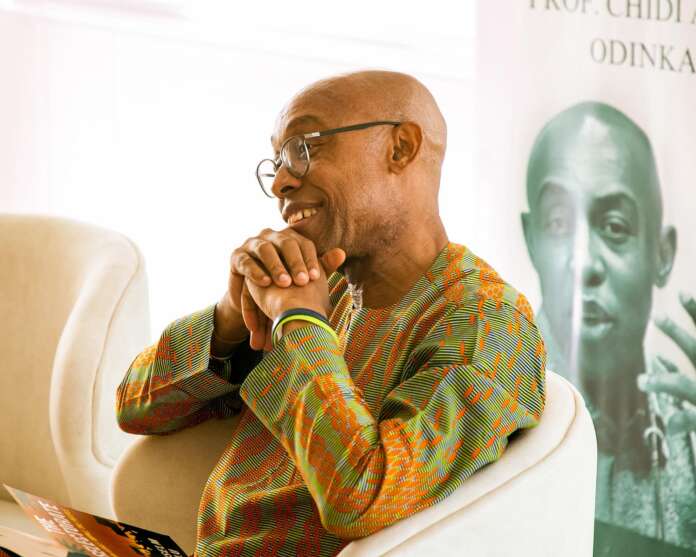
“INEC Has No Role Here”: Odinkalu fires back, raises alarm over ‘pre-signed resignation’ plot

Law teacher and ex-Chair of the National Human Rights Commission (NHRC) Professor Chidi Anselm Odinkalu, has faulted the Independent National Electoral Commission [INEC] on its decision to interpret the ruling of the Court of Appeal in the case [appeal] between Senator David Mark v Hon Nafiu Bala Gombe & Ors.

Odinkalu, in an X post- https://x.com/i/status/2039466036471452080 – pointed the finger at the INEC leadership, President Bola Tinubu, Court of Appeal and the Federal High Court, alleging a meeting that culminated in the Commission’s statement containing its interpretation of the Court of Appeal ruling.

He wrote: “This release by @inecnigeria followed a meeting involving senior leaders of the Commission, & @NGRPresident, @CourtOfAppealNG, @FederalHigh in the last 60 hours.

“I have it on the most impeccable authority that there is a pre-signed resignation letter by Chairman [Professor Joash] Amupitan [INEC chairman]. It was a pre-condition for his appointment. Ultimately, that had to be called in aid by those who persuaded him to issue this release. The threat of releasing it did the magic.

It shd [should] be evident to a professor of law & #SAN that [it] is not the business of @inecnigeria to interpret the decision of the Court of Appeal. If they had any doubt, an #INEC governed by good faith shd [should] have gone back to the Court of Appeal to secure an interpretation of the decision.

“But that is not where we are now. The country stares down a barrel & only those willing to enable that, make peace with it, or dare it will be able to sniff the stakes in #NigeriaDecides2027.

“As for Joash Amupitan….!”

The African Democratic Congress [ADC] had also kicked against INEC’s interpretation.

The ADC rejected INEC’s interpretation of the Court of Appeal ruling, alleging that the electoral body acted under pressure from a government that was scared stiff by the opposition’s momentum.

The ADC, in a statement signed by its National Publicity Secretary, Mallam Bolaji Abdullahi, said APC-led federal government was still panicky despite its efforts to destroy all opposition parties and foist a one-party rule on Nigeria.

The party described INEC’s position as contradictory and inconsistent with facts, insisting that it would publicly clarify these issues while warning that the commission has effectively sided with the government against Nigerians.

ADC said it was currently reviewing its options and would announce its next steps soon, urging its members and the public to remain steadfast as events unfolded.

The statement by Malam Bolaji Abdullahi, National Publicity Secretary of ADC, is produced in extenso hereunder:

“We reject INEC’s interpretation of the Court of Appeal ruling. We knew that INEC was being pressured by a government that has become jittery from the ADC’s rising momentum even in the face of its relentless assault on all opposition parties.

“INEC’s press statement is full of contradictions that fly in the face of both facts and reason. We shall clarify these contradictions for all to see. What is clear, however, is that INEC has caved to pressure and has chosen to side with the government against the Nigerian people.

“We are currently reviewing our options, and we shall make these known soon.

“Meanwhile, we call on our members and all Nigerians to remain steadfast as they await further directives.
Nigeria is rising. ADC is rising.”

Recall that INEC had on Wednesday issued a statement announcing the removal of the names of David Mark and Rauf Aregbesola from its official portal as National Chairman and National Secretary of the ADC respectively.

The commission also had said it would also not recognise Nafiu Bala Gombe, who is seeking to be declared national chairman through the courts.

INEC announced on Wednesday that it would suspend recognition of all factions within the party and refrain from monitoring any conventions or congresses organised by groups aligned with the affected leaders.

The decision, it said, would remain in place pending the final determination of a substantive suit before the Federal High Court.

The development followed a leadership crisis within the ADC and a recent judgement of the Court of Appeal in Suit No. CA/ABJ/145/2026, which had further complicated the dispute.

The fatal elevator ride took a lawyer’s life in Abuja hotel

What should have been an ordinary descent turned into a horrifying final moment. An elevator ride that ended in tragedy, claiming the life of a lawyer in the heart of Abuja.

In a place meant for comfort and safety, the sudden loss has left a chilling silence, raising painful questions about trust, negligence, and how quickly life can be taken without warning.

Abdulsalami Ginsau, a Nigerian lawyer, who was trapped in the elevator of a hotel in the Federal Capital Territory, Abuja, suffocated to death.

Read Also: Like many others, Nigeria happened to Dr.  Vwaere Diaso…

A former representative of Kaduna Central Senatorial District, Senator Shehu Sani, made this known on his X handle on Tuesday.

Sani, who also shared the photograph of Ginsau, tweeted: “The case of Barrister Abdulsalami Ginsau is pathetic.

“He was reportedly trapped in an Abuja Hotel lift and he suffocated to death.

“Could it be that power supplying the Lift ceased?

“Could it be that the Lift has technical issues?

“Could it be that it’s just a tragedy of fate?

“May Allah grant him Aljanna firdausi,Amin.”

A Henry Nwosu reminiscence, By Calixthus Okoruwa

By the time I entered Edo College, Benin City in 1977, there was still plenty of evidence of the tremendous investment which former military ruler, Samuel Ogbemudia, had made particularly in the area of sports in the then Bendel State. Several talented students were already making their marks on the national stage as bona fide members of the Bendel State squads. My classmate, Fatai Enabulele was on the state’s swimming team. Another student, Okhamera, who was Head of Esigie House, was a boxer for Bendel State. Indeed, I can never forget my surprise when I first saw another schoolmate, Oritsejolomi Isebor donning the green tracksuit with the legend, “Nigeria” emblazoned behind. Isebor, while still a student, had long transcended the Bendel State team. He played basketball for Nigeria.

But football was the most popular sport and there were several football competitions that helped it retain its popularity – from the under-13 championships to the Principals’ Cup to the Bendel State Academicals. There was also the Giwa-Osagie Cup which was strictly for schools which offered Advanced Levels – Edo College, Government College Ughelli, Federal Government College Warri and St. Patrick’s College Asaba. The most talented stars were often well-known locally before they emerged on the national stage.

Read Also: Traded Before Birth: The silent trauma of Nigeria’s ‘money wives’, By Lillian Okenwa

After winning the Giwa-Osagie Cup in the 1977/78 session, Edo College painstakingly assembled a squad of extremely talented footballers in a bid to qualify to represent Nigeria at the World School Championships holding in Spain in 1978/79. The all-star cast included names that would later become very famous, such as George Ebojoh, Adebayo, Afejukwu, George Okoh, Bobson Akpotohwo and many others. The football team was fearsome and won its matches, sometimes in a manner that ridiculed its opponents. After a number of keenly-contested qualifying matches, it soon won the rights to represent Nigeria at the World School Championships in Spain. At the time, watching these talented footballers train on the pitch in the evenings was so entertaining that it was a very popular past-time among students.

Read Also: Paralyzed After Rape, She Chose Euthanasia—A courtroom war couldn’t stop it

Read Also: ‘They Are Taking Us Like Livestock’: Inside Kwara’s emptying towns as terror tightens grip

It was in preparing for the journey to Spain that Saint Finbarr’s College, Akoka, which had a formidable reputation for sporting excellence under its long-time principal, Reverend Father Slattery, was invited to play against the star-studded Edo College team. At Edo College, even though we had somehow, never encountered them, we had heard that the St. Finbarr’s team was among the best college teams in the country. So it was with considerable excitement that we looked forward to what we imagined was going to be a very entertaining game. Our most respected football pundits, the duo of Ehizogie Airewele and Chibuzo Aguocha both agreed that the forthcoming match was “the closest thing to Mohammed Ali’s ‘Thrilla in Manila’”

The match took place at Ogbe Stadium in Benin City and more than lived up to its hype. It generated as much entertainment as a typical European cup final would today.

But there was a standout player. No, he wasn’t on the Edo College side. It didn’t matter that he was the smallest and at 15, perhaps the youngest player on the pitch. He was everywhere on the pitch, dribbling opponents, motivating his team mates, dictating the pace of play and making the star-studded Edo College team look ordinary. As cheering fans of Edo College, this was not what we had expected. We had expected a tough match, no doubt, but we hadn’t reckoned with some fellow coming to Benin City to make our highly rated football team suddenly look rather ordinary.

But so overwhelmed were we, with the dexterity of this football talisman, that even though our task was to cheer the Edo College team, come what may, we found ourselves regularly cheering the young, diminutive player.

Word soon got round and before long, everyone in the stadium knew his name: Henry Nwosu! His skills set him head and shoulders above everyone else – he was in a class of his own. We couldn’t help admiring and applauding the sheer magnificence with which he orchestrated play with his artistry. The boy was a master craftsman, a magician with the ball.

The match ended in a 3-3 draw, but Henry Nwosu had considerably demystified the Edo College team in our young eyes. How could only one player have such a dramatic impact on a football match, we wondered.

Ironically, even though he was only 15 and the smallest player on the pitch, Nwosu’s performance gave the impression that he was playing in a league for which he was too talented.

And it was hardly any surprise that barely a year later, Henry Nwosu had been called up to the national team – the Green Eagles. Clearly, he belonged in the ranks of Nigeria’s elite professionals. Henry Nwosu would, at 17, feature in the AFCON winning Green Eagles team of 1980 and earn for himself, an MON, like other greats of the team such as Christian Chukwu and Segun Odegbami. He remained an integral part of the national team for many years before transitioning to coaching upon retirement.

Henry Nwosu’s career trajectory shows that sports development really ought to be a strategic process that entails among others, training programs and structured tournaments to help identify talent for further refinement and development.

Unfortunately, it is difficult to point to any strategic sports development program in Nigeria, today. All of the youth sporting tournaments of old have long disappeared, across the country. Sporting facilities where they exist, are typically in abject neglect and better associated with political gatherings and religious crusades than sporting events.

Many schools, of course, lack sporting facilities of any sort. Had Henry Nwosu not been privileged to attend St. Finbarr’s College whose founding principal laid a strong sports foundation for the school, perhaps his genius as a footballer may never have been discovered. Incidentally, this is the lot of millions of Nigeria’s young people today.

Indeed, the growing number of professional footballers of Nigerian-origin in elite European football leagues – the Eberechi Ezes, Fikayo Tomoris, Tammy Abrahams, Karim Adeyemis, Michael Olises and Bukayo Sakas – is simply because their talents were discovered and honed in environments that are painstakingly designed to do just this. Unfortunately, for each of these stars, there are perhaps 20 others on the streets of Ajegunle and Mushin, innately talented, but with neither means nor opportunity to express that talent.

Nigeria continues to sit on the potential of millions of its young people, by its lacklustre and unambitious approach to sports development. To make matters worse, in so doing, the country is deprived of the entertaining, unifying and economic potential of sports.

In enjoying football beamed to our TV sets from European leagues, basketball from America’s NBA and tennis from professional circuits around the world, we must remember that these spectacles are the end-result of deliberate, painstaking and strategic investment by these countries in sports.

I do hope that the passing of Henry Nwosu the football prodigy will force Nigerians to deeply interrogate the plight of our country in sports and compel our sports administrators and politicians to live up to their responsibilities.

May Henry Nwosu’s talented soul find rest in the bosom of his creator.

  • Okoruwa works for XLR8, a communications company

Nemo judex in causa sua and the Nigerian judiciary, By Leslie Iheduru

The rule of law in every society is rooted in two very important principles; ‘Nemo judex in causa sua’ and ‘audi alteram partem’. These terms simply mean that no person shall be a judge in his own cause and that both sides to a dispute should enjoy equal opportunity to present their cases. They are the principles of natural justice otherwise described as the twin pillars of justice. Nemo judex in causa sua which is the focus of this piece is one of the rules of natural justice and it is not confined to a cause in which a person is a party alone, but also applies to a cause in which a person has an interest or that he is involved in. It underlines the doctrine of reasonable apprehension of bias which is not permitted because even a slight taint of bias would destroy the integrity of the proceedings conducted in such contexts.

To properly understand the principle of nemo judex in causa sua, we will take a journey across jurisdictions to understand how legal proceedings are conducted in other climes in comparison to the Nigerian judicial process.

The American judiciary unlike its European counterpart practices the adversarial and jury system, where the judge is not allowed to descend into the arena, he is only allowed to sit as an independent arbiter who acts as an umpire, listening to different parties argue their case, present evidence and then make a pronouncement based on the decision of the jury. He is not allowed the liberty to personally inquire into the case, he cannot ask questions outside the evidence presented by the parties in the case before him, he cannot also interrogate the evidence presented by both parties, neither can he investigate the investigations done by law enforcement, or form opinions around his own beliefs or understanding of the case. He must limit himself to the words and evidence of the litigants and their counsel. In reaching his decision, he is only allowed to guide the jury, who are members of the community of the accused or litigants, and who are selected by the state to sit as a panel to hear the evidence presented by parties and make a judgement in both civil and criminal proceedings.

European countries on the other hand employ the inquisitorial system, in which a judge investigates the facts, interviews witnesses, and renders a decision. Juries are not held in high regard in an inquisitorial court, and the parties to the case are only moderately involved in the fact-finding process. The main emphasis in a European court is the search for truth, whereas in an American courtroom, truth is secondary to the aim of reaching the fairest decision in the resolution of the dispute. It has been suggested that the inquisitorial system, with its goal of seeking and finding the truth, is a more just and equitable legal system. However, proponents of the adversarial system maintain that the truth is most likely to emerge after all sides of an argument are put forward.

In Nigeria, the situation is quite different. Our judicial jurisprudence is built on the adversarial system of adjudication where all a judge does, is sit on his throne and listen to litignts and their legal counsel canvass their arguments, present evidence, make submissions and thereafter make a ruling or pass a judgement based on the preponderance of evidence or on the balance of probability in civil cases or beyond a reasonable doubt in criminal cases.

A judge in a Nigerian court should ordinarily never be seen as delving into the arena of conflict unlike his European counterparts, he must restrict himself to the limits created by the rules governing the courts. A judge must not assume the role of a party or counsel in the proceedings before it. This principle has even been enshrined in section 36 of the 1999 Constitution of the Federal Republic of Nigeria (as amended) and given judicial imprimatur in a plethora of cases. See Ani v. Out (2023) 8 NWLR (Pt. 1886) 301 SC where the Supreme Court defined the concept as follows:

“Nemo judex in causa sua is a latin phrase, which means no man should be a Judge in his own cause. It is a principle of natural justice that no person can judge a case, in which he has a personal interest or involvement. This rule of natural justice is, therefore, not confined to the cause in which the person is a party, but it also applies to a cause in which he has an interest or he is involved in. It underlines the doctrine of reasonable apprehension of bias, which is not permitted in law because a taint of bias would destroy the integrity of the proceedings conducted in such a manner. In the instant case, the positions occupied by the respondents would not ipso facto disqualify them from being nominated, selected and presented as the candidate of their respective Houses.”

But a simple question begs for clarification; if our constitution is rooted in the rule of law, and the rule of law holds sacred the twin pillars of justice “Nemo Judex in Causa Sua and Audi Alteram Patem” which translates into “A man shall not be a judge in his own case and Hear the Other Side”, why then will a judge sit as a judge in their own case?

That question might sound surprising to you, but when you find yourself in a court room, and a litigant through his counsel raises the question of bias against the sacred throne holder, you become amazed, you ask yourself, can a court be bias? Is the Judex not supposed to be a neutral arbiter? Are the courts not supposed to be the gatekeepers of justice? Why then will a court be bias? That is a question I cannot answer, but that is not the reason for this piece, my concern is not the reason for bias, but how the court deals with it, when it is raised by either party to a suit.

I was witness to a case in a court in Abuja where a defendant had raised the issue of bias against the court, counsel to the litigant backed it up by making a written application to the court, praying the court to recuse itself and transfer the case to the Honourable Chief Judge for reassignment. The next phases of this procedure which I witnessed in my opinion defeats the entirety of the foundations of justice upon which our laws are predicated and which the courts are sworn to and should uphold and defend.

In Ogboka v. State (2021) 17 NWLR (Pt. 1804) 139 SC. The Supreme Court once again cautioned when it said that:

“The court’s neutrality or impartiality in a case, under section 36(1) of the 1999 Constitution guaranteeing fair hearing to the parties before it, is summarised by the phrase – nemo judex in causa sua (a Judge should not be a judge in own cause). In this case, the trial court erred when it dismissed the prosecutor’s insistence and prayer that the appellant be convicted for the lesser offence of culpable homicide not punishable with death as the respondent had admittedly failed to prove the alleged intentional culpable homicide. (P. 174, paras. E-F; G-H).

This is very instructive in what follows after counsel filed his application.

The Claimant after being served with the defendant’s application, filed a counter-affidavit and address opposing the allegation of bias and the application to the court to recuse itself from hearing that suit. The court fixed a date for hearing and on that date, parties adopted their processes, the same court which had been allegedly indicted by a party to the suit for bias fixed a date for ruling on the said application. This same court whose neutrality is being questioned goes on to subject the processes filed by parties to judicial review by itself, the same court that was accused of bias reviews the allegation of bias against itself and ruled on it too. Is that not a judicial absurdity? I witnessed the ruling of the court opposing the allegation of bias and refusing the application to recuse itself. Is that alone not telling enough?

It is trite that a court must not only do justice but must be seen to do justice in every case brought before it. The confidence of the society in the neutrality of the courts is the foundation of the power and efficacy of courts. Where a court can be seen to be bias and then uphold the bias by judicial discretion and prerogative, the confidence in the judiciary is diminished. The Court of Appeal had this to say about the effect of bias in Omoniyi v. Central Schools Board (1988) 4 NWLR (Pt. 89) 448 when it held that “The imputation of bias of any kind to a trial Judge including favouritism and selective treatment, does not only diminish the stature and integrity but destroys the foundation of his judgment, however sound and consistent with the rules of court, pleadings and evidence. These considerations ordinarily should guide the court whenever a question of bias is raised by a party to a suit.

The Nigerian judiciary has come under heavy criticism for its seeming lack of independence and its inability to actually play the role of being the last hope of the common man. This impression by the society has significantly eroded the trust and confidence which the society should have in the courts, it has placed the courts in a limbo of distrust, uncertainty and abuse.

The court must be neutral, fair, compliant, flexible, attentive, unbiased, responsive, decisive and independent. It must not give any room for its stakeholders to perceive or allege bias. It must ensure the highest standards of equity are observed and this equity must not only be done, but must be seen by all who observed, the litigants, the parties and the mere observer in the court.

In conclusion, I will anchor on the words of Honourable Justice Ayobode Olujimi Lokulo-Sodipo who in the case of Orogbemi v. State (2024) 13 NWLR (Pt. 1954) 71 CA., held that:

It is a grave matter to charge a court with bias or likelihood of bias, and the accuser must be ready and able to establish the facts and grounds he relies upon before he can succeed in his complaint. To charge a court with bias or likelihood of bias, there must be cogent and reasonable evidence to satisfy the court that there was in fact such bias or real likelihood of bias as alleged. Allegations of bias cannot be founded on mere conjectures but on concrete and real evidence. Although justice in law must not only be done but seen to be manifestly done, bias cannot be proved by sheer and vague suspicion and scandalous allegation against a court. In the instant case, the appellant did not make out a credible case to sustain the allegation of bias against the trial court. [Ojengbede v. Esan (2001) 18 NWLR (Pt. 746) 771; Osayomi v. State (2007) 1 NWLR (Pt. 1015) 352;…”

Flowing from the above, where there exist a suspicion of bias and the attention of the judex has been brought to it with cogent facts within the knowledge of all the parties, the judge being accused of bias cannot and should not be allowed to rule on an application for recusal or transfer. That application should in the interest of preserving the neutrality and integrity of the courts be heard by a neutral judge who will be presented with all the facts in the case of bias and that judge alone, must be allowed to hear parties and rule on it. This must be included in our judicial jurisprudence for the development of the law and the sustenance of the confidence of the people in the court system.

I will finally add that a procedure be established within the court’s rules and directives for the processes to be followed where a party alleges bias and the court is not inclined to suo motu recuse itself but seeks to hear the accusing party establish the alleged bias before it. This will create a clear pathway for what must be done in instances where the integrity and neutrality of the court is questioned, especially in cases involving regular litigants before the courts, politically exposed persons and in other cases before trial courts.

Leslie Iheduru, a legal practitioner with the ICPC.

The views expressed by contributors are strictly personal and not of Law & Society Magazine.

Video: Soyinka’s Okada Moment, Symbol or Statement?

In a country where survival increasingly demands improvisation, the image was as jarring as it was symbolic: Wole Soyinka, global literary icon, moral voice, and one of Nigeria’s most enduring public intellectuals—perched on the back of a commercial motorbike (okada), cutting through traffic like millions of ordinary Nigerians.

It lasted only a moment. But in that moment, a nation saw itself.

The sight of Soyinka on a commercial motorcycle has ignited a wave of reactions across Nigeria, not merely because of its novelty, but because of what it appears to say about a deepening economic crisis that is reshaping daily life under President Bola Ahmed Tinubu.

A Symbol in Motion

In a country battling soaring fuel prices and transportation costs, the okada has become more than a mode of transport—it is a last resort.

For Soyinka, long regarded as a conscience of the nation, the choice to ride one is being widely interpreted as more than convenience. It is being read as commentary.

Nigeria’s ongoing fuel crisis—triggered in part by subsidy removal and broader economic reforms—has pushed petrol prices beyond the reach of many citizens. Commuters now navigate a harsh reality of inflated fares, long queues, and shrinking mobility.

Soyinka’s ride distilled that reality into a single, arresting image.

A Voice, Once Loud—Now Measured

The moment has also revived scrutiny of Soyinka’s evolving relationship with power.

During the administration of former President Goodluck Jonathan, Soyinka was an unrelenting critic—famously branding the government “Nebuchadnezzar” during the 2012 fuel subsidy protests linked to the #OccupyNigeria movement.

By contrast, his posture under Tinubu has appeared more restrained, prompting debate about whether the Nobel laureate’s voice has softened—or simply changed tempo.

Soyinka himself has rejected that framing. He has argued that his approach is deliberate, not diminished.

In late 2023, he said he prefers to give new administrations time before passing sweeping judgment. But he has not been silent.

Selective Criticism in a Volatile Climate

Over the past year, Soyinka has issued pointed criticisms of specific government actions.

He condemned the handling of protests tied to the #EndBadGovernance protests, describing the state’s response as “colonial-style repression.” He has also questioned excessive security around the president’s family, warned against regional military entanglements, and criticized the declaration of emergency rule in Rivers State as an overreach.

Yet for critics—including supporters of Peter Obi—these interventions fall short of the sweeping condemnation Soyinka once directed at past governments.

His acceptance of a national honour under Tinubu—an award he previously declined under Jonathan—has further fuelled perceptions of a shifting stance.

The Politics of Perception

Whether fair or not, perception in Nigeria’s political space often carries as much weight as action.

And in that context, Soyinka’s okada ride has been interpreted as a subtle recalibration—a form of protest not in words, but in imagery.

Analysts suggest the message is simple, if unsettling: hardship has become universal.

“This is not just about Soyinka,” one political observer noted. “It’s about what happens when even the symbolic elite begin to mirror the survival strategies of the masses.”

A Nation Running Out of Options

Across Nigeria, the consequences of fuel scarcity are cascading.

Transport costs have surged. Small businesses are struggling to stay afloat. Workers are being priced out of their daily commute. For many households, mobility itself has become a luxury.

In that context, the okada is no longer just a workaround—it is a reflection of a system under strain.

Soyinka’s ride, then, becomes metaphor.

It captures a country where dignity is increasingly negotiated, where resilience is stretched thin, and where adaptation often masks desperation.

Public Reaction: Between Solidarity and Alarm

The response has been swift and deeply emotional.

On social media, many Nigerians have embraced the image as a moment of solidarity—a reminder that the crisis spares no one. Others see it as something more urgent: a warning signal.

If a figure like Soyinka must resort to an okada, they argue, then the scale of the crisis is no longer debatable. It is visible.

Beyond the Image

Fuel scarcity is not new in Nigeria. But the current wave of hardship has been described by many as unprecedented in both scale and impact.

It is disrupting education, crippling commerce, and redefining daily existence.

Against that backdrop, Soyinka’s ride stands as more than a fleeting viral moment. It is a cultural signal, part protest, part adaptation, part indictment.

And perhaps most powerfully, it raises a question that lingers long after the image fades:

If this is how even the most prominent Nigerians now move, what does it say about where the country is headed?

TIPS